
When it comes to your car's safety on Haltom City roads, the brake fluid level is one of those things you can't afford to ignore. This fluid is the muscle behind your brake pedal, creating the hydraulic force that actually stops your car. If that level gets too low, your braking power can weaken significantly—or disappear altogether. That's why keeping an eye on it is non-negotiable for safe driving.
Why Your Brake Fluid Is the Hero of Your Braking System
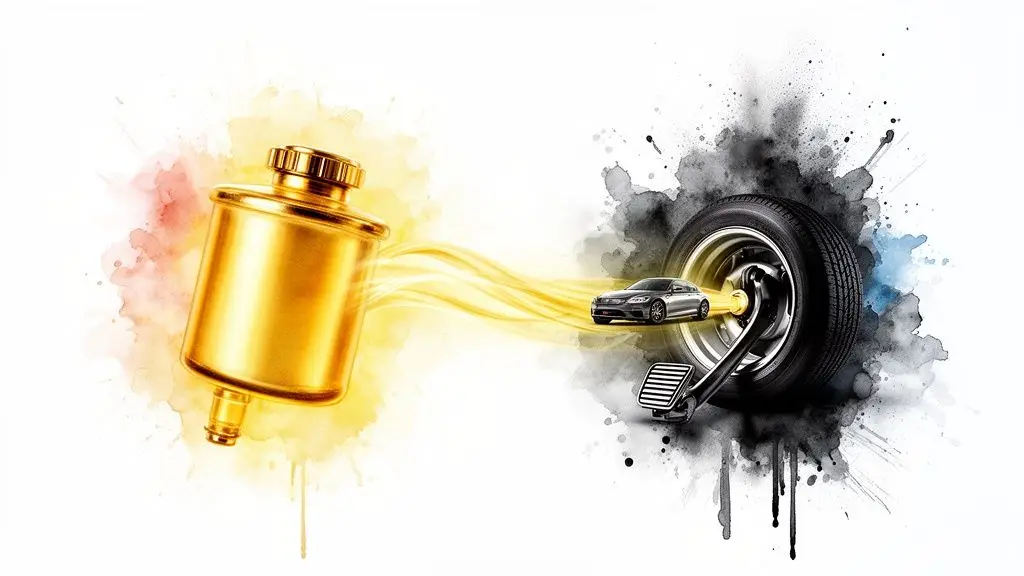
Most people don't give their brake fluid a second thought until something feels wrong. But this humble fluid is the absolute lifeblood of your entire braking system. Think of it as the messenger that carries the urgent command from your foot directly to your wheels.
Here’s how it works: when you press the brake pedal, you're not physically stopping the car yourself. You’re actually pushing a special, non-compressible hydraulic fluid through a sealed network of lines. That force is instantly transferred, causing the brake pads to clamp down on the rotors and bring you to a smooth, safe stop.
The Unseen Pressure on Your Brakes
This hydraulic system is what you rely on every single day, especially in the stop-and-go traffic around Haltom City. The intense Texas heat we experience puts even more stress on every component in your braking system. A proper brake fluid level is your first line of defense.
A low brake fluid level is a major red flag. It almost always points to an underlying problem, like a leak in a brake line or severely worn-out brake pads. It’s an issue that needs professional attention right away—ignoring it is just not a safe bet, especially for Haltom City drivers.
It’s no surprise that the demand for reliable braking is growing, with the global market for brake fluids expected to jump from 1.27 million liters in 2026 to 1.54 million liters by 2031. This trend highlights a universal truth for drivers everywhere, including right here in Haltom City: you simply can't neglect this critical system. Low fluid can cause that dreaded spongy brake pedal or, even worse, complete brake failure. Our certified technicians here at Express Lube & Car Care on 6211 Denton Hwy are here to make sure that never happens. You can read more about the critical role of brake fluid in vehicle safety to understand its global importance.
Your Haltom City Partner in Brake Safety
Understanding how brake fluid works demystifies one of your car's most important safety features. It’s much more than just a liquid in a plastic tank; it's a core component that ensures you can stop precisely when you need to. To see how this fluid works with the other parts of your system, check out our guide on the different types of car brakes.
At Express Lube & Car Care, we’re proud to be your local Haltom City partners in maintaining this essential system. We're committed to helping you and your family stay safe on every single drive.
Understanding How Brake Fluid Works
Ever wonder what actually happens when you press the brake pedal? You’re not physically squeezing the wheels to a stop. Instead, you're commanding a special fluid to do all the heavy lifting for you. Think of brake fluid as the unsung hero of your car's safety system, transmitting the force from your foot directly to your brakes with incredible power.
This works because of a simple hydraulic principle: liquids in a sealed system can’t be compressed. When you push the pedal, you're pressurizing the fluid in the brake lines, and that pressure is instantly and evenly applied to the brake calipers at each wheel. It’s an elegant system that gives you precise control over thousands of pounds of moving vehicle.
The Two Most Important Properties of Brake Fluid
For your brakes to work every single time, the fluid has to perform two very different, but equally important, jobs. Getting a handle on these two characteristics makes it clear why keeping an eye on your brake fluid level is a non-negotiable for driving safely around Haltom City.
First, brake fluid must have a high boiling point. The act of braking creates an enormous amount of friction and heat, especially during a hard stop or when driving downhill. If the fluid were to boil, it would create gas bubbles in the lines. Since gas can be compressed, your brake pedal would suddenly feel spongy and lose its effectiveness—a truly dangerous situation.
Your brake fluid is engineered to handle intense heat without failing. But to do its job, it has to stay clean and free of contaminants that drag its boiling point down.
Second, the fluid is also hygroscopic, which is a technical way of saying it’s designed to absorb moisture right out of the air. This might seem strange, but it’s actually a clever feature. It prevents stray water droplets from pooling in the brake lines, where they could cause rust or even freeze in the winter.
Why Moisture and Low Levels Are a Problem
Unfortunately, this moisture-absorbing quality comes with a catch. Over time, the more water the brake fluid soaks up, the lower its boiling point becomes. After just two years, the boiling point of a standard DOT 3 fluid can plummet by over 25%. This drastically increases the risk of brake fade, especially in the humid weather we often get here in Haltom City.
A low brake fluid level is an even bigger, more immediate warning sign. Your brake system is a closed loop, meaning the fluid doesn't get consumed like fuel. If the level is dropping, it almost always points to one of two things:
- A Leak: A leak can develop in the brake lines, calipers, or master cylinder, creating a serious safety hazard.
- Worn Brake Pads: As your brake pads wear down, the caliper pistons have to push out further to make contact with the rotors. This extra space is filled by fluid from the reservoir, causing the level to drop. Our guide on the expected life of brake pads explains this relationship in more detail.
Both of these scenarios demand a professional inspection. A leak can lead to total brake failure, and worn-out pads severely diminish your car's stopping power. Regular checks are the best way to catch these issues before they turn into an emergency on Haltom City roads.
Spotting the Warning Signs of Low Brake Fluid
Your car is always trying to tell you something; you just have to know how to listen. Long before a major brake failure, your vehicle will give you subtle—and sometimes not-so-subtle—clues. Let's move beyond just a dashboard light and talk about the physical sensations and sounds that point to a low brake fluid level.
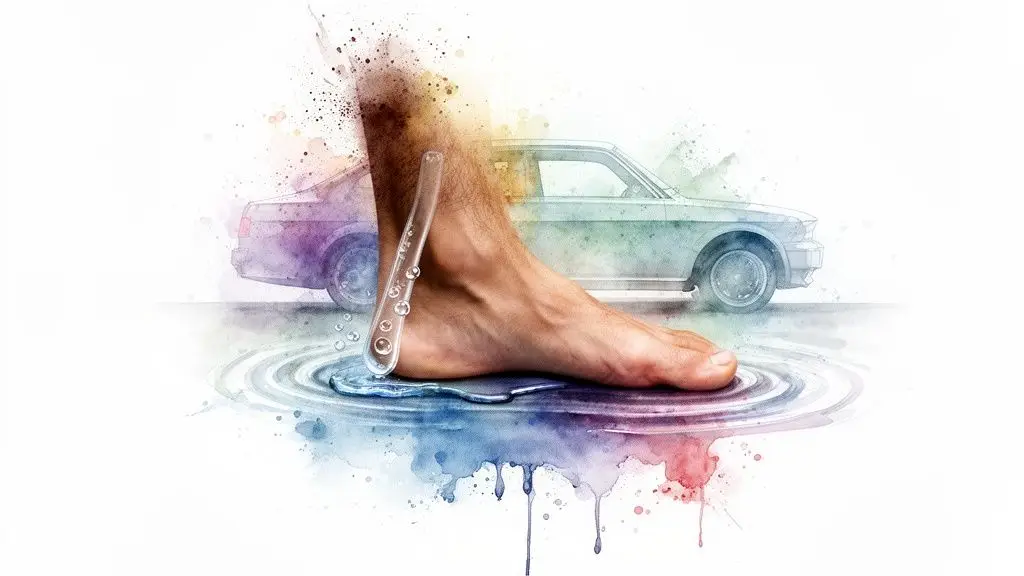
One of the most common and unnerving signs is a change in how the brake pedal feels under your foot. A pedal that feels "soft" or "spongy" is a classic giveaway that air has gotten into your brake lines, which often happens when the fluid level drops too low.
Think of it this way: brake fluid is a liquid, and liquids don't compress. This creates immediate, firm hydraulic pressure when you hit the brakes. Air, on the other hand, is highly compressible. When air is in the lines, you're essentially squishing a bubble instead of applying solid force to your brakes. That spongy feeling is a serious red flag that needs a professional inspection right away at a trusted Haltom City shop.
Physical and Audible Clues You Cannot Ignore
Beyond the pedal's feel, your own eyes and ears are powerful diagnostic tools. Paying attention to these symptoms can help you catch a brake fluid problem before it becomes a dangerous situation on the road in Haltom City.
- A Sinking Pedal: You press the brake pedal, and instead of holding firm, it slowly sinks toward the floor. This almost always points to a leak in the master cylinder or somewhere else in the system. The hydraulic pressure is bleeding out, and your stopping power is literally fading away.
- Grinding or Squealing Noises: While we often associate these sounds with worn-out brake pads, they can also signal a problem with the hydraulic system. If worn pads have caused the brake caliper pistons to overextend, it can lead to a low fluid situation and a cacophony of warning sounds.
- Visible Puddles: Finding a puddle of oily, slightly yellowish or brownish liquid under your car is a dead giveaway. Brake fluid is slippery to the touch, and a puddle means you have an active leak that must be addressed immediately.
The importance of proper brake fluid maintenance is no secret. In some global markets, mechanical failures, including brake issues, were a factor in 30.6% of all traffic accidents in a single year. Low or contaminated fluid doesn't just reduce stopping power; it can also cripple the performance of modern safety systems like ABS and electronic stability control. Read more about the critical role of brake fluid in vehicle safety.
When Your Dashboard Brake Light Comes On
Your car’s most direct cry for help is the brake warning light on the dashboard. This light can pop on for a few different reasons, but a low brake fluid level is one of the most frequent culprits. You can learn more about what a brake light on your dashboard means in our detailed guide.
Ignoring any of these symptoms is a gamble you should never take with your safety. Every sign—from a soft pedal to a strange noise or a warning light—is your vehicle telling you that the one system designed to protect you is compromised. Don't wait for it to get worse. Bring your car to a professional technician here in Haltom City for a proper diagnosis. At Express Lube & Car Care, we’ll pinpoint the source of the issue and get your brakes back in perfect working order.
How to Safely Check Your Brake Fluid at Home
Giving your brake fluid a quick visual check is one of the smartest and easiest things you can do for your car. You don't need any tools, and it only takes a minute. Think of it as a quick health screening for your vehicle's most critical safety system, essential for every Haltom City driver.
First things first, you’ll need to find the brake fluid reservoir. Just pop the hood and scan the area near the back of the engine, typically on the driver's side. You're looking for a small, semi-clear plastic tank. The cap usually has a symbol on it that looks like a circle inside a set of parentheses and will often say "Brake Fluid."
Reading the Reservoir
Once you’ve spotted it, there’s no need to open the cap just yet. The side of the plastic reservoir has handy markings molded right into it: "MAX" (maximum) and "MIN" (minimum). Your fluid level should be sitting comfortably between those two lines.
Next, take a good look at the color of the fluid itself. Fresh, healthy brake fluid has a light, yellowish-amber hue, almost like new vegetable oil. If what you see in the reservoir is dark, murky, or looks like coffee, that’s a red flag. It means the fluid is contaminated and it’s time for a professional brake fluid flush.
Important Safety Note: Try to avoid opening the brake fluid reservoir cap unless you're actually adding fluid. Brake fluid is hygroscopic, which is a fancy way of saying it loves to absorb moisture right out of the air. It’s also corrosive and can damage your car's paint. Exposing it to open air can introduce moisture, which lowers the fluid's boiling point and makes your brakes less effective.
Here’s something every driver should know: a low brake fluid level is never normal. Unlike engine oil, brake fluid operates in a sealed system and doesn't get "used up." If the level is hovering near the "MIN" line, it points to a problem elsewhere. The two most common culprits are worn-out brake pads or a leak somewhere in the brake lines.
Taking a few moments for this check is a key part of understanding overall vehicle health and can save you from major headaches down the road. If you do find the fluid is low, resist the urge to simply top it off and forget about it. That's just a band-aid. Instead, schedule a brake inspection with the certified technicians here at Express Lube & Car Care in Haltom City so we can find and fix the real issue.
Choosing the Right Brake Fluid for Your Vehicle
Picking the right brake fluid isn't just a minor maintenance detail—it's as critical as choosing the correct oil for your engine. Using the wrong type can have serious consequences for your braking system, and with modern cars, the stakes are higher than ever. To really get it, you need to understand what those DOT ratings on the bottle actually mean.
Think of the Department of Transportation (DOT) rating as a performance grade. The most common fluids you'll see are DOT 3, DOT 4, and DOT 5.1. These are all glycol-based, but the key difference between them is the boiling point. A higher number signifies a higher boiling point, which is absolutely essential for preventing brake fade when you need your brakes the most.
Why Modern Cars Demand Better Fluid
Today’s cars are incredibly sophisticated, packed with safety features like Anti-lock Brakes (ABS) and Electronic Stability Control (ESC). These systems are lifesavers, but they work by rapidly pulsing the brakes—sometimes dozens of times per second—which generates an enormous amount of heat.
If you use a fluid with a low boiling point in a car with these systems, that intense heat can cause the fluid to boil and create vapor bubbles in your brake lines. This is a worst-case scenario that leads to a spongy pedal and a terrifying loss of braking power.
A fluid with a higher boiling point, like DOT 4, provides a much wider margin of safety. It’s designed to handle the intense heat generated by ABS and ESC systems without turning to vapor, ensuring your brake pedal stays firm and responsive when you need it most.
As cars on the road get older and technology advances, the need for high-performance fluid is more critical than ever. For drivers here in Haltom City, our intense summer heat only makes things worse, accelerating fluid breakdown. This can lead to vapor lock and potential brake failure.
This growing need for quality brake fluid is a major topic in the auto industry. You can even learn more about the growing demand for quality brake fluid and how it affects vehicle safety worldwide. At Express Lube & Car Care, our certified technicians understand these risks and only use premium parts for checks and fluid flushes, building trust with straightforward advice and clear estimates for our Haltom City customers.
Brake Fluid Comparison DOT 3 vs DOT 4 vs DOT 5.1
With so many variables in play, it's easy to see why picking the right fluid is so important. This table compares the key characteristics of the most common brake fluid types to help you understand why using the correct one is essential for your vehicle's safety and performance.
| Fluid Type | Base | Dry Boiling Point (Approx.) | Wet Boiling Point (Approx.) | Common Use |
|---|---|---|---|---|
| DOT 3 | Glycol-Ether | 401°F (205°C) | 284°F (140°C) | Older cars, vehicles without ABS/ESC |
| DOT 4 | Glycol-Ether | 446°F (230°C) | 311°F (155°C) | Most modern cars with ABS/ESC, high-performance use |
| DOT 5.1 | Glycol-Ether | 518°F (270°C) | 356°F (180°C) | High-performance and racing vehicles, heavy-duty trucks |
The main takeaway here is that while all these fluids are glycol-based and technically compatible, you should never downgrade. If your car requires DOT 4, using DOT 3 puts you at risk. Always stick with your manufacturer's recommendation or upgrade to a higher-spec fluid like DOT 5.1 if appropriate.
The flowchart below gives you a quick visual of what’s involved in a basic fluid inspection—the same steps our technicians take every day in our Haltom City shop.
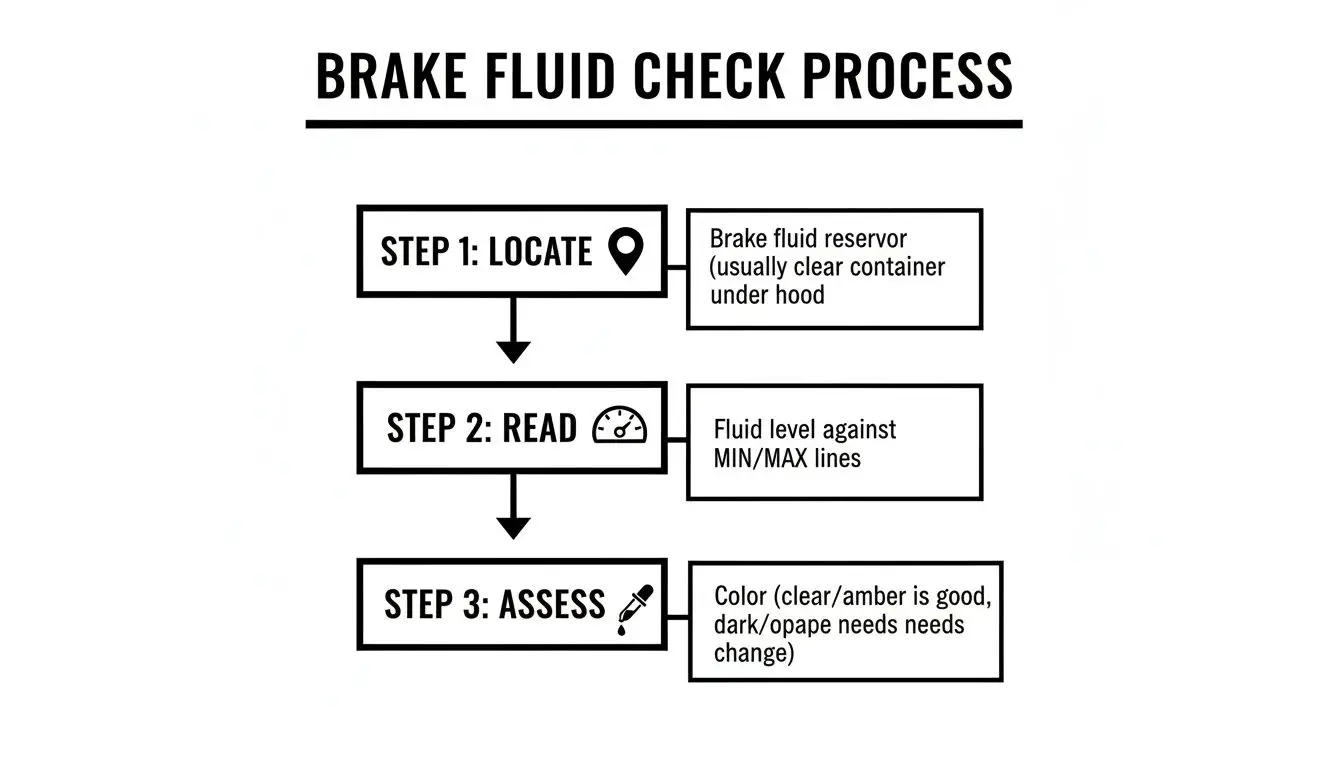
It’s clear that brake service is best left to professionals who understand the nuances. Here at Express Lube & Car Care in Haltom City, our technicians do more than just top off your fluid. We make sure your vehicle gets the exact type specified by the manufacturer, ensuring your brake system performs precisely as it was designed. That's how you get real peace of mind on the road.
Your Trusted Brake Service Experts in Haltom City
When it comes to your brakes, getting things right is all that matters. While checking your own brake fluid level is a great maintenance habit, discovering that it's low should be seen as a serious warning sign.
Think of low fluid as a symptom, not the actual problem. Simply topping it off is like putting a bandage on a wound that needs stitches—it hides the real issue and gives you a false sense of security. The root cause could be anything from worn-down brake pads to a dangerous leak in a brake line, both of which put your stopping power at risk. That's why drivers throughout Haltom City rely on the certified technicians here at Express Lube & Car Care.
Why a Professional Diagnosis Is Non-Negotiable
Our job isn't just to add more fluid; it's to find out exactly why you lost it in the first place. We dig deep to uncover the real problem, giving you an honest diagnosis and a solution that lasts. It’s this commitment to finding the "why" that separates a quick, temporary patch from a repair that keeps you safe.
Your safety on Haltom City roads is our absolute priority. We believe in providing clear answers and expert repairs, ensuring that when you drive away, you do so with complete peace of mind.
Our shop, conveniently located at 6211 Denton Hwy in Haltom City, has the right tools and experienced eyes to perform a thorough brake inspection. We'll pinpoint the source of the fluid loss, recommend the correct fix, and get your braking system back into perfect shape. To get a better idea of everything we check, you can read more about what our comprehensive brake service includes right here on our blog.
Don't take any chances with your brakes. Schedule a professional inspection with our Haltom City team today and drive with the confidence that your vehicle is truly safe.
Common Brake Fluid Questions We Hear at the Shop
Even after you get the basics down, you're bound to have some practical questions about your car's brake fluid. We get these all the time from drivers here in Haltom City. Let's walk through the most common ones so you can feel confident about your vehicle's safety.
Can I Just Top Off My Brake Fluid if It Is Low?
That's a definite no. Think of your brake system as a completely sealed loop. If the fluid is low, it means something is wrong—it's not just "using up" fluid like your car uses oil. A low brake fluid level almost always points to one of two problems: your brake pads are worn down to their limits, or you have a leak somewhere in the brake lines.
Just adding more fluid is like putting a piece of tape over your car’s flashing check engine light. You’re ignoring the real issue, which can be incredibly dangerous. The only safe move is to have a professional technician in Haltom City find and fix the root cause before it leads to weak brakes or, even worse, total brake failure.
How Often Should I Change My Brake Fluid?
As a general rule of thumb, most car manufacturers suggest a complete brake fluid flush every two years or about every 30,000 miles. Why so often? Brake fluid is hygroscopic, which is a fancy way of saying it loves to absorb moisture right out of the air.
Over time, this water contamination is a big deal, especially in the Texas heat. It drastically lowers the fluid's boiling point. If the fluid boils under heavy braking, you get a terrifying condition called "brake fade"—the pedal suddenly feels spongy and goes soft, and your stopping power all but disappears. A scheduled flush is your best defense against this.
Our technicians at the Haltom City shop can quickly test your fluid's moisture content and let you know if you’re due for service.
Is It Bad if My Brake Fluid Looks Dark?
Yes, that’s a sure sign of trouble. Fresh, healthy brake fluid is nearly clear with a slight amber or yellowish tint. If you check the reservoir and see fluid that looks dark, murky, brown, or even black, it’s telling you it’s old and contaminated.
That dark color is a nasty mix of absorbed moisture, microscopic rust particles from inside the lines, and bits of deteriorating rubber from old hoses. This sludge can't handle heat properly and can cause expensive damage to precision parts, like your ABS module. If your fluid is dark, it's well past time for a professional brake fluid flush here in Haltom City.
What Is a Brake Fluid Flush?
A brake fluid flush isn't just a top-off or a partial drain. It's a comprehensive service where we remove 100% of the old, contaminated fluid from your entire braking system—that includes the master cylinder, all the brake lines running to each wheel, and the brake calipers.
After purging all the old gunk, the system is filled with brand-new, high-quality fluid that meets your vehicle’s exact requirements. This is far more thorough than simply "bleeding the brakes," a procedure that's mainly done to remove air bubbles from the lines, not to replace the fluid itself.
When you need straight answers you can trust about your car's brakes, come see the experts at Express Lube and Car Care. For a comprehensive brake inspection or any other auto service, you can schedule an appointment with us online or just stop by our shop in Haltom City.