
Thinking about cleaning your engine? Most people see it as a purely cosmetic job, something you do to make your car look good before a sale. But from my experience serving drivers in the Haltom City area, it's one of the most critical—and overlooked—maintenance tasks you can perform. It’s about way more than just appearances; it's about spotting problems early, improving performance, and protecting your investment right here in our community.
Why You Should Clean Your Engine in Haltom City
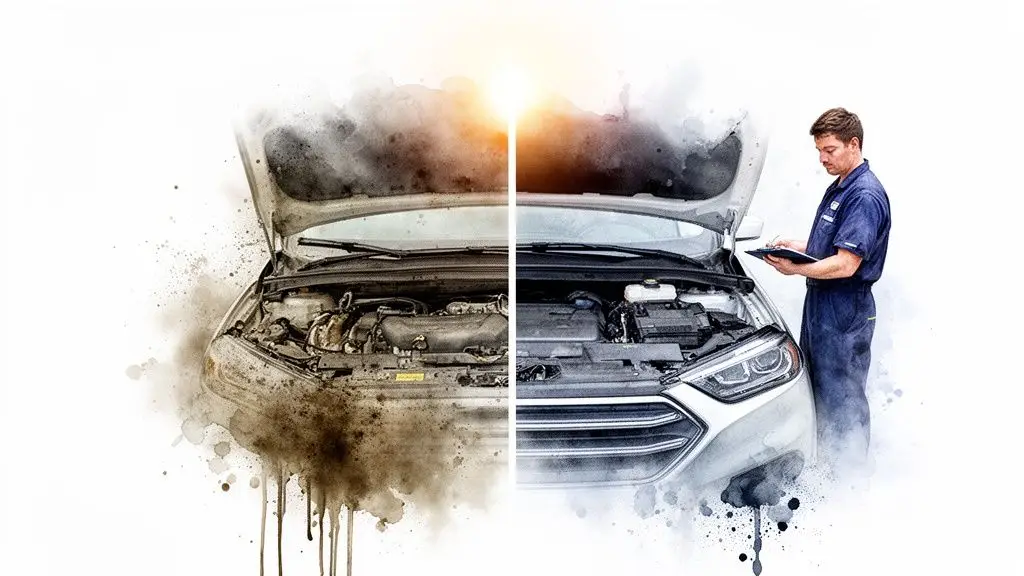
If you're a driver in Haltom City, pop the hood and take a look. Chances are, you’ll see a thick layer of dust, caked-on oil, and general road grime. It’s easy to write this off as normal, but that buildup is a silent killer, especially under the relentless Texas sun that we all know so well.
Think of all that gunk as a thick winter blanket wrapped around your engine. It traps an incredible amount of heat, forcing your cooling system to work overtime just to keep up. On a scorching Haltom City summer day, that extra heat dramatically increases the risk of overheating and can accelerate the breakdown of vital belts and hoses.
Spot Problems Early and Save a Fortune
Here’s where a clean engine really pays off for a Haltom City driver: it becomes your best tool for preventative maintenance. When all that grime is gone, you can immediately spot issues that would otherwise be completely hidden from view.
- Fluid Leaks: A tiny drip of oil or a small coolant seep stands out like a sore thumb on a clean engine block. On a dirty one? It’s invisible.
- Cracked Hoses: You can easily see if hoses are getting brittle, cracked, or starting to bulge.
- Worn Belts: A quick glance is all it takes to check your serpentine and accessory belts for fraying or cracking.
Catching a minor coolant leak early might cost you just a few dollars for a new hose clamp. Ignoring it because you couldn't see it could lead to a catastrophic overheat and a repair bill that runs into the thousands—a headache no Haltom City resident needs.
This proactive approach is just plain smart car care. The same logic applies to the rest of your vehicle, which is why understanding the benefits of regular vehicle washing is so important for long-term ownership.
Boost Your Fuel Efficiency and Resale Value
Believe it or not, that dirty engine is also costing you money at the gas station. Over time, an engine insulated by grime can see its fuel efficiency drop by as much as 10-20%. The engine has to work harder to stay cool, and that means it burns more fuel. Keeping components clean, especially the radiator, allows for proper heat exchange. If you want to dive deeper into that, we have a whole guide on how to clean radiator fins.
And when it’s time to sell? A sparkling engine bay makes a huge difference. When a potential buyer from Haltom City or a neighboring town opens the hood and sees a clean, well-cared-for engine, it sends a powerful message that the car has been maintained properly. Whether you do it yourself or have our pros at Express Lube & Car Care handle it, cleaning your engine is one of the smartest investments you can make in your vehicle’s health and value.
Assembling Your Engine Cleaning Toolkit
Walking into an auto parts store in Haltom City can feel a bit like sensory overload. The aisles are packed with countless bottles, sprays, and brushes all promising a showroom shine. It’s easy to get overwhelmed and end up with a cart full of things you don't really need.
Let’s cut through the noise. I’m going to walk you through building a simple, effective toolkit. We’re focusing on getting the right gear for the job, not just the most expensive stuff. Having everything ready before you pop the hood makes the entire process smoother and, more importantly, safer.
The Right Cleaner Makes All the Difference
First things first: the cleaner. This is where most people go wrong. Grabbing an all-purpose cleaner might seem like a good idea, but those formulas are often too aggressive for what’s under your hood. They can dry out rubber hoses, fade plastic covers, and even damage the seals on electrical connectors over time.
You need a dedicated engine-specific degreaser. These are formulated to cut through years of baked-on oil and road grime without being so harsh that they harm the sensitive parts. You’ll find plenty of great options, from aerosol foams to liquid concentrates, at any auto shop here in the Haltom City area.
My Two Cents: Always read the label. You're looking for phrases like "safe for plastic and rubber" or "sensor-safe." That's your green light—it tells you the product was designed specifically for the complex environment of an engine bay.
To make it even easier, here’s a quick rundown of what you’ll need to grab.
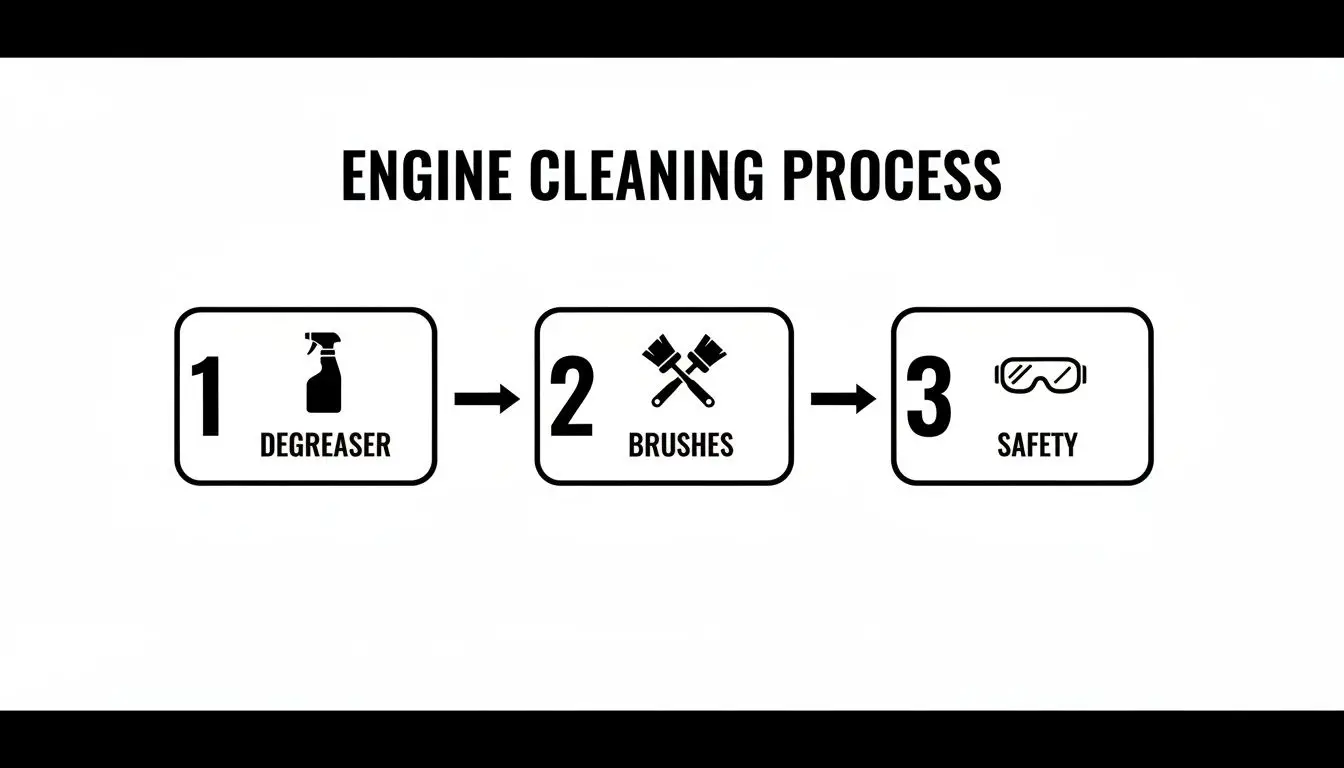
DIY Engine Cleaning Toolkit
| Item | Purpose | Pro Tip |
|---|---|---|
| Engine Degreaser | To break down and dissolve oil, grease, and grime. | Choose a foam-based spray for better cling time on vertical surfaces. |
| Detailing Brushes | For agitating grime in tight spots and on textured surfaces. | Get a set with varied sizes and stiffness. A long-handled wheel brush works great for hard-to-reach areas. |
| Plastic Bags & Tape | To protect sensitive electronics from water and chemicals. | Grocery bags and painter's tape are perfect. The tape won't leave a sticky residue. |
| Safety Goggles | To protect your eyes from chemical splashes. | Choose a pair that wraps around to provide side protection. |
| Chemical-Resistant Gloves | To protect your skin from the degreaser. | Nitrile gloves offer better chemical resistance than standard latex gloves. |
| Water Source | For rinsing away the cleaner and grime. | A garden hose with a gentle spray nozzle is ideal. Avoid high-pressure washers. |
With these items on your workbench, you're pretty much set for the cleaning phase.
A Few More Essentials for a Job Well Done
Once you have your cleaner, you’ll need a few things to do the actual work. Don't worry, you don't need a professional setup.
- Soft-Bristled Brushes: A multi-pack of detailing brushes is your best friend here. Use the bigger ones for large, flat areas like the engine cover, and save the small, toothbrush-sized ones for getting around bolts, hoses, and tight crevices.
- Plastic Bags and Painter's Tape: This is your insurance policy. Before any water or cleaner gets near the engine, you absolutely must cover sensitive electronics. The alternator, air intake/filter, and fuse box are the main culprits. Simple plastic bags secured with tape work perfectly.
- Safety Gear (This is non-negotiable): Seriously, don't skip this. Always wear chemical-resistant gloves and safety goggles. Degreasers are powerful chemicals, and the last thing you want is a chemical burn or an emergency room visit. Protecting yourself is the most important step of all.
Also, keep in mind that the gunk you rinse off your engine has to go somewhere. That runoff contains oil and other chemicals that shouldn't just flow into the storm drains here in Haltom City. For a complete guide on handling the aftermath responsibly, check out our article on how to properly dispose of motor oil.
How to Clean the Engine Bay Safely
Alright, you've got your gear ready. Now for the fun part—actually getting that engine bay looking new again. We'll walk through this step-by-step, covering how to prep the area, clean it without causing issues, and finish the job like a pro. Don't worry, this isn't as intimidating as it looks. Let's get that hood popped.
Prepare the Engine Bay for Cleaning
This is the most critical step, and skipping it is the number one mistake I see people make in their Haltom City garages. Just spraying cleaner everywhere is a fast track to electrical headaches you really don't want. Before a single drop of water hits your engine, you have to protect the sensitive parts.
Grab your plastic bags and painter's tape. It's time to wrap up the electronics. Be thorough here and make sure you get a good seal on these key components:
- Alternator: This is a big one. It's usually easy to spot and very susceptible to water damage.
- Air Intake: You absolutely cannot let water get in here, whether you have a stock airbox or an aftermarket open filter. Water in the engine itself is a catastrophic failure waiting to happen.
- Fuse Box: Cover the main fuse box lid and any other electrical hubs you see.
- ECU (Engine Control Unit): On some cars, the main computer is right there in the engine bay. If you see it, make sure it’s completely covered.
Once everything is securely wrapped, take a moment to clear out the big stuff. A quick pass with a shop vac, compressed air, or even just a stiff brush will get rid of loose leaves, cobwebs, and caked-on dirt. This lets the degreaser focus on the real grime.
Apply Degreaser and Let It Work
Now we can get to cleaning. One crucial rule: always work on a cool engine. If the engine is hot, the cleaner will flash-dry on contact, leaving a chalky, splotchy mess that's a pain to remove. You could also burn yourself.
Start spraying the degreaser from the bottom of the engine bay and work your way up. This little trick prevents the cleaner from running down and creating streaks on the dry, dirty surfaces below. Be generous, especially on the really greasy spots like the valve cover or engine block.
Let the degreaser sit and do its job for the time recommended on the bottle, which is usually around 3-5 minutes. This is where the magic happens. You need to give the chemicals time to dissolve that baked-on gunk, but don't let the product dry completely.
Gently Agitate and Rinse the Grime Away
After letting the degreaser soak, it's time to put in a little elbow grease. Grab your assortment of brushes and start scrubbing the surfaces you sprayed. This physical agitation is what actually lifts and removes the grime that the chemicals loosened up. Use your smaller detail brushes to get into all the nooks and crannies around hoses and brackets. If you're dealing with a particularly stubborn oil leak stain, our guide on how to clean oil off an engine has some extra pointers.
With everything scrubbed, it's time to rinse. And I can't stress this enough: do not use a high-pressure washer. The force is too much and can easily push water past your protective coverings and into electrical connectors, causing all sorts of problems. A simple garden hose with a shower-type spray nozzle is all you need.
Rinse from the top down, letting gravity help you wash all the soap and grime away. Be methodical—you don't want any degreaser residue left behind. Once you're satisfied, carefully remove the plastic bags and tape. Use a leaf blower, compressed air, or a few microfiber towels to get rid of any pooling water, paying close attention to spark plug wells and electrical areas. A final wipe of the plastic trim pieces will leave your engine looking sharp.
What to Do If Something Goes Wrong
Alright, you’ve done the work, the engine bay looks brand new, and you turn the key. But instead of a satisfying roar, you get a sputter, a hesitation, or… nothing.
Don't panic. This is almost always caused by one simple culprit: a bit of moisture that found its way into the wrong spot. Nine times out of ten, water has settled into the spark plug wells, shorting out the connection and causing a misfire or a no-start. Thankfully, the fix is usually pretty simple.
Drying Out Your Engine
First things first, disconnect the battery again to be safe. Now, you'll need to get to the source of the problem. Carefully remove the ignition coils or spark plug wires covering the spark plugs.
Grab a can of compressed air or even a leaf blower and gently blow out any water you see in the spark plug wells. Pay attention to other electrical connectors, too. A few clean microfiber towels are perfect for blotting up any remaining puddles of water.
Patience is key here. Let the engine bay air-dry for at least an hour, and honestly, longer is better. If you're in Haltom City, that Texas heat is your best friend—it will do most of the work for you, evaporating any lingering dampness. Once you’re confident it’s all dry, put everything back together, reconnect the battery, and try starting it again. It should fire right up.
Dealing With Stubborn Grime and Mishaps
So what happens when you find a patch of ancient, baked-on grease that just refuses to budge? I see this all the time on older vehicles or engines with slow oil leaks here in Haltom City. Whatever you do, don't reach for a metal scraper. You'll end up gouging the soft aluminum engine parts.
Instead, hit that stubborn spot with another direct spray of your degreaser and let it soak for a few extra minutes. Get in there with a stiff nylon brush and really work it in. Sometimes, a second or even third pass is all it takes to finally break down years of caked-on gunk.
What if you accidentally spray the alternator or another part you meant to keep dry? Don't sweat it. Just grab a towel and blot the area immediately. A quick blast of compressed air will clear out any crevices. The goal is just to get the moisture out before it can settle in and cause a problem.
Keeping your engine clean is more than just about looks; it's smart preventative maintenance. A clean engine runs cooler, which is a huge deal. Engine overheating is a problem that affects a staggering 40% of vehicles with over 100,000 miles. In a hot climate like ours in Haltom City, built-up sludge and grime can trap heat, causing temperatures to spike and leading to expensive damage. In fact, data shows that routine degreasing reduces overheating incidents by up to 35%.
If you’ve tried these steps and the car still won’t start, or if you run into any other issue that makes you feel uneasy, it's time to call a professional. It's one thing to troubleshoot a simple moisture issue, but it's never worth risking serious damage to your vehicle. The team at Express Lube & Car Care has the right diagnostic tools and experience to figure it out quickly and safely, getting you back on the road in Haltom City.
Knowing When to Call a Haltom City Pro

There's a real sense of pride in a good DIY job. I get it. But when it comes to your car's engine, knowing when to put down the tools and call in a professional is a skill in itself. Sometimes, it’s the smartest—and cheapest—move you can make.
Not every engine bay is a candidate for a weekend wash. Certain cars and situations are just too risky, and a simple mistake can lead to some seriously expensive and permanent damage. If you're in the Haltom City area, it’s worth knowing which vehicles require an expert's touch.
High-Risk Scenarios for DIY Cleaning
Some cars have complex systems or aging parts that just don't play well with an amateur cleaning. Here are a few times when you should seriously consider letting a Haltom City pro handle it:
- Classic and Vintage Cars: That beautiful 1969 Camaro has wiring that's worlds away from a modern car's. It's often brittle, and the insulation can easily be damaged, causing shorts or other headaches you just don't need.
- Luxury and European Vehicles: High-end cars from makers like BMW, Mercedes, and Audi are loaded with sensitive electronics. Their engine bays are a maze of control units (ECUs), sensors, and wiring harnesses that are notoriously unforgiving of moisture.
- High-Mileage Daily Drivers: On an engine with over 150,000 miles, things get brittle. Plastic connectors can snap, and rubber hoses can crack with the slightest pressure, leading to frustrating vacuum leaks or coolant drips.
When you're trying to decide, it helps to understand what professional auto detailing services really offer. It's much more than just a quick spray-down.
The Express Lube & Car Care Advantage
Bringing your car to a shop like Express Lube & Car Care in Haltom City is about more than just a cosmetic clean. Think of it as a check-up. Our certified technicians have seen it all and know exactly how to protect sensitive components while getting rid of tough grime.
We have the right tools for the job—specialized, low-pressure equipment and professional-grade, pH-neutral cleaners that are safe for your car's vital parts. More importantly, we can spot problems you might miss, like a tiny crack in a manifold or the first signs of a valve cover gasket leak.
A professional service is an investment in peace of mind. Our Haltom City technicians see hundreds of engines and can recognize the subtle signs of wear and tear that a DIYer might overlook.
The stakes are higher than you might think. Did you know that dirty engines contribute to 30% of premature failures in modern cars? All that carbon buildup can also rob your engine of up to 10% of its horsepower. With cars lasting longer than ever, that grime just accelerates wear and tear.
For drivers in Haltom City, Keller, and Watauga, our shop at 6211 Denton Hwy is your worry-free option. We'll get the job done right, leaving you with an engine that's not just spotless but also professionally inspected. If you're curious about more in-depth engine care, you can also learn more about what an engine flush involves on our blog.
Answering Your Top Engine Cleaning Questions
We've covered the how-to, but there are always a few lingering questions. Here are some of the most common ones we get from folks around Haltom City who want to get it right.
So, How Often Should I Really Clean My Engine?
For most cars cruising around Haltom City and North Richland Hills, a good engine cleaning once or twice a year is a solid benchmark. If you’re constantly dealing with dusty construction zones or see a lot of grime building up when you check your oil, you might want to step up that frequency.
A great bit of preventative maintenance is to give it a good cleaning right before the Texas summer heat really kicks in. This simple job can make a real difference in how efficiently your engine cools itself when the asphalt is sizzling. For newer cars that live a more pampered life, a light cleaning every 1-2 years is usually plenty to keep things tidy and make spotting any issues a breeze.
Is It Safe to Spray Down a Hybrid or EV Engine Bay?
This is where you need to hit the brakes. The engine bays in hybrid and electric vehicles are a different world, packed with high-voltage orange cables, sensitive control modules, and complex electronics that do not play well with water.
We can't stress this enough: never use a pressure washer, water hose, or any liquid degreaser on a hybrid or EV yourself. The risk of causing thousands of dollars in damage to these specialized components is incredibly high. This is a job best left to trained, certified technicians.
Our team at Express Lube & Car Care in Haltom City knows exactly how to handle these advanced systems safely. While you can gently wipe down the plastic covers with a damp cloth, anything more involved requires professional tools and expertise.
Does a Clean Engine Actually Improve Performance?
It absolutely does, though not in the way you might think. You won't suddenly feel a surge of horsepower, but the benefits are all about improving long-term health, efficiency, and reliability. A clean engine simply runs cooler.
When that thick blanket of dirt and oil is gone, the engine's computer gets more accurate readings from its sensors, allowing it to fine-tune performance and fuel consumption. It’s a bit like taking off a heavy winter coat before a run. Plus, a clean engine bay is the best diagnostic tool you can have—it makes it incredibly easy to spot a small oil drip or coolant seep before it becomes a major roadside problem in Watauga or Keller.
For a professional engine cleaning that guarantees safety and delivers a like-new finish, trust the experts. Express Lube and Car Care is ready to help you keep your vehicle in prime condition. Swing by our Haltom City shop or book your appointment online today.