

It’s a familiar, sinking feeling for any driver: walking out to your car and spotting a mysterious brown puddle on the pavement underneath. If you're in Haltom City and see this, your first thought might be to panic. But don't. Nine times out of ten, that brown spot points to one of three common culprits: old engine oil, aging transmission fluid, or rusty coolant.
Let's break down what that puddle is trying to tell you and what to do next.
What That Brown Puddle Under Your Car Really Means
Finding a brown fluid leak feels like your car is trying to send you a warning, but the message isn't always clear. Is it a big deal? Is my car safe to drive? The color, consistency, and even the smell of the fluid are all clues that can help you figure out what's going on under the hood.
Ignoring a leak, especially a brown one, is never a good idea. It's a clear sign that something needs your attention. It might be a simple gasket that needs replacing, or it could be an early warning of a more serious problem down the road.
The Main Suspects in a Brown Leak
When you see a brownish stain, it’s usually because a vital fluid has either gotten old and dirty or has become contaminated. Each one has a very different job, which means each one signals a different kind of problem.
- Engine Oil: This is the most common cause. Fresh engine oil starts as a light amber or honey color. Its job is to lubricate your engine's moving parts, and as it does, it picks up dirt, grime, and tiny particles. Over time, it naturally darkens to a deep brown or even black.
- Transmission Fluid: In most cars, new transmission fluid is bright and translucent red. It can turn a dark, burnt-looking brown as it ages and breaks down from heat and wear. A leak here is serious, as it can quickly affect your car's ability to shift gears smoothly.
- Rusty Coolant: Coolant, or antifreeze, should be a vibrant color like green, pink, or orange. If it looks like rusty brown water, you have a problem. This means rust and corrosion are building up inside your radiator or cooling system, which can easily lead to engine overheating.
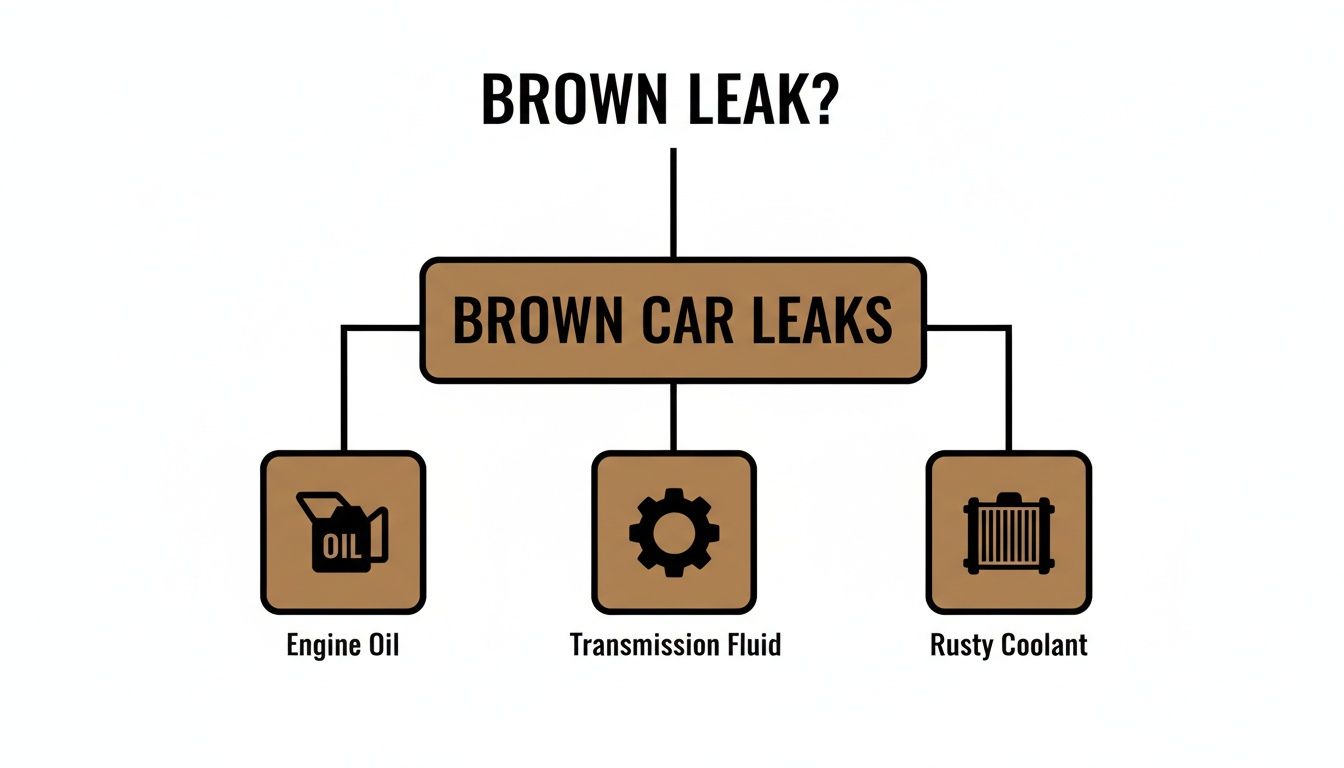
As you can see, a brown leak is a definite signal that a critical system—your engine, transmission, or cooling system—needs to be checked out. While an oil leak is common, a brown transmission fluid leak is particularly worrying because of the potential for expensive damage.
In fact, transmission problems are a surprisingly frequent headache for car owners, and here in Haltom City, we see our fair share.
Statistics from repair shops show that transmission leaks are behind 22% of all fluid-related complaints. These issues lead to over 7 million repair cases annually, costing American drivers a staggering $2.5 billion in fixes.
That number really drives home how a small leak can point to a widespread—and potentially costly—problem if it's not addressed quickly. You can dig into more data on the automotive repair market to see just how common these issues are.
The Prime Suspect: Explaining Engine Oil Leaks
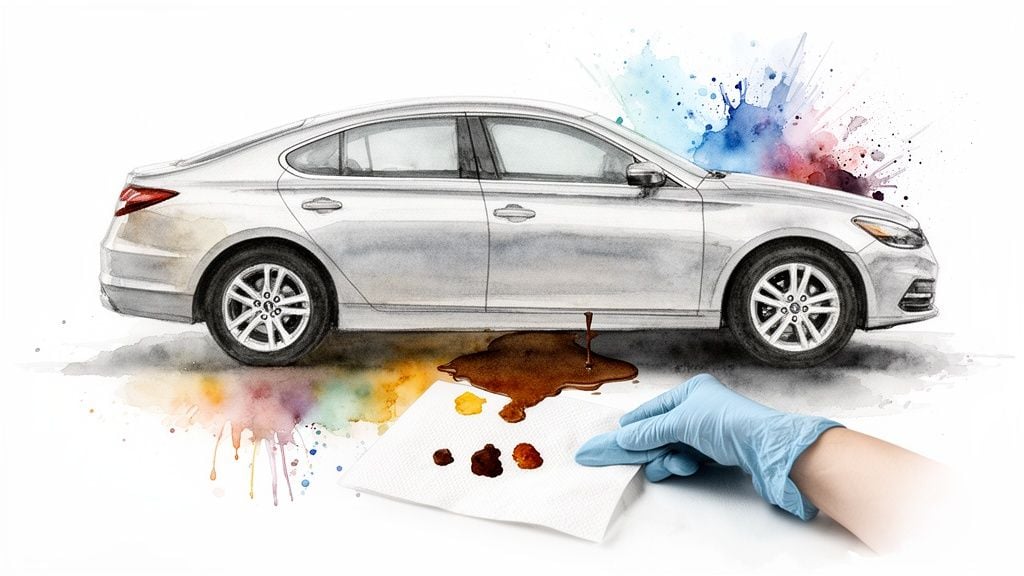
When you spot a dark brown or black puddle forming under your car, your first thought should be engine oil. It’s the most common culprit behind a brown fluid leaking from car, and knowing why it happens is the first step to figuring out what to do next.
Fresh, clean engine oil is a translucent, honey-amber color. Its job is to circulate through the engine, keeping all the moving parts lubricated while pulling away heat. As it does its work over thousands of miles, it also traps soot, dirt, and microscopic metal shavings from normal engine wear. This is what causes the oil to gradually darken to brown and, eventually, black.
If you see that dark fluid on your driveway in Haltom City, it's a sure sign that the oil has done its job but is now escaping.
Common Causes of Engine Oil Leaks
Your engine has a whole system of seals and gaskets designed to keep the oil contained. Over time, these parts can simply wear out. The intense heat of a Haltom City summer, for example, can make rubber and cork gaskets turn brittle and crack, which is all it takes for a drip to start.
Some of the usual suspects include:
- A Failing Oil Pan Gasket: This seal sits between the engine block and the oil pan at the very bottom of your engine. When it degrades, oil can easily seep out.
- Worn Valve Cover Gaskets: Found at the top of the engine, these gaskets can get brittle and crack, causing oil to leak down the side of the engine block.
- A Loose or Damaged Oil Filter: If the filter wasn't tightened correctly during your last oil change, or if its own seal is faulty, it can become a source of a pretty significant leak.
A small drip of brown fluid might not seem like a big deal, but it’s often a warning that your engine’s seals are breaking down. This is especially true in hot climates like ours in Texas, where summer temperatures can climb past 100°F. Under that kind of stress, automotive seals can degrade 30% faster. This leads to leaks in an estimated 1 out of every 50 cars with over 100,000 miles on the clock. If you ignore it, the problem can escalate into major engine damage, with repair bills ranging from $4,000 to $7,000.
What You Can Do
A quick check can tell you a lot. Your car's dipstick isn't just for checking the oil level; it's a window into your engine's health. Pull it out and take a look at the oil's color. If it's dark brown or black, that's a sign it's been working hard and is probably due for a change.
Key Takeaway: A consistent brown fluid leaking from car is a clear signal that your vehicle needs attention. Routine oil changes are your best defense, as fresh oil contains additives that help keep seals conditioned, preventing them from drying out and failing.
Regular maintenance isn't just another chore—it’s the single most effective way to head off expensive, and preventable, damage. For a deeper dive into the specific causes and repair options, take a look at our complete guide on understanding and addressing engine oil leaks.
When to Suspect Your Transmission or Steering System
So, you've ruled out engine oil, but there's still a dark puddle spreading on your driveway. What now? Your investigation should point toward two other crucial systems: the transmission and the power steering. Both rely on special hydraulic fluids that break down over time, and a leak in either one can cause that puzzling brown fluid leaking from car that every Haltom City driver dreads.
Think of transmission fluid as the lifeblood that allows your car to shift gears smoothly. Fresh out of the bottle, it's almost always a bright, translucent red. But after thousands of miles of intense heat and pressure, it starts to wear out. The fluid darkens as it picks up tiny bits of metal and clutch material, eventually turning into a murky, burnt brown liquid.
Identifying a Transmission Fluid Leak
A transmission leak is rarely just a puddle; it’s a problem you can usually feel from the driver's seat. If your car suddenly hesitates, seems to struggle when shifting, or jerks between gears, low or old fluid is a likely culprit.
Your nose is another great diagnostic tool here. Healthy transmission fluid has a unique, slightly sweet smell. But if the fluid on your driveway has a harsh, burnt toast-like odor, that’s a dead giveaway. It means the fluid has been overheating, which often points to a serious internal issue.
Expert Insight: Transmission problems are some of the most misunderstood—and feared—issues in auto repair. To get a better handle on what might be happening inside, you can find great information on why transmissions fail.
Just topping off the fluid won’t solve the problem. Continuing to drive with low or burnt fluid is a recipe for disaster, potentially leading to a complete transmission failure—a repair that can run into thousands of dollars. If you're spotting these symptoms, our guide on what causes transmission fluid leaks and how to fix them provides more detail.
What About Power Steering Fluid
Your car's power steering system also contains a hydraulic fluid that can be the source of a brown fluid leaking from car. While many power steering fluids are red or pink when new, some are clear or amber. Over time, all of them can darken to brown as they get old and contaminated.
The signs of a power steering leak are pretty distinct:
- A whining or groaning sound that gets louder when you turn the steering wheel.
- The steering wheel suddenly feels stiff or heavy, requiring much more effort.
- The leak is usually located toward the front of the car, near the engine's belts and pulleys.
Here’s a non-negotiable rule: you must use the correct fluid for both your transmission and power steering. The wrong type can cause serious, expensive damage. When you bring your vehicle to a trusted Haltom City shop like Express Lube & Car Care, our technicians know precisely which fluid your make and model needs, so you can be confident the job is done right.
Could Brown Fluid Indicate a Cooling System Failure?
Most drivers know to look for dark brown oil or reddish transmission fluid leaks. But what if the puddle under your car is thin, watery, and brown? While less common, this is a serious red flag pointing directly to a problem with your cooling system—one that puts your engine in immediate danger, especially during a brutal Haltom City summer.
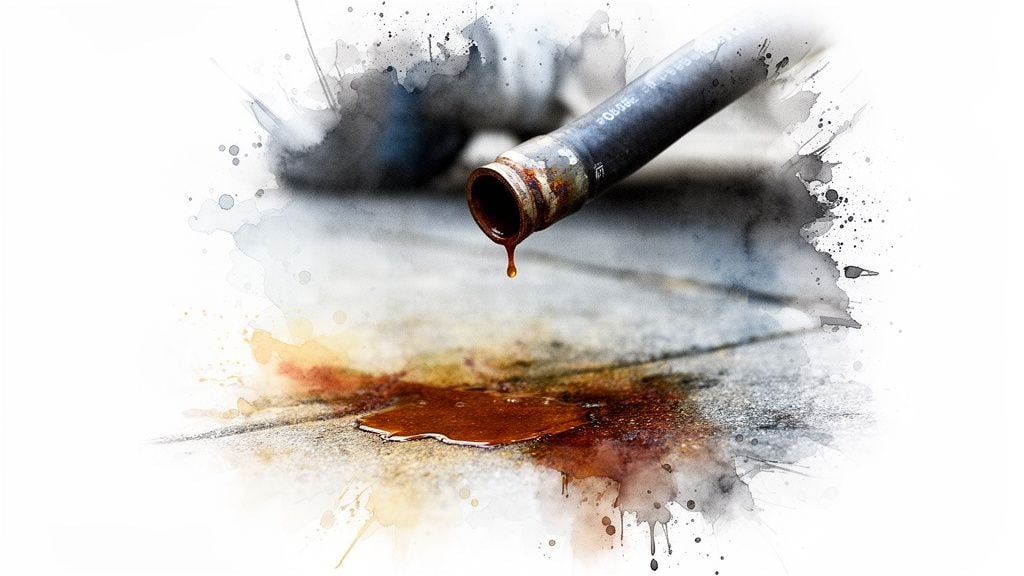
Fresh coolant, or antifreeze, is usually a vibrant color like green, pink, or orange. If you’re seeing a leak that looks more like rusty water, it means the coolant has gone bad. The protective additives have completely worn out, and your cooling system is starting to rust from the inside.
Why Your Coolant Has Turned Brown
Think of your cooling system like your car’s circulatory system. The coolant is the lifeblood that keeps the engine's temperature in check. When that coolant gets old, it loses its ability to fight off corrosion. Rust then starts to form inside the radiator, water pump, and engine block.
This rust flakes off and mixes with the fluid, creating a gritty, brown sludge. This contaminated mixture is what you’re seeing leak out. At this point, the fluid can’t do its job anymore. It’s no longer protecting your engine; it's actively harming it.
This isn't just a cosmetic issue. Coolant leaks are behind 18% of all summer breakdowns, and recent data shows over 1.2 million cases in the U.S. in a single year, with repair bills averaging $1,500. During an intense Texas heat wave, those engine failure rates can spike by as much as 35%. You can discover more insights about leak detection trends and their impact.
The Dangers of Ignoring Rusty Coolant
Seeing a brown fluid leaking from car that you've identified as rusty coolant is a direct warning of potential engine failure. This isn’t a "wait and see" kind of problem.
A rust-colored coolant leak, whether from a bad hose or a failing water pump, is your engine's cry for help. Ignoring it can quickly escalate from a manageable repair to catastrophic engine overheating and a full engine replacement.
Driving with a compromised cooling system is a huge gamble. That rusty, sludgy fluid will eventually clog the small, delicate passages inside your radiator and heater core, causing your engine to overheat very quickly. For more tips on pinpointing the problem's source, you can check out our guide on how to find a coolant leak.
If you spot this kind of leak, the safest move is to stop driving immediately and call a trusted Haltom City mechanic for service.
Your Immediate Action Plan for a Brown Fluid Leak
That sinking feeling when you spot a dark puddle under your car is all too familiar. But don't panic. Instead of guessing what's wrong, you can take a few simple steps right away to figure out what you're dealing with. Here’s what to do the moment you notice a brown fluid leaking from car.
Your first move is to play detective. Grab a clean white paper towel or a spare piece of cardboard and slide it right under the drip. This is a classic mechanic's trick. It gets the fluid off the dark, dirty pavement so you can see its true color and feel its texture. Is it a dark, slick brown, or is it closer to a watery, rusty color? That single clue tells you a lot.
With your car parked on level ground and the engine completely cool, it's time for a couple of quick under-the-hood checks. Your owner's manual will show you exactly where to look.
Checking Fluid Levels Safely
Safety first, always. Never check fluids when the engine is hot. Once it's cool, follow your manual’s guide to locate and check the dipsticks for your engine oil and transmission fluid. Pulling them out will tell you if a fluid is dangerously low, which is a dead giveaway for the source of your leak.
Pay close attention to what the fluid on the dipstick looks and smells like. If your engine oil is dark brown or black, that's a strong sign. If you check your transmission fluid and it smells burnt, that’s a major red flag that needs immediate attention. If you're ever unsure about what you're seeing, it's always smarter to call a pro. You can learn more from our experts on how to properly diagnose vehicle problems.
To Drive or To Tow: A Critical Decision
Now comes the most important judgment call: how bad is the leak? The size of the puddle and how fast it's growing will determine your next move. It's a decision every Haltom City driver needs to make carefully.
The rule of thumb is simple: if the puddle is growing quickly or you see a steady stream of fluid, the car is not safe to drive. Period. Trying to "make it to the shop" could cause catastrophic engine or transmission failure, putting you and others at risk.
Use this guide to make the right call:
- A Few Drips: If you only see a small spot a few inches across that formed overnight, your car is likely safe enough for a short, direct drive to your mechanic. The key is to call ahead and go straight there.
- A Growing Puddle: If the puddle is visibly getting bigger or you can see a steady drip-drip-drip, do not drive the car. The fluid loss is happening too fast. Your only safe bet is to call for a tow to a professional repair shop.
Why Haltom City Trusts Express Lube and Car Care
So, you’ve done a little sleuthing on your own, but you’re still staring at that mystery puddle and wondering, "Now what?" When you’ve got a brown fluid leaking from car and you’ve gone as far as you can, it’s time to call in a pro you can actually talk to. Here in Haltom City, folks know they can count on the team at Express Lube & Car Care. We get it—seeing any kind of leak is stressful. Our job is to cut through the confusion and give you straight answers and solid repairs.
Your initial look at home gives us a great starting point, but our certified technicians take it from there. We use advanced diagnostic tools to go beyond just spotting the drip and find its exact origin. It’s not enough to just patch the leak; we need to figure out why it happened so it doesn’t happen again.
The Express Lube and Car Care Difference
Guesswork has no place in a good auto shop. To track down those really sneaky, hard-to-find leaks, we have a few trusted methods that let us see what the naked eye can't. This precision means we fix the right thing the first time, which saves you both headaches and money down the road.
Here’s how we pinpoint the problem:
- UV Dye Testing: We add a special fluorescent dye to the system that’s leaking. Then, using a UV light, we can see the fluid’s entire escape route. Even the tiniest pinhole or crack will glow brightly, leading us directly to the source.
- Pressure Testing: This is our go-to for the cooling system. We’ll carefully pressurize the radiator and hoses. If there's a weak spot—a worn-out gasket, a cracked hose, or a failing seal—the pressure will force a little fluid out, making the problem impossible to miss.
Once we’ve found the culprit, we’ll show you exactly what’s going on. We believe you should see the problem for yourself. We'll walk you through the repair needed, whether it’s a simple fix or something more involved, and give you a clear, upfront estimate. There are no surprises here. Part of that trust also comes from knowing your vehicle is protected while it's with us; a reliable shop will always have a comprehensive dealership insurance plan in place.
We only use high-quality parts that meet or beat the original manufacturer's standards. A good repair should last, and that's why we don't cut corners on quality. It's about protecting your car and your peace of mind.
You can find us right here in the community at 6211 Denton Hwy. The whole team at Express Lube & Car Care takes pride in serving our Haltom City neighbors with honest work. Don't let a small leak spiral into a major repair bill—stop by and let our experts get you safely back on the road.
Your Top Questions About Car Leaks Answered
When you spot that dreaded brown fluid leaking from car, your mind probably starts racing with questions. We get it. Here in Haltom City, we've heard them all, from concerns about safety to worries about the repair bill. Let's clear things up with some straightforward answers.
How Much Does Fixing a Brown Oil Leak Cost in Haltom City?
This is often the first thing people ask, and the honest answer is: it really depends. The final cost is tied directly to the source of the leak.
Something simple, like a worn-out drain plug gasket that gets swapped during an oil change, might run you less than $100. But if the culprit is a failing rear main seal, the price can climb into the hundreds or even over a thousand dollars. That’s not because the part is expensive, but because the engine or transmission often has to be removed to get to it.
Here at Express Lube & Car Care, we don't believe in surprises. We'll always perform a complete diagnosis first and give you a clear, detailed estimate. You'll know exactly what to expect before we ever pick up a wrench.
Is It Safe to Drive with a Brown Fluid Leak?
This is a big one. A tiny, slow drip of engine oil might not feel like a five-alarm fire, but you shouldn't ignore it. That small leak is a warning sign. If you let it go, you risk the oil level dropping too low, which can lead to catastrophic engine damage.
Brake fluid can also turn brown as it gets old, and a leak in your brake system is a massive safety hazard.
If you see a large puddle forming quickly or notice fluid actively streaming from under your car, do not drive the vehicle. Your safety is worth more than any destination. It's time to call a professional.
Do Regular Oil Changes Help Prevent Brown Leaks?
Absolutely. In fact, sticking to your car's recommended oil change schedule is the single best thing you can do to prevent most common leaks.
Think of it this way: fresh oil is packed with conditioners that keep your engine's many seals and gaskets pliable and healthy. As oil ages, it breaks down, loses those conditioners, and becomes abrasive. It lets seals dry out, get brittle, and crack—and that’s precisely when leaks start.
Regular maintenance at a trusted Haltom City shop is your best defense for keeping your engine healthy and avoiding that unwelcome surprise of a brown fluid leaking from car.
Dealing with a car leak can be a headache, but you don't have to diagnose it on your own. The certified technicians at Express Lube and Car Care are ready to pinpoint the problem and get it fixed right. Schedule your diagnostic appointment today and let us get you back on the road with confidence.