
The check engine light usually shows up at the worst time. You are headed to work, trying to pick up the kids, or getting ready for a job across DFW, and suddenly the dash lights up or the car starts making a noise it definitely did not make yesterday.
That moment puts most drivers in the same place. You want a straight answer. Is it safe to keep driving? Is this something small, or the start of a bigger repair? And if you need help, which shop in Haltom City will explain the problem instead of talking around it?
For local drivers, good haltom city auto repair is not just about fixing cars. It is about keeping daily life moving. For business owners, it is about keeping work vehicles on the road instead of parked behind the shop.
Your Guide to Trusted Haltom City Auto Repair
A lot of repair decisions begin with uncertainty. A sedan starts running rough at a stoplight. A work van smells hot after a long afternoon route. A pickup develops a brake squeal on the way home from North Richland Hills. The car still moves, so many people wait. Sometimes that works out. Often it turns a manageable repair into a more expensive one.

That is why having a dependable local shop matters before a breakdown happens. In this part of Tarrant County, many residents rely heavily on their vehicles. Haltom City has over 45,000 residents, and Texas vehicle miles traveled top 290 billion annually, which helps explain why reliable service and low downtime matter so much for local drivers and families according to this Haltom City service area page.
What a trusted repair relationship looks like
A good repair experience is usually not flashy. It is simple.
- You describe the symptom clearly. Maybe it pulls while braking, stalls at idle, or leaves fluid on the driveway.
- The shop confirms the cause before replacing parts. Guessing gets expensive fast.
- You get an estimate you can understand. Labor, parts, and urgency should all make sense.
- The repair matches the problem. No upsell parade. No mystery charges.
Drivers around Haltom City, Watauga, and North Richland Hills usually want the same thing. They want somebody to tell them what is urgent, what can wait a little, and what maintenance will prevent repeat visits.
Why local context matters
A neighborhood shop sees patterns that matter. Short trips are hard on batteries. Summer heat exposes weak cooling systems. Stop and go traffic eats through brakes faster than many people expect. Work trucks and delivery vehicles rack up wear differently than a commuter car used a few days a week.
A warning light does not always mean a catastrophic failure. It does mean the car is asking for attention now, while the problem is still easier to isolate.
A practical haltom city auto repair guide should help both groups. Daily drivers need plain-English advice on maintenance, warning signs, and repair choices. Fleet managers need a process that keeps vehicles available, documented, and predictable.
That is where smart diagnosis, routine service, and a repair plan all come together.
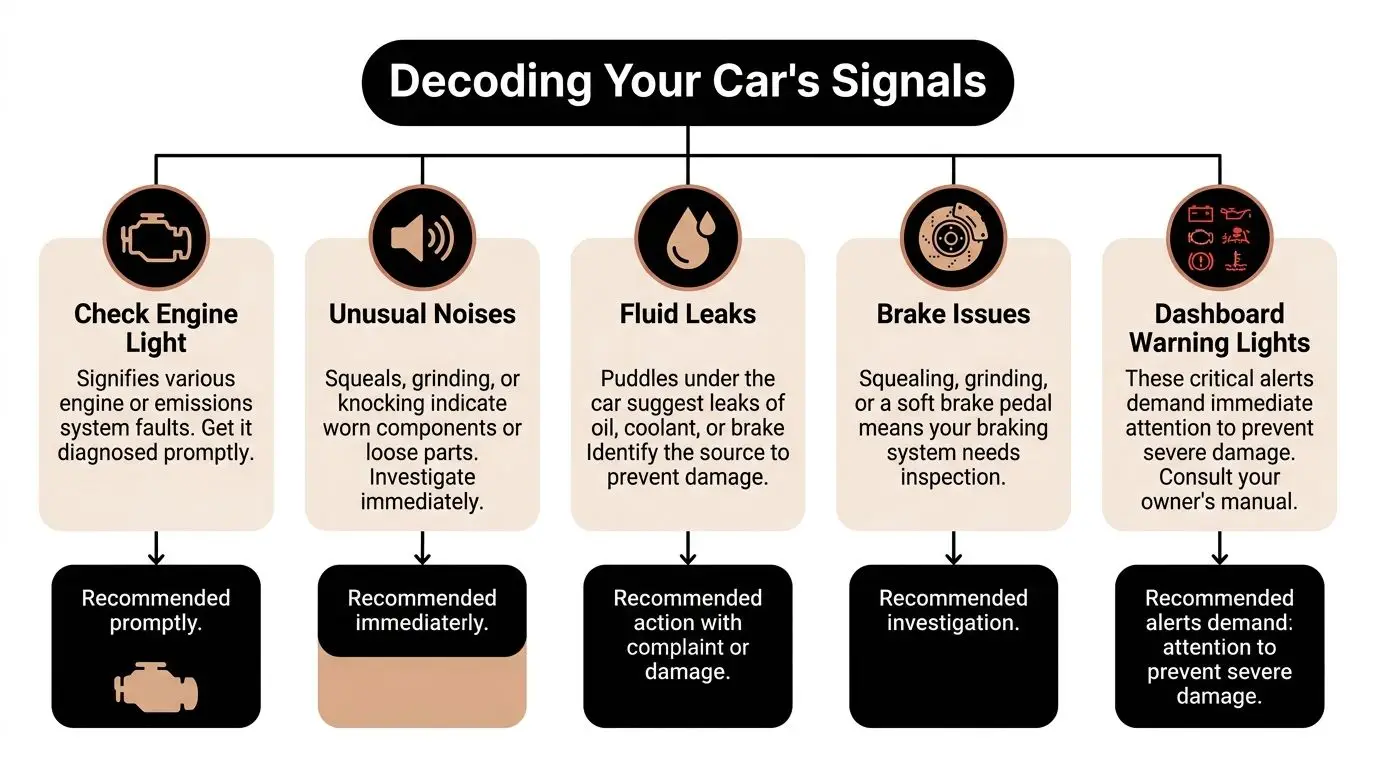
Decoding Your Car’s Signals Common Maintenance and Repairs
Cars usually give notice before they fail completely. The trick is knowing which signals are warnings, which are urgent, and which ones point to a system that has been slowly wearing down for a while.
When the car talks, listen to the pattern
An oil change is a lot like keeping clean water in your body. Oil carries heat away from moving parts, suspends contaminants, and helps metal parts avoid grinding directly against each other. Old oil loses effectiveness. Skip enough changes and the engine starts paying for it.
Brakes work more like a chain of command. Your foot presses the pedal, hydraulic pressure moves through fluid, and that force tells the brake hardware at each wheel to clamp down. If the pedal feels soft, goes too low, or the brakes squeal or grind, the issue might be pads, rotors, fluid condition, or another braking component. The important point is simple. Brakes do not improve on their own.
Cooling system problems are another common example. If the gauge climbs, coolant may not be circulating properly, a leak may be developing, or the radiator may not be doing its job. Heat is one of the fastest ways to turn a modest repair into engine damage.
Common signals and what they often mean
- Check engine light: This light can point to emissions faults, sensor problems, drivability issues, or a deeper engine concern. The light itself is not a diagnosis.
- Squealing or grinding: Brake wear is common, but belts, pulleys, and bearings can also make noise. Sound matters, but timing matters too. Only at startup is different from all the time.
- Fluid under the car: Engine oil, coolant, brake fluid, and other fluids each tell a different story. Color, smell, and location help narrow it down.
- Rough idle or hesitation: Think fuel delivery, ignition, sensor input, or air flow problems.
- Steering shake or pull: This can mean alignment issues, suspension wear, tire problems, or brake-related vibration.
What works and what does not
What works is documenting the symptom before the appointment. Notice when it happens. Cold start or warm engine. Turning or braking. Highway speed or stoplight idle. That kind of detail saves time.
What does not work is replacing parts based on internet guesses. A bad sensor can mimic other failures. A weak battery can trigger strange electrical behavior. A cooling complaint can come from more than one source.
For drivers who want a practical maintenance baseline, this car maintenance guide for Haltom City drivers gives a useful overview of routine service categories.
Pay attention to combinations, not single symptoms
One symptom can mislead you. Two or three together usually point in a direction.
For example:
- Check engine light plus poor fuel mileage often points toward an engine management or emissions issue.
- Brake squeal plus vibration suggests the system needs inspection soon.
- Hot smell plus rising temperature gauge means pull over and stop pushing your luck.
If a warning light appears after the car starts running differently, trust the drivability change more than the fact that the car still moves. “Still moves” is not the same as “safe to keep driving.”
The more clearly you can describe the signal, the easier it is for a technician to find the root cause instead of chasing symptoms.
Our Full Range of Auto Repair Services in Haltom City
Some shops are built around quick guesses and fast parts swapping. That approach wastes time and money. The better approach is to confirm the problem first, then repair what failed and inspect the related parts that could be affected.
Diagnosis first, parts second
Modern vehicles need more than a visual check. ASE-certified technicians using advanced OBD-II scanners can pinpoint issues such as a faulty sensor causing a 20-30% drop in fuel efficiency, and that precision can reduce vehicle downtime by up to 50% compared to shops without that diagnostic capability, as described on the Express Lube & Car Care site. That matters because accurate diagnosis shortens the path from symptom to repair.
In real shop terms, that means you do not treat a check engine light like a single problem. You scan for codes, review live data, consider the complaint, inspect the related system, and test before installing parts. A code may point toward a circuit or performance issue, but it rarely tells the whole story by itself.
Core services drivers ask for most
At a full-service haltom city auto repair shop, most needs fall into a few broad categories:
- Routine maintenance: Oil changes, fluid checks, filters, and general inspections keep small wear items from becoming larger failures.
- Brake service: Pads and rotors get the most attention, but brake fluid condition and the rest of the system matter too.
- Cooling system work: Radiator service, hose inspection, and overheating diagnosis protect the engine from heat damage.
- Suspension and steering: Shocks, struts, and related components affect tire wear, ride control, and stopping confidence.
- Engine and drivability repair: Misfires, poor acceleration, rough idle, and warning lights all belong here.
- Electrical concerns: Batteries, charging issues, wiring faults, and sensor problems can create symptoms that seem unrelated until tested properly.
A broad service menu only helps if the shop can verify what failed. That is where technician training and equipment make a difference.
What ASE certification means in practice
ASE certification is not magic. It does not guarantee honesty or good communication by itself. What it does signal is formal knowledge across specific vehicle systems and a commitment to staying competent in the trade.
For a customer, that usually translates into better testing habits. Certified technicians are more likely to isolate a problem instead of jumping to a familiar guess. That matters with modern engines, electrical systems, and drivability complaints, where one failed input can affect several systems at once.
How quality parts affect the outcome
Cheap parts can create comeback visits. That is the truth many drivers learn the hard way.
Premium or OEM-equivalent parts usually fit better, last longer, and behave more predictably after installation. On jobs like brakes, cooling system repairs, or ignition components, the part quality affects noise, durability, and overall confidence in the repair. Saving a little upfront can mean paying labor twice.
The most expensive repair is often the one done twice. Good diagnosis and solid parts usually cost less over the life of the vehicle than trial-and-error repairs.
For drivers comparing local options, the service list at this Haltom City shop is a good example of how a repair center can group maintenance, diagnostics, and major repairs in one place.
The strongest repair shops do not just fix what broke today. They help you understand what to watch next, what can wait, and what should be handled before it strands you.
Choosing the Right Auto Repair Shop in Haltom City
A lot of people ask the same basic question in different ways. How do I know if a shop is competent, fair, and worth trusting with my car?
The answer is not a slick waiting room or a coupon. A good shop shows its quality through process, communication, and consistency.

Start with experience, but do not stop there
Longevity matters because hard shops survive, weak ones do not. Some established Haltom City shops have operated for over 12 years, with technicians holding over 40 years of combined experience, which sets a high bar for professionalism in the local market as noted on Truck Techs.
That said, time in business is only one signal. A shop can be old and disorganized. A newer shop can be sharp and methodical. Experience matters most when it shows up in how the team diagnoses, explains, and documents repairs.
A practical checklist for choosing well
Use a short checklist before approving any major repair.
- Look for certifications: ASE credentials tell you the shop has invested in technical knowledge.
- Ask how they diagnose problems: If the answer sounds like a guess, keep looking.
- Read estimates carefully: You should understand what is being replaced and why.
- Notice how they explain urgency: A trustworthy shop separates safety issues from maintenance items.
- Ask about parts quality: The cheapest option is not always the most economical.
- Pay attention to communication: Good shops return calls, explain delays, and update you when the repair path changes.
Red flags that deserve caution
Some warning signs show up before the wrench ever turns.
A vague estimate is one. So is a recommendation to replace multiple components without a clear failure explanation. Another is pressure. If every issue is framed as immediate disaster, the shop may be selling fear instead of repairs.
Here is a better standard. The advisor or technician should be able to say what they found, what test confirmed it, what happens if you wait, and whether the work is safety-related, reliability-related, or preventive.
Fair comparison beats blind loyalty
Drivers sometimes stay with a bad shop because changing shops feels risky. The better move is to compare how two places handle the same concern.
Ask each one the same question. What caused the symptom, how are you confirming it, and what repair solves it? The stronger shop usually becomes obvious fast.
A good haltom city auto repair shop does not get offended by informed questions. Clear questions usually lead to better service decisions.
For local drivers, the true benchmark is not low advertised pricing. It is whether the shop helps you avoid repeat failures, surprise charges, and downtime that could have been prevented with better testing.
Efficient Fleet Services for Haltom City Businesses
Business vehicles create a different kind of pressure. When a family car is down, the day gets complicated. When a company truck, van, or service vehicle is down, work stops, appointments move, and revenue gets squeezed.
That is why fleet service should not be treated like walk-in retail repair with a different invoice name.

The local gap fleet managers already know about
In the Haltom City market, most auto repair messaging is aimed at individual drivers. There is a meaningful gap in services designed for business fleets, and dedicated fleet management solutions remain a high-value service many independent shops in the area overlook, as described by Callaway’s Automotive.
That gap matters because fleet needs are operational, not just mechanical. A fleet manager needs visibility, scheduling discipline, and a repair partner who understands that a service delay affects customers, routes, payroll timing, and job completion.
What a useful fleet relationship should include
A business should expect more than oil changes and occasional repairs. The right fleet arrangement usually includes:
- Preventive maintenance planning: Service intervals should be tracked so vehicles come in before a breakdown disrupts the schedule.
- Priority handling: Work vehicles need fast triage because every parked unit creates friction for the rest of the day.
- Clear reporting: A manager should be able to see what was done, what is coming due, and which vehicles are becoming expensive to keep.
- Consistent communication: Approval delays and unclear recommendations slow everything down.
What works for fleets and what does not
What works is standardizing maintenance expectations across the fleet. Every van or truck does not need identical repairs, but every unit should follow a consistent inspection and service rhythm.
What does not work is waiting for symptoms. By the time a driver reports a severe noise, overheating concern, or brake issue, the company is already behind.
For businesses that want a local option focused on this need, the fleet services page for Express Lube & Car Care outlines the kind of dedicated fleet support local operators often look for.
Why this matters beyond repairs
Fleet service is about control. It helps a business plan around maintenance instead of reacting to failures. That changes how owners budget, dispatch, and schedule staff.
A good fleet partner also helps separate urgent safety repairs from less urgent planning items. That kind of prioritization keeps vehicles usable without ignoring developing problems that will cost more later.
For contractors, delivery operators, mobile technicians, and local service companies around Haltom City, Keller, Watauga, and North Richland Hills, that difference is not small. It affects whether the vehicle earns money this week or sits still waiting for the next opening.
Understanding Repair Costs Timelines and Our Guarantee
Repair cost questions are fair. So are timeline questions. Most drivers are not trying to become mechanics. They just want to know what affects the bill, how long the car may be unavailable, and whether the recommendation makes sense.
What drives the final cost
Repair pricing usually comes down to a few things.
Parts matter. Labor complexity matters. Diagnostic time matters when the failure is not obvious. Vehicle design matters too, because some components are easy to access and others are buried under layers of other parts.
The mistake many people make is focusing only on the part. A brake pad set, sensor, or hose is only one piece of the total repair. Access time, testing, and verifying the fix are part of the job too.
Why timelines vary
Some work moves fast because the failure is straightforward and the parts are available. Other jobs take longer because the symptom must be duplicated, traced, and confirmed before repair. Intermittent electrical faults are a classic example.
The best shops give a realistic time window, then update you if inspection reveals related wear or a different root cause than expected. That is better than an overconfident promise that gets revised later.
Clear estimates reduce stress. Clear updates reduce frustration.
For anyone trying to understand one of the more confusing electronic repair categories, this engine control module repair cost guide shows why computer-related work often depends on diagnosis and vehicle-specific factors.
Recommended vehicle maintenance schedule
| Service | Recommended Interval (Miles) | Key Benefit |
|---|---|---|
| Oil change | Follow manufacturer schedule | Helps protect internal engine components |
| Tire rotation | Follow manufacturer schedule | Promotes more even tire wear |
| Brake inspection | At routine service visits | Catches wear before braking performance drops |
| Coolant inspection | Follow manufacturer schedule | Helps the cooling system manage heat properly |
| Battery check | During regular maintenance | Reduces the chance of surprise no-start problems |
| Fluid inspection | At each service visit | Helps identify leaks and fluid breakdown early |
What a fair guarantee should feel like
A useful guarantee starts before the repair. It begins with a written estimate and a clear explanation of what the shop believes failed. That way, you are approving actual work, not a vague promise.
After the repair, the guarantee should give you a clear path if something feels off. You should know who to call, what documentation to keep, and whether a follow-up inspection is needed. The best repair relationships are built on that kind of transparency.
For both everyday drivers and business owners, the key value is predictability. You do not need a perfect car. You need a shop that explains cost, respects your time, and stands behind the work it performs.
Your Partner in Vehicle Health and Safety
Good car care is rarely about one dramatic repair. It is usually about catching problems early, choosing the right fix, and working with people who explain the difference between urgent, important, and optional.
That is what makes haltom city auto repair feel less stressful. Drivers need honest guidance on warning lights, brakes, overheating, fluids, and routine maintenance. Business owners need fleet support that keeps vehicles available and service records organized.
Express Lube and Car Care is located at 6211 Denton Hwy, Haltom City, TX, and serves local drivers looking for maintenance, diagnostics, and repair support in one place. If your vehicle is making noise, showing a warning light, overdue for service, or part of a working fleet, call (817) 281-3300 to talk through the next step or schedule an appointment online at https://www.expresslubehaltom.com.
Frequently Asked Questions About Haltom City Auto Care
| Question | Answer |
|---|---|
| Do I need an appointment for routine maintenance? | Appointments usually make the day smoother because they help the shop plan parts, labor time, and vehicle flow. Some quick services may still be available depending on workload. |
| Should I keep driving with the check engine light on? | It depends on how the vehicle is running. If the light appears and the car also starts misfiring, overheating, stalling, or losing power, it is smarter to stop driving and get it checked. |
| What should I tell the shop when I bring my car in? | Be specific about the symptom. Note when it happens, how often it happens, whether the engine is cold or warm, and whether braking, turning, or highway speed affects it. |
| Do local shops in this area only serve Haltom City drivers? | No. Many shops in this area also work with drivers from nearby communities such as Watauga, Keller, and North Richland Hills. |
| What matters most when comparing repair shops? | Look at diagnosis process, communication, estimate clarity, technician qualifications, and whether the shop can explain why a repair is needed. |
| Is fleet service different from regular auto repair? | Yes. Fleet service should include planning, communication, and tracking that support business operations, not just one-off repairs as problems appear. |
If you need practical, local help with maintenance, diagnostics, or fleet support, contact Express Lube and Car Care to schedule service and get a clear next step for your vehicle.