
That unsettling rattle you hear when you’re stopped at a red light in Haltom City can really put a damper on your drive. Is it a minor quirk or the first sign of a major problem? Your engine is trying to tell you something, and learning to interpret that sound is the first step toward getting it fixed right here in Haltom City.
Decoding the Engine Rattle at a Stoplight
Sitting at a Haltom City stoplight, the last thing anyone wants is a new, mysterious noise from under the hood. An engine that starts rattling when you're idling can be nerve-wracking, leaving you to wonder if you’re facing a simple fix or a massive repair bill.
Think of that rattle as a message from your car. Figuring out what it means can save you a lot of headache and money down the road. The sound often pops up at idle because the engine is running at its slowest speed, making any vibrations from loose or worn-out parts much more obvious. While some rattles are no big deal, others are early warnings you shouldn't ignore, especially with Haltom City's stop-and-go traffic.
Why Your Car Makes Noise When It Is Not Moving
When your car is idling, the engine is turning over at its lowest speed, usually somewhere between 600 and 1,000 RPM. It’s at this point that the delicate balance of all its moving parts is most noticeable. A single component that’s loose or failing can throw off that harmony and create a distinct rattling sound.
Here are a few common culprits that tend to show themselves at idle in Haltom City:
- Loose External Parts: Things like heat shields or exhaust system components can get loose over time due to simple vibration and rust. This usually creates a tinny, metallic buzzing sound.
- Worn Belt System Components: Your engine has a serpentine belt that powers several accessories. The tensioner and pulleys that keep this belt tight can wear out, leading to a chattering or rattling noise as the belt spins.
- Low Fluid Levels: This one is a big deal. If your engine oil is critically low, critical parts aren't getting the lubrication they need. This can cause a deeper, clattering sound from inside the engine. You can learn more about how crucial good oil is in our article on full synthetic oil change services.
A persistent rattle is more than just a noise—it's a diagnostic clue. Paying attention to when the rattle started, what it sounds like, and if it changes with acceleration provides valuable information for a technician in Haltom City.
To help you get a better handle on what you might be hearing, we put together this quick guide.
Quick Guide to Common Rattling Noises
Use this table to help identify potential issues based on the type of engine rattle you hear in your vehicle.
| Type of Rattle | Potential Cause | Action to Take |
|---|---|---|
| Thin, metallic buzzing | Loose heat shield or exhaust clamp | Check for loose components (when cool) or have a Haltom City mechanic inspect. |
| Rhythmic clicking or chattering | Worn serpentine belt tensioner/pulley | Inspect the belt system for wobble or unusual movement. |
| Deep clattering from engine | Low oil pressure, worn lifters, timing chain issues | Check oil level immediately. If low, top off. If sound persists, seek professional help ASAP. |
| Knocking sound | Rod knock or piston slap (serious) | Turn off the engine and have the vehicle towed to a Haltom City repair shop. Do not drive. |
Remember, this table is just a starting point. Pinpointing the exact source of a noise often takes a trained ear.
Understanding these possibilities is the first step. Here at Express Lube & Car Care, we help drivers all over Haltom City translate these strange sounds into clear, straightforward solutions, so you can get back on the road with peace of mind.
Is It a Harmless Rattle or a Serious Warning?
Not every sound from under the hood spells disaster. For drivers here in Haltom City, learning to tell the difference between a simple annoyance and a real warning sign is a skill that can save you a lot of worry and money. An engine rattle is always concerning, but the first step is to really listen to what the sound is telling you.
Think of it this way: a light, tinny, buzzing sound is kind of like a loose screw on a ceiling fan. It’s annoying, for sure, but probably not an emergency. In a car, this often points to something simple, like an exhaust heat shield that has come loose and is vibrating against the frame. This is a common issue for Haltom City vehicles and usually an inexpensive fix. These noises are typically high-pitched and might sound like they’re coming from underneath the car instead of deep inside the engine.
Now, a deep, heavy, rhythmic knocking sound? That’s more like hearing a creak in your home’s foundation. It’s a noise that demands your immediate attention because it signals a much bigger problem. This kind of sound could mean serious internal engine damage like rod knock or piston slap. Ignoring a deep, heavy rattle is a gamble you just don’t want to take.
Performing a Quick Sound Check
You don’t need to be a professional mechanic to play detective. A few simple checks can give you—and your Haltom City technician—some valuable clues about what’s going on. The goal is to see if the sound changes when you change the conditions.
Here are a couple of things you can try right in your driveway:
- The AC Test: With your car idling and making the noise, crank the air conditioning to full blast. Does the rattle get louder or change its rhythm? If it does, that’s a good clue it could be related to a failing AC compressor clutch or a worn-out serpentine belt tensioner.
- The Warm-Up Test: Pay close attention to the rattle when you first start the car cold. Then, listen again after it’s been running for 10-15 minutes. A rattle that’s loud on a cold start but fades away as the engine warms up might be pointing to hydraulic valve lifters that just need a moment to build up oil pressure.
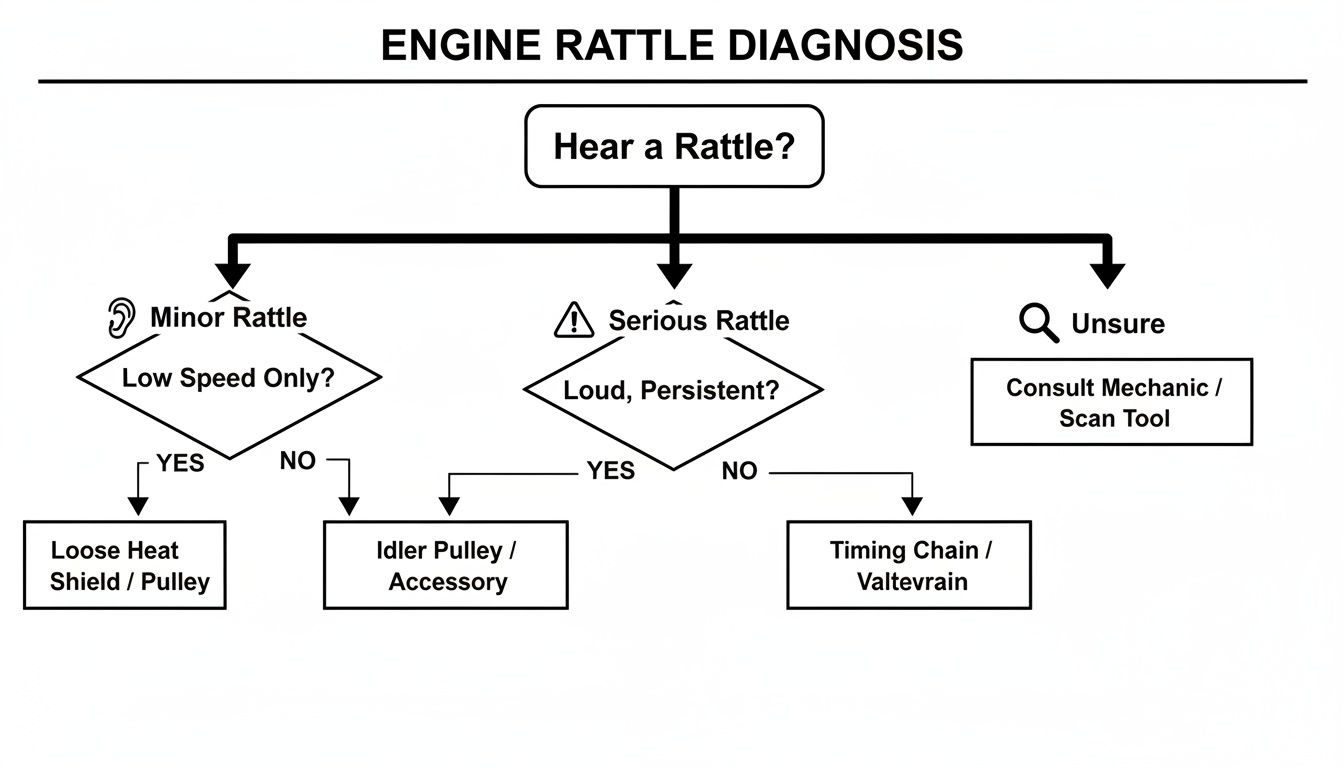
The big takeaway here is that how a sound behaves is just as important as the sound itself. It helps point you in the right direction.
An engine rattle at idle that gets progressively louder, more consistent, or is joined by a check engine light on your dashboard should never be ignored. These are clear signs that it’s time to let a Haltom City professional take a look.
By learning to be a better listener, you can feel more in control and make smarter decisions about your car. While these quick checks are a great starting point, nothing beats the trained ear and diagnostic equipment of a professional. Here in Haltom City, the team at Express Lube & Car Care is always ready to help you figure out what those noises mean and create a clear plan to fix them.
The Most Common Causes of an Engine Rattling at Idle
That unsettling rattle from under the hood can make your heart sink, immediately bringing to mind visions of expensive, complicated repairs. But before you panic, you should know that many of the most common reasons for an engine rattle at idle are actually pretty straightforward and surprisingly affordable to fix. Let’s walk through what might be happening with your vehicle here in Haltom City.
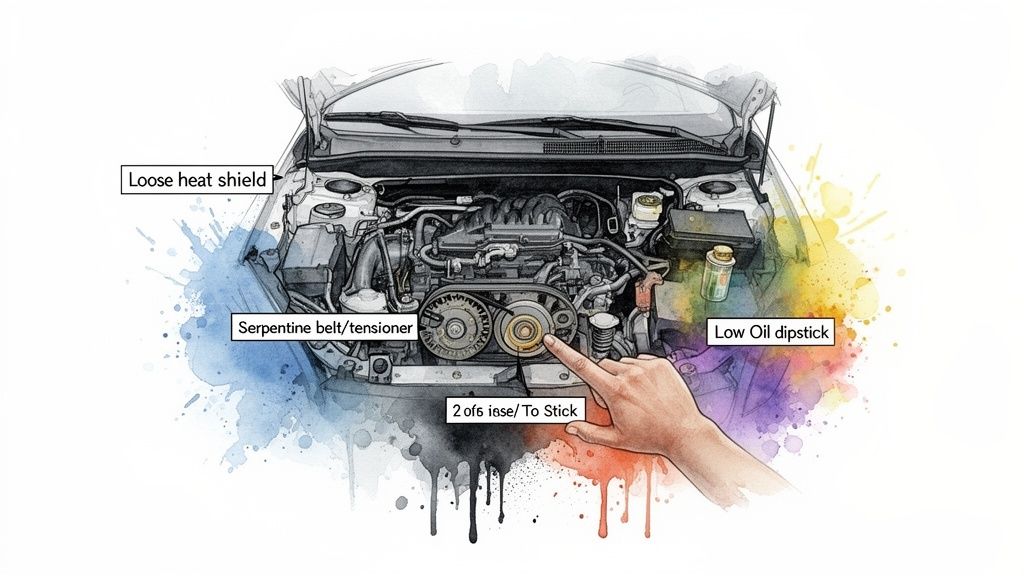
We’ll start with the simplest culprits and work our way toward the more complex ones. Half the battle is just knowing what to listen for.
That Annoying, Tinny Rattle: A Loose Exhaust Heat Shield
One of the most classic rattles we see here in Haltom City is from a loose exhaust heat shield. Think of this as a thin metal guardian, a firewall that protects your car’s floor and other components from the intense heat blasting out of the exhaust system. Over years of exposure to rain, road salt, and vibrations, the simple bolts or clamps holding it in place can rust away and fail.
The sound this makes is very specific—a thin, metallic buzzing or vibration, almost like a can of marbles being shaken. You’ll usually hear it most when you’re stopped at a light, as the engine’s idle vibrations hit just the right frequency to make the loose shield chatter against the exhaust pipe or frame.
It’s amazing how often this simple issue gets overlooked—in about 40% of initial checks for a rattle, it’s just a corroded heat shield. These shields deflect scorching 1,200°F temperatures, so while the fix is easy, it’s definitely important.
A Chattering or Slapping Sound: Failing Serpentine Belt Tensioner
Your engine has a long, winding rubber belt—the serpentine belt—that’s the workhorse for powering all your accessories. It spins the alternator (to charge your battery), the power steering pump (so you can turn easily), and the A/C compressor. To keep that belt spinning tightly, it relies on a spring-loaded part called the belt tensioner.
When the tensioner’s internal spring gets weak or its pulley bearing wears out, it can’t do its job. The belt goes slack and starts slapping around, creating a distinct chattering or ticking rattle. This noise often gets louder when you crank up the air conditioning. If you ignore it, the belt can eventually fly off, leaving you stranded in Haltom City with no power steering and a dead battery. It’s also closely related to another crucial belt, the timing belt. You can read about its job in our guide on timing belt services.
A Sharp Ticking from the Top: Low Engine Oil
This is the one rattle you never want to ignore. Engine oil is the lifeblood of your vehicle, creating a super-slick cushion between all the fast-moving metal parts. When the oil level drops too low, the oil pump struggles to send it all the way to the top of the engine, starving critical components like the valve lifters and camshafts.
The sound of an oil-starved engine is a sharp, almost frantic ticking or clattering noise that seems to come from right under the valve cover on top. It’s the sound of metal violently hitting metal, and it can cause catastrophic damage in a shockingly short amount of time.
If you hear this, pull over safely and check your dipstick immediately. Is it low? Add the correct type of oil right away. If the oil level is fine but the ticking won’t stop, you might have a more serious oil pressure problem that needs a Haltom City professional’s eye on it ASAP.
Shaking a Box of Rocks: A Degrading Catalytic Converter
The catalytic converter is an environmental hero in your exhaust system, using precious metals to transform toxic fumes into much safer gases. Inside this metal canister is a fragile, honeycomb-like ceramic structure. After thousands of miles of heat cycles and vibrations, that internal structure can start to crumble and break apart.
When that happens, the loose ceramic chunks get tossed around inside the converter’s metal shell. The result? A sound often described as shaking a box full of rocks, especially noticeable when you’re idling or driving at low speeds. A dying “cat” will also rob your engine of power and almost always trigger your check engine light.
When a Rattle Signals Deeper Engine Problems
While many rattles are simple fixes, some are urgent warnings coming from deep within your engine. These aren’t the thin, tinny buzzing of a loose shield; they are heavier, more rhythmic noises that tell you critical internal parts are in trouble. Ignoring these red flags can lead to catastrophic engine failure and repair bills that can easily climb into the thousands.
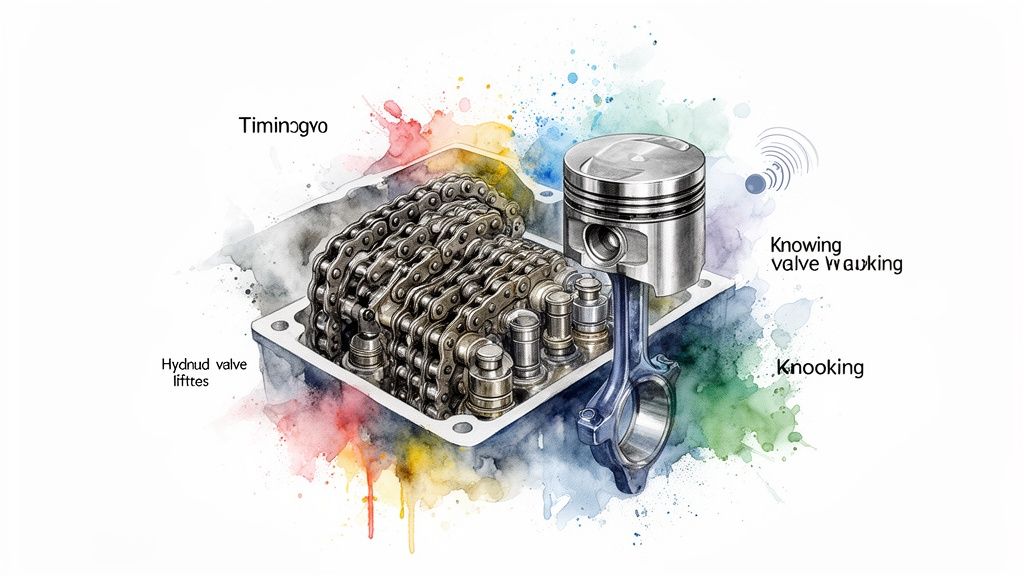
When an engine rattling at idle deepens into a clatter or a sharp, consistent tapping, it’s time to listen closely. These sounds often point to problems with the very heart of the engine—the components responsible for timing, combustion, and lubrication. This is the point where a professional diagnosis from a Haltom City expert is no longer optional.
Failing Hydraulic Valve Lifters
One of the most common internal culprits is a failing hydraulic valve lifter. Think of these small but mighty parts as tiny hydraulic pumps that use oil pressure to precisely open and close your engine’s valves. When they wear out or get gummed up with sludge, they can’t maintain pressure, which creates a very distinct ticking or rattling noise.
It’s a fact: failing hydraulic valve lifters are a top cause of that annoying engine rattle at idle, especially in older vehicles. These parts can collapse from wear or poor lubrication, creating a ticking sound that’s most obvious when the engine is idling around 600-800 RPM. This issue is particularly common in cars with complex valve systems, which are now standard in over 70% of modern passenger vehicles. You can read more about this common issue from automotive experts at J.D. Power.
A persistent lifter tick is often a cry for help related to oil quality or pressure. You can see how oil issues can impact your engine in our guide on the common causes of car oil leaks.
A Stretched Timing Chain
Your engine’s timing chain is the conductor of an orchestra, making sure the pistons and valves all move in perfect, synchronized harmony. This tough metal chain is built to last, but over many thousands of miles, it can stretch. When it loses tension, it starts slapping against its plastic guides, creating a rattling or scraping sound you’ll hear most at idle.
A loose timing chain is a ticking time bomb. If it slips a tooth or breaks entirely, the engine’s timing will be thrown off, causing pistons to collide with valves. This is a catastrophic failure that can destroy your entire engine.
This is not a sound you can afford to ignore. If you hear a rattle coming from the front of your engine, it’s crucial to have it inspected immediately by a trusted Haltom City mechanic.
The Dreaded Piston Slap
The most serious rattle of all is often what we call “piston slap.” This happens when there’s too much space between the piston and the cylinder wall, causing the piston to rock back and forth and literally slap against the cylinder. The sound is a deep, hollow knocking that’s usually loudest when the engine is cold and might quiet down as it warms up.
This isn’t just a noise; it’s a clear sign of significant internal wear. It means the precise, tight tolerances that make your engine run smoothly are gone. Continuing to drive with piston slap will only accelerate the damage, leading to a total loss of compression and, eventually, complete engine failure. Catching these deep-seated problems early is the key to avoiding a total engine replacement.
Your Next Step: Getting a Professional Diagnosis in Haltom City
So, you’ve listened to the rattle, considered the possibilities, and done a few checks yourself. That’s a huge head start. But moving from “I think it might be this” to “I know exactly what’s wrong” is a big leap—one that usually requires professional gear and a seasoned eye.
For drivers here in Haltom City, the next logical step is getting a solid, trustworthy diagnosis from a pro.

This is exactly where the team at Express Lube & Car Care comes in. Our ASE-certified technicians have heard it all before, and they pair that hands-on experience with sophisticated diagnostic equipment to find the true source of that noise. We don’t guess. We diagnose, right here in Haltom City.
Our Transparent Diagnostic Process
We get it—nobody likes feeling in the dark at the auto shop. Trust is built on clarity, which is why our process is straightforward and transparent from the moment you pull in. We don’t just find the issue; we make sure you understand it.
Here’s what you can expect when you bring your car to our Haltom City shop:
- A Real Conversation: First, we listen. When did you first hear it? Does it change when the A/C is on? Your side of the story is full of clues that point us in the right direction.
- Advanced Code Scanning: We hook up our professional scan tools to your car’s computer. This helps us pull any stored fault codes, which are often the breadcrumbs leading to the problem—even if your check engine light isn’t on.
- A Hands-On Inspection: Next, we get our hands dirty. We’ll be under the hood and under the car, physically checking everything from the exhaust heat shields and belt tensioner to your fluid levels and motor mounts.
- A Clear Explanation and Estimate: Once we’ve pinpointed the cause, we’ll show you what we found. You’ll get a detailed explanation in plain English and an itemized estimate for the repair. No work ever starts without your go-ahead.
At Express Lube & Car Care, our job is to give you the information you need. We want you to understand the “why” behind every recommendation so you can feel confident in your decisions for your vehicle.
That engine rattle is your car’s way of telling you something’s up. To see more about how we track down these kinds of problems, check out our guide on auto diagnostic services.
Don’t let that nagging noise ruin your peace of mind. Schedule an inspection with our team in Haltom City today, and let’s get that rattle silenced for good.
Answering Your Questions About That Annoying Engine Rattle
Even after going through the usual suspects, you probably still have a few questions about that rattling sound coming from under your hood. It’s totally normal. Here in Haltom City, we get these questions all the time, so let’s get you some straight answers to help you figure out what to do next.
Is My Car Safe to Drive if It’s Rattling?
This is the big one, and the right answer really comes down to what you’re hearing. A faint, tinny buzzing noise? That’s often just a loose heat shield, and you’re probably okay to drive it over to our Haltom City shop for a look.
But if you hear a deep, heavy knock or a sharp, metallic tick that gets faster as you press the gas, that’s a different story. Pull over safely and shut the engine off immediately. Pushing your luck with a serious internal engine problem can be the difference between a manageable repair and needing a whole new engine.
Why Does It Only Rattle When I’m Idling?
A rattle is often loudest at idle because that’s when your engine is turning its slowest—usually somewhere between 600 and 1,000 RPM. At that low speed, any vibration from a worn or loose part stands out. It isn’t getting drowned out by the noise of the road or the wind on Haltom City streets.
When you accelerate, the engine’s speed and frequency change, which can sometimes smooth out the sound or make it seem like it’s gone away. Trust us, the problem is still there, it’s just being masked.
Can I Just Use a Thicker Oil to Stop the Rattle?
While good oil is absolutely essential, switching to a thicker grade is almost never a real solution. Think of it like a temporary patch. If worn-out parts like bearings or lifters are the culprit, a thicker oil might quiet them down for a bit by cushioning the gaps.
But it’s just a band-aid. It doesn’t fix the actual mechanical wear. In fact, using an oil that’s too thick for your engine can cause more problems by preventing proper lubrication in tight spaces, leading to even more damage.
A new engine noise is your car’s way of telling you something is wrong. Simply masking the sound with a different oil or an additive can give you a false sense of security while a small problem quietly snowballs into a major one.
What’s the Most Common Rattle You See in Haltom City?
Hands down, the number one cause for a light, metallic rattle we see from Haltom City drivers is a loose exhaust heat shield. The road vibrations, humidity, and general wear and tear cause the little clamps holding it on to rust and break. It’s an easy and inexpensive fix that gets rid of that annoying buzz right away. Coming in at a close second is a worn-out serpentine belt tensioner, which usually makes more of a chattering sound.
What Does It Cost to Figure Out What the Rattle Is?
Getting a professional diagnosis is a smart, small investment that saves you from expensive guessing games. When you bring your car to our Haltom City shop, we run a full inspection and use professional scanning tools to pinpoint the issue. This initial check is affordable and gives you a clear answer on what’s wrong and exactly what it will take to fix it. Finding a failing part early on can easily save you hundreds, if not thousands, down the line.
Don’t let an engine rattle ruin your day. The experienced team here at Express Lube and Car Care has the right tools and know-how to find the source of that noise and give you a straight answer. We’re proud to provide clear explanations and honest advice to all our Haltom City neighbors. Schedule your diagnostic appointment online today and get your peace of mind back.