
Let's get straight to it: No, you should never mix different types of coolant. It might seem harmless, but this is one of those small mistakes that can lead to catastrophic, wallet-draining engine damage, especially for drivers here in Haltom City.
The Quick Answer to Mixing Coolants
Think of it like a bad chemical experiment happening right inside your engine. Pouring the wrong coolant into the reservoir, even just to top it off, can set off a reaction that creates a thick, gooey sludge. For drivers here in Haltom City, where the Texas heat already pushes cooling systems to their limit, this is a risk you just can't afford to take.
It's not about the color—it's all about the chemistry. Each type of coolant is formulated with a specific package of anti-corrosion additives designed to protect the unique metals in your engine. When you mix them, these different chemistries can clash, effectively canceling each other out and leaving your engine's delicate internal parts exposed to rust and corrosion.
Why Mixing Is a Costly Mistake
The biggest problem that arises is something mechanics call gelling. This is when the incompatible additives react and clump together, forming a thick, gelatinous substance that looks a lot like brown sludge. This gel is your cooling system's worst nightmare.
- Clogged Arteries: The sludge immediately starts blocking the narrow passages inside your radiator, heater core, and engine block.
- Rapid Overheating: Once the flow is restricted, your engine can't shed heat. The temperature gauge will spike, and you're suddenly at risk of serious overheating.
- System-Wide Failure: The strain can destroy your water pump, cause the thermostat to fail, and lead to other major component breakdowns.
The most immediate consequence of mixing coolants is the formation of a gel-like precipitate that can clog the cooling system. This blockage can lead to engine overheating, warped cylinder heads, and even complete engine failure.
What started as a simple top-off can quickly snowball into a multi-thousand-dollar repair bill. Before you ever add fluid, you have to be 100% certain you're using the correct type for your vehicle.
Here’s a quick-glance table to summarize the risks of mixing common coolant types.
Coolant Mixing At-A-Glance Risk Assessment
This table breaks down what can happen when different coolant chemistries are combined. As you'll see, the outcome is never good.
| Coolant Combination | Chemical Reaction Risk | Potential Engine Damage |
|---|---|---|
| OAT + IAT | High: Rapid gelling and precipitate formation. Additives become abrasive. | Severe risk of radiator/heater core clogs, water pump failure, and overheating. |
| HOAT + IAT | Moderate to High: Potential for additive dropout and sludge formation. Reduced corrosion protection. | Increased risk of corrosion, overheating under load, and shortened component life. |
| HOAT + OAT | Low to Moderate: Less severe than other mixes, but still reduces corrosion protection. | Can lead to long-term corrosion damage and compromise the cooling system's efficiency. |
Ultimately, any mix compromises the system. The only way to ensure your engine is protected, especially against our brutal Haltom City summers, is to use the exact coolant specified by your vehicle's manufacturer or have a professional service it for you.
Decoding Coolant Colors and Chemistries
Not too long ago, things were simple. You had green coolant for older cars and orange for the new ones. But if you think that's still the rule, you're setting yourself up for a costly repair. Relying on color to choose a coolant today is a gamble because what's inside the bottle is a specific chemical cocktail designed for very specific engine materials. The real answer to "Can I mix coolants?" is locked in the chemistry, not the color.
The crucial difference lies in the corrosion inhibitors—the additive package that protects your engine's insides. Think of these additives as tiny, specialized bodyguards assigned to protect the different metals in your cooling system. Each formula is engineered to guard specific materials, whether it's the cast iron in a classic V8 or the aluminum and plastics in a brand-new hybrid. Mixing them is like sending the wrong security detail to a VIP event; they won't just fail at their job, they'll end up causing a lot more trouble.
The Three Main Coolant Technologies
To get why mixing is such a bad idea, you have to look past the dye. Coolants today generally fall into one of three chemical families.
- Inorganic Additive Technology (IAT): This is the classic green stuff many of us remember. It uses silicates and phosphates to provide quick, effective corrosion protection. The downside? It wears out fast, usually needing a flush every two years or 30,000 miles.
- Organic Acid Technology (OAT): Typically orange or red, OAT coolants were developed for modern engines that use a lot more aluminum. They offer much longer-lasting protection by chemically bonding to the metal surfaces that need it.
- Hybrid Organic Acid Technology (HOAT): This is the best-of-both-worlds approach, often seen in yellow, turquoise, or pink. It blends the fast-acting nature of IAT with the long-life chemistry of OAT. It's often required by specific manufacturers, like Ford and Chrysler.
Mixing these different chemistries isn't just a bad idea—it can trigger a disastrous chemical reaction inside your engine.
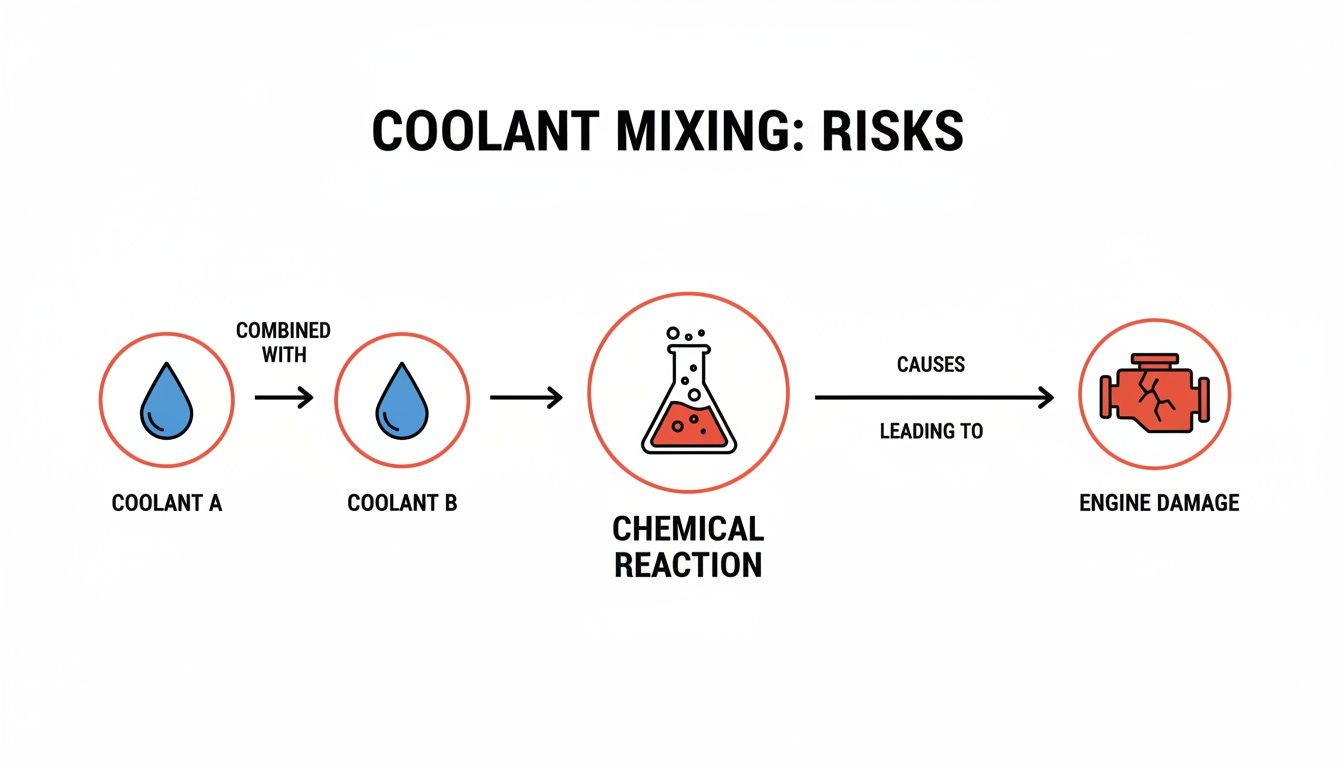
When incompatible coolants meet, they can form a thick, gel-like sludge. This gunk clogs radiator passages, blocks the heater core, and ultimately starves your engine of the cooling it desperately needs.
Why OAT Coolant Is the New Standard
The automotive industry's push for lighter, more fuel-efficient engines is why OAT has taken over. In fact, Organic Acid Technology coolants now account for 54.8% of the global market. OAT formulas don't contain the silicates and phosphates found in IAT coolants, which can become abrasive over time and lead to scale buildup. The result is better, longer-lasting protection that can push service intervals all the way out to 150,000 miles.
Here's the most important thing to remember: The chemical specification on the bottle is the only thing that matters. Forget the color. Always check your owner's manual or have a trusted mechanic in Haltom City verify the exact coolant your vehicle needs.
A classic mistake is mixing green and orange coolant, which we see all too often at our Haltom City shop. At the end of the day, picking the right antifreeze isn't about matching colors; it’s about matching the precise chemical formula to protect your engine for the long haul.
The Damage Caused by Mixing Incompatible Coolants
So, when people ask, "Can I mix coolants?" the answer from any seasoned Haltom City mechanic is a hard "no." Why? Because it kicks off a disastrous chemical reaction inside your engine. This is what we in the shop call gelling. The anti-corrosion additives in the different formulas literally fight each other and solidify, turning your once-protective coolant into a thick, gritty sludge.
Think of it like trying to pump peanut butter through a drinking straw. That’s exactly what your water pump is trying to do with this gunk. The tiny, critical passages inside your radiator and heater core get choked off and completely blocked. Suddenly, coolant can't flow, heat has no way to escape, and your engine starts to cook itself.
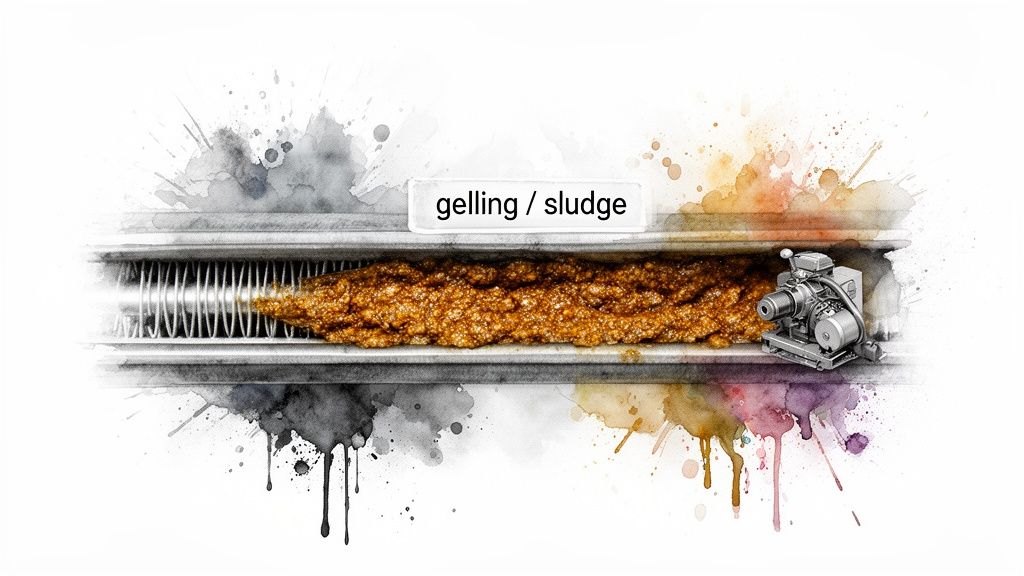
This single mistake sets off a chain reaction that can easily lead to some of the most wallet-busting repairs you can imagine.
From Bad Mix to Blown Gaskets
Once that sludge brings coolant flow to a halt, the temperature skyrockets. It's this extreme heat that kills engines. Under that kind of thermal stress, aluminum cylinder heads can warp and twist, breaking the crucial seal between the head and the engine block.
The result is a blown head gasket. Now you’ve got coolant pouring into your oil and vice-versa, which leads to catastrophic engine failure. On top of that, the gelling reaction completely neutralizes the coolant's anti-corrosion properties. Your water pump, thermostat, and other metal components are left wide open to aggressive rust and decay.
A Haltom City Story: Before heading out on a summer road trip, a local driver noticed his coolant was a bit low. He grabbed a jug of green coolant from his garage and topped off the orange fluid in his newer SUV. Just outside of Waco, the temperature gauge shot into the red, and steam started pouring from under the hood. The sludge had completely blocked his radiator, leading to a warped cylinder head and a repair bill that cost more than the vacation itself.
This real-world example shows how a simple, seemingly harmless mistake can have devastating consequences, especially under the strain of Texas heat. A healthy cooling system is more than just fluid; even a bad radiator cap can cause overheating. To see how all the parts work together, you can learn how to test a radiator cap in our detailed guide.
Symptoms of Incorrect or Mixed Coolant
Knowing what to look for can be the difference between a simple coolant flush and a complete engine replacement. If you spot any of these signs, it’s critical to stop driving and get your vehicle checked out by a Haltom City professional right away.
Here’s a quick rundown of what to watch for:
Symptoms of Incorrect or Mixed Coolant
| Symptom | What It Looks Like | What It Means for Your Engine |
|---|---|---|
| Thick, Brown Fluid | Your coolant reservoir contains a sludgy, rusty-looking liquid instead of a clean, vibrant color. | The chemical gelling process has begun, and flow is likely already restricted. |
| Rapid Overheating | The temperature gauge quickly climbs into the red zone, even during short drives. | The radiator or heater core is clogged, preventing the engine from shedding heat effectively. |
| No Heat from Vents | When you turn on your car's heater in winter, it only blows cool or lukewarm air. | The heater core, a small radiator for your cabin, is blocked by sludge, stopping hot coolant flow. |
| Visible Coolant Leaks | You find puddles of coolant under your car, often around the water pump or hoses. | Corrosion caused by neutralized additives has eaten through seals and gaskets. |
Catching these symptoms early is your best defense. Don't ignore them—the problem will only get worse, and more expensive, over time.
How to Fix a Coolant Mixing Mistake
So, you've realized you mixed the wrong coolants. First thing's first: stop driving your car immediately. Don't even think about a "quick trip" to the store. Every second the engine runs, it's pumping that sludgy, corrosive cocktail deeper into the cooling system, which can quickly lead to catastrophic failure.
It’s a serious situation, but it's fixable.
The key thing to understand is that you can't just drain the radiator and pour in new fluid. That gelled-up gunk is stubborn—it sticks to the inside of your radiator, hoses, water pump, and all the tiny, critical passages inside your engine block. A simple drain won't get it out.
The only real solution here is a professional cooling system flush. This is especially important for drivers around Haltom City who might be tempted to try and save a few bucks with a DIY fix. A professional flush is a completely different beast than a drain-and-fill.
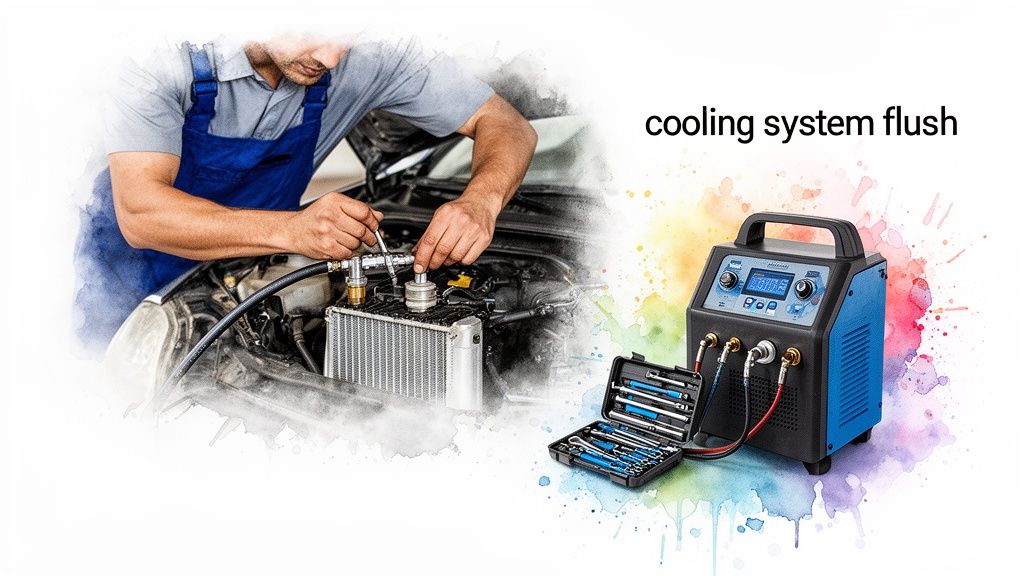
What a Professional Flush Involves
When you bring your vehicle to a trusted Haltom City shop, a coolant flush isn't just a fluid swap—it's a deep cleaning designed to get your cooling system back to pristine, factory-clean condition.
Here’s a breakdown of how we get it done right:
- Pressurized Cleaning: We don't just rely on gravity. Our technicians hook up specialized equipment that actively pushes a powerful cleaning solution through the entire system under pressure. This is what it takes to break down and dislodge the sludge and scale that’s clinging to everything.
- Total Contaminant Purge: The machine circulates the cleaner until every last drop of that nasty, contaminated mixture is forced out. This step is what clears those tiny, hard-to-reach passages inside the radiator and heater core that a simple drain always misses.
- OEM-Specific Refill: Once the system is spotless, we refill it with the exact type of coolant your vehicle's manufacturer specifies. No guesswork, just the correct chemistry to protect your engine for the long haul.
A professional flush is the only way to be certain that 100% of the damaging mixture has been removed. Think of it as hitting the reset button on your cooling system, protecting your engine from corrosion and overheating down the road.
If you have a leak on top of the mixed coolant problem, you've got to tackle both issues at once. Pouring the right coolant into a leaky system is a temporary fix at best. You can learn more about finding and fixing leaks in our guide on what to do when your antifreeze is leaking.
Trying to fix this mess without the right equipment almost guarantees you'll leave harmful deposits behind. Those leftovers will continue to eat away at your engine, making a professional service the smartest and safest investment.
Why Modern Cars Demand Specialized Coolants
To really understand why the answer to "can I mix coolants?" is a hard "no," we have to look at how much cars have evolved. The coolant in your car today isn't just some generic fluid; it's more like a prescription, custom-tailored for the high-tech, lightweight engine under the hood. It’s an engineered component, just as vital as the pistons or fuel injectors.
Think back a few decades. Engines were built like tanks, mostly from heavy-duty cast iron. The old green IAT coolant was the perfect match, using silicates to lay down a protective blanket against rust. But then the game changed. Automakers began chasing better fuel economy, which meant swapping heavy iron for lightweight aluminum in engine blocks, cylinder heads, and radiators.
The Move to Aluminum and Advanced Coolants
Aluminum is a fantastic way to shed pounds, but it's also far more sensitive to the corrosion inhibitors used in that old green antifreeze. The very silicates that did such a great job protecting iron could actually act like sandpaper on aluminum parts, damaging water pump seals and creating nasty scale buildup. This forced the industry to develop smarter, more sophisticated coolants.
That’s when OAT and HOAT chemistries stepped onto the scene. Instead of just coating every single surface, these newer formulas use organic acids that are smart enough to bond only to the specific metal surfaces that need protection. It’s a much more targeted approach that provides superior, longer-lasting defense without the risk of creating gunk and deposits.
Modern coolant is an engineered fluid designed to handle higher operating temperatures, protect a complex mix of metals and plastics, and last for significantly longer service intervals. Using the wrong type is like putting the wrong grade of oil in your engine—it compromises the entire system.
The New Frontier of Coolant Technology
The world of automotive coolant has been completely transformed by this shift to advanced, long-life technologies. A huge turning point was when General Motors introduced DexCool, which stretched the old 30,000-mile service interval to an incredible 150,000 miles or more. That's a mind-boggling 400-500% increase in coolant life. For drivers we see at Express Lube & Car Care in the Haltom City and Keller areas, this really drives home how crucial it is to use the right stuff.
And it doesn't stop with gasoline engines. The complex thermal management needed for electric vehicle batteries is pushing coolant technology even further. You can get a glimpse into this future by reading about the latest innovations in electric vehicle battery technology. It's simple: as cars get more complex, the fluids that keep them running have to evolve right along with them.
Your Trusted Haltom City Solution for Coolant Service
Trying to decipher the alphabet soup of OAT, HOAT, and IAT coolants can make anyone's head spin. If you're in Haltom City, Keller, or Watauga and find yourself wondering "can I mix coolants?", we have a simple answer: you don't have to. Let a professional sort it out for you.
At Express Lube & Car Care, our certified technicians are your local Haltom City go-to experts for everything related to your car's cooling system. We take all the guesswork out of the equation. Whether you've got a tough domestic truck or a high-tech import, our team knows exactly which manufacturer-specified coolant your engine needs to stay healthy and last longer. We don't just match colors—we match technical specifications to get the job done right, every single time.
Professional Service You Can Trust
A professional coolant flush is one of the smartest ways to protect your vehicle. We use specialized equipment to give your entire cooling system a deep clean, flushing out every last drop of old fluid, gunk, and rust. Once it's pristine, we refill it with the precise OEM-specified coolant your engine was designed for.
This level of detail is more important now than ever. With the complex demands of modern and electric vehicles, the automotive coolant market is expected to grow by 7.02% annually between 2026 and 2031. This industry trend, which you can read about in this detailed market analysis on Mordor Intelligence, just confirms what we see every day in our Haltom City shop: specialized maintenance is key to keeping today's cars on the road.
At Express Lube & Car Care, our promise is simple: honest advice and quality work. We build trust by helping you prevent expensive problems before they start.
Don't let a simple mistake put your engine at risk. Let our team give you the peace of mind that comes from knowing the job was done correctly. Swing by our Haltom City shop for a cooling system inspection today. You can learn more about our complete fluids exchange services and see how we help protect your ride for the long haul.
Got Questions About Mixing Coolants? We've Got Answers.
Even knowing the risks, it's natural to have a few more questions. We get them all the time here at the shop in Haltom City, and getting the right answer can save you a world of hurt down the road. Let's clear up some of the most common ones.
"What if I only added a little bit of the wrong coolant?" This is probably the number one question we hear. While a splash of the wrong stuff won't cause your engine to seize on the spot, it immediately starts a chemical war inside your cooling system. The protective additives get compromised, and the corrosion process begins.
Think of it like adding salt water to a freshwater aquarium – even a little bit throws the whole environment out of balance. The only real fix is a complete, professional coolant flush to get the contamination out and restore protection.
"Universal" Coolant: Friend or Foe?
Another big one is about those "universal" or "all makes, all models" coolants you see on the shelf. They sound like a perfect, simple solution, right? The reality is they're a compromise.
While they're usually better than mixing, say, green with orange, they just can't provide the specific, tailored protection your engine was designed for. They're a classic "jack of all trades, master of none." Using the exact coolant your manufacturer recommends (the OEM-specified fluid) is the only way to be 100% sure you’re protecting sensitive metals and keeping your warranty intact.
When in doubt, don't pour. It's always better to ask a pro what your car needs than to guess and end up with a costly problem.
How Often Should I Get a Coolant Flush?
Finally, people ask us how often they need to change their coolant. There's no single answer for this one—it really depends on your vehicle and the type of coolant it uses.
Many modern cars use long-life coolants that can go for up to 100,000 miles or even more. Older cars with traditional green coolants need service much more frequently. Your owner's manual is the best place to start, but we can always give you a solid recommendation based on your car's specific age, mileage, and condition.
Figuring out coolants can feel complicated, but you don't have to go it alone. For expert advice and professional coolant flush services right here in Haltom City, put your trust in the certified technicians at Express Lube and Car Care. Stop by the shop or visit us online to make sure your engine is protected for the miles ahead.