
When you see a parking brake light on your dashboard while driving around Haltom City, it's usually pointing to one of two things. The simple one? Your parking brake is still on. But if that's not it, the light is signaling a problem in your car's main braking system—something you can't afford to ignore, especially on our busy local roads.
What That Glowing Red Light on Your Dash Means

It’s easy to get a little rattled when a red warning light pops up mid-drive in Haltom City. Before you panic, just know that your car is trying to communicate something important. It's best to think of this light as more than a simple "parking brake" reminder; it's the dedicated health monitor for your entire braking system.
This one little light serves several big purposes. Its main job is to get your attention when something needs a closer look, from a simple mistake to a critical safety issue that could impact your ability to stop.
Breaking Down the Brake Warning Light
That red "BRAKE" light isn't just a random color choice. Vehicles use a universal color code for dashboard warnings. Red always signals a potential danger that demands you pull over as soon as it's safe. It’s a world away from yellow or green lights, which usually just mean a system is working or needs a routine checkup soon.
If your parking brake light on warning appears while you're driving, it’s often tracking down one of a few key issues:
- Low Brake Fluid: This is the most common culprit after the parking brake itself. Low fluid is a major red flag, often pointing to a leak somewhere in the system or extremely worn-out brake pads.
- Worn Brake Pads: As your brake pads wear down, the calipers have to push the pistons further out to make contact with the rotors. This extra travel causes the brake fluid level in the reservoir to drop, which is enough to trigger the sensor.
- A Faulty Sensor: Sometimes, the problem isn't with your brakes at all. The switch that detects if your parking brake is engaged or the sensor that monitors the brake fluid level can fail, sending a false alarm.
In any modern car, that "BRAKE" light is your first and most important alert for the hydraulic brake system. When it comes on, your vehicle is telling you in no uncertain terms that a problem exists that could directly affect its stopping power.
Ignoring this light is a gamble you don't want to take, especially in the stop-and-go traffic we see on Denton Highway in Haltom City. It's your car's way of giving you a heads-up, letting you address a small problem before it becomes a total brake failure. For a deeper dive, check out our guide on what happens when a brake light is on your dashboard. Understanding what the light means helps you decide what to do next, whether it’s a quick fluid check or a trip straight to our Haltom City shop.
Common Reasons Your Brake Light Stays On
Seeing that little red brake light pop up on your dash—and stay there—is your car’s way of waving a big red flag. It’s a clear signal that something in one of your most critical safety systems needs attention. While your mind might jump to worst-case scenarios, the culprit is usually one of a few common issues we see from Haltom City drivers all the time.
The first thing to check is always the simplest, and often the one we forget. Is the parking brake really all the way off? Sometimes the lever or pedal can get caught just shy of being fully disengaged, which is enough to keep the sensor activated. Give it a firm pull or push to re-engage it, then release it completely. If the light goes off, you've found your answer.
The Real Culprit is Often Your Brake Fluid
But what if the light stays on? Nine times out of ten, that stubborn light is pointing to low brake fluid. Your brake system is hydraulic, using pressurized fluid to turn the force of your foot on the pedal into stopping power at the wheels. Think of it like a sealed plumbing system dedicated entirely to slowing you down.
A sensor inside the brake fluid reservoir acts as a guard, constantly watching the fluid level. If it dips below the safe line, the warning light is triggered. It's important to remember that brake fluid doesn't just evaporate or get "used up." A low level is always a symptom of a larger problem.
That brake warning light isn't just a simple notification. It's your car’s early warning that something is wrong. When it signals low fluid, your job isn't just to top it off—it's to find out why the fluid is low in the first place.
Low fluid almost always means one of two things:
- Severely Worn Brake Pads: As your brake pads wear down from use, the brake calipers have to push their pistons farther out to make contact with the rotors. To fill that extra space, more fluid is drawn from the reservoir. Over time, this causes the overall fluid level to drop low enough to trigger the light.
- A Brake Fluid Leak: This is the more serious possibility. A leak in a brake line, hose, or at the caliper means the integrity of your hydraulic system is compromised. If it’s not fixed, you could lose hydraulic pressure completely, which means you could lose the ability to brake.
Other Potential System Faults
While fluid problems are the most common cause, the issue can sometimes be electrical rather than mechanical.
A faulty sensor or switch can cry wolf, sending a false signal to your dashboard. The switch connected to your parking brake or the level sensor in the fluid reservoir can simply wear out and fail, telling your car's computer there’s an issue when there isn't one.
On newer vehicles, a problem with the Anti-lock Braking System (ABS) can also set off the main brake light. The ABS usually has its own yellow warning light, but a major fault in the system can be serious enough to trigger the primary red "BRAKE" light, too. Knowing how to spot the difference is key, and you can learn more about the various brake problem symptoms to better diagnose what's happening. This will help you give a clear picture to your mechanic here in Haltom City.
Your First Steps for a Glowing Brake Light
That little red warning light on your dashboard is impossible to ignore, and for good reason. Before you start diagnosing anything, your absolute first priority is safety. Pull over as soon as you can do so safely. Finding a good spot away from the flow of traffic, especially on busy Haltom City roads, is key. It gives you the breathing room to figure out what's going on without risking your safety or anyone else's.
Once you’re safely parked, the first thing to check is also the easiest. Firmly pull your parking brake lever up (or press the pedal down), then release it completely. Do this a couple of times. It's not uncommon for a sticky switch or a lever that wasn't fully disengaged to be the culprit behind the parking brake light on warning. If the light shuts off, you’ve just found your simple fix.
Perform a Quick Visual Inspection
If cycling the brake didn't solve it, the next step is a quick look under the hood. Pop the hood and locate the brake fluid reservoir. You're looking for a small, semi-see-through plastic container, usually located toward the back of the engine bay on the driver's side. The cap should have a brake symbol on it, making it easier to spot.
Look at the fluid level against the "MIN" and "MAX" lines etched into the side of the container. If it's hovering near or below the "MIN" line, that's almost certainly why your light is on. While you're there, check the fluid's color. Healthy brake fluid is nearly clear with a slight amber tint, but old or contaminated fluid will look dark, like used motor oil.
This visual guide shows the most common reasons your car is trying to get your attention.

As the diagram shows, an engaged brake, low fluid, or a sensor issue are the usual suspects, which is why these initial checks are so valuable.
Check for Obvious Leaks
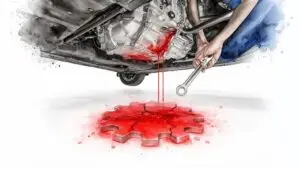
Low fluid is a huge clue, but it’s critical that you don't just top it off and drive on. That fluid went somewhere, and the most common reason is a leak. With the hood still open, take a careful look underneath your car, paying close attention to the area under the engine and near each wheel.
Here’s something every Haltom City driver should know: Brake fluid isn't consumed like gasoline. If the level is low, it means one of two things: either your brake pads are extremely worn, or there's a leak somewhere in the brake system.
Search for any puddles or even just damp, oily-looking spots on the pavement. Brake fluid has a slick, slippery feel that’s very different from water. If you spot anything that looks like a leak, your vehicle is not safe to drive. Even a small leak can quickly become a major one, leading to a complete loss of braking ability.
A responsive brake system is non-negotiable for your safety. Research has even confirmed that small improvements to brake system performance can reduce braking response times by 3-7%, which is a massive advantage in an emergency. You can read the full study on braking response time effectiveness to see just how much it matters. These simple checks are your first line of defense, but they only help diagnose the issue—not fix it.
Understanding Low Brake Fluid—The Critical Culprit

When that parking brake light stays on, it’s easy to get tunnel vision and focus on the parking brake itself. But in many cases, that light is pulling double duty, alerting you to a much more serious problem: low brake fluid.
Your brake system is a hydraulic marvel. Think about it—a little bit of pressure from your foot is multiplied into enough force to stop thousands of pounds of moving steel. That’s all thanks to brake fluid. It works inside a sealed, pressurized system, so if the level drops, you know something’s up. There are really only two reasons this happens, and neither is good news.
Why Your Brake Fluid is Low
The most common cause is just good old-fashioned wear and tear. As your brake pads get thinner with every stop, the brake calipers have to push their pistons out a little further to make contact with the rotors. This action draws more fluid from the master cylinder's reservoir to fill that extra space. Over time, the level drops enough to trigger the sensor, and your warning light comes on.
The second reason is the one we mechanics here in Haltom City really worry about: a leak. A compromised brake line, a failing seal, or a cracked caliper can let fluid escape. This is an immediate safety hazard, because a leak means your hydraulic system can't build pressure. Even a tiny drip can quickly lead to a "mushy" pedal or, in a worst-case scenario, total brake failure.
Ignoring low brake fluid is like putting a piece of tape over your car's most critical warning sign. Simply adding more fluid might turn the light off temporarily, but it dangerously masks the root cause—be it worn pads or a potentially catastrophic leak.
That light is your car’s way of telling you that key components are wearing out or have already failed. It’s a clear signal to get your vehicle to a trusted shop in Haltom City before a small issue becomes a big one.
The Dangers of Masking the Problem
Let's be blunt: driving with a compromised brake system is a huge risk for anyone on Haltom City's roads. You need to be able to trust your brakes, period. It's no surprise that rear-end collisions, often caused by a failure to stop in time, account for about 32.5% of all crashes in the United States. You can see more data on brake-related safety in various automotive reports on HTF Market Insights.
Pouring some brake fluid into the reservoir is not a fix; it’s a band-aid on a problem that needs stitches. If your pads are worn, they'll just keep wearing down. If you have a leak, it's guaranteed to get worse. At Express Lube & Car Care, our technicians will find the real cause. We’ll figure out if you just need new pads or if there's a leak to hunt down and repair. To get a better idea of what a proper fix looks like, you can read our guide on what a complete brake service includes.
When to Visit Your Haltom City Brake Experts
So, you've done the basic checks. You've made sure the parking brake is all the way off and you’ve taken a peek at the brake fluid reservoir. But that stubborn parking brake light on your dashboard is still staring back at you. That’s your car’s way of saying it’s time to call in the professionals right here in Haltom City.
Trying to ignore a brake warning light is a bad bet, plain and simple. If you've also noticed other weird things happening with your brakes, getting an expert diagnosis isn't just a good idea—it's urgent.
Red Flags That Demand Professional Attention
Some symptoms are your brake system's way of screaming for help. If you experience any of these while driving around Haltom City, don't wait.
- A Spongy or Soft Brake Pedal: Does your brake pedal feel mushy, like you're stepping on a sponge? This is a classic sign of air in the brake lines or even a master cylinder that's on its way out.
- The Pedal Goes to the Floor: This is a major red flag and a critical failure. It means your hydraulic system isn't building pressure, and your car has lost most of its ability to stop safely.
- You've Confirmed Low Brake Fluid: As we talked about, low fluid points to one of two things: worn-out parts or a leak somewhere in the system. Neither of these problems will fix itself, and both will only get worse.
- The Light Stays On No Matter What: If you've ruled out all the simple stuff, the problem is likely deeper. It could be a bad sensor or a more complicated electrical issue that requires proper diagnostic tools to track down.
When your brake system sends out an alert, it’s not just a suggestion—it’s a direct command to prioritize your safety. At Express Lube & Car Care, we treat every brake warning with the seriousness it deserves, ensuring Haltom City drivers have total confidence on the road.
This is where our Haltom City team comes in. We know you need an honest, accurate diagnosis, not a confusing sales pitch. Our certified technicians use modern diagnostic gear to pinpoint the exact source of the trouble. This equipment lets us see what’s happening behind the warning light, testing the pressure, sensors, and all the individual parts of your braking system. Our complete auto diagnostic services are designed to give you clear answers.
Whether the fix is as simple as swapping out a faulty switch or requires a full brake overhaul, our goal is the same. We want to get you back on the road safely, in a car you can trust to stop every single time you need it to.
Your Guide to Common Brake System Repairs
Seeing a brake warning light on your dash can be nerve-wracking, but it doesn't always signal a huge, expensive problem. More often than not, it’s your car’s way of asking for a check-up. Here in Haltom City, we want to take the mystery out of brake repairs so you can feel confident when you bring your vehicle to us.
Let's walk through some of the most common fixes we handle for our Haltom City neighbors every day.
From Simple Wear to Electrical Quirks
By far the most common repair is replacing worn-out brake pads and rotors. Think of your brake pads as the soles of your shoes and the rotors as the pavement—every time you stop, a little bit of material wears away. It's completely normal, and our Haltom City technicians can inspect them and swap them out with high-quality parts to get your car stopping like new.
Sometimes, the problem has nothing to do with wear and tear. It can be a simple electrical glitch, like a faulty parking brake switch. This small sensor can fail over time and trick your car into thinking the parking brake is on when it’s not. It's a surprisingly common issue and usually a quick, straightforward fix for a technician.
A more pressing concern is a brake fluid leak. If you're losing fluid, you're losing the hydraulic pressure needed to stop your car safely. Our Haltom City team will meticulously trace the entire brake system—from the master cylinder down to the calipers on each wheel—to find and fix the source of the leak. This is a repair that absolutely can't wait.
Trust and transparency are the cornerstones of our service in Haltom City. We'll always show you what’s wrong, explain why a specific repair is necessary, and use only premium parts that meet or exceed your car's original standards. Your peace of mind is our top priority.
Why Quality Parts and Professional Service Matter
In some situations, the heart of the brake system, the master cylinder, can fail. This component is responsible for creating the hydraulic pressure that makes your brakes work. Replacing it is a more involved job, but it's absolutely critical for your safety. This is one area where cutting corners with cheap, subpar parts is a recipe for disaster.
A prime example was the massive Chrysler recall of over 450,000 vehicles due to faulty brake light modules that put drivers at serious risk. For folks here in North Texas and Haltom City, it’s a stark reminder of why professional inspections and top-tier parts are non-negotiable. You can read more about this significant recall and its safety implications on vehicle safety at Fox Business.
At Express Lube & Car Care in Haltom City, we’re committed to getting the job done right the first time, ensuring your car is safe and reliable for the road ahead.
Answering Your Top Questions About Brake Warning Lights
Working on cars here in Haltom City, we get asked a lot about dashboard warning lights. Here are some of the most common questions we hear about that tricky brake light, with honest, straightforward answers.
Can I Drive If My Parking Brake Light Is On?
We’d really recommend against it, especially with Haltom City traffic. That light is your car’s way of screaming for attention, and it usually means your brakes aren't at 100%. If you notice the brake pedal feels spongy, soft, or goes down too far, don't even think about driving it. It's just not worth the risk.
Is the Parking Brake Light the Same as the ABS Light?
Nope, they're two different warnings for two different systems. The main brake light typically flags an issue with the core hydraulic system—think low fluid or a pressure problem. The ABS light, on the other hand, points specifically to a malfunction in your anti-lock braking system.
It's important to know that sometimes both lights will come on at once. When that happens, it's a major red flag for a more serious problem. You'll want a professional in Haltom City to diagnose it right away to make sure you're safe.
How Much Will It Cost to Fix?
That’s the big question, and the honest answer is: it completely depends on what's wrong. The fix could be something simple, like topping off fluid or a small adjustment. Or, it could be more involved, like a full brake service with new pads and rotors. Here in our Haltom City shop, we'll always pinpoint the exact issue and give you a clear, easy-to-understand estimate before we ever pick up a wrench.
When a warning light has you worried, the worst thing you can do is guess. Let our certified technicians at Express Lube & Car Care in Haltom City find the real answer. We’ll diagnose the problem correctly and make sure you get back on the road safely. Schedule your brake inspection today!