
Community auto shops are independently owned, locally operated garages that provide personalized vehicle repair and maintenance while serving as genuine pillars of their neighborhoods. The role of community auto shops explained simply is this: they fill the gap between impersonal dealership service and the need for trusted, affordable, face-to-face automotive care. Unlike national chains or franchise service centers, these shops build their reputations one customer at a time, often over years or even decades. For drivers in areas like the DFW metroplex, understanding what these shops offer, and why they matter, can change how you approach every oil change, brake job, or diagnostic visit.
What are the key benefits of community auto shops?
The most direct benefit of choosing a local independent shop is cost. Trusted local repair shops typically charge less for the same routine repairs as dealerships, without cutting corners on quality. That cost difference adds up fast when you factor in oil changes, tire rotations, and brake inspections across a vehicle’s lifetime.
Pricing transparency is another area where community shops consistently outperform larger operations. When synthetic oil change prices in El Paso jumped to $70 to $80 from $50 to $60 the previous year due to supply constraints, local shops were the ones explaining why the price changed, not just presenting a higher invoice. That kind of honest communication builds the trust that keeps customers coming back.
Here is what you gain by choosing a community shop over a dealership or chain:
- Lower labor rates on most routine services, including oil changes, fluid flushes, and brake work
- Faster scheduling with same-day or next-day availability in most cases
- Direct access to your technician, so you can ask questions and get real answers
- Personalized service history tracked by people who recognize your name and your car
- Flexible pricing discussions, especially for older vehicles where repair-versus-replace decisions require honest conversation
Pro Tip: Ask your local shop to walk you through the inspection report line by line. Shops that welcome those conversations are the ones worth staying loyal to.
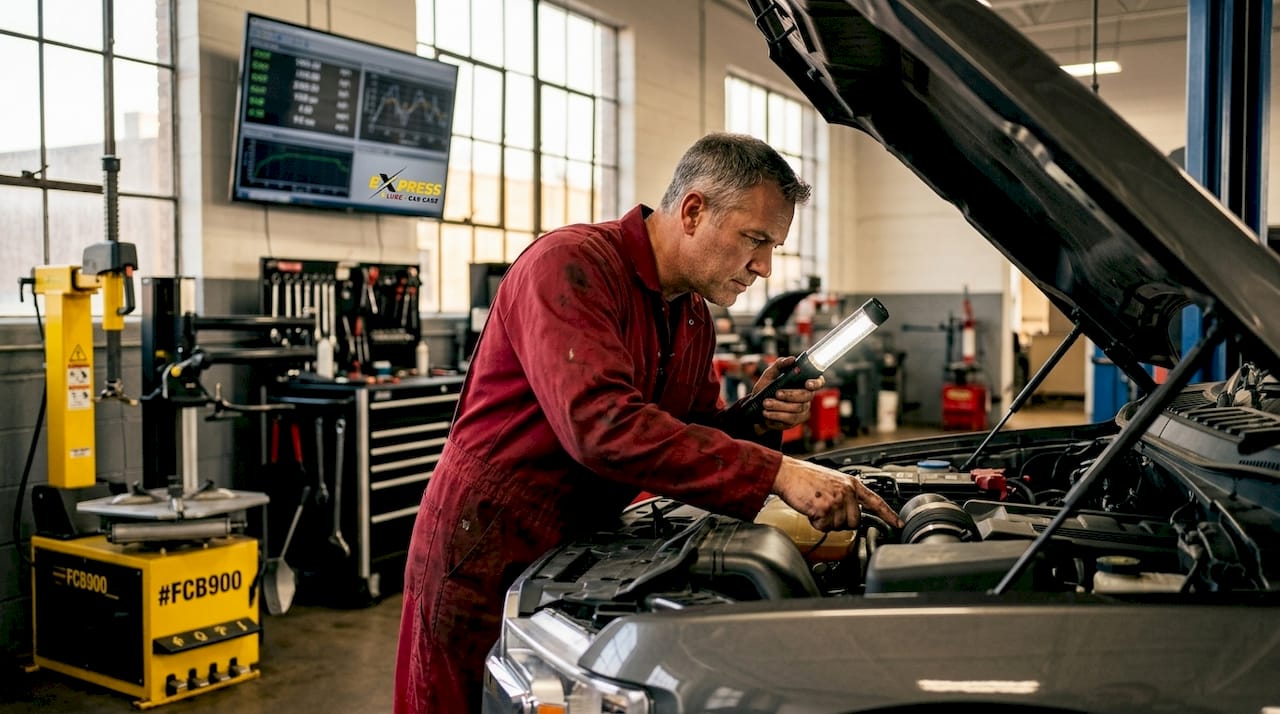
The relationship factor is real and measurable. When a shop knows your 2018 Ford F-150 has been running a slow coolant leak for two visits, they track it. A dealership service advisor handling 40 customers a day rarely does.
How do community auto shops engage with their local communities?
Community involvement is not a marketing strategy for independent shops. It is how they survive and grow. Community involvement humanizes local shops, transforming them from transactional service providers into trusted neighbors through consistent, long-term relationship building. That distinction matters because trust, once earned at this level, is nearly impossible for a national chain to replicate.
Shops like Fluid Community Garage in Durham, North Carolina, demonstrate what this looks like in practice. Fluid Community Garage offers regular mechanic services alongside classroom lessons and community events, creating a space where drivers learn how their vehicles work rather than just handing over keys and waiting. That educational model builds confidence in customers and loyalty to the shop.
Here are the most common ways community shops invest in their neighborhoods:
- Hosting car shows and appreciation events that bring local families together around a shared interest in vehicles
- Partnering with local charities for fundraisers, food drives, or discounted services for low-income residents
- Offering free or low-cost clinics on basic maintenance like tire pressure checks, fluid top-offs, and battery testing
- Sponsoring youth programs or school events to build goodwill with the next generation of drivers
- Creating welcoming shop cultures where employees take pride in their work and customers feel comfortable asking questions
“Customers start seeing these shops as their neighbors and friends, which builds loyalty over time.” — AASP Minnesota
This kind of engagement pays off in ways that go beyond repeat business. When a shop becomes part of the neighborhood fabric, word-of-mouth referrals become the primary growth engine. No advertising budget matches a neighbor telling another neighbor, “Take your car to them. They’re honest.”
What challenges do local shops face in the 2026 automotive landscape?
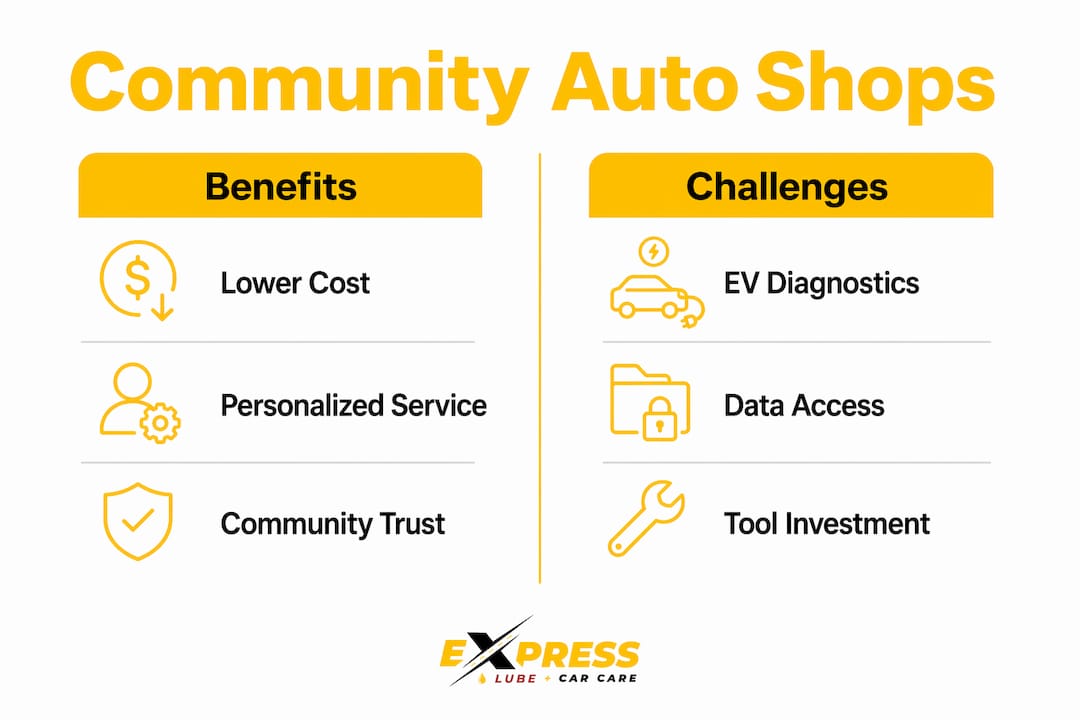
The role of local auto repair is evolving fast, and not every shop is keeping pace. The two biggest pressures in 2026 are electric vehicle servicing and restricted access to diagnostic data.
On the EV side, community shops are actually filling a critical gap. Independent shops provide quick, trusted EV service when dealer wait times stretch for weeks, particularly for routine maintenance that does not require proprietary software. This is a real opportunity for shops willing to invest in EV-specific training and tools.
The data access problem is more serious. About 30% of small shops report declines in the vehicles they can service because automakers restrict access to diagnostic software and repair data. That restriction does not just hurt shop revenue. It forces drivers toward dealerships for repairs that any skilled technician could otherwise handle. Right-to-repair legislation at the federal and state level is the policy response, and its outcome will directly shape what independent shops can offer in the coming years.
| Challenge | Impact on drivers | Current status |
|---|---|---|
| Restricted diagnostic data | Fewer vehicles serviceable at independent shops | Active legislative debate |
| EV tool investment costs | Shops without EV tools must refer customers elsewhere | Shops investing now gaining early advantage |
| Rising parts and supply costs | Higher prices for routine services like synthetic oil changes | Ongoing supply chain pressure |
| Technician training for modern vehicles | Skill gaps in shops not investing in continuing education | Addressed by shops with strong training programs |
Without tool access, even highly skilled shops must refer customers elsewhere for certain repairs, making diagnostic tool investment as critical as labor expertise. Shops that recognize this and budget accordingly are the ones positioned to serve you well as your vehicle ages and becomes more technologically complex.
Pro Tip: When evaluating a new shop, ask directly whether they have invested in EV diagnostic tools and whether they subscribe to a data service like ALLDATA or Mitchell 1. Shops that answer confidently are doing the work to stay current.
How do community shops compare with dealerships and national chains?
The comparison between community auto shops and dealerships comes down to four factors: cost, trust, availability, and long-term relationship value.
About 80% of new-car buyers plan to service at the selling dealership initially, and losing that customer to a general repair shop can mean $12,000 or more in lifetime service revenue lost to the dealer. Dealerships know this, which is why they invest heavily in service department amenities. But those amenities come at a price, and the service advisor you see today may not be there next month.
| Factor | Community shop | Dealership | National chain |
|---|---|---|---|
| Cost for routine service | Lower | Higher | Moderate |
| Technician familiarity with your vehicle | High | Low to moderate | Low |
| Scheduling flexibility | High | Moderate | High |
| Transparency on pricing | High | Moderate | Moderate |
| EV-specific capability | Varies by shop | High for brand vehicles | Low |
| Long-term relationship value | High | Low | Low |
Where dealerships genuinely win is on brand-specific warranty work and software updates for newer vehicles. If your car is under manufacturer warranty, the dealer is often the right call. For everything else, including the difference between maintenance and repair decisions that require honest conversation, a trusted community shop almost always delivers better value.
National chains like Jiffy Lube or Midas offer speed and convenience, but the technician turnover rate at high-volume chains means you rarely build a relationship with anyone who knows your vehicle’s history.
What steps help you get the most from your local shop?
Getting real value from a community auto shop relationship requires a little effort on your side. These steps make a measurable difference:
- Request a written inspection report after every visit, with specific measurements like brake pad thickness in millimeters and tire tread depth readings. Shops that provide this are showing you the work, not just billing for it.
- Ask about repair urgency directly. A good technician will tell you what needs attention now, what can wait 3,000 miles, and what is simply worth monitoring. Clear explanations about repair urgency reduce misunderstandings and help you plan financially.
- Schedule regular maintenance consistently at the same shop. Your service history becomes a diagnostic tool over time, and a shop that knows your vehicle catches patterns that a first-time technician misses.
- Attend any educational events or clinics the shop offers. Fluid Community Garage’s classroom model is not unique. Many independent shops host free tire pressure checks, battery testing days, or seasonal prep clinics.
- Verify estimates before approving work by checking resources like RepairPal’s cost estimator for your zip code. Shops confident in their pricing welcome the comparison.
Pro Tip: If a shop recommends a repair you did not expect, ask them to show you the problem directly, whether that means looking at the worn part, seeing a photo, or reviewing a diagnostic code printout. Trustworthy shops never hesitate to show their work.
Building this kind of relationship with a shop like Express Lube & Car Care means you are not starting from zero every time something goes wrong. You have a team that knows your vehicle, your budget, and your priorities.
Key takeaways
Community auto shops deliver better value, stronger trust, and more personalized service than dealerships or national chains for the majority of routine and mid-level vehicle repairs.
| Point | Details |
|---|---|
| Cost advantage is real | Local shops charge less for routine repairs and explain price changes honestly. |
| Community involvement builds loyalty | Shops that host events and offer education become trusted neighbors, not just vendors. |
| EV servicing is a growing opportunity | Independent shops filling dealer wait-time gaps are gaining EV customers now. |
| Data access is a serious threat | About 30% of small shops already service fewer vehicles due to restricted diagnostic data. |
| Consistent relationships pay off | Using the same shop over time turns your service history into a diagnostic asset. |
Why community shops deserve more credit than they get
At Express Lube & Car Care, we have watched the conversation about independent shops shift over the past few years, and we think most drivers still underestimate what a good local shop actually provides. The transactional view, where you show up, pay, and leave, misses the point entirely.
The shops that thrive in 2026 are the ones treating every visit as part of a longer conversation. They remember that your Chevy Silverado runs a little hot in summer traffic. They flag the slow tire leak before it becomes a roadside emergency. They tell you when a repair is not worth doing on a vehicle with 180,000 miles. That kind of honest guidance is not something you can automate or franchise.
We also believe the right-to-repair issue is underreported among everyday drivers. When automakers restrict diagnostic data, you lose choices. You get pushed toward a dealer service department whether you want to go there or not. Supporting independent shops, and the right-to-repair legislation that protects their ability to serve you, is not just good for shop owners. It is good for your wallet and your options as a vehicle owner.
The community involvement piece matters too, more than most people realize. A shop that sponsors a local food drive or hosts a free tire check day is telling you something about how it operates. That culture shows up in how technicians treat your car and how service advisors talk to you at the counter. Find a shop with that culture and stay with it.
— Express Lube & Car Care
Trusted local auto care from Express Lube & Car Care
Express Lube & Car Care in Haltom City brings everything this article describes into daily practice for DFW drivers. Our ASE-certified technicians handle everything from quick oil changes to full engine diagnostics and repair, with no appointment required and transparent pricing on every service.
We built our reputation on the same principles that define the best community shops: honest communication, consistent quality, and genuine care for the drivers we serve. Whether you need a routine maintenance visit or a clear answer about a warning light, our team is ready to help. Visit Express Lube & Car Care to see our full service menu, check current pricing, or schedule your next visit. We are here when you need us, without the wait.
FAQ
What does a community auto shop actually do?
A community auto shop is an independently owned garage that provides vehicle repair and maintenance services, from oil changes and brake work to diagnostics and engine repair. Unlike dealerships, these shops serve all makes and models and build long-term relationships with local drivers.
Are community auto shops cheaper than dealerships?
Local independent shops typically charge less for routine services like oil changes, brake replacements, and fluid services compared to dealerships. The cost difference is most significant for maintenance work that does not require brand-specific warranty coverage.
Can community shops service electric vehicles?
Many independent shops are actively investing in EV diagnostic tools and training to service electric vehicles. Independent shops are filling real service gaps when dealer wait times are long, making them a practical option for EV owners needing routine maintenance.
How do I know if a community shop is trustworthy?
Look for shops with ASE-certified technicians, RepairPal certification, or strong local reviews. A trustworthy shop provides written inspection reports, explains repair urgency clearly, and welcomes questions about pricing and parts without hesitation.
Why should I support my neighborhood auto shop?
Supporting a local auto repair shop keeps skilled technicians employed in your community, preserves competitive pricing options, and gives you access to personalized service that national chains and dealerships rarely match. The relationship you build over time becomes a genuine asset for your vehicle’s long-term health.