
A reliable auto shop is defined by verifiable qualities: certified technicians, transparent pricing, clear communication, and warranties that stand behind the work. This reliable auto shop qualities list covers the nine traits that separate trustworthy shops from risky ones, so you can make a confident, informed decision before handing over your keys. Whether you drive a Ford F-150 or a Toyota Camry, these auto repair shop characteristics apply across every make, model, and service type. Knowing what to look for protects your vehicle, your wallet, and your time.
1. What certifications and technician qualifications should you verify?
ASE certification is the most recognized quality marker in the auto repair industry. The National Institute for Automotive Service Excellence (ASE) administers 52 tests covering everything from engine repair to electrical systems, and certified technicians must retest every five years to maintain their credentials. That recertification cycle matters because vehicle technology changes fast, and a technician who passed a test in 2015 without updating their knowledge may not be equipped to handle modern systems.
When you call or visit a shop, ask directly whether their technicians hold current ASE certifications and whether any specialize in your vehicle’s make and model. Shops that display ASE Blue Seal of Excellence signage have met a threshold where a majority of their technicians are certified, which is a stronger signal than a single certified employee. Specialized training in your specific vehicle brand, such as Ford, Honda, or BMW, also affects repair quality because manufacturer procedures and diagnostic tools vary significantly.
- Ask to see current ASE certification cards or shop credentials
- Confirm whether technicians have experience with your specific make and model
- Ask about diagnostic capabilities and what scan tools the shop uses
- Check if the shop follows manufacturer-recommended repair procedures
Pro Tip: Ask specifically whether the technician assigned to your car has worked on your vehicle’s model before. A shop may have one ASE-certified tech on staff but assign your car to someone without relevant experience.
2. How transparent and fair pricing builds trust in auto shops
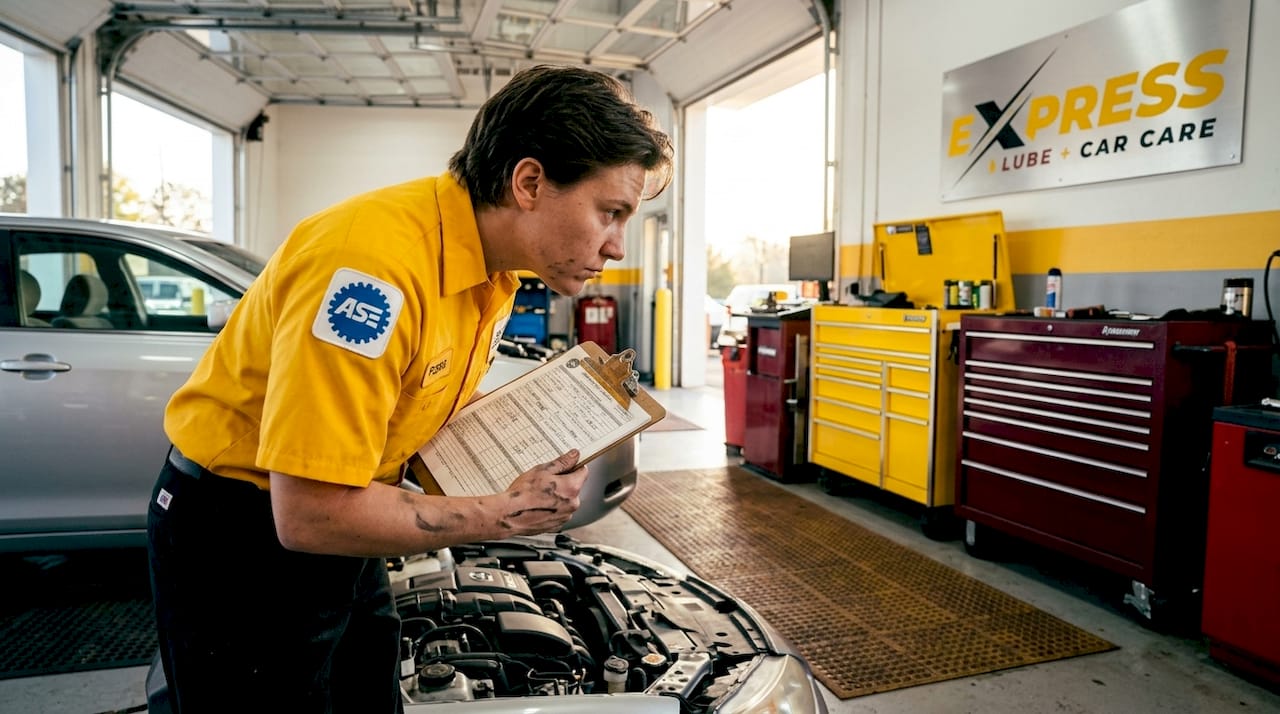
Pricing transparency is a stronger trust signal than a clean waiting room or a friendly front desk. Fair pricing and investment in staff training matter more than surface-level customer service, according to Consumer Reports contributor Kathleen Long. A shop that invests in its people and charges fairly is more likely to deliver lasting repairs than one that competes on price alone.
Every estimate you receive should be written and itemized. California’s Bureau of Automotive Repair (BAR) requires that repair estimates itemize parts and labor with written customer authorization before any work begins. Even if you live outside California, this standard protects you from scope creep and surprise charges, and any shop worth trusting will follow it voluntarily.
A detailed, scoped estimate that requires fresh authorization if the scope changes allows you to audit and control repair work effectively. If a shop resists putting the estimate in writing, that resistance is itself a red flag.
- Request a written, itemized estimate before approving any work
- Confirm whether quoted parts are new, used, OEM, or aftermarket, since parts condition disclosure is a consumer protection standard
- Use RepairPal to benchmark the estimate against fair market rates in your area
- Ask whether the price changes if additional problems are found mid-repair
Pro Tip: RepairPal’s online estimator lets you enter your zip code, vehicle, and repair type to see a fair price range. If a shop’s quote is significantly below that range, ask why. Unusually low prices often mean lower-quality parts.
3. Why clear communication and customer service matter
Clear communication is one of the most practical indicators of a trustworthy mechanic. Michael Crossen, cited by Consumer Reports, notes that many drivers miss the chance to discuss services before bringing their car in, and that pre-visit conversation is itself a trust signal. A shop that takes time to understand your concerns before you arrive is already demonstrating respect for your time and your vehicle.
Once your car is in the shop, you should receive timely updates without having to chase them down. Detailed repair explanations, progress updates, and timeline transparency reduce customer anxiety and build the kind of trust that brings drivers back. A shop that goes quiet after you drop off your car is not a shop that values your experience.
- Gauge how well the shop listens during your first phone call or visit
- Ask whether you will receive updates during the repair process
- Confirm who to contact if you have questions while your car is being serviced
- Notice whether the service advisor explains repairs in plain language or hides behind jargon
4. The role of warranties and guarantees in reliable auto shops
A warranty is a shop’s written commitment that the work will hold up. Good auto shops offer a minimum 12-month or 12,000-mile warranty on most repairs, and some extend that coverage on select services. That benchmark tells you the shop is confident in its technicians and the parts it installs.
The strongest warranties specify coverage for both parts and labor, tied directly to the repair type authorized. A warranty that covers parts but not labor, or one that uses vague language about “defects,” leaves you exposed. Before you approve any repair, ask the service advisor to spell out exactly what the warranty covers, how long it lasts, and what process you follow if something goes wrong.
- Confirm the warranty covers both parts and labor, not just one
- Ask whether the warranty applies to OEM parts, aftermarket parts, or both
- Get warranty terms in writing on the final invoice
- Ask what happens if the same problem returns within the warranty period
5. Community reputation, reviews, and recommendations as trust signals
A shop’s reputation in the community reflects its consistency over time, not just how it behaves when you are watching. Online reviews on AAA, Yelp, RepairPal, and BBB complaint records give you access to hundreds of real customer experiences before you commit to a single visit. Look for patterns across platforms rather than reacting to one glowing or one negative review.
Word-of-mouth from people who drive the same make or model as you carries extra weight. A neighbor who drives a Honda Accord and has used a shop for three years is a more relevant reference than a five-star review from an anonymous account. Referrals from trusted sources with similar vehicles are one of the most reliable ways to find a shop that knows your car.
| Source | What to look for |
|---|---|
| RepairPal | Certified shops with verified reviews and fair price ranges |
| BBB | Complaint history, resolution patterns, and accreditation status |
| Yelp | Volume of reviews and owner responses to negative feedback |
| AAA Approved | Shops that meet AAA’s facility and technician standards |
Pro Tip: Check the BBB complaint records, not just the rating. A shop with an A rating but ten unresolved complaints in the past year tells a different story than the letter grade alone.
6. Willingness to do a trial run before major repairs
Consumer Reports frames trust as something you test, not something you assume. Conducting a trial run with smaller maintenance jobs lets you evaluate a mechanic’s communication style, care for your vehicle, and overall reliability without risking a major repair. An oil change, tire rotation, or brake inspection is a low-stakes way to see how a shop actually operates.
Pay attention to how the shop handles the small job. Did they return your car on time? Did they explain what they found? Did they try to upsell you on services you did not ask about without explaining why? A shop that handles minor work with care and honesty is far more likely to handle a transmission repair or engine diagnostic with the same standard.
7. Use of proper tools, equipment, and up-to-date training
Modern vehicles require modern diagnostic tools. A shop still relying on outdated scan equipment may miss fault codes that a current-generation scanner catches immediately. Technician training, manufacturer-recommended procedures, and in-house repair capabilities directly affect repair quality and safety, particularly as vehicles incorporate more electronic systems.
Ask whether the shop invests in ongoing training for its technicians and whether it uses manufacturer-recommended repair procedures for your vehicle. Shops affiliated with programs like RepairPal Certified or AAA Approved Auto Repair are audited for equipment standards and technician qualifications, which removes some of the guesswork from your evaluation.
8. Clear documentation and authorization practices
Documentation is the paper trail that protects you if something goes wrong. A trustworthy shop provides a written estimate before work starts, a repair order that details what was authorized, and a final invoice that matches the original scope. If the scope changes mid-repair, the shop should contact you for fresh authorization before proceeding.
The BAR’s authorization requirement for automotive repair dealers is designed specifically to prevent unauthorized charges and scope creep. Even outside California, this standard reflects best practice. A shop that calls you before adding work to the bill is a shop that respects your ownership of the decision.
9. Convenience and respect for your time
Reliability is not only about technical quality. It also includes whether a shop respects your schedule. No-appointment-required service, accurate time estimates, and a clean, organized facility all signal that the shop values your experience as much as the repair itself. A shop that consistently runs two hours over its quoted time, without communicating why, is creating unnecessary stress regardless of how good the mechanical work is.
Look for shops that offer clear turnaround estimates upfront, communicate proactively if delays arise, and make it easy to get your car in and out without a complicated scheduling process. For a deeper look at how to evaluate shops in your area, the neighborhood auto repair shop evaluation guide covers additional criteria worth reviewing before you commit.
Key takeaways
A reliable auto shop is identified by a combination of verifiable credentials, transparent practices, and consistent communication that together protect your vehicle and your budget.
| Point | Details |
|---|---|
| ASE certification matters | Verify current credentials and ask about experience with your specific make and model. |
| Written estimates protect you | Itemized, authorized estimates prevent surprise charges and scope creep. |
| Warranties signal confidence | A minimum 12-month or 12,000-mile warranty on parts and labor is the baseline to expect. |
| Trial runs reduce risk | Start with a small job to evaluate communication, care, and reliability before committing. |
| Reputation requires research | Cross-check reviews on RepairPal, BBB, and AAA rather than relying on a single source. |
What we have learned from years of working with DFW drivers
The quality that most drivers overlook is documentation. Certifications and reviews get most of the attention, but the shops that cause the most frustration are the ones that do good mechanical work and then hand you a bill that does not match what you approved. We have seen drivers pay hundreds of dollars more than expected simply because they did not get the scope in writing before work started.
The other thing worth saying plainly: a low price is not the same as a fair price. Shops that undercut the market often do so by using lower-grade parts, skipping steps, or employing less experienced technicians. The repair that costs $80 less today can cost $400 more in three months. When you use a resource like the auto repair estimates guide to understand what a fair price looks like, you are not being difficult. You are being a smart vehicle owner.
The best shops welcome informed customers. If a shop gets defensive when you ask about certifications, warranties, or why the estimate looks the way it does, that reaction tells you everything you need to know.
— Express Lube & Car Care
Why Express Lube & Car Care checks every box on this list
Express Lube & Car Care in Haltom City is RepairPal Certified and staffed by ASE-certified technicians who work on a wide range of makes and models. Every service comes with transparent, itemized pricing and no-appointment-required convenience, so you are never waiting days just to get your car looked at. Warranties are discussed upfront, and the team communicates clearly throughout every repair. If you are ready to work with a shop that meets the standards this article describes, visit Express Lube & Car Care to learn more about available services or schedule your next visit.
FAQ
What does ASE certification mean for a mechanic?
ASE certification means a technician has passed one or more of 52 standardized tests and must retest every five years to stay current. It is the most widely recognized credential for verifying technician competence in the auto repair industry.
How do I know if an auto shop’s pricing is fair?
Use RepairPal’s online estimator to compare a shop’s quote against fair market rates for your vehicle and zip code. A trustworthy shop will also provide a written, itemized estimate covering parts and labor before any work begins.
What warranty should a reliable auto shop offer?
A reliable shop offers at least a 12-month or 12,000-mile warranty on most repairs, covering both parts and labor. Get the warranty terms in writing on your final invoice so the scope is clear if you need to return.
How can I test a new auto shop before a major repair?
Bring your car in for a minor service like an oil change or tire rotation first. This trial run lets you evaluate the shop’s communication, punctuality, and care without the stakes of a larger repair.
What online sources are best for checking a shop’s reputation?
Cross-reference reviews on RepairPal, Yelp, and AAA, and check BBB complaint records for unresolved issues. Look for patterns across multiple sources rather than reacting to a single review.