

Synthetic oil is a chemically engineered lubricant designed to protect modern engines more effectively than conventional petroleum-based oil. Where conventional oil is refined from crude, synthetic oil is built molecule by molecule to deliver consistent viscosity, cleaner combustion residue, and stronger film strength across a wider temperature range. The role of synthetic oil in modern engines goes well beyond basic lubrication. It directly affects fuel economy, wear rates, cold-start protection, and how long your engine lasts. Brands like Pennzoil Platinum and Mobil 1 have built their reputations on these differences, and API standards like GF-6 now reflect how central synthetic formulations have become to modern engine design.
How synthetic oil works in modern engines
Modern engine lubrication depends on one thing above all else: keeping metal surfaces separated under pressure and heat. Synthetic oil does this better than conventional oil because of its uniform molecular structure, which means fewer impurities and more consistent behavior when temperatures swing from a cold Texas morning to a highway run in July.
Conventional oil molecules vary in size and shape, which causes viscosity to shift unpredictably under heat or cold. Synthetic molecules are engineered to stay stable, maintaining film strength whether the engine is idling or running hard. This consistency is what makes synthetic oil the standard for high-performance and turbocharged engines, where oil temperatures routinely exceed what conventional oil can handle without breaking down.
Cold starts are where the difference shows up most clearly. In the seconds after you turn the key, oil has not yet reached every bearing and cam surface. Synthetic oil flows faster at low temperatures, reaching critical components before metal-to-metal contact causes wear. Viscosity grades like 0W-16 and 0W-20, now standard in many Honda, Toyota, and Ford engines, are formulated specifically for this rapid cold-flow behavior.
- 0W-16: Required by many newer Toyota and Honda engines for fuel economy compliance
- 0W-20: Standard in a wide range of Ford, Subaru, and GM applications
- 5W-30: Common in older modern engines and some trucks still in production
- 0W-8: An emerging ultra-low-viscosity grade appearing in hybrid powertrains
Pro Tip: Check your oil filler cap or owner’s manual for the exact viscosity grade your engine requires. Using the wrong grade, even one step heavier, reduces the protection your engine was designed to receive.
Does synthetic oil actually improve fuel economy?
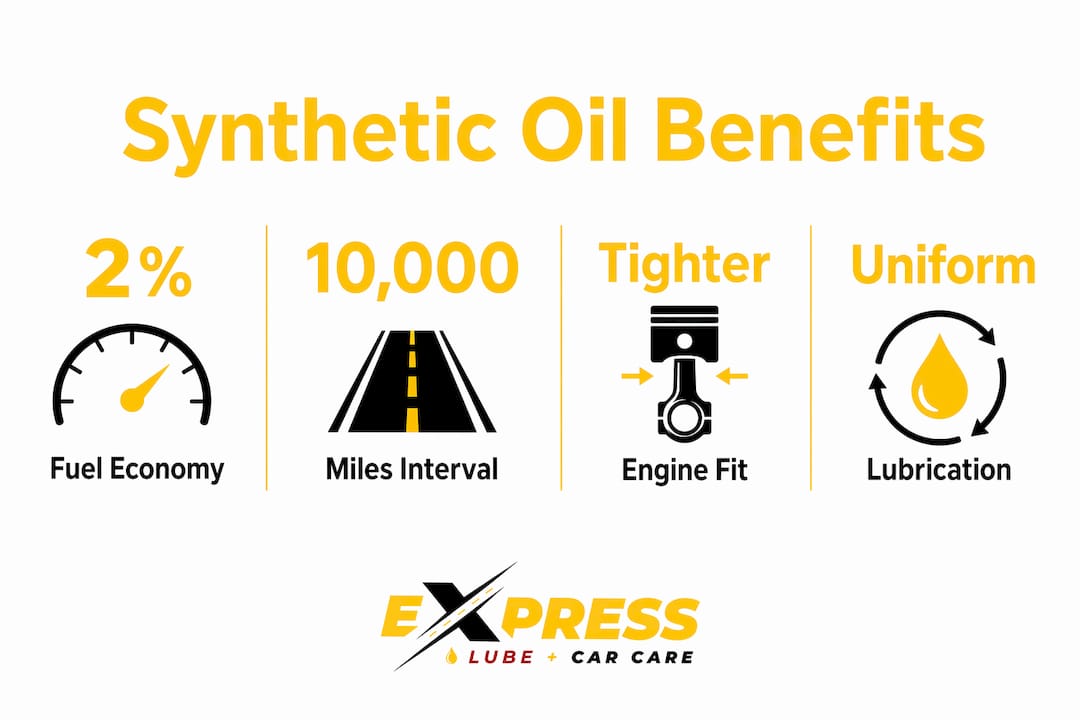
The short answer is yes, and the data is specific. Fuel economy improves by 0.5% to 2% when switching from conventional to synthetic oil, depending on driving conditions and engine design. That range sounds modest, but across 15,000 miles of driving, it adds up to real savings at the pump, especially for drivers who spend significant time in stop-and-go traffic where internal friction losses are highest.
The mechanism is straightforward. Less internal friction means the engine converts more of each combustion event into forward motion rather than heat. Synthetic oil’s stable viscosity reduces the drag on pistons, crankshafts, and camshafts, which is why automakers specify synthetic oil in fuel-economy-rated configurations submitted to the EPA.
“Synthetic oil’s molecular uniformity ensures consistent flow and protection unmatched by conventional oils.” — UTI Industry Analysis
Wear reduction follows the same logic. When oil film strength holds under load, metal surfaces stay separated. Over years of driving, that separation means bearings, timing chains, and cylinder walls degrade more slowly. Drivers who follow oil change tips and stick to manufacturer-specified synthetic grades consistently report longer engine life compared to those who cut corners with cheaper conventional oil.
Longer oil change intervals are another real benefit. Full synthetic oil maintains its protective properties longer than conventional oil, with many manufacturers now recommending 7,500 to 10,000-mile intervals for synthetic-filled engines. Some vehicles with oil life monitoring systems push that further under the right conditions.
Why modern engines require synthetic oil specifically
Modern engines are not simply updated versions of older designs. They are built with tighter tolerances, higher compression ratios, and direct injection systems that generate more heat and carbon deposits than engines from 20 years ago. These engines are calibrated for specific viscosities that only synthetic formulations can reliably deliver.

Using conventional oil or a heavier viscosity than specified in one of these engines is comparable to running a marathon in hiking boots. The oil cannot flow fast enough through tight clearances, starving components of lubrication during the critical first seconds of operation. The timing chain and main bearings are the first to show accelerated wear when the wrong oil is used consistently.
Here is what you need to know about matching oil to modern engine requirements:
- Read the owner’s manual first. The specified viscosity grade is not a suggestion. It is an engineering requirement tied to bearing clearances and oil pump design.
- Check for API GF-6 certification. This standard, introduced in 2020, covers both GF-6A for conventional viscosity grades and GF-6B for ultra-low-viscosity grades like 0W-16. Your engine may require one specifically.
- Do not assume heavier is safer. Thicker oil does not mean more protection in a modern engine. It means restricted flow and higher wear on components designed for thin, fast-moving lubricant.
- Verify OEM approval marks. Toyota, Honda, and GM each publish approved oil lists. Pennzoil Ultra Platinum, Mobil 1 Advanced Full Synthetic, and Castrol Edge all carry multiple OEM approvals.
Pro Tip: If you drive a hybrid or a vehicle with a turbocharged engine, pay extra attention to the viscosity spec. These powertrains run hotter and at higher loads, making the correct synthetic grade even more critical.
Understanding engine oil viscosity is the foundation of making the right oil choice for your specific vehicle.
Practical tips for choosing and using synthetic oil
Selecting the right synthetic oil is not complicated once you know what to look for, but a few common mistakes can cost you real money in repairs.
Addressing the supply situation honestly. Ultra-low-viscosity synthetic oils like 0W-8 and 0W-16 have faced some supply pressure due to geopolitical factors, with full recovery expected around mid-2027. Standard grades like 5W-30 and 0W-20 remain widely available. If your vehicle requires a specialty ultra-thin grade, buy a couple of extra quarts when you find them at a fair price.
The leak myth, addressed directly. Some drivers worry that switching to synthetic will cause leaks in older engines. The truth is that synthetic oil’s detergent additives clean existing sludge deposits, which can temporarily reveal pre-existing seal wear that was masked by buildup. Synthetic oil does not cause leaks. It exposes leaks that were already there. If you drive a high-mileage vehicle, check out guidance on best oil for high mileage cars before making a switch.
Switching between synthetic and conventional. Switching is generally safe as long as the viscosity grade matches your engine’s specification. That said, synthetic offers stronger heat resistance and cleaning performance, so there is rarely a good reason to downgrade unless cost is a genuine constraint.
- Always match the viscosity grade on the label to your owner’s manual specification
- Look for API certification symbols on the bottle, not just marketing language
- Use oil life monitoring systems as a guide, but do not ignore obvious signs of oil degradation
- Consider oil analysis services like those offered by Blackstone Labs to determine your actual safe change interval based on your driving patterns
Pro Tip: Oil analysis from a professional lab costs around $30 per sample and can tell you whether your oil is still protecting effectively at 8,000 miles or whether it degraded at 5,000. Over time, this data can save you money and protect your engine better than guessing.
Key takeaways
Synthetic oil is the correct lubricant for modern engines because its engineered molecular structure delivers consistent viscosity, faster cold-start protection, and measurable fuel economy gains that conventional oil cannot match.
| Point | Details |
|---|---|
| Fuel economy improvement | Synthetic oil delivers a 0.5% to 2% fuel economy gain by reducing internal engine friction. |
| Cold-start protection | Synthetic flows faster at low temperatures, protecting bearings and cams before heat builds. |
| Viscosity matching matters | Modern engines require specific grades like 0W-16 or 0W-20; using the wrong grade accelerates wear. |
| Leak myth is false | Synthetic oil reveals pre-existing seal wear by cleaning sludge. It does not create new leaks. |
| Oil analysis extends intervals | Services like Blackstone Labs let you extend change intervals safely based on actual oil condition. |
What we’ve learned from years of synthetic oil changes
At Express Lube & Car Care, we see the real-world results of oil choices every day. Engines that have been maintained on the correct synthetic grade from the start look dramatically different inside than those that have been run on mismatched or conventional oil. The difference is not subtle. Bearing surfaces stay cleaner, timing chains show less stretch, and turbocharger bearings hold up far longer.
The thing that surprises most drivers is how much the viscosity grade matters, not just the synthetic label. We have seen engines come in with legitimate wear damage caused by using a 5W-30 in an engine that called for 0W-20. The owner thought they were being cautious by using a “thicker” oil. They were actually restricting flow to components that needed fast, thin lubrication.
The false economy of downgrading oil quality is something we talk about regularly. A full synthetic oil change costs more upfront than a conventional one, but the math changes completely when you factor in extended intervals and reduced wear. Drivers who treat their oil specification as a firm requirement, not a suggestion, consistently get more miles out of their engines with fewer unplanned repairs.
Our honest advice: follow your manufacturer’s spec, use a certified synthetic that matches your API requirement, and do not let media-driven panic about oil supply realities push you into a poor substitution. The right oil, changed on time, is the single most cost-effective maintenance decision you can make.
— Express Lube & Car Care
Synthetic oil service and engine care in Haltom City
If you are not sure which synthetic oil your engine requires, or if it has been a while since your last change, Express Lube & Car Care is ready to help. Our ASE-certified technicians handle synthetic oil changes for all makes and models, with no appointment needed and fast turnaround so you are not waiting around.
We also offer engine diagnostics and repair for drivers who suspect their engine has been running on the wrong oil or who want a professional assessment before switching to a new synthetic grade. RepairPal-certified and committed to transparent pricing, Express Lube & Car Care gives DFW drivers a reliable place to get the right oil in the right engine, done right the first time.
FAQ
What does synthetic oil do for a modern engine?
Synthetic oil lubricates internal engine components with a chemically uniform film that reduces friction, prevents metal-to-metal contact during cold starts, and maintains stable viscosity under high heat. It also carries away combustion deposits more effectively than conventional oil.
How often should you change synthetic oil?
Most manufacturers recommend synthetic oil changes every 7,500 to 10,000 miles, though some vehicles with oil life monitoring systems may extend that interval further. Always follow your owner’s manual specification rather than a generic rule.
Can you switch from conventional to synthetic oil?
Switching is generally safe as long as the viscosity grade matches your engine’s requirement. Synthetic oil may temporarily reveal pre-existing seal leaks by cleaning sludge buildup, but it does not cause new leaks in a healthy engine.
Is there really a synthetic oil shortage in 2026?
Standard synthetic grades like 0W-20 and 5W-30 remain widely available. Only specialty ultra-low-viscosity oils like 0W-8 and 0W-16 face limited supply, with recovery expected by mid-2027. Most drivers will see price increases rather than true unavailability.
Does synthetic oil improve fuel economy?
Yes. Synthetic oil provides a measurable fuel economy improvement of 0.5% to 2% compared to conventional oil by reducing internal engine friction, which allows more combustion energy to reach the wheels.