
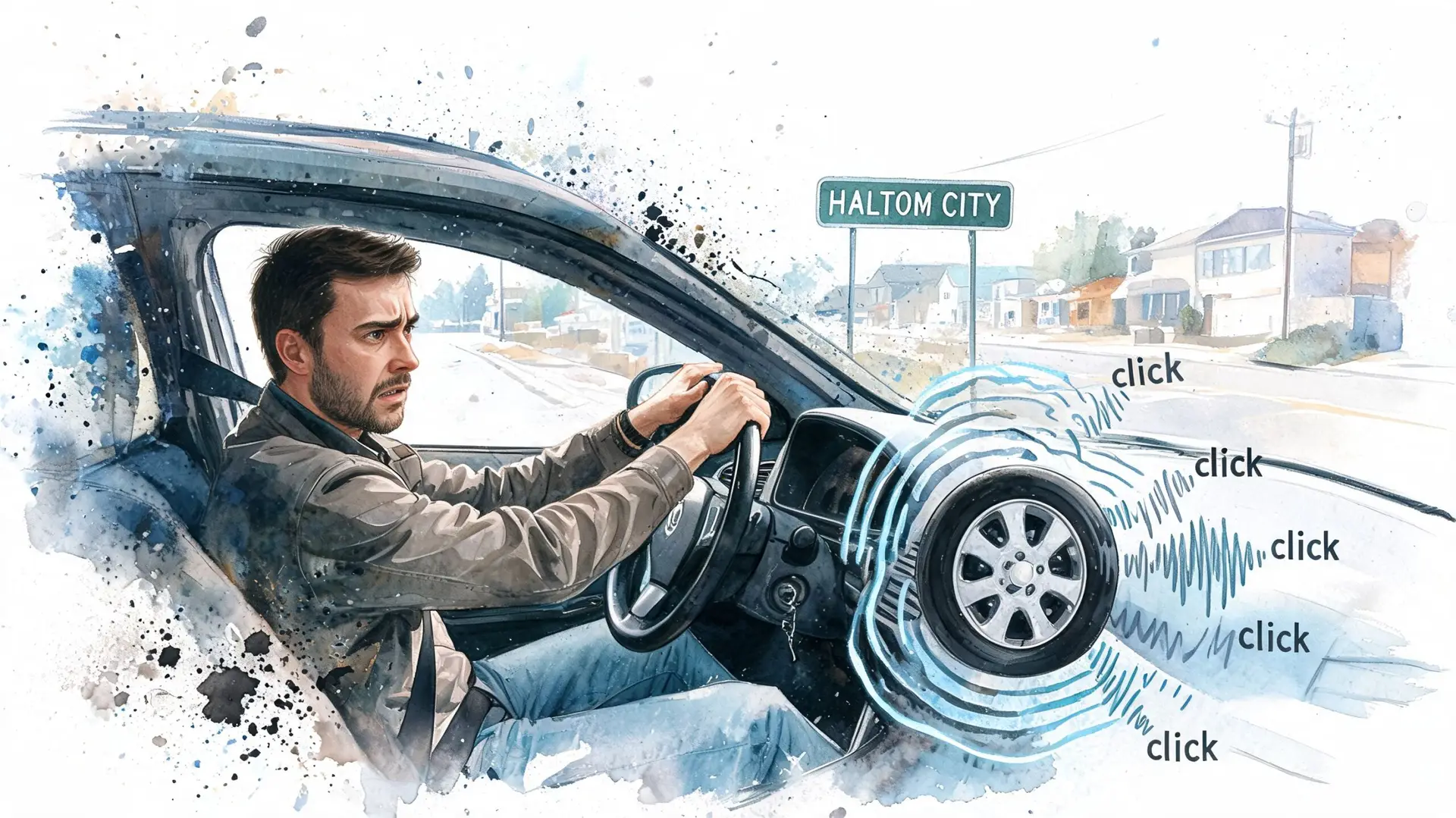
You’re backing out of a parking spot in Haltom City, turning into traffic, and you hear it. Click, click, click from the front end. Not a squeak. Not a brake grind. A steady little ticking sound that shows up when the wheel is turned.
A lot of drivers ignore that noise because the car still moves fine. That’s understandable. The problem is that this sound often points to a part rarely considered until it fails, the CV joint boot.
These small rubber covers don’t look important. They are. They protect the joint that helps deliver power to your wheels while the suspension moves and the steering turns. When the boot splits, grease gets out, dirt and water get in, and a manageable repair can turn into a bigger axle problem.
For drivers around Haltom City, Watauga, Keller, and North Richland Hills, that matters. North Texas heat, rough road debris, and the extra strain from lifted trucks can all make cv joints boots wear out sooner than you’d expect.
That Clicking Sound A Driver's Introduction
You hear the noise pulling into a grocery store lot in Watauga. Then again making a tight right turn near Denton Highway in Haltom City. At first it’s easy to shrug off because the vehicle still drives normally on a straight road.
That’s how CV problems often start. A small tear in a boot doesn’t stop the axle overnight. It usually starts as a warning sign, and the most common warning is a clicking or popping sound during turns.
A CV joint is part of the axle assembly. It lets the axle keep transferring power while the wheel moves up and down and turns left or right. The boot is the flexible cover wrapped around that joint. If you’ve been trying to sort out odd sounds from your car, this guide to common car noises and what they mean can help you narrow things down.
Why this little boot matters
The axle often goes unnoticed until it’s already making noise. The boot usually fails first. Once it cracks or tears, the grease that protects the joint can escape, and road grime starts working its way inside.
Catching a bad boot early is often the difference between a smaller repair and replacing the whole axle assembly.
That’s why cv joints boots deserve more attention than they get. They’re easy to overlook, but they have one of the most important jobs under the vehicle.
Your Axle's Personal Bodyguard What CV Boots Do
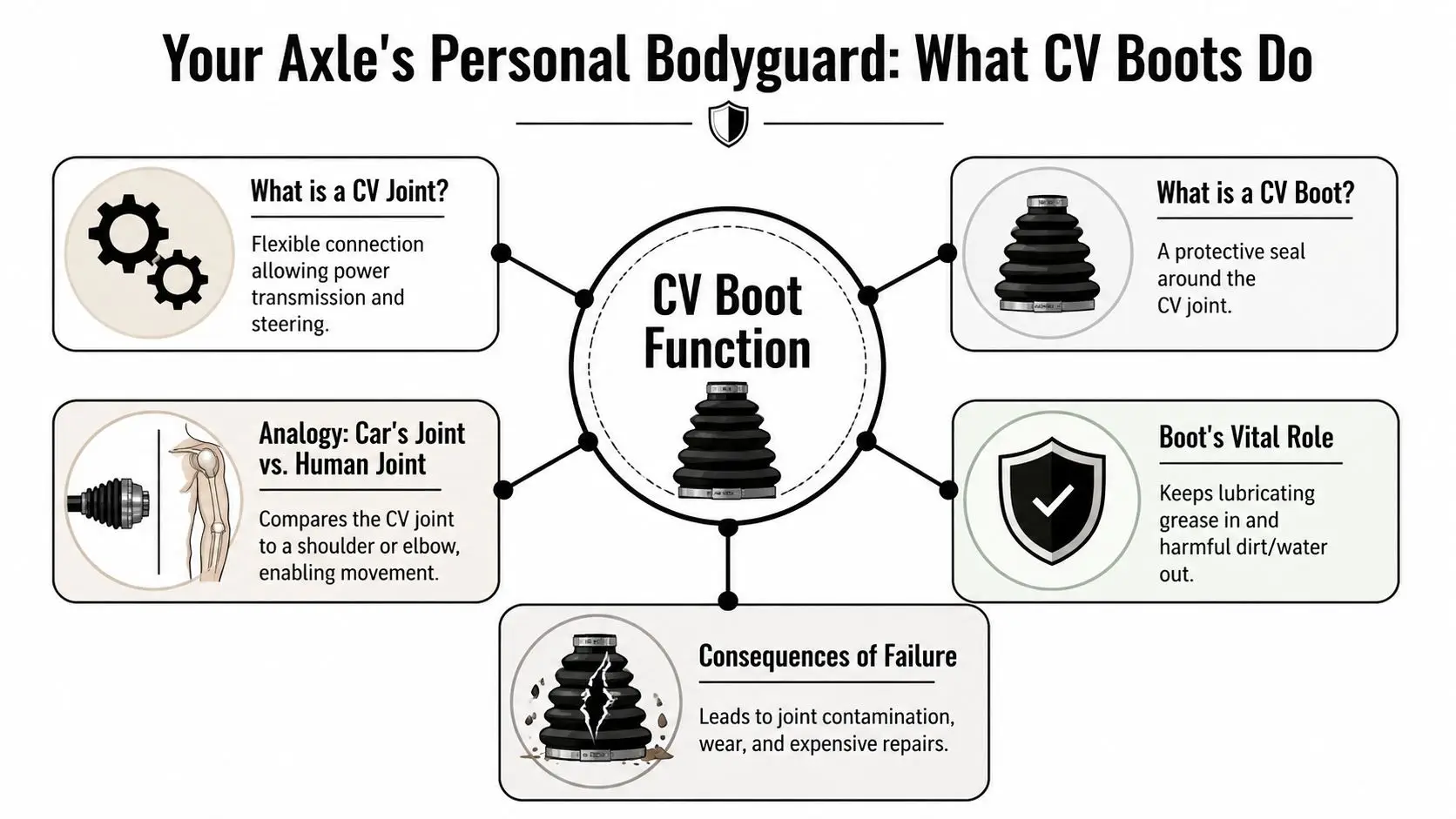
Think of your CV joint like a shoulder or elbow. A human joint bends and moves while still doing its job. Your vehicle needs the same kind of flexibility where the axle meets the wheel. The joint has to keep power flowing even while the suspension is moving and the wheel is turned.
A constant-velocity joint can operate at maximum angles of 42°, but with a protective boot, the maximum allowable operating angle decreases to 25° during dynamic driving. That flexibility is what keeps axles from fracturing during turns, and damaged boots are the most common cause of CV joint failure, according to this overview of constant-velocity joint operation.
The boot is a sealed cover
The boot is the accordion-shaped rubber or thermoplastic sleeve around the joint. Its shape matters because it has to flex every time you steer or hit a bump. It isn’t there for appearance. It’s there to create a sealed space around the joint.
Inside that sealed space is a special grease. This grease lubricates the moving parts so they can operate smoothly.
It does two jobs at once
A good CV boot has two basic jobs.
- Keeps grease in so the joint stays lubricated.
- Keeps contamination out so dirt, water, and road grime don’t reach the moving parts.
That second job is where many drivers get confused. They’ll see a torn boot and assume the issue is only “some grease leaking.” It’s usually worse than that. Once the seal is broken, the joint is exposed to exactly the stuff you don’t want inside a precision moving component.
Why the failure snowballs
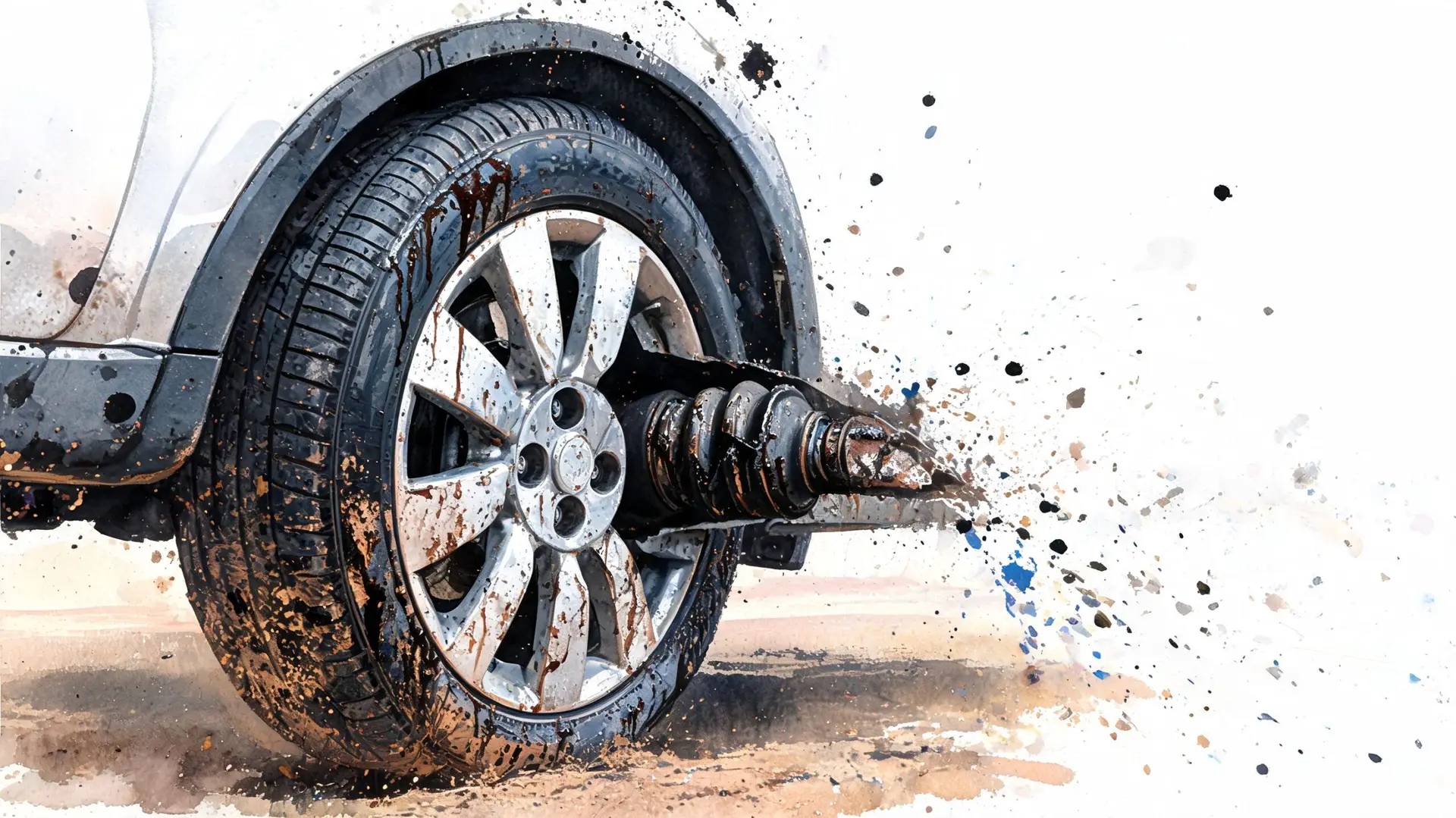
The underside of a vehicle is a rough place. Boots sit low, close to debris, heat, moisture, and constant flexing. When the material ages or gets damaged, the grease begins to sling outward as the axle rotates. You may even see grease on the inside of the wheel or tire sidewall.
Practical rule: If a boot can’t seal, the joint can’t stay healthy.
That’s why cv joints boots are often called small parts with big consequences. The joint itself is strong. The weak link is usually the protective cover.
Signs of a Failing CV Boot From Grease Splatters to Clicks
CV boot problems rarely announce themselves with a dashboard light. They show up in ways drivers can see, hear, and feel. Around North Texas, heat, road debris, and everyday wear all add stress to these parts.
Industry data indicates that 80% of CV joint problems stem directly from boot failure, and this explanation of CV boot damage and contamination makes clear why inspections matter. Once the boot tears, grease escapes and water and debris get inside the joint.
What causes boots to fail
Some failures happen from age. Rubber and similar materials flex thousands of times and eventually dry out, crack, or split. North Texas summer heat can make that aging process harder on exposed components under the vehicle.
Other failures are more sudden. A piece of road debris can nick the boot. A suspension impact can stretch it past what it likes. If the vehicle sees rough roads, towing, or a lot of stop-and-go driving, the boot has a tougher life than it would in gentle highway use.
The three signs drivers notice most
If you want a quick mental checklist, start here.
- Grease around the wheel area. Dark grease on the inside of the wheel, wheel well, or nearby suspension parts is one of the clearest signs. The axle spins, so leaked grease gets thrown outward.
- Clicking or popping while turning. This is the classic symptom. It’s usually most noticeable during low-speed, sharp turns, like pulling into a driveway or parking space.
- Vibration at speed. If the joint wears enough, you may feel a vibration through the vehicle or steering wheel, especially at higher road speeds.
What the noise usually means
A torn boot doesn’t always mean the joint is already ruined. But once a clicking noise starts, the joint has often already begun wearing internally. At that point, the problem has moved beyond simple visual damage.
This walk-through shows the kind of issue many drivers are trying to identify:
Grease splatter is the early clue. Clicking is the clue that tells you the joint may already be wearing out.
If your vehicle makes noise only when turning and not while braking, that’s another reason to look closely at cv joints boots and axle condition instead of focusing only on the brake system.
How to Perform a Quick Visual Inspection
You don’t need to be a technician to do a basic check. You do need to be careful. A simple visual inspection can reveal a torn boot before the damage gets worse.
CV joint boots are typically made from neoprene or advanced thermoplastic copolyesters, and their bellows shape is designed to accommodate steering angles of 40-50 degrees. If the seal fails, contamination can lead to complete joint failure within 5,000-10,000 miles, as explained in this technical overview of CV joint boot materials and sealing.
A safe driveway check
Park on a flat surface. Set the parking brake. Turn the steering wheel fully to one side so you can see more of the axle area behind the front tire.
Then look for the accordion-shaped boot near the axle. You’re not trying to disassemble anything. You’re just checking visible condition.
- Look for cracks or splits in the folds of the boot.
- Check for grease sling on the inner wheel, surrounding parts, or underbody.
- Notice the clamps at both ends. They should look present and secure.
- Compare left and right sides if you can. Sometimes one damaged side stands out when you see the other side still intact.
What you should not do
Don’t crawl under a vehicle supported only by a jack. Don’t grab rotating parts. Don’t assume a boot is fine just because the tear is small. Small openings are enough to let contamination in.
If you want a broader vehicle check while you’re already looking things over, this car inspection checklist is a useful companion.
If you see grease outside the boot, the seal has already failed. At that point, delay works against you.
When it’s time for a shop inspection
A driveway look is good for spotting obvious issues. It won’t tell you whether the joint itself has started wearing internally. If there’s clicking, vibration, or heavy grease loss, a technician should inspect it more closely.
CV Boot Repair Options DIY vs Professional Service
Once you know the boot is damaged, the next question is practical. Do you replace only the boot, swap the whole axle yourself, or hand the job to a shop?
Many online guides often make the process sound easier than it is. CV work can get messy fast, and the details matter. A common mistake is over-greasing. Heat from friction and brakes can cause grease and air inside the boot to expand, forcing the boot off its seal, and CV joints can exceed 200°F under load according to this discussion of common CV joint service mistakes.
Boot-only replacement
A boot-only repair sounds cheaper on paper. Sometimes it is. But it’s also the fussiest option.
You have to remove components, clean old grease, inspect the joint, pack the correct grease amount, and secure the clamps properly. If the joint has already started wearing, replacing only the boot may not solve much.
Full axle replacement
For many vehicles, replacing the complete axle assembly is more straightforward than servicing the boot and joint separately. That’s one reason many technicians prefer it. The assembly comes as a unit, and you avoid putting labor into a joint that may already have hidden wear.
It’s still not a beginner-friendly job for everyone. You may deal with stubborn axle nuts, suspension separation, seal concerns, and torque requirements that need to be exact.
Professional service
A shop can inspect the whole setup and tell you whether the joint is still worth saving or whether the smarter move is a complete axle replacement. That matters because the wrong repair can waste both time and money.
If you like seeing how related driveline repairs compare in difficulty, this guide on how to change a universal joint gives a good sense of why these jobs go beyond a simple bolt-off, bolt-on task.
| Factor | DIY Replacement | Professional Service (Express Lube) |
|---|---|---|
| Best fit | Drivers with tools, time, and mechanical experience | Drivers who want diagnosis and repair handled correctly |
| Difficulty | Moderate to high, depending on vehicle and whether you're replacing the boot or full axle | Lower for the owner because the shop handles disassembly, inspection, and reassembly |
| Mess level | High, especially with grease-packed components | Minimal for the owner |
| Tool needs | Hand tools, torque tools, and sometimes specialty equipment | Professional-grade shop equipment already on hand |
| Risk | Incorrect grease amount, poor clamp sealing, or missed joint wear | Lower risk when certified technicians inspect the complete assembly |
| Time commitment | Can stretch if parts are stuck or the diagnosis changes mid-job | More predictable turnaround |
| Confidence after repair | Depends on skill and inspection quality | Better if you want the vehicle checked as a complete system |
A simple decision rule
Choose boot-only DIY work only if you’re comfortable with teardown, grease handling, and careful reassembly. Choose full axle replacement if the joint is noisy or if you want a more complete fix. Choose professional service if you don’t want guesswork in a part of the drivetrain that directly affects drivability.
The cheapest-looking repair isn’t always the lowest-cost repair once labor, mess, and repeat failure are part of the picture.
Lifted Trucks and Modified Cars A Special Case for CV Boots
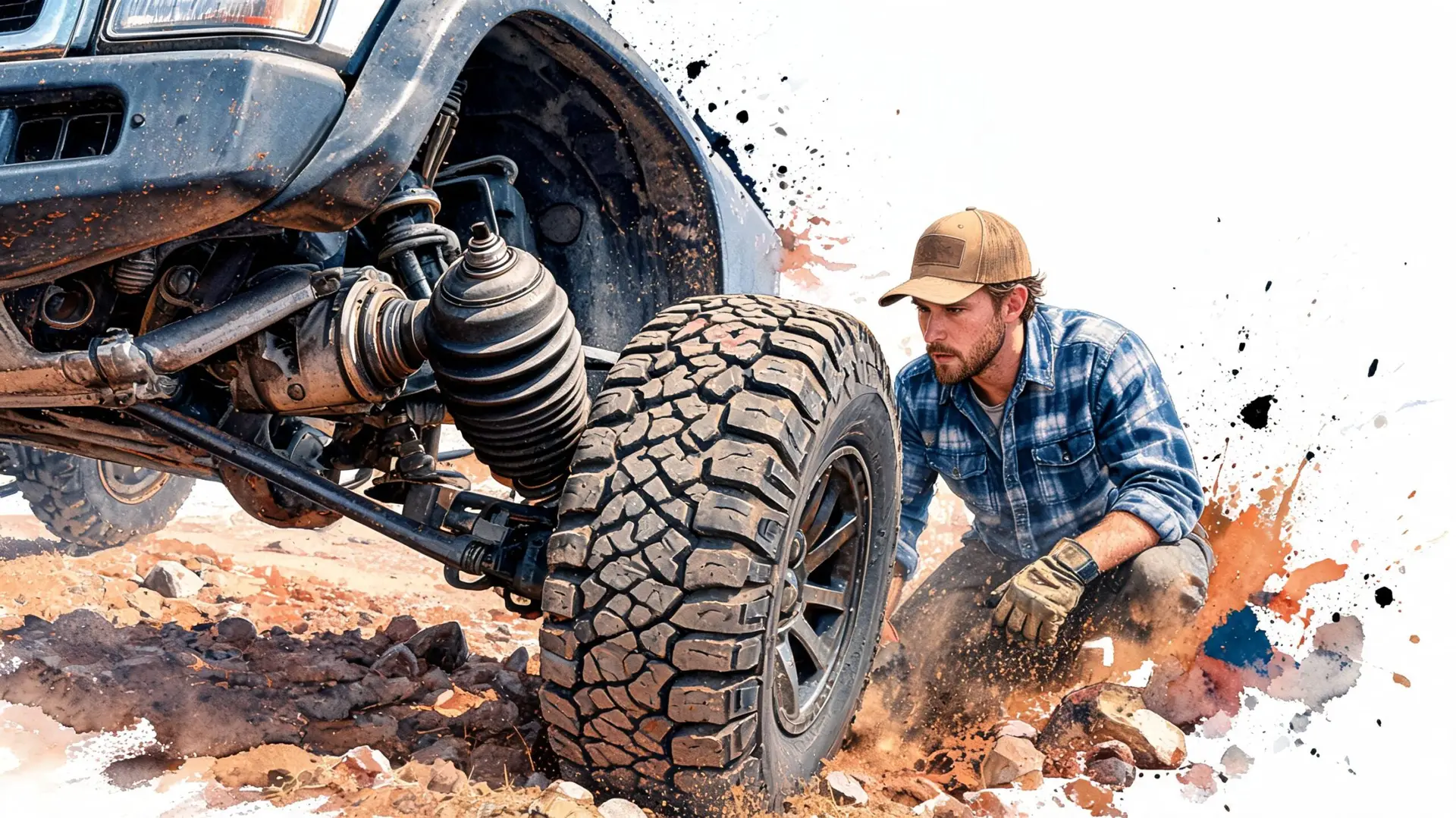
In Haltom City and across North Texas, lifted trucks are everywhere. Lowered cars are common too. These setups can look great and drive the way the owner wants, but they change suspension geometry. That affects CV joints boots.
When a vehicle is lifted, the axle often sits at a steeper angle than stock. That puts extra strain on the boot folds. In some trucks, the fins of the boot can rub against each other at the new angle.
Why stock geometry matters
Lifting a vehicle, including popular trucks like the Tacoma, can cause the boot’s fins to rub due to the steeper angle. Most CV joints can handle angles up to 45º, but prolonged operation at excessive angles increases wear, especially when subframes or suspension components are misaligned, as noted in this discussion of CV angle and boot wear on modified vehicles.
That doesn’t mean every lifted truck is doomed to tear boots. It means the margin for error gets smaller. Alignment, suspension condition, and part quality matter more.
What modified-vehicle owners should watch for
Modified vehicles benefit from more frequent visual checks than stock daily drivers.
- Check boot folds regularly after a lift or lowering job.
- Pay attention to rubbing marks on the bellows.
- Watch for grease traces after off-road driving or rough-road use.
- Don’t ignore angle-related vibration just because the truck is modified.
A suspension lift changes more than ride height. It changes the working angle every CV component has to live with.
If you own a modified truck or car, cv joints boots should be part of your routine inspection list, right alongside tires, shocks, and alignment wear.
Your Local Solution at Express Lube and Car Care
The big takeaway is simple. A CV boot is a small part that protects a much more expensive one. Ignore the boot, and the axle assembly may be next. Catch the issue early, and you may avoid a breakdown, noise complaint, or a much larger repair bill.
That matters for drivers in Haltom City, Keller, Watauga, and North Richland Hills who depend on their vehicles every day. It matters even more if your vehicle sees construction-zone debris, summer heat, frequent short trips, or a modified suspension setup.
What good service should look like
A good shop shouldn’t just say “you need an axle” and move on. They should show you the damaged area, explain whether the boot failed before the joint made noise, and tell you why one repair option makes more sense than another.
They should also inspect related components instead of treating the axle in isolation. If the vehicle has unusual suspension angles, missing clamps, or obvious grease loss, those details should be part of the conversation.
Why local drivers value a clear diagnosis
Busy drivers don’t want mystery repairs. They want to know what failed, what happens if they wait, and what the practical fix is. That’s especially true for fleet vehicles and family cars that can’t afford downtime.
For local maintenance and repair support, the full list of automotive services available at Express Lube and Car Care shows the kind of complete vehicle care many drivers need when a simple inspection turns up something more serious.
The best CV boot repair is the one handled before the joint starts clicking.
A careful inspection, a clear explanation, and quality parts go a long way with this kind of repair. That’s how you keep a small undercar problem from turning into a bigger drivability issue.
If your car is clicking in turns, showing grease around the wheel, or you just want a professional inspection of your cv joints boots, schedule a visit with Express Lube and Car Care. Local drivers in Haltom City and nearby communities can count on a straightforward diagnosis, quality repair recommendations, and experienced technicians who know what North Texas driving does to undercar components.