
A certified mechanic is a technician who has passed industry-recognized exams, such as those administered by ASE (Automotive Service Excellence), to prove competency in specific vehicle systems. Choosing the right one near you is not just about convenience. It directly affects how long your car lasts, how much you spend on repairs, and whether you can trust the diagnosis you receive. This nearby certified mechanic selection guide walks you through every step, from reading credentials on a shop wall to interpreting Google reviews and comparing shop types, so you can make a confident, informed decision without wasting time or money.
What certifications should you look for in a nearby mechanic?
ASE certification is the most widely recognized credential in American auto repair, and it covers everything from engine performance to electrical systems and collision repair. Master certification requires passing 8 core exams, and technicians must retest every five years to keep their credentials current. That retesting cycle matters because vehicle technology changes fast, and a mechanic certified in 2015 without renewal may not be equipped to handle a 2024 hybrid drivetrain.
Beyond ASE, OEM (original equipment manufacturer) certifications are worth checking if you drive a hybrid, electric vehicle, or a European import. Brands like Toyota, Ford, and BMW offer manufacturer-specific training programs that go deeper than general ASE categories. A shop with Toyota T-TEN or Ford FACT credentials, for example, has technicians trained directly on those platforms. This is especially relevant for complex diagnostics that require brand-specific software tools.
AAA-Approved Auto Repair and BBB accreditation are two additional markers of a shop that has been independently reviewed for customer satisfaction and ethical business practices. These are not just participation trophies. Both programs require shops to meet ongoing standards and respond to customer complaints.
Here is what to look for when verifying credentials:
- ASE certificates displayed in the waiting area or service bay (look for the blue seal)
- OEM training plaques or manufacturer program logos near the front desk
- AAA-Approved or BBB accreditation badges on the shop’s website or window
- Technician names listed with their specific ASE specialties, not just a generic “ASE-certified shop” claim
Pro Tip: Ask the service advisor which technician will work on your car and what their specific ASE certifications cover. A shop confident in its team will answer that question without hesitation.
You can also verify ASE credentials directly through the ASE website by searching a technician’s name or certification number. Do not rely solely on a shop’s self-reported claims.
How do online reviews help you find trustworthy local mechanics?
Online reviews are one of the most reliable tools for finding the best local mechanics, but only if you read them correctly. Google Maps organic listings with 4-star or higher ratings and consistent recent feedback are your most dependable starting point. Sponsored listings at the top of a search page are paid placements, not endorsements of quality. Scroll past them to the organic results.
Star averages alone tell you very little. A shop with 4.2 stars and 300 reviews is more trustworthy than one with 5.0 stars and 11 reviews. The volume and recency of reviews matter as much as the score itself.
Reading 3-star reviews gives you the most balanced picture of a shop’s real performance. Mid-range reviewers tend to describe specific experiences rather than venting frustration or writing promotional praise. Look for recurring themes in those reviews, such as comments about wait times, surprise charges, or poor communication. One complaint is noise. Three complaints about the same issue is a pattern.
Pro Tip: Search the shop’s name in local Facebook groups or brand-specific forums like Toyota Nation or BimmerFest. Real user recommendations from owners of your exact vehicle model are more relevant than any star rating.
Here is a quick reference for evaluating review sources:
| Review source | Best used for | Watch out for |
|---|---|---|
| Google Maps (organic) | Overall reputation and volume | Fake five-star clusters |
| Yelp | Detailed written feedback | Filtered reviews that hide negatives |
| RepairPal | Certified shop verification | Limited coverage in smaller cities |
| Facebook groups | Hyper-local, model-specific advice | Bias toward personal connections |
| Brand forums | Vehicle-specific technician expertise | Outdated recommendations |
Use at least two sources before forming a judgment. A shop that looks great on Google but has a pattern of complaints on RepairPal deserves a second look before you book.
Independent shop, chain, or dealership: which is right for you?
The type of shop you choose matters as much as the individual technician’s credentials. Each model has real strengths and real limitations, and the right choice depends on your vehicle’s age, the complexity of the repair, and your budget.
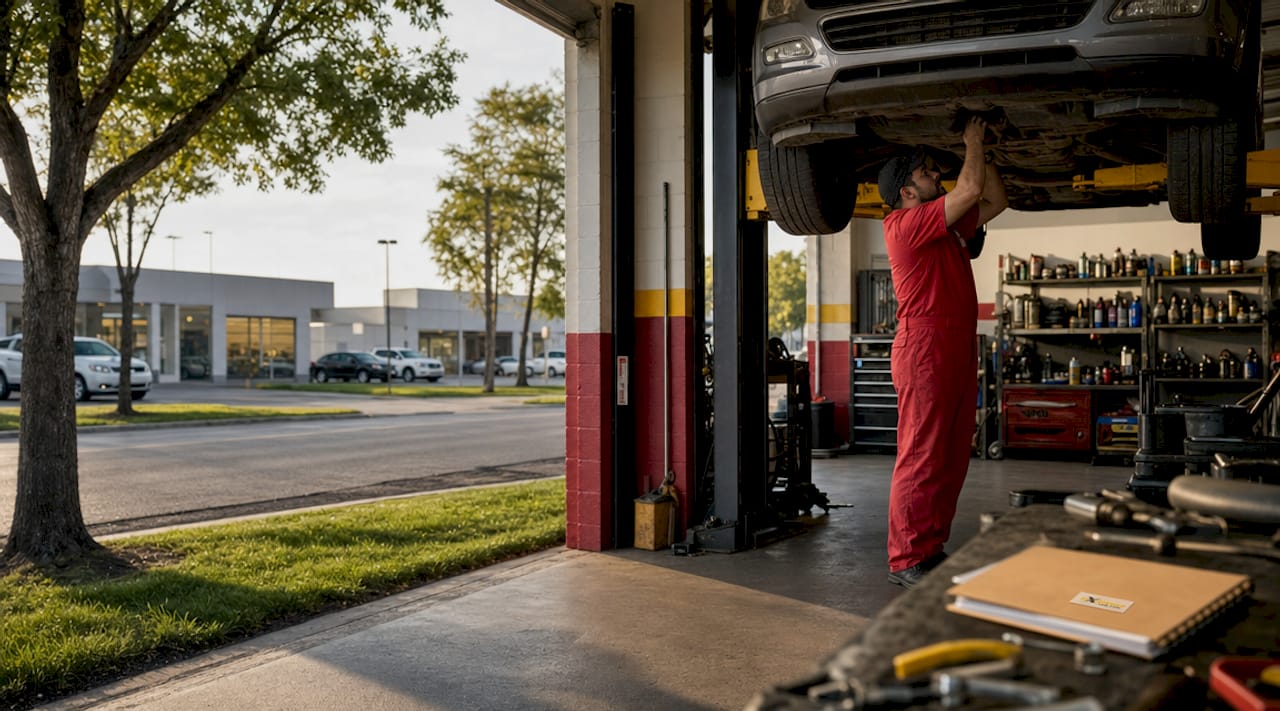
Independent shops offer personalized service and lower labor rates than dealerships, making them a strong choice for routine maintenance and most common repairs. The owner often works on-site, which creates accountability that larger chains sometimes lack. The tradeoff is that some independent shops may not have the specialized diagnostic software required for newer vehicles or complex systems.
Dealerships charge $150 to $200 per hour but provide factory-trained technicians, OEM parts, and brand-specific diagnostic tools. For warranty work, recall repairs, or a vehicle still under the manufacturer’s coverage, a dealership is often the only logical choice. Independent shops save you $20 to $40 per hour on labor, but that savings disappears if they cannot complete the repair correctly without the right tools.
Chain shops like Jiffy Lube, Midas, or Firestone offer standardized service menus and consistent warranty terms across locations. They work well for oil changes, tire rotations, and brake inspections. Where they fall short is in complex diagnostics and personalized attention. Upselling is also more common at chain locations, where service advisors often work on commission.
| Shop type | Labor cost | Best for | Limitation |
|---|---|---|---|
| Independent | Low to moderate | Routine and complex repairs | May lack OEM tools |
| Chain | Moderate | Standardized maintenance | Upsell pressure, limited diagnostics |
| Dealership | High | Warranty, recalls, advanced diagnostics | Premium pricing on all services |
Understanding these differences helps you match the shop to the job rather than defaulting to whoever is closest or cheapest.
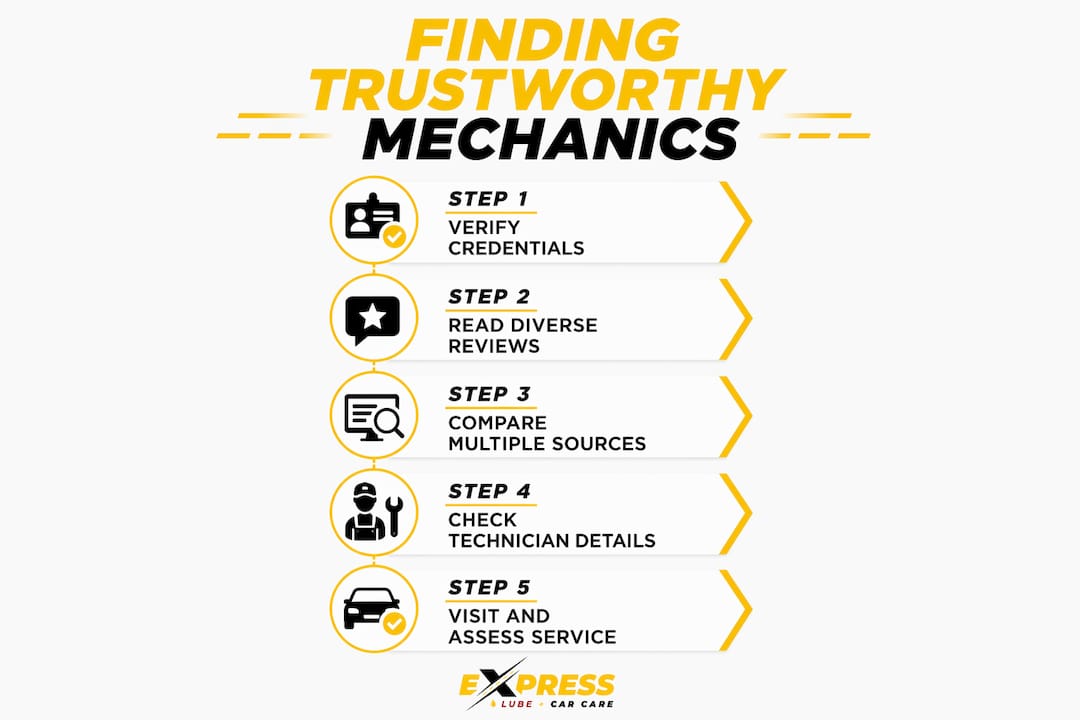
How to vet and select your certified mechanic step by step
Selecting a mechanic you can trust takes about 30 minutes of research upfront and one trial visit. Follow this process and you will avoid most of the common mistakes car owners make.
- Start with a local Google Maps search. Use terms like “certified mechanic near me” or “ASE-certified auto repair” and focus on organic results with 4-plus stars and at least 50 reviews.
- Cross-check certifications and accreditations. Look for ASE credentials, OEM training, AAA-Approved status, or BBB accreditation on the shop’s website or by calling ahead.
- Ask about experience with your specific vehicle. Proactive owners who ask about brand-specific experience consistently get better service outcomes. A shop that has serviced dozens of Honda CR-Vs will handle yours more confidently than one that rarely sees them.
- Request a written estimate before any work begins. The estimate should break down parts and labor separately. Use this auto repair estimates guide to understand what a fair, transparent quote looks like and what to question.
- Start with a low-stakes trial service. Routine maintenance like an oil change tests a shop’s communication, organization, and attention to detail before you commit to a major repair.
- Confirm warranty terms in writing. A reputable shop offers at least 12 months or 12,000 miles on parts and labor. If a shop cannot tell you its warranty policy clearly, that is a red flag.
- Trust your read on the interaction. How a mechanic explains repairs and whether they respect your questions is often the clearest signal of long-term reliability. A good technician welcomes questions. A dismissive one does not.
Pro Tip: Check the shop’s reliable auto shop traits against a structured checklist before your first visit. It takes five minutes and removes most of the guesswork.
This process works whether you are new to an area, switching mechanics after a bad experience, or simply doing your due diligence for the first time.
Key takeaways
Choosing a certified mechanic near you requires verifying ASE credentials, reading reviews critically, matching the shop type to your vehicle’s needs, and testing the relationship with a low-risk service before committing to major repairs.
| Point | Details |
|---|---|
| Verify ASE credentials directly | Look for posted certificates and confirm technician-level credentials, not just shop-level claims. |
| Read mid-range reviews first | Three-star reviews reveal recurring patterns in communication and pricing better than extreme ratings. |
| Match shop type to the job | Use independents for value, dealerships for warranty work, and chains only for standardized maintenance. |
| Start with a trial service | An oil change reveals shop organization, communication, and professionalism before you risk a major repair. |
| Confirm warranty in writing | A minimum of 12 months or 12,000 miles on parts and labor is the standard for reputable shops. |
What we have learned from years of working with local drivers
The most common mistake we see is car owners choosing a mechanic based on price alone, then spending more money fixing what the cheaper shop missed. Price matters, but it is not the first filter. Certification and communication are.
At Express Lube & Car Care, we have found that the drivers who get the best long-term outcomes are the ones who treat their mechanic relationship like any other professional relationship. They ask questions. They show up for routine maintenance consistently. They do not wait until a warning light has been on for three weeks. That steady relationship is what allows a technician to notice when something is slightly off before it becomes a $1,200 repair.
One thing that rarely gets mentioned in generic mechanic guides is the value of finding an ASE-certified mechanic who specializes in your vehicle category. A technician who works on domestic trucks every day will diagnose your F-150 faster and more accurately than a generalist who sees one every few weeks. That specialization shows up in labor time, parts accuracy, and the quality of the explanation you receive.
We also want to be direct about red flags. If a shop cannot give you a written estimate, pushes you to authorize work before explaining what is wrong, or cannot name the specific technician who will handle your car, walk away. Transparency is not a bonus feature in a good shop. It is the baseline.
— Express Lube & Car Care
See the difference at Express Lube & Car Care
Express Lube & Car Care in Haltom City is staffed by ASE-certified technicians and holds RepairPal certification, which means pricing and quality are independently verified. No appointment is needed for most services, and every job comes with transparent written estimates so you know exactly what you are paying for before work begins.
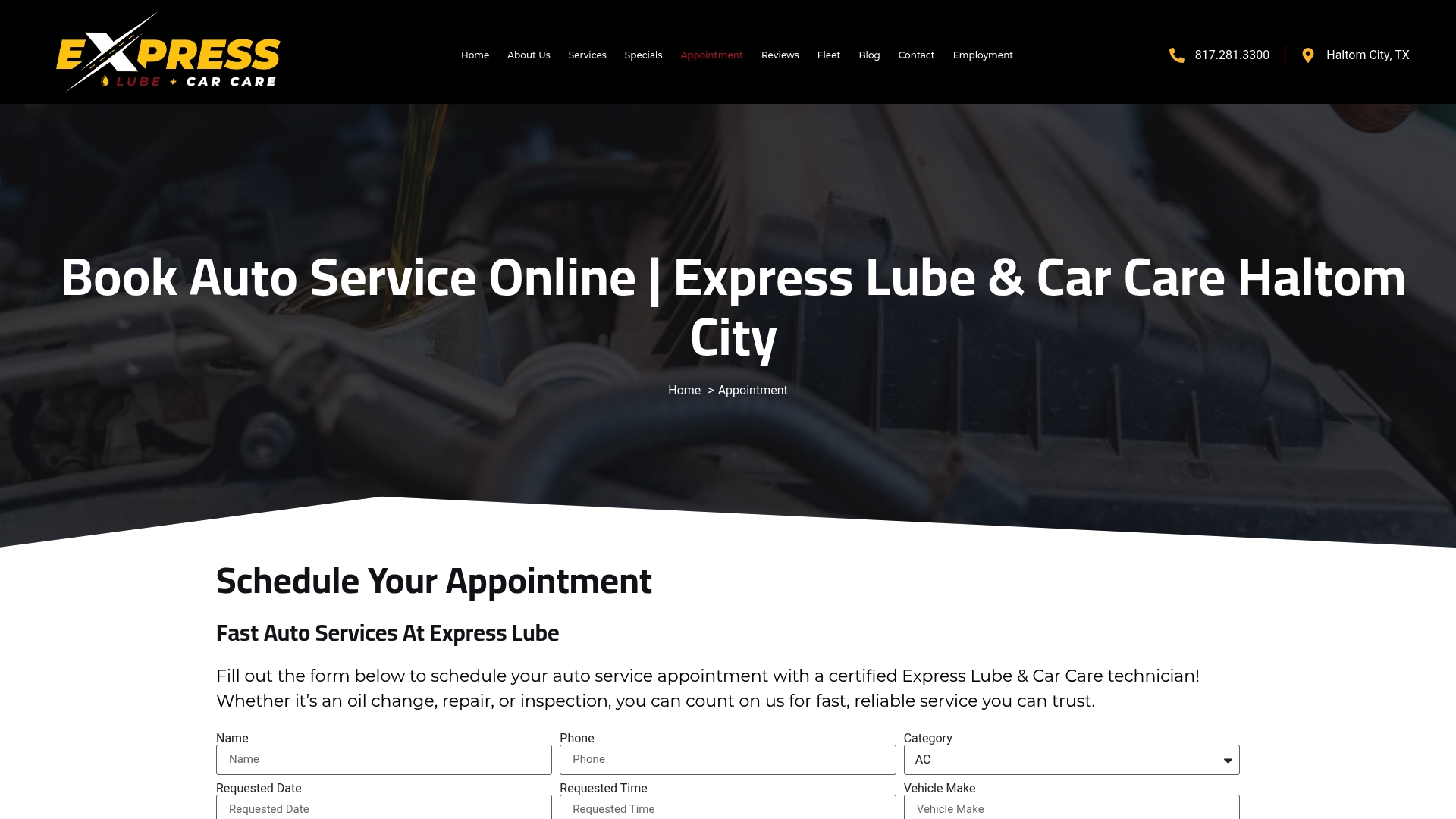
If you want to test the experience before committing to a major repair, start with an oil change. It is a low-cost, low-risk way to evaluate how the team communicates, how organized the shop is, and whether the service matches the promise. For more complex concerns, the engine diagnostics and repair team is equipped with the tools and training to handle advanced issues accurately. You can also explore the full range of services at Express Lube & Car Care and book your visit when you are ready.
FAQ
What does ASE certification actually mean for a mechanic?
ASE certification means a technician has passed standardized exams in specific vehicle systems and must retest every five years to stay current. It is the most widely recognized professional credential in American auto repair.
How do I verify a mechanic’s certifications before visiting?
You can search a technician’s name or certification number on the ASE website, or ask the shop directly to show posted certificates and name the technician assigned to your vehicle.
Is an independent shop or a dealership better for my car?
It depends on the repair. Independent shops offer better value for routine and most common repairs, while dealerships are the right choice for warranty work, recalls, and complex diagnostics requiring brand-specific tools.
What warranty should a reputable auto repair shop offer?
A reputable shop offers at least 12 months or 12,000 miles on parts and labor. Always ask for warranty terms in writing before authorizing any repair.
How do I use online reviews to find the best local mechanics?
Focus on Google Maps organic listings with 4-plus stars and at least 50 reviews, and read the 3-star reviews carefully for patterns in communication and pricing issues rather than relying on the overall score alone.