
That faint hum, a slight vibration, a new clicking sound-your vehicle communicates its health in subtle ways. Often, these are early warnings for components like wheel bearings, which are crucial for a smooth and safe ride. Ignoring the initial signs of wheel bearing failure can lead to dangerous situations and much more expensive repairs down the road. This is a safety issue that requires immediate attention, as a completely failed bearing can cause a wheel to lock up or even detach from the vehicle while driving.
For drivers in Haltom City, understanding these signals is the first step toward proactive car care. This guide is designed to be a straightforward resource for our local community. We will break down the seven most common signs of a bad wheel bearing, explaining what each symptom means, how to spot it, and why prompt action is so essential for your safety on Haltom City roads.
We'll provide practical tips, from simple on-road checks you can perform yourself to understanding a technician's diagnostic process. Our goal is to empower you to confidently identify potential issues and know when to seek professional help, keeping your vehicle running safely on Texas roads.
1. Grinding or Squealing Noise When Turning
One of the most distinct and common early signs of wheel bearing failure is a grinding, squealing, or humming sound that becomes noticeably louder when you turn your vehicle. This noise is a direct result of the internal components of the bearing wearing down, which eliminates the smooth, low-friction surface needed for your wheel to rotate freely. As the bearing degrades, metal-to-metal contact generates friction and heat, producing the audible warning sign.
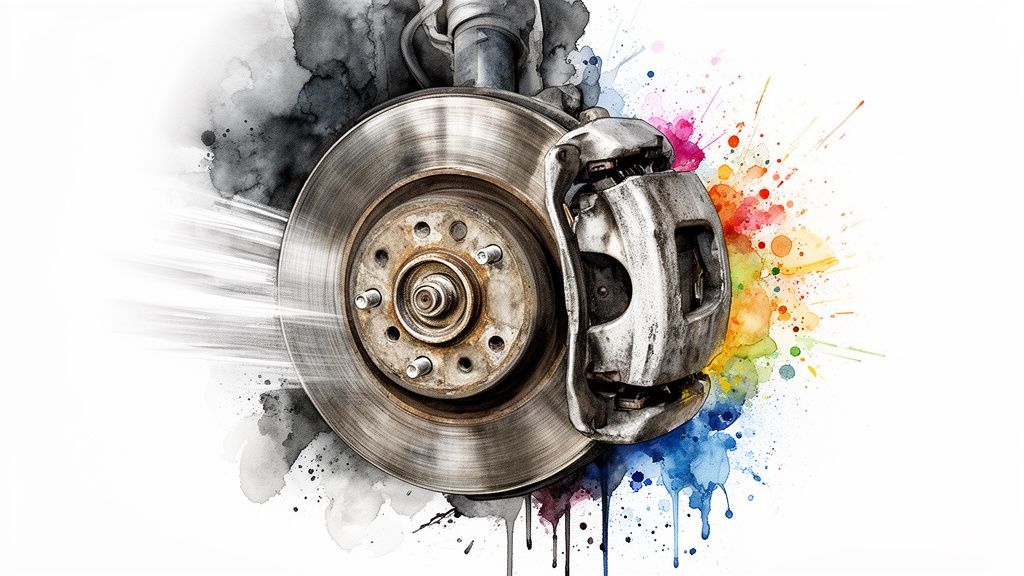
The sound often isolates itself depending on the direction of your turn. When you steer, the vehicle's weight shifts, placing greater load on the wheel bearing on the outer side of the turn. For example, a failing bearing on the front passenger side will typically become louder when you make a left turn. This is a critical diagnostic clue that our technicians at Express Lube & Car Care here in Haltom City use to pinpoint the problem quickly.
Real-World Examples
- Daily Commuter: A Haltom City driver notices a low humming noise on the highway that transforms into a distinct grinding sound only when they take the curved exit ramp to the right each morning.
- Fleet Vehicle: A fleet manager in Haltom City gets a report from a driver about a "squeal" during tight, low-speed turns in a parking garage, prompting a vehicle inspection before the bearing fails completely on a delivery route.
What to Do
If you hear these noises, it's time for a professional diagnosis. While a bad bearing is the likely culprit, similar sounds can sometimes be linked to brake issues. You can explore other potential causes by reading about common brake problem symptoms, but a comprehensive inspection is the only way to be certain. Ignoring this warning can lead to more severe damage, including hub and axle failure, which is a far more expensive repair.
Actionable Tip: Don't delay. The moment you notice a consistent turning-related noise, schedule an inspection. Early diagnosis at our Haltom City facility can prevent a simple bearing replacement from escalating into a major safety hazard and a costly repair.
2. Excessive Vibration in Steering Wheel or Vehicle
Another critical symptom that points toward signs of wheel bearing failure is a distinct vibration felt through the steering wheel, floorboard, or the entire vehicle. This shaking is caused by the deteriorating bearing allowing excessive play or "wobble" in the wheel assembly. As the internal components wear out, the wheel can no longer rotate smoothly, creating an imbalance that translates into a noticeable vibration as you drive.
This vibration typically starts subtly but will intensify as the bearing damage worsens. You might first notice it at higher speeds, such as when driving on I-820, but it can eventually become present at lower speeds as well. For safety-conscious drivers in Haltom City, this symptom is a clear signal that the vehicle's handling and stability are compromised, requiring immediate professional attention from our certified technicians at Express Lube & Car Care.
Real-World Examples
- Busy Professional: A professional driving daily on I-820 through Haltom City notices a new, persistent vibration in their steering wheel at highway speeds that wasn't there before. The feeling is unsettling and affects their confidence in the vehicle's control.
- Fleet Manager: During a routine safety inspection on a company vehicle in Haltom City, a fleet manager identifies a slight but unusual vibration. They ground the vehicle until it can be inspected, preventing a potential on-road failure.
What to Do
If you feel this type of vibration, it's crucial to have it diagnosed. While a bad wheel bearing is a strong possibility, vibrations can also be caused by unbalanced tires, alignment issues, or suspension problems. To understand the full scope of what a technician will check, you can read about our comprehensive auto diagnostic services. A thorough inspection at our Haltom City shop is the only way to accurately identify the source and ensure your safety.
Actionable Tip: Don't dismiss steering wheel vibration as a minor annoyance. Test your vehicle on a smooth, flat road at different speeds to see if the vibration changes. Note if it occurs while driving straight, turning, or both, and bring this information to our Haltom City technicians for a faster diagnosis.
3. ABS Warning Light Activation
While many associate dashboard lights with direct system failures, an illuminated Anti-Lock Braking System (ABS) warning light can be a surprising but important sign of wheel bearing failure. In modern vehicles, the ABS relies on wheel speed sensors to monitor the rotation of each wheel. These sensors are often integrated directly into the wheel bearing and hub assembly. When a wheel bearing begins to wear out and develops excessive play or wobble, it disrupts the precise gap between the sensor and its magnetic reluctor ring, leading to erratic or inconsistent speed signals.
Your vehicle's computer interprets this faulty data as a potential brake system problem, triggering the ABS light. This is a critical safety indicator because a malfunctioning ABS can compromise your vehicle's stability during hard braking. At Express Lube & Car Care, our technicians use advanced OBD-II scanners to read the specific fault codes, allowing us to determine if the issue stems from a failing bearing or another component within the ABS.
Real-World Examples
- Haltom City Resident: A driver in Haltom City notices their ABS light comes on intermittently after hitting a large, unavoidable pothole. A diagnostic check reveals the impact damaged the wheel bearing, causing the integrated speed sensor to send faulty signals.
- Fleet Vehicle: During a routine safety inspection for a local Haltom City delivery fleet, a technician pulls an ABS fault code pointing to the left rear wheel. Further inspection confirms the wheel bearing has failed, even before the driver noticed any audible symptoms.
What to Do
An illuminated ABS light should never be ignored, as it indicates a compromise in your vehicle's primary safety systems. While the root cause could be a simple sensor issue, it often points to a more significant mechanical problem like a bad wheel bearing. You can find more information about what it means when your brake light comes on the dashboard, but a professional diagnostic is essential. Continuing to drive with an active ABS light can lead to brake system failure and potentially a complete wheel detachment if the bearing fails catastrophically.
Actionable Tip: If your ABS light is on, schedule a computer diagnostic test immediately. At our Haltom City location, we can quickly read the fault codes to pinpoint the exact wheel and determine if a bearing replacement is necessary to restore your vehicle's safety.
4. Wobbling or Loose Feeling Wheel
One of the most alarming and severe signs of wheel bearing failure is a tangible wobbling, vibration, or looseness felt through the steering wheel or the entire vehicle. This sensation indicates that the bearing has deteriorated to a critical point where it can no longer hold the wheel hub assembly securely. The excessive play allows the wheel to physically move and wobble on its axle, creating a dangerous and unstable driving condition.
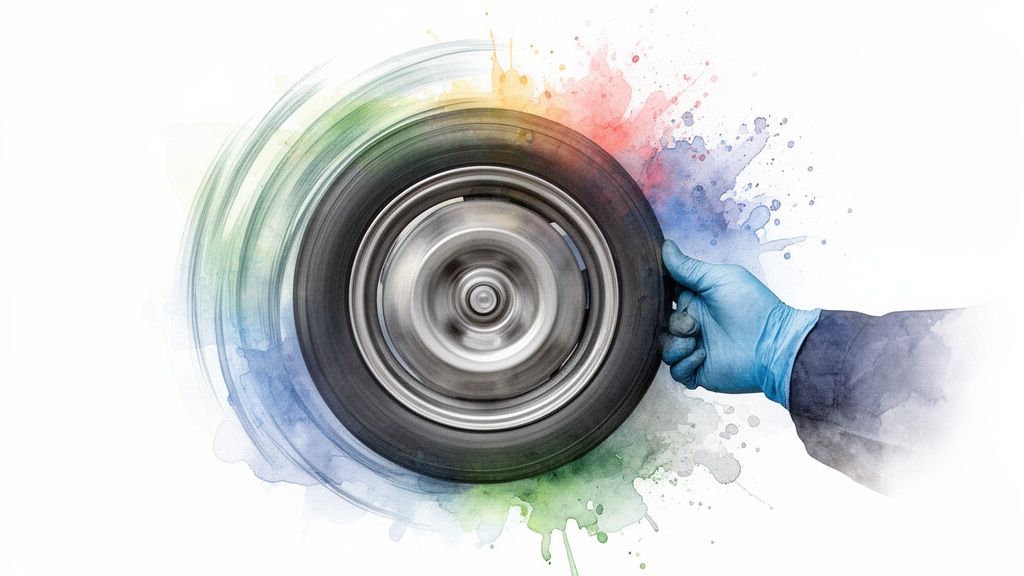
This symptom typically manifests at lower speeds but can worsen dramatically as you accelerate, compromising your ability to steer accurately and maintain control. Unlike a tire balancing issue that often appears at specific highway speeds, a loose feeling from a bad bearing is more consistent and feels like the wheel itself is unstable. This is not just a warning sign; it is a mechanical emergency that requires immediate attention to prevent the wheel from detaching from your vehicle.
Real-World Examples
- Local Commuter: A Haltom City driver feels a distinct "wobble" from the front end while navigating a parking lot. Recognizing the danger, they immediately call for service instead of attempting to drive home.
- Fleet Vehicle: During a routine pre-trip inspection in Haltom City, a fleet driver physically shakes a wheel and detects significant looseness, grounding the vehicle before it can begin its delivery route and preventing a potential disaster.
What to Do
If your wheel feels loose or you notice a prominent wobble, your vehicle is unsafe to drive. Pull over to a safe location as soon as possible and shut off the engine. Driving further, especially at highway speeds, significantly increases the risk of the wheel separating from the axle, which can cause a catastrophic accident. We strongly advise drivers in Haltom City to have their vehicle towed to a professional repair facility like Express Lube & Car Care for an emergency inspection.
Actionable Tip: Never ignore a wobbly or loose wheel. This is a critical safety failure in progress. Contact us immediately for an emergency appointment or arrange for a tow to our Haltom City shop. Do not risk driving the vehicle; the potential for complete failure is extremely high.
5. Increased Heat Radiating From Wheel Area
One of the more alarming signs of wheel bearing failure is an unusual amount of heat radiating from the wheel area after driving. This extreme heat is a direct consequence of intense friction. As the bearing’s internal components break down, the lack of lubrication and increased metal-on-metal contact generate temperatures far beyond normal operating levels. A wheel that is noticeably hot to the touch indicates the bearing is in an advanced stage of failure and is dangerously close to seizing completely.
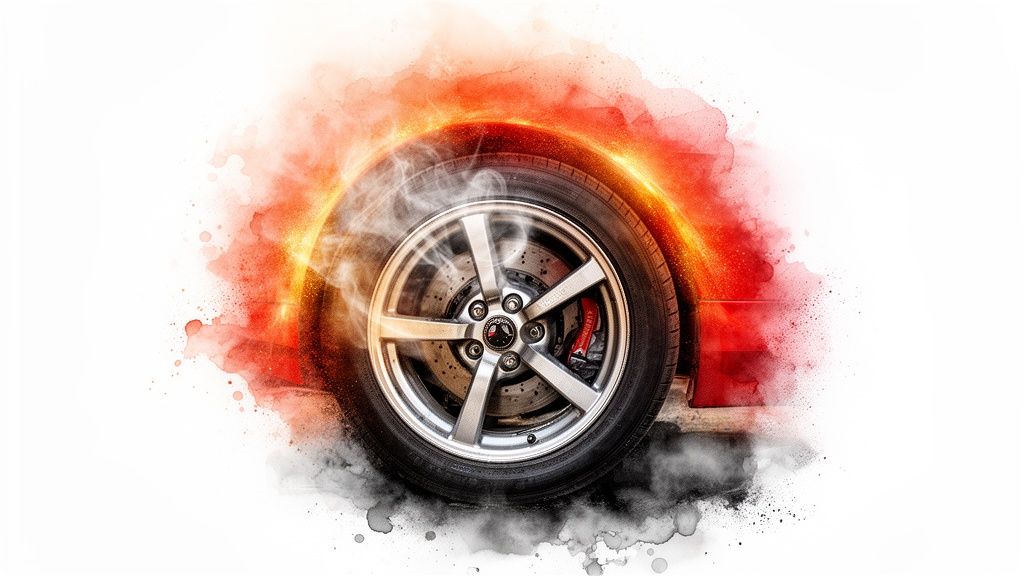
This symptom often appears after other signs, like noise or vibration, have been ignored. The heat can become so intense that it damages surrounding components, including the wheel hub, axle spindle, and even the braking system. This is not just a sign of a problem; it's a critical safety warning that the wheel assembly could lock up while you are driving, leading to a complete loss of control. Our certified technicians at Express Lube & Car Care in Haltom City treat this symptom with the utmost urgency.
Real-World Examples
- Highway Driver: After a routine drive in Haltom City, a driver notices a distinct burning smell and feels significant heat coming from their rear wheel well while getting groceries out of the car.
- Local Business Owner: A fleet vehicle operator in Haltom City performs a post-trip inspection and discovers one of the truck's front wheels is significantly hotter than the others, prompting an immediate call for service.
What to Do
If you detect excessive heat from a wheel, do not continue driving the vehicle. The risk of the bearing seizing is extremely high. Cautiously check the temperature by hovering your hand near the wheel; never touch it directly, as it can cause severe burns. The best course of action is to have your vehicle towed for a professional inspection. Ignoring this can result in catastrophic failure, potentially causing an accident and leading to far more extensive and expensive repairs to the hub, axle, and brakes.
Actionable Tip: If you notice a hot wheel, your vehicle is unsafe to drive. Contact us immediately at Express Lube & Car Care for guidance and arrange for a tow to our Haltom City shop. Addressing this emergency promptly is crucial for your safety and prevents collateral damage to other critical components.
6. Play or Movement in Wheel Hub When Vehicle Is Lifted
While audible noises are common signs of wheel bearing failure, a definitive physical test provides undeniable proof. When a vehicle is safely on a service lift, a technician can check for excessive play or looseness in the wheel hub. This is a direct physical manifestation of a worn-out bearing that has lost its tight tolerances, allowing the wheel to wobble on its axis.
A healthy bearing holds the wheel securely with no perceptible movement. However, as the internal raceways and ball bearings degrade, a gap forms. This gap allows the entire wheel and hub assembly to rock back and forth. Our technicians at Express Lube & Car Care perform this check by grasping the tire at the 12 and 6 o'clock positions and applying force to see if it tilts. Any noticeable play is a clear indicator of a failing bearing.
Real-World Examples
- Routine Maintenance Catch: During a standard oil change for a Haltom City customer, our technician performs a courtesy vehicle check and discovers significant play in the front driver-side wheel, recommending a replacement before it becomes a safety risk.
- Preventative Fleet Care: A fleet manager in Haltom City adds a "wheel bearing play check" to their preventative maintenance schedule. This proactive step helps them identify and replace bearings on their delivery vans before a catastrophic failure can occur on the road, preventing costly downtime.
What to Do
This test requires a vehicle lift and should only be performed by a trained professional. You can, however, be proactive by requesting this specific check during your next service visit. It's a quick and simple procedure that provides peace of mind or an early warning. If play is detected, it confirms the bearing needs immediate attention, as this looseness directly impacts steering, alignment, and tire wear.
Actionable Tip: The next time your vehicle is at our Haltom City shop for a tire rotation or brake inspection, ask our technician to specifically check for wheel bearing play. It takes only a moment and is one of the most reliable methods for confirming the health of your wheel bearings.
7. Clicking or Popping Noise During Acceleration or Cornering
Beyond the more common grinding or humming, another of the key signs of wheel bearing failure is a distinct clicking, popping, or knocking sound. This noise typically surfaces during acceleration or while cornering, moments when the load and rotational forces on the bearing are at their highest. The sound is caused by worn-out rollers or races inside the bearing assembly, which create excessive clearance and allow for uneven, jarring contact instead of smooth rotation.
This periodic contact produces sharp clicks or pops that are often synchronized with the speed of your wheel rotation. As the bearing deteriorates further, the internal friction and uneven resistance build, making the noise more pronounced. It's a clear mechanical cry for help, indicating that the bearing is no longer able to manage the forces exerted upon it during routine driving maneuvers.
Real-World Examples
- Local Commuter: A Haltom City driver hears a repetitive clicking noise every time they accelerate from a stop sign on their way to work. The sound disappears once they reach cruising speed but returns during turns.
- Fleet Maintenance: A fleet operator in Haltom City instructs their drivers to report any unusual noises. One driver notes a popping sound during sharp turns on a delivery route, prompting an immediate inspection that catches a failing bearing before it seizes.
What to Do
A clicking or popping noise should never be ignored, as it signifies significant internal wear. While a failing wheel bearing is a strong possibility, these sounds can sometimes be confused with a bad CV axle or even transmission issues. To understand other potential driveline problems, you can read about symptoms like a car transmission slipping, but a professional inspection is essential for an accurate diagnosis. Continuing to drive with this symptom drastically increases the risk of the bearing seizing completely, which can cause the wheel to lock up while you're driving.
Actionable Tip: If you hear clicking or popping, find a safe, open area like a parking lot to test it. Gently accelerate and make sharp, slow turns to see if you can replicate the noise. Then, schedule an appointment with our certified technicians at Express Lube & Car Care in Haltom City for a definitive diagnosis and to ensure your vehicle remains safe on the road.
7-Point Comparison of Wheel Bearing Failure Signs
| Symptom | 🔄 Implementation complexity | ⚡ Resource requirements | ⭐ Expected reliability/quality | 💡 Ideal use case | 📊 Key advantages |
|---|---|---|---|---|---|
| Grinding or Squealing Noise When Turning | Moderate — audible checks + road/turn testing | Technician listening test, test drive, lift if needed | ⭐⭐⭐⭐ — strong early indicator when directional | Early detection during city driving or corner tests | Audible warning enables timely diagnosis and cost savings |
| Excessive Vibration in Steering Wheel or Vehicle | Moderate–High — multiple causes to isolate | Road test, wheel balancing equipment, lift, alignment tools | ⭐⭐⭐ — common but nonspecific | Highway-speed checks and routine safety inspections | Prompts prompt service; measurable on lift for diagnosis |
| ABS Warning Light Activation | High — electronic diagnostics required | OBD/ABS scanner, diagnostic tools, possible sensor replacement | ⭐⭐⭐⭐⭐ — clear electronic alert to a fault | Immediate inspection when ABS light appears | Direct fault codes guide accurate repair; safety protected |
| Wobbling or Loose Feeling Wheel | High — safety-critical, urgent inspection | Lift, hands-on inspection, possible towing, replacement parts | ⭐⭐⭐⭐⭐ — unmistakable indicator of severe failure | Emergency stop and tow; pre-trip safety checks | Identifies critical hazard; prevents catastrophic failure |
| Increased Heat Radiating From Wheel Area | High — tactile/thermal sign of severe friction | Thermal check, inspection, possibly thermal imaging, tow | ⭐⭐⭐⭐ — strong sign of advanced damage | After long drives or post-highload operation | Clear tactile/visual cue prompting immediate service |
| Play or Movement in Wheel Hub When Vehicle Is Lifted | Moderate — performed by trained technician | Service lift, hands-on inspection, measurement tools | ⭐⭐⭐⭐⭐ — definitive professional diagnostic | Routine maintenance or when other symptoms are present | Reliable detection; documents severity and repair timeline |
| Clicking or Popping Noise During Acceleration or Cornering | Moderate — rhythmic sound analysis required | Test drive, inspection for CV/joints and bearings | ⭐⭐⭐ — useful early indicator but can be mistaken | Safe acceleration/turn tests in parking or low-speed areas | Distinct pattern helps isolate bearing issues before grinding |
Your Next Step: Get a Professional Diagnosis in Haltom City
Navigating the complexities of your vehicle's health can feel daunting, but understanding the signs of wheel bearing failure is a critical first step toward ensuring your safety on the road. We've explored the tell-tale symptoms, from the subtle hum that grows into a roar to the unnerving vibration that shakes your steering wheel. Recognizing these indicators is not just about avoiding costly repairs; it’s about maintaining control of your vehicle and protecting yourself, your passengers, and others on Haltom City roads.
Ignoring a grinding noise, a loose-feeling wheel, or an illuminated ABS light is a gamble with serious consequences. A compromised wheel bearing won't fix itself; it will only degrade further, potentially leading to catastrophic failure where the wheel can seize up or even detach from the vehicle entirely. The key takeaway from this guide is proactive vigilance. Your car communicates its problems through these sounds and sensations, and listening to them is the hallmark of a responsible driver.
From Suspicion to Certainty: The Importance of Expert Diagnostics
While this guide equips you with the knowledge to suspect a failing wheel bearing, a definitive diagnosis requires specialized tools and expertise. Simple on-road checks can point you in the right direction, but only a certified technician can confirm the issue without a doubt. Professionals can lift the vehicle, check for the specific play and resistance that indicates bearing wear, and rule out other potential culprits like tire imbalances or suspension problems. This precision is vital, as it ensures you are only paying for the repair you actually need.
For residents in Haltom City, finding a trustworthy automotive partner is essential. While a comprehensive local business directory can be a great resource for exploring various services in the greater DFW metroplex, having a dedicated specialist for your car's critical systems provides unparalleled peace of mind. An accurate diagnosis from a trusted local shop like ours in Haltom City is the bridge between suspecting a problem and solving it correctly the first time.
Take Action Today for a Safer Drive Tomorrow
The information presented here empowers you to be an informed vehicle owner, but the most crucial step is the one you take next. Don't let a potential safety issue linger. The difference between a simple bearing replacement and a more complex, expensive, and dangerous failure is often a matter of timely intervention. By addressing the signs of wheel bearing failure as soon as they appear, you are investing in your vehicle’s longevity and, more importantly, your own safety. Your journey begins with recognizing the symptoms, but it concludes with a professional, reliable repair.
Don't wait for a warning sign to become an emergency. The ASE-certified technicians at Express Lube and Car Care in Haltom City are equipped with the diagnostic tools and expertise to accurately identify and resolve wheel bearing issues. Schedule your vehicle inspection today at Express Lube and Car Care and drive with the confidence that comes from professional service.