
Your brake pads are a lot like the soles on your favorite pair of running shoes. They’re designed to wear down over time to keep you safe and in control. For drivers here in Haltom City, that typical 25,000 to 65,000-mile lifespan can look wildly different from one car to the next. Let's break down what those numbers really mean for your daily drive in and around Haltom City.
How Long Brake Pads Really Last in Haltom City
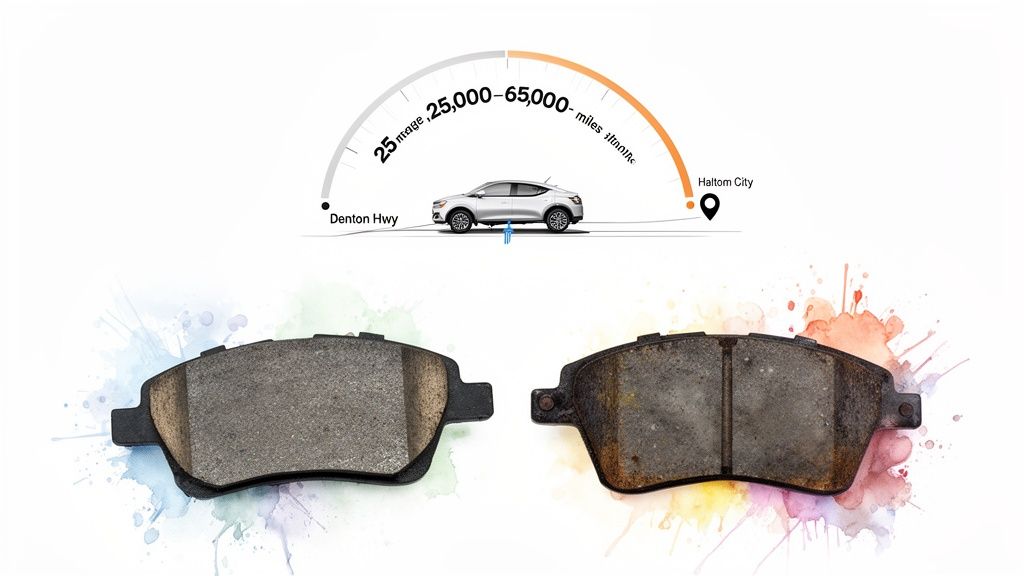
There’s no magic number for how long your brake pads will last. The lifespan is a direct reflection of your driving habits and where you drive. Someone cruising on open highways will put far less strain on their brakes than a driver navigating the constant stop-and-go traffic along Denton Hwy in Haltom City. At Express Lube & Car Care, we see this firsthand every single day.
The local conditions right here in Haltom City and the surrounding Tarrant County area play a huge role in how quickly your pads wear out. Every time you hit the brakes, you generate heat and friction—and those two things are the biggest enemies of your braking system.
The Impact of Haltom City Driving
Most Haltom City drivers are surprised to learn how fast their brake pads can wear down. While the average range is 25,000 to 65,000 miles, here's the reality check: aggressive city driving can chew through a set in under 30,000 miles. Worn-out pads aren't just an inconvenience; they're a serious safety hazard, contributing to thousands of brake-related incidents every year. You can dig into some of the automotive market trends research to see the bigger picture.
That's why it’s so important for Haltom City drivers to have a realistic timeline for their vehicle's brakes. Our job is to give you honest advice based on what we see in our own community, helping you stay ahead of potential problems.
At Express Lube & Car Care in Haltom City, we believe an informed driver is a safe driver. Understanding how your daily route impacts your brakes is the first step toward proactive maintenance and long-term vehicle health.
To give you a clearer idea of what to expect, we've put together a quick guide based on the different types of brake pads and the driving styles we commonly see around Haltom City.
Brake Pad Lifespan at a Glance
This table provides estimated mileage ranges for different types of brake pads based on common driving styles found in the Haltom City area.
| Brake Pad Type | Typical Lifespan (Conservative Driving) | Typical Lifespan (Aggressive/City Driving) |
|---|---|---|
| Organic Pads | 30,000 – 40,000 miles | 20,000 – 25,000 miles |
| Semi-Metallic Pads | 40,000 – 60,000 miles | 25,000 – 40,000 miles |
| Ceramic Pads | 50,000 – 70,000+ miles | 40,000 – 50,000 miles |
As you can see, both the material of the pad and how you drive have a massive impact on longevity. Let's look a little closer at what these different types mean for your car in Haltom City.
- Organic Pads: Often the factory standard on smaller, lighter cars. They're known for being quiet but tend to wear out the fastest, especially if you’re frequently in Haltom City traffic.
- Semi-Metallic Pads: A great all-around choice. These are durable, offer solid performance, and hold up well to most Haltom City driving conditions, making them a very popular option.
- Ceramic Pads: This is the premium choice. Ceramic pads last the longest, operate with almost no noise, and produce far less of that ugly black brake dust on your wheels. They're a fantastic investment for both highway commuters and Haltom City drivers.
Of course. Here is the rewritten section with a more natural, human-written tone.
What Really Wears Down Your Brakes?
Mileage is a good starting point, but it's far from the whole story when it comes to your brake pads. Think of brake pad life like the tread on your tires—how you drive, what you drive, and even where you drive all play a huge role in how quickly they wear out.
These factors often work together, and once you understand them, you can actually drive smarter and get more life out of your braking system. Let's dig in.
It's Not Just What You Drive, It's How You Drive
More than anything else, your personal driving style determines how long your brake pads will last. If you’re an aggressive driver—and heavy traffic in Haltom City sometimes forces us all to be—you could easily slice your brake pad lifespan in half.
Here are the biggest culprits we see every day at our Haltom City shop:
- Hard, Last-Minute Braking: Slamming on the brakes generates a ton of heat and friction. It chews through your pad material and can even warp your rotors over time.
- "Riding" the Brakes: Do you rest your foot on the brake pedal going downhill or creeping along in traffic? That constant, light pressure creates friction and wears down your pads for no reason.
- Constant Stop-and-Go: That daily grind on Denton Hwy in Haltom City is way tougher on your brakes than a smooth cruise on the interstate. Every single stop grinds away a little more of that pad material.
A simple change in habit can make a world of difference. Try looking further ahead, anticipating stops, and coasting more. By braking gently and giving yourself more space, you're putting less stress on the pads and directly helping them last longer.
Your Vehicle and Our Haltom City Roads Matter, Too
It's simple physics: the heavier the vehicle, the harder the brakes have to work. The big trucks and SUVs we love here in Texas put a massive demand on their braking systems.
It just takes a lot more force to bring a heavy F-150 to a stop than a little Honda Civic. A loaded work truck making deliveries around Haltom City will burn through a set of brake pads way faster than a compact car, even if they're driven on the exact same roads.
And finally, our North Texas environment has a say. Those brutal summer heatwaves cause brake parts to expand, which can lead to faster wear. Plus, all the dust, grit, and road debris kicked up around Haltom City can get wedged between the pad and rotor, acting like sandpaper. So even with perfect driving, your brakes are always up against the elements here.
Why Your Choice of Brake Pad Matters
Brake pads aren't a one-size-fits-all component. Just like you wouldn't wear hiking boots to a black-tie dinner, you shouldn't put the wrong type of brake pad on your vehicle. The material they're made from is the single biggest factor in how well they stop your car and how long they last.
Picking between organic, semi-metallic, and ceramic pads can feel a bit overwhelming, but each one is engineered for a specific purpose. Getting it wrong means you could be dealing with faster wear, annoying squealing, or even a drop in performance right when you need it most.
The Three Main Types of Brake Pads
To get the most out of your braking system, it’s helpful to know what you're working with. Every type of pad strikes a different balance between durability, performance, and price. This is where getting a professional opinion from your Haltom City mechanic really helps—we can match the right material to your specific car and driving style.
- Organic Pads: These are made from a mix of non-metallic materials, making them the quietest option and very gentle on your brake rotors. The trade-off? They tend to wear down faster, especially if you do a lot of stop-and-go driving around Haltom City.
- Semi-Metallic Pads: A blend of metal fibers gives these pads great heat resistance and solid, durable performance. They're a fantastic all-around choice for most vehicles, but they can be a bit noisier and create more of that black brake dust on your wheels.
- Ceramic Pads: Made from dense ceramic and copper fibers, these are the top-of-the-line option. They deliver incredible stopping power, are whisper-quiet, and last a whole lot longer, making them a smart investment for the long haul.
This diagram shows a few of the universal factors that affect how quickly any type of brake pad will wear out, regardless of what it's made of.
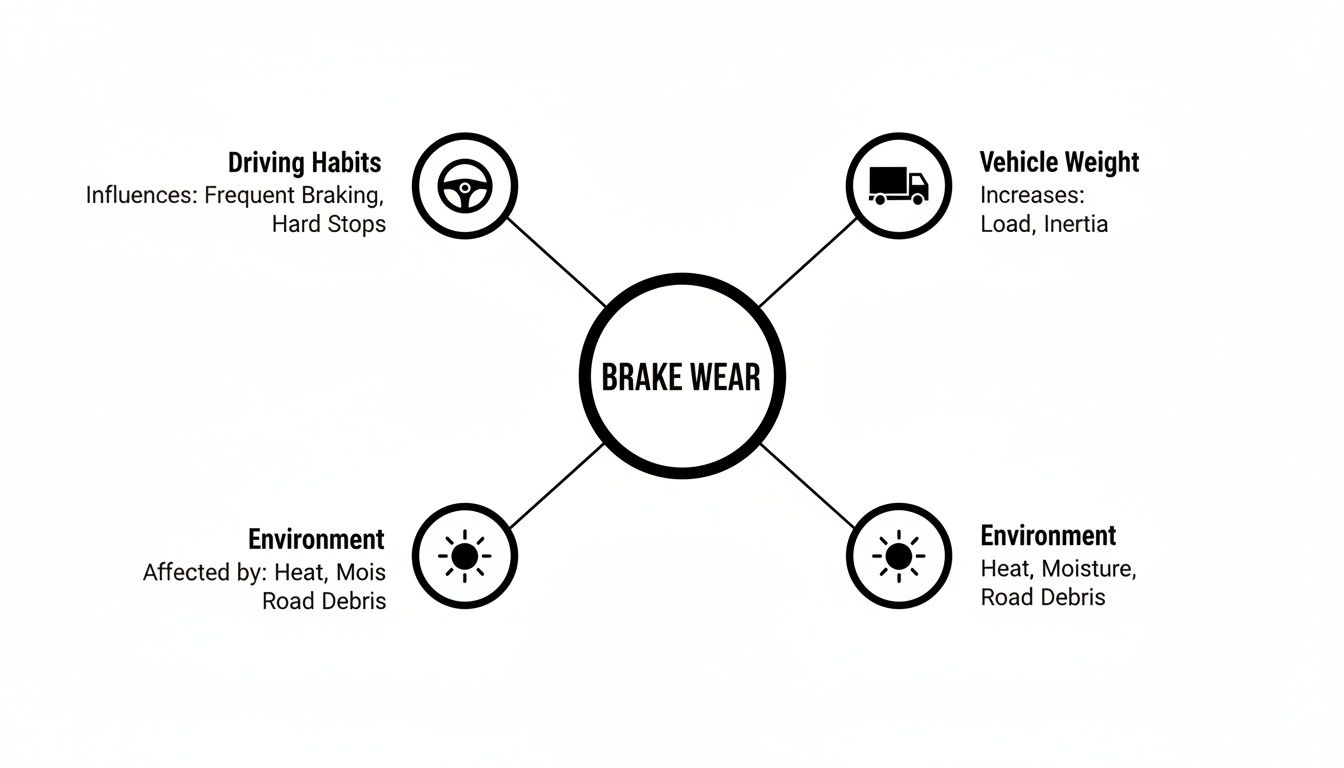
As you can see, your own driving habits, the weight of your vehicle, and even the local environment all work together to create a unique wear pattern for your brakes.
Why Quality Parts Matter on Haltom City Roads
In the auto repair world, brake jobs are incredibly common—in fact, pad replacements make up over 70% of aftermarket brake sales. For drivers navigating the busy roads of Haltom City, putting off a replacement can lead to 25% longer stopping distances. That’s a huge safety risk.
At Express Lube & Car Care in Haltom City, we often recommend premium ceramic pads because they can offer two to three times the lifespan of basic organic ones while providing quieter, more reliable stops. This keeps your car safe on the road and out of the shop.
Choosing a higher-quality brake pad isn't an upsell; it's an investment in safety, performance, and long-term value. Better materials mean fewer replacements over the life of your vehicle and greater peace of mind on every trip in Haltom City.
Ultimately, the goal is to match the pad's strengths to your driving needs. We've covered the materials here, but you can also check out our guide on the different types of car brakes to get a better look at how the entire system functions.
Learning to Spot the Signs of Worn Brakes
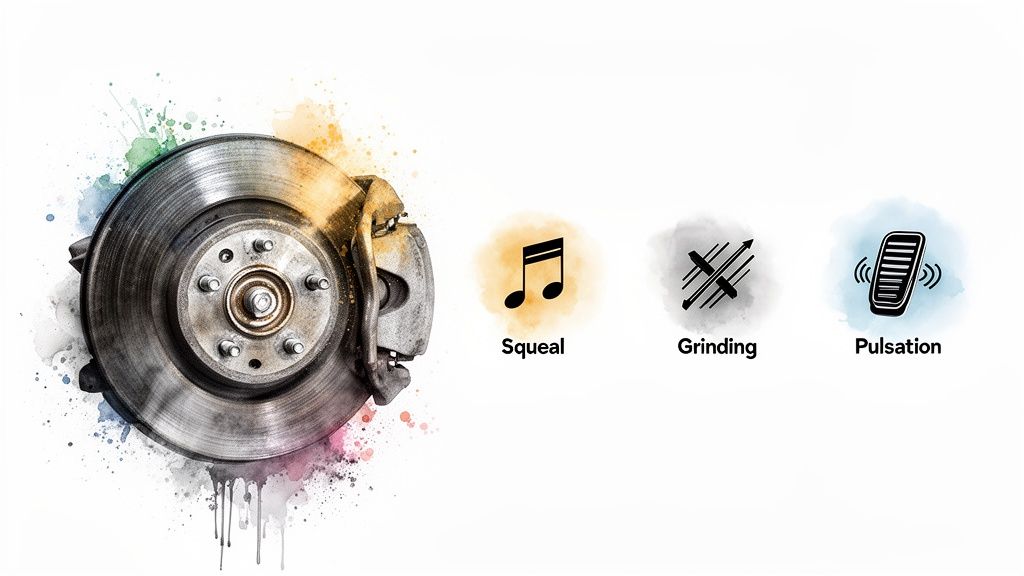
Your car has a way of telling you what it needs long before something goes seriously wrong. When it comes to your brakes, it’s all about learning to listen and look for the right clues. Catching these early warnings is key to preserving the life of brake pads and, more importantly, keeping you safe on the road in Haltom City.
Think of this as your guide to understanding the language of your brakes. We'll walk through the common signs so you know exactly when it’s time to bring your car to our Haltom City team at Express Lube & Car Care for a professional look.
Decoding the Sounds Your Brakes Make
Strange noises are usually the first sign that your brake pads are getting thin. Each distinct sound tells a different story about how much life they have left.
-
A High-Pitched Squeal: This is often the first thing you'll hear. Most brake pads are built with a small metal tab called a wear indicator. When the pad material wears down, this tab scrapes against the rotor, creating that tell-tale squeal. It’s your car’s built-in alarm system, signaling that it's time for an inspection.
-
A Deep, Harsh Grinding: If you're hearing a low-pitched grinding or a deep growl, the situation has become urgent. This sound means the friction material on the pads is completely gone. Now, the metal backing plate is scraping directly against the metal rotor. That’s a recipe for serious damage and a much bigger repair bill.
That initial squeal is the warning; the grinding sound is the emergency. When you hear grinding, your stopping power is compromised, and you need to get your vehicle serviced right away.
A grinding sound is your brake system’s last-ditch cry for help. Driving on it not only risks your safety but also turns a simple pad swap into a major—and much more expensive—brake system repair.
Feel and Visual Cues to Watch For
It’s not just about what you hear. Your car also gives you physical and visual hints that your brakes need attention. How the car feels under your foot can be just as revealing as any noise.
From a vibrating pedal to a change in braking performance, there are many clues. For a closer look, you can learn more about the common brake problem symptoms in our detailed guide.
Pay attention to these other key signs:
- Pulsating or Vibrating Pedal: If the brake pedal shudders or pulses under your foot when you press it, your brake rotors are likely warped. An uneven rotor surface means the pads can't apply smooth, even pressure, causing that shaking sensation.
- Excessive Brake Dust: A little bit of dust on your wheels is normal. But if you see a sudden, heavy buildup—especially on one wheel more than the others—it could mean you have a sticking caliper or a pad that's wearing down way too fast.
- Thin-Looking Pads: Sometimes, you can get a peek at the brake pad right through your wheel spokes. Look for the pad material pressing against the shiny metal rotor. If it looks thinner than about a quarter of an inch, it’s time for a replacement.
Use this quick checklist to keep track of the most common brake wear symptoms.
Brake Pad Wear Checklist
| Warning Sign | What It Sounds/Feels Like | What It Means |
|---|---|---|
| Squealing | A high-pitched, piercing noise when you brake. | The wear indicators are touching the rotor; it's time for an inspection. |
| Grinding | A deep, harsh metal-on-metal scraping or growling. | The pads are completely worn out, and you're damaging the rotors. Stop driving! |
| Pulsating Pedal | A vibration or shudder felt through the brake pedal. | The brake rotors are likely warped and need to be resurfaced or replaced. |
| Spongy Pedal | The brake pedal feels soft or sinks toward the floor. | There could be air in the brake lines or a fluid leak. A serious safety risk. |
Being able to spot these signs empowers you to act before a small fix turns into a major safety issue. If any of this sounds familiar, don’t wait—let the pros at Express Lube & Car Care in Haltom City take a look and give you peace of mind.
Simple Driving Habits to Extend Brake Pad Life
You have way more control over how long your brake pads last than you might think. It really comes down to a few small, conscious tweaks to how you drive. By making these simple adjustments, you can seriously reduce wear and tear, which saves you money and keeps you safer on the road.
These aren’t radical changes to your daily commute. Think of them as smart driving strategies, especially for the kind of stop-and-go traffic we see around Haltom City. When you start using them, you’re not just a driver anymore; you’re actively helping maintain your own vehicle, extending the life of your brakes with every trip.
Brake Smarter, Not Harder
If you want to do just one thing to save your brakes, this is it: change how you approach stopping. Slamming on the brakes at the last second creates a ton of heat and friction, and that’s what absolutely shreds brake pads over time.
Instead, try driving more defensively. It makes a huge difference.
- Look way ahead: Scan the road far in front of you, not just the car directly ahead. This helps you spot red lights, traffic, and slowdowns much earlier. You can then just lift your foot off the gas and coast, letting the car’s natural momentum slow you down instead of relying on your brakes.
- Leave more space: This is a big one, especially on busy Haltom City roads like I-820 or Denton Hwy. Giving yourself plenty of room between you and the car in front means you have more time to react. This allows for smooth, gradual stops instead of sudden, pad-wearing panic braking.
- Practice “one-pedal” driving: The goal is to use the gas pedal and your engine’s natural resistance to control your speed. Every second you can spend coasting to a stop is a second you’re saving your brake pads from unnecessary wear.
Lighten Your Load and Keep Up with Maintenance
Beyond how you use the pedals, a couple of other things can make a surprising impact. It’s simple physics: the heavier an object is, the more force it takes to stop it. Your car is no different.
Think of it this way: every extra pound in your car is another pound your brakes have to work to stop. While it might seem small, consistently carrying unnecessary weight adds up over thousands of miles, putting extra strain on your pads and rotors.
Take a few minutes to clean out your trunk and remove any heavy junk you don’t need for your daily drives. This one simple step reduces your vehicle’s overall weight, which eases the burden on your entire braking system.
Finally, staying on top of your regular service appointments is key. A proper car maintenance schedule by mileage ensures your brake fluid is fresh and the whole system is working at its best, which directly helps your pads last longer.
Your Guide to Professional Brake Service in Haltom City
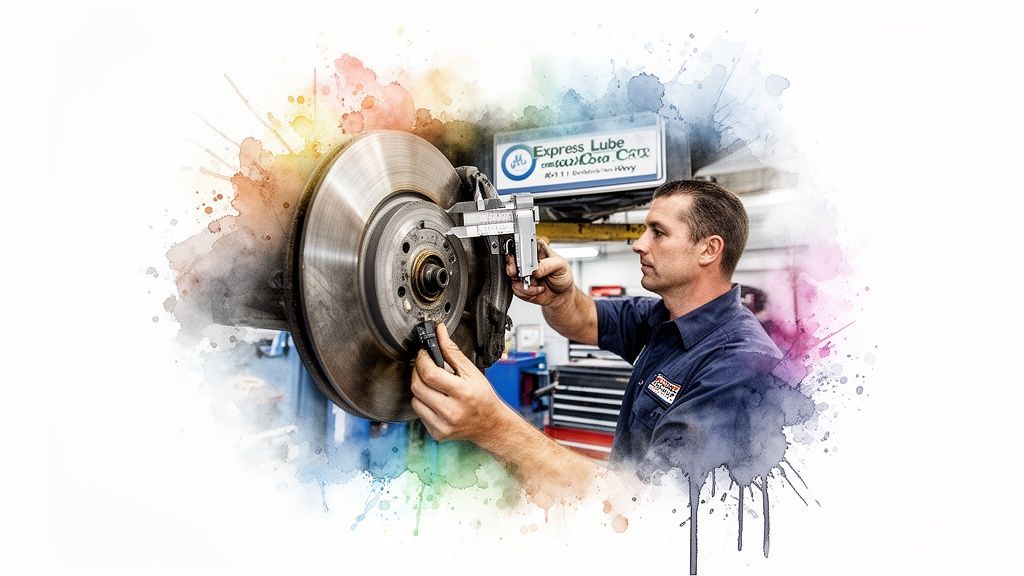
Whether you’ve noticed one of those warning signs or it’s just time for a routine check-up, knowing what to do next brings real peace of mind. Here at Express Lube & Car Care, we believe in keeping our Haltom City customers in the loop. We want you to understand the health of your brake system so you can make confident, informed decisions about your car’s safety.
You can find us right at 6211 Denton Hwy. We’ve become Haltom City’s go-to partner for honest diagnostics and straightforward estimates because we know your vehicle’s reliability is non-negotiable. That’s why our whole process is designed to be clear and thorough from the second you pull in.
What to Expect During a Brake Inspection
Our certified technicians don’t just hunt for problems. They perform a complete health assessment of your entire braking system. This detailed approach means nothing gets missed and helps you get the most out of the life of brake pads and every other component.
Here’s a quick rundown of what our comprehensive inspection covers:
- Measuring Pad Thickness: We break out specialized tools to get a precise measurement of the friction material left on your brake pads. Then, we compare that number directly to the manufacturer’s safety minimums.
- Checking Rotor Integrity: Our team carefully inspects the rotors for any signs of warping, deep grooves, or excessive wear. A smooth, even rotor surface is absolutely critical for effective stopping power.
- Assessing Brake Fluid: We’ll check your brake fluid level and evaluate its condition. Old, contaminated fluid can seriously degrade hydraulic performance, often leading to that dreaded “spongy” brake pedal feel.
Our goal is simple: to give you a complete and accurate picture of your brake system’s condition. We explain our findings in plain language, show you what we see, and provide a clear, no-pressure estimate for any necessary work.
For a deeper dive into everything a full service involves, take a look at our guide on what brake service includes. It’s a great resource that walks you through every step we take to keep your vehicle safe on the road.
If you’re curious about how vehicle care is managed on a much larger scale, exploring tools like fleet maintenance software can be pretty fascinating. These systems help businesses manage everything from routine checks to major repairs for dozens of vehicles, which really underscores the importance of a structured, professional approach to service.
Your Brake Pad Questions Answered
Over the years, we’ve heard just about every question in the book when it comes to brakes. Here are a few of the most common ones we get from drivers right here in Haltom City, along with some straight-to-the-point answers.
What’s the Typical Cost for a Brake Pad Replacement?
This is probably the number one question we get, and the honest answer is: it depends. The final price tag is tied to your specific vehicle and the kind of pads you choose.
At our Haltom City shop, we’ll always give you a clear, detailed estimate before we pick up a single tool. We’re big believers in value, so we often suggest higher-quality parts that not only perform better but also last longer, which can actually save you money down the road.
Do My Front and Back Brakes Wear Down Evenly?
Almost never. Think about what happens when you hit the brakes—the front of your car dips down, right? That’s because your front brakes are doing most of the heavy lifting, often handling 60-70% of the stopping force.
Because they work so much harder, it’s completely normal for the front pads to wear out much faster than the rears. You might even replace your front pads twice before the rear set needs attention. That’s why we always check all four corners during an inspection to give you the full picture.
Do I Have to Replace My Rotors When I Get New Pads?
Not always, but it’s often a very good idea for safety and performance. Your rotors are the metal discs the pads squeeze against, and over time, they can get warped from heat or worn too thin.
Putting fresh pads on a worn, uneven rotor surface is a bit like trying to write on crumpled paper with a new pen—it just won’t be smooth or effective. The new pads can’t make solid, flat contact, which can lead to weaker stopping power and that annoying steering wheel shake.
Our technicians don’t guess. We use precision tools to measure your rotors and check them against the manufacturer’s safety specs. We only recommend replacing them if it’s truly necessary to guarantee your brakes work perfectly and keep you safe.
Ready for a brake check you can feel good about? The team at Express Lube and Car Care in Haltom City is here to help. Schedule your appointment today and get back on the road with total confidence.