
So, you're thinking about lowering your car. The simple answer is that it involves swapping out factory suspension parts for aftermarket gear like lowering springs, coilovers, or even a full air suspension setup. Each route will get you a lower ride height, but they all offer a different mix of performance, looks, and cost. It’s one of the most popular mods out there for a good reason, but you need to know exactly what you’re getting into before you start turning wrenches here in Haltom City.
Why Everyone Loves That Lowered Stance
Lowering a vehicle is about so much more than just shrinking the gap between your tire and the fender. For countless enthusiasts right here in Haltom City, it’s a change that completely redefines a car's entire personality, mixing aggressive looks with real-world performance boosts. The visual change is instant and undeniable—a lowered car just looks more planted and athletic, whether it's parked on Denton Highway or cruising down I-820.
But the real magic happens once you get behind the wheel. When you bring the car’s body closer to the asphalt, you’re lowering its center of gravity. That single adjustment has a massive impact on how the car feels and responds. It's the difference between a tall, tippy SUV and a sleek sports car; the lower vehicle feels glued to the road, especially when you push it in a corner.
Better Handling and a Sharper Feel
The biggest win here is a huge improvement in handling. A lower center of gravity is the enemy of body roll—that sensation of your car leaning away from a turn. Less roll means the car stays flatter, feels sharper, and responds instantly to your steering.
This all adds up to a driving experience that feels far more connected. You'll feel it on a winding backroad, of course, but you’ll also notice it just navigating a freeway on-ramp in the Haltom City area. The car feels more eager and confident when changing direction.
- Sharper Cornering: Keeping the car level through turns helps your tires maintain better contact with the road, boosting grip and stability.
- Improved Aerodynamics: It might be a small gain, but lowering a car can reduce the air flowing underneath it. This cuts down on high-speed lift and adds a touch of stability.
- Killer Looks: Let's be honest, this is a huge part of the appeal. A lowered stance gives almost any car a sportier, more aggressive presence.
Now, for the Trade-Offs
This isn't a modification without compromises, and it’s important to be real about them. The most common trade-off? Ride comfort. Performance suspension is, by its nature, stiffer than what your car came with from the factory. That stiffness is exactly what cuts down on body roll, but it also means you're going to feel every bump, crack, and pothole in the road.
For anyone driving in North Texas, this means you have to be more aware of your surroundings. The steep driveways, unavoidable potholes, and monster speed bumps around Haltom City and the surrounding neighborhoods suddenly become major obstacles that demand a whole new way of driving.
On top of that, less ground clearance requires you to be constantly vigilant. You'll quickly learn to approach driveways at an angle to keep your front bumper from scraping. Navigating parking lots or dealing with road construction becomes a much more calculated affair. In the end, you have to decide if the incredible look and feel are worth the practical adjustments you'll need to make every day on Haltom City streets.
Choosing the Right Lowering Method for Your Car
So, you've decided to lower your car. That’s the easy part. Now comes the real decision: how you're going to do it. The path you take here will shape everything from the final look and feel to how much you'll spend.
There's no single "right answer." The best method for you boils down to your goals, your specific vehicle, and what you can live with day-to-day. Are you just aiming for a better stance to close up that wheel gap, or are you chasing track-ready handling and complete control over your setup?
Let's walk through the most common ways to get your car closer to the ground. Each has its own set of trade-offs, especially when you factor in the realities of driving on Haltom City roads.
Lowering Springs: The Simple and Affordable Route
For a lot of people just starting out, lowering springs are the go-to option. These are simply shorter, stiffer springs designed to directly replace the ones that came from the factory. The result is a pre-set drop in ride height.
Why are they so popular in Haltom City?
- Easy on the Wallet: This is hands-down the most budget-friendly way to lower your car.
- Straightforward Job: While you still need the right tools and safety know-how, swapping springs is less involved than a full suspension overhaul.
- Predictable Drop: The manufacturer tells you exactly how much the springs will lower your car (e.g., a 1.5-inch drop), so there are no surprises.
But there’s a catch. The biggest downside is the total lack of adjustability. You get the height and spring rate the manufacturer gives you, and that’s it. This can sometimes create a problem by pairing those new, stiffer springs with your factory shocks and struts, which weren't built to handle them. This mismatch can lead to a bouncy ride and cause those components to wear out much faster. If you're going this route, it's smart to know what to look for—you can learn more about strut repair prices in our related guide.
Coilovers: For Ultimate Control and Performance
If you're the kind of driver who wants to fine-tune every aspect of your car's stance and handling, then coilovers are what you're looking for. A "coilover" is a complete assembly that bundles the shock absorber and the spring into one integrated unit.
The magic is in the adjustability. Most coilover kits give you the power to change not only your ride height but also the damping (how stiff or soft the suspension feels). This means you can dial in a softer, more comfortable ride for your daily commute through Haltom City and then crank up the stiffness for a weekend canyon run or a day at the track.
The real beauty of coilovers is finding that perfect sweet spot. You can set the height to get that flawless stance and then adjust the damping to perfectly balance sharp, responsive handling with a ride that won't punish you on bumpy roads.
Of course, all that control comes at a price. Coilovers cost significantly more than just springs, both for the parts and the installation. They also demand a bit more knowledge to set up right. A poorly adjusted coilover system won't just ride terribly—it can be downright unsafe.
Air Suspension: The Peak of Versatility
Want to have your cake and eat it too? That’s where air suspension comes in. Often called "air ride" or "bags," this system ditches traditional metal springs entirely, replacing them with heavy-duty, inflatable rubber air bags. With an onboard compressor and air tank, you can raise or lower your car on the fly, usually with a controller or even an app on your phone.
The versatility is unmatched. You can drive around at a near-stock height, slam it to the pavement for a car show, and then instantly air up to get over a nasty speed bump or a steep driveway. For anyone navigating the varied roads around Haltom City, this on-demand adjustability is a lifesaver, eliminating the constant worry about scraping on road hazards.
The trade-offs are significant, though. Air suspension is by far the most expensive and complex system to install, requiring a web of air lines, tanks, compressors, and management electronics.
Here's a table to help you weigh the options at a glance:
Car Lowering Methods Compared
This table gives you a practical breakdown of what to expect from each lowering method, considering cost, adjustability, and how it will feel on the streets of Haltom City.
| Method | Average Cost (Parts & Labor) | Adjustability | Ride Quality Impact | Best For |
|---|---|---|---|---|
| Lowering Springs | $500 – $1,200 | None (Fixed Drop) | Firmer, can be bouncy with stock shocks | The budget-conscious driver looking for a simple aesthetic improvement. |
| Coilovers | $1,500 – $4,000+ | Height, Damping, Preload | Tunable from firm to very stiff | The performance enthusiast who wants to dial in handling and stance. |
| Air Suspension | $3,000 – $7,000+ | On-the-fly Height | Highly adjustable, can be very smooth | The show car owner or daily driver wanting ultimate versatility and looks. |
Ultimately, choosing between these methods is a personal decision based on what you value most—affordability, performance, or sheer flexibility.
Deciding whether to lower your vehicle involves weighing the aesthetic and performance benefits against practical concerns like ride comfort and ground clearance. This flowchart can help you think through the decision.
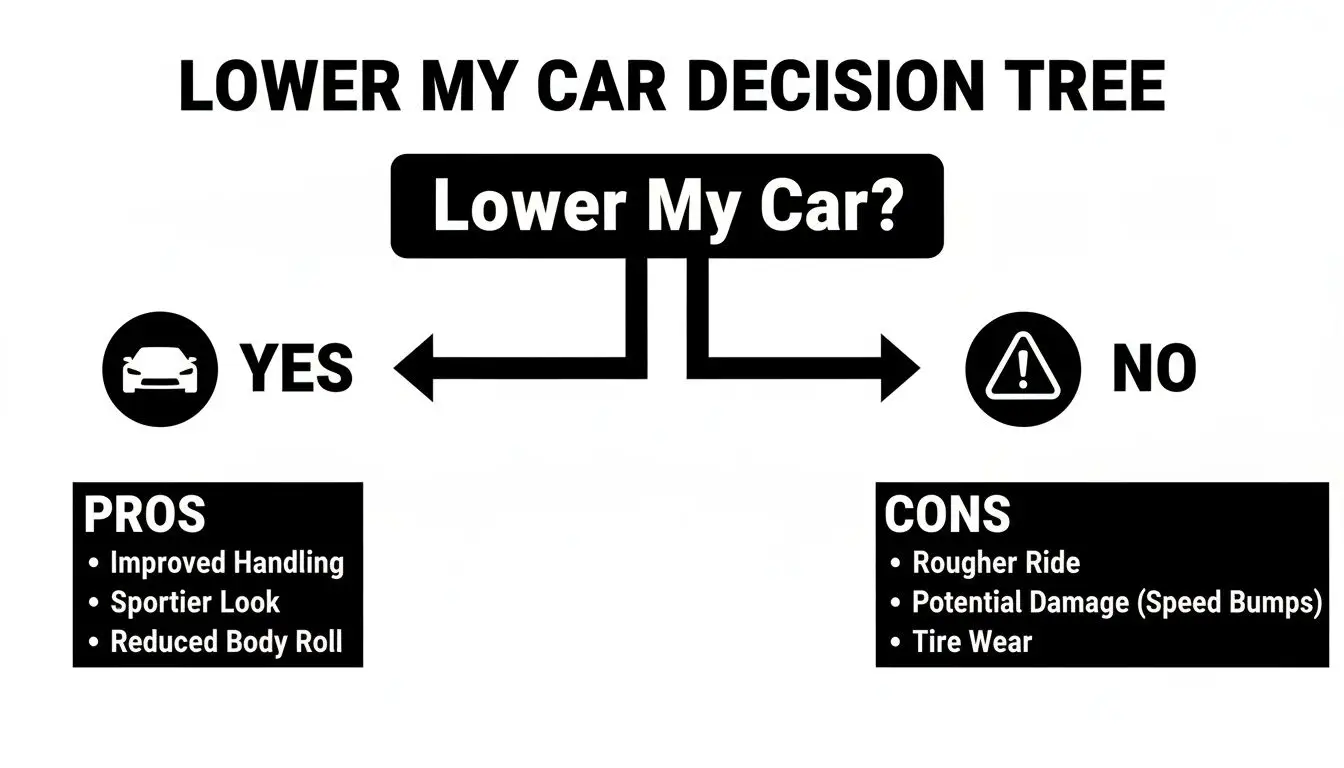
As you can see, the path to a lowered car is filled with performance gains, but it’s important to be aware of the trade-offs in ride quality and everyday usability.
A Realistic Look at the Installation Process
Alright, you’ve picked out your parts and you’re getting excited. Now comes the big question: should you tackle the installation yourself? Going the DIY route when you’re figuring out how to lower your car can be incredibly satisfying, but it’s one of those jobs where you need to be brutally honest about what’s involved. This is a project that directly affects your car’s handling and, more importantly, its safety.
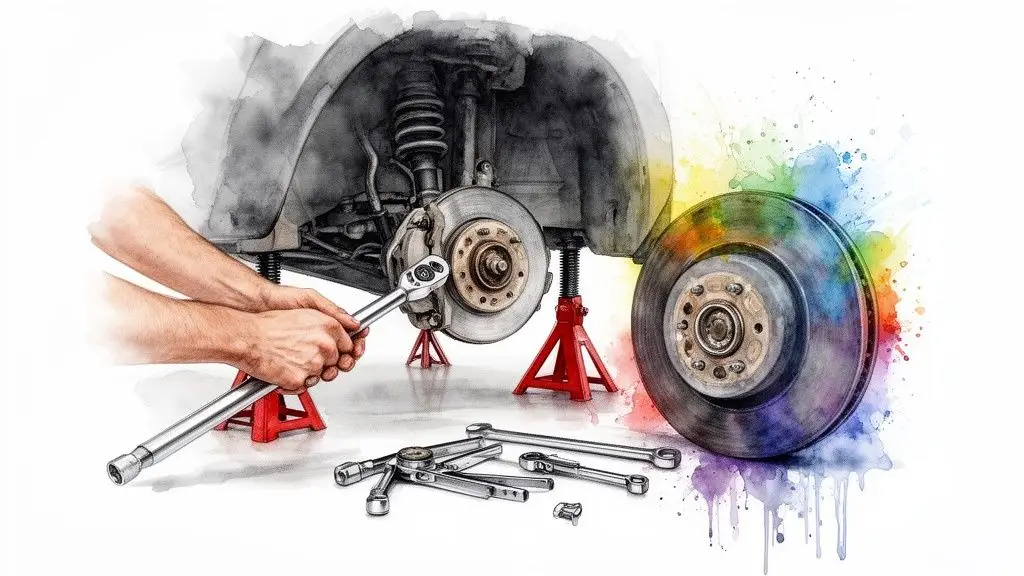
I’m not going to write a full step-by-step guide here. Instead, I want to give you an honest look from our shop floor in Haltom City at the real challenges, tools, and safety checks you’ll encounter. The goal is to help you decide if this is a job you can tackle in your garage or if it’s one best left to the pros at a Haltom City auto shop.
Gearing Up: The Tools You Can’t Skimp On
Before you even think about loosening a bolt, your first job is making sure you have the right equipment. Trust me, trying to “make it work” with the wrong tools is the fastest way to break a part, strip a bolt, or get seriously hurt.
Here’s the bare minimum toolkit you’d need for a job like installing lowering springs or coilovers:
- A High-Quality Floor Jack: That little scissor jack that came with your car? It’s only for changing a flat on the side of the road. You need a real hydraulic floor jack that can handle your vehicle’s weight without breaking a sweat.
- Sturdy Jack Stands: This is the most important safety rule in any garage. Never, ever work under a car that’s only held up by a jack. Jack stands are the only thing standing between you and a few thousand pounds of falling metal.
- A Calibrated Torque Wrench: Your suspension is held together by bolts that need to be tightened to a very specific number. “Tight enough” isn’t a measurement. A torque wrench is a non-negotiable safety tool.
- A Breaker Bar and Socket Set: Suspension bolts that have been on a car for years are notoriously stubborn, especially with the weather we get around Haltom City. A long breaker bar provides the leverage you need to crack them loose safely.
Of course, this is just the start. You’ll likely also need spring compressors, a good set of pry bars, and a variety of wrenches. The more complex your car’s suspension, the longer that tool list gets.
The Stages of a Suspension Overhaul
Breaking down the job, you’ll find a few distinct phases, and each one has its own potential pitfalls. Getting the car properly in the air on jack stands is step one. You have to use the specific lift points on the frame, or you risk denting the floor pan or, worse, having the car shift and fall.
Once it’s secure and the wheels are off, the teardown begins. You’ll be disconnecting sway bar links, unbolting brake line brackets, unplugging ABS sensors, and loosening control arms just to wiggle the factory strut or spring out. These bolts can fight you every step of the way.
Here’s where things get genuinely dangerous: handling the spring. A standard car spring is compressed with thousands of pounds of force. If you’re swapping springs, you must use a spring compressor to remove it from the strut. If that tool slips or is used incorrectly, the spring can launch with explosive force, becoming a lethal projectile.
This is, without a doubt, one of the most common ways DIY mechanics get into serious trouble. A cheap spring compressor or a moment of inattention can have disastrous consequences. Understanding how these parts work is why we offer detailed information on shocks and struts service; it helps drivers know what they’re dealing with.
Why “Close Enough” Isn’t Good Enough
With the old parts out, you can start fitting the new lowering components. It might feel like the home stretch, but this is where precision becomes everything. With coilovers, for example, you have to set the spring preload correctly and meticulously measure to ensure both sides are at the exact same ride height.
Then comes the most critical step of all: reassembly. Every bolt you touch must be tightened to the manufacturer’s torque specification. Why is this such a big deal?
- Under-tightened bolts will absolutely work themselves loose. This leads to rattling noises, throws your alignment out of whack, and can eventually cause a total suspension failure.
- Over-tightened bolts can stretch the metal, weakening the bolt until it snaps under pressure. Imagine a control arm bolt breaking while you’re taking a corner. The results would be catastrophic.
There’s no guesswork allowed here. Those torque specs exist for a reason—they are fundamental to your safety on the road.
The Honest Truth About DIY Lowering
Look, if you’re an experienced home mechanic with a well-stocked garage and a solid grasp of suspension geometry, this can be a great weekend project. But for most Haltom City drivers, the risks are just too high. A small mistake can cause expensive damage or lead to a failure when you’re driving.
When you factor in the cost of buying specialized tools, the sheer physical effort, and the absolute need for precision, letting a professional handle it is often the smartest move. At a trusted shop, the technicians have the lifts, the tools, and the vehicle-specific data to do the job right the first time, giving you a perfectly lowered car without the headaches or safety risks.
What Happens After the Car Is Lowered
Getting the new suspension parts bolted on feels like the finish line, but it’s really just the beginning. What you do next is absolutely crucial for your safety, your car’s handling, and the life of your tires. This is where you go from having a collection of new parts to a properly sorted, road-worthy vehicle.
Changing the ride height, even by an inch, completely messes with your vehicle’s suspension geometry. All the factory settings—camber, toe, and caster—are thrown out the window. Driving on a freshly lowered car without getting it aligned is a recipe for disaster.
Why a Professional Alignment Is Non-Negotiable
A proper four-wheel alignment isn’t just a good idea; it’s the single most important thing you must do after lowering your car. Your suspension is designed to work with the wheels at very precise angles. When you lower it, those angles are gone.
- Camber: This is the top-to-bottom tilt of your wheels. Lowering a vehicle almost always creates negative camber, where the tops of the tires lean inward. A little can be good for cornering, but too much will chew through the inside edge of your tires.
- Toe: This is whether your tires point inward or outward when viewed from above. Lowering often causes the wheels to “toe out,” making the car feel twitchy and unstable while shredding your tires with a “feathered” wear pattern.
Believe me, skipping the alignment will cost you a new set of tires in no time and make your car’s handling dangerously unpredictable. We’ve seen it countless times at our Haltom City shop: a customer rolls in with brand-new tires that are destroyed after just a few hundred miles from a DIY lowering job. It’s a costly and completely avoidable mistake. You can see just how bad it can get in our article on what causes uneven tire wear.
Your First Test Drive Checklist
Once the alignment is sorted, it’s time for a careful test drive. This isn’t for fun—it’s a diagnostic run. Turn the radio off, roll the windows down, and drive on some familiar Haltom City roads with a good mix of turns and bumps.
Here’s what you need to listen and feel for:
- New Noises: Are there any clunks, pops, or groans, especially when you turn or hit a bump? That could signal a loose bolt or a component that isn’t seated properly.
- Tire Rubbing: Listen for scraping sounds from the wheel wells. You’ll often hear it when turning the wheel lock-to-lock or when the suspension compresses over a dip.
- Vibrations: Do you feel new vibrations through the steering wheel or the floor? This could be anything from an improperly torqued wheel to a binding suspension part.
Any strange sound or weird feeling after major suspension work is a big red flag. It’s the car telling you something is wrong. Don’t ignore it—bring it back to the shop or get it safely on jack stands to find the source immediately.
Fine-Tuning Your Adjustable Coilovers
If you went with adjustable coilovers, you’ve got one more step: dialing them in. This is your chance to really customize the ride. Most coilovers have damping adjustment, which controls how stiff or soft the suspension feels, usually via a small knob on top of the shock.
I always recommend starting with the damping set right in the middle of the adjustment range. Drive the car like that for a few days. Is the ride too jarring on the rougher roads around Haltom City? Soften the damping by a few clicks. Does the car feel too “floaty” or bouncy through corners? Stiffen it up a click or two.
Always make small adjustments, and be sure to set the front and rear equally at first. This fine-tuning process is how you find that sweet spot between sharp, responsive handling and a car you can actually live with every day. After getting your stance just right, you might look into other upgrades like custom fabricated traction bars to really put the power down. Taking these final steps seriously is what makes the difference between a lowered car that just looks good and one that’s genuinely great to drive.
Living With a Lowered Car in Haltom City
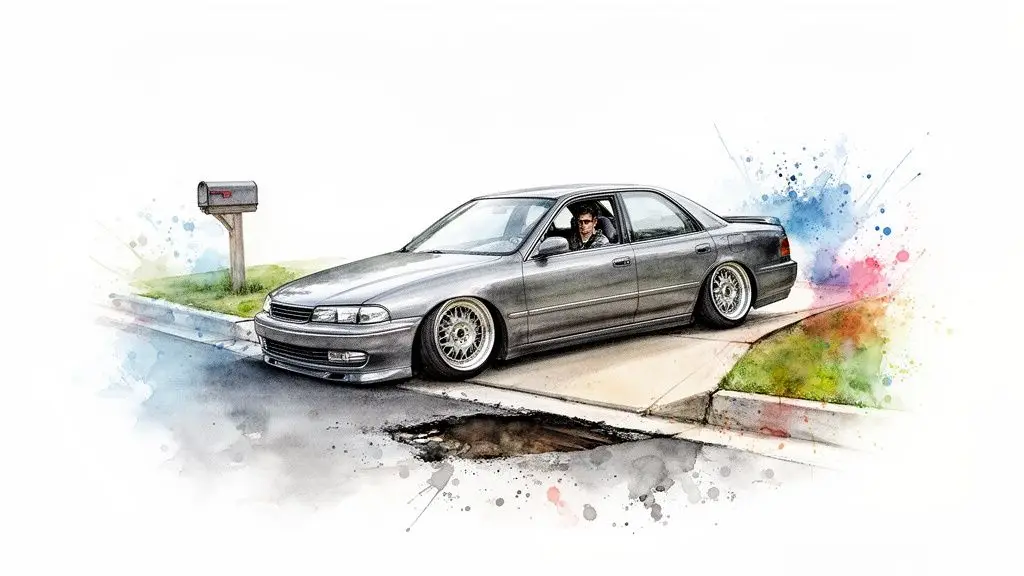
So, you’ve got the perfect stance. The car looks amazing, but that initial thrill quickly runs into the reality of driving a lowered vehicle every day, especially on the roads around Haltom City. It’s not just about the occasional scrape; it’s a whole new way of driving.
You start to develop a sixth sense for road hazards. Every steep driveway, unexpected dip, and gnarly pothole becomes an obstacle you learn to anticipate. The secret is to change your approach—literally. You’ll quickly master the art of hitting inclines at an angle, distributing the car’s weight to save your front bumper and side skirts from that gut-wrenching scraaaape.
The New Maintenance Reality
Beyond just learning to navigate the asphalt, living with a lowered car means getting serious about your maintenance schedule. Those suspension parts are now working a lot harder than the factory ever intended. This isn’t a “set it and forget it” mod; it demands your constant attention.
Think of routine checks as non-negotiable. Keeping a close eye on a few key areas is the only way to stop small issues from snowballing into expensive, catastrophic failures.
- Suspension Components: Your bushings, ball joints, and control arms are now high-wear items. You’ll want to inspect them far more often, looking for cracks or any looseness before your handling goes south.
- CV Boots: Lowering a front-wheel-drive or all-wheel-drive car puts the axles at a more extreme angle, stressing the CV boots. A torn boot flings grease everywhere and quickly destroys the CV joint. Check them for rips every time you’re under the car.
- Tire Wear: Even after a perfect alignment, lowered cars have a reputation for unique tire wear patterns. Getting the most life out of your rubber means being diligent about rotations and pressure checks.
Forget the factory service interval. You are now your car’s crew chief. A race car gets inspected after every single race. While your daily driver isn’t hitting the track, adopting that same mindset of frequent, careful checks is the key to keeping your modified ride reliable and fun.
This hands-on approach is critical, especially when your annual state inspection rolls around. To get a better sense of what’s involved, check out our guide on how much a Texas vehicle inspection costs so there are no surprises.
The Hidden Data Your Car is Sharing
While you’re busy watching the road for potholes, there’s another, invisible risk every modern car owner needs to be aware of: your own car is spying on you. It’s a strange thought, but as you cruise around Haltom City, your vehicle could be broadcasting your driving habits to data brokers and insurance companies.
Today’s cars are essentially rolling data centers. A real eye-opener from Consumer Reports found that cars from the last five years collect a shocking amount of data on your driving—everything from how fast you accelerate to how hard you brake. According to S&P Global Mobility, modern cars can generate nearly 25 gigabytes of data per hour. That’s like streaming over six hours of HD video for every hour you’re on the road. You can read more about how to stop your car from sharing your driving data and take back control.
This data gets sold to third parties, including insurers, often without you realizing it. For anyone who enjoys a bit of spirited driving, this could lead directly to higher insurance premiums. The good news is you can opt out. Most automakers have a privacy portal on their website where you can dig into the settings and turn off this data sharing. It’s a few minutes of your time that can save you a major headache later.
Common Questions About Lowering Your Car
Even with a solid plan, a few questions always pop up. We hear them all the time at our Haltom City shop, so let’s walk through some of the most common concerns we help drivers navigate. Getting these details straight is the key to being happy with your car’s new stance for years to come.
Is Lowering My Car Legal in Texas?
Good question. Yes, lowering your vehicle is perfectly legal here in Texas, but you have to follow the rules to pass the state inspection. The law is all about safety and making sure your vehicle remains visible to other drivers.
It really comes down to your lights:
- Headlights: Your headlight centers must be at least 24 inches off the ground.
- Taillights: The center of your taillights needs to be at least 15 inches from the pavement.
Beyond that, your car just needs to have enough ground clearance to get over normal road obstacles without becoming a hazard. When we do a lowering job at our Haltom City shop, we double-check everything to make sure your car is 100% compliant with Texas law. It’s all about getting the look you want without the legal headaches.
Will This Void My Car’s Warranty?
This is probably the biggest worry for anyone with a newer car. The short answer is no, it won’t automatically void your entire warranty. Thanks to a federal law called the Magnuson-Moss Warranty Act, a dealer can’t deny a claim just because you have aftermarket parts.
They have to prove that the part you installed—in this case, your new suspension—directly caused the specific failure. For instance, putting coilovers on your car won’t void the warranty for your touchscreen or your engine. But if a CV axle fails prematurely, the dealer might argue that the new suspension angles caused the issue and deny that specific repair claim.
The bottom line is your warranty isn’t just gone. The burden of proof is on the manufacturer to link your modification directly to the part that failed.
How Much Does Car Lowering Cost in Haltom City?
The cost really depends on what you drive and which route you take. It’s a combination of parts and the labor involved, which can be pretty different from one method to another.
Here’s a rough idea of what to expect for labor here in Haltom City:
- Lowering Springs: A straightforward spring swap usually runs between $400 and $800.
- Coilovers: Being a more involved installation, labor for a full set of coilovers typically falls in the $600 to $1,200 range, sometimes more.
- Air Suspension: This is the most complex system to install, and labor costs can easily climb into the thousands.
The best way to get a firm price is to let us look at your car. Stop by our Haltom City shop, and we can give you a precise quote based on your specific vehicle and what you want to achieve.
Do I Really Need a Wheel Alignment After Lowering?
Yes. Absolutely, 100%. This isn’t optional—it’s the most important step after the parts are bolted on.
Lowering a vehicle completely changes its suspension geometry. All the critical angles like camber, toe, and caster are thrown way out of spec. If you skip a professional four-wheel alignment at a trusted Haltom City shop, your car’s handling will become unpredictable and even dangerous. Not to mention, it will chew through a new set of tires in shockingly little time.
If you’re ready to transform your car’s look and feel, the team at Express Lube & Car Care in Haltom City has your back. We handle everything from picking the right components to a professional installation and a precision alignment to finish the job right. Schedule your appointment with us today!