
If you’re in Haltom City and wondering whether your car needs a safety inspection, you’re not alone. A lot of drivers hear one thing from a neighbor, another from the internet, and something else at the registration office. That confusion usually starts with one basic question: what is a vehicle safety inspection?
The short answer is simple. It’s a check of the parts on your vehicle that matter most for safe driving, like brakes, tires, lights, steering, and other equipment that helps you control the car and stay visible on the road. The bigger answer is more useful. A safety inspection is really a way to catch problems before they turn into breakdowns, tickets, or crashes.
Around Haltom City, I talk to people all the time who say, “My car seems fine.” Sometimes it is. Sometimes a worn tire, weak brake pad, loose suspension part, or dead light bulb is hiding in plain sight. That’s why inspections matter. They give you a clear look at the condition of the vehicle you depend on every day, whether you’re driving to work, taking kids to school, or running a small business fleet across Tarrant County.
Your Car’s Annual Check-Up Understanding the Safety Inspection
Think of a safety inspection like a doctor’s check-up for your car. You don’t wait until chest pain to care about your health, and you shouldn’t wait until the brake pedal feels wrong or the tire goes flat to think about your vehicle’s condition.
A proper inspection looks at the systems that wear out slowly over time. Most of those parts don’t fail all at once. They weaken bit by bit. Brake pads get thin. Tires lose tread. Bulbs burn out. Wiper blades harden. Steering and suspension parts loosen up. You can drive for weeks without noticing the change, and then one rainy morning the problem suddenly matters.
Why the inspection matters
The purpose isn’t just paperwork. It’s prevention.
According to the Auto Care Association summary of inspection research, University of Texas research from 2018 found that vehicle defects are twice as likely to result in a fatality as crashes without defects, and a Carnegie Mellon University study found the true failure rate for light-duty vehicles is 12 to 18 percent. That’s a strong reminder that a lot of vehicles on the road have safety issues their owners may not know about.
Practical rule: If a problem affects stopping, steering, traction, or visibility, don’t treat it as a small issue.
That matters even more as a vehicle gets older. Rubber dries out. Metal parts wear. Fluids absorb moisture or break down. A car can still start every morning and still not be in good safety condition.
What people often misunderstand
A lot of drivers think an inspection means someone is trying to “find something wrong” with the car. That’s not the right way to look at it. A good inspection is a neutral process. The technician checks condition and function. If something passes, great. If something doesn’t, you now know about it before it puts you or someone else at risk.
Here are a few common mix-ups:
- “If my car runs fine, it must be safe.” Running and stopping are not the same thing.
- “I just got an oil change, so everything was checked.” Maintenance and safety inspections overlap a little, but they aren’t identical.
- “A warning light would tell me.” Some safety problems never trigger a dashboard light.
- “I only drive locally.” Most local driving means more stops, more turns, and more chances to notice brake, tire, and light problems.
A safety inspection doesn’t just answer “Will the car move?” It answers “Can the car operate safely in traffic?”
When you understand it that way, the process feels a lot less like a hurdle and more like smart routine care.
The Complete Vehicle Safety Inspection Checklist
When people ask what gets checked, they usually expect a short list. In reality, a real inspection is more hands-on than most drivers realize. The technician isn’t guessing. They’re looking at wear, function, damage, and whether each item still does its job safely.
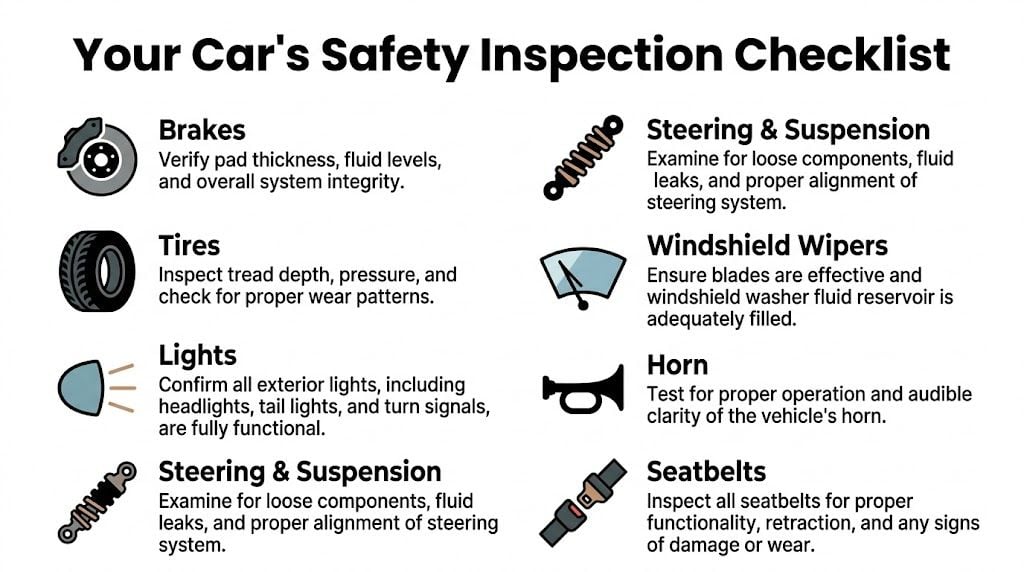
The major systems that get attention
Most safety inspections focus on components like these:
- Brakes. The technician checks wear, operation, and whether the system responds the way it should.
- Tires. Tread, condition, and wear pattern all matter because they affect grip and stability.
- Lights. Headlights, brake lights, turn signals, and other exterior lights need to work so other drivers can see you.
- Steering and suspension. Loose or worn parts can make the vehicle unstable or harder to control.
- Seat belts. They must latch and function correctly.
- Windshield and wipers. The driver needs a clear view in dry weather and rain.
- Horn. It sounds simple, but it is still a required safety device.
- Exhaust-related visible issues. Damage or leaks can create safety concerns.
- General safety equipment. Technicians also look for obvious condition problems that affect roadworthiness.
Why brake checks get so much attention
Brakes deserve special attention because they do more than “work or not work.” They can work poorly long before they fail completely.
According to this overview of inspection standards and brake measurements, technicians rigorously evaluate brake systems because inadequate brakes contribute to approximately 30% of commercial vehicle crashes. For passenger vehicles, inspections measure brake pad wear below a 3/32 inch minimum and check for excessive pushrod stroke, which can reduce stopping power by up to 50% and extend stopping distance.
That sounds technical, so here’s the plain-English version. If brake material gets too thin, or if key brake components move farther than they should, your car may still stop, but it may take longer and feel less controlled when you need it most.
If you want a closer look at one part of that process, this guide on how to inspect brake rotors explains what technicians look for when checking rotor condition.
If the brake pedal feels soft, the car pulls while stopping, or you hear grinding, don’t wait for an inspection date. Get it checked.
Other inspection points drivers can understand at home
You don’t need a lift or shop equipment to notice some early warning signs. A few simple checks in your driveway can tell you whether the vehicle needs attention before inspection day.
Tires
Look at all four tires, not just the front two. Uneven wear can point to alignment or suspension trouble. Cracks, bulges, or cords showing through the rubber mean the tire needs immediate attention.
Lights
Have someone stand outside while you test headlights, turn signals, brake lights, and reverse lights. A single failed bulb is easy to miss from the driver’s seat.
Wipers and windshield
If the wipers streak badly, chatter, or leave sections uncleared, visibility drops fast in a Texas storm. Chips and cracks in the driver’s viewing area matter too.
Steering and suspension
Pay attention to clunks over bumps, a steering wheel that’s off-center, or a car that wanders in its lane. Those symptoms don’t automatically mean failure, but they do mean something is changing underneath the vehicle.
Seat belts and horn
These are easy to ignore because you don’t think about them until you need them. Make sure every belt latches and retracts, and make sure the horn sounds strong and clear.
What the checklist is really trying to answer
An inspection isn’t just a pile of boxes. It asks four practical questions:
- Can the vehicle stop safely?
- Can the driver steer and control it predictably?
- Can other people see what the driver is doing?
- Can the driver see the road clearly and use basic safety equipment properly?
If the answer to any of those starts leaning toward no, that’s when repair work moves from “I’ll get to it later” to “this needs attention now.”
Safety Emissions and Pre-Purchase Inspections Compared
A lot of confusion comes from mixing up three different services. People ask for “an inspection” when they may need a safety inspection, an emissions inspection, or a pre-purchase inspection. Those are not the same thing.
The easiest way to separate them is by purpose. A safety inspection asks whether the vehicle is reasonably safe to operate. An emissions inspection focuses on environmental compliance. A pre-purchase inspection helps a buyer understand the condition of a used vehicle before money changes hands.
Vehicle Inspection Types at a Glance
| Inspection Type | Primary Goal | Key Checkpoints | When You Need It |
|---|---|---|---|
| Safety Inspection | Roadworthiness and basic operating safety | Brakes, tires, lights, steering, suspension, seat belts, visibility items, horn, general safety equipment | When required for a registration-related situation, after concerns about vehicle condition, or when you want reassurance the vehicle is safe |
| Emissions Inspection | Environmental compliance | Emissions-related systems and whether the vehicle meets applicable standards | When required by local rules tied to registration or county requirements |
| Pre-Purchase Inspection | Protecting the buyer from surprises | Broader condition review that may include safety items, leaks, wear, drivability concerns, and visible signs of past damage or poor maintenance | Before buying a used car, especially from a private seller or out-of-state source |
The easiest way to choose the right one
If your question is, “Is this car safe to drive?”, you want a safety inspection.
If your question is, “Will this vehicle meet the environmental requirements tied to registration?”, you’re talking about emissions.
If your question is, “Should I buy this used car at all?”, you want a pre-purchase inspection.
A pre-purchase inspection is the broadest of the three. It isn’t just about passing a requirement. It’s about avoiding a bad deal.
Where drivers in Haltom City get tripped up
The most common mistake is assuming one inspection covers everything. It usually doesn’t. A vehicle can run fine and still have a safety issue. A vehicle can also be safe in basic operation and still have registration-related requirements that involve a different kind of check.
That matters a lot with used vehicles, especially if you’re buying from an individual, bringing a car in from another state, or dealing with title and registration changes in Tarrant County. In those situations, asking for the right inspection up front saves time and frustration.
Texas Inspection Rules for Haltom City and Tarrant County Drivers
Texas rules are where many local drivers get mixed up. They hear that statewide periodic safety inspections aren’t required for every passenger vehicle in the same way people remember from earlier years, then assume inspections no longer matter at all. That’s not a safe assumption, especially in and around Tarrant County.
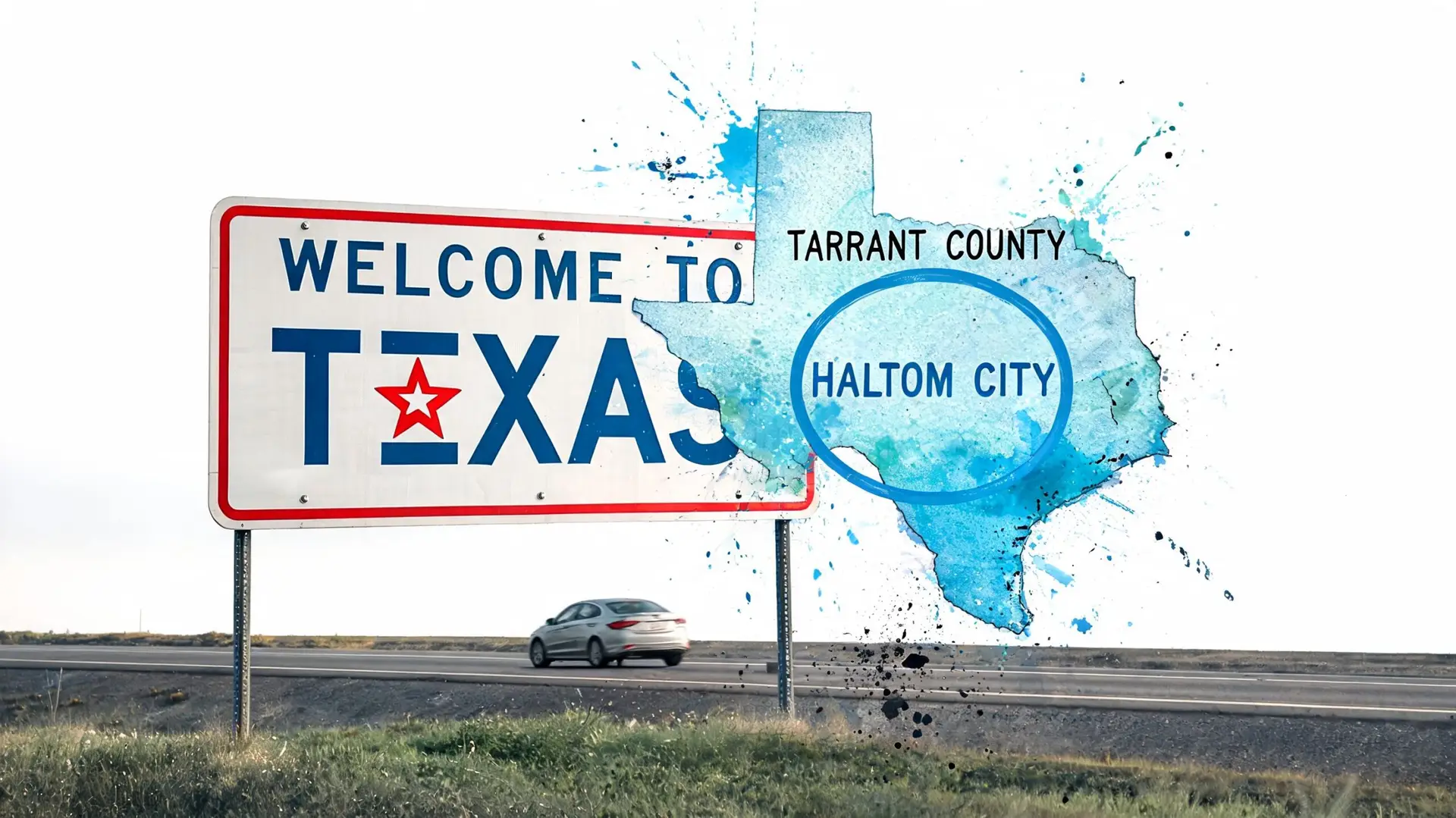
For Haltom City drivers, the practical issue is this. You may not need the same routine process people remember from older Texas rules, but inspection-related requirements can still come up in specific situations tied to registration transfer or vehicle condition.
According to this summary of U.S. vehicle inspection rules, Texas doesn’t mandate periodic safety inspections for all passenger vehicles, but Tarrant County requires them upon registration transfer or if a vehicle is suspected of being unsafe. That same source says more than 1.2 million safety-related citations were issued statewide, with faulty brakes accounting for 28% and tires 22%. Whatever a driver thinks about the rules, those defect categories show where real-world problems keep showing up.
What that means in real life around Haltom City
If you live in Haltom City, Watauga, North Richland Hills, or nearby parts of Tarrant County, these are the situations where people most often need clarification:
- Registration transfer. Buying or transferring ownership can trigger an inspection requirement.
- Out-of-state vehicle situations. If a vehicle is coming from another state, don’t assume the previous paperwork covers everything locally.
- Unsafe condition concerns. If law enforcement believes a vehicle is unsafe, that can put inspections back into the picture quickly.
- Salvage or rebuilt situations. These cases often involve additional scrutiny and more paperwork than drivers expect.
A lot of frustration comes from treating Texas as one simple rule for every county and every vehicle situation. It isn’t that neat on the ground.
Why local drivers should check before they assume
If you’re unsure, checking before you head to the registration office is a lot easier than sorting it out after you’ve already taken time off work. Local drivers often benefit from reviewing a practical guide like how often to get a car inspected so they can match their situation to the current requirement instead of relying on old advice.
Here’s a quick visual overview that helps make the issue easier to follow:
The local mindset that helps most
The safest approach for Haltom City drivers is simple. Don’t ask only, “Do I legally need an inspection today?” Also ask, “If my car had to be checked today, would it pass the basic safety items?”
Local advice: Rules can change by situation faster than your car’s condition changes. Keeping the vehicle inspection-ready prevents last-minute stress.
That mindset helps whether you’re renewing paperwork, helping a teenager with their first car, or managing several work vehicles that stay busy across North Texas.
Your Inspection at Express Lube & Car Care A Step-by-Step Guide
For most drivers, the stress isn’t the inspection itself. It’s not knowing what the visit will feel like. People worry they’ll show up, sit around forever, and get hit with a list of unexplained problems. A straightforward process makes a big difference.
At a local shop, the visit usually starts with basic vehicle information and the reason for the inspection. If the inspection is tied to a registration or transfer situation, having your documents ready helps the process move more smoothly. If you’re coming in because something feels off, say that early. A brake noise, shaking at highway speed, or a dead bulb gives the technician useful context.
What the visit usually looks like
A typical inspection appointment often follows this flow:
- Check-in. Staff confirm your vehicle information and why the inspection is needed.
- Vehicle review. A technician checks the relevant safety items and looks for obvious condition issues.
- Results explanation. You get a clear pass or fail result, along with notes about anything that needs attention.
- Repair discussion if needed. If the vehicle doesn’t pass, the next step is usually a simple explanation of what failed and what it would take to correct it.
If you need the service itself, Texas state inspection information at Express Lube & Car Care outlines the type of inspection support available at the shop.
Common reasons vehicles don’t pass
Most failures are not mysterious. They tend to come from ordinary wear or small issues that went unnoticed too long.
Some of the common ones include:
- Worn brake components that no longer meet safe condition standards
- Tires in poor condition from low tread, damage, or severe uneven wear
- Burned-out or inoperative lights
- Wiper problems that leave the windshield hard to see through
- Seat belt issues such as belts that don’t latch or retract properly
- Steering or suspension concerns that affect control or stability
What’s reassuring is that many of these are fixable without major drama if they’re caught early.
If your vehicle fails, that result is useful information. It tells you exactly what needs attention before the problem gets worse.
How to prepare before you go
You don’t need to be a mechanic to make inspection day easier. A quick owner check can eliminate some of the easy problems beforehand.
Simple things to check in your driveway
- Test every outside light. Headlights, turn signals, brake lights, and reverse lights are easy to verify with help from another person.
- Look over the tires. Check for obvious damage, uneven wear, and very shallow tread.
- Run the wipers. If they smear more than they clear, replace them.
- Try every seat belt. Make sure each one latches and retracts.
- Listen to the horn. If it’s weak or silent, don’t ignore it.
- Pay attention on the drive over. Pulling, grinding, squealing, shaking, or clunking are signs worth mentioning.
What drivers appreciate most
The best inspection visits are the ones where the findings are explained in plain language. You should know what passed, what didn’t, and why it matters. If repairs are needed, the explanation should connect the issue to real-world safety, not just a line item on a sheet.
That clarity is especially helpful for used-car owners, parents helping young drivers, and fleet managers trying to keep multiple vehicles in safe working order without unnecessary downtime.
The Life-Saving Benefits of Staying Inspection-Ready
It’s easy to think of inspections as something personal. My car. My registration. My repair bill. In reality, safety inspections affect everybody who shares the road.
The strongest argument for staying inspection-ready is simple. Safer vehicles reduce the chances that worn or failed equipment will turn a normal traffic situation into a serious crash.
According to the Missouri Highway Patrol brochure summarizing inspection program data, states with vehicle safety inspection programs experience 10.4% fewer fatal crashes per 100 million miles traveled. That same source notes that South Carolina saw an 11% increase in traffic fatalities in the first year after eliminating its inspection program.
Why that matters on local roads
Those are statewide numbers, but the lesson is very local. The roads around Haltom City are full of ordinary moments where vehicle condition matters immediately:
- A quick stop at a busy light
- A lane change in moderate traffic
- A rainy commute with weak wipers and worn tires
- A nighttime drive with one headlight out
- A family trip where a brake problem gets worse far from home
In each case, the difference between “good enough” and “properly maintained” can be the distance between a close call and a crash.
Inspection-ready is better than inspection-rushed
Drivers usually make better decisions when they aren’t under pressure. If you wait until paperwork deadlines, a warning from law enforcement, or obvious brake trouble, your choices get narrower. If you keep the vehicle in condition that could pass a basic safety review at any time, you avoid that scramble.
Road safety isn’t only about how carefully you drive. It’s also about whether the vehicle can respond when you do the right thing.
That mindset helps your family, your passengers, and the people in the next lane who never chose to share the road with a poorly maintained car.
Frequently Asked Questions About Vehicle Inspections in Haltom City
Drivers usually ask the same handful of questions once they understand the basics. Here are the answers I give most often around Haltom City.
How long does a safety inspection take
It depends on the vehicle, the reason for the inspection, and whether the technician finds an issue that needs a closer look. A simple inspection on a well-maintained vehicle is usually straightforward. If lights don’t work, tires are in rough shape, or the vehicle has obvious brake or suspension symptoms, it may take longer because the technician needs to confirm the condition properly.
What happens if my car fails
You get a list of the items that did not meet the required condition. From there, you fix those items and return as needed under the shop’s process. A failed inspection isn’t the end of the road. It’s a safety warning with specifics attached.
The important thing is not to treat a failed result like bad luck. Treat it like useful information. It tells you where the risk is.
Can I do anything before the appointment to improve my chances
Yes. Check lights, wipers, horn, seat belts, and tire condition before you go. Also pay attention to how the car feels when driving. If something feels wrong, mention it instead of hoping it won’t matter.
If you want a practical breakdown of fees and what may affect the total visit, this page on Texas vehicle inspection cost is a useful starting point.
I just moved to Haltom City from another state. What should I expect
Expect some paperwork questions and don’t assume your previous state’s process matches what applies here. Rules tied to title transfer, registration, or vehicle condition can differ from what you’re used to. If the car is new to Texas or new to your name, ask what applies before making a second trip.
Do fleet vehicles need a different kind of inspection
Often, yes, or at least a different level of attention. Business vehicles tend to rack up miles, idle time, stop-and-go wear, and repeated driver use much faster than the average personal vehicle. That means small safety problems show up sooner and can affect multiple people in your company.
According to CVSA inspection information referenced in the provided fleet data, FMCSA data shows 25% of Texas fleet crashes stem from uninspected components. The same verified information says that as of Q1 2026, a new TxDOT program offers tax credits for DFW fleets that undergo biennial vehicle-only inspections, and that program can be managed at certified shops like Express Lube.
For North Texas business owners, that means inspections aren’t just about compliance. They’re part of risk control. A fleet vehicle with worn brakes, bad tires, or lighting problems creates downtime, liability, and scheduling headaches.
Is a safety inspection the same as regular maintenance
No. They overlap, but they are not the same service. Maintenance keeps the vehicle running well. A safety inspection focuses on whether key components are in safe operating condition. You want both.
What’s the smartest approach for a busy local driver
Keep the vehicle close to inspection-ready all year. Replace burned-out bulbs quickly, don’t stretch tire life too far, and don’t ignore brake noises just because the car still drives. That habit makes every registration, transfer, and road trip easier.
If you’d like a local shop to look over your vehicle and help you sort out what applies in Haltom City, Express Lube and Car Care offers inspection-related service along with the repair and maintenance work that often goes with it. For drivers in Haltom City, Watauga, Keller, and North Richland Hills, having a clear answer from a nearby technician can save a lot of guesswork.