
Car electrical repair cost in the Haltom City area can range from $180 to $350 for a 12-volt battery replacement to $600 to $1,000 for an alternator replacement, and more recent 2026 figures place alternator replacement at $754.07 to $849.96. The first money-saving step is usually a proper diagnostic check, which typically costs $100 to $200.
If you’re reading this because your car gave you a single click, slow crank, flickering lights, or a battery warning light on the dash, you’re probably not thinking about theory. You’re thinking about whether the car will start again, whether it’s safe to drive, and how bad the bill is going to be.
That’s a fair concern. Electrical problems can feel random because one weak part often makes another part look bad. A dying battery can mimic starter trouble. A slipping belt can look like an alternator failure. Corroded terminals can make a healthy charging system act sick. For drivers in Haltom City, Keller, and Watauga, the fix starts by narrowing down the actual fault before buying parts.
That Dreaded Click Your Guide to Car Electrical Issues
Most drivers know the moment. You turn the key or hit the start button, and instead of a clean start, you get a click, a pause, maybe dim lights, maybe nothing. Sometimes the radio works but the engine won’t crank. Other times the headlights pulse or the dash lights up like a Christmas tree.
Those symptoms point to the same broad area: the vehicle’s electrical system. That includes the battery, starter, alternator, connections, grounds, and wiring that tie them together. When one of those pieces fails, the car may still act like the problem is somewhere else.
What usually goes wrong first
A simple way to consider the situation:
- Battery problems often show up as slow cranking, clicking, or electronics acting weak.
- Starter problems usually show up when power is present, but the engine still won’t turn over properly.
- Alternator problems often show up while driving, such as dimming lights, warning lights, or a car that dies after a jump-start.
- Wiring or connection issues create the most confusing symptoms because they can come and go.
Practical rule: If the car starts after a jump but dies again soon after, don’t assume it’s “just the battery.” The charging system still needs to be checked.
In Haltom City, local drivers deal with the same stress every day: getting to work, getting kids picked up, and not getting stranded on Denton Highway or Loop 820. The right approach isn’t guessing from symptoms alone. It’s checking battery condition, charging output, starting draw, and visible wiring condition in a logical order.
That matters because electrical repairs sit in the category of high-urgency work. When a starter or alternator fails, the car often isn’t drivable. You’re not deciding whether to fix a squeak next month. You’re trying to get your transportation back now.
Common Car Electrical Repair Costs in 2026
In Haltom City, the first question after a no-start usually isn’t technical. It’s, “How much is this going to cost me?” Fair question. Electrical repairs can be straightforward, or they can widen once testing shows the battery was only the symptom and not the root problem.
For common starting and charging repairs, most drivers in the DFW area will see estimates land in a familiar range. Starter replacement often runs $450 to $900, alternator replacement usually falls between $600 and $1,000, and a 12-volt battery commonly costs $180 to $350 to replace, based on this vehicle repair cost guide. Around Haltom City, local labor rate, vehicle design, and part quality usually decide where your invoice lands inside that range.
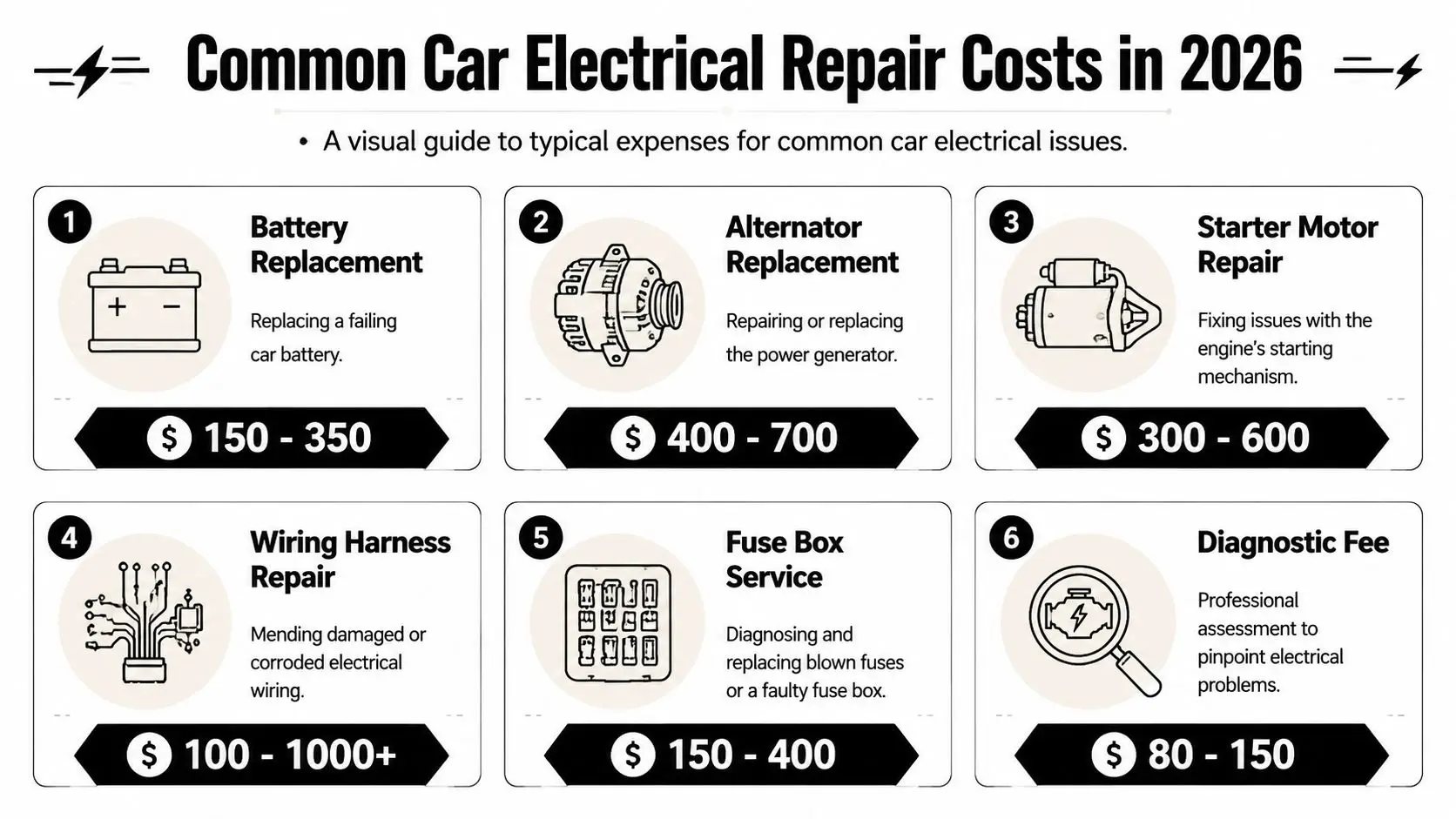
A quick reminder on what you’re paying for helps make these estimates less frustrating. The battery stores power and supports electronics. The starter uses that power to crank the engine. The alternator keeps the battery charged and supplies power once the engine is running. Symptoms overlap all the time, so many electrical invoices include both diagnostic time and the repair itself.
Estimated Cost for Common Electrical Repairs in Haltom City 2026
| Component | Part Cost Range | Labor Cost Range | Total Estimated Cost |
|---|---|---|---|
| Battery replacement | Included in typical replacement range | Included in typical replacement range | $180 to $350 |
| Starter replacement | Varies by vehicle | Varies by vehicle | $450 to $900 |
| Alternator replacement | Varies by vehicle | Varies by vehicle | $600 to $1,000 |
| Electrical diagnostic check | Testing and inspection | Testing and inspection | $100 to $200 |
Why one alternator job costs more than another
Alternator jobs are a good example of why two drivers can hear the same repair name and get different numbers. On one vehicle, access is open and the unit comes out without much disassembly. On another, the technician may need to remove extra brackets, shields, or nearby components just to reach it.
Parts choice matters too. A lower-priced alternator can reduce the estimate up front, but it may not hold up as well as a better unit, especially on a daily driver that spends plenty of time in DFW traffic with the A/C, lights, and electronics working hard. I usually tell drivers to compare the whole repair, not just the cheapest line on the page.
A lower estimate can still cost more later if it skips proper testing, uses a poor-quality part, or misses the problem that damaged the original component.
Module faults can raise the bill too, especially when charging issues are tied to computer controls instead of a single failed part. If you want a clearer picture of that side of the repair, this guide on engine control module repair cost explains what changes the estimate.
At shops such as Express Lube & Car Care in Haltom City, the useful estimate is the one that separates testing, parts, and labor clearly. That gives local drivers a way to judge whether the price makes sense for their vehicle instead of guessing under stress.
Key Factors That Influence Your Final Bill
The same repair name doesn’t guarantee the same invoice. Two drivers in the same part of DFW can both need an alternator and still get different estimates for good reasons.

One reason is the larger market around you. Motor vehicle repair prices climbed 197.57% between 1997 and 2026, with an average annual inflation rate of 3.83%, and consumers now spend an average of $838 on car repairs, according to motor vehicle repair inflation data. That bigger trend shows up every time a shop orders parts, pays technicians, or invests in newer scan tools.
Vehicle design changes everything
A basic sedan and a late-model luxury SUV may both need a starter, but they won’t always get the same estimate. Some vehicles require more disassembly to reach the failed part. Others have tighter packaging, more electronics near the work area, or more time spent verifying system operation after the repair.
That complexity affects labor first, but it can also affect parts selection. A part that looks similar across multiple vehicles may have different specs, connectors, or calibration requirements.
Part choice matters
Shops and customers usually weigh three broad paths:
- OEM-style replacement keeps the repair close to factory spec.
- Aftermarket parts may lower the upfront bill, but quality varies.
- Remanufactured units can make sense on some charging-system repairs when the part source is solid and the unit is tested properly.
There isn’t one answer that fits every car. On an older daily driver, a carefully chosen remanufactured alternator may be a practical value decision. On a newer vehicle with sensitive electronics, saving money on the part can backfire if the replacement doesn’t charge consistently or fails early.
The cheapest part isn’t always the lowest-cost repair. If you pay for the job twice, the first savings disappears fast.
Local labor rates shape the estimate
Labor is where local context matters. Mechanic labor rates across much of the United States commonly range from $120 to $159 per hour, though some states can be much higher. In the Haltom City area, the regional labor rate is listed at about $251.67 per hour in the earlier-referenced repair cost guide. That doesn’t automatically mean your estimate will be extreme. It means skilled electrical work in this area isn’t priced like a simple oil change.
For drivers in North Richland Hills, Watauga, Keller, and Haltom City, the smartest move is comparing estimates based on scope, not just bottom-line price. Ask what testing is included, what part quality is being used, and whether the shop is fixing the cause or just replacing the obvious failed component.
Why a Diagnostic Test is Your First and Best Investment
You exit a grocery store in Haltom City, turn the key, and hear a click. The battery light was on earlier, but the car started, so it was easy to put off. That is how many electrical repairs become costly. Drivers replace the part that appears guilty, then pay again when the actual fault is still there.
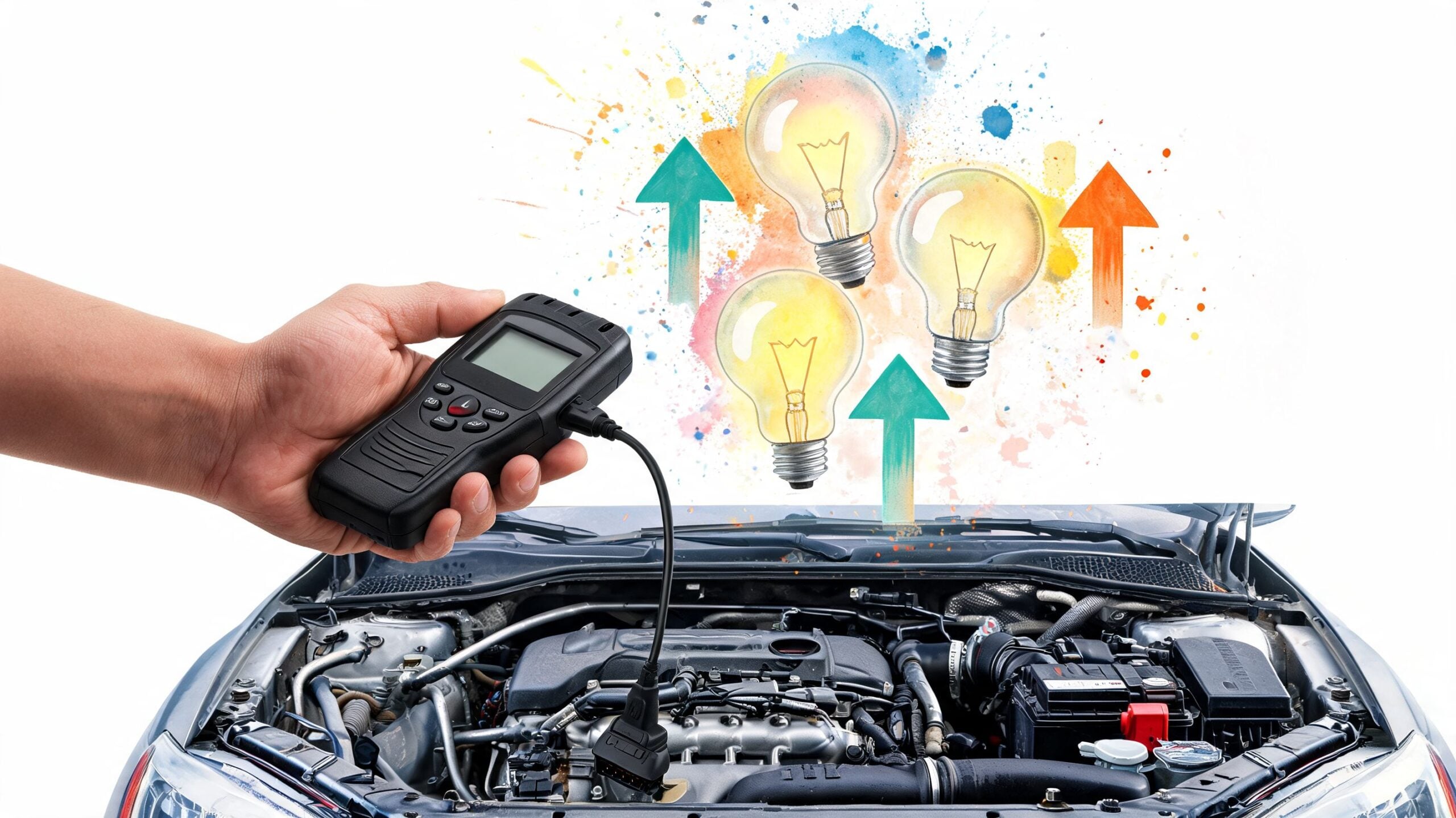
In most DFW shops, a diagnostic test is a smaller bill than a wrong repair. Around Haltom City, that matters because electrical labor adds up fast once a shop starts installing parts that do not fix the problem. A proper diagnosis usually checks system voltage, battery health, cable condition, grounds, fuse and relay operation, and whether the issue is intermittent or constant.
That process saves money because electrical symptoms overlap. A weak battery, bad starter connection, failing alternator, stretched belt, corroded ground, or damaged wiring can all create the same complaint.
What a diagnostic actually prevents
One of the most common mistakes is replacing an alternator because the battery keeps dying. If the actual problem is a slipping belt, a parasitic draw, or high resistance in a cable, the new alternator will not solve it. The car leaves with an expensive part and comes back on a tow truck.
Good testing answers two questions before any repair starts: what failed, and what caused it.
That second answer is where the value is. If a technician finds acid corrosion in the terminals, a loose engine ground, or heat damage in a connector, the repair can address the root cause instead of chasing symptoms. For a closer look at what local testing includes, this guide to auto diagnostic services breaks down the process clearly.
A short explainer can help if you’re sorting out warning signs before scheduling service:
Where guesswork gets expensive
Electrical guesswork usually follows a pattern. Battery first. Starter next. Alternator after that. Each step feels reasonable on its own, but the total climbs fast, especially if the car still will not start by the end of the week.
I tell drivers in Haltom City and nearby DFW neighborhoods the same thing. Pay for targeted testing once, then approve the repair with confidence. On modern vehicles packed with modules and sensors, that approach is usually the cheaper one.
Warning Signs You Have a Car Electrical Problem
Electrical problems usually send warnings before a complete failure. The problem is that many of those warnings look small until the car stops starting.
Symptoms you shouldn’t ignore
-
Slow cranking at startup
If the engine turns over sluggishly, the issue may involve the battery, starter, or cable connections. -
A single click or repeated clicking
That often points to low available power, a weak battery, poor terminal contact, or starter engagement trouble. -
Headlights that dim or brighten unusually
Charging-system trouble is a common suspect when light output changes with engine speed or accessory load. -
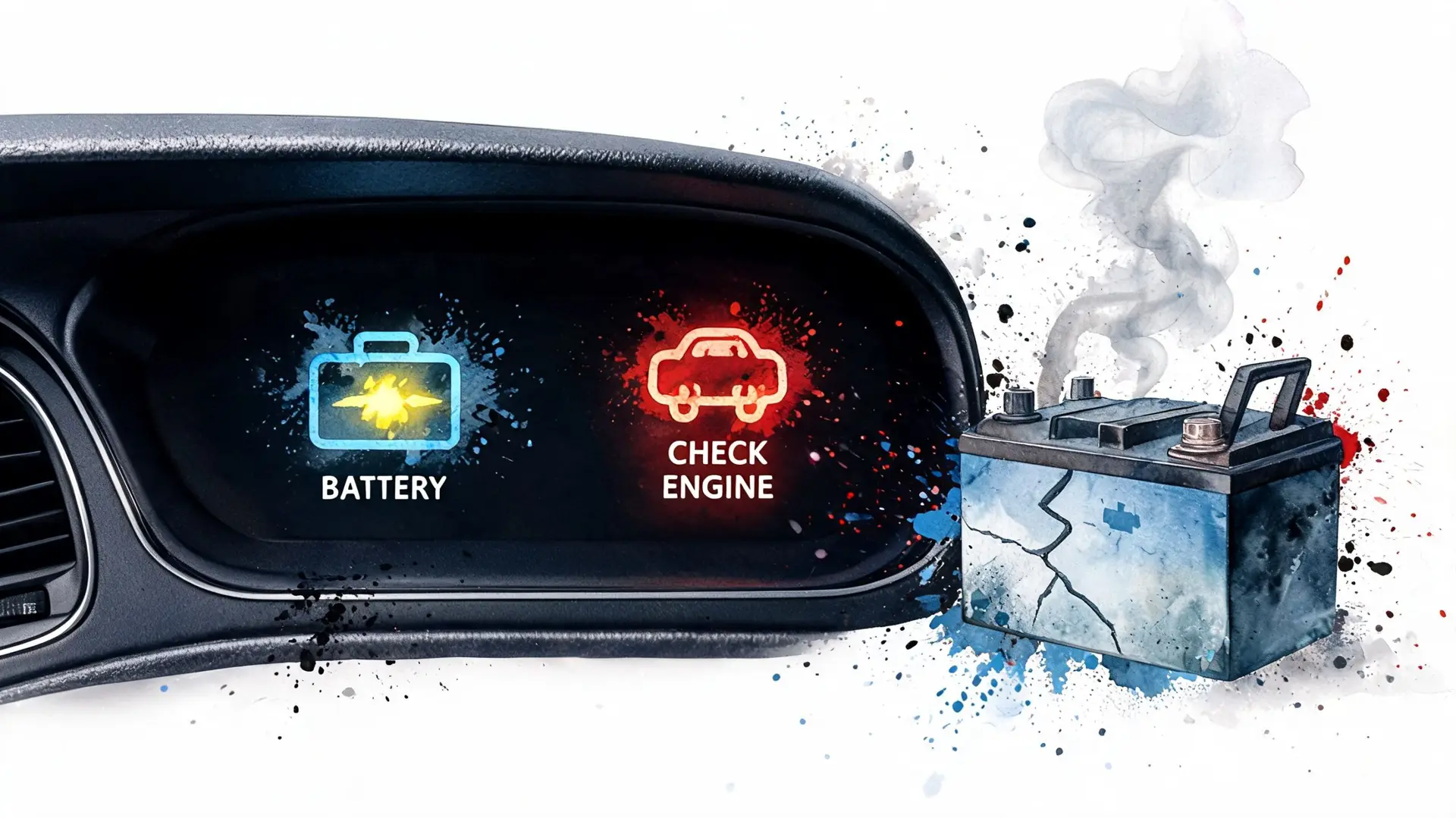
Battery warning light on the dash
This doesn’t always mean the battery itself is bad. It can also point to charging-system problems. -
Electrical accessories acting erratic
Windows slowing down, radio resets, or dash glitches can signal unstable voltage.
Smells, sounds, and intermittent faults
Some clues aren’t visual.
- Burning plastic smell can suggest overheated wiring, a short, or connector damage.
- Grinding or unusual under-hood noise can line up with charging-system hardware problems.
- Intermittent no-start behavior often means the fault is developing, not gone.
If the problem comes and goes, that doesn’t mean it’s minor. Intermittent electrical faults often get worse before they become obvious.
For alternator-specific symptoms, this local guide on how to know if an alternator is bad is a useful next read.
How to self-triage before you call a shop
You don’t need to diagnose the whole car in your driveway. You just need to notice patterns:
- Does it fail only when starting, or also while driving?
- Do the lights dim when you crank the engine?
- Did a jump-start help temporarily, or not at all?
- Did the issue begin suddenly, or has it been getting worse?
Those details help a technician narrow the problem faster and reduce wasted time.
Getting an Accurate Repair Estimate in Haltom City
When you need a real number, ask for an estimate that starts with testing, not assumptions. That’s how you avoid paying for parts you didn’t need.
A solid estimate usually follows this sequence:
-
Describe the symptom clearly
Say what the car does, when it happens, and whether a jump-start changed anything. -
Approve diagnostic time first
That gives the shop a fair path to test the charging and starting system instead of guessing. -
Ask what part failed and what caused the failure
Those are different questions, and both matter. -
Review the repair line by line
You want to understand labor, parts choice, and whether related items need attention.
If you also care about preserving the car after repairs, a market-focused resource like this AAA is a useful reminder that ownership costs don’t stop at mechanical work. Appearance, protection, and maintenance all add up, especially if you keep your vehicles a long time.
For local drivers in Haltom City, Keller, Watauga, and North Richland Hills, one practical option is Express Lube & Car Care at 6211 Denton Hwy, Haltom City. The shop handles electrical repair and check engine light diagnosis, and a page like how to repair car battery can help you understand the battery side before you book service.
Frequently Asked Questions About Electrical Repairs
Can I still drive with the battery light on
Sometimes the car will keep running for a short time, but it’s risky. A battery light can point to charging trouble, and once the stored power is depleted, the vehicle may stall and not restart.
Is a remanufactured alternator a safe way to save money
It can be, depending on the vehicle and the part source. The key is matching the part correctly and making sure the original failure wasn’t caused by another issue like belt trouble, bad connections, or wiring faults.
Should I replace the battery first and see what happens
Usually not. If the battery is old or weak, replacement may be justified, but guessing can turn one repair into several. Testing first is the better move when symptoms could come from the battery, alternator, starter, or wiring.
If your car is clicking, slow to start, showing warning lights, or acting like the power is unstable, schedule a proper inspection with Express Lube and Car Care. A clear diagnosis, a written estimate, and a repair plan based on the actual fault is the fastest way to get back on the road in Haltom City with fewer surprises.