
Sitting on Denton Highway in summer traffic, you can feel the heat coming off the pavement through the floorboard. The A/C is running, the light ahead stays red, and your engine is counting on one system to keep everything under control.
That system is the cooling system. When it's working, most drivers never think about it. When coolant is old, contaminated, low, or the wrong type, problems gradually build until the temperature gauge climbs and your day changes fast.
For drivers in Haltom City, Watauga, Keller, and North Richland Hills, a coolant change service isn't just another line on a maintenance list. It's one of the simplest ways to protect the engine you rely on every day.
Protecting Your Car from the Haltom City Heat
A lot of local drivers don't notice cooling system stress until they're stuck in slow traffic with the sun beating down, then suddenly the temperature needle starts moving higher than usual. That's common around Haltom City because many trips are short, stop-and-go, and hard on under-hood temperatures.

The cooling system has to do its job whether you're heading toward Fort Worth, idling at a long light, or making quick errands across town. Coolant carries heat away from the engine, but the system also depends on clean airflow through the radiator. If debris is packed into the fins, the whole setup works harder, which is why it helps to understand how to clean radiator fins.
Why local driving is hard on coolant
North Texas heat puts pressure on every part of the system. Radiators, hoses, the thermostat, the water pump, and the coolant itself all have to stay in sync. If one part is weak, the margin for error gets small fast.
Short trips can be rough too. A vehicle that rarely gets a full highway run may still build contamination in the cooling system over time, especially if maintenance has been delayed or the wrong coolant has been added in the past.
Cooling system problems rarely start with steam pouring out from under the hood. Most start with neglected fluid, a small leak, or contamination that someone ignored for too long.
What a coolant change service really protects
A good coolant change service protects more than just temperature control.
- Engine reliability: Old coolant stops protecting internal passages the way it should.
- Water pump condition: Clean fluid helps the pump and seals live longer.
- Daily drivability: Stable operating temperature means less risk when traffic is heavy.
- Repair costs: Catching cooling system issues early is usually much easier than dealing with an overheated engine later.
In Haltom City, that matters. The heat is real, the traffic is real, and coolant maintenance is one of those services that pays off most when nothing dramatic happens.
Why Your Engine's Coolant is Critical in Texas
A car can seem fine on a mild morning in Haltom City, then start running hot in afternoon traffic with the A/C on full blast. That shift is often where coolant condition shows up. In North Texas, the cooling system does not get much margin for neglect.
Coolant has one job drivers notice and several they usually do not. It carries heat away from the engine, but it also protects the inside of the radiator, engine passages, heater core, and water pump from corrosion and wear. Once the additives wear out or the wrong coolant gets mixed in, the fluid can start causing problems instead of preventing them.
What healthy coolant does
A proper coolant mixture has several jobs at once:
- Controls temperature: It moves heat out of the engine and into the radiator where it can be released.
- Protects internal metal surfaces: It helps reduce rust, scale, and corrosion inside the cooling system.
- Helps seals and pump components last longer: Clean, correct coolant is easier on the water pump and sealing surfaces.
- Keeps the system cleaner over time: Good fluid is less likely to leave behind deposits that restrict flow.
For a clearer mechanical picture, this overview of how car radiators work shows why coolant condition and radiator performance have to be considered together.
What degraded coolant does inside a system
Old coolant does more than lose cooling ability. It can turn acidic, carry suspended debris, and leave deposits behind in narrow passages where flow matters most. That is one reason a vehicle may not overheat every day, but still run hotter than normal in traffic or under load.
This is also where drivers get confused about flush versus exchange. A basic drain and refill replaces only part of the old fluid in many vehicles. An exchange or flush goes further, but it is not automatically the right choice for every car. If the system is clean and the service is being done on schedule, a simpler service may be enough. If the coolant is rusty, cloudy, mixed with the wrong type, or the system has contamination, a more thorough cleaning makes more sense.
Practical rule: If the coolant looks dirty in the reservoir, there is a good chance the rest of the system needs more than a quick top-off or partial drain.
Why Texas heat changes the stakes
Hot weather does not ruin coolant by itself. It exposes weak coolant, small leaks, and restricted flow faster. Around Haltom City, North Richland Hills, and Watauga, long idle times, heavy summer A/C use, and stop and go traffic put extra demand on the system.
That is why coolant service is about more than preventing a boil-over on the side of the road. It is also about keeping stable operating temperature, protecting expensive parts, and choosing the right service before minor contamination turns into radiator, thermostat, or water pump trouble.
| Cooling system condition | What it usually means |
|---|---|
| Clean coolant, correct type, stable level | System is likely protecting and cooling as designed |
| Old coolant with no obvious symptoms | Protection may already be weakening |
| Cloudy, rusty, or debris-filled coolant | Internal contamination is likely present |
| Low coolant level that keeps returning | Leak testing should come before fluid replacement alone |
In the shop, I would rather service coolant early than price an overheating repair later. That is the trade-off local drivers need to understand.
Warning Signs Your Vehicle Needs a Coolant Change
Most cooling system problems give warnings before they turn into a roadside breakdown. The problem is that many of those warnings are easy to brush off. A gauge that runs a little hotter, a faint sweet smell, or coolant that looks dirty in the reservoir often gets ignored until the car overheats.
For drivers around Haltom City, North Richland Hills, and Keller, these are the signs that deserve attention.
Signs you can catch yourself
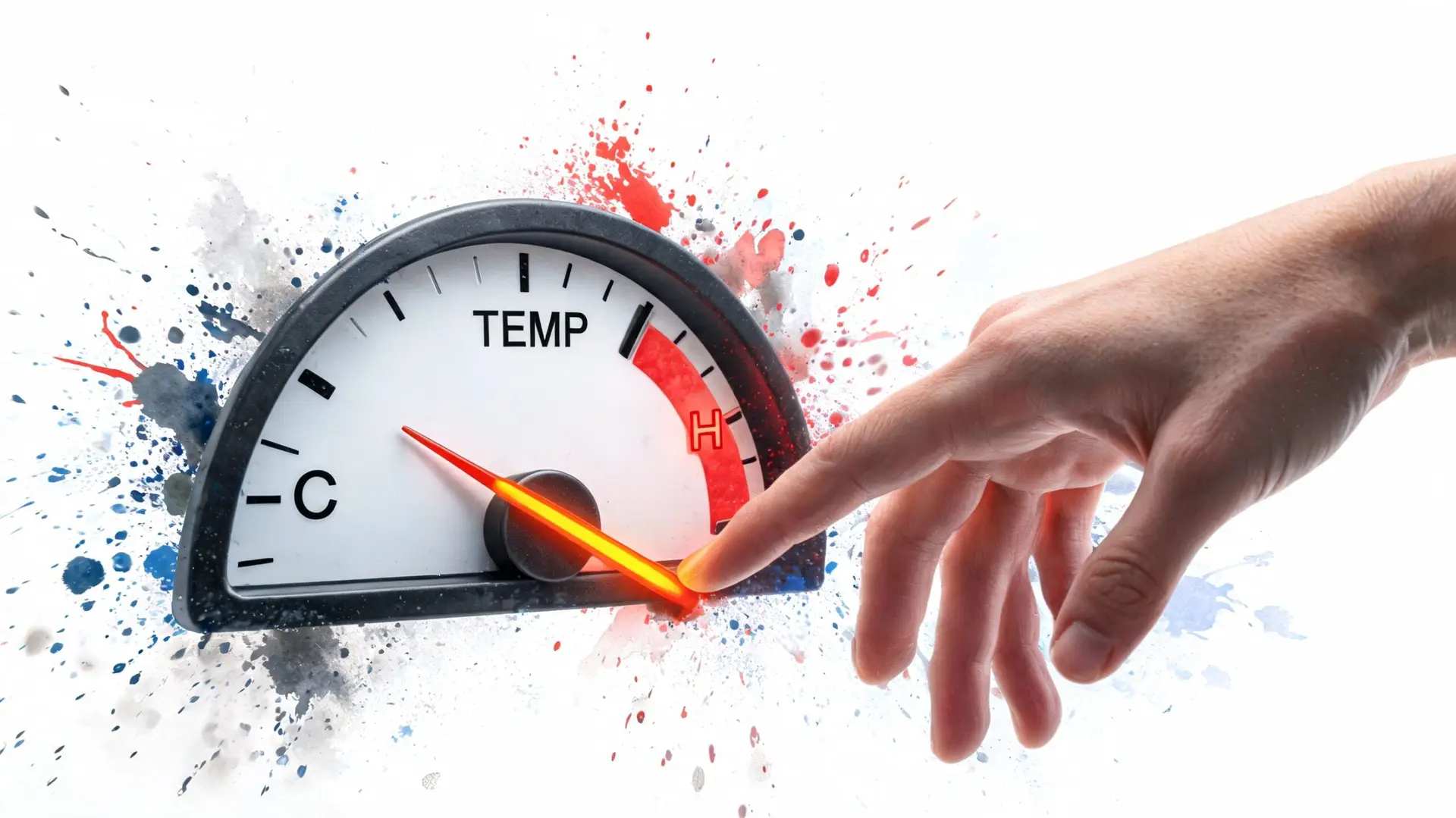
- Temperature gauge creeping higher than normal: If the gauge is running hotter in traffic or with the A/C on, the system may be losing efficiency.
- Sweet smell under the hood: Coolant has a distinct sweet odor. If you smell it after parking, don't ignore it.
- Puddle or drip under the vehicle: Coolant leaks can show up as colored fluid under the front of the car.
- Low reservoir level: A dropping coolant level usually means there's a leak somewhere, even if you don't see it yet.
- Rusty, cloudy, or dirty coolant: If the reservoir looks murky or has floating debris, the fluid is past its best days.
If you've noticed leaking, this guide on car coolant leak symptoms can help you narrow down what you're seeing before you bring the car in.
Signs drivers often misread
Some symptoms don't scream “coolant problem,” but they still point in that direction.
A heater that suddenly stops blowing warm air can signal low coolant. So can a cooling fan that seems to run more than usual. On some vehicles, you may also notice warning messages before you see the gauge move.
If the coolant reservoir looks dirty, don't judge it by color alone. Look for cloudiness, rust tone, or visible particles. That tells you more than whether it's green, orange, pink, or yellow.
A quick visual explanation helps here:
When to stop driving
If the gauge pushes into the hot zone, or you see steam, stop driving as soon as it's safe. Continuing to drive an overheating vehicle is where manageable cooling system service turns into major engine repair.
Watch for these higher-risk situations:
- Steam from under the hood
- Temperature warning light
- Rapid coolant loss
- Engine running rough after overheating
Those are not “keep an eye on it” symptoms. Those are “shut it down and inspect it” symptoms.
Understanding Your Coolant Change Options
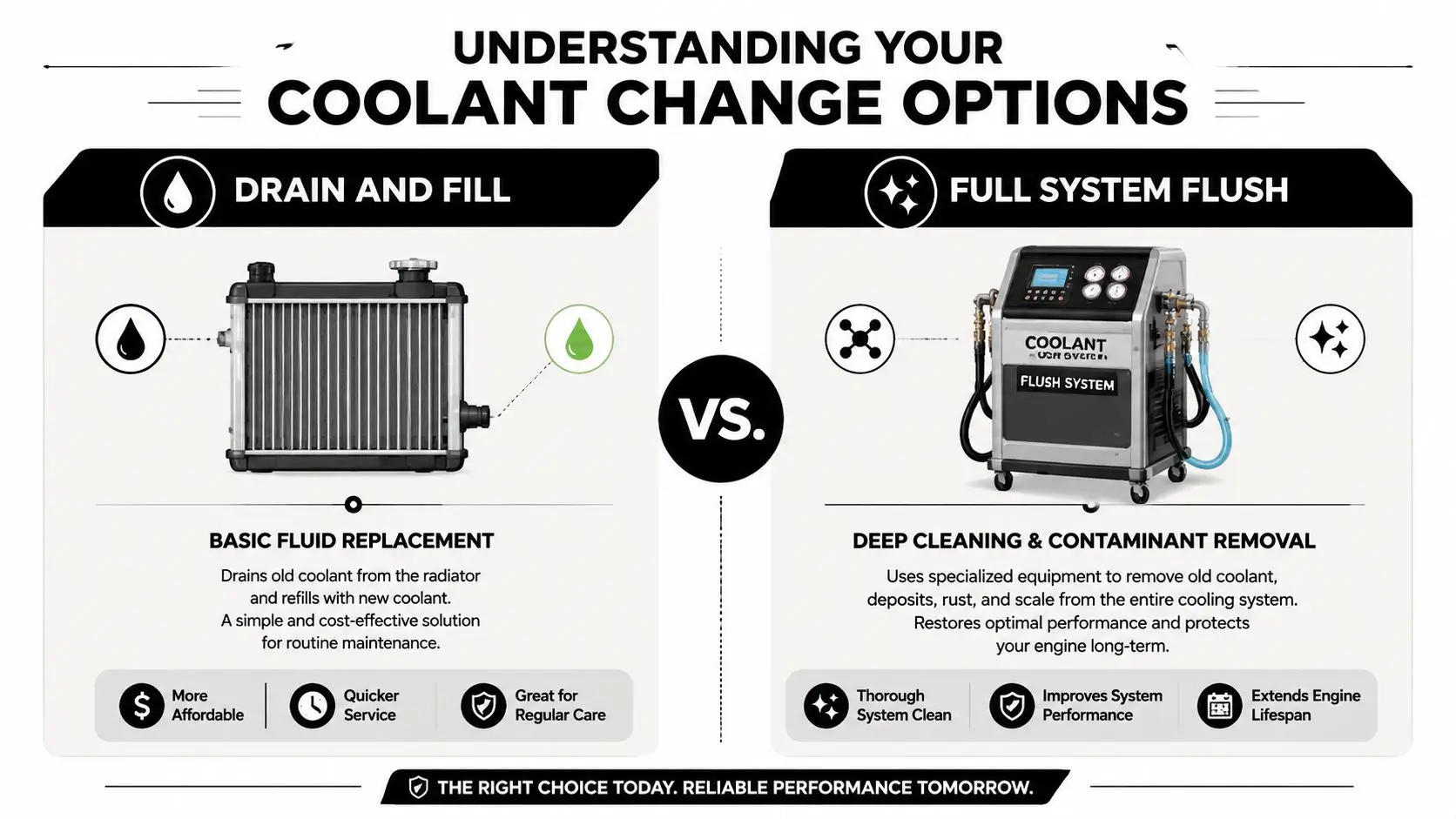
Pull into a Haltom City shop and ask for a coolant change, and you may hear three different terms in two minutes: drain and fill, exchange, and flush. Those are not the same service. In North Texas heat, that difference matters because a clean, well-maintained system can often be serviced one way, while a neglected or contaminated system needs more than fresh fluid added on top.
Drain and fill versus full flush
A drain and fill removes coolant from the radiator or drain point, then refills the system with the correct new coolant. It works well for routine maintenance when the coolant is still clean and the system has no signs of rust, sludge, oil contamination, or mixed formulas.
A full flush is more involved. It is used when the old coolant is dirty, the wrong coolant may have been added, or deposits are already building inside the system. The goal is not just to replace fluid. The goal is to clean out contamination that can keep circulating through the radiator, heater core, and engine passages.
Here is the practical difference:
| Service type | Best use case | Limitation |
|---|---|---|
| Drain and fill | Routine service on a clean system | Some old coolant usually remains in the system |
| Full flush | Dirty, rusty, mixed, or neglected systems | Takes more time and only makes sense when condition calls for it |
That trade-off is what drivers often miss. More service is not always better. The right service is the one that fits the condition of the system.
Where a coolant exchange fits
A coolant exchange usually means old fluid is pushed out and new fluid is installed through service equipment. On a healthy system, that can be a solid maintenance option. On a dirty system, it may not remove buildup stuck inside the cooling passages.
That is why we explain the difference before recommending anything at Express Lube. If you want to see how we handle coolant fluid exchange and related fluid services, the focus is matching the service to the vehicle instead of selling one package to everybody.
Some shops also use better front-desk systems to explain recommendations clearly and keep service records organized. Tools discussed in these top AI tools for car repair service can help with communication, but the important part in the bay is still inspection and judgment. A machine does not tell the full story if the coolant is rusty, sludged, or mixed.
If the system is contaminated, an exchange replaces fluid. A flush addresses the contamination.
Coolant type matters more than coolant color
Color causes a lot of mistakes. Green, orange, pink, yellow, and blue coolant do not tell you enough by themselves. Manufacturers use different additive packages, and mixing the wrong types can shorten coolant life or create residue in the system.
The common categories are:
- IAT coolant: Older conventional formula, often found in older vehicles
- OAT coolant: Longer-life formula used in many newer vehicles
- HOAT coolant: A hybrid formula used by several manufacturers
The safe move is to use the exact coolant spec the vehicle calls for. Prestone's coolant guide explains why color alone is not a reliable way to choose coolant, which matches what we see in the shop all the time.
How we choose the right service
A practical decision usually looks like this:
- Clean coolant and good service history: Drain and fill may be enough
- Cloudy, rusty, or debris-filled coolant: Flush is usually the better repair path
- Unknown history: Inspect first, then decide
- Wrong coolant added: Correct the mix issue before normal maintenance resumes
That saves drivers from two expensive mistakes. Paying for a flush when the system does not need one, or choosing a basic exchange when contamination is already causing trouble.
Our Coolant Change Service at Express Lube
A Haltom City driver comes in after a week of triple-digit afternoons, and the car has not overheated yet. The coolant reservoir is low, the fluid looks dull, and nobody is fully sure what was added last time. That is the point where a careful inspection matters more than a quick drain and refill.
At Express Lube, we start by checking the system before we recommend any service. We look at coolant condition, verify the level, inspect hoses and visible leak points, and confirm the coolant spec the vehicle calls for. In North Texas heat, guessing wrong on coolant type or skipping an active leak can turn a routine visit into a comeback.
What happens during the visit
Our process is straightforward:
- Initial inspection: Check coolant appearance, reservoir level, hose condition, and visible signs of leakage
- Service recommendation: Decide whether the vehicle needs an exchange, a flush, or more diagnosis before either one
- Correct refill: Use the manufacturer-specified coolant, not a color guess
- Final check: Recheck level and confirm the system is operating normally after service
Modern cooling systems leave less room for error than older ones did. Long-life coolant formulas can last well when the right product stays in a clean, sealed system, but service intervals and chemistry still vary by manufacturer. We verify the spec first so the vehicle gets the right fluid for its design.
Why the inspection comes first
A lot of cooling system problems start with simple mistakes. Wrong coolant gets mixed in. A small leak gets ignored and the system keeps losing fluid. Old coolant gets replaced, but the actual problem is a weak cap, a soft hose, or residue already forming inside the system.
That is why we inspect first and service second.
For drivers who like seeing how repair shops are improving intake and communication, this overview of top AI tools for car repair service is worth a look. Better workflow usually means fewer mix-ups about what a vehicle needs.
What customers should expect
A proper coolant visit should be clear from start to finish. You should leave knowing what shape the old coolant was in, whether your car needed an exchange or a flush, what coolant went back into the system, and whether we found a separate repair concern.
If you want a closer look at our coolant and fluid exchange services in Haltom City, that page gives a solid overview. In the shop, the standard stays the same. Inspect the system carefully, choose the right service for the condition of the vehicle, and refill it with the correct coolant the first time.
Coolant Service Cost and Long-Term Value
A lot of drivers put off coolant service because it feels optional when the car is still running fine. From a repair standpoint, that's usually backwards. Cooling system maintenance is one of the lower-cost services that helps avoid some of the more expensive failures.

Verified data from Firestone's coolant service FAQ states that professional coolant exchange services can identify developing leaks 6-12 months before catastrophic failure, and that a proactive coolant exchange typically costs $150-250. The same source lists a failed water pump at $400-800 and a radiator replacement at $600-1,200, with an estimated 8:1 to 12:1 ROI for proactive service.
Why the numbers matter
Those numbers tell the story pretty well. Even before you get into overheating damage, basic cooling system parts can cost far more than maintenance.
Here's the practical comparison:
| Item | Verified cost range |
|---|---|
| Proactive coolant exchange | $150-250 |
| Water pump repair | $400-800 |
| Radiator replacement | $600-1,200 |
That doesn't include the hassle of towing, missed work, or getting stranded in North Texas heat.
Value isn't just the fluid
The best coolant service isn't valuable only because it replaces old fluid. It's valuable because it gives a technician a chance to catch small problems while they're still small.
- A slow leak may show up before it leaves you on the shoulder.
- Seal wear may be caught before a water pump fails.
- Coolant condition can show whether the system has been neglected or mixed improperly.
- Pressure-related issues can be found before the engine runs hot.
Paying for preventive cooling system service usually feels uneventful. That's the point. The expensive version is the one that happens after the gauge spikes.
For Haltom City drivers, that long-term value is real. You're not paying just to swap fluid. You're paying to reduce the odds of a much bigger repair landing at the worst possible time.
Your Coolant Service Questions Answered
Drivers usually ask the same handful of coolant questions, and they're good ones. Cooling systems have gotten more specialized, especially on newer cars, hybrids, and vehicles using extended-life coolant.
Can I just top off coolant with water
In an emergency, getting the engine safely protected is the first concern. But as a normal habit, topping off with plain water isn't the right answer because it changes the coolant mixture and reduces the protection the system was designed to have.
If the level is low, the better question is why it's low. Coolant doesn't get used up like fuel. If it keeps dropping, the system needs inspection.
What happens if I mix coolant types
This is one of the most common and most avoidable mistakes. Verified data from Firestone's radiator maintenance page states that with Texas hybrid sales up 25% YoY, Extended Life Coolants are required for high-voltage systems, and improper mixing can cause gelling and create 2x more electrolysis per ASTM D1384 tests.
That's not just a hybrid problem either. Mixing the wrong coolants in a conventional vehicle can still create contamination, poor protection, and long-term cooling system damage.
How often do newer vehicles need coolant service
There is no one mileage answer that fits every car. Some modern coolants last much longer than older formulas, which is why the owner's manual matters more than shop folklore.
A newer vehicle may not need old-school frequent coolant changes. But “extended life” doesn't mean “ignore it forever.” It still needs periodic inspection for condition, leaks, and system health.
Do hybrids and EVs need coolant service
Yes, many do. Some hybrid and electric systems use coolant to manage critical components, and they can be even less tolerant of incorrect fluid than a traditional gas engine.
For those vehicles, don't guess and don't mix. Confirm the exact specification before topping off or servicing anything.
What's the safest rule to follow
Use this short checklist:
- Check the owner's manual first
- Never choose coolant by color alone
- Don't keep topping off a low system without finding the leak
- If coolant looks dirty, inspect before deciding on service
- On hybrids, use only the required coolant type
The safest cooling system is the one that gets the correct fluid, the correct procedure, and attention before it starts overheating.
If your vehicle is due for a coolant check, has dirty coolant, or you've noticed leaks or rising temperatures in Haltom City traffic, Express Lube and Car Care can help you sort out what the system needs. Their team can inspect the cooling system, explain whether your car needs an exchange or a full flush, and help you protect the engine before a small issue turns into a major repair.