
Keep Your Haltom City Fleet on the Road, Not on the Hook
A single company vehicle breakdown on Denton Highway during a busy workday can throw off deliveries, push back service calls, and force someone on your team to spend half the day dealing with towing and rescheduling. For a local business in Haltom City, Keller, Watauga, or North Richland Hills, that kind of disruption shows up fast. Customers notice late arrivals, drivers get frustrated, and repair costs climb when small issues turn into roadside failures.
That’s why a company vehicle maintenance checklist needs to be more than a clipboard in the glove box. It should be a working system your team follows. A structured checklist can reduce unexpected breakdowns by 45% and lower overall operating costs by 30%, according to industry analysis summarized by OxMaint’s fleet maintenance checklist guide. In practice, that starts with simple habits like daily walkarounds, fluid checks, tire pressure verification, brake awareness, and service logs that don’t get skipped.
If your business buys, sells, or evaluates vehicles as part of fleet planning, it also helps to compare your maintenance process with a practical checklist for car buyers and dealers. Good acquisition habits and good maintenance habits usually go together.
Here’s the checklist that works in practical situations.
1. Oil and Fluid Management
A Haltom City work truck that leaves the shop low on oil can turn a normal Tuesday into a missed service window, an overheated engine, and a tow bill before lunch. Fluid problems cause that kind of downtime because they start small and stay invisible until the vehicle is already in trouble.
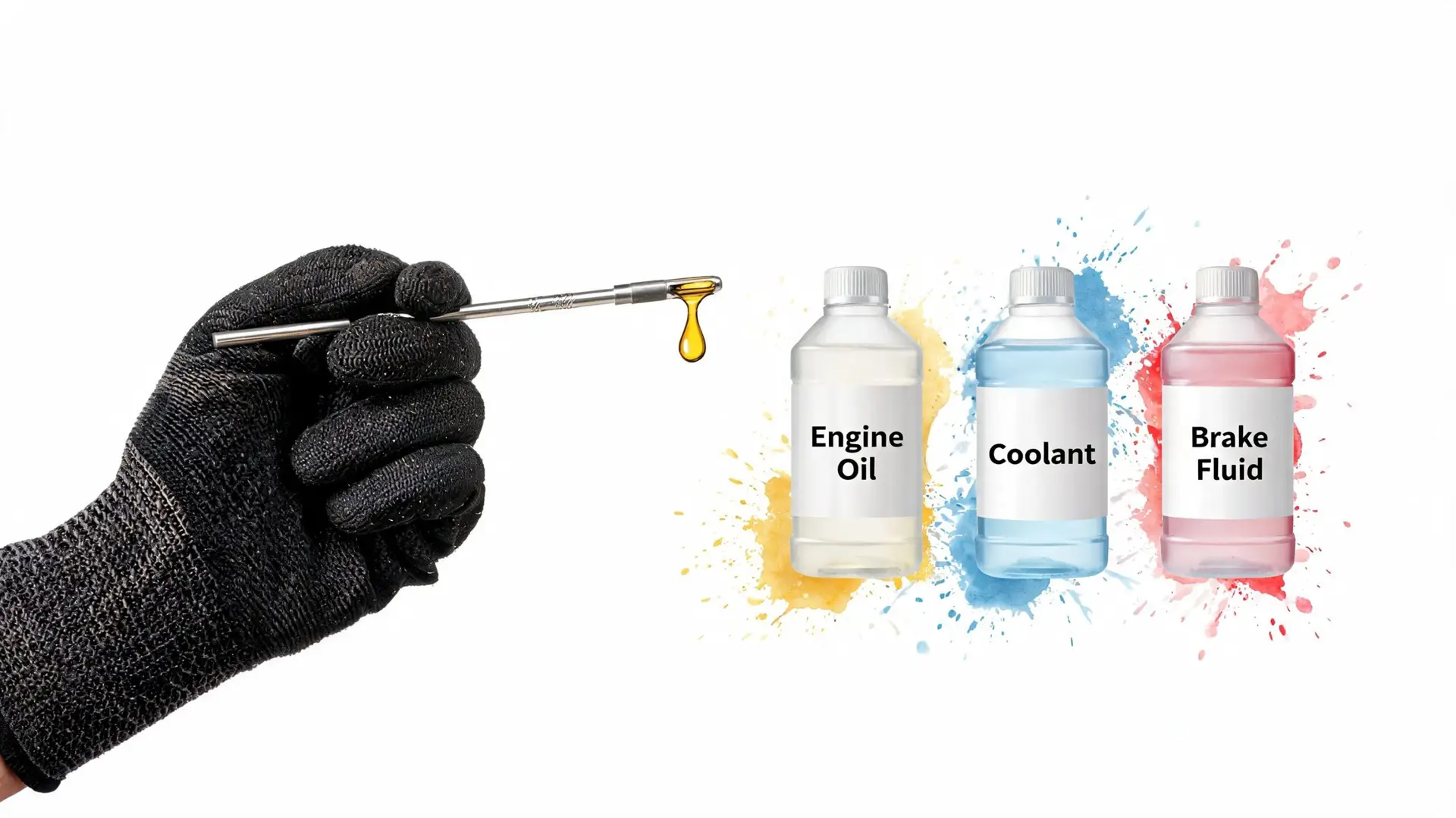
Oil changes get the attention, but a working fleet depends on the full fluid picture. Engine oil, transmission fluid, coolant, brake fluid, power steering fluid, and washer fluid all affect whether your driver finishes the route or calls in with a problem. In North Texas heat, coolant condition and fluid level checks deserve more discipline than many small fleets give them.
The practical fix is a repeatable routine that drivers can follow and a local shop can back up fast. For Haltom City businesses, Express Lube & Car Care fits that role well because routine fluid service can be handled close to home instead of losing half a day across town. Their team also publishes useful oil change tips for longer engine life that line up with what experienced fleet operators already know.
Use a simple pass-status system your staff can understand at a glance:
- Green means go: Fluid is at the proper level, looks clean, and matches the service interval.
- Yellow means schedule it: Level is slightly low, fluid is getting dark, or the vehicle is nearing service mileage.
- Red means pull it in: Active leaks, burnt smell, contamination, repeated top-offs, or warning lights show up.
Keep drivers focused on reporting, not diagnosing.
That matters with brake fluid in particular. If the level drops, the color changes, or the pedal feel changes, log it and send the vehicle for inspection. Early warning signs often overlap with broader brake problem symptoms that fleet drivers should report right away.
A good oil and fluid process is simple on paper and strict in practice. Track mileage, last service date, fluid condition, and any top-off between visits. If one van needs coolant every few weeks or keeps coming back a quart low on oil, treat that as a repair issue, not a refill habit.
For small fleets in Haltom City, Keller, Watauga, and North Richland Hills, this is one of the easiest ways to prevent avoidable downtime. Catch the leak in the bay at Express Lube & Car Care, not on the shoulder with a customer waiting.
2. Brake System Inspection and Service
A Haltom City service van that cannot stop straight is already off schedule. It may still be running routes, but every hard stop adds heat, wear, and risk. By the time a driver mentions grinding, shaking, or a soft pedal, the job often costs more and the vehicle stays down longer than it should have.
For fleet owners, brake service needs a fixed process, not a guess based on noise. Express Lube & Car Care should be part of that process at regular intervals, especially for vans and trucks that spend their week in traffic on Belknap, 121, Loop 820, and neighborhood stop-and-go routes around jobsites.
To see the basics in motion, this quick video is useful:
What to check before the brake job gets bigger
Quarterly brake inspections are a good baseline for working fleet vehicles. If a unit carries weight, runs long delivery days, or spends time idling and creeping through city traffic, inspect sooner. Waiting for a warning sound is expensive management.
A proper brake visit should cover pad thickness, rotor condition, caliper operation, brake line condition, and fluid condition in one stop. That gives you trend data, not just a snapshot. Express Lube & Car Care can document those findings so you can spot the van that is wearing pads too fast or the truck that keeps developing heat spots on the same axle.
Here is what deserves close attention:
- Pad thickness trend: Record current measurement and compare it to the last visit.
- Rotor surface and feel: Grooves, hot spots, scoring, or steering wheel vibration usually mean service waited too long.
- Brake fluid condition: Low level, dark color, or contamination needs inspection right away.
- Caliper movement: A sticking caliper can wear one side early and create pull during braking.
- Driver report: Soft pedal, noise, pull, shake, or longer stopping distance should trigger same-day service.
A brake complaint should move ahead of convenience services every time. Oil can wait a day. Safety work shouldn’t.
Driver reporting matters here because the first warning is often subtle. Give drivers a short checklist with plain terms they can readily use: squeal, grind, pull left, pull right, vibration in pedal, vibration in steering wheel, low pedal, burning smell. If they can describe the symptom clearly, your shop can diagnose faster. Express Lube & Car Care also has a helpful local resource on common brake problem symptoms drivers shouldn’t ignore.
Do not approve pad replacement without asking why the wear pattern looks the way it does. One wheel wearing faster than the others can point to caliper drag, alignment problems, or front-end wear. If you are seeing repeated uneven wear across the same vehicle, review related causes such as uneven tire wear patterns that signal alignment or suspension trouble. That extra check can prevent repeat brake work a few months later.
For small fleets in Haltom City, the practical goal is simple. Catch brake wear during a planned stop at Express Lube & Car Care, schedule parts before failure, and keep the vehicle earning instead of sitting in the lot waiting on a larger repair.
3. Tire Maintenance and Rotation
A Haltom City service truck leaves the yard with a half-day schedule, picks up a nail near a jobsite, and comes back with one front tire worn smooth on the inside edge. That is not a tire problem alone. It usually means pressure checks were missed, rotation got pushed back, or an alignment issue kept chewing through rubber until the tire failed early.
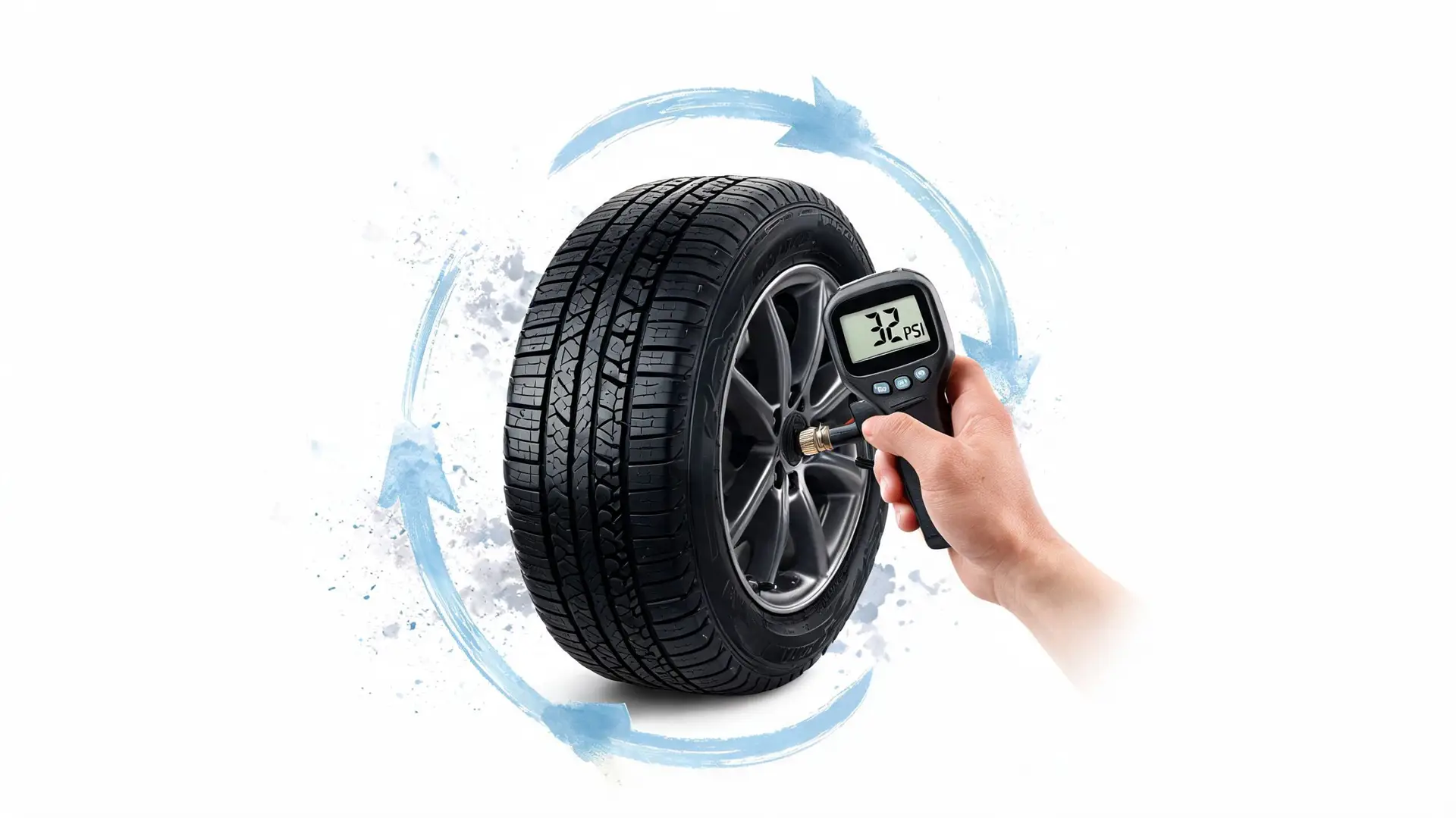
Tires give fleet owners one of the fastest reads on maintenance discipline. They show overload habits, curb impacts, rough-route damage, suspension wear, and whether drivers are catching problems before they turn into road calls. In North Texas heat, with highway miles one day and broken pavement the next, tire condition changes faster than many small businesses expect.
Read the wear pattern, not just the tread depth
Tread depth matters, but the wear pattern tells you why the tire is wearing out. Outer-edge wear often points to low pressure. Center wear usually means the tire has been overinflated. Cupping can trace back to shocks or other front-end issues. Feathering often signals alignment trouble.
That is why a working tire routine needs more than a quick glance in the parking lot:
- Check pressure at every service stop: Catch slow leaks and underinflation before heat and load turn them into blowout risks.
- Rotate on a fixed schedule: Regular rotation helps the full set wear evenly and gives your shop repeated chances to inspect each tire closely.
- Inspect tread and sidewalls every time: Look for punctures, cuts, bulges, exposed cords, and signs of impact damage.
- Review alignment and suspension if wear is uneven: Replacing one bad tire without fixing the cause usually leads to another early replacement.
Express Lube & Car Care is useful here because tire service should connect to the rest of the maintenance plan, not sit in its own box. If a Haltom City fleet vehicle comes in with abnormal wear, the shop can flag whether the issue looks like alignment, worn suspension parts, chronic underinflation, or driver route abuse. That saves money compared with burning through another tire and hoping the problem is gone.
For managers who want a plain-language reference, Express Lube & Car Care has a helpful guide on uneven tire wear patterns that point to alignment or suspension trouble. It is useful when you need to show a driver or supervisor why one tire failed early and why the fix is bigger than rubber.
The practical rule is simple. Log rotations, record pressure-related issues, and treat odd wear as a repair clue. Tires are expensive. Downtime costs more.
4. Engine Air Filter and Cabin Air Filter Replacement
Filters are easy to ignore because they fail without obvious signs. A clogged engine air filter doesn’t usually strand the vehicle in the parking lot. It slowly chokes performance, makes the engine work harder, and adds stress that doesn’t show up until later. Cabin filters do something similar for the people inside the vehicle. They turn daily driving into a dusty, stale, uncomfortable experience when they’re neglected.
This is one of the simplest wins in a company vehicle maintenance checklist because inspection is fast and replacement is straightforward. The bigger challenge is consistency. Teams forget filters because they don’t leak on the pavement or make obvious noise.
Dirty filters create slow problems
In North Texas, dust and pollen load up filters faster than many owners expect. Vehicles used on mixed routes, construction access roads, or high-traffic commercial corridors usually need more frequent checks than a standard personal car.
A practical shop routine looks like this:
- Check the engine air filter during every routine service: If it’s dirty, show the driver or manager.
- Inspect the cabin air filter on schedule: Especially for work vehicles with employees in and out all day.
- Log replacement dates: That keeps service from becoming random.
- Adjust by driving conditions: Dusty routes beat up filters much faster.
Clean filters are cheap compared with chasing driveability complaints that never seem serious enough to diagnose properly.
This is also one of those areas where showing the old part helps. Drivers and owners usually understand the value right away when they see dirt packed into the pleats. On fleet vehicles, that visual proof cuts down on approval delays.
Using the same replacement interval for every vehicle in the fleet is ineffective. A lightly used office sedan and a service truck that runs jobsite routes do not experience the same wear. Good maintenance accounts for how the vehicle works in practice, not just what the manual stated under ideal conditions.
5. Battery Health and Electrical System Inspection
Battery failures waste time in a very specific way. They don’t just break the vehicle. They stop the day before it starts. A technician can’t leave for the first call, a delivery route gets reshuffled, and somebody ends up looking for jumper cables in a hurry.
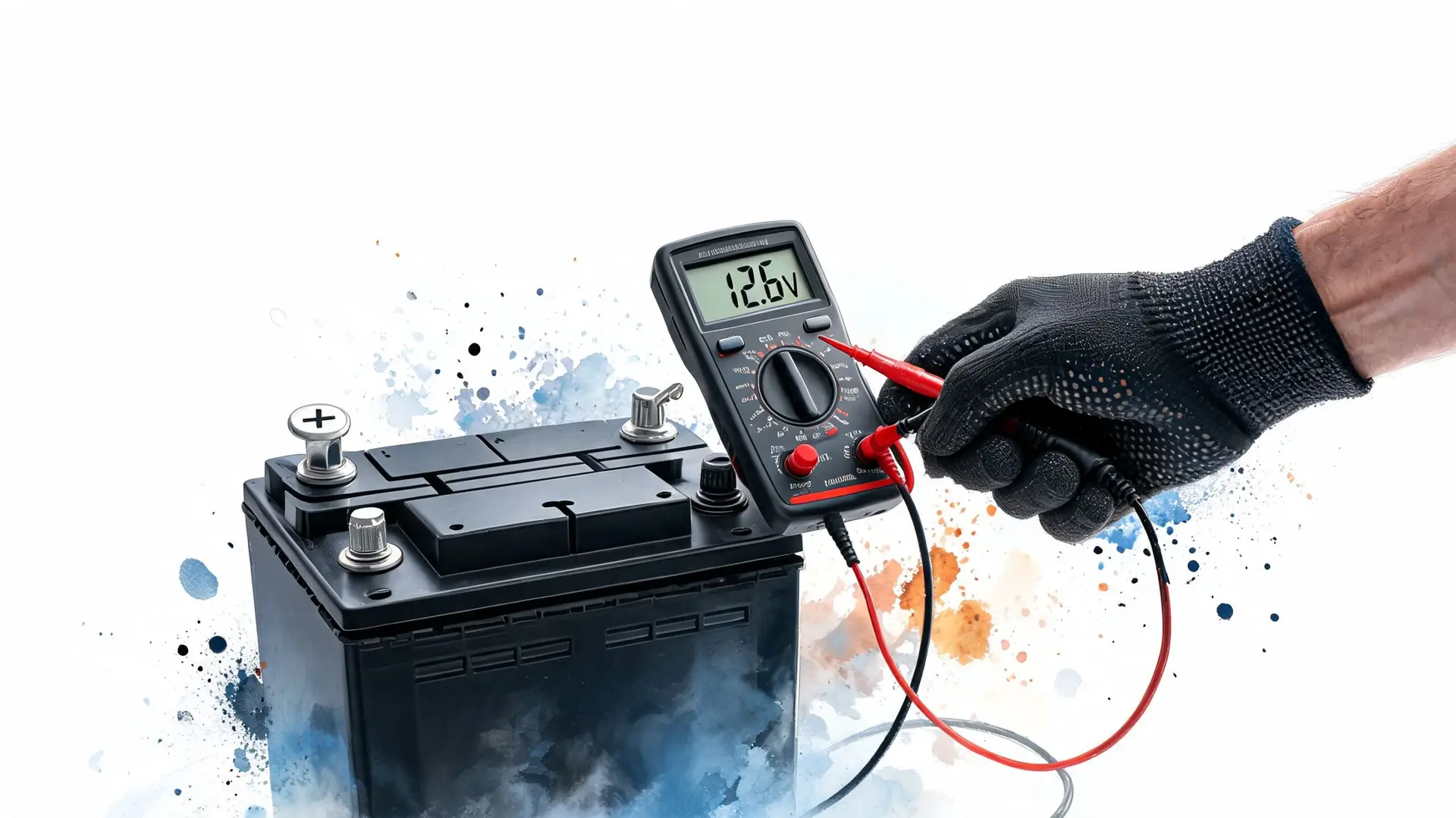
The fix is routine testing, not guesswork. A battery can look fine and still be close to failure. Terminals can hold enough charge to start today and still be corroded enough to create intermittent problems next week.
Test before the complaint turns into a tow
A good electrical inspection includes battery voltage, load testing, terminal condition, charging output, and a quick look at wiring and accessory draw. This matters even more on newer company vehicles that depend on electronics for diagnostics, safety systems, and routing tools.
The predictive maintenance side of the industry is moving fast. The vehicle predictive maintenance market was valued at USD 3 billion in 2025 and is projected to reach USD 13.7 billion by 2036, with connected vehicle platforms helping reduce unplanned downtime by 30% to 50%, according to Transparency Market Research’s vehicle predictive maintenance analysis. Small local fleets may not need a full telematics stack, but the lesson is clear. Waiting for failure is the expensive option.
For day-to-day operations, keep it simple:
- Load test at regular service visits: Especially before extreme summer demand.
- Clean terminals when corrosion starts: Don’t wait for a no-start event.
- Track battery age in the service record: Replacement planning beats emergency replacement.
- Check charging output after any starting complaint: Batteries get blamed for alternator issues all the time.
What works is recording battery condition as part of every recurring inspection. What doesn’t work is replacing the battery and ignoring a weak charging system or accessory drain.
6. Suspension and Shock Absorber Inspection
Suspension problems often get dismissed as comfort issues. They aren’t. Worn shocks, tired struts, loose steering parts, and damaged bushings affect tire contact, braking stability, and driver control. On a loaded work vehicle, that matters even more.
If one of your drivers says a van bounces after bumps, wanders on the highway, or feels unstable in turns, put suspension inspection near the top of the list. Those complaints usually don’t fix themselves.
Bad ride quality is usually a safety signal
This part of a company vehicle maintenance checklist works best when the inspection is both visual and functional. Look for leaking shocks, damaged mounts, abnormal tire wear, and sagging stance. Then connect that with what the driver reports on the road.
A few practical checks belong in every fleet routine:
- Bounce test during inspection: It’s basic, but it still catches obvious weakness.
- Visual check for leaks and damaged bushings: Worn components leave clues.
- Steering response review: Excess play or pull should be documented.
- Post-repair alignment check: Suspension work and alignment go together.
The automotive predictive maintenance sector shows how much fleets now rely on better diagnostics and checklist discipline. Mordor Intelligence reports digital checklist tools earned 92% approval in 2026 fleet benchmarks, with repair backlog reduced by 40% and uptime improved through stronger tracking in its vehicle fleet maintenance and services market overview. Even without advanced software, the message holds up. Suspension issues get missed when nobody writes them down.
Worn suspension parts don’t just hurt comfort. They shorten tire life and make every brake and alignment problem harder to solve.
What doesn’t work is replacing one front strut and sending the vehicle back out without checking the matching side, alignment, and tire condition. What works is treating suspension as a system.
7. Radiator and Cooling System Maintenance
Cooling system neglect is one of the fastest ways to turn a workable vehicle into a major repair ticket. In Haltom City summers, weak hoses, old coolant, a sticky thermostat, or a failing water pump can push a fleet vehicle from “running a little warm” to “stuck on the shoulder” in one afternoon.
This item deserves extra attention locally. The generic national checklist isn’t enough when vehicles spend long days idling, stop-and-go driving, and working through Texas heat.
Heat exposes weak maintenance habits
Coolant level and condition need to be inspected routinely, but substantial benefits come from checking hose integrity, radiator condition, fan operation, thermostat behavior, and leak history. A truck that keeps needing coolant isn’t asking for top-offs. It’s asking for diagnosis.
Texas-specific compliance and seasonal readiness also matter. One industry gap identified in checklist coverage is the lack of local guidance on Texas rules and conditions, including missed inspection issues and tighter attention on heat-related failures. The same gap summary notes a 15% rise in North Texas heatwave-related radiator and suspension failures in 2025, highlighted in osapiens’ vehicle maintenance checklist discussion. For local fleet owners, that makes cooling system checks more than routine housekeeping.
Use a practical sequence:
- Inspect coolant condition every service cycle: Dirty or incorrect coolant causes long-term trouble.
- Check hoses for cracks, swelling, and softness: Hose failure is often visible before it’s dramatic.
- Verify fan and thermostat operation when temperature concerns show up: Don’t stop at the reservoir check.
- Record the last flush and coolant type used: Mixing the wrong fluids creates avoidable problems.
If your team needs a simple local reference point, Express Lube & Car Care offers advice on when to replace a radiator hose.
What doesn’t work is treating overheating as a one-time event. What works is tracing the cause, documenting the repair, and tightening your summer inspection routine before the next hot stretch hits.
8. Lights, Wipers, and Windshield Inspection
This is the fastest inspection on the list, and it’s the one many businesses skip until a driver gets stopped or caught in bad weather with poor visibility. That’s backwards. Lights, wipers, and windshield condition should be checked constantly because they affect safety every single day.
A company vehicle maintenance checklist should treat visibility equipment like brake components. If drivers can’t see clearly or other motorists can’t see them, the vehicle isn’t ready for the road.
Five-minute checks prevent avoidable problems
Discipline beats complexity in this process. A quick walkaround catches more than most owners expect. Burned-out brake lights, weak headlights, split wiper blades, empty washer fluid, and spreading windshield chips are all easy to spot when someone is assigned to look.
For small fleets, digital tools can make this easier to enforce. One gap in common maintenance guidance is weak support for small businesses using simple mobile inspection apps. Device Magic’s checklist discussion highlights growing use of affordable digital tools for photo documentation and compliance tracking in smaller fleets through its commercial vehicle maintenance checklist article. That kind of setup works well for a Haltom City business with a handful of vans and no dedicated fleet office.
A sharp routine includes:
- Headlights, brake lights, reverse lights, and turn signals: Test them together, not one at a time when a complaint appears.
- Wiper blade condition: Replace them before the first hard rain exposes the problem.
- Washer fluid level: Drivers use it more than most managers think.
- Windshield chips and cracks: Fix small damage before vibration and heat spread it.
For anyone dealing with faded or cloudy lenses, it’s useful to understand what professional headlight restoration in Seattle looks like, even if your own service needs are local.
What works is making visibility checks part of every service intake. What doesn’t work is assuming the driver will mention a failed bulb before the next shift.
Company Vehicle Maintenance: 8-Point Checklist Comparison
| Service | Implementation Complexity 🔄 | Resource Requirements ⚡ | Expected Outcomes 📊⭐ | Ideal Use Cases 💡 | Key Advantages ⭐ |
|---|---|---|---|---|---|
| Oil and Fluid Management | Low, routine checks and top-ups 🔄 | Basic tools, fluids, 30–60 min, low cost ⚡ | Prevents engine wear, reduces overheating, improved fuel economy 📊⭐ | Regular service intervals, fleets, high-mileage vehicles 💡 | Cost-effective prevention with quick turnaround ⭐ |
| Brake System Inspection and Service | Medium–High, diagnostics and mechanical repair 🔄 | Lift, brake tools, parts, 1–4 hours, moderate–high cost ⚡ | Restores stopping power, prevents accidents, saves rotor costs 📊⭐ | Safety inspections, pre-trip, aging vehicles, fleets 💡 | Directly reduces accident risk and liability ⭐ |
| Tire Maintenance and Rotation | Medium, requires balance/alignment equipment 🔄 | Tire machine, alignment rack, TPMS tools, periodic cost ⚡ | Extended tire life, better fuel economy, improved traction 📊⭐ | Regular rotations, seasonal swaps, commercial fleets 💡 | Lowers running costs and improves wet-weather safety ⭐ |
| Engine & Cabin Air Filter Replacement | Low, simple inspection/replacement 🔄 | Replacement filters, minimal labor, very low cost ⚡ | Improved engine performance, fuel economy, better cabin air 📊⭐ | Routine services, dusty conditions, allergy-sensitive drivers 💡 | High ROI for minimal cost; fast service ⭐ |
| Battery Health & Electrical Inspection | Low–Medium, testing and diagnostics 🔄 | Multimeter/charger/tester, occasional replacement cost ⚡ | Prevents no-starts, identifies charging faults, extends battery life 📊⭐ | Cold climates, intermittent starts, fleet reliability programs 💡 | Prevents roadside failures with low testing cost ⭐ |
| Suspension & Shock Absorber Inspection | High, diagnostic and labor-intensive repairs 🔄 | Lift, specialty tools, parts, often alignment post-service ⚡ | Restores stability, reduces tire wear, improves ride comfort 📊⭐ | Rough-road vehicles, handling complaints, safety-critical fleets 💡 | Restores handling and prevents secondary component damage ⭐ |
| Radiator and Cooling System Maintenance | Medium–High, flushes and component checks 🔄 | Flush equipment, coolant, parts, proper disposal procedures ⚡ | Prevents overheating, avoids catastrophic engine damage 📊⭐ | Hot climates, older engines, heavy-duty fleet use 💡 | Protects engine longevity; prevents costly failures ⭐ |
| Lights, Wipers, and Windshield Inspection | Low, quick functional checks and minor fixes 🔄 | Bulbs, wipers, washer fluid, minimal labor and stock ⚡ | Improved visibility, legal compliance, reduced accident risk 📊⭐ | Every service visit, pre-trip checks, adverse weather seasons 💡 | Fast, low-cost safety and compliance improvements ⭐ |
Your Local Partner in Fleet Maintenance: Express Lube & Car Care
A checklist only pays off when somebody follows it, documents it, and fixes what the inspection finds. That’s where many local fleets get stuck. They have a rough idea of what needs attention, but service gets delayed, records get scattered, and vehicles stay on the road longer than they should because the schedule is packed. Then one preventable failure turns into towing, missed jobs, and a customer call nobody wanted to make.
For Haltom City businesses, the better approach is a maintenance program that matches real operating conditions. That means more attention to heat, stop-and-go driving, short service windows, and practical scheduling. Daily walkarounds catch obvious issues. Quarterly service handles fluid changes, brake review, and filter replacement. Semi-annual visits are where you tighten up cooling system service, safety inspections, and the bigger wear items that don’t show up in a rushed weekday check.
The local advantage matters. You don’t need a generic checklist built for some national fleet with a full internal shop and a maintenance administrator. You need a process that works for the number of vehicles you run, the routes they drive, and the downtime your business can absorb. For many small and midsize companies around Haltom City, Keller, Watauga, and North Richland Hills, the smartest move is having one trusted service partner handle the recurring work before it turns reactive.
Express Lube & Car Care is built for that role. Their certified technicians handle the work vehicles need most, including oil changes, brake service, engine diagnostics, shocks and struts, and radiator maintenance. That makes it easier to keep your company vehicle maintenance checklist tied to action instead of reminders that keep getting postponed. It also means your records stay cleaner, your service history is easier to follow, and your team doesn’t have to bounce between shops for routine work and bigger mechanical issues.
If you manage a local fleet, the goal isn’t perfection. It’s consistency. Check the vehicles, log the findings, fix the safety items early, and don’t let “still running” become your maintenance standard. A reliable fleet protects revenue, protects your drivers, and protects your reputation.
Express Lube & Car Care at 6211 Denton Hwy gives local businesses a practical place to build that kind of maintenance routine. When your service partner understands the local roads, the climate, and the pace your vehicles work under, your checklist stops being paperwork and starts doing its job.
If you want a maintenance routine that keeps your work vehicles moving, schedule service with Express Lube and Car Care. Their Haltom City team can help you turn this company vehicle maintenance checklist into a repeatable local fleet program with fast inspections, clear recommendations, and repair work that cuts downtime instead of adding to it.