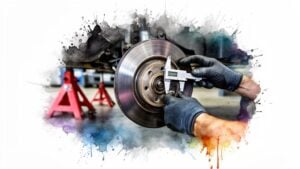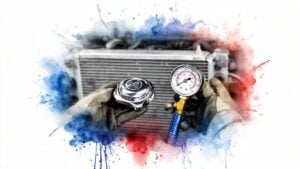

When you're trying to figure out what's wrong with your car, the best tools you have are already built-in: your eyes, ears, nose, and even your sense of touch. Before you ever pop the hood or call a shop in Haltom City, a strange noise or an odd vibration is your car's way of telling you something's up.
Your First Steps to Diagnose Vehicle Problems at Home

We've all been there. That dreaded check engine light flicks on, or you hear a rattle that definitely wasn't there yesterday. It’s easy to jump to worst-case scenarios, but for most Haltom City drivers, a little at-home detective work can go a long way.
Think of this initial check as gathering clues. The goal isn't to tear the engine apart, but to get a handle on what your car is trying to tell you. This simple process puts you in control, helping you decide if it's a quick fix or something that needs a professional eye from a Haltom City mechanic.
Trust Your Senses: What You See, Feel, Hear, and Smell
Your car is always communicating; you just have to learn its language. The key is noticing when something changes.
- Listen Closely: Strange noises are classic red flags. A high-pitched squeal every time you hit the brakes? That’s a textbook sign of worn brake pads. Hear a rhythmic click-click-click that gets faster as you accelerate? You might be looking at a CV joint issue.
- Feel the Vibrations: Does the steering wheel start to shimmy and shake once you hit a certain speed on the highway near Haltom City? That’s often just a sign your tires need balancing. If you feel a pulsing or vibration through the brake pedal itself, it’s a good bet your rotors are warped.
- Look for Clues: Puddles under your parking spot are never a good sign, but the color tells a story. A bright green or orange puddle is likely coolant. Dark brown or black is usually engine oil.
- Pay Attention to Smells: Some smells are unmistakable. A sweet, syrupy scent, especially when the heater is on, points to a coolant leak, possibly from the heater core. The smell of burning rubber could be a slipping belt or even a brake that’s stuck.
One of the most common headaches is when your car simply won't turn over. Knowing what to do when your car won't start can be a real lifesaver and prevent a lot of stress.
Pro Tip: Keep a small notebook and pen in your glove compartment. When you notice something new, jot it down. Be specific: "Loud squeal when braking, started this morning," or "Car shakes when I go over 55 mph." This detailed log is incredibly helpful for your Haltom City mechanic.
To give you a head start, this table connects some common symptoms to their likely culprits.
Common Symptoms and What They Might Mean
| Symptom (What You Hear, See, or Smell) | Potential Problem Area | Recommended First Check |
|---|---|---|
| High-pitched squeal when braking | Brakes | Check brake pad thickness and rotor condition. |
| Grinding or scraping noise when turning | CV Joints / Wheel Bearings | Listen for the noise while turning in an empty lot. |
| Sweet, syrupy smell inside the car | Cooling System (Heater Core) | Check coolant level and look for dampness on the passenger floor. |
| Steering wheel vibrates at high speeds | Wheels / Tires | Inspect tires for uneven wear; consider a tire balance. |
| Puddle of bright green or orange fluid | Cooling System | Check radiator hoses and coolant reservoir for leaks. |
| Smell of burning oil or "hot" metal | Engine / Brakes | Check for oil leaks around the engine or signs of a stuck brake caliper. |
| Dimming headlights when idling | Battery / Alternator | Get your battery and charging system tested. |
This quick reference can help you narrow down the possibilities right from your driveway.
These initial observations are the foundation of any good diagnosis. For a more thorough walkthrough, our complete car inspection checklist can guide you through a systematic check of all the essential areas, helping you tell the difference between a minor tweak and a major repair.
Your Hands-On DIY Diagnostic Checklist
Alright, you’ve used your senses to get a feel for what’s going on. Now it’s time to pop the hood and get a little more hands-on. These simple checks can help you pinpoint exactly what your car is trying to tell you, often before a small issue becomes a major headache. You don’t need a fancy toolkit for this—just a few minutes and a safe spot to park in Haltom City.
Before you start poking around, always make sure your engine is completely cool and the car is on level ground. Safety is non-negotiable when you're working on your vehicle.
What Your Car's Fluids Are Telling You
Think of your car's fluids as its lifeblood. Their color, level, and consistency are huge clues into its overall health, and checking them is surprisingly straightforward.
- Engine Oil: Find the oil dipstick, pull it out, and wipe it clean with a rag. Push it all the way back in, then pull it out again. The oil level should sit between the 'Full' and 'Add' marks. Fresh oil is a light amber color. If yours is dark black, feels gritty, or looks like a milky brown coffee, you’re either overdue for an oil change or might be dealing with a coolant leak.
- Coolant (Antifreeze): Look for the translucent plastic reservoir. The coolant level should be between the min and max lines. Crucially, never open the radiator cap when the engine is hot. The fluid should be a bright color—like green, orange, or pink. If it looks rusty or you see gunk floating around, your cooling system needs to be looked at.
- Transmission Fluid: Many cars have a second dipstick for this. You'll often need to check it with the engine running and the car in Park. The fluid should be a translucent reddish-pink. If it’s turned brown, looks dark, or has a burnt smell, that’s a red flag for potential transmission trouble.
These quick checks are the foundation of good car care. If you want to get more in-depth, our checklist for car maintenance is a great next step.
Expert Insight: Your car’s fluids tell a detailed story. Low, discolored, or gritty fluid is a direct signal that a system is either overdue for service or experiencing internal wear. Ignoring these signs can turn a simple fluid top-off into a major repair.
A Quick Look at Belts and Battery
Beyond the fluids, taking a moment to inspect your belts and battery can literally save you from being stranded on the side of Denton Highway in Haltom City.
First, find the serpentine belt—it's the long rubber belt that snakes around multiple pulleys to power things like your alternator and water pump. Look closely for any cracks, fraying, or a shiny, glazed look on its surface. Any of those signs mean the belt is getting old and could snap without warning.
Next, glance at your car battery. See that white or bluish crusty stuff around the terminals? That’s corrosion, and it can seriously mess with the electrical connection, sometimes preventing your car from starting at all. Simply cleaning it off can be an instant fix.
The ever-increasing complexity of cars is why the market for automotive diagnostic scan tools is booming. It was valued at an estimated USD 40.5 billion in 2025 and is expected to climb to USD 61.2 billion by 2032. You can learn more about the growth of diagnostic tools and see for yourself why professional gear is becoming so essential. This trend really highlights why catching the simple mechanical stuff on your own is more valuable than ever.
Understanding What Your Dashboard Is Trying to Tell You
Your car's dashboard is its main line of communication. It's filled with symbols that can feel a bit like learning a new language, and seeing one pop up unexpectedly can definitely cause a moment of panic. The first step in figuring out what's wrong with your car is knowing how to interpret these signals.
Many folks in Haltom City assume any warning light spells immediate, expensive trouble, but that’s rarely the case. It all comes down to the color and the symbol. As a general rule, think of it like a traffic light: yellow or orange is a "heads up" to get something checked soon, while red means "stop now" because there's a problem that needs immediate attention.
That Dreaded Check Engine Light
Ah, the check engine light. It’s easily the most misunderstood symbol on the dash. It could mean something as simple as a loose gas cap, or it could be signaling a serious engine misfire.
If the light is on and steady, it means the car's computer has detected a fault, but it's not an emergency. You should definitely schedule a time to get it checked out, but you don't need to pull over on the side of a Haltom City road.
A flashing check engine light, however, is a whole different ballgame. This is your car's way of screaming for help. It usually means a severe issue is happening right now, like raw fuel getting dumped into the exhaust system. This can fry your catalytic converter in a hurry—a repair that nobody wants to pay for. If you see that light blinking, ease off the gas, and get to a trusted mechanic as soon as you safely can. We cover this in more detail in our guide to what that engine light really means.
The "Pull Over Now" Warning Lights
Beyond the check engine light, a few other symbols demand your immediate attention. These are almost always red and warn you about a major mechanical failure or a safety system problem.
Oil Pressure Light: Looks like an old-school oil can. This means your engine's oil pressure has dropped to a dangerously low level. This isn't a suggestion; it's an order to stop the car now. Driving even a few hundred feet without proper oil pressure can destroy your engine.
Temperature Warning Light: This one looks like a thermometer dipped in liquid and it means your engine is overheating. Find a safe place to pull over, shut the car off, and let it cool down. Pushing an overheating engine can lead to a warped cylinder head or even a cracked engine block.
Brake System Light: Usually a circle with an exclamation point inside. It might just be telling you that your parking brake is on. But if it’s not, it's warning you of a serious problem like low brake fluid or a failure in the hydraulic system. Don't take chances with your brakes.
Another common one is the battery warning light, which usually points to a problem with the alternator or the charging system—not just a bad battery.
My Two Cents: Treat your dashboard lights with respect. A yellow light gives you time to plan, but a red light means your car needs help right away. Ignoring it is the fastest way to turn a minor issue into a major, wallet-draining repair.
To help drivers prioritize what to do when a light pops on, I've put together this quick-reference table.
Warning Light Urgency Guide
| Warning Light | Color (Typically) | Level of Urgency | Recommended Action |
|---|---|---|---|
| Check Engine | Amber | Low (Steady) | Schedule a diagnostic scan soon. |
| Check Engine | Amber | High (Flashing) | Pull over safely and call for a tow. |
| Oil Pressure | Red | Critical | Stop immediately and turn off the engine. |
| Engine Temperature | Red | Critical | Pull over immediately, turn off the engine to cool. |
| Battery/Charging | Red | High | Drive to a mechanic immediately; avoid restarting. |
| Brake System | Red | High | Pull over, check parking brake, check brake fluid. |
| Tire Pressure (TPMS) | Amber | Low | Check tire pressures at the next opportunity. |
This table is a great starting point, but always consult your owner's manual if you're unsure about a specific symbol.
This flowchart can also give you a simple path to follow for some basic DIY checks before you head to the shop.

Sometimes, a quick visual inspection of your fluids, belts, or tires is all it takes to start narrowing down the problem yourself.
Know When to Call a Haltom City Pro
I’m a big believer in DIY car care. For drivers here in Haltom City, getting your hands a little dirty changing an air filter, swapping out wiper blades, or even replacing a headlight bulb is a great way to save a few bucks and get to know your vehicle. These are the kinds of jobs that are safe, straightforward, and really satisfying to complete with just a few basic tools.
But here’s the thing: the smartest DIY-ers I know are the ones who recognize their own limits. Today's cars are incredibly complex. When you start guessing with critical systems, you can quickly turn a manageable problem into a dangerous and expensive one.
Red Flags That Scream "See a Pro"
Some symptoms are your car’s way of telling you that the issue has moved beyond a simple driveway fix. If you see, hear, or feel any of these, it's time to put the tools down and call a trusted Haltom City mechanic.
- Transmission Trouble: Are you feeling a harsh clunk when it shifts? Does the engine rev up but the car doesn’t go anywhere (slipping gears)? Or is there a long pause before it engages in Drive? These are all classic signs of internal transmission problems, and that’s not a system you want to experiment with.
- Serious Brake System Failure: Sure, changing brake pads is a popular DIY project. But if your brake pedal feels spongy and goes to the floor, the car pulls hard to one side when you brake, or you're losing stopping power, that's a whole different ballgame. This points to a failure in the hydraulic system—maybe a fluid leak or a bad master cylinder—and it’s a non-negotiable safety issue that needs immediate professional help.
- That Dreaded Airbag (SRS) Light: If the airbag light is on, it means there's a fault somewhere in your car's safety restraint system. This is a highly complex network of sensors and explosive charges. Don't touch it. Ever.
- Major Engine Work: If you see clouds of sweet-smelling white smoke from the exhaust (a sign of a blown head gasket) or hear deep, metallic knocking sounds from the engine, you’re dealing with an internal problem. Issues like these or a broken timing belt require a professional teardown.
A Quick Word on Safety: Your personal safety trumps everything. If a job requires you to lift the entire car, open up the fuel system, or work anywhere near the high-voltage orange cables of a hybrid, the risk is just too high for a home garage. One slip-up can lead to serious injury or catastrophic damage to your vehicle.
Your OBD-II Scanner Is Smart, but It's Not a Genius
That little handheld OBD-II scanner you bought is an awesome first step for reading trouble codes, but it’s really only giving you the headline, not the full story.
The professional diagnostic computers we use here at our Haltom City shop dive much, much deeper. They let our technicians see a live stream of data from every single sensor in your car.
Think of it this way: your scanner might spit out a generic code for an oxygen sensor. Our equipment, on the other hand, lets a technician watch that sensor's performance in real-time. We can see if it’s responding too slowly or if its voltage readings are jumping all over the place. That's the kind of detail that lets us pinpoint the exact failure, so you aren't just throwing money at new parts hoping one of them fixes the issue.
What Really Happens During a Professional Diagnosis?

When you drop your car off at a Haltom City auto shop and hand over the keys, you're trusting us to figure out what's wrong. So, what actually happens behind the garage door? It’s far from a guessing game. A proper, professional effort to diagnose vehicle problems is a meticulous process, combining a technician's hands-on experience with some seriously advanced diagnostic tools.
It all starts with you. That strange clunking sound you heard on the highway or the way the engine hesitates when you accelerate—those are the first clues. A seasoned Haltom City technician will always start by listening to what you've seen, heard, and felt.
It’s More Than Just Reading a Code
Sure, anyone can plug in a basic OBD-II scanner and get a trouble code. But that code is just the beginning of the story. Think of it like a single symptom—a fever, for instance. A professional scan tool, on the other hand, is like getting a full medical work-up. It gives us the "why" behind the code.
Our technicians dive into live data streams from all of your vehicle's sensors. Let's say a code points to a vague fuel system issue. We can watch the real-time fuel pressure, see how the injectors are firing, and monitor the oxygen sensor readings all at once. This lets us pinpoint the exact component that's failing, not just the general system it belongs to.
The Diagnostic Workflow in Action
After pulling the codes and analyzing the live data, the real hands-on work begins. It’s a methodical approach designed to catch everything.
- Verification: First things first, we’ll try to replicate the issue you described. If the car only makes noise on a right turn, we'll take it for a drive and make some right turns.
- Visual Inspection: Next comes a thorough look-over. We’ll get under the hood and check for obvious culprits like frayed wires, cracked hoses, loose connections, or fluid leaks.
- System Testing: From there, we use specialized tools to test specific components. This might mean using a multimeter to check electrical circuits, hooking up a pressure gauge to test the fuel pump, or performing a compression test on the engine.
Our philosophy is simple: communication is key. A technician's job isn't done when they find the problem. It's done when they've explained it to you in a way that makes sense, so you feel confident about the repair.
Why a Pro Diagnosis Saves You Money
Modern cars are more complex than ever, packed with computers and sensors. This complexity has fueled a huge demand for better diagnostic technology. In fact, the global market for vehicle diagnostic analytics recently shot up to USD 1.95 billion, a jump of about 10.2% in a single year. This highlights just how crucial precise data is for getting repairs right the first time.
Ultimately, investing in a professional diagnosis in Haltom City is about accuracy. It saves you from the frustrating and expensive cycle of "parts-swapping," where components are replaced based on a hunch. Instead, you get a confident repair based on solid data, saving you time, money, and a whole lot of headaches.
Want to learn more about our process? Check out our detailed guide on auto diagnostic services.
Your Vehicle Diagnostics Questions, Answered
Over the years, we've heard just about every question you can imagine from folks in Haltom City, Watauga, and North Richland Hills. Here are some of the most common ones we get, with honest, straightforward answers from our team.
"My Check Engine Light Is On, But the Car Seems Fine. What's the Deal?"
This happens all the time. The Check Engine Light is your car's way of saying "something's up," but it doesn't always mean disaster is imminent. It can be triggered by hundreds of things, many of which won't affect how the car drives at that moment. It could be something as simple as a gas cap that wasn't tightened properly.
But here's the thing: ignoring it is a roll of the dice. That light could also be an early warning for a failing sensor or a problem that, if left alone, will slowly start to hurt your fuel economy or even lead to some pretty serious engine trouble. Your best bet is to get the code read by a Haltom City expert. It's a quick, simple step that can save you a world of hurt—and a hefty repair bill—down the line.
"How Often Do I Really Need a Professional Diagnostic Check?"
If your car is running great and the dashboard is clear of any warning lights, you don't need to schedule a special diagnostic check just for the sake of it.
A much better approach is to make it part of your routine. When you bring your car in for a regular oil change at our Haltom City shop, ask us to do a quick vehicle health inspection. This is the smart way to get ahead of problems before they become big enough to trigger a light. Of course, if a warning light does pop up, or if you notice any weird noises or changes in how the car feels, that's your cue to get it checked out right away.
Our Pro Tip: Think of it as preventative care versus emergency repair. A quick, proactive check during a regular service visit can spot a small issue before it leaves you stranded.
The entire auto industry is shifting this way. The market for automotive remote diagnostics is already valued at USD 23.01 billion and is expected to climb to USD 26.48 billion. This is all thanks to new connected car technology that can monitor vehicle health in real-time. If you're curious, you can learn more about the evolution of remote diagnostics to get a glimpse into the future of car care.
"Is a Cheap Code Reader from the Auto Parts Store as Good as What You Use?"
Those handheld OBD-II scanners are great for car enthusiasts! They’re perfect for pulling the basic trouble codes and giving you a general idea of what's going on under the hood. It’s a fantastic starting point for any DIYer.
However, the professional diagnostic equipment we use in our Haltom City shop is on a completely different level. Our tools can dig much deeper, accessing manufacturer-specific codes that the consumer models can't see. We can also look at live data streams from your car's sensors and run advanced functional tests.
Here’s an easy way to think about it: a basic scanner can tell you that there's an electrical problem somewhere in the house. Our professional gear can tell you exactly which outlet has a faulty wire. That precision is what allows us to diagnose the problem correctly the first time, so you’re only paying to fix what’s actually broken.
When you need clear answers and a diagnosis you can trust in Haltom City, our team at Express Lube and Car Care is here to help. Schedule your diagnostic appointment today and let our certified technicians get to the root of the problem. Visit us online to book your service at https://expresslubehaltom.com.