
That little glowing orange engine symbol on your dashboard? It's your car's primary way of telling you something's up. An engine light service is simply the process we use to figure out exactly what that message is. A technician plugs a special scanner into your car's computer, reads the specific "trouble code" it's sending, and then traces that code back to the root of the problem to get it fixed right.
What Your Check Engine Light Is Trying To Tell You
Seeing that light pop on can definitely make your heart skip a beat, but it doesn't automatically mean disaster. Think of it as a "check-up needed" alert from your car's central computer. This system, called Onboard Diagnostics (or OBD-II for short), keeps a constant watch on everything from engine performance to emissions.
When it spots something out of the ordinary—whether it's a tiny emissions hiccup or a major engine misfire—it switches on that light to get your attention. For drivers here in Haltom City, the first step is figuring out what kind of alert you're getting, and that all comes down to how the light is behaving.
Solid vs. Flashing: A Tale of Two Warnings
A solid, steady check engine light is the one we see most often at our Haltom City shop. This is your car's way of giving you a heads-up about a non-emergency issue. You don't need to pull over on the side of the road, but you should definitely plan to get it checked out soon. Ignoring it can let a small, simple fix turn into a big, expensive one. It could be something as minor as a loose gas cap or a sensor that's starting to fail.
A flashing check engine light, however, is a different story entirely. This is a critical warning that signals a serious problem demanding your immediate attention. It usually means a severe engine misfire is happening, which can dump raw fuel into your exhaust system. If you keep driving, you risk destroying expensive parts like the catalytic converter in a matter of minutes.
This quick-glance flowchart makes it easy to see what your next move should be.
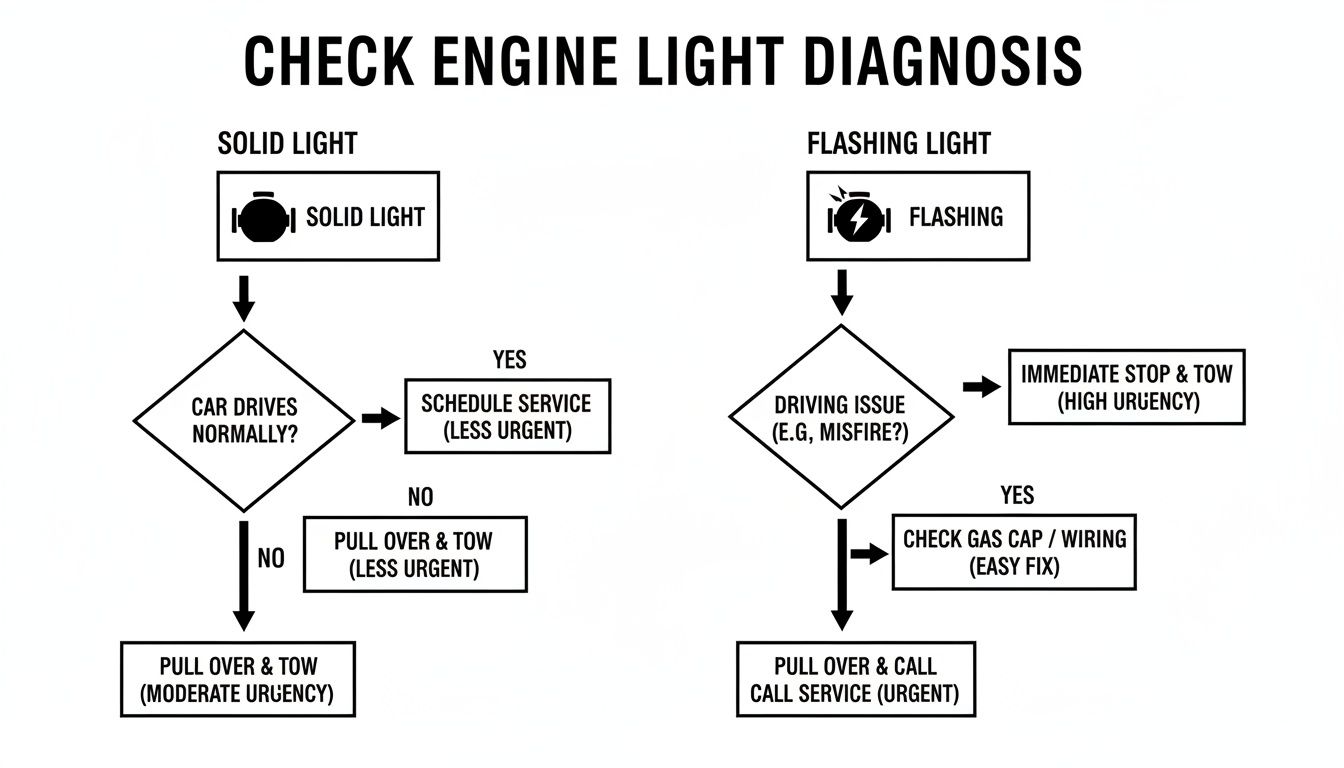
To help you remember, here's a simple breakdown of what to do.
Check Engine Light Status And Your Next Steps
This table is a quick reference guide for Haltom City drivers to understand the urgency of their check engine light and what to do next.
| Light Status | What It Means | Recommended Action |
|---|---|---|
| Solid/Steady | A non-urgent issue has been detected. | It's safe to drive, but schedule a diagnostic service within a few days to prevent further issues. |
| Flashing/Blinking | A severe, potentially damaging problem is occurring. | Pull over as soon as it's safe. Turn off the engine and call for a tow to a repair shop. Do not continue driving. |
The takeaway is simple: a solid light means "schedule service soon," but a flashing light means "stop driving now."
While that light can point to hundreds of different engine-related issues, it's also worth knowing the specific warning signs of transmission failure, as a struggling transmission can sometimes be the culprit. If you're hearing odd sounds along with the light, our guide on why your engine is rattling at idle might shed some light on the situation.
The Most Common Reasons Your Check Engine Light Is On
While your car's computer can flag hundreds of different problems, our experience here in Haltom City shows that a small handful of issues cause the vast majority of check engine light warnings. We like to call these the "usual suspects" that we check first.
The good news? Some of these are incredibly simple fixes. Others, however, definitely need a professional eye. Knowing the difference helps you walk into an engine light service feeling confident and informed.
Simple Fixes vs. Deeper Issues
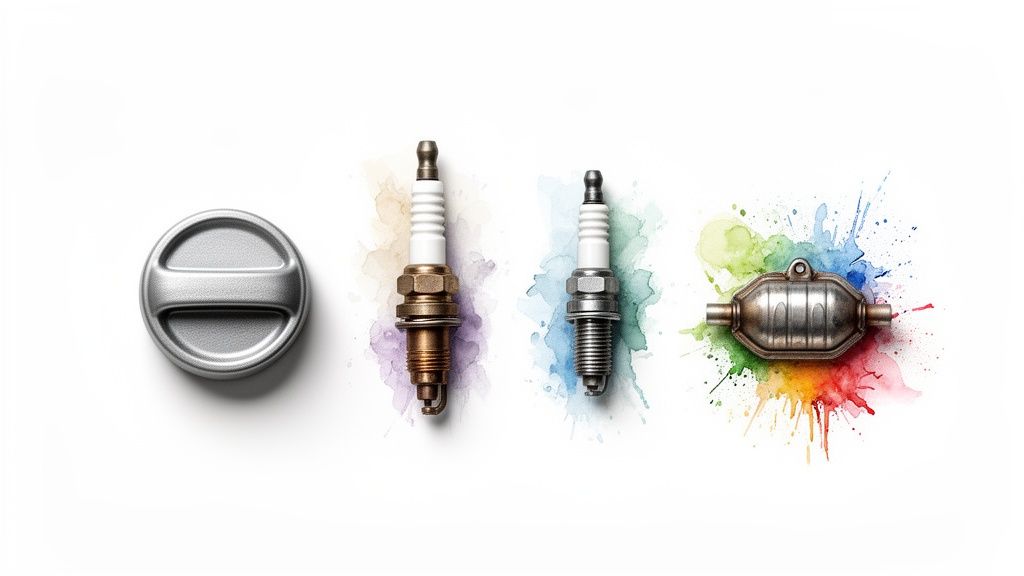
Believe it or not, one of the most common culprits is something you can check in about ten seconds: a loose or faulty gas cap. Your car’s fuel system is designed to be a sealed, pressurized environment to keep gasoline vapors from escaping. If that cap is loose, cracked, or just not sealing right, the system loses pressure, and the computer throws up a warning light.
So, before you panic, give your gas cap a few good clicks to make sure it's tight. If that was the issue, the light will typically clear itself after a few drive cycles. But if it stays on, we know the problem lies a bit deeper.
A huge number of check engine light codes point back to the complex network of sensors monitoring your engine and exhaust. In fact, many problems are first detected by the various types of automotive sensors that are constantly feeding data to your car's computer.
Key Components That Trigger The Light
When tightening the gas cap doesn't do the trick, our technicians have a shortlist of key parts we investigate next. These components are known to wear out over time and are critical for your car's performance, fuel economy, and emissions.
Here are the most frequent offenders:
- Failing Oxygen (O2) Sensor: This little sensor is a big deal. It sniffs the exhaust to measure how much unburned oxygen is present, helping the engine's computer get the air-to-fuel ratio just right. When it goes bad, you’ll notice your fuel economy tank—sometimes by as much as 40%. Ignore it for too long, and you risk damaging your pricey catalytic converter.
- Worn-Out Spark Plugs or Ignition Coils: Spark plugs provide the literal spark that gets your engine firing. As they get old and fouled, they can cause engine misfires. You’ll feel this as a rough idle, sluggish acceleration, or general hesitation. The ignition coils that power the plugs can also fail, leading to the exact same symptoms.
- Malfunctioning Catalytic Converter: This is a big one. The catalytic converter is a vital part of your exhaust system that turns nasty pollutants into less harmful gases. A failing one is an automatic fail on an emissions test and a serious problem for your car. Often, a bad converter is just a symptom of another issue, like worn spark plugs or a bad O2 sensor that was left unchecked. If your fuel system is acting up, you might want to learn about our fuel injector service as another potential piece of the puzzle.
Our Professional Diagnostic Process In Haltom City
So, your check engine light is on, and you’ve brought your car into our Haltom City shop. What happens now? We believe you should never be left wondering what’s going on under the hood, which is why we keep our process completely transparent. Our goal isn't just to make the light go away; it's to fix the root problem so it stays away.
Our approach to an engine light service is methodical and precise. We move from the general clues your car gives us to a specific, confirmed diagnosis. We don't guess—we investigate.
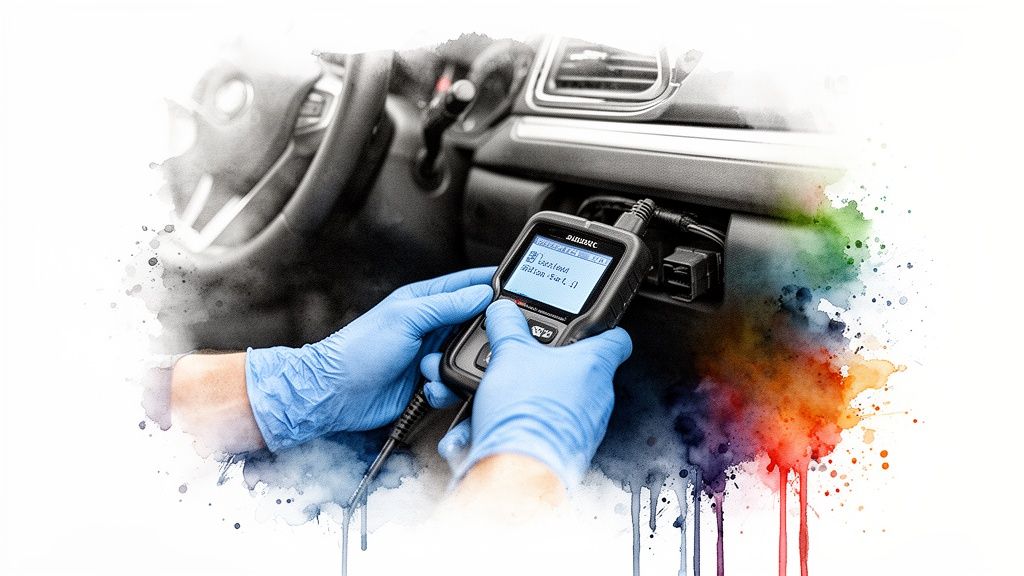
The whole thing kicks off with one of our Haltom City-based, ASE-certified technicians plugging a professional-grade OBD-II scanner into your car's diagnostic port. This tool is the bridge between our tech and your car's brain, allowing us to retrieve the specific Diagnostic Trouble Code (DTC) that triggered the light in the first place. Think of this code as the first big clue in a detective story.
Beyond The Code: A Hands-On Approach
That trouble code is a fantastic starting point, but it’s rarely the final answer. For example, a code might tell us the engine is running lean (too much air, not enough fuel), but it won’t explain why. Is it a vacuum leak? A bad sensor? Maybe a clogged fuel injector? That’s where real expertise makes all the difference.
Our technicians use that code to guide a hands-on inspection of all the related systems. This is the crucial step that separates a good mechanic from a great one. It involves:
- Visual Inspection: Looking for obvious culprits like cracked hoses, frayed wires, or loose connections.
- System Testing: Using specialized tools to test individual parts like sensors, fuel pumps, and solenoids to see if they're actually working correctly.
- Data Analysis: Watching the live data stream from your car’s computer to see how all the components are talking to each other in real-time.
This thorough method ensures we fix the actual cause of the problem, saving you from the frustration of coming back for the same issue down the road.
At Express Lube & Car Care, we combine advanced technology with old-fashioned diagnostic skill. This commitment to accuracy saves you time, money, and the stress of repeat repairs right here in Haltom City.
Keeping Pace With Automotive Technology
Cars aren't what they used to be, and an auto shop that hasn’t evolved can't properly service them. The global vehicle service sector continues to grow, mainly because cars are lasting longer and packed with more complex electronics than ever before. For shops in the Dallas-Fort Worth area, including right here in Haltom City, staying current with modern diagnostic equipment isn't just a good idea—it's absolutely essential. As cars get smarter, so must the tools and the technicians who use them. You can discover more insights about these automotive industry trends and see why this is so important.
Your Transparent Service Experience
Once we’ve pinpointed the exact problem, we stop. We don't move forward without talking to you first. We’ll explain the issue in plain English, show you what we found, and give you a detailed, easy-to-understand estimate for the repair. Our team is always here to answer any questions you have.
By investing in both the best tools and the best people, we deliver an engine light service that Haltom City drivers can truly trust. We’re committed to getting you back on the road safely and with the confidence that the job was done right. To learn more about our approach, check out our guide on auto diagnostic services and see what sets our process apart.
Why Ignoring The Light Is A Costly Mistake
We've all been there. That little amber engine symbol lights up on the dashboard, and the first instinct is to hope it just goes away on its own. For drivers here in Haltom City, that's a gamble that almost never pays off. Ignoring that light is often the first step toward a much bigger, more expensive headache down the road.
Think of it like a small roof leak. At first, it's just a minor annoyance. But left unchecked, it eventually leads to serious structural damage. That light is your car's early warning system, and it's trying to save you from a major repair bill.
From Small Fix To Major Failure
Let's look at a classic example we see all the time at our Haltom City facility: a faulty oxygen sensor. This small, relatively inexpensive part plays a huge role in your engine's health. When it goes bad, your car's computer can't properly regulate the air-to-fuel mixture. Your engine starts running "rich," which tanks your fuel economy and costs you money every time you fill up.
But that's just the start of the financial pain. All that unburned fuel has to go somewhere, and it gets dumped into the exhaust system. This can superheat and literally melt the inside of your catalytic converter, turning a simple sensor replacement into one of the most expensive repairs your vehicle can need.
By delaying a professional engine light service, you're essentially risking a repair bill that could be 5 to 10 times higher than the cost of fixing the original problem. It's a common and completely avoidable scenario we see from Haltom City drivers.
The Ripple Effects Of Delaying Service
A fried catalytic converter is just one possible outcome. Kicking the can down the road can cause a whole cascade of problems that affect your wallet, your safety, and even your ability to legally drive in Texas.
Putting off a diagnostic check opens you up to several risks:
- Failed Emissions Tests: An illuminated check engine light is an automatic fail on your annual Texas state inspection. You won't be able to renew your vehicle's registration until the issue is properly diagnosed and repaired.
- Poor Fuel Efficiency: Many of the faults that trigger the light, especially sensor or fuel system issues, absolutely destroy your gas mileage. You’ll be making more frequent trips to the pump, basically watching your money go up in smoke.
- Severe Engine Damage: What begins as a simple misfire from a worn-out spark plug can lead to catastrophic internal engine damage if you keep driving. If that light starts flashing, pull over immediately—it's a sign that severe, costly damage is happening in real-time.
For Haltom City drivers, the message is clear. That little light is your car asking for help. A proactive engine light service is the smartest, most cost-effective way to answer the call and keep your car reliable for years to come.
Choosing The Right Auto Shop In Haltom City
When that little amber engine light pops up on your dashboard, it’s always a little stressful. You know it needs to be checked out, but the big question is, who can you trust to give you a straight answer? For anyone driving around Haltom City, finding a local shop that combines real expertise with honest-to-goodness service is key. You want a place that treats you like a neighbor, not just another repair order.
That’s the standard we’ve set for ourselves at Express Lube & Car Care. We’ve built our shop on being that trusted local partner for Haltom City. We know an engine light service is about more than just plugging a scanner into a port—it’s about giving you clarity and confidence so you can get back on the road without worry.
The Express Lube & Car Care Difference
So, what really separates one auto shop from another? It boils down to a few simple things: the skill of the technicians, the quality of their equipment, and an unwavering commitment to doing right by the customer. We’ve built our entire business around mastering all three.
Our team is really the heart of our operation. We don’t just hire mechanics; we invest in ASE-certified technicians who are true professionals dedicated to their craft. That certification isn’t just a piece of paper—it’s your assurance that the person working on your vehicle has proven their expertise in diagnosing and fixing today’s complex engines. You can learn more about our ASE and RepairPal certifications and see why it matters for your car.
We believe in 100% transparency. Our promise is simple: you’ll always get a clear, detailed estimate before we start any work. You'll know exactly what needs to be fixed, why it's necessary, and what it will cost. No hidden fees, no last-minute surprises. That's our commitment to our Haltom City customers.
Investing In Technology And Our Community
A great technician is only as good as their tools. That’s why we’ve equipped our shop with the latest diagnostic scanning equipment. This technology allows us to do more than just pull a code; it lets us talk directly to your car’s onboard computer, analyze live data, and get to the absolute root of the problem.
As a local, family-owned business, we're deeply rooted in the Haltom City community. We see the big picture, too. The global auto service industry is massive and growing—projected to jump from $760.53 billion in 2025 to $931.26 billion by 2029. For a local shop like ours, that growth just reinforces how important it is to be a reliable, go-to partner for our neighbors. By staying on top of new technology and focusing on quality, we're here for the long haul. You can dive into the full report on the growing automotive service industry on ResearchAndMarkets.com.
When you bring your car to Express Lube & Car Care, you’re not just getting a repair. You’re supporting a local business that’s invested in keeping our Haltom City community moving safely. We’re here to earn your trust, one visit at a time.
Your Top Questions About Check Engine Light Service
When it comes to car troubles, nothing creates more questions than that little glowing engine symbol on your dashboard. As the go-to shop here in Haltom City, we've heard them all. We've put together some straightforward answers to the most common questions we get about our engine light service, so you can feel more in control.
Think of this as your quick guide to figuring out what to do next.
Is It Safe to Keep Driving with the Light On?
This is the big one, and the answer really depends on what the light is doing.
If the check engine light is on and steady, and your car seems to be driving just fine—no weird sounds, no shaking, no loss of power—you're generally okay to drive it to our Haltom City shop. It's a warning, not an emergency.
But if that light is flashing or blinking, that's a completely different story. A flashing light signals a serious problem, usually a major engine misfire. Pull over as soon as it's safe, shut off the car, and call for a tow. Driving with a flashing light can quickly destroy your catalytic converter, turning a manageable problem into a painfully expensive repair.
How Long Does an Engine Light Diagnosis Take?
We know your time is valuable. The initial step—plugging our advanced diagnostic scanner into your car's port and pulling the trouble code—takes just a few minutes. That code is our first clue.
From there, our ASE-certified technicians have to do some real detective work to find the actual cause. A thorough, accurate diagnosis can take anywhere from 30 minutes to over an hour, depending on how deep we have to dig. Our priority is finding the right fix the first time, so you aren't back here next week for the same problem.
A common mistake is thinking the diagnostic code is the problem. It's not. The code is just a signpost pointing us to the right system; our hands-on inspection is what actually finds the specific part that failed.
Seriously, Could It Just Be a Loose Gas Cap?
Absolutely! And you wouldn't believe how often it happens. Your car's fuel system is sealed and pressurized to keep gasoline vapors from escaping into the air. If the gas cap is loose, cracked, or just worn out, it breaks that seal. The car's computer senses this vapor leak and flags it by turning on the light.
It's always worth a try: before you panic, check your gas cap. Tighten it until it clicks a few times. If that was the problem, the light should go off on its own after a few drive cycles. If it stays on, you know it’s something more.
What Does an Engine Light Service Cost in Haltom City?
The cost really breaks down into two parts. First, there's the diagnostic fee. This is a set price that covers the technician's time and the use of our professional-grade scanning equipment to pinpoint the exact issue.
The second part is the repair itself. This can range from a very minor fix, like a new gas cap that costs a few bucks, to a more involved repair like replacing an oxygen sensor or a catalytic converter. No matter what, we will always give you a clear, detailed estimate to approve before we start any work. There are never any surprises.
When that light pops on, don't play a guessing game. Get clear, trustworthy answers from the certified technicians at Express Lube and Car Care. We're here to provide the expert engine light service Haltom City needs. Schedule your diagnostic appointment online today and get back on the road with confidence.