

An oil gasket leak is one of those classic car problems. It happens when the seal between two engine parts gives out, letting oil seep through. That dark, greasy puddle on your Haltom City driveway? That's often the first and most obvious sign that you've got a leak. If you let it go, you're looking at low oil levels, potential engine damage, and some seriously expensive repairs down the road.
How to Spot an Oil Gasket Leak Under Your Car
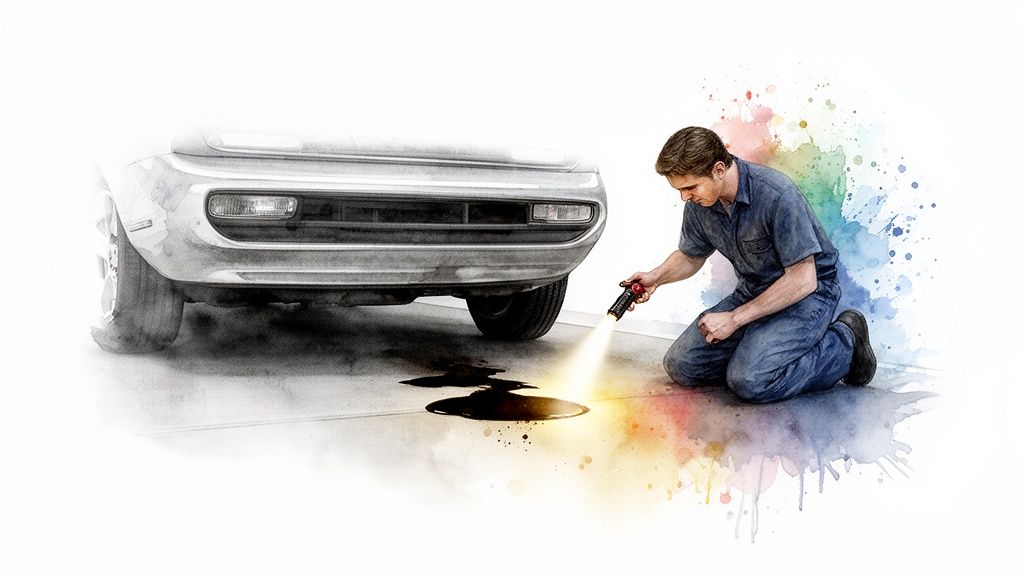
Finding that dark spot under your parked car is a dead giveaway, but an oil gasket leak can show itself in a few other sneaky ways. Think of your engine's gaskets like the rubber washers in your home’s plumbing. When one wears out, that small drip is a warning sign of a much bigger problem brewing. For drivers here in Haltom City, catching these clues early is the key to preventing major engine trouble.
The signs can be glaringly obvious or pretty subtle, but they all point to an issue that needs a closer look. Knowing what to look for can be the difference between a simple, quick fix and a complex, costly overhaul.
Common Signs of a Failing Gasket
The most famous symptom is, of course, seeing oil on the ground where you park. But you should also keep your other senses on high alert for clues that a leak is happening. A failing gasket leaves a trail of evidence that goes beyond just a few drips.
Here are the main things Haltom City drivers should watch out for:
- Visible Oil Drips: This is the big one. Dark brown or black puddles on your driveway or garage floor are a classic sign of an oil leak.
- Burning Oil Smell: If oil is dripping onto hot engine components like the exhaust manifold, it’ll burn. This creates a very distinct, sharp smell you might notice from inside or outside the car.
- Smoke from the Engine Bay: When a leak gets more serious, that dripping oil can create visible smoke from under the hood as it hits hot surfaces. It's a clear signal to stop driving and get it checked.
- Low Oil Levels: Find yourself constantly topping off your oil? If your dipstick shows the oil is always low and you can’t figure out why, a slow, hidden leak is the most likely culprit.
An oil leak is more than just a mess; it's your engine’s way of crying out for help. Ignoring these warnings starves your engine of the vital lubrication it needs to run without destroying itself. That leads to friction, overheating, and eventually, catastrophic failure. To get the full picture, check out our guide on the different reasons why cars leak oil.
Why Do Engine Gaskets Start Leaking?
Think of your engine's gaskets as the unsung heroes of your car. They're the tough, flexible seals sandwiched between heavy metal parts, tasked with one crucial job: keeping hot, high-pressure oil exactly where it belongs. It's a demanding role, and over thousands of miles, they face a constant barrage of heat, pressure, and chemical exposure. Sooner or later, something has to give, which is why an oil gasket leak is often a matter of when, not if.
Imagine leaving a rubber band out in the Texas sun for a few summers. It gets stiff, brittle, and eventually cracks. That's essentially what happens to your engine's gaskets. The constant heat cycles are a major factor. Every time you drive your car around Haltom City, the engine gets hot, and the gasket material expands. When you park it and it cools down, it contracts. This endless cycle of flexing slowly but surely robs the gasket of its pliability, making it hard and prone to failure.
The Main Causes of Gasket Failure
It’s almost never one single thing that causes a gasket to fail. It's more like a slow-motion breakdown, with several factors contributing over time. Knowing what these stressors are can help you understand why even a meticulously maintained car can spring a leak.
Here are the usual suspects behind a failing gasket:
- Simple Wear and Tear: Most gaskets are made of specialized rubber, cork, or silicone. Just like the tires on your car, these materials have a finite lifespan. Over the years, they simply degrade, harden, and lose their ability to maintain a tight seal.
- Extreme Temperature Swings: The wild temperature shifts we get here in North Texas are brutal on engine components. The constant, significant expansion and contraction can eventually create microscopic gaps—just big enough for oil to start seeping through.
- Excessive Engine Pressure: Your engine is a high-pressure environment by design. If the crankcase ventilation system gets clogged, that pressure has to go somewhere. It will always find the path of least resistance, which is often a weak, aging gasket.
This isn't just a small annoyance; it's a fundamental challenge in automotive engineering. Gasket failures have triggered huge vehicle recalls, highlighting just how critical these simple parts are. General Motors, for example, once had to halt production on nearly 1.4 million vehicles because a faulty valve cover gasket was leaking oil onto hot engine parts, creating a serious fire risk. Issues like this are a big reason why the market for replacement parts is so large, as people scramble to fix these common leaks. You can get a deeper look into the industry trends by checking out research on the automotive oil seals market.
A gasket leak isn't a sign that you've neglected your car—it's just a predictable part of its lifecycle. The best defense is catching it early with regular inspections, which lets a technician spot a weak gasket before it fails completely.
For those of us driving in Haltom City and the surrounding areas, this really just means being proactive. A quick check-up at a trusted local shop like Express Lube & Car Care can catch these problems early on. It's the easiest way to stop a tiny drip from becoming a dangerous and costly repair down the road.
Identifying the Different Types of Engine Gaskets
Not all oil gasket leaks are the same because every gasket in your engine has a very specific and important job to do. The best way to think of it is like a complex jigsaw puzzle. Each gasket is a thin, perfectly shaped seal that locks engine components together, keeping the oil flowing where it should—and not where it shouldn't.
For drivers around Haltom City, figuring out which gasket might be failing is the first big step toward getting the right fix. Most oil leaks trace back to one of three usual suspects. Knowing a little about them can help you feel more confident when you talk to a local technician.
The Main Gasket Culprits
Where you see the oil dripping can tell you a lot about where the problem is coming from. While nothing beats a professional inspection, here’s a rundown of the most common gaskets to fail and what to look for.
- The Valve Cover Gasket: Think of this one as the lid on the very top of your engine. It seals the valve cover to the cylinder head, keeping oil contained around your engine's valves. Since it's located so high up, a leak here usually sends oil trickling down the sides of the engine block.
- The Oil Pan Gasket: You'll find this gasket at the very bottom of the engine. Its job is to seal the oil pan—the reservoir that holds all your engine oil when the car is off. A leak from this gasket is often the most obvious, leaving tell-tale puddles of oil directly on the ground right under your car.
- The Head Gasket: This is the big one. The head gasket is arguably the most critical and complex seal in your entire engine. It's sandwiched right between the engine block and the cylinder head, tasked with sealing the combustion chambers and keeping oil and coolant from mixing. A failed head gasket is a very serious problem that can quickly lead to major engine damage.
So, what causes these tough little seals to give out? It really comes down to a constant battle against three forces.
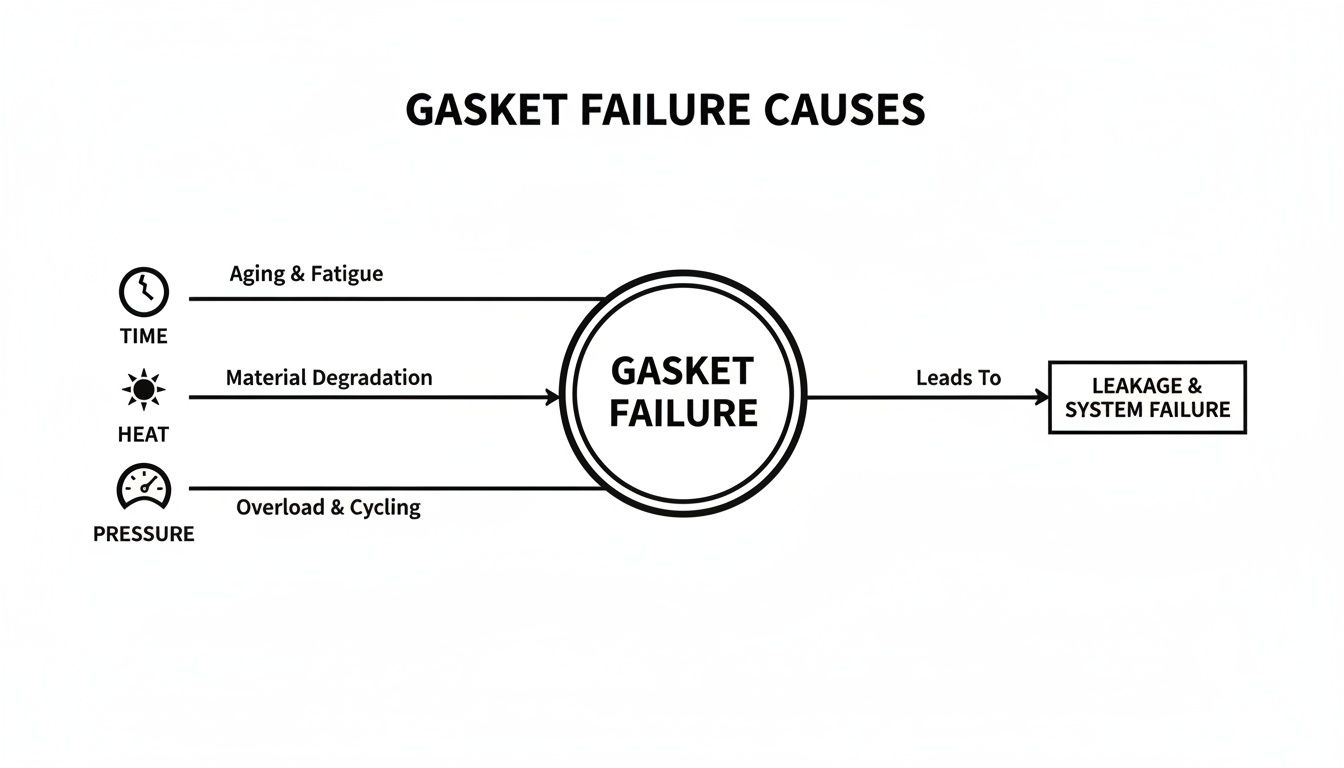
As the chart shows, the relentless combination of time, intense heat, and high pressure eventually wears down even the most durable gasket material, leading to cracks, brittleness, and ultimately, leaks.
Common Oil Gasket Leaks At a Glance
To give Haltom City drivers a clearer picture of what they might be up against, we've put together a quick comparison of these common gasket leaks. Understanding the differences can help you judge just how serious the situation is.
| Gasket Type | Location on Engine | Common Symptoms | Repair Urgency |
|---|---|---|---|
| Valve Cover Gasket | Top of the engine | Oil drips down the side of the engine; burning oil smell. | Medium. Address it soon to avoid a bigger mess and oil loss. |
| Oil Pan Gasket | Bottom of the engine | Puddles of oil directly under the car. | Medium to High. Consistent oil loss isn't something to ignore. |
| Head Gasket | Middle of the engine | White smoke from exhaust; milky-colored oil; overheating engine. | Critical. Stop driving immediately and call a professional. |
A failing gasket isn't just about losing oil; it's about what happens when fluids go where they don't belong. A bad head gasket, for instance, can let coolant seep into your oil, creating a sludge-like substance that can destroy your engine from the inside out.
While oil leaks are a frequent concern, other fluids can cause trouble, too. If you're not sure what kind of puddle you're seeing under your car, our guide on what causes transmission fluid to leak might help. Correctly identifying the problem is always the first step toward the right solution.
The Real Dangers of an Unrepaired Oil Leak
That small, dark puddle on your Haltom City driveway might seem like just another stain, but don't be tempted to ignore it. A slow oil gasket leak is a gamble you don't want to take, and the stakes are much higher than a simple clean-up job.
When you see a drip, you're seeing a symptom of a much bigger problem: your engine is slowly losing its lifeblood. Engine oil is what keeps all those complex metal parts moving smoothly, cutting down on friction and pulling heat away. When a gasket gives out and oil levels start to drop, that critical protection vanishes.
What happens next isn't pretty. Metal grinds against metal, creating intense friction and heat. This is a surefire recipe for catastrophic engine failure—a repair that can easily run into thousands of dollars. Suddenly, the cost of a simple gasket replacement looks like a bargain.
From Drips to Disaster
The financial hit is bad enough, but the safety risks are what really keep us up at night. If that leaking oil drips onto a hot exhaust manifold or another superheated part of your engine, it can ignite. A seemingly small leak can create a serious fire hazard, putting you, your passengers, and everyone else on the road in real danger.
Here's a sobering thought: Industry data shows that persistent oil leaks, when ignored, are behind 30-50% of all engine failures. These often end in severe overheating or, in the worst-case scenario, vehicle fires.
The Bigger Economic Picture
This isn't just a local problem; failing gaskets are a global issue. The market for automotive seals and gaskets hit a staggering USD 26.2 billion in 2024. That number is still climbing, mainly because older vehicles need these essential repairs to keep running safely.
Here in Haltom City, where we see everything from brand-new trucks to well-loved older cars, this trend is something we deal with every day. Getting a gasket leak fixed quickly isn't just about preventing a breakdown; it’s a smart financial decision. It stops a minor issue from snowballing into a wallet-emptying disaster. You can dig deeper into the global trends by exploring findings on automotive seals and gaskets.
At the end of the day, taking care of an oil gasket leak right away is one of the most important investments you can make in your vehicle's health and your own peace of mind. It keeps your car reliable, safe, and ready for whatever the road throws at it.
Finding a Reliable Gasket Repair in Haltom City

When you've got an oil gasket leak, you need a local Haltom City expert you can count on to fix it right the first time. For drivers here in Haltom City, that peace of mind comes from knowing your car is in good hands. At Express Lube & Car Care, our first step is always a careful diagnosis to find the exact source of the leak. This way, we don’t waste your time or money chasing the wrong problem.
This diagnostic-first approach is what separates a quick, permanent fix from a frustrating cycle of repeat visits. Once we've pinpointed the issue, our certified technicians use high-quality, durable replacement gaskets engineered to create a perfect seal and get your engine back to its reliable self.
Your Trusted Partner for Leak Repairs
We know car trouble is stressful. That’s why we’re all about clear communication and honest work for our Haltom City neighbors. You’ll always get a straightforward estimate before we touch your car, and our team is happy to walk you through what needs to be done in plain English. We find that when you understand the what and the why, you feel a lot more confident about the repair.
We also respect your time. Our service is designed for busy Haltom City families and professionals who need to get back on the road. Our entire goal is to fix your car quickly and safely, so you can get back to your life without another thought about that pesky leak.
At Express Lube & Car Care, we don’t just fix leaks for Haltom City drivers—we build trust. Our professional process ensures every repair is handled with the expertise and care your vehicle deserves, from initial inspection to final quality check.
The need for reliable gasket repairs isn't slowing down. The global market for automotive gaskets and seals was valued at USD 25.89 billion in 2024 and is projected to hit USD 35.99 billion by 2030. It makes sense when you consider the 92.4 million vehicles sold in 2023 alone—all of which will eventually face wear and tear. You can read more about the trends in the automotive gasket market.
Why Quality and Certification Matter
Choosing the right shop really comes down to choosing the right people. Our technicians’ certifications are your guarantee that your vehicle is being serviced by pros who are at the top of their game. That level of skill is absolutely critical for a tricky job like an oil gasket replacement, ensuring it’s done to the highest standard for every Haltom City customer.
You can see what it takes to be a top-tier auto repair facility by reading about our ASE and RepairPal certifications. This commitment to excellence is how we provide dependable, lasting solutions for our neighbors in the Haltom City community.
Simple Maintenance to Help Prevent Future Leaks
While some gasket wear and tear is just a part of a car's life, a little proactive maintenance can go a surprisingly long way. For drivers here in Haltom City, staying on top of routine service is the smartest way to prevent a future oil gasket leak and protect your investment. A little care now can save you a big headache later.
Think of your gaskets as being alive—they need the right environment to thrive. The absolute best thing you can do for them is to get regular oil changes with the right type of high-quality oil.
The Role of Clean Oil and a Healthy Cooling System
Fresh motor oil isn't just for lubrication; it's packed with detergents and conditioners that help keep rubber and silicone gaskets supple and clean. Over time, as oil degrades, it becomes acidic and contaminated with gunk that can eat away at these critical seals. Sticking to a consistent oil change schedule is your best first line of defense.
Beyond oil, your engine’s cooling system is just as important for keeping gaskets healthy. Here’s what Haltom City drivers can do:
- Maintain Proper Coolant Levels: Always make sure your coolant is topped off. If it's low, the engine will run hotter than it was designed to.
- Regular Radiator Checks: Your radiator is the heart of the cooling system. Keeping it in good shape is essential for preventing overheating, which is a major cause of gasket failure.
- Use High-Quality Oil: The right oil does more than lubricate; it helps manage engine temperatures and keeps seals conditioned.
A hot engine is a stressed engine. When your car overheats, the gaskets are often the first victims. They can become brittle and crack under the intense heat, leading directly to leaks. Keeping your cooling system happy is one of the best ways to protect them.
For those who enjoy getting their hands dirty, there are plenty of DIY auto repair resources that can guide you through common car issues. When it comes to fluids and internal engine work, though, having a professional handle it ensures everything is done right. For more advice, check out our guide on oil change tips for your vehicle.
Your Oil Gasket Leak Questions Answered
If you think you have an oil gasket leak, a bunch of questions probably pop into your head right away. For drivers around Haltom City, getting straight answers is the first step to feeling confident about your car's repair. We've put together the questions we hear most often to give you a clear picture of what's involved.
Let's cut through the noise and talk about everything from potential costs to whether it's safe to drive, so you can handle a leak without all the stress.
What’s a Gasket Repair Going to Cost Me Around Haltom City?
The price tag for fixing an oil gasket leak really comes down to one thing: which gasket is busted. A simple valve cover gasket is often the most affordable fix, usually running between $150 and $350. Why? Because it’s typically right on top of the engine and easy for a mechanic to get to.
Things get a bit more involved with an oil pan gasket. This one is on the bottom of the engine, and sometimes other parts have to be moved out of the way to reach it. You can expect this repair to be in the $250 to over $500 range. The big one, though, is the head gasket. Because it requires taking apart the top half of the engine, this is a major job that can cost anywhere from $1,500 to over $3,000.
How Long Will My Car Be in a Haltom City Shop?
Like the cost, the repair time depends entirely on the gasket's location. A valve cover gasket is a pretty quick fix for a skilled technician. Most of the time, we can have you in and out in about 1 to 2 hours.
An oil pan gasket replacement takes a bit longer, typically 3 to 5 hours of labor. If the head gasket is the culprit, plan on leaving your car with the shop for a few days. It's a complex, detailed repair that you absolutely don't want anyone to rush.
Don't ever brush off an oil leak, no matter how small it seems. It's not just making a mess on your driveway; it's starving your engine of the lubrication it needs to survive. Taking care of it quickly is always the smarter—and cheaper—move in the long run.
Is It Really That Bad to Drive with a Small Leak?
Driving with a small oil leak is a roll of the dice. You might get by for a little while, but if the oil level gets too low, you're looking at catastrophic engine damage. That tiny drip could also turn into a major leak without warning, leaving you stranded.
Even worse, oil dripping onto a hot exhaust pipe is a serious fire hazard. The best thing you can do is have a professional take a look as soon as you spot trouble. A quick inspection will tell you exactly how serious the problem is and how fast you need to act.
Noticing oil spots under your car? Don't wait for a small drip to become a big problem. The expert team at Express Lube & Car Care is ready to give you an honest diagnosis and a solid repair to get you back on the road safely in Haltom City. Visit us online to schedule your appointment today!