
You pull the dipstick, hold it up to the light, and your stomach drops a little. The oil isn’t honey-colored. It’s dark brown, maybe almost black.
That’s a common moment for drivers in Haltom City, Keller, Watauga, and North Richland Hills. A lot of people assume black oil means something is badly wrong. Sometimes it does point to a problem. Most of the time, though, it means the oil has been working.
The trick is knowing the difference between normal darkening and trouble signs. That’s where many drivers get mixed messages. One person says black oil is always fine. Another says change it immediately. Neither answer is complete.
As technicians, we look at more than color. We look at color, consistency, and smell. Those three clues tell you far more than the dipstick color alone. If you’ve also noticed drips in the driveway, that’s a separate issue worth checking because leaks can change the whole picture. This guide on engine oil leaks and what they can mean can help with that.
That Moment You See Black Oil on the Dipstick
A driver comes in after checking fluids before work. The report is almost always the same. “My oil looks black. Did I wait too long?”
That reaction makes sense. Clean new oil looks light and clear, so dark oil feels like bad news. But engines aren’t clean rooms. They’re hot, dirty, high-pressure machines that create byproducts every time fuel burns.

A useful way to think about it is this. Fresh oil goes into the engine clean, but its job is to pick up contamination, help carry it safely, and keep engine parts separated by a protective film. If the oil stayed perfectly golden forever, that would raise questions about whether it was cleaning well enough.
Black oil by itself is a clue, not a diagnosis.
In the shop, concern starts when dark oil shows up with other symptoms. Maybe it feels gritty. Maybe it smells burnt. Maybe the level drops fast. Maybe the engine sounds noisier than normal. Those combinations matter.
What drivers usually want to know
Many drivers aren’t asking for a chemistry lesson. They want practical answers:
- Is this normal: Dark oil often is.
- Do I need an oil change now: Maybe, but color alone doesn’t decide that.
- Could this hurt my engine: It can, if the oil is also thick, sludgy, contaminated, or overdue.
What this article helps you do
By the end, you’ll know how to check three things at home:
- Color
- Consistency
- Smell
That quick check won’t replace a professional inspection, but it can help you decide whether what you’re seeing is routine or something that deserves fast attention.
Why Good Engine Oil Is Supposed to Get Dark
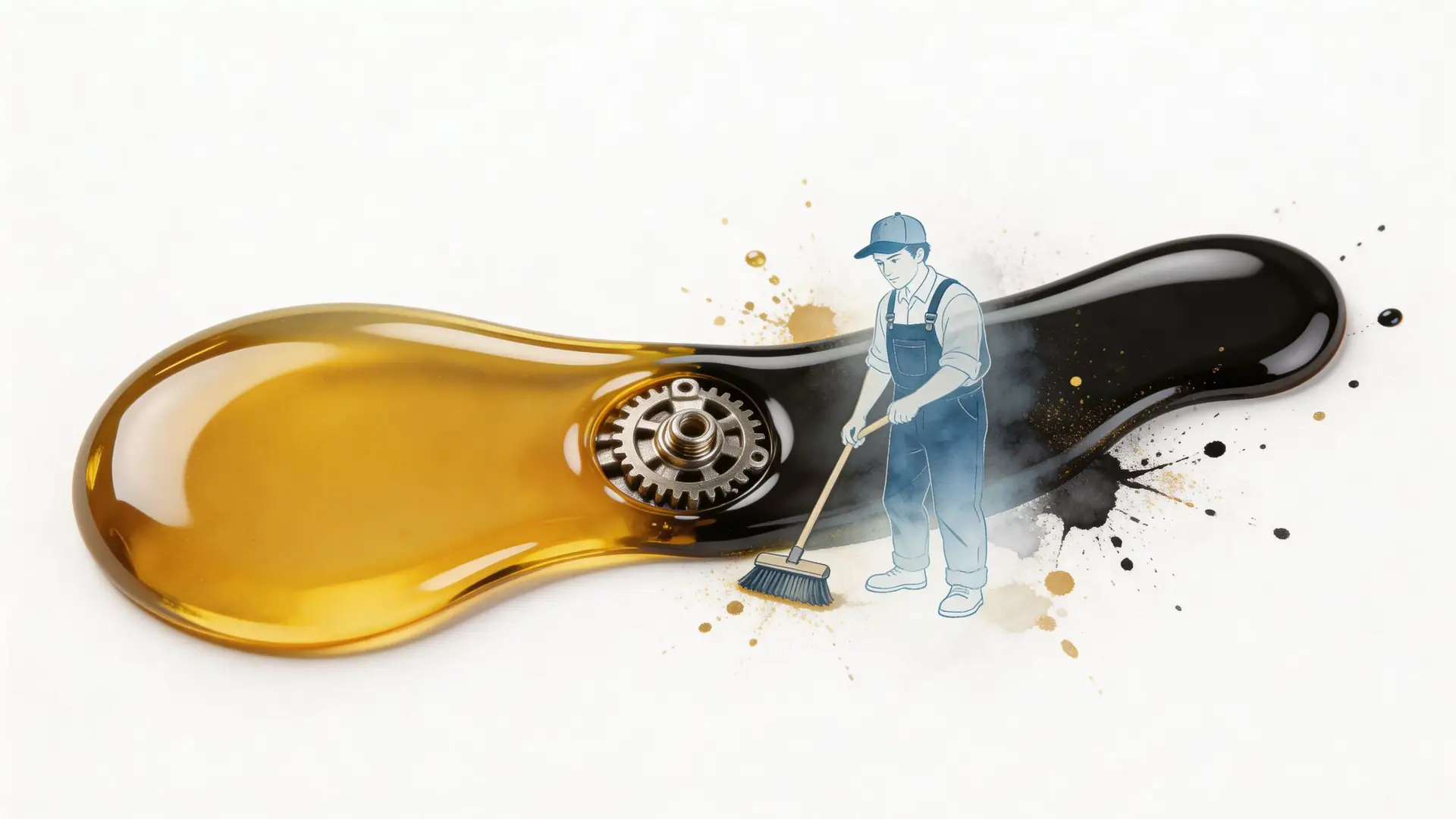
Engine oil has to do more than lubricate. It also cleans. The easiest analogy is a janitor working inside the engine all day, sweeping up what combustion leaves behind and keeping that mess from sticking to internal parts.
That cleaning action is one of the main answers to what causes engine oil to turn black.
Soot is a major reason oil darkens
When fuel burns, it creates tiny carbon particles. Some of that soot gets past the combustion chamber and into the crankcase, where the oil picks it up and holds it in suspension.
That darkens the oil quickly. According to the verified engineering summary provided, modern gasoline direct injection engines generate 5 to 10 times more particulate matter and soot than traditional port injection engines, and those soot particles can be less than 1 micron in diameter, which is tiny compared with a human hair at roughly 70 microns. The same verified source also notes that, by 2025, over 60% of new vehicles in the U.S. are projected to feature direct injection, which helps explain why more drivers now notice oil turning dark sooner (engineering summary on GDI soot and oil blackening).
Why dark oil can be a good sign
Modern oil contains detergent and dispersant additives. Their job is to keep soot and combustion debris suspended in the oil instead of letting it bake onto engine surfaces.
That means dark oil often shows the oil is doing exactly what it should.
Practical rule: If the oil is dark but still smooth and fluid, the color alone usually doesn't mean failure.
This is especially important in newer engines. Gasoline direct injection engines can darken oil faster than many drivers expect. A customer may get an oil change, drive normally for a short time, check the dipstick again, and think the fresh oil has already “gone bad.” In many cases, it hasn’t. It has started collecting soot.
What works and what doesn't
Some habits help. Others waste money.
| Approach | What happens |
|---|---|
| Using the correct oil specification | Gives the engine the detergent and dispersant package it was designed around |
| Changing oil at a sensible interval | Removes suspended contamination before the oil gets overloaded |
| Assuming black color alone means failure | Leads to unnecessary worry and sometimes unnecessary early changes |
| Ignoring dark oil that also feels wrong | Misses the signs that contamination may no longer be under control |
Why diesel owners have seen this for years
Diesel engines have long been known for turning oil black quickly because of heavier soot loading. What surprises many gasoline drivers today is that some modern engines can show a similar pattern of early darkening.
That doesn’t mean the engine is worn out. It means the oil is carrying the byproducts of combustion.
How Heat Cycles and Oxidation Contribute to Dark Oil
Not all dark oil comes from soot. Some of it comes from heat.
Every time you start the engine, the oil heats up. Every time you park it, the oil cools back down. That repeated cycle slowly changes the oil itself. Consider cooking oil in a pan. Heat changes the color and chemistry over time, even if nothing dramatic happens all at once.
Normal operating heat changes oil chemistry
Verified data in the brief notes that engine oil regularly sees 195°F to 220°F during normal operation, and oxidation speeds up as temperatures rise. The same verified source says oxidation rates double for every 10°C increase in temperature, which is why stop-and-go driving and hot conditions can age oil faster (explanation of heat cycles and oxidation in motor oil).
That’s relevant around Haltom City because short errands and traffic-heavy driving are hard on oil. The engine may warm up, cool down, then warm up again without staying at full temperature long enough to clean itself out as effectively.
Short trips are harder on oil than many people realize
A lot of North Texas driving is made up of quick trips. School drop-offs. Lunch runs. A short commute. A stop at the store on the way home.
Those patterns can be rough on oil because the engine may not stay hot long enough to fully drive off moisture and other contaminants. The verified data also states that frequent short-trip driving can significantly reduce oil life because incomplete warm-up traps contaminants and accelerates degradation.
If you want a better feel for why thickness matters as oil ages, this explanation of engine oil viscosity and how it affects protection is worth reading.
What oxidation looks like in real life
Oxidation doesn’t always announce itself dramatically at first. The oil gets darker with use.
Later, the clues can become more obvious:
- The oil looks darker and less translucent
- The texture starts feeling heavier
- The smell shifts toward burnt
- Deposits begin forming inside the engine
Heat-darkened oil can be normal. Heat-damaged oil usually brings other signs with it.
That’s why a dipstick check should never stop at color. If the oil still moves and feels like oil, that points one direction. If it starts feeling sticky or unusually thick, that points another.
Normal Darkening vs Problematic Blackening A Simple Checklist
Most drivers don’t need a lab report to make a first decision in the driveway. They need a usable rule of thumb.
The simplest one is this. Color matters less than color plus feel plus smell. Dark oil that still behaves like healthy oil is one thing. Dark oil that feels wrong or smells wrong deserves attention.
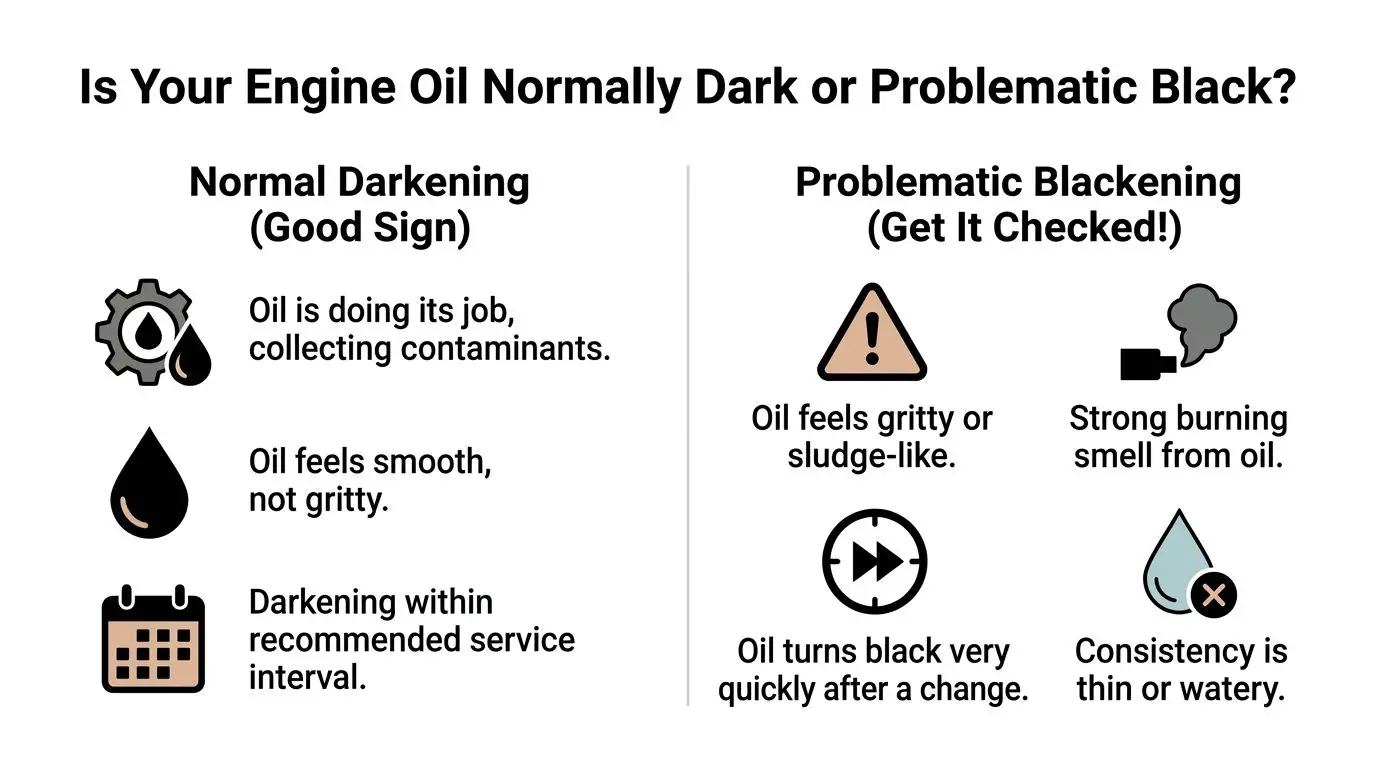
The quick comparison
| Check | Usually normal | Warning sign |
|—|—|
| Color | Dark brown to black within the service interval | Turns black unusually fast and seems paired with other changes |
| Consistency | Smooth, slick, and still flows normally | Thick, sticky, sludgy, or gritty |
| Smell | Mild oil smell | Strong burnt smell or other unusual odor |
| Appearance on towel | Spreads into the paper in a smooth stain | Clumps, smears heavily, or looks contaminated |
The key distinction in the verified material is practical and useful. If the oil is dark but still flows normally, it’s likely safe. If it’s dark and thick, gritty, or tarlike, it warrants professional inspection. That same verified guidance also warns that sludge-like oil can block small oil passages and lead to serious engine damage (practical decision tree for normal versus dangerous oil darkening).
Use the Color Consistency Smell method
Color
Dark color by itself is common. Treat it as the first clue, not the final answer.
If the oil changed color gradually over normal use, that’s usually expected. If it looked extreme almost immediately and the engine also seems off, pay closer attention.
Consistency
This is the most useful at-home check.
Rub a small amount between cool fingers or spread it on a white towel. Healthy used oil should still feel slick. If it feels gritty, sticky, or tarlike, that’s different.
Smell
Smell gives away a lot.
A sharp burnt odor can suggest overheating or oxidation issues. If the oil smells noticeably off, don't shrug that off.
Dark and smooth is usually routine. Dark and thick is not.
What not to do
Drivers sometimes make two mistakes here.
- Don't judge by color alone: Black oil can still be serviceable.
- Don't ignore texture changes: Sludge and grit matter more than darkness.
- Don't keep driving for weeks after noticing obvious warning signs: Once oil starts feeling contaminated, delay can get expensive fast.
This simple checklist won’t replace diagnostics, but it does help you separate normal darkening from a problem that needs hands-on inspection.
Simple DIY Oil Checks You Can Perform at Home
A good oil check takes only a few minutes. Do it with the engine off and cool enough that you can work safely.
Start on level ground. Keep a clean rag or paper towel nearby.
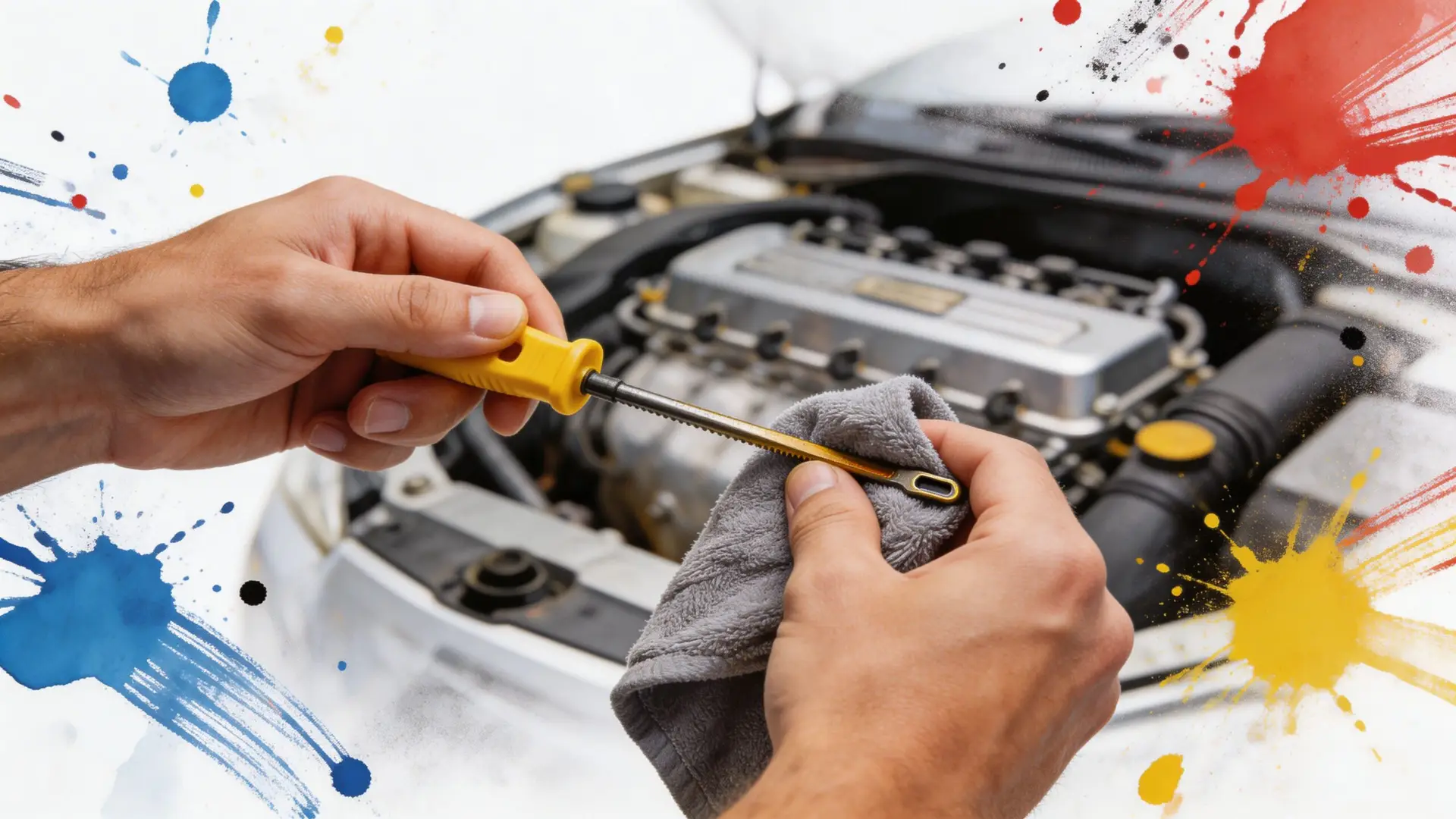
Step one, check the dipstick correctly
A rushed check gives bad information. Use the same process every time.
- Park level: An incline can distort the reading.
- Shut the engine off: Give the oil time to settle.
- Pull the dipstick and wipe it clean: Use a lint-free rag if you have one.
- Reinsert fully, then pull it again: Now you’re seeing the true level and condition.
If you want a broader routine for keeping oil service on schedule, these oil change tips for everyday drivers are a solid companion read.
Step two, do the paper towel test
This is one of the easiest ways to get a better look at used oil.
Wipe the dipstick onto a white paper towel. That makes it easier to judge what you’re seeing than looking at a dark dipstick alone.
Look for a few things:
- A smooth stain: Usually normal used oil
- Uneven clumps or heavy smears: Worth more attention
- Very poor flow across the paper: Can suggest thickening
Step three, check feel and smell
Use a tiny amount of oil only, and only when it’s cool.
Rub it lightly between your fingers. It should feel slick. If it feels gritty, sandy, or gluey, that’s a warning sign.
Then smell the dipstick or the rag. A strong burnt smell deserves a closer look.
A home oil check isn't about making a final diagnosis. It's about deciding whether what you're seeing looks routine or unusual.
A visual demonstration can help if you haven’t done this before:
What a home check can't confirm
A driveway check is useful, but it has limits.
It can help you spot abnormal texture, odor, and appearance. It can’t tell you everything about additive condition, internal wear, or the exact cause of contamination. If the oil looks questionable and the engine is also noisy, smoking, leaking, or consuming oil, that’s the point to stop guessing.
When to Visit Express Lube and Car Care in Haltom City
There’s a point where the smart move is to get a technician involved.
If your oil is dark within a normal service interval and still feels smooth, that usually doesn’t call for panic. If your check turns up anything beyond color, it’s time for a closer look.
Clear signs it's time to schedule service
Bring the vehicle in if any of these apply:
- The oil feels gritty: That can suggest contamination beyond normal soot suspension.
- The oil is thick or sticky: Sludge-like texture is not something to monitor casually.
- There’s a strong burnt smell: That points to heat-related breakdown or another problem.
- The oil darkens unusually fast and the engine seems different: Fast change plus rough idle, noise, or poor performance deserves diagnosis.
- You’re also losing oil: A condition issue combined with low level needs attention promptly.
Why professional inspection matters
A technician can separate normal used-oil appearance from a mechanical issue. That may include checking for sludge, confirming the correct oil grade, inspecting for leaks, and looking for signs of overheating or internal contamination.
For drivers in Haltom City, Keller, Watauga, and North Richland Hills, convenience matters too. If your quick check points toward service, the easiest next step is to schedule an oil change or inspection online.
Local help when the dipstick raises questions
Express Lube & Car Care is located at 6211 Denton Hwy in Haltom City. If your oil check leaves you unsure, that’s exactly the kind of question a certified shop should answer before a small issue grows into engine trouble.
Frequently Asked Questions About Engine Oil Health
Does full synthetic oil turn black slower than conventional oil
Not always in a way you can judge by eye. Good oil can darken quickly because it’s suspending contaminants. Synthetic oil may resist heat-related breakdown better in real use, but dark color alone still doesn't tell you whether the oil is worn out.
How much does Texas heat affect engine oil
Heat matters. Long idling, hot pavement, and repeated short trips can all add stress to oil. In North Texas, summer conditions can make oxidation and general oil aging more noticeable, especially if the vehicle sees heavy traffic or frequent stop-and-go use.
Is it okay to top off black oil instead of changing it
Sometimes topping off is appropriate for level, but it doesn’t solve condition. If the oil is a little low and otherwise appears normal, adding the correct oil may help until the scheduled service. If the oil is dark and also thick, gritty, or burnt-smelling, topping off isn't the fix.
If black oil can be normal, what should I watch for
Watch for combinations:
- Dark plus smooth: Usually routine
- Dark plus gritty: Not routine
- Dark plus sticky: Get it checked
- Dark plus burnt smell: Get it checked
Should I trust the dipstick or the mileage sticker
Use both, but don’t rely only on either one. The sticker gives you a service target. The dipstick tells you what the oil looks and feels like right now. If the mileage says you’re fine but the oil condition looks suspicious, inspect further.
If you’re in Haltom City and want a professional answer instead of a guess, Express Lube and Car Care can inspect your oil condition, check for leaks or sludge-related concerns, and help you decide whether your engine oil is doing its job or warning you about a real problem.