

Most drivers assume that skipping one oil change will either destroy their engine immediately or do nothing at all. The truth sits uncomfortably in between. Understanding what happens if you skip an oil change means recognizing that the damage is gradual, cumulative, and often invisible until repair bills arrive. The consequences of a missed oil change rarely show up overnight, but they quietly compound with every mile you drive on degraded oil. This article breaks down exactly what oil does inside your engine, what goes wrong when you neglect it, and what it actually costs you over time.
Table of Contents
- Key Takeaways
- What happens if you skip an oil change
- How neglect damages your engine
- Warranties, inspections, and what it costs you
- How to stay on schedule and avoid skipping
- Our perspective on skipping oil changes
- Keep your engine protected with Express Lube & Car Care
- FAQ
Key Takeaways
| Point | Details |
|---|---|
| Damage builds gradually | Skipping oil changes causes cumulative engine wear, not immediate failure. |
| Degraded oil turns harmful | Old oil develops sludge and acid that actively damage engine components. |
| Warranties can be voided | Missing manufacturer-scheduled oil changes may nullify your new car warranty coverage. |
| Inspections get skipped too | Oil change visits catch failing belts, hoses, and brakes before they become emergencies. |
| Cost comparison is stark | A $40–$100 oil change prevents repairs that can cost thousands of dollars. |
What happens if you skip an oil change
Engine oil has four jobs: lubricate moving metal parts, carry heat away from the engine, clean away deposits and contaminants, and protect metal surfaces from corrosion. When oil is fresh, it handles all four jobs without much trouble. When you let it go too long, it starts failing at every single one.
Here is what happens chemically over time. Oil absorbs moisture from combustion byproducts and picks up microscopic metal particles from normal engine wear. As it circulates, heat causes oxidation, which thickens the oil and changes its viscosity. The additives that keep oil performing well, including detergents, dispersants, and anti-wear compounds, get depleted. What remains is a thicker, darker fluid carrying acids, sludge precursors, and abrasive particles.
The effects of skipping oil change intervals go beyond just dirty oil. Degraded oil loses its ability to lubricate, clean, and cool the engine effectively, which accelerates wear on every surface it touches. Sludge forms on oil passages and valve components, starving parts of the flow they need. Acid buildup etches bearing surfaces in ways that do not always show up in routine diagnostics.
Pro Tip: Even if your mileage is low, oil still degrades from moisture and oxidation over time. A car that sits for months can have oil that needs changing just as much as one that drives 5,000 miles.
One finding that surprises many drivers: oil analysis can show acceptable wear metal levels while completely missing sludge deposits on critical surfaces, ring sticking, and bearing acid etching happening inside the engine. A clean-looking oil sample is not the same as a healthy engine. That gap between what tests reveal and what is actually happening is where hidden, expensive damage quietly accumulates.
How neglect damages your engine
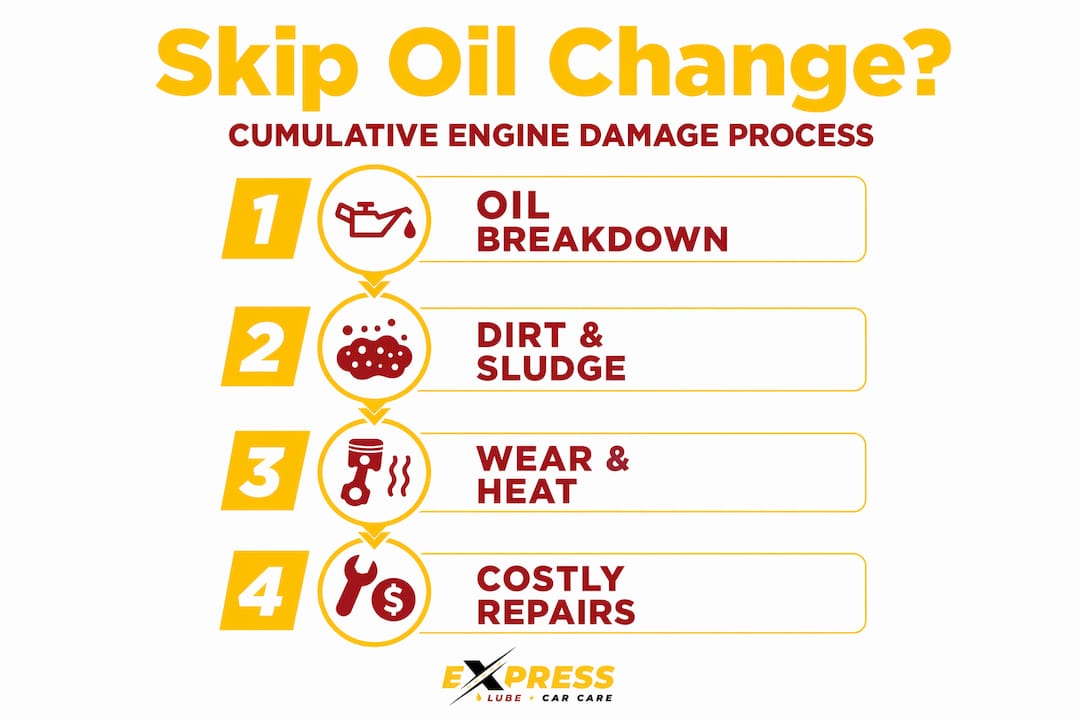
The risks of delaying oil changes go well beyond “the engine feels a little rougher.” The problems that build up are specific, serious, and often expensive to fix. Here is how the damage typically progresses:
- Increased engine wear. Without proper lubrication, metal surfaces grind against each other with less protection. Piston rings, camshafts, and crankshaft bearings take the most punishment. This wear is permanent.
- Overheating. Oil carries heat away from areas the coolant cannot reach. When oil loses that capacity, engine temperatures rise, gaskets fail, and warped components follow.
- Turbocharger failure. Turbos spin at speeds exceeding 100,000 RPM and depend entirely on clean, pressurized oil. Skipping oil changes can destroy a turbocharger, which is a repair that commonly runs $1,000 to $4,000 depending on the vehicle.
- Reduced fuel economy. Thick, degraded oil increases internal friction, which makes the engine work harder to produce the same power. You burn more fuel to go the same distance.
- Increased emissions. Dirty oil contributes to incomplete combustion and clogged emissions systems. In states with mandatory inspections, this can mean a failed emissions test.
“An oil change is the single cheapest form of engine insurance available. Skipping it to save $50 today is trading a small, predictable expense for a large, unpredictable one.”
The performance decline you notice, if you notice it at all, tends to be subtle at first. A slight drop in acceleration, a rougher idle, maybe a faint ticking sound when the engine is cold. By the time those signs are obvious, the internal damage is already done. The real danger of skipping oil changes is that the engine keeps running while slowly wearing out, giving you no urgent warning until something fails outright.
Warranties, inspections, and what it costs you

Most new car warranties require you to follow the manufacturer’s maintenance schedule, and oil changes are the most frequent item on that list. Skipping oil changes can void warranty coverage when a manufacturer determines that neglected maintenance caused or contributed to a failure. If your engine develops a problem and your service records show gaps in oil change history, the warranty claim can be denied.
Keeping receipts matters more than most drivers realize. Documentation with dates, mileage, and receipts is what actually proves you maintained the vehicle correctly. Without that paper trail, a warranty dispute is very difficult to win.
Pro Tip: Whether you change your oil yourself or use a service shop, keep a dedicated folder, physical or digital, with every receipt and maintenance record. This documentation has protected warranty claims when manufacturers challenged whether proper maintenance had been performed.
There is another cost that rarely gets mentioned: the inspections you miss. A trained technician performing an oil change service also checks belts, hoses, fluid levels, tires, brake lines, and suspension components. Skipping those visits means a worn serpentine belt or low brake fluid goes unnoticed until it becomes a roadside emergency.
| Service | Typical cost |
|---|---|
| Conventional oil change | $40–$70 |
| Synthetic oil change | $70–$100 |
| Engine repair (moderate) | $1,500–$4,000 |
| Engine replacement | $4,000–$10,000+ |
Oil changes typically cost between $40 and $100, which makes the math on skipping them pretty clear. The cost of engine repair after prolonged neglect dwarfs anything you save by putting off a routine service.
How to stay on schedule and avoid skipping
The practical question is not whether to change your oil. It is how to make sure you actually do it on time. A few habits make this much easier.
- Follow your manufacturer’s interval. Check your owner’s manual for the recommended schedule, which may be based on mileage, time, or an oil-life monitoring system. Many modern vehicles use a dashboard indicator that calculates oil degradation based on driving conditions rather than just miles driven. Trust it.
- Use your oil-life monitor correctly. Do not wait until the warning light turns red and urgent. Schedule your change when the monitor first alerts you, typically around 15 to 20 percent oil life remaining.
- Set a calendar reminder. If your car is older and does not have an oil-life monitor, set a recurring reminder on your phone every three to six months, depending on your driving habits. Short trips and stop-and-go traffic degrade oil faster than highway miles.
- Document every change. Record the date, mileage, oil type, and filter used, even if you do a DIY oil change at home. A simple note in your phone works.
- Pair it with your schedule. Some drivers tie oil changes to a routine event, like the beginning of each season, or every other tire rotation. Connecting the task to something already on your calendar makes it harder to forget.
Pro Tip: If you drive a high-mileage vehicle, the right oil for older engines can reduce leaks and burn-off between changes. It does not replace regular service intervals, but it does give aging seals and bearings added protection.
Understanding your car maintenance schedule is one of the simplest ways to protect your investment. Most drivers have more flexibility than they think, but that flexibility is not unlimited. Staying within a reasonable range of your recommended interval keeps the oil doing its job before the damage starts.
Our perspective on skipping oil changes
I have seen a pattern repeat itself at Express Lube & Car Care more times than I can count. A driver comes in, a little embarrassed, saying they went “just a little” over their interval. Sometimes it is 2,000 miles, sometimes it is 8,000. What I have learned is that the embarrassment is always more useful earlier than later.
The conventional fear that one missed oil change causes instant engine failure misses the bigger picture. One missed change rarely causes catastrophic failure on its own. What it does is start a clock. The engine runs a little dirtier, the deposits build a little higher, and the oil’s protective capacity drops a little more. By the second or third skipped change, you are not just behind on maintenance. You are actively shortening the engine’s life.
What I have also learned is that oil analysis reports give a lot of drivers false reassurance. Clean wear metals do not mean clean internals. I have seen engines with “good” oil samples that had significant sludge buildup on valve train components. The oil had masked the problem just long enough for the driver to feel confident, and then the symptoms appeared.
My honest take is this: treat oil changes as the insurance they are. A $60 service every few months is not a car expense. It is the fee you pay to avoid a $5,000 engine problem. That framing has saved real money for drivers who shifted from reactive to proactive maintenance.
— Express Lube & Car Care
Keep your engine protected with Express Lube & Car Care
If your oil change is overdue, or if you are not sure when your last service was, the team at Express Lube & Car Care in Haltom City is ready to help. No appointment is needed, and our ASE-certified technicians handle everything quickly so you can get back on the road.

Every oil change at Express Lube & Car Care includes a multi-point inspection of belts, hoses, fluid levels, and brakes, giving you a full picture of your vehicle’s health in one visit. If there are concerns about engine wear from delayed maintenance, our engine diagnostics team can run a thorough check before a small issue becomes a costly repair. Transparent pricing, fast service, and RepairPal certification mean you know exactly what you are getting. Stop in when it is convenient for you.
FAQ
What actually happens when you skip an oil change?
Oil degrades over time, losing its ability to lubricate, clean, and cool engine components. Skipping changes allows sludge and acids to build up, which accelerates engine wear and can lead to overheating or component failure.
Can you skip one oil change without damage?
One skipped change rarely causes immediate failure, but it starts a pattern of cumulative damage. The longer degraded oil circulates, the more wear it causes on engine surfaces, seals, and bearings.
Does skipping an oil change void your warranty?
Yes, it can. Most new car warranties require adherence to the manufacturer’s maintenance schedule, and missing scheduled services can give the manufacturer grounds to deny a warranty claim related to engine problems.
How do I know if my engine is damaged from missed oil changes?
Common signs include increased engine noise, a ticking or knocking sound, reduced fuel economy, sluggish acceleration, and dark or gritty oil on the dipstick. A professional engine diagnostic can reveal deeper damage not visible from the outside.
How often should you really change your oil?
Follow your owner’s manual or your vehicle’s oil-life monitor. Most modern vehicles on synthetic oil fall in the 5,000 to 10,000 mile range, but driving conditions, oil type, and engine age all affect the right interval for your specific car.