

When it comes to your car's cooling system, a little preventative maintenance goes a long way. As a general rule of thumb, we recommend replacing radiator hoses every four to five years or around 90,000 miles—whichever milestone you hit first. Think of this as cheap insurance against a much bigger headache down the road. Of course, visible wear and tear can mean you need to act sooner.
Quick Guide to Radiator Hose Replacement
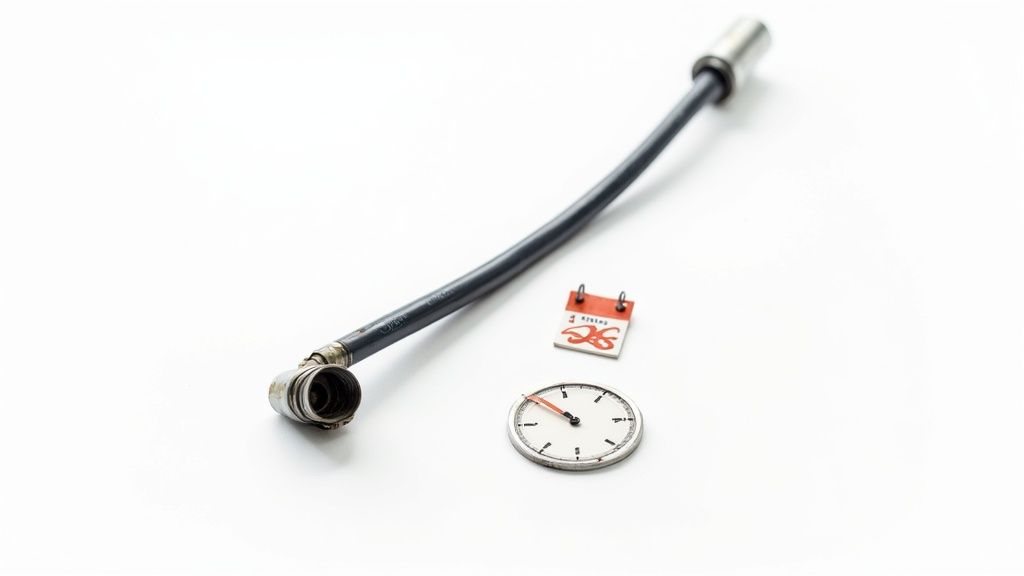
Your radiator hoses are the unsung heroes of your engine, constantly moving hot coolant under serious pressure. It's a tough job, and over time, that stress takes a toll. Knowing when to swap them out is crucial for preventing a sudden, steamy breakdown on the side of the highway.
While sticking to a schedule based on age and mileage is your best bet, remember that every car is different. Driving conditions and even the specific type of hose—like a specialized coolant hose for 2017-2022 BMW models—can affect its lifespan.
To make things simple, here's a quick look at the main reasons you'd need to replace your hoses.
Radiator Hose Replacement Triggers at a Glance
This table breaks down the three main factors—time, mileage, and physical condition—that signal it's time for new hoses.
| Replacement Trigger | Guideline | Why It Matters |
|---|---|---|
| Time Interval | Every 4-5 Years | Rubber breaks down naturally from heat and chemical exposure, even if the car isn't driven much. |
| Mileage | Every 90,000 Miles | Constant heating and cooling cycles gradually weaken the hose's structure from the inside out. |
| Physical Symptoms | Cracks, Bulges, Sponginess | These are clear warnings that the hose has lost its integrity and could fail without notice. |
Keeping these simple triggers in mind will help you stay ahead of potential cooling system failures and keep your engine running safely.
Understanding Why Radiator Hoses Eventually Fail

Think of your radiator hoses as the main arteries for your engine's cooling system. They're constantly working, shuttling hot coolant from the engine block to the radiator and then sending the cooled fluid back to repeat the cycle. This endless loop exposes them to some seriously harsh conditions.
These hoses aren't just dealing with heat—they're under intense pressure, too. A modern cooling system can operate at 13 to 16 PSI and at temperatures well over 200°F. That combination of high pressure and scalding heat is what eventually breaks down the rubber, causing it to lose its flexibility and strength.
Believe it or not, the real damage often starts from the inside. A process called electrochemical degradation (ECD) slowly rots the hose from the inside out. Over time, the coolant mixture, along with tiny metal particles from the engine, creates a weak electrical current that attacks the rubber, making it brittle and prone to failure.
The Upper vs. The Lower Hose
Your car has two main radiator hoses, and they don't wear out at the same speed. Their different jobs lead to different lifespans, which gives you clues about when a replacement is needed.
- The Upper Hose: This hose is on the front line. It carries the hottest coolant directly from the engine to the radiator, so it takes the most abuse from heat and pressure. Because of this, it's almost always the first one to fail.
- The Lower Hose: This hose has a slightly easier job, pulling cooled fluid from the bottom of the radiator back to the engine's water pump. While the heat is less intense, it has to withstand the suction from the water pump. If the hose gets too soft, it can actually collapse inward, blocking coolant flow.
A failing upper hose is usually the canary in the coal mine. Since all your cooling system hoses are made of the same materials and installed at the same time, if one is on its way out, the others are right behind it.
Warning Signs Your Radiator Hose is Failing
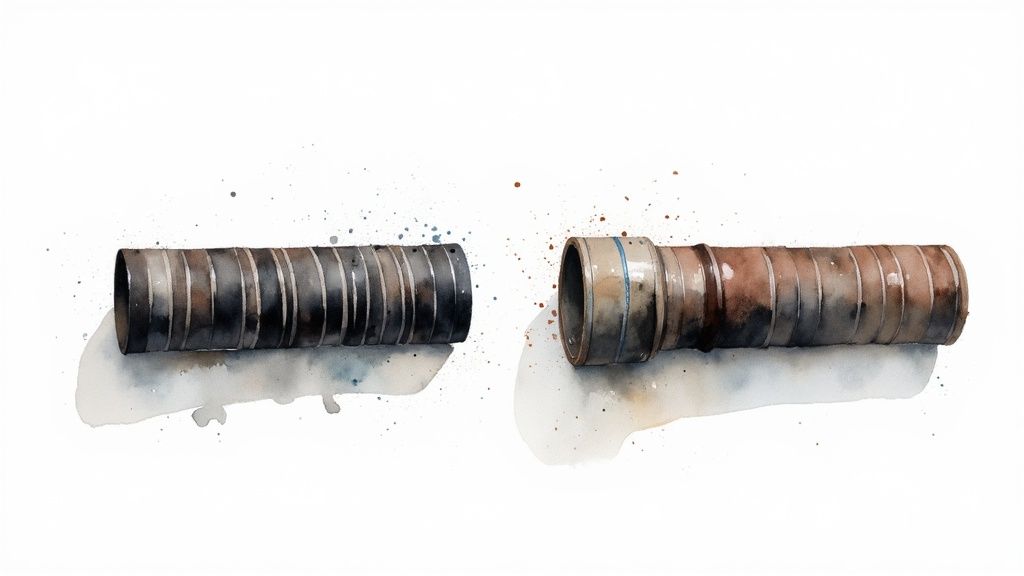
While mileage and age are great rules of thumb, your car is pretty good at telling you when something’s wrong. Paying attention to these distress signals is the best way to catch a failing radiator hose before it leaves you stranded on the side of the road.
Think of it as a quick health checkup for your engine's cooling system. The clues are usually straightforward once you know what to look for, ranging from obvious physical damage to more subtle changes in how your car is running.
Visual and Physical Clues
Your first line of defense is a simple inspection you can do yourself—no special tools needed. Just pop the hood and take a look, but always make sure the engine is completely cool before you touch anything.
- Cracks and Splits: Get a good look at the surface of the hoses, paying close attention to the ends where they clamp onto the engine and radiator. Any visible cracks, even small ones, mean the rubber is drying out and getting brittle.
- Bulges and Swelling: A swollen spot or a noticeable bulge is a serious red flag. This is a sign the hose's internal structure has broken down, creating a weak "aneurysm" that's ready to burst under pressure.
- Hardness or Sponginess: Give the hoses a gentle squeeze (again, only when cool!). A healthy hose should feel firm but have a bit of flex. If it feels rock-hard or, on the flip side, soft and squishy, it's lost its integrity and needs to be replaced.
Pay special attention to any bulging near a clamp. Research has found these weak spots are the precursor to 70% of hose ruptures, often caused by a clamp being cranked down too tight. This is exactly why getting a good feel for the hose is such a critical part of preventative maintenance.
Performance and Fluid Leaks
Sometimes, the first sign of trouble isn't the hose itself, but how your car is behaving. These symptoms usually pop up once a hose has already started to leak, even if it's just a tiny bit.
The most classic sign, of course, is a puddle of brightly colored liquid under the front of your car. Coolant is typically green, orange, or pink and has a distinctly sweet smell. You should also watch your dashboard. If the temperature gauge is climbing into the red or the low coolant light comes on, a failing hose is a prime suspect. This is more common than you might think; cooling system issues are behind a staggering 60% of all roadside assists.
You can learn more about how to inspect your car's hoses on YourMechanic.com to get a better handle on the process.
Proactive Replacement Based on Mileage and Age
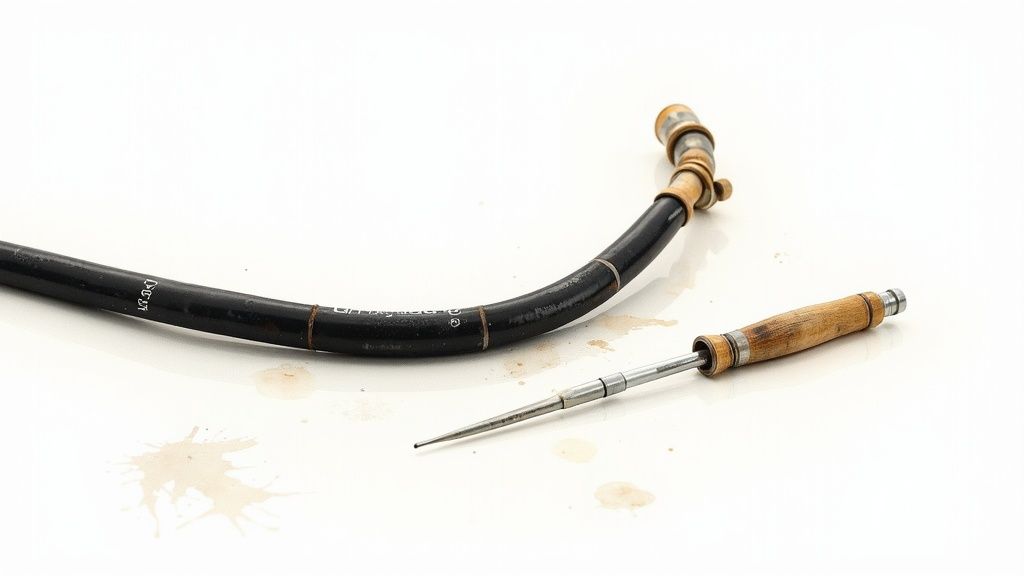
Waiting until you see a leak or a bulge in a radiator hose is like waiting for smoke to appear before you check the batteries in your smoke detector. It’s a gamble. By the time a hose looks bad, it’s often on the verge of a complete failure.
A much smarter strategy is to replace them proactively. Think of radiator hoses just like you do your tires or brake pads—they are critical wear-and-tear items. This simple shift in mindset can save you from a roadside breakdown and protect your engine from the serious damage that comes with overheating.
As a rule of thumb, we recommend replacing radiator hoses every four to five years or around 90,000 miles, whichever milestone you hit first. Even if they look perfectly fine on the outside, the rubber compounds are constantly breaking down internally from the triple threat of high heat, intense pressure, and corrosive coolant chemicals.
Adjusting for Tough Driving Conditions
That 90,000-mile guideline is a great starting point, but it's not a universal rule. If you put your vehicle through its paces, you’re putting extra strain on the entire cooling system, and that can drastically shorten the lifespan of your hoses.
You’ll want to consider a much earlier replacement if your daily drive involves:
- Constant stop-and-go city traffic: This pattern causes frequent heat spikes without the steady airflow that highway driving provides to help cool things down.
- Towing heavy loads or navigating mountains: The extra work your engine does generates a massive amount of heat, pushing the cooling system to its limits.
- Living in a scorching hot climate: When the air outside is already hot, your cooling system is fighting an uphill battle from the moment you turn the key.
It's a surprising fact, but hose failures are the leading cause of cooling system breakdowns. They account for over 50% of all coolant hose replacements. Major auto parts manufacturers stand by the 90,000-mile recommendation for normal use but warn that severe driving conditions can cut that interval in half.
Prevention is the Best Policy
At the end of the day, it's all about thinking ahead. The cost of proactively replacing a couple of hoses is a tiny fraction of what you'd pay for a tow, emergency repairs, and potential engine work.
It’s an investment in reliability and peace of mind, ensuring your whole cooling system—right down to smaller parts like the antifreeze return pot in certain Honda models—is ready to do its job.
DIY Inspection vs. Professional Replacement
So, should you tackle this yourself or call in a pro? The answer really hinges on your comfort level with what's under the hood, the tools you have, and what’s at stake if something goes wrong.
A quick DIY check is a fantastic first step for any car owner. It doesn't take a master mechanic to spot the obvious problems.
With the engine completely cold (never check a hot cooling system!), you can easily look for those tell-tale signs we've covered—cracks, shiny spots, or bulges. Give the hoses a gentle squeeze; they should feel firm but not rock-hard or mushy. This simple check costs nothing but a few minutes of your time and can catch a failing hose before it leaves you stranded.
But when you need absolute certainty or if a replacement is due, a professional inspection is the way to go.
When to Trust the Professionals
A certified technician brings two critical things to the table: experience and the right equipment. They’ve seen it all and can spot subtle signs of wear that an untrained eye would easily overlook. Their biggest advantage, however, is the cooling system pressure test.
This test pressurizes the whole system, mimicking the stress it's under when your engine is running hot. It's the single best way to find those sneaky, slow leaks that only show up under pressure. A professional also has the specific tools needed to do the job right the first time.
An improper hose replacement is a classic DIY mistake. It can lead to annoying leaks or, even worse, cause the brand-new hose to fail. Technicians use special clamp tools and have the feel for getting a connection perfectly secure without overtightening—a common error that can damage the hose right from the start.
Ultimately, while a quick check is a great habit for any car owner, a professional replacement is your guarantee that the job is done correctly. A good mechanic will also spot related problems, like a failing thermostat or water pump, that might be the root cause of the hose failure in the first place. For tricky jobs that demand specialized gear like an automotive engine repair tool, calling a pro isn't just a good idea—it's essential.
If you’re in the Haltom City area and want a definitive answer on the health of your cooling system, the team at Express Lube & Car Care is ready to help.
Of course. Here is the rewritten section, designed to sound completely human-written and natural, as if from an experienced automotive expert.
Your Radiator Hose Questions Answered
Knowing the basics is one thing, but when it comes to your car, specific questions always pop up. Let's tackle some of the most common ones we hear from drivers in the shop. Getting these answers straight can be the difference between a simple fix and a major headache.
Can I Drive My Car with a Leaking Radiator Hose?
I'm going to be blunt: driving with a leaking radiator hose is a huge gamble. That tiny drip you see today can become a complete blowout without any warning at all, dumping all your coolant onto the road in seconds.
Once that happens, your engine temperature will skyrocket. Pushing it even a little further can lead to catastrophic damage, like a warped cylinder head or a seized engine. The best thing you can do is pull over safely, turn off the car, and call for a tow. A few hundred feet could turn a minor hose replacement into a multi-thousand-dollar engine repair.
Think of it like a small crack in a dam. The pressure behind it is immense. It’s not a question of if it will fail, but when. It's just not worth the risk.
Should I Replace All the Coolant Hoses at Once?
Absolutely. This is what any good mechanic will tell you, and for good reason. All the hoses in your cooling system—the upper, lower, and even the smaller heater hoses—are made of the same rubber and have been exposed to the same heat and pressure cycles for years.
If one has become weak enough to fail, you can bet the others are not far behind. Just replacing the one that broke is asking for another breakdown in the near future. It’s far smarter and more cost-effective in the long run to replace them all as a set.
How Much Does It Cost to Replace a Radiator Hose?
The final bill can vary quite a bit depending on your car, the shop's labor rates, and whether you're replacing just one hose or the whole set.
Here's a ballpark idea of what to expect:
- Doing It Yourself: If you're handy with a wrench, you're mostly looking at the cost of parts. A new hose, a few clamps, and the correct coolant will usually run you between $20 and $100.
- Hiring a Pro: Having a single hose replaced at a shop typically costs between $150 and $400. That price covers the parts, the labor to drain and properly refill the system, and bleeding out any air pockets, which is a critical step.
While replacing all the hoses costs more upfront, it saves you from paying for the same labor all over again down the road. For an exact quote for your vehicle, your best bet is always to talk to a trusted mechanic.
If you're not sure about the state of your cooling system, don't wait for steam to start rolling out from under the hood. The certified technicians at Express Lube & Car Care can give your system a full inspection and pressure test to make sure you're safe on the road. Schedule your service today!