
That high-pitched screech you hear every time you tap the brakes? It’s almost always caused by a high-frequency vibration between your brake pads and the brake rotors. A great way to picture it is to think of the sound a wet finger makes when you run it around the rim of a wine glass—a specific kind of friction that creates a very specific, and very loud, sound.
While it’s one of the most common complaints we hear from drivers in Haltom City, not every squeak means your car is headed for disaster.
Your First Clue: That Annoying Squeak
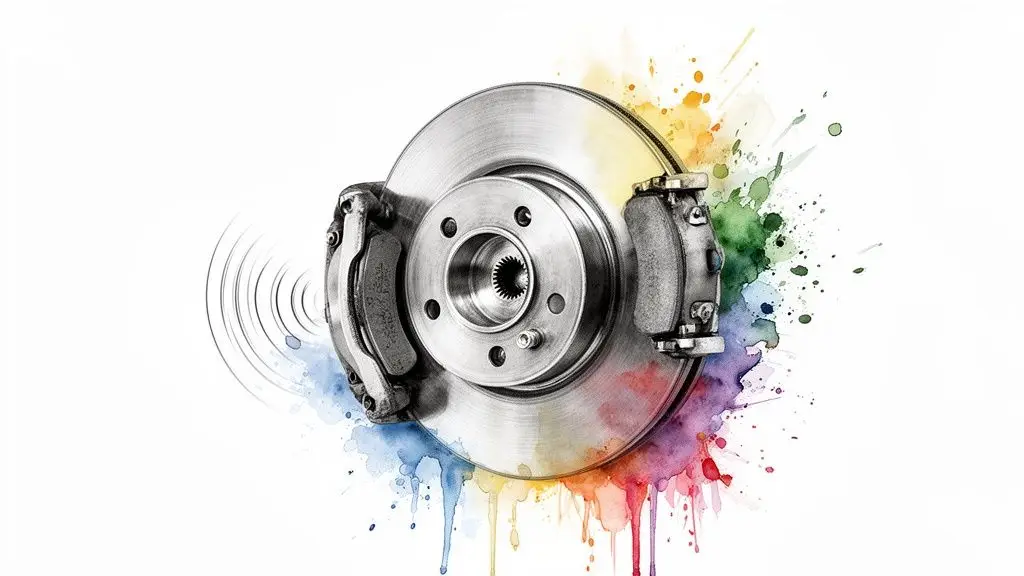
When that piercing squeal cuts through your morning commute along Haltom Road, it’s natural to jump to the worst conclusion. But before you start picturing a massive repair bill, remember that brake noise is more of a symptom than a diagnosis. It’s your car's way of trying to tell you something, and the first step is learning to interpret the message.
Sometimes, the cause is totally benign. Those humid Texas mornings we all know in the Haltom City area can leave a thin layer of surface rust on your brake rotors overnight. As you start your day, the first few times you brake, the pads scrape that rust off. This can create a temporary squeak that vanishes once the rotors are clean and warmed up. No harm, no foul for Haltom City drivers.
What Is Your Car Trying to Tell You?
A squeak that sticks around, however, is a different animal. A persistent squeal is one of the most maddening issues for drivers, often ringing out at over 80 dB, which is louder than most vacuum cleaners. This isn't just an annoyance; it’s a huge factor behind brake-related service visits and warranty claims across the auto industry. You can even find detailed industry reports on how engineers work to reduce brake squeal.
The key is distinguishing between a temporary, environmental noise and a consistent warning sign. A squeak that continues throughout your drive signals that something in your brake system needs attention, and for Haltom City residents, that means a trip to a trusted local mechanic.
Here's where a little detective work comes in handy. Different noises often point to different problems, and understanding the sound, when it happens, and what it might mean can give you immediate clarity. It’s the first step in knowing whether you're dealing with a minor fix or a critical safety issue.
To help you get started, we've put together a quick reference guide.
Quick Guide to Common Brake Noises
This table breaks down the most common noises you'll hear, what they usually mean, and how urgently you should get them checked out by a Haltom City service center.
| Type of Noise | Common Cause | When It Happens | Urgency Level |
|---|---|---|---|
| High-Pitched Squeal | Worn Brake Pads (Wear Indicator) | Consistently while braking | High |
| Light Squeak | Morning Moisture/Surface Rust | First few stops of the day | Low |
| Grinding or Scraping | Fully Worn Pads (Metal-on-Metal) | Constantly while braking | Immediate |
| Clicking or Ticking | Debris or Loose Hardware | While moving or braking | Medium |
Think of this as a starting point. While it's great for an initial diagnosis, if any noise persists—especially grinding or a consistent squeal—it’s always best to have a professional in Haltom City take a look.
The Science Behind Squeaky Brakes
That high-pitched squeal isn't just a random noise—it's physics in action. To get to the bottom of why brakes squeak, we have to zoom in on what’s happening between the brake pad and the rotor the moment you press the pedal. Most of the time, the culprit is a process called stick-slip vibration.
Think about trying to slide a heavy box across a slightly sticky floor. It doesn't glide smoothly, does it? It tends to catch for a second (the "stick") and then lurch forward (the "slip"). This constant stuttering motion creates a shudder and a rumbling sound. Your brakes are doing the exact same thing, just on a microscopic level and at an incredibly high speed.
When the brake pad presses against the spinning rotor, it's not a perfectly smooth contact. Instead, the pad rapidly sticks and slips against the metal surface thousands of times per second. This generates a high-frequency vibration that echoes through your brake system, and what you hear is that all-too-familiar, ear-splitting squeal.
The Physics of Friction and Vibration
This stick-slip effect is one of the main reasons brakes get noisy, especially when you're braking gently at low speeds. As the pad grabs and releases the rotor over and over, it creates vibrations that produce a sound, usually somewhere between 1 kHz and 16 kHz. That frequency range just so happens to be particularly grating to the human ear. You can find deep-dive reports about brake noise and vibration dynamics if you're curious about the nitty-gritty science.
Of course, this doesn't just happen out of nowhere. Certain conditions and even your driving habits can create the perfect storm for squeaky brakes, turning a quiet stop into an announcement for the whole neighborhood.
Key Takeaway: Brake squeal usually isn't a sign that something is broken. It's a high-frequency vibration caused by the brake pad rapidly grabbing and letting go of the rotor's surface.
For those of us driving around Haltom City, our local traffic can be a big contributor. The constant, light braking you do in stop-and-go traffic on Denton Highway or while navigating busy intersections often doesn't create enough heat to properly wear in the brake pads. This light touch actually encourages the stick-slip effect, making squeaks a common part of the daily commute in Haltom City. Knowing what's going on with the components helps, and you can learn more about the various types of car brakes in our other guide.
At the end of the day, that noise is a physical reaction. It’s the result of how your brake pads and rotors are interacting, often amplified by how and where you drive. Once you understand the basic science, the noise becomes a lot less mysterious and much more of an understandable—and fixable—problem.
Uncovering the Common Causes of Squeaky Brakes
So, you know that squealing is just a high-frequency vibration. But what's actually causing that vibration? Think of your brake system as a finely tuned instrument. When every part works together in harmony, you get silent, smooth stops. When just one component is out of tune—due to wear, weather, or the materials used—you get that ear-splitting squeal.
Fortunately, most brake noises come from a handful of common culprits. Once you know what to listen for, you'll be able to walk into a Haltom City shop and have a much more informed conversation about why your car is making such a racket.
Brake Pad Material Matters
Brake pads aren't a one-size-fits-all component, and the material they're made from is one of the biggest factors in how much noise they make.
- Semi-Metallic Pads: These are workhorses, known for great stopping power and handling heat well. The downside? They’re packed with tiny metal fibers. As those metal bits grind against your metal rotors, they can easily create that classic high-pitched squeal.
- Ceramic Pads: If quiet is what you're after, ceramic is king. These pads are made from a dense ceramic composite that vibrates at a frequency humans can't even hear. They're a perfect choice for daily commuters navigating the streets of Haltom City.
- Organic Pads: Made from non-metallic materials like glass and rubber, these are also very quiet. However, they tend to create more dust and wear out faster than the other types.
Ultimately, the type of brake pad on your vehicle is a trade-off between noise, performance, and how long they last.
Glazed Rotors and Pads
Ever been stuck in bumper-to-bumper traffic on Denton Highway and noticed the squeaking gets worse with every stop? That's a classic Haltom City driving scenario that can lead to glazing.
Glazing happens when your brakes get too hot from repeated, hard braking. The intense heat literally cooks the surface of your brake pads and rotors, crystallizing them into a smooth, glossy finish. This hardened surface just can't create the friction needed to stop effectively, which causes that awful squeak and, more importantly, a dangerous loss of stopping power.
The physics here are pretty straightforward: when the pad can't grab the rotor properly, it starts to slip and vibrate.
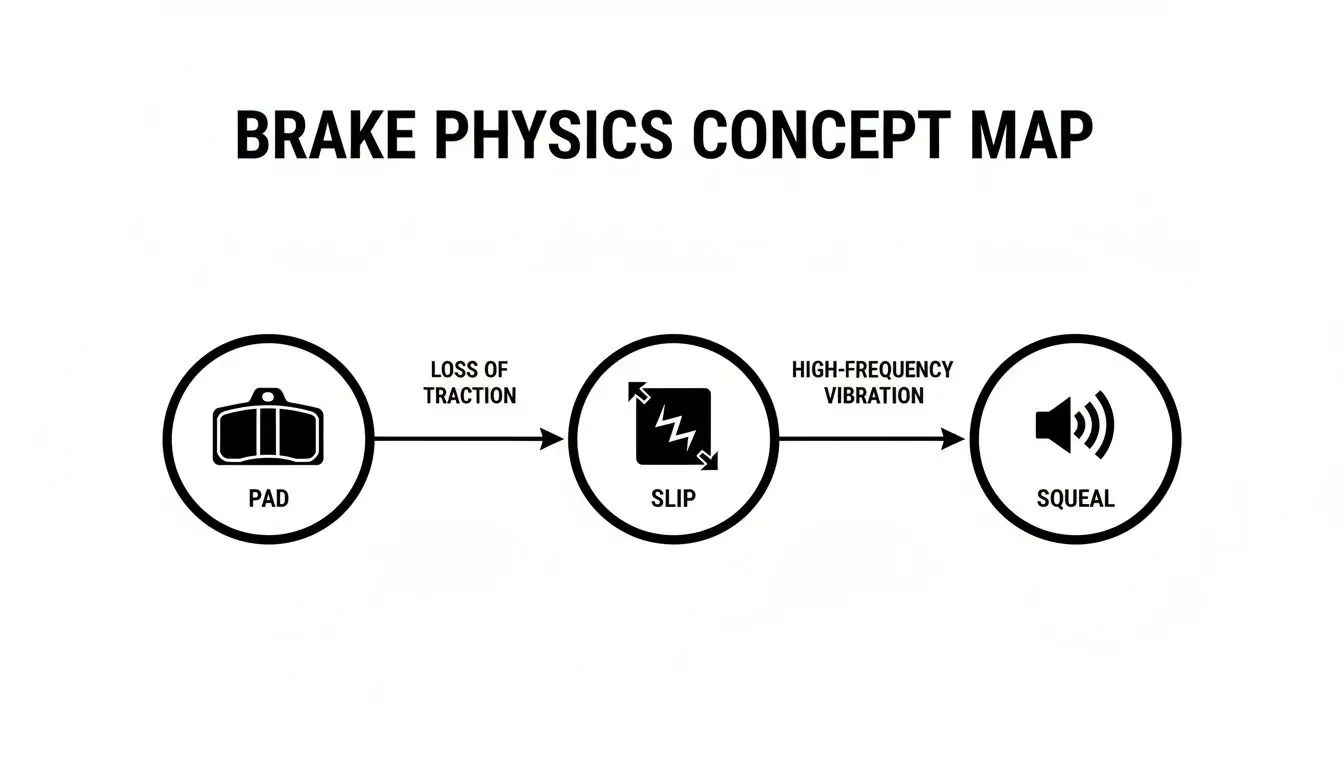
As you can see, that "slip" is what creates the high-frequency vibration your ears pick up as a squeal.
Morning Moisture and Surface Rust
Our humid Texas climate is another common reason for squeaky brakes in Haltom City, especially first thing in the morning. Overnight, dew and moisture can settle on your cool metal brake rotors, causing a very thin layer of surface rust to form.
This "morning squeak" is completely normal for Haltom City drivers. After the first couple of stops, the brake pads will have scraped that rust layer clean, and the noise should go away on its own.
Missing Hardware or Debris
Your brake pads don't just sit loosely inside the caliper; they're held in place by a system of clips, shims, and pins. These little pieces of hardware are critical for dampening vibration and making sure the pad sits perfectly against the rotor.
If this hardware is missing, rusted, or wasn't reinstalled correctly during the last brake job in Haltom City, the pad can rattle around. That uncontrolled movement creates noise. Sometimes the cause is even simpler—a tiny rock or piece of road debris can get wedged between the pad and rotor, causing a constant, grinding squeal.
The Squeak You Want to Hear: The Wear Indicator
Finally, there's one squeak that’s actually a good thing. Most brake pads come with a small metal tab built right in, called a wear indicator.
As your pads get thin, this tab starts scraping against the brake rotor. It's specifically designed to create a loud, unmistakable squeal that sends a clear message: it's time for new brake pads. If you're curious about timelines, our guide on the typical life of brake pads can give you a better idea. Ignoring this warning sound is a recipe for more expensive and much more serious damage down the road.
How to Tell If Your Brakes Need Immediate Attention
Knowing why your brakes squeak is helpful, but knowing what to do next is what really keeps you safe on the roads here in Haltom City. Think of yourself as a detective. The noises your brakes make are crucial clues, and your car is counting on you to listen closely.
The key to figuring this out is context. To start narrowing down the cause, just ask yourself a couple of quick questions. Does the sound only pop up for the first few stops of the day, then disappear? Or does it stick around no matter how much you drive around Haltom City? Is it a light, high-pitched squeak, or something much deeper and uglier, like grinding metal? The answers are your first step toward a real diagnosis.
Interpreting the Sounds
Let's be clear: not all brake noises are the same. That classic, high-frequency squeal is a specific kind of sound caused by high-speed vibrations in the brake rotor. Believe it or not, brake manufacturers put a lot of work into managing this. Some even test their parts to ensure they don't squeal over 70 dB more than 10 times per 100 stops. It's a surprisingly complex science, and engineers have developed some incredible ways to analyze these complex vibrations.
To make it simple, think of your brake noises like a traffic light for urgency:
- Green Light: A faint squeak that goes away after a few minutes of driving is almost always just a bit of morning moisture or a light film of rust burning off the rotors. It's nothing to worry about.
- Yellow Light: A steady, high-pitched squeal that you hear every time you press the pedal is your car trying to tell you something. This is usually the sound of the wear indicator—a small metal tab designed to make noise when your brake pads are getting low. This is your cue to schedule a brake service in Haltom City soon.
- Red Light: A deep, metallic grinding or scraping sound is a serious warning. This isn't a squeak; it's the sound of metal-on-metal destruction. It means your brake pads are completely gone, and the backing plate is now chewing into your rotors.
If you hear a grinding noise, you need to stop driving as soon as it's safe to pull over. Continuing on will destroy your rotors and can even damage the calipers, turning a routine Haltom City brake job into a much more expensive and dangerous situation.
A car that pulls to one side when you brake is another red flag. This often points to a seized caliper or a problem in the hydraulic system. If you're experiencing this, it’s a good idea to know the other common symptoms of a brake problem.
When it comes down to it, your safety is what matters most. If you're ever in doubt about a noise coming from your brakes, the only way to be certain is to get them checked by a professional in Haltom City.
Your Trusted Brake Repair Solution in Haltom City
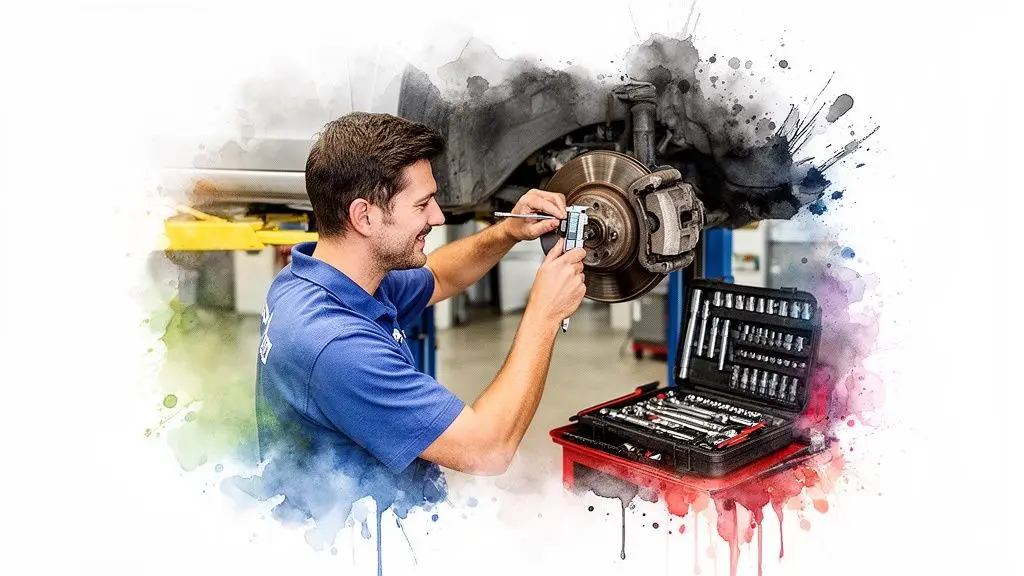
So, you've played detective with your car, but you're still asking, "why do my brakes squeak?" That's when it’s time to let a professional take a look. For drivers in Haltom City, Watauga, and North Richland Hills, Express Lube & Car Care is the local shop you can count on for honest answers and solid brake work. We know car trouble is a headache, so we keep our process simple and transparent. No surprises, just straight answers for our Haltom City neighbors.
Every visit for a brake issue starts the same way: with a thorough, hands-on inspection by one of our certified technicians. Your safety is what matters most to us, and that means we skip the guesswork and go straight to a meticulous process to find the real source of that noise.
Our Detailed Brake Inspection Process
Our whole goal is to make sure you have complete confidence every time you hit the brake pedal. When you bring your vehicle to our Haltom City shop, we put it through a multi-point inspection that covers every piece of your brake system.
Here’s what that looks like:
- A Detailed Visual Check: We get our eyes on everything—your brake pads, rotors, calipers, and brake lines—looking for any signs of wear, cracks, or fluid leaks.
- Precise Measurements: We break out the specialty tools, like digital calipers, to measure the exact thickness of your brake pads and check if the rotor surface is warped or uneven. These numbers don't lie; they tell us precisely how much life your brakes have left.
- Brake Fluid Evaluation: We also check the condition and level of your brake fluid. If it's old, contaminated, or low, it simply can't do its job right, and your stopping power suffers.
We believe in total transparency. After our inspection, we don't just hand you a bill with a bunch of jargon on it. We'll actually show you the worn-out pads or the glazed rotor, explain what it means in plain English, and walk you through your options with zero pressure.
We're here to build relationships with our Haltom City neighbors, and that starts with service you can trust. We only use high-quality parts that meet or exceed what your car's manufacturer recommends, so you can be sure the job is done right the first time. Our team is all about honest advice and skilled repairs that give you real peace of mind on the road.
If you want to know more about what a full service involves, our guide explains what a complete brake service includes.
When that squeak goes from a minor annoyance to a major concern, don't put it off. Let the team at Express Lube & Car Care give you the clarity and quality service you deserve as a Haltom City resident.
Your Brake Noise Questions, Answered
Even with all the technical details, you probably still have a few nagging questions. We get it. Let’s go through some of the most common ones we hear from drivers right here in Haltom City.
Why Do My Brakes Only Squeak in the Morning?
That morning squeal is one of the top complaints we hear in Haltom City, and our Texas humidity is usually the culprit. When your car sits overnight, moisture in the air can cause a whisper-thin layer of surface rust to form on the cool metal of your brake rotors. It looks a little alarming, but it’s perfectly normal.
The first few times you tap your brakes in the morning, the brake pads are just scrubbing that rust layer off. That's the squeak you're hearing. The sound should vanish after a few stops as the rotors get clean and warm up. If that squeak sticks around all day, though, that’s a sign you need to get them checked out by your Haltom City mechanic.
Are Ceramic Brake Pads Really Quieter?
In a word, yes. Ceramic brake pads are famous for being much quieter than their semi-metallic cousins. It all comes down to what they're made of. Ceramic composites are engineered to vibrate at a frequency that’s literally outside the range of human hearing.
Semi-metallic pads, on the other hand, are woven with tiny metal fibers. While they provide excellent stopping power, especially for heavy-duty use, those metal-on-metal fibers are what create that high-pitched, audible squeal. For everyday driving around Haltom City, ceramic pads give you that perfect blend of quiet confidence and solid performance.
Can't I Just Spray Something on My Brakes to Stop the Noise?
This is a huge safety issue, so let’s be crystal clear: never, ever spray a lubricant like WD-40 or any kind of grease on the face of your brake rotors or pads. It’s incredibly dangerous. Those products are made to eliminate friction, and without friction, your car simply won't be able to stop.
You might see "brake quiet" sprays on the shelf, but those are meant for a very specific purpose—to be applied to the back of the brake pad where it touches the caliper. It's a temporary vibration dampener, not a real fix. The only truly safe way to solve a persistent squeak is to have a pro in Haltom City find the root cause and repair it correctly.
How Much Does a Brake Repair Cost in Haltom City?
There's no single answer here, as the final cost really depends on what your car needs. The make and model are a big factor—parts for a big truck or a German import are often priced differently than for a common domestic sedan. The scope of the repair matters, too. A simple cleaning or hardware adjustment will cost much less than replacing all four sets of pads and rotors.
At Express Lube & Car Care in Haltom City, we believe in total transparency. We’ll never start work without performing a full inspection to figure out exactly what’s going on. Afterward, we'll give you a clear, detailed estimate with no strings attached, so you have all the information you need to make the right choice for your vehicle.
If you’re tired of wondering “why do my brakes squeak?” and just want an honest answer, our team is ready to help. Schedule your brake inspection with Express Lube and Car Care today and get back to driving with peace of mind. Visit us online or swing by our Haltom City shop for service you can count on. Learn more at https://www.expresslubehaltom.com.