
Ever wondered how your car’s engine doesn't melt during a blazing Haltom City summer? You can thank your radiator. It’s the heart of your car's cooling system, acting as a heat exchanger that pulls potentially catastrophic heat away from the engine block.
A healthy radiator is single-handedly responsible for keeping your engine running at its optimal temperature, preventing a complete meltdown on the road, especially in the demanding stop-and-go traffic we see in Haltom City.
Your Engine's Ultimate Defense Against the Texas Heat
Imagine your engine as a world-class athlete sprinting a marathon in 100-degree weather. It generates an incredible amount of power, and with that power comes a ton of heat. Without a way to manage that heat, crucial metal parts would warp, seize, and fail in a hurry.
That's where the cooling system comes in, with the radiator as its star player. Its entire job is to keep the engine operating within a very specific, ideal temperature range. This guide will walk you through how it all works, what signs of trouble to look for, and why drivers across Haltom City trust our team to keep them cool.
Why Your Radiator's Health is Non-Negotiable
The radiator’s job is simple in theory but absolutely critical in practice. It takes a super-hot liquid called coolant, which has just soaked up heat from the engine, and cools it down significantly. That freshly cooled liquid is then sent right back to the engine to absorb more heat.
This cycle runs continuously, protecting your engine whether you're idling in traffic on Denton Highway or cruising down I-820. For Haltom City drivers, a reliable radiator isn't a luxury; it's a necessity.
A typical engine runs best between 195 and 220 degrees Fahrenheit. Your radiator and the rest of the cooling system are what keep it locked in that precise range, preventing damage that can happen in just a few minutes of overheating.
This whole process relies on several key parts working together perfectly. If even one component fails—whether it’s the radiator itself or just a small hose—the entire system can come to a grinding halt.
For a closer look at all the moving parts, check out our guide to professional heating and cooling services, which details what our technicians inspect to keep your vehicle running safely.
Tracing the Coolant's Journey from Hot to Cold
Think of your car's cooling system as a purpose-built highway inside your vehicle, designed for one critical job: moving intense heat away from your engine. It's a continuous, flowing journey that protects your engine from the punishing Haltom City heat, and understanding it is key to knowing how your radiator really works.
It all starts with the water pump. This is the heart of the system, pushing a special fluid we call coolant (or antifreeze) into the engine block. As this liquid snakes through tiny passages inside the engine, it soaks up a massive amount of heat from the combustion process—the very thing that makes your car go.
Now, with all that heat absorbed, the coolant is super hot and needs to get out of the engine to cool down. It flows out through a thick rubber hose, heading for the radiator. But first, it has to get past a crucial gatekeeper.
The Thermostat as the Gatekeeper
The thermostat is a small, smart valve that acts like a bouncer, constantly checking the coolant's temperature. When you first start your car, the engine is cold, so the thermostat stays shut. This traps the coolant in the engine, helping it warm up to its ideal operating temperature much faster.
Once the engine hits that sweet spot—usually somewhere between 195 and 220 degrees Fahrenheit—the thermostat pops open. This is the green light for the hot coolant to finally flow into the radiator and start the real cooling process. A bad thermostat can cause all sorts of problems, either by never letting the engine warm up or, far worse, by trapping the heat and causing it to overheat.
The Radiator's Heat Exchange Magic
Once inside the radiator, the hot coolant spreads out into a network of very thin, flat tubes. These tubes are surrounded by thousands of delicate metal fins, which look a bit like a grill. The whole point of these fins is to create a massive amount of surface area for air to pass over. This is where the magic happens.
As you drive around Haltom City, air rushes through the front of your car and flows across these fins. If you get stuck in traffic, a big fan automatically kicks on to pull air through instead. This constant airflow pulls the heat right off the fins, cooling the liquid flowing through the tubes inside.
This diagram gives you a great visual of how that heat transfer works.
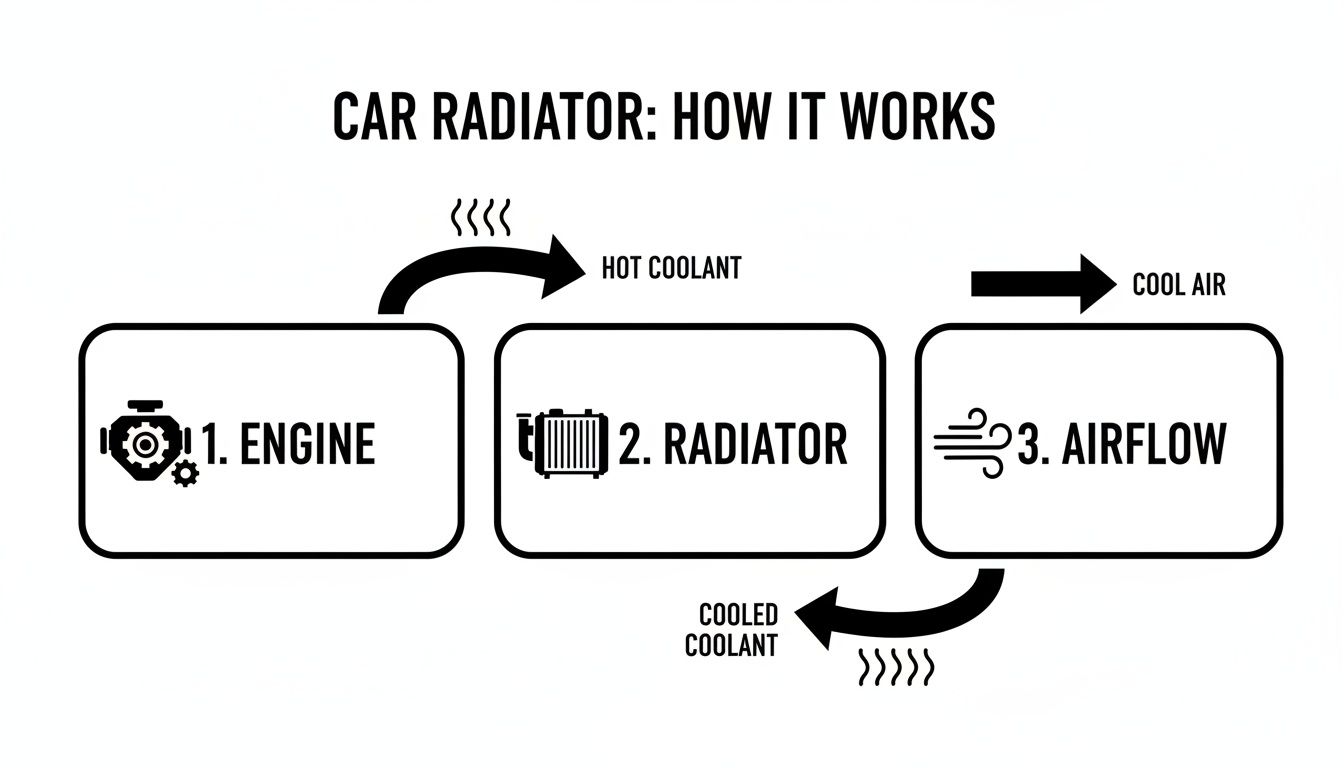
You can see the radiator’s main job is just to be a middleman, efficiently moving all that damaging engine heat out into the open air.
After it's been cooled down, the fluid leaves the radiator through another hose and heads right back to the water pump to start the whole trip over again. This non-stop cycle is what keeps your engine running strong and prevents a meltdown. Of course, the specific type of coolant you use matters a lot, too. If you've ever wondered about that, you can find out if you can mix different types of coolants in our other guide.
Meet the Core Components of Your Cooling System
To really understand how a car radiator works, you need to get to know the whole team of parts working behind the scenes. Think of it as a specialized crew where every member has a critical job. If just one of them messes up, the entire system is at risk—and that's a big deal, especially under the relentless Haltom City sun.
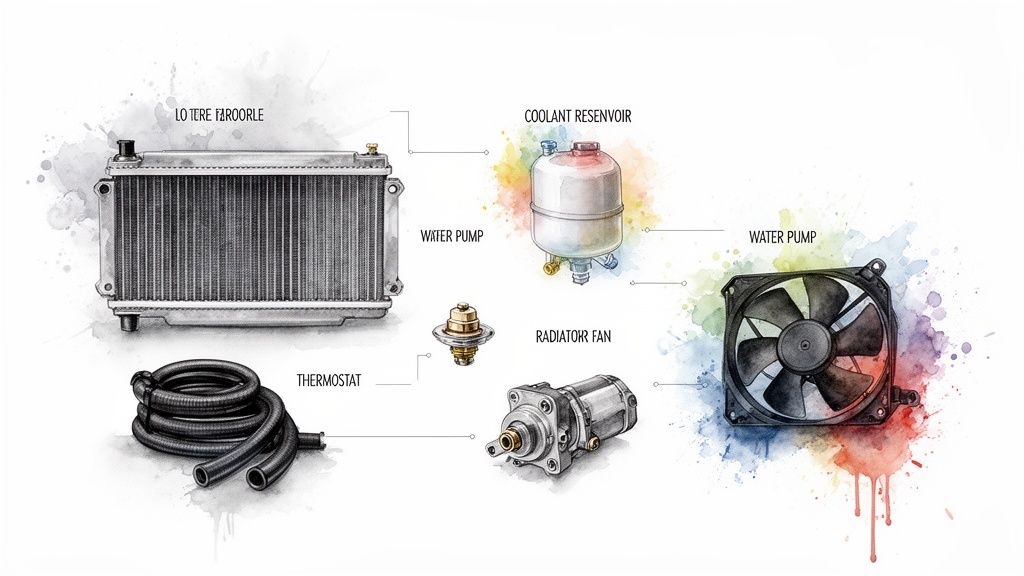
When our technicians here in Haltom City run a cooling system inspection, they aren’t just glancing at one part. They're looking at how this whole team functions together. Let's break down who’s on the roster.
The Radiator
This is the star player—the big heat exchanger we've been talking about. It's that large metal block with thin fins at the front of your car, designed to maximize contact between the hot coolant inside and the cool air rushing past outside. This is where the magic of heat dissipation happens.
The Coolant
Often just called antifreeze, coolant is the lifeblood of the whole operation. This specialized fluid is brilliant at absorbing engine heat and carrying it away to the radiator. But modern coolants are more than just heat transporters; they also prevent freezing in the winter, raise the boiling point for summer, and fight off corrosion inside your engine. Using the correct type is non-negotiable.
The Water Pump
Think of the water pump as the powerful heart of the system. It's responsible for one thing: circulation. Driven by one of the engine's belts, this pump forces coolant to flow continuously from the engine to the radiator and back again, keeping the entire cycle moving.
The Thermostat
As we touched on earlier, the thermostat is the system's brain. It's a surprisingly simple little valve that can sense the coolant's temperature. It stays closed when the engine is cold to help it warm up fast, then opens up to let coolant flow to the radiator once things get hot.
It's easy to dismiss the radiator cap as just a lid, but it's actually a precision valve. It pressurizes the entire cooling system, which raises the boiling point of the coolant. This allows the fluid to absorb far more heat without turning into steam.
The Radiator Cap
This little cap plays a huge role. By keeping the system under pressure, typically between 15-20 psi, it drastically raises the coolant's boiling point. This single function prevents your car from boiling over during a Haltom City heatwave and keeps the whole system operating efficiently.
Hoses and Cooling Fan
A network of tough rubber hoses serves as the plumbing, connecting all the components and carrying the coolant where it needs to go. Last but not least, the cooling fan is the backup plan for when your vehicle is stuck in traffic or moving slowly. It pulls air through the radiator when there's no natural airflow, ensuring the cooling process never stops. Curious about your hoses? We have a detailed guide on when you might need to replace a radiator hose.
Automotive cooling systems have come a long way. For decades, right up until the 1970s, 100% of cars relied on heavy-duty copper-brass radiators for their sheer durability and heat-shedding muscle. These old-school systems worked on the same principles we see today, pressurizing coolant as it flowed through tubes and fins, where airflow would strip away up to 70% of the engine's waste heat. The game truly changed with the introduction of ethylene glycol antifreeze, which boosted cooling performance by 50% over plain water and gave engines incredible protection—preventing freezing down to -34°F and boiling up to 265°F. You can discover more insights about the evolution of automotive radiators and see how these early innovations set the stage for the systems in our cars today.
Critical Warning Signs Your Radiator Needs Help
Your car is surprisingly good at telling you when something's wrong, especially with the cooling system. It doesn't keep secrets; it sends out very clear signals. For drivers here in Haltom City, learning to read those signals is the best way to stop a small problem from becoming a full-blown engine meltdown on a sweltering Texas afternoon.
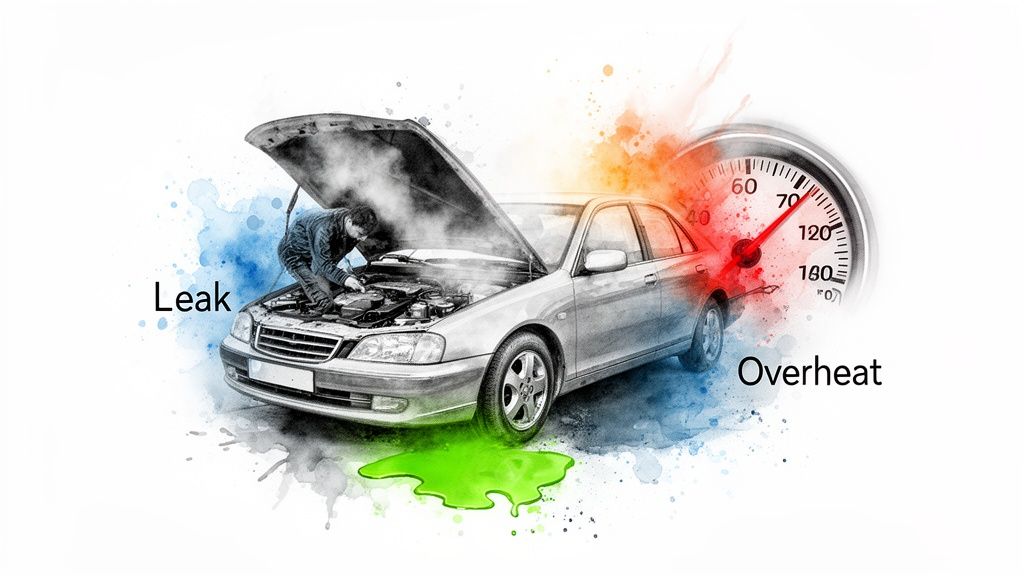
Think of these signs as direct messages from under the hood. Listening to them can be the difference between a simple fix and a massive repair bill—not to mention the headache of being stranded. Each symptom points toward a specific issue, whether it's a leaky hose or a water pump on its last legs.
The Most Obvious Red Flags
Some radiator problems are impossible to miss. If you see any of these, your car is in immediate distress, and it's time to act fast. These are signs that the cooling system's main job—keeping the engine from frying itself—is failing.
-
Skyrocketing Temperature Gauge: This is the big one. If that needle on your dash starts creeping into the red, your engine is overheating. Find a safe place to pull over immediately and turn the engine off. Pushing it any further risks catastrophic damage.
-
Steam from Under the Hood: You can't miss it. Billowing white steam pouring out from the engine bay is a movie-level sign of trouble. This means coolant is boiling over because the system can't handle the intense heat and pressure anymore.
-
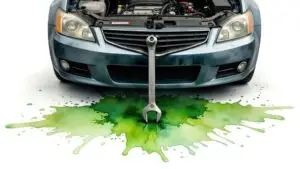
Visible Puddles Under Your Car: Coolant, or antifreeze, is usually a bright, eye-catching color—like neon green, pink, or orange. If you spot a puddle of this stuff on your driveway in Haltom City, you’ve got a leak. It could be coming from a hose, the radiator itself, or even the water pump.
Subtle Clues You Shouldn't Overlook
Not all warnings are as dramatic as steam and flashing lights. Some are sneakier but just as critical for Haltom City drivers to pick up on. Catching these early can save you a world of trouble.
Have you noticed a weird, sweet smell inside or outside your car? That’s a classic sign of a coolant leak. The ethylene glycol in antifreeze has a distinct odor when it heats up and escapes the system.
Another major clue is a constantly low coolant level. If you're always having to top off the reservoir, that fluid is disappearing for a reason. A slow leak might seem minor, but it's a ticking time bomb for your engine's health.
Finally, take a look at the coolant itself. If it looks rusty, brown, or has sludge floating in it, you've got internal contamination. All that gunk can clog the delicate passages inside the radiator and choke its ability to cool things down. This is a clear signal that your system needs a professional flush and a thorough check-up to find out where the contamination is coming from. Ignoring any of these signs is a gamble you don’t want to take.
How Radiator Technology Evolved Over Time
The radiator humming away under your hood is the product of more than a century of automotive problem-solving. For the longest time, cars relied on heavy-duty copper-brass radiators. They were fantastic at shedding heat and tough as nails, but they were also incredibly heavy.
As the auto industry chased better performance and fuel economy, that weight became a real problem. Engineers knew that a lighter car is a more efficient car, so the search began for new materials that could do the same job without weighing the front end down.
The Shift to Aluminum and Plastic
The real turning point came in the 1970s. Spurred on by global oil crises, car manufacturers got serious about making vehicles lighter. This is when the classic copper-brass design started giving way to the aluminum-and-plastic radiators that are now standard in almost every car you'll see on the roads in Haltom City.
This wasn't just a minor tweak; it was a revolution. Automakers swapped out the heavy copper-brass units for lightweight aluminum cores paired with plastic tanks. Since aluminum’s density is just one-third of copper's, this simple change slashed the radiator's weight by two-thirds and boosted fuel efficiency by up to 5%. While the idea wasn't new—England's Frederick Royce built the first all-aluminum radiator way back in 1904—the 70s made it the industry standard. You can dig deeper into this fascinating automotive radiator history to see how we got here.
The switch to aluminum wasn't just about saving weight. It opened the door to new manufacturing methods and more intricate, efficient designs. But it also brought new challenges, as working with aluminum and plastic requires a different set of skills and tools than servicing the old all-metal workhorses.
At Express Lube & Car Care, our Haltom City technicians see firsthand how these modern designs perform—and where they fail. Clogged fins, for instance, can slash a modern radiator’s cooling ability by 40%. That's why we use advanced diagnostic tools to pinpoint problems before they lead to a breakdown.
Knowing this history helps you appreciate why a "one-size-fits-all" approach to car care just doesn't work. Servicing the cooling system on a classic muscle car is a world apart from working on a new hybrid. Our team in Haltom City is equipped to handle both, making sure your engine has what it takes to beat the Texas heat, no matter what you drive.
Radiator Maintenance and When to Call the Pros
Knowing how your car’s radiator works is one thing, but putting that knowledge into practice is what really keeps your engine running smoothly. While there are a few simple checks you can do right in your driveway, some jobs are best left to a professional to avoid turning a small problem into a big, expensive one.
A quick visual inspection now and then can save you a lot of headaches. Just pop the hood and take a look at the coolant reservoir to make sure the fluid is at the correct level. While you're there, give the radiator hoses a good look. You're searching for any red flags—cracks, bulges, or even a spongy feeling—that signal they're getting old and weak.
When Professional Service is a Must
Doing your own checks is a great habit, but there are certain tasks that absolutely need a trained hand and the right tools. For drivers in Haltom City who depend on their cars every day, these professional services are non-negotiable.
-
Full Coolant Flush: A pro doesn't just drain the old coolant; they perform a full flush that pushes out all the old, contaminated fluid along with any gunk, rust, or sludge that's built up inside. This is key to keeping the system working at its best.
-
System Pressure Testing: If you think you have a leak but can't find it, a technician can help. They use a special tool to pressurize the cooling system, which makes even the tiniest, hidden leaks—like a hairline crack in the radiator or a pinhole in a hose—show themselves.
-
Component Replacement: Swapping out parts like a water pump or thermostat demands real precision. One small mistake during installation can cause your engine to overheat almost instantly, leading to catastrophic damage.
Ever wonder who to thank for keeping your car from overheating on a hot Texas day? Karl Benz, who invented the car radiator back in 1885. Keeping it in good shape isn't just a suggestion—proper maintenance prevents over 30% of all engine failures. In our Haltom City climate, even a tiny leak can cause engine temperatures to shoot up by 50°F.
Don't ever guess when it comes to your cooling system. An expert inspection from our team at Express Lube & Car Care can spot trouble long before it leaves you stranded on the side of the road.
Even a simple-looking part like the radiator cap plays a huge role in maintaining the right pressure. If you're not sure if yours is working correctly, check out our guide on how to test a radiator cap. But when you need an expert opinion, scheduling an inspection with us is the best way to protect your engine for the long haul.
Got Questions About Your Radiator? We've Got Answers.
Even after you understand the basics of how your car's cooling system works, you're bound to have a few questions. We get it. Here in Haltom City, the brutal summer heat and stop-and-go traffic can really test your vehicle.
We hear the same questions time and again at the shop, so we’ve put together some straight answers to help you out. A little knowledge here can save you a lot of money and headaches later on.
How Often Should I Get a Coolant Flush?
Most manufacturers will tell you to flush your coolant every 30,000 to 50,000 miles, and that's a decent starting point. But let's be realistic—Texas heat isn't a "decent" starting point for anything. It breaks down coolant much faster.
That’s why our Haltom City service center recommends a more practical approach: let a technician check your coolant's condition every time you're in for an oil change. It takes just a moment and gives us a real-world picture of how it's holding up, so we can recommend a flush schedule that actually fits your car and driving conditions.
Is It Okay to Use Just Water in a Pinch?
This is a big one, and the answer is a hard no. Running straight water in your radiator, especially around Haltom City, is asking for trouble. Water boils far too easily compared to a proper coolant mixture, and it does absolutely nothing to stop rust from forming inside your engine.
Think of coolant as more than just "antifreeze." It's a precisely engineered fluid that raises the boiling point in summer, prevents freezing in winter, and lubricates critical parts like your water pump. Using the right stuff is non-negotiable for a healthy engine.
What’s the Big Deal If My Engine Overheats a Little?
Driving with an overheating engine is never a "little" problem—it's one of the fastest ways to destroy your vehicle. Continuing to drive can cause catastrophic damage, like a warped cylinder head, a blown head gasket, or even a completely seized engine.
We're not talking about minor fixes here. These are the kinds of repairs that can easily run into thousands of dollars. If that temperature gauge starts creeping into the red, your only move is to pull over safely, turn off the engine immediately, and call for help.
When your car's cooling system needs a pro's touch, you can count on the certified technicians at Express Lube and Car Care. Schedule your radiator inspection today and give your engine the protection it needs to beat the Texas heat.