
In Tarrant County for 2026, the typical Texas emissions test cost is $18.50 to $25.50 at the station, plus a separate state fee you’ll handle during vehicle registration. If you live in or around Haltom City, that’s the number to keep in mind before you head in for your annual renewal.
A lot of drivers open that registration notice and immediately wonder what changed, what still applies, and whether they’re about to pay one fee or two. That confusion makes sense. Texas changed the inspection system, but emissions testing still matters in counties like Tarrant, so the process feels familiar in some ways and completely different in others.
From a local shop perspective, the biggest issue usually isn’t the test itself. It’s the guessing. Drivers in Haltom City, Watauga, Keller, and North Richland Hills want to know what they’ll pay, whether their vehicle even needs the test, and what to do if the check engine light comes on the week of renewal. That’s where a practical guide helps more than a statewide summary.
Your Guide to Navigating Tarrant County Emissions Testing
That DMV notice usually shows up at the worst time. You’re busy, registration is coming up, and now you’re trying to figure out whether your car needs an emissions check, what the current texas emissions test cost is, and whether the old safety inspection still applies.
Around Haltom City, this comes up every day. A driver from North Richland Hills might think inspections were eliminated completely. A commuter from Keller may know emissions testing still exists, but not realize the payment is split between the station and the state. Someone in Watauga may only want the fast answer: what do I need to do so I can renew on time and avoid making two trips?
The local answer is simpler than it looks. In Tarrant County, emissions-related inspection requirements still apply because this county is one of the Texas counties where emissions testing remains part of the renewal process. The cost you pay at the station is only part of the full picture. The state also collects a separate fee during registration.
Why local drivers get tripped up
Most confusion comes from hearing two true things at once:
- Safety inspections changed: Texas removed mandatory safety inspections for non-commercial vehicles.
- Emissions testing did not disappear in Tarrant County: If your vehicle qualifies and is registered here, you may still need the annual emissions portion.
That’s why a neighbor who lives outside an emissions county can have a different experience than you do in Haltom City.
The easiest way to avoid hassle is to treat registration renewal like a two-step process. First the required inspection piece, then the registration payment piece.
If you also need broader maintenance before inspection time, it helps to start with a local repair overview like this Haltom City auto repair guide. A small issue caught early is usually easier to deal with than a failed test on deadline week.
Breaking Down the Texas Emissions Test Cost in Haltom City
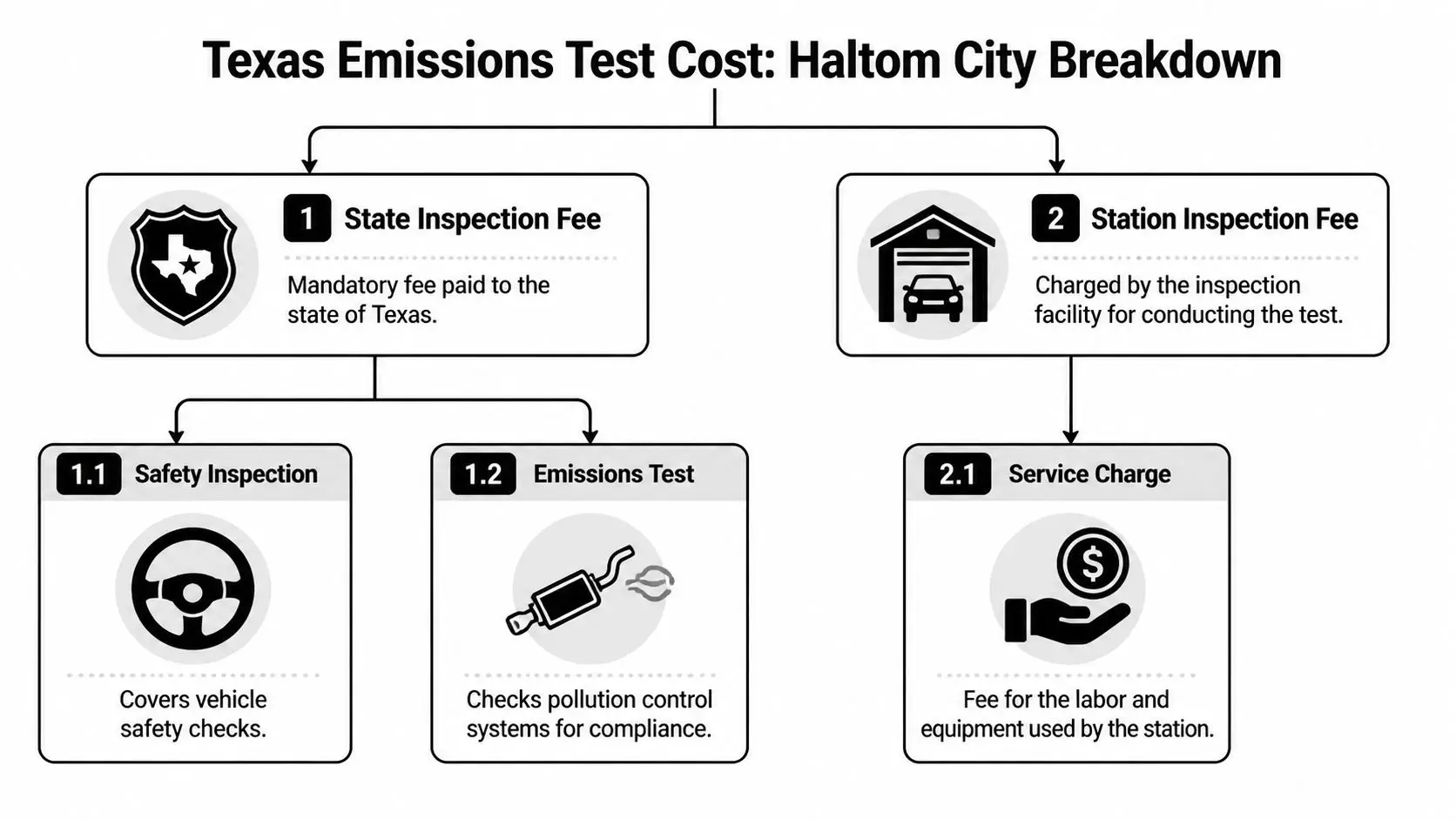
A Haltom City driver usually asks us the same thing at the counter. “What am I paying today, and what will show up later when I renew?” That’s the right question, because the emissions cost in Tarrant County is split into two parts.
At the shop, the station charge in this area usually falls between $18.50 and $22.50. Then the state collects a separate $7.50 Inspection Program Replacement Fee during registration. If you only look at one receipt, the total can feel off, especially if you’re comparing notes with family in a county that does not handle emissions the same way.
Why local drivers get confused on price
Around Haltom City, North Richland Hills, and Watauga, the mix-up usually starts when someone hears that inspections changed in Texas and assumes every inspection fee disappeared. What changed was the broader safety inspection requirement for many non-commercial vehicles. In Tarrant County, qualifying vehicles still have to pass the emissions portion tied to registration.
That leaves drivers dealing with two charges at two different points in the process. One is paid at the inspection station. The other is paid to the state when registration is renewed.
2026 Tarrant County Vehicle Inspection Cost Breakdown
| Fee Component | Amount | Where You Pay |
|---|---|---|
| Station inspection charge in Tarrant County | $18.50 to $22.50 | At the inspection station |
| Inspection Program Replacement Fee | $7.50 | During vehicle registration |
Here’s the practical part. If your budget is tight, plan for both charges before your renewal month hits. The station fee is the one you feel first, but the registration-side fee is still part of the full cost of staying legal on the road.
At Express Lube, we also see drivers lose time because they show up unprepared, pass the test, then get frustrated later by the separate registration charge. A quick look through a car inspection checklist before your visit helps you avoid the more common last-minute hiccups.
Simple rule for Tarrant County drivers: ask two questions up front. What is the station charging today, and what state fee will be added during registration?
That gives you a clear picture of the texas emissions test cost in Haltom City without mixing a shop invoice with a state renewal fee.
What Your Inspection Fee Actually Covers
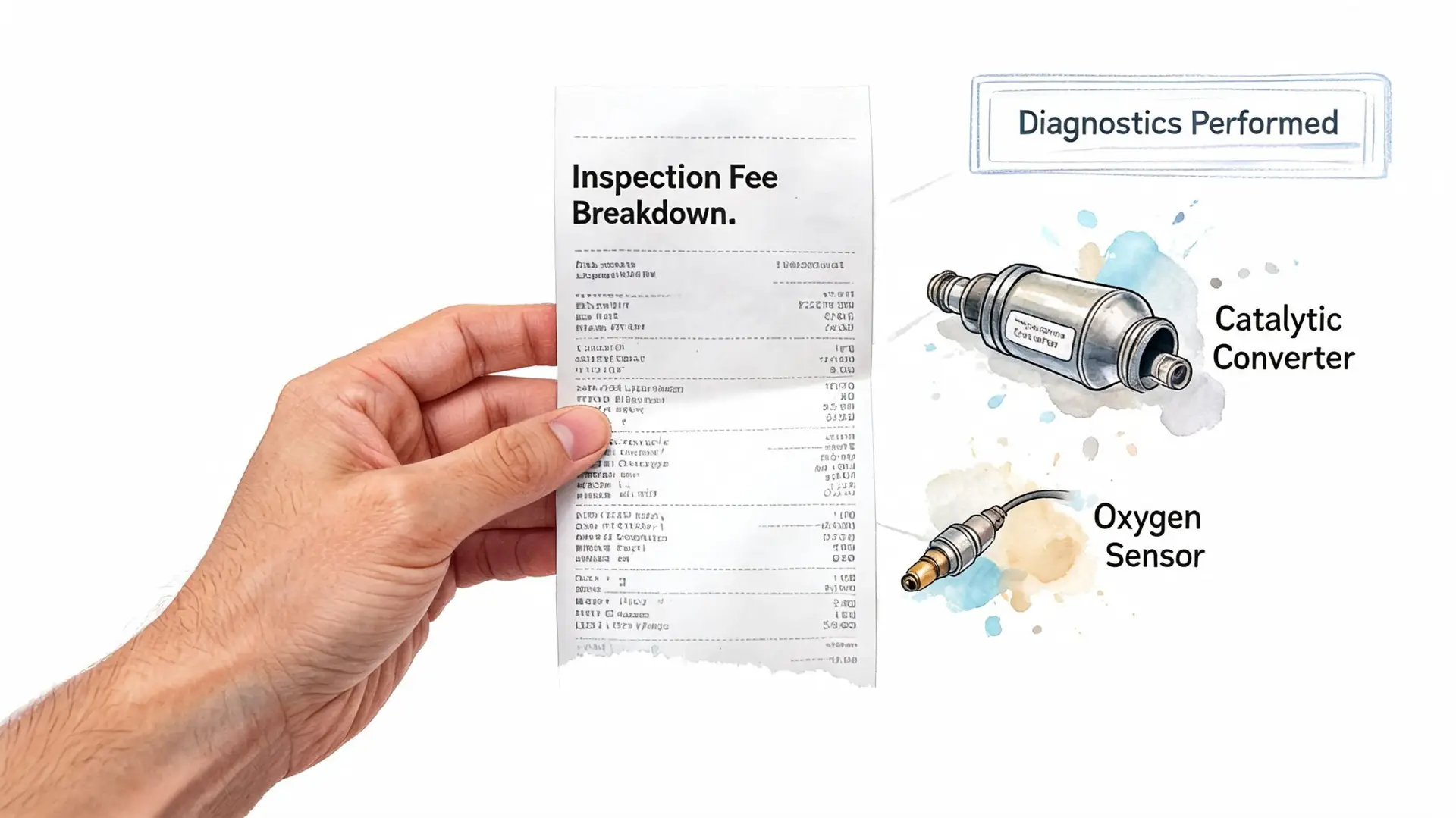
Drivers around Haltom City often expect an emissions test to be a quick plug-in and printout. At a certified station, the job is more involved. The fee helps cover the testing equipment, software, calibration, technician training, and the reporting system that sends your result into the state system so your registration can move ahead.
It covers the test, the equipment, and the recordkeeping
For many Tarrant County vehicles, the process starts with the onboard diagnostics system. The technician checks whether the car’s emissions monitors are ready and whether any emissions-related trouble codes are present. Some vehicles also require dedicated testing equipment, and that equipment has to be maintained, calibrated, and kept in working order.
From the shop side, that matters more than drivers realize. A legal emissions result is not just a mechanic’s opinion. It has to be produced through approved equipment and reported correctly. At Express Lube in Haltom City, that is a big part of the work customers never see.
Why shops charge what they charge
Part of your fee goes toward the time it takes to run the test properly. Part goes toward the tools and service contracts that keep the station certified and able to report valid results. That is one reason the cheapest option is not always the easiest option, especially if a shop rushes cars through, has long wait times, or does not explain why a vehicle failed.
Good inspection service saves time even when the price difference between stations is small.
If you want to cut down the odds of a repeat trip, use this car inspection checklist before your visit. It helps catch common problems like a check engine light, battery disconnect issues, or monitors that have not reset after recent repairs.
Drivers relocating a vehicle into Texas sometimes run into timing and paperwork questions before the first local inspection. If that is your situation, these opciones de transporte de autos PR-TX may help you sort out the move before you deal with testing and registration.
Here’s a quick explainer that lines up with what many drivers want to understand before they come in:
What a failed result usually means
A failed emissions test usually points back to the vehicle, not the station. In our shop, the common causes are a check engine light, incomplete readiness monitors, or a fault in the emissions system that the car’s computer has already detected.
That can be frustrating, especially if renewal is due soon. Still, the test is doing its job. It is catching a problem before you pay for registration and find out later that the vehicle is not ready to clear the state requirement.
Who Needs an Emissions Test and How Often
For drivers in Haltom City, the first question is simple. Does my vehicle need an emissions test this year? If your vehicle is registered in Tarrant County, the answer may be yes, because Tarrant is one of the 17 Texas counties where emissions testing remains required under the current system, as described in the earlier state law update.
The 17 emissions counties
These are the counties where emissions testing applies:
- Brazoria
- Collin
- Dallas
- Denton
- Ellis
- El Paso
- Fort Bend
- Galveston
- Harris
- Johnson
- Kaufman
- Montgomery
- Parker
- Rockwall
- Tarrant
- Travis
- Williamson
If you live in Haltom City, Watauga, Keller, or North Richland Hills, you’re in Tarrant County, so this is the list that matters.
Who usually needs the test
In practical terms, emissions testing typically applies to gasoline-powered vehicles that are within the age range covered by the program in an emissions county. It’s an annual requirement tied to registration renewal.
Common exemptions
Some drivers can skip the emissions part entirely. Common exemptions include:
- Newer vehicles in their first two years
- Vehicles older than 24 years
- Diesel-powered vehicles
- Motorcycles
- Electric vehicles
- Certain farm and road-building equipment
If you’ve just brought a vehicle into Texas, especially from another place, it’s smart to confirm how local registration and inspection timing applies before your renewal deadline. For drivers relocating a vehicle from Puerto Rico, this overview of opciones de transporte de autos PR-TX is a useful starting point because transportation logistics and registration timing often intersect.
If you’re not sure whether your vehicle falls into an exemption, check before making a trip. The easiest inspection is the one you don’t need.
A broader local maintenance rhythm also matters. This guide on how often to get your car inspected is useful if your schedule, mileage, or vehicle age makes inspection timing easy to lose track of.
Common Reasons for Failing and What Happens Next
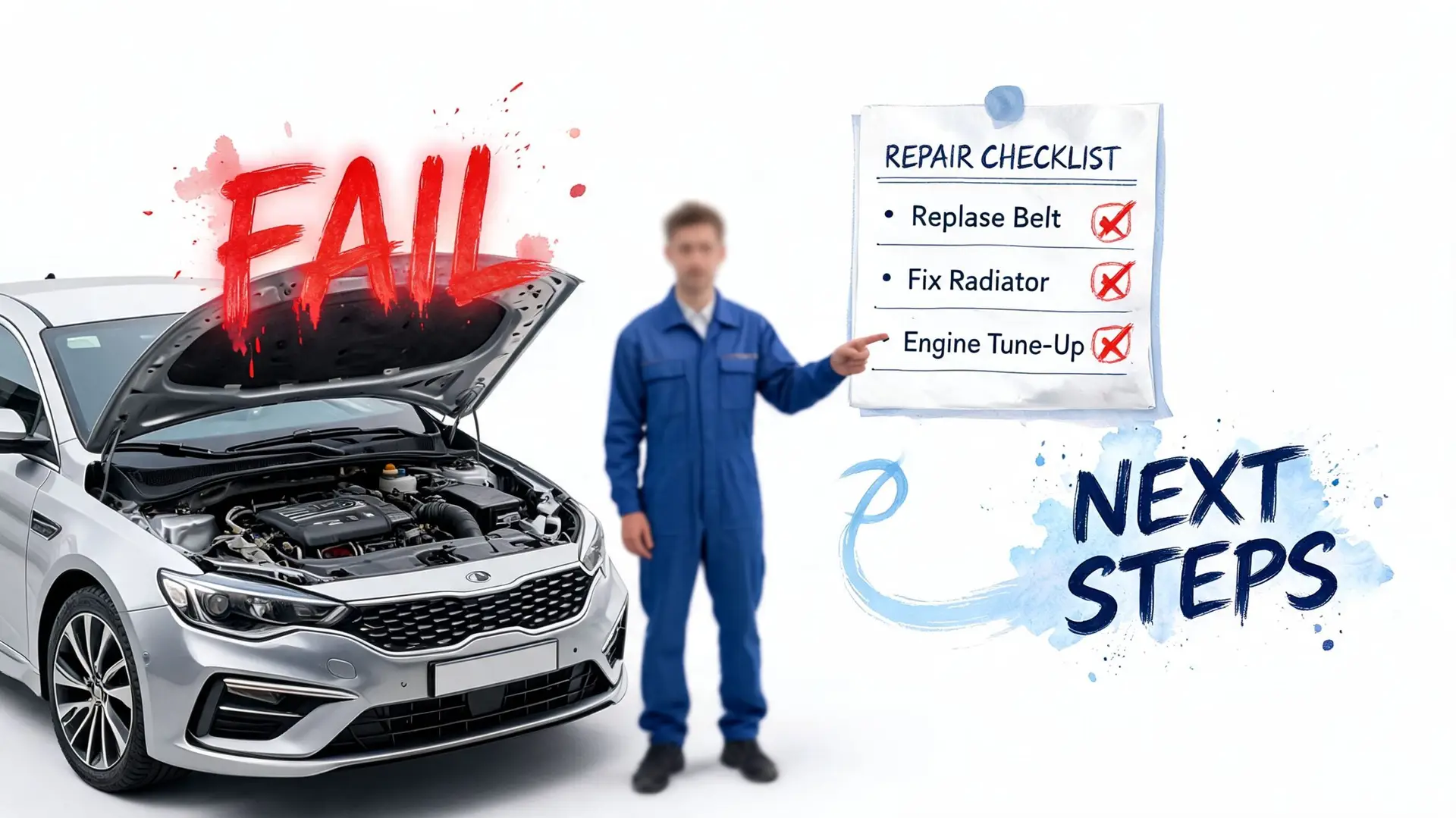
Most failed emissions tests don’t start with a dramatic breakdown. They start with something small that a driver has been meaning to check for a while. The most common example is the check engine light.
A typical Tarrant County scenario goes like this. A driver comes in from Haltom City on a lunch break, expecting a quick inspection. The car seems to run fine, but the light is on. The test can’t move forward the way they hoped, and now registration feels like a bigger project than it did that morning.
The usual culprits
Several problems show up again and again:
- Check engine light on: This is often the issue that stops the process first.
- Loose or failing gas cap: Small problem, but it can trigger emissions-related faults.
- Oxygen sensor trouble: The engine may still run, but the system knows something is off.
- Catalytic converter problems: These tend to become impossible to ignore once the vehicle is tested.
- Readiness monitors not set: This often happens after someone clears codes right before the test.
Not every problem feels serious from the driver’s seat. That’s part of why these failures catch people off guard.
What happens right after a fail
You’ll receive a Vehicle Inspection Report, usually called a VIR. That report tells you what failed and gives the next step a little structure. Instead of guessing, you can move straight into diagnosis and repair.
At that point, the smart move is to fix the root cause, not chase symptoms. Replacing parts based on a hunch wastes time and money. A proper diagnostic check narrows down whether the issue is sensor-related, fuel-system-related, evaporative-system-related, or tied to another emissions component.
Don’t treat a failed test like a verdict on the whole vehicle. Most failures come down to one specific issue that needs to be identified correctly.
The re-test piece
Drivers are often relieved to learn there’s usually a one free re-test within 15 days at the same station, which gives you a window to get repairs done and come back without restarting the process from scratch.
That changes the strategy. If you fail, don’t rush into random repairs because you’re frustrated. Use the report, fix the actual problem, and return within that re-test window if you can.
For shops that handle both diagnostics and repairs, the process becomes much easier. Instead of leaving with a fail result and then hunting for another place to interpret it, you can move from test result to repair plan with less back and forth.
Pro Tips to Pass Your Test on the First Try
Most failed tests are preventable. Not all of them, but enough that a little prep is worth doing before you head out.
What to do before you arrive
- Drive the vehicle first: A short drive before the test helps the engine and emissions system reach normal operating condition.
- Make sure the gas cap is tight: It’s simple, but it matters.
- Pay attention to warning lights: If the check engine light is on, deal with that before inspection day if possible.
- Fix known drivability issues: Rough idle, stalling, or obvious performance problems rarely improve at the station.
- Bring proof of insurance: Missing paperwork creates a different kind of delay.
What not to do
A common mistake is clearing the check engine light right before the test. That may turn the light off for the moment, but it can also reset the system’s internal readiness status. Then the vehicle shows up not ready, which doesn’t solve the problem.
Another bad move is waiting until the registration deadline to find out whether your car has an emissions issue. A small repair feels manageable on a normal week. It feels a lot bigger when you need the car passed immediately.
A practical pre-test mindset
If your vehicle has been running normally and no warning lights are on, keep it simple. Drive it, arrive with the car warmed up, and don’t overthink it.
If you want a few broader habits that help reduce stress on emissions-related components over time, these sustainable vehicle operation tips are useful reading. The benefit isn’t just cleaner operation. Vehicles that are maintained consistently tend to create fewer inspection surprises.
A calm, prepared visit usually beats a last-minute scramble. The goal isn’t to game the test. It’s to show up with a vehicle that’s actually ready.
Book Your Haltom City Inspection at Express Lube Today
For most Tarrant County drivers, the process comes down to three practical points. Know the station cost range, remember the separate state registration fee, and don’t ignore a warning light right before renewal time.
The other point is timing. If your car needs attention, catching it before the deadline gives you options. If it passes cleanly, you’re done and can move on with your day. If it needs repair, you still have room to handle it without rushing every decision.
Local convenience matters
Haltom City drivers usually aren’t looking for a complicated process. They want a nearby shop, a straightforward answer, and a clear path if the vehicle needs work.
At 6211 Denton Hwy, drivers from Haltom City, Watauga, and North Richland Hills can schedule service through Express Lube and Car Care appointments. The shop performs Texas emissions testing in Tarrant County, and for drivers who need more than the test itself, it also handles the maintenance and repair side that often comes up when a vehicle doesn’t pass.

When to schedule
A good time to book is before your renewal window gets tight. That gives you room to handle an unexpected repair without turning one errand into a week of inconvenience.
Walk-in service can work for some drivers. An appointment is usually the better choice if your schedule is packed and you want the visit mapped out in advance.
Frequently Asked Questions About Texas Emissions Tests
Do I need to bring anything with me
Bring your vehicle and proof of insurance. If you’re unsure about registration paperwork, it’s better to bring what you have than to arrive empty-handed and guess.
Is a check engine light an automatic problem
Yes, in practice it’s one of the biggest reasons vehicles don’t pass emissions-related inspection requirements. Even if the car seems to drive normally, the warning light signals that the system has detected a fault that needs attention.
I just moved to Tarrant County. What should I do
Start by confirming your registration timing and whether your vehicle falls into the group that needs emissions testing here. New residents often get tripped up because the rules in their previous state or county were different.
Do electric vehicles need an emissions test
No. Electric vehicles are generally exempt from the emissions testing requirement.
What about diesel vehicles and motorcycles
Those are also commonly exempt from emissions testing.
My car is older. Does it still need testing
Possibly not. Vehicles older than the exemption threshold are commonly excluded from emissions testing, so age matters. If you’re unsure, verify before making a trip.
If my vehicle fails, should I just clear the code and come back
No. That usually creates a second problem instead of fixing the first one. The better move is to diagnose the reason the light came on and repair that issue correctly.
Is the texas emissions test cost the same everywhere
No. The state structure is standardized, but county requirements affect what drivers pay. Tarrant County drivers should focus on the local numbers that apply here rather than comparing their situation to someone in a non-emissions county.
If your registration is coming up and you want a straightforward inspection process in Haltom City, Express Lube and Car Care is a practical local option for emissions testing, diagnostics, and follow-up repairs. Bring your proof of insurance, allow a little time before your renewal deadline, and get the process handled before a small issue turns into a bigger inconvenience.