
You're usually not searching for back wheel bearing information on a good day. It's often after you've heard a strange hum on Loop 820, felt something odd from the rear of the car on Denton Highway, or noticed your vehicle doesn't feel as settled as it did last month.
That's why generic advice online can fall short. A back wheel bearing problem isn't just a “maybe later” noise. It's a wear item tied directly to smooth wheel rotation, stable handling, and safe driving. For Haltom City drivers, that matters whether you're commuting daily, hauling equipment for work, or keeping a family vehicle dependable in North Texas traffic and heat.
What Your Back Wheel Bearing Actually Does
A back wheel bearing is the part that lets your rear wheel spin smoothly while carrying the vehicle's weight. It sits inside the hub assembly and works like a low-friction support between the rotating wheel and the fixed suspension or axle parts.
A simple way to think about it is a fidget spinner axle. When the center is supported correctly, the outside spins freely and smoothly. If that support gets rough, dry, loose, or damaged, the spinner starts dragging and wobbling. Your car's rear wheel works on the same basic principle, just under far more weight, heat, and road stress.
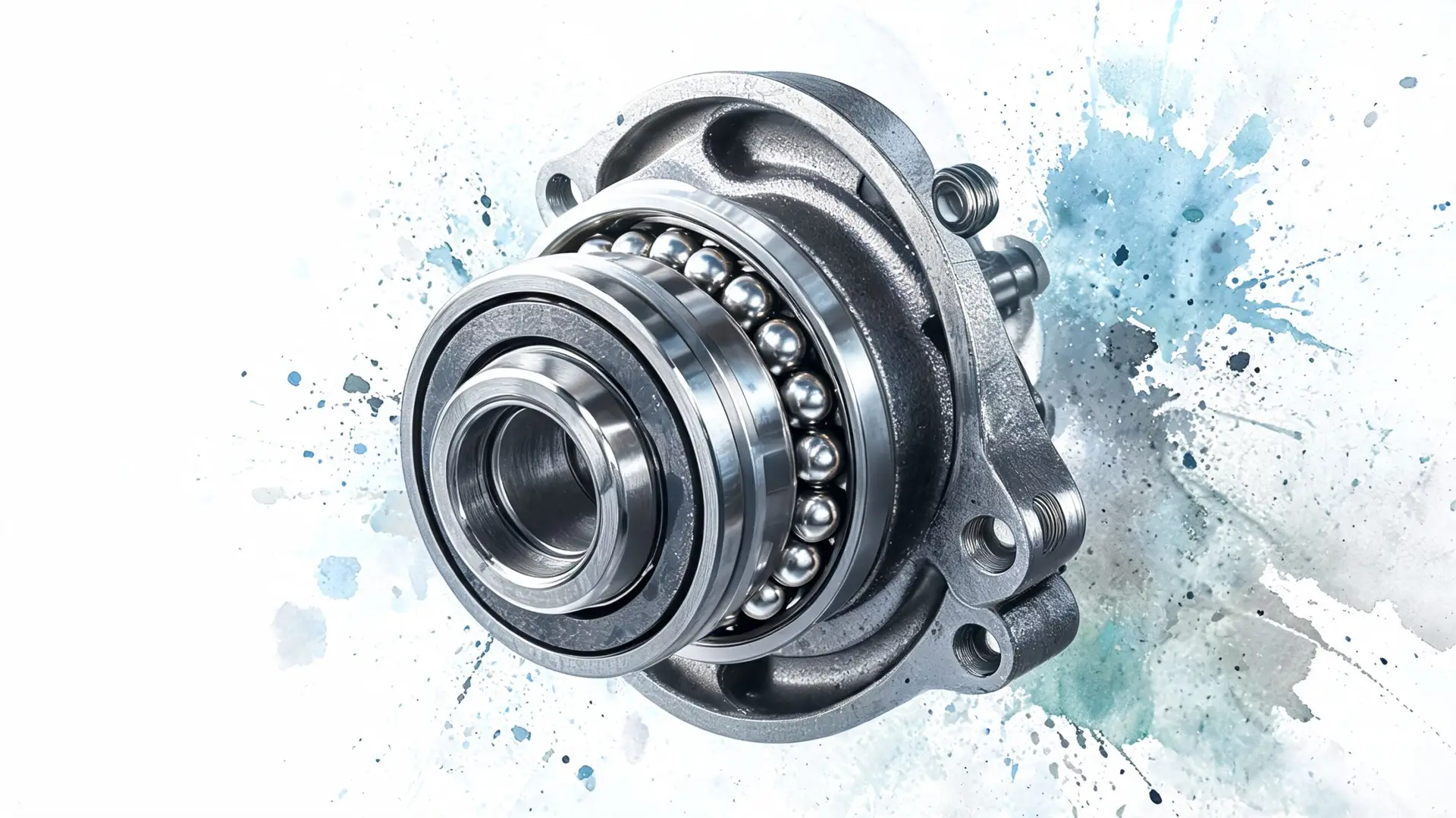
Where it lives and why it matters
The bearing lives inside the rear hub area. On some vehicles, it's part of a hub assembly. On others, the design is more serviceable and adjustment matters a lot more. Either way, its job is the same. It has to let the wheel rotate with minimal friction while staying tight, centered, and stable.
When it's working properly, you don't notice it. The wheel rolls freely, the tire stays planted, and the car feels settled. When it starts failing, the wheel can no longer turn as cleanly as it should.
What a healthy bearing gives you
A good back wheel bearing helps with several things at once:
- Smooth rotation: The wheel turns freely instead of dragging.
- Stable handling: The tire stays better aligned with the road.
- Predictable braking feel: The rear of the vehicle feels more controlled.
- Less stress on related parts: Tires, hubs, and suspension components don't have to compensate for looseness.
If you've been comparing sounds and symptoms, this guide to hub bearing sound and what drivers usually notice can help connect the part to the noise you hear from the road.
A wheel bearing is small, but it carries a big job. If it turns rough or loose, the whole vehicle starts giving clues.
Telltale Signs of a Failing Back Wheel Bearing
Most drivers first notice a sound, not a warning light.
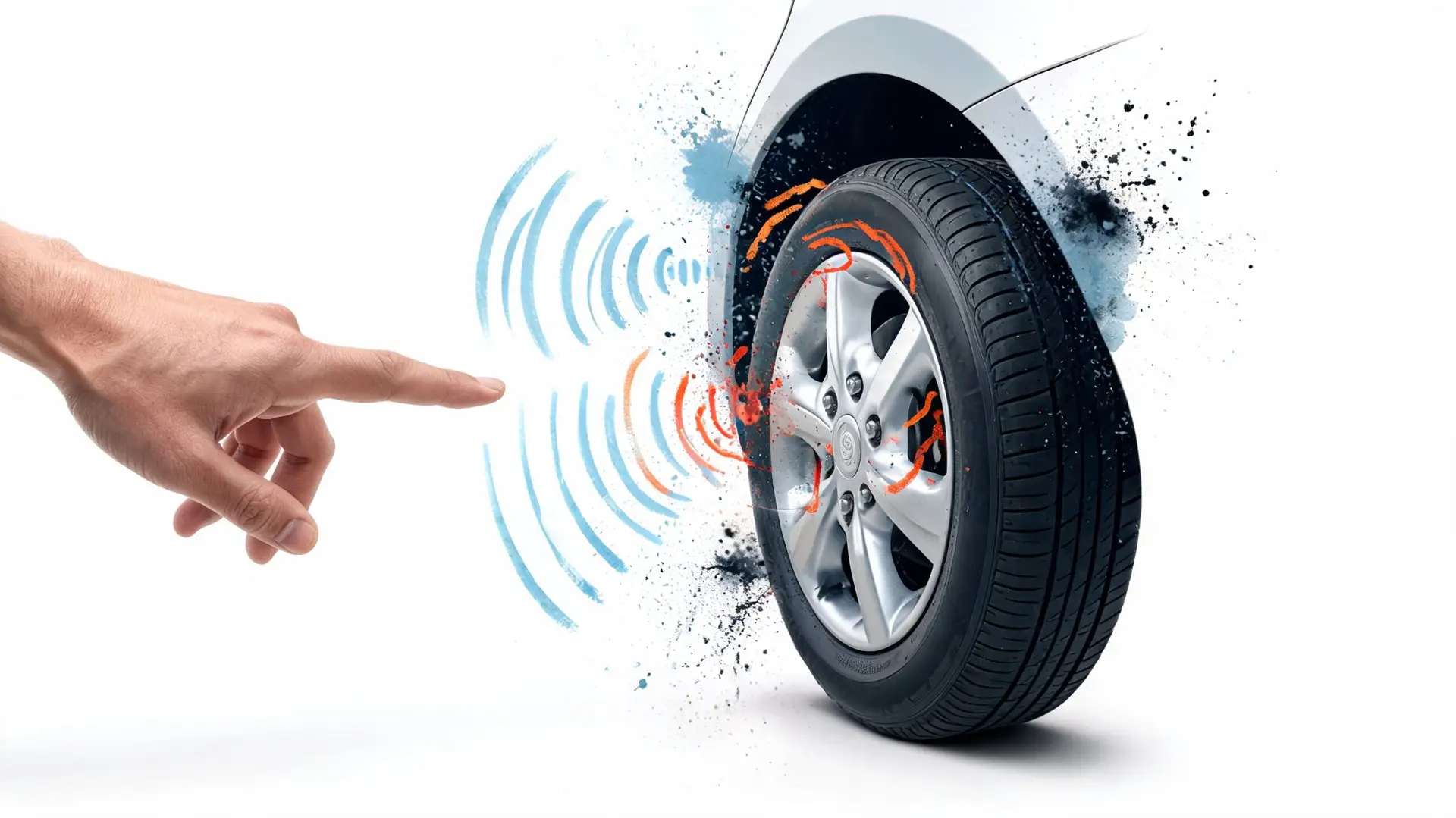
It usually starts as a low hum or growl from the rear of the vehicle. At first, it can sound like rough pavement or a slightly louder tire. Then it gets more consistent. Then it starts showing up every drive.
The sound that gets louder with speed
A failing back wheel bearing often makes a noise that rises with road speed. Not engine speed. That distinction matters.
If the sound changes when you accelerate but stays tied to how fast the vehicle is moving, the problem may be in the wheel end. Many drivers describe it as:
- A low humming sound from the rear
- A growl or rumble that gets stronger on faster roads
- A rough rotating noise that seems to come and go with pavement changes
- A rhythmic clicking or roughness in more advanced wear cases
That can be hard to separate from tire noise, especially on older pavement around Haltom City and nearby roads. The pattern matters more than the exact word you'd use to describe it.
What changes when you turn
One of the most useful clues is how the noise behaves in a gentle turn.
When weight shifts from one side of the vehicle to the other, a worn bearing often gets louder or quieter. That doesn't replace a proper inspection, but it can help narrow down which side is under stress.
Practical rule: If the rear noise changes in a long curve but the engine note stays the same, the wheel end deserves a close inspection.
A lot of drivers mistake this for tire roar, especially if they've recently rotated tires or changed tread type. That's why it helps to compare what you're hearing with a broader guide to common car noises and what they usually mean.
What you may feel from the driver's seat
Not every bad back wheel bearing announces itself with a dramatic sound. Some vehicles show the problem through feel first.
Common driver complaints include:
- A loose or unsettled rear feel: The back of the car doesn't feel planted over bumps.
- Vibration or roughness: You may feel a coarse road sensation that wasn't there before.
- Uneven tire wear: The tire can wear strangely when the wheel no longer runs true.
- Rear-end wobble sensation: Some drivers describe it as a faint side-to-side instability.
A short visual explanation can help if you're trying to match that sound to what's happening at the wheel:
When to stop guessing
If the noise is getting worse, if the rear of the vehicle feels loose, or if the tire wear looks uneven and unexplained, don't keep experimenting on the road. A back wheel bearing issue can overlap with tire, brake, and suspension symptoms. The difference is that a bearing problem can become a safety problem fast once looseness increases.
Why Bearings Fail and How We Diagnose the Problem
Rear wheel bearings usually fail after a long stretch of heat, contamination, impact, or extra load. By the time the driver hears the growl, the damage has often been building for a while.
In the shop, the pattern is pretty consistent. Grease breaks down. Seals let in water or grit. A hard pothole hit knocks something out of line. Repeated overloading, towing, or rough road use puts more force into the hub than the bearing was meant to carry. Around Haltom City, that matters more than generic online advice suggests. North Texas heat, broken pavement, construction-zone edges, and sudden storm runoff all add stress that shortens bearing life.
The main ways a rear bearing gets damaged
Most failed rear bearings trace back to a few root causes:
- Contamination: Once a seal is compromised, water, dirt, and road grime can get into the bearing and wear the internal surfaces.
- Impact damage: Potholes, curbs, and rough transitions can shock the hub and bearing assembly.
- Heat and load: Heavy cargo, towing, long commutes, and summer temperatures put extra strain on grease and seals.
- Improper installation or torque: Bearings need correct fitment and torque. Too tight or too loose can shorten service life.
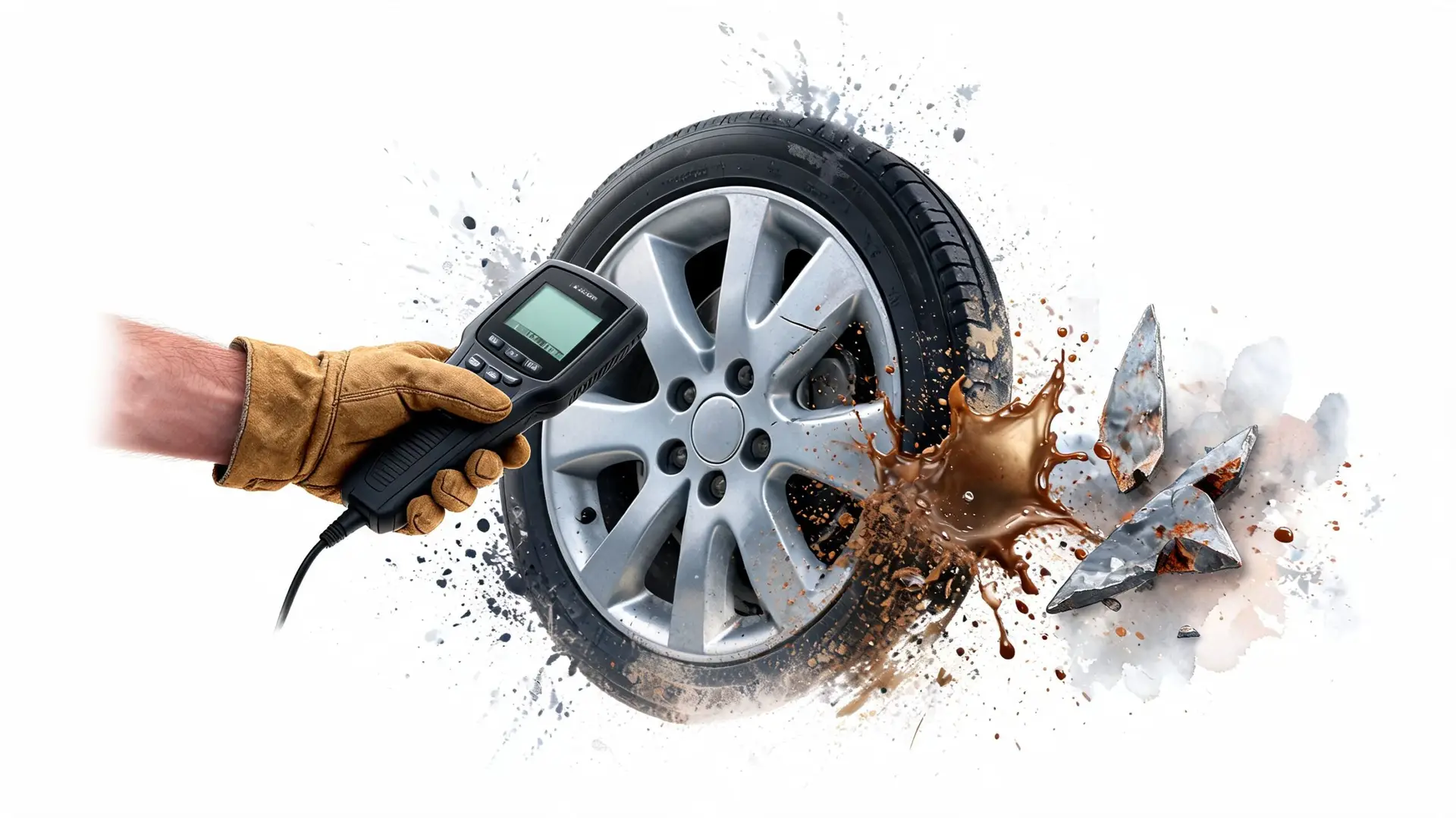
Heat by itself does not ruin a healthy bearing. It does speed up the decline of one that is already worn, low on grease, or no longer sealed well. That is a common North Texas pattern, especially on higher-mileage vehicles and work trucks.
Why diagnosis has to be hands-on
Bearing noise can sound like tire roar, brake drag, or even a rough road surface. That is why we do not diagnose this by ear alone.
A proper inspection usually includes:
- Road-testing the vehicle to confirm whether the noise changes with speed, turning, or load.
- Lifting the vehicle safely so the wheel and hub can be checked without road force masking the problem.
- Spinning the wheel by hand to feel for roughness, binding, or a gravelly sensation.
- Checking for looseness at the wheel and hub to spot play that should not be there.
- Inspecting nearby parts so tire wear, brake hardware, or suspension issues do not get blamed on the bearing.
That step-by-step process matters. A good vehicle problem diagnosis prevents wasted money on the wrong repair and gives the driver a clear answer before the problem gets worse.
Some bearings fail with obvious looseness. Others only show a rough feel or a low growl on the road test. That is why a trusted local shop does both. Listening helps. Mechanical inspection confirms it.
What does not work
Replacing parts based on one symptom is where people get burned. A new tire will not fix a worn bearing. Brake work will not cure hub play. And waiting because the car still feels "good enough" can turn a manageable repair into a louder, riskier one.
Bearings do not recover once the internal surfaces are pitted or contaminated. They keep getting rougher, hotter, and looser until the problem is addressed.
Back Wheel Bearing Replacement Options Costs and Timeline
A rear wheel bearing repair can look simple until the vehicle is on the lift, the hub refuses to come apart, and a basic parts swap turns into half a day of fighting rust and fitment. That happens plenty in North Texas. Heat, age, and road grime around Haltom City do not help stuck hardware come apart politely.
Once the bearing problem is confirmed, the real decision is whether the job fits your tools, your time, and your tolerance for risk.
Why installation precision matters
Rear bearing replacement is not one-size-fits-all. Some vehicles use a sealed hub assembly that bolts on as a unit. Others use serviceable or pressed-in bearings that require more measurement and more care during installation.
For many adjustable rear wheel bearings, the final setup matters as much as the new part. As explained in this wheel bearing basics reference, proper installation includes tightening the nut while rotating the hub, backing it off, and setting very small endplay. If that adjustment is off, the bearing can overheat, wear early, or develop looseness that sends the noise right back.
That is why experienced techs do not treat this like a lug-nut job.
DIY versus shop replacement
DIY replacement can be a reasonable choice on a familiar vehicle with a simple rear hub design. It gets a lot less friendly when the bearing is pressed in, the axle nut is seized, or the brake and parking brake hardware have to come apart without damage.
Around Haltom City, I see the same pattern. A driver watches a clean online example filmed on a rust-free car, then runs into a real Texas vehicle with stubborn parts, heat-baked seals, and no margin for a setup mistake. The repair itself may still be possible at home, but the timeline and frustration go up fast.
Here is the practical comparison:
| Factor | DIY Replacement | Professional Replacement (e.g., Express Lube & Car Care) |
|---|---|---|
| Upfront cost | Lower labor expense, but special tools and mistakes can raise the total | Higher initial bill, but tools, labor, and installation procedure are included |
| Typical cost | Depends heavily on vehicle design, parts quality, and tool needs | Usually varies by vehicle, whether the bearing is a hub assembly or pressed-in type, and how much disassembly is required |
| Time commitment | Often unpredictable if parts are seized or the bearing is difficult to remove | Usually same day on common applications once parts and bay time are lined up |
| Tool requirements | May require a puller, press, slide hammer, torque wrench, or measuring tools | Shop equipment is already available and used regularly |
| Risk level | Higher chance of seal damage, incorrect preload, or repeat repair | Lower chance of comeback issues when handled by trained technicians |
| Best fit | Skilled DIYers with time, patience, and the right equipment | Daily drivers, work trucks, family vehicles, and anyone who needs dependable turnaround |
What the timeline usually looks like
On many vehicles with a bolt-on rear hub, replacement can be fairly quick if everything comes apart cleanly. Pressed bearings or rusted assemblies take longer. So do jobs where worn brake components, ABS concerns, or damaged hardware show up once the wheel end is opened.
That is one reason generic cost charts only go so far. The same rear bearing job can be straightforward on one vehicle and much more involved on another.
For Haltom City drivers, the safest expectation is a clear inspection first, then a quote based on the actual design and condition of the vehicle. A good local shop will explain whether you are looking at a simple hub replacement or a more labor-heavy bearing service, how long the car may be down, and whether replacing one side or checking both rear sides makes sense.
Close enough does not work on bearing setup. If the repair calls for precise torque and endplay, accuracy is what keeps the new part quiet and the car safe on North Texas roads.
Maintenance Tips to Extend Bearing Life
Most bearing articles focus on the moment the noise starts. That misses the bigger opportunity.
A back wheel bearing often gives small warnings before it becomes an urgent repair. Catching seal damage, slight play, or roughness during routine service is usually far easier than dealing with a breakdown, a tow, or collateral damage after a failure.
What helps a bearing last longer
The habits that protect rear bearings are simple, but they matter:
- Watch impact damage: Avoid potholes, curbs, and rough construction transitions when you can.
- Respect load limits: Exceeding payload and towing capacity puts extra pressure on rear bearings, as noted in the earlier bearing adjustment reference.
- Pay attention to early noise: A low rear hum that keeps repeating shouldn't be ignored.
- Ask for inspections during routine service: Oil changes, brake checks, and tire service are good times to have the wheel end looked at.
Why proactive inspection makes sense
One verified source points to a gap many drivers and fleet operators run into. Most content focuses on detecting a bad bearing, but rarely addresses proactive inspection schedules. For fleet managers and busy professionals, understanding the cost-benefit of replacing a bearing preventively at 100,000 miles versus waiting for a failure that requires towing represents a significant underserved knowledge gap in this discussion of preventive rear bearing planning.
That idea matters well beyond fleets. If you rely on your vehicle every day, waiting for a bearing to announce itself loudly is rarely the best strategy.
A practical maintenance approach is simple. Listen early, inspect regularly, and treat unusual rear-wheel noise as a reason to check the vehicle sooner, not later.
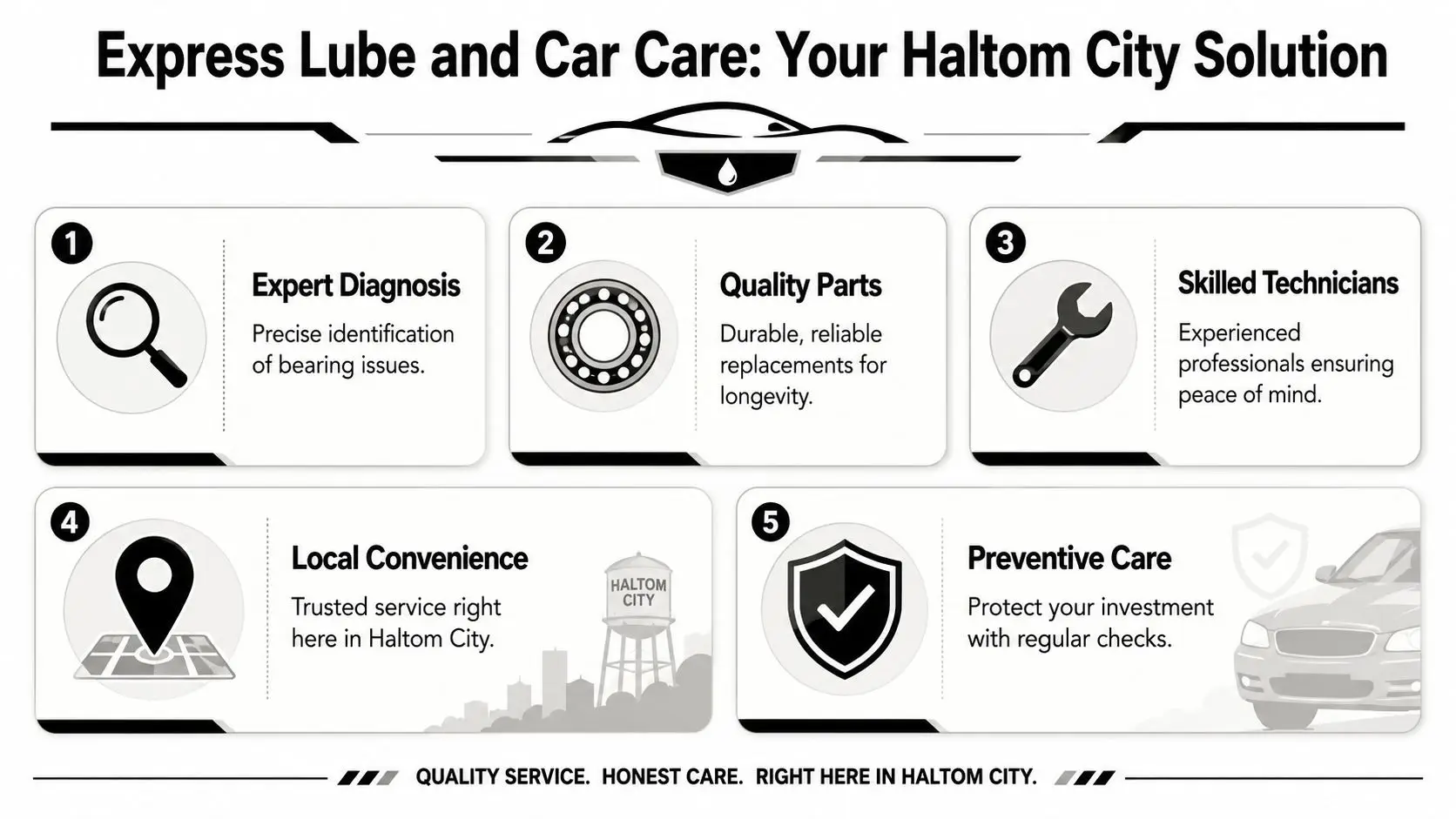
Your Trusted Haltom City Solution Express Lube and Car Care
Back wheel bearing problems look simple from the outside. You hear a noise, replace a part, and move on. In practice, the job is more vehicle-specific than many drivers expect.
Some rear setups are straightforward. Others require a technician to understand design differences that aren't obvious until the vehicle is on the lift. One verified reference notes that technicians must understand vehicle-specific differences, such as rear bearing setups on vehicles without traditional axles. This architectural nuance affects inspection and replacement, making expertise essential for a safe and durable repair on the diverse mix of trucks and sedans found in Texas in this vehicle-specific rear bearing discussion.
That's the takeaway for Haltom City drivers. The right repair isn't just about replacing a noisy part. It's about confirming the source, understanding the rear suspension and hub design, installing the bearing correctly, and checking that the vehicle leaves the shop safe and stable.
What local drivers should expect from a good shop
A solid bearing repair experience should include:
- Clear diagnosis: You should hear what was found, what wasn't found, and why the bearing is the correct repair.
- Vehicle-specific repair planning: Trucks, sedans, commercial vans, and hub-centric rear designs don't all get serviced the same way.
- Quality parts and careful installation: Bearings don't tolerate shortcuts.
- Straight communication: Drivers should understand the repair, the estimate, and the timeline before work starts.
Why local context matters
Shops that work with North Texas vehicles every day understand the pattern. Daily commuting, rough pavement transitions, summer heat, commercial use, and stop-and-go traffic all shape how rear wheel components wear.
That local familiarity matters when you're trying to separate bearing noise from tire noise, when a work vehicle needs predictable turnaround, or when a family car has to be dependable by the end of the day. If you want a shop that understands the community and the vehicles on its roads, it helps to work with a team rooted in Haltom City auto repair, not just generic national advice.
Good bearing work is quiet work. The car tracks straight, the rear stays settled, and the noise is gone.
When a back wheel bearing is caught early, the repair is more manageable. When it's ignored, the cost and inconvenience usually grow. For Haltom City drivers, the smartest move is simple. Don't wait for a rear hum to become a rear-end problem.
If your vehicle has a rear hum, growl, wobble, or other signs of a back wheel bearing issue, schedule an inspection with Express Lube and Car Care. Their certified technicians can diagnose the problem, explain the repair clearly, and help you get back on the road with confidence.