
You walk out in Haltom City, glance at the driveway, and spot a dark puddle under the front of the car. Most drivers hope it’s old residue, a small drip, or something they can deal with later. If the leak is coming from a hole in oil pan, later is exactly what gets expensive.
The oil pan sits at the bottom of the engine and holds the engine’s oil supply. When that pan is cracked, punctured, or leaking badly, the engine can lose oil fast enough to trigger warning lights, create burning smells, and put the whole lubrication system at risk. This is one of those car problems that starts as a stain on the ground and can turn into a major repair if the engine keeps running without enough oil.
Drivers around Haltom City, Keller, Watauga, and North Richland Hills usually want the same thing in this moment. A calm answer, a clear diagnosis, and a plan that keeps a bad day from getting worse. That’s what this guide is for.
That Puddle Under Your Car Is a Serious Warning
You back out of a driveway in Haltom City, stop, and see a dark wet spot where the front of the car was parked. If that puddle is under the engine area and feels slick between your fingers, treat it as a serious oil leak until proven otherwise.
A hole in the oil pan can empty the engine’s oil supply faster than many drivers expect. I’ve seen cars come in after one bad scrape on a rough entrance or a piece of road debris on a busy stretch nearby, and the driver had no idea how quickly a small-looking leak could turn into low oil pressure and engine damage.
The oil pan does more than cover the bottom of the engine. It holds the oil the engine needs to keep internal parts lubricated and cooled. Once the pan is cracked or punctured, the problem shifts from cleanup to engine protection.
In Haltom City, the pattern is familiar. A driver hears a scrape, smells burning oil after parking, or spots smoke near the underside. Then comes the question: can it make one more trip? If the leak is active, the safest answer is often no.
Practical rule: If you suspect a hole in oil pan, protect the engine first. Figure out the exact leak source second.
Why the oil pan matters so much
Drivers sometimes assume the pan is simple stamped metal and nothing more. In real repair terms, a damaged pan can put the whole lubrication system at risk because it lets oil escape before the engine can keep proper pressure and supply.
Two problems usually show up first:
- The oil level drops enough to threaten bearings, timing components, and other moving parts.
- Oil reaches hot parts like the exhaust and creates smoke or a burnt-oil smell.
That’s also why it helps to know the difference between a minor seep and a true active leak. If you want a broader comparison of leak sources, our guide on why your car leaks oil can help you separate a valve cover or gasket issue from something lower and more urgent.
What calm action looks like
Stay methodical.
If the puddle is fresh, the smell is strong, or the oil warning light has come on, assume the car may not have enough oil to keep running safely. A slow seep can sometimes wait for an appointment. A punctured or badly cracked oil pan usually needs attention right away.
How to Confirm You Have an Oil Pan Leak
You don’t need a lift to notice the basic signs. You do need to pay attention to what the car is telling you.
Start with the dashboard, then your nose, then the underside of the car.
Check the warning signs first
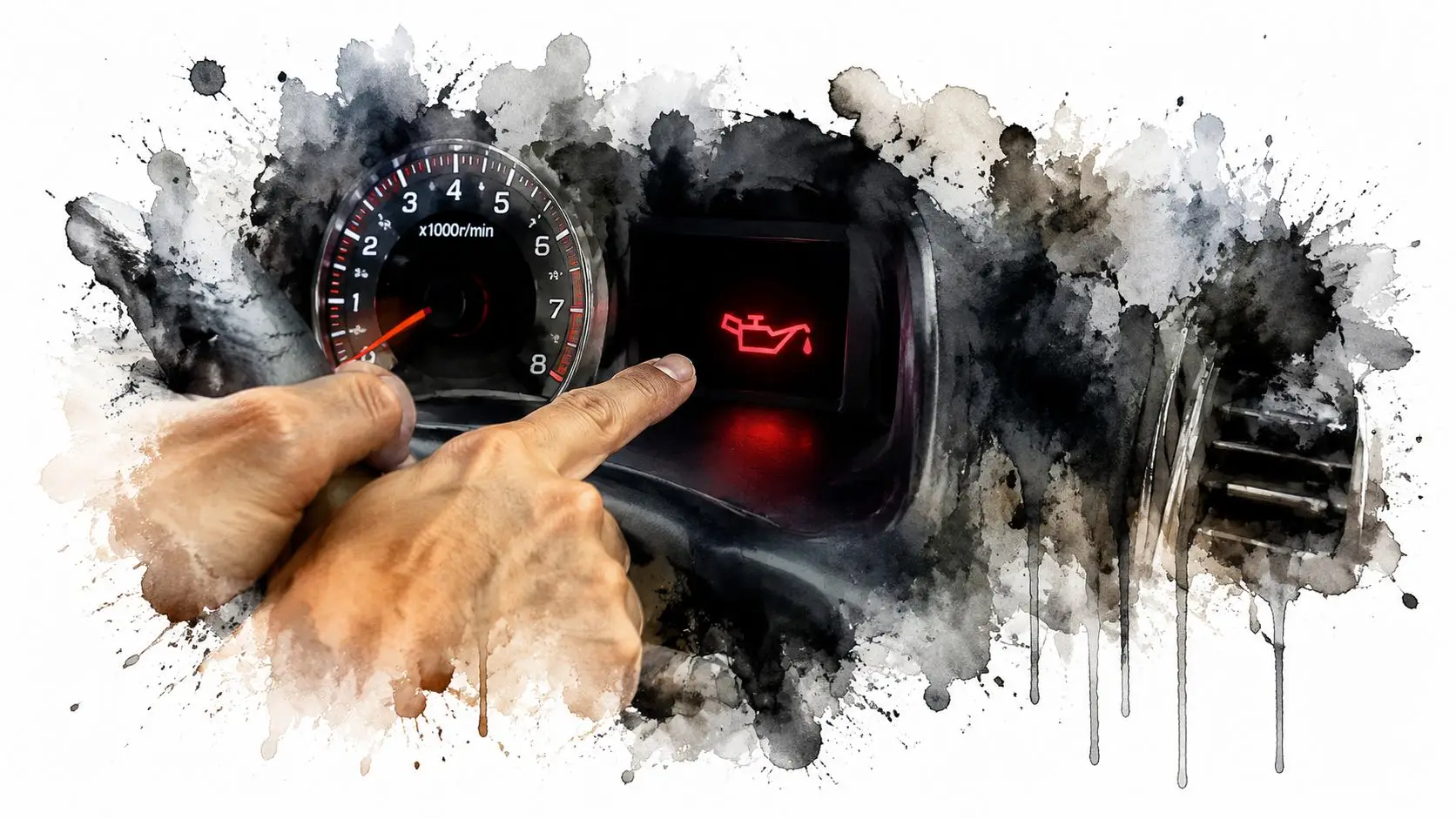
A reliable on-vehicle check is a visual inspection around the pan-to-block seam after the engine has run, because fresh oil at the mating surface strongly points to a pan or gasket leak. Symptoms can also include low oil pressure lights, smoke, or a burnt-oil odor if leaking oil reaches hot surfaces, as noted in this explanation of oil pan leak symptoms and inspection.
Use this quick checklist:
- Dashboard warning light: If the oil pressure light has come on, stop treating this like a minor leak.
- Burning smell: Oil on hot exhaust parts often creates a sharp burnt-oil odor.
- Smoke from underneath: That usually means oil is reaching a hot surface.
- Fresh drips after parking: A fresh puddle after a short drive matters more than old grime.
- Low dipstick level: If the dipstick reads low, the leak is already affecting oil supply.
If you’ve had other oil leak issues before, it also helps to compare symptoms with this guide on why cars leak oil.
Look underneath with a mechanic’s mindset
A lot of people crawl under the car, see oily dirt everywhere, and get stuck. The trick is to look for fresh, wet oil, not just old buildup.
Check these spots:
- Pan bottom: A visible crack, scrape, or puncture is the most obvious sign.
- Drain plug area: Damaged threads or a failed plug can mimic a pan failure.
- Pan-to-block seam: Oil forming at the seam often points to a gasket problem.
- Nearby exhaust components: Wet oil on them explains the smell and smoke.
Fresh oil tells the story. Old grime only tells you the car has leaked before.
What to say when you call for help
Good descriptions save time. Instead of saying “my car is leaking something,” say what you observed:
- Where the puddle is located
- Whether the oil pressure light came on
- Whether you smelled burnt oil or saw smoke
- Whether the bottom of the pan looks scraped or punctured
That gives the shop or tow operator a much clearer picture of what may be waiting underneath.
Your Immediate Steps to Prevent Engine Damage
When you suspect a hole in oil pan, the priority changes instantly. You’re no longer trying to get where you were going. You’re trying to save the engine.
Here’s the emergency sequence that makes the most sense.
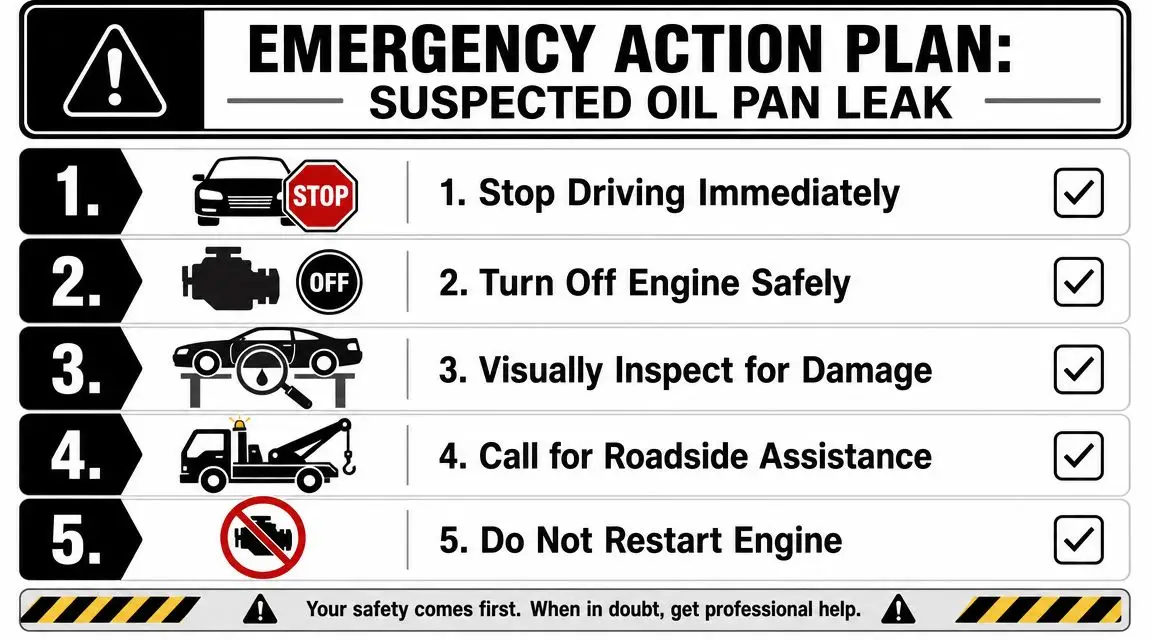
Stop the car and shut it down
If you’re driving and the oil warning light comes on, or you suddenly smell burning oil and hear a new mechanical noise, pull over as soon as it’s safe. Then shut the engine off.
Running an engine low on oil is like asking it to work without the lubrication it depends on. The longer it runs, the more risk you take on.
Make a quick roadside check
Once the engine is off and you’re safely out of traffic, do a basic inspection. Don’t crawl under an unstable vehicle on the shoulder, but do look carefully from the side.
- Look under the engine area for active dripping or a visible trail of oil.
- Check the dipstick if it’s safe to do so. You’re not trying to solve it on the roadside. You’re judging severity.
- Notice any metal impact marks on the underside if they’re visible without getting under the car.
- Do not restart just to see if it still runs. That test can cost you an engine.
If leaking oil has covered parts of the engine bay, this overview on how to clean oil off an engine helps explain the cleanup side after the mechanical repair is handled.
Choose the safe option
Most drivers get into trouble by trying to nurse the car home or to a shop a few miles away. That gamble only works until it doesn’t.
Use this rule set:
- If the oil pressure light came on, tow it.
- If you see a heavy leak, tow it.
- If there’s smoke or a strong burnt-oil smell, tow it.
- If the pan looks punctured, don’t restart it.
The cheapest tow is usually far less costly than an engine that ran without enough oil.
Common Causes from Road Debris to Engine Failure
A hole in oil pan doesn’t always come from the same kind of failure. A good diagnosis starts by separating outside damage from inside damage.
That distinction matters because one may call for a pan replacement and cleanup. The other may point to major engine trouble beyond the pan itself.
External damage from the road
For many local drivers, the most likely cause is impact. Road debris, a chunk of metal, a loose object in traffic, or a hard strike on a raised surface can puncture the pan from below.
In Haltom City and the surrounding area, this often happens on busy corridors, construction routes, rough entrances, or after a vehicle drops into a deep dip and bottoms out. Lower vehicles are especially vulnerable, but any car can catch a hard object in the wrong spot.
Common external causes include:
- Road debris impact
- Accident damage
- Bottoming out on a curb, dip, or rough pavement
- Drain plug or thread damage after improper service
- A deteriorated pan gasket that leaks enough to mimic pan damage
If your leak appears to be coming from the sealing surface rather than a puncture, this article on a gasket leaking oil helps explain why that distinction matters.
Internal damage from inside the engine
This is the diagnosis nobody wants, but it has to stay on the table. A key question is whether the hole is a standalone puncture or a symptom of catastrophic engine failure.
One practical example from a forum diagnosis is especially useful. A hole appearing above the crossmember is unlikely to be caused by road impact and may suggest internal damage such as a spun bearing, which calls for deeper inspection, as discussed in this Honda-Tech thread about a mysterious oil pan hole.
A pan with a hole from the inside changes the whole repair conversation. The pan may be the visible damage, not the root problem.
What a technician looks for
The first questions are usually simple:
- Did the leak start suddenly or gradually?
- Was there a loud impact?
- Did the engine make new knocking sounds?
- Is there metallic debris in the oil?
- Can the engine still be rotated safely?
Those answers guide the next move. A clean puncture on the bottom of the pan often points one way. A hole in an unusual location, paired with metal and internal noise, points another way.
That’s why guessing is risky. The pan itself may be damaged, but the actual issue may be above it.
Temporary Fixes vs Professional Replacement
Temporary patches have their place. That place is narrow.
If a vehicle has a very small hole in the oil pan, some repair guidance does describe temporary sealing with silicone, metal epoxy, or two-part epoxy. The catch is important. Those are temporary measures for very limited situations, not a substitute for proper repair.
What an emergency patch can and can’t do
A patch can sometimes slow a leak enough to move a disabled vehicle in a controlled situation. It does not restore the oil pan to original strength, and it doesn’t answer the bigger diagnostic question of what caused the damage.
Temporary materials also face a hard environment. The pan sees heat, vibration, oil exposure, and road spray. A patch that looks fine in the driveway can fail under real driving conditions.
Oil Pan Fix Comparison Temporary Patch vs. Professional Repair
| Factor | Temporary Fix (Epoxy/Sealant) | Professional Replacement |
|---|---|---|
| Best use | Emergency measure for a very small hole | Proper long-term repair |
| Reliability | Uncertain under heat and vibration | Built for normal engine operation |
| Root-cause diagnosis | Often skipped or incomplete | Includes inspection of pan, gasket, drain plug area, and surrounding damage |
| Risk level | Higher risk of leak returning or worsening | Lower risk when installed and sealed correctly |
| Suitable for larger cracks or severe damage | No | Yes |
| Confidence for daily driving | Low | High |
What works in the shop
A proper oil pan repair usually means draining the oil, removing the pan, cleaning the mating surfaces, aligning the new gasket correctly, and reinstalling the pan with bolts tightened in sequence to manufacturer specifications. That process matters because pan sealing mistakes often create repeat leaks.
Short version. A patch may help you survive the moment. Replacement is what solves the problem.
When not to patch it at all
Skip the patch idea entirely if:
- The hole is large
- The metal is bent or cracked around the impact
- The leak is heavy
- The engine may have internal damage
- The car already showed oil pressure warnings
In those cases, patching usually delays the right repair and increases the chance of something being missed.
Oil Pan Repair Costs and Service at Express Lube
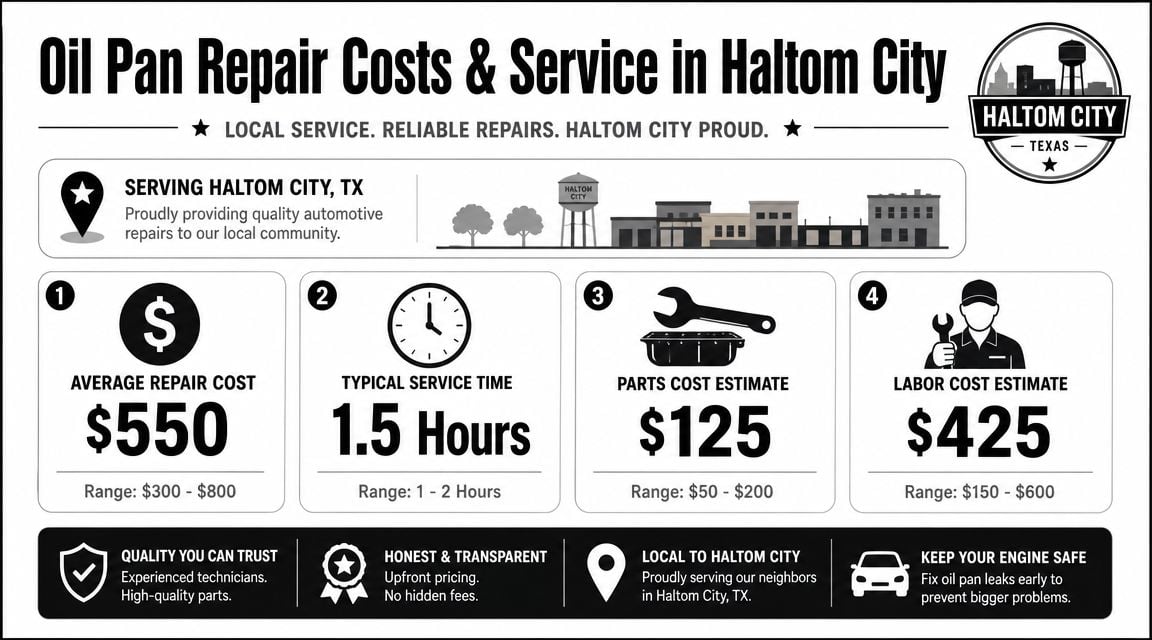
A hole in the oil pan can turn into an expensive repair fast. I have seen Haltom City drivers catch it early after hitting debris on Highway 121 or I-820 and get out with a simpler fix. I have also seen the other version, where the car kept running low on oil and the final bill grew because the engine paid the price too.
The cost depends on what the inspection finds. Some vehicles have an oil pan that is easy to reach. Others require extra labor because the technician has to work around shields, exhaust parts, crossmembers, or tight clearances under the engine. The estimate can also change if the impact damaged more than the pan itself.
Why the final bill can vary
The pan is only one part of the job.
A good estimate should account for the full condition of the vehicle, not just the visible leak. If the drain plug threads are stripped, the sealing surface is damaged, or the impact bent surrounding metal, repair time goes up. If the engine was run low on oil, the conversation changes from a leak repair to possible internal damage.
Labor is often the biggest variable. On some cars, the pan comes off with routine disassembly. On others, access is slow and careful work. That is why two drivers can both have an oil pan problem and receive very different estimates.
A proper estimate should account for:
- Vehicle make and model
- How accessible the oil pan is
- Whether the damage is in the pan, the gasket area, or both
- Whether the drain plug threads are damaged
- Whether there are signs of deeper engine trouble
What a good repair process looks like
Drivers around Haltom City usually want the same thing. A straight answer and a repair that holds.
At Express Lube, the job should start with confirming where the oil is coming from. Oil can travel across the underside of an engine, so a leak that looks like a punctured pan can sometimes trace back to the gasket, drain plug area, or another engine seal. Getting that part right saves time, money, and repeat visits.
A solid repair process should include:
- Confirming the source of the leak before any parts are ordered.
- Checking for impact damage and low-oil warning signs so nothing important gets missed.
- Giving a clear estimate before work starts with the repair path explained in plain language.
- Replacing the damaged pan or sealing components correctly with clean mating surfaces and proper bolt sequence.
- Verifying the repair after installation so the vehicle leaves without an active leak.
If you are weighing this repair against bigger engine risks, our guide on how much engine repair costs helps put the numbers in context.
What local drivers should expect
In Haltom City, Keller, Watauga, and North Richland Hills, the right shop should treat a hole in the oil pan as a lubrication problem first and a parts replacement second. That means checking whether the damage stopped at the pan or whether oil loss created a larger issue.
Drivers should expect clear communication. If the pan is punctured and the engine still sounds healthy, say that. If the underside shows a hard impact and there is concern about internal wear, say that too. Guesswork is what gets people into trouble.
The best repair protects the engine, fixes the leak correctly, and gives you confidence the car is safe to drive again.
When a shop handles this well, you leave knowing what failed, what was replaced, and whether anything else needs attention.
If you’re in Haltom City and need a trusted next step, Express Lube and Car Care can inspect the leak, determine whether you’re dealing with a punctured pan, a gasket failure, or something deeper, and give you a clear repair plan. For local drivers who want honest answers and dependable service without the runaround, it’s a practical place to start.