
Hidden deep inside the rear wheels of many cars, there’s a small, powerful component called the brake wheel cylinder. You can think of it as the muscle of your drum brake system. When you step on the brake pedal, it's the wheel cylinder that does the heavy lifting, pushing the brake shoes out to create the friction that slows your car down. It’s a crucial part for any vehicle with drum brakes, including many you’ll see on the roads of Haltom City.
How Your Brakes Create Stopping Power
Every time you hit the brakes in Haltom City, you're initiating a fascinating process that turns the pressure from your foot into real stopping power. This is all thanks to hydraulics, and the wheel cylinder is right in the middle of the action.
It works a lot like a simple water pistol. When you squeeze the trigger, you're pressurizing the water inside, which forces it to shoot out. Your brake system does something similar, but instead of water, it uses specialized brake fluid to move a set of pistons.
This diagram breaks down how that simple press of the pedal translates into slowing your car down.
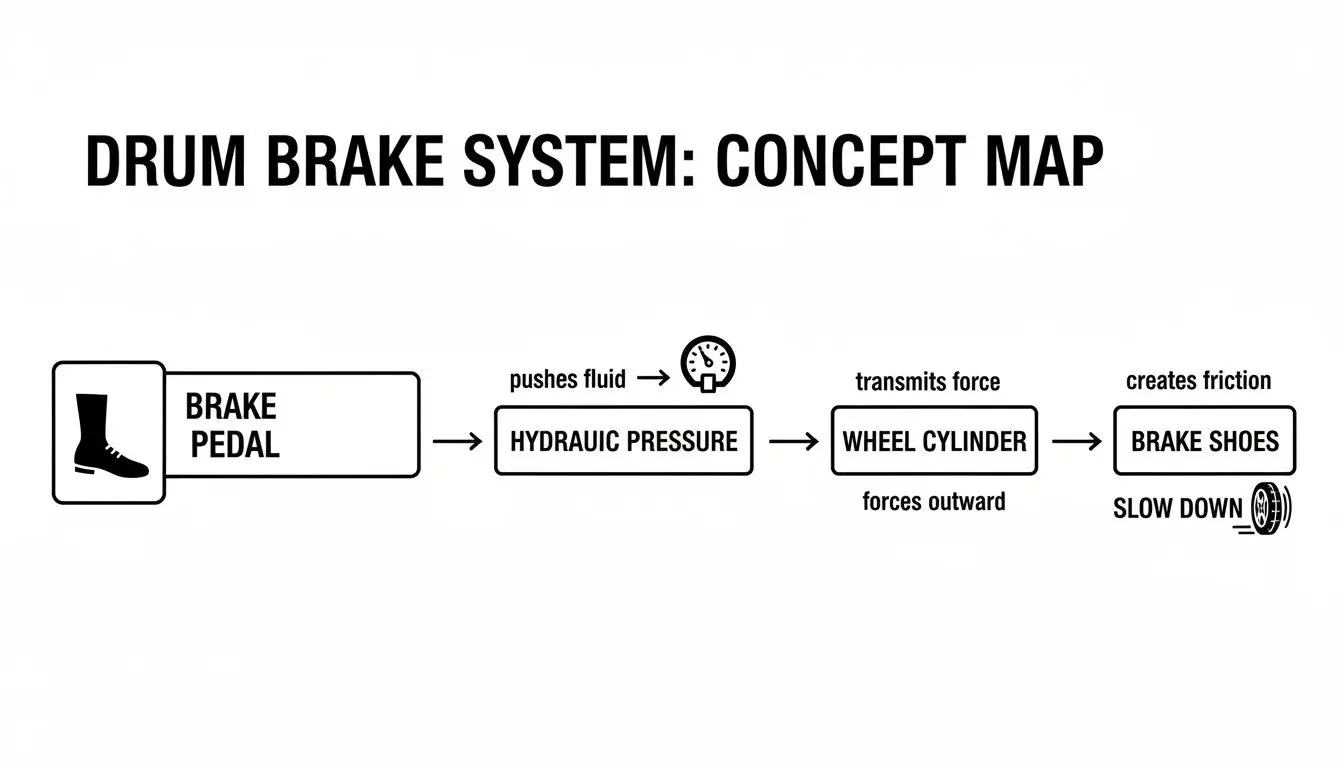
As you can see, the force travels from your foot all the way to the wheels in a split second. The wheel cylinder is the key link that converts the hydraulic pressure from the brake fluid into the physical force needed to stop the wheel from spinning.
The Role of Hydraulic Fluid
The magic behind this whole process is the brake fluid. This isn't just any old liquid; it's engineered to be incompressible. That means when you push on it at one end of the system (the master cylinder), it transfers that force almost perfectly to the other end—the wheel cylinders.
A brake wheel cylinder is a component inside a drum brake that uses hydraulic pressure from the brake fluid to push pistons outward. These pistons then force the brake shoes into contact with the spinning drum, creating friction and slowing the vehicle.
Because this is a sealed hydraulic system, its integrity is everything. Any air bubbles or fluid leaks compromise the pressure, which can lead to a soft pedal or, in the worst case, brake failure. To get the full picture, you can learn more about why your car's brake fluid level is so important in our detailed guide.
Where You Find a Wheel Cylinder
While most modern cars have disc brakes up front, many still rely on drum brakes for the rear wheels to save on cost and complexity. This is common in many of the vehicles we see daily in Haltom City. The brake wheel cylinder is a part you'll only find inside a drum brake assembly.
Here’s the basic difference:
- Drum Brakes: A wheel cylinder pushes brake shoes outward to contact the inside of a spinning drum.
- Disc Brakes: A caliper squeezes brake pads against a spinning rotor (or disc).
Knowing whether your car has drum or disc brakes in the rear helps you understand what's going on when you bring your vehicle to us at Express Lube & Car Care in Haltom City. It tells our technicians exactly what to look for when you say you're having brake trouble.
How Modern Braking Systems Became Safer
The brakes on your car are something you probably don't think about until you really need them. That incredible, reliable stopping power we all take for granted is the result of more than a century of innovation, with safety at the forefront. Early cars used very basic mechanical drum brakes, but the first major leap toward the systems we use today was the switch to hydraulic fluid.
This move from clunky mechanical rods to fluid pressure was a game-changer. It paved the way for critical components like the brake wheel cylinder, but the first designs had a terrifying secret.
The Problem with Single-Cylinder Systems
The story of the brake wheel cylinder is directly linked to the development of hydraulic brakes. When Malcolm Loughead introduced the concept back in 1918, it was revolutionary. But these early systems all shared a critical, and incredibly dangerous, design flaw: they relied on a single master cylinder to power the brakes on all four wheels.
Think about that for a second. This meant that if a single brake line sprung a leak—from a rock, rust, or simple wear and tear—the entire system would fail. You’d lose all your brakes. Instantly. This flaw is detailed in the history of the automotive master cylinder, and it was a serious risk drivers lived with for decades. It was obvious something had to change.
The Rise of Redundancy and Safety
That change finally came in the 1960s with the invention of the dual-cylinder system, which is still the gold standard in every modern car. This wasn't just an improvement; it was a monumental leap forward for automotive safety.
The dual-cylinder master cylinder essentially splits your brake system into two independent circuits. One typically operates the front brakes, and the other operates the rear. If one circuit fails, the other one is still fully capable of bringing you to a safe stop.
This built-in backup is the bedrock of modern brake design. It ensures that a single point of failure won't leave you helpless. Just before this breakthrough, Bendix perfected the modern brake wheel cylinder in 1958, refining the part that does the physical work of pressing the brake shoes against the drum.
For drivers here in Haltom City, this history really drives home why we inspect every single part of your brake system. From the master cylinder to the wheel cylinders, everything is designed with redundancy and your safety in mind. You can learn more about how these parts work together in our guide to the different types of car brakes.
Spotting The Warning Signs Of A Failing Wheel Cylinder
When a brake wheel cylinder starts to go bad, your car won't keep it a secret. It sends out some pretty clear signals, and for drivers here in the Haltom City area, catching them early can be the difference between a simple fix and a dangerous situation. The problems often start small, so knowing what to feel and look for is your best defense.
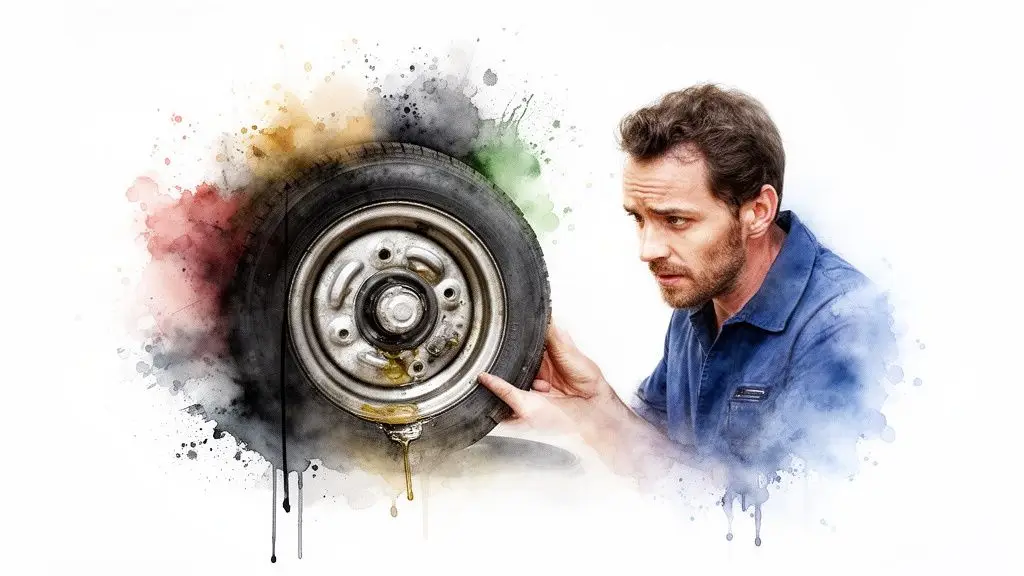
The first thing most people notice is a change in the brake pedal. If it suddenly feels soft, “spongy,” or sinks closer to the floor than it used to, you’ve likely got a problem in your hydraulic system. That mushy feeling is a classic sign that air has gotten into the brake lines—a common side effect of a fluid leak from a failing wheel cylinder.
Finding A Brake Fluid Leak
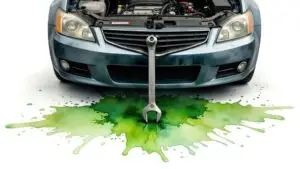
By far the most definitive sign of a bad brake wheel cylinder is, of course, a leak. Brake fluid will begin to seep out from inside the drum brake assembly. The tricky part is that this happens behind the wheel, so you might not spot it right away on your Haltom City driveway.
Look for a wet, oily patch on the inside of your rear tire or dark streaks running down the backing plate (the stationary metal plate the wheel bolts onto). Brake fluid is usually clear to yellowish-brown, but as it leaks, it mixes with dark brake dust, making it look grimy and oily.
Key Takeaway: A soft brake pedal is a direct result of lost hydraulic pressure. Think of it like this: brake fluid can't be compressed, so it transfers force perfectly. But when a wheel cylinder's seals wear out, fluid leaks and air gets in. Air can be compressed, so your pedal feels squishy because you're just squeezing air instead of applying solid force to the brakes.
If you even suspect a brake fluid leak, it's time to call a professional immediately. Driving with a compromised brake system is a massive safety risk. Our Haltom City technicians at Express Lube & Car Care can pinpoint the leak's source and get you back on the road safely.
Other Symptoms To Watch For
A spongy pedal and visible leaks are the most obvious clues, but other signs can point to a failing wheel cylinder. It's helpful to know all the potential warnings.
Here’s a quick-reference guide to help you identify what’s going on with your vehicle.
Symptoms of a Failing Brake Wheel Cylinder
| Symptom | What It Feels or Looks Like | Why It Happens |
|---|---|---|
| Spongy Brake Pedal | The pedal feels soft or sinks to the floor. | Air has entered the hydraulic system through a leak in the cylinder. |
| Visible Fluid Leak | Oily residue on the inner side of the tire or on the brake backing plate. | The rubber seals inside the wheel cylinder have failed, letting fluid escape. |
| Reduced Stopping Power | Your car takes longer to stop than usual. | The leak causes a loss of hydraulic pressure, so the rear brakes can't apply full force. |
| Low Brake Fluid | The fluid level in the reservoir under the hood is low without an obvious leak elsewhere. | The wheel cylinders are a common, hidden source for disappearing brake fluid. |
| Brake Warning Light | The red "BRAKE" or "(!)" light on your dashboard illuminates. | The master cylinder's fluid sensor detects a significant drop in fluid level. |
These symptoms can overlap with other brake issues, which is why a professional diagnosis in Haltom City is so important.
If any of these signs sound familiar, don't wait for the problem to get worse. You can learn more about these issues in our guide to common brake problem symptoms. Paying attention to your car’s warnings is the first and most critical step in maintaining your safety on the road.
The Dangers of Ignoring a Bad Brake Wheel Cylinder
Procrastinating on brake repairs is one of the biggest gambles you can take with your vehicle. A failing brake wheel cylinder is far more than a minor annoyance—it's a ticking clock on a major safety system. If you’re ignoring the signs on your daily drive around Haltom City or Watauga, you’re taking a serious risk.
When a wheel cylinder leaks, it’s actively pushing crucial hydraulic fluid out of a sealed system. This immediately translates to a loss of braking power in your rear wheels. Your stopping distance can suddenly get much, much longer, creating a dangerous risk of rear-ending someone or failing to stop for an unexpected obstacle on Haltom City roads.
The Compounding Effect of a Leak
But that's not the only problem. The escaping brake fluid doesn't just disappear; it contaminates everything around it, creating a second, equally dangerous issue.
When brake fluid leaks from a faulty wheel cylinder, it soaks the brake shoes and the inside surface of the brake drum. This contamination makes them slick and oily, rendering them almost useless and severely compromising your vehicle's ability to stop safely.
What this means is that even if you have some hydraulic pressure left, the brake shoes can't generate the friction needed to grip the drum. This isn't a "wait and see" kind of problem. It requires immediate attention from a trusted Haltom City shop like Express Lube & Car Care.
Understanding the Safety Redundancy
Thankfully, modern brake systems are designed with some brilliant safety backups. Each brake wheel cylinder uses two pistons to force the brake shoes outward against the drum, all powered by the hydraulic pressure you create by pressing the brake pedal. The master cylinder, which generates that pressure, has a dual-piston design—one hydraulic circuit for the front brakes and a separate one for the rear. This redundancy was a huge leap forward from older single-cylinder systems, where one leak meant total brake failure. You can actually read more about the history and design of the wheel cylinder on Wikipedia.
Even with this design, a failure in the rear circuit puts a massive amount of extra work on your front brakes and creates a dangerous imbalance. If a brake fluid warning light pops up on your dashboard, that’s your car’s way of screaming for help. It’s a definite sign that you've lost a critical amount of fluid. You can get the full story on this in our guide to understanding the brake fluid warning light.
Simply put, any problem with your brakes, especially a bad wheel cylinder, is an urgent safety threat that needs to be addressed right away to keep yourself and everyone else on the roads of Haltom City safe.
Expert Brake Wheel Cylinder Repair in Haltom City
Brake problems are unnerving, and when it comes to your family's safety, there's absolutely no room for second-guessing. At Express Lube & Car Care, our ASE-certified technicians have seen it all. We have the hands-on experience to correctly diagnose and repair your brake wheel cylinder right here in Haltom City, getting you back on the road with confidence.
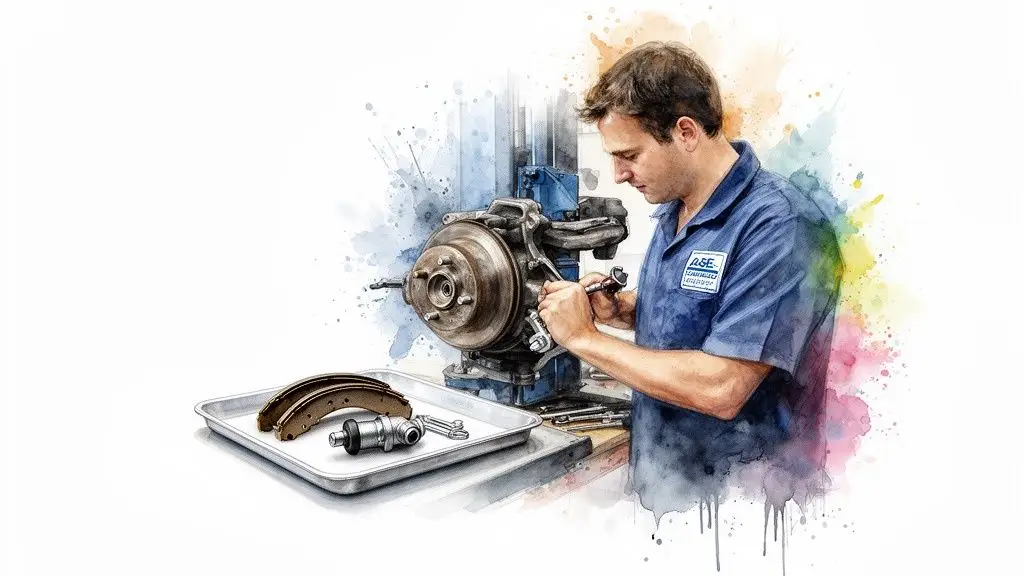
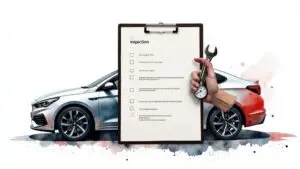
Fixing brakes properly always starts with a rock-solid diagnosis. We don’t guess. Our process begins by getting your vehicle on a lift, removing the rear wheels and brake drums, and taking a hard look to confirm exactly what's going on.
Our Diagnostic and Repair Process
A leaky wheel cylinder can cause a lot of collateral damage, so a quality repair means looking beyond the obvious drip. Our technicians evaluate the entire drum brake system to make sure we're delivering a complete fix that lasts for our Haltom City customers.
Here’s what our comprehensive inspection really looks at:
- Finding the Source: We first verify that the brake wheel cylinder is the culprit. A professional eye can spot the tell-tale wetness around the rubber boots and on the backing plate that confirms a leak.
- Checking for Contamination: This is a big one. Brake fluid is oily, and if it has soaked the brake shoes, they're ruined. Oily shoes can't grab the drum to create friction, so they must be replaced. We'll show you if this has happened.
- Inspecting the Support System: We also check the brake shoes for wear, look over the springs and hardware for rust or fatigue, and make sure the self-adjuster is moving freely.
Once we’ve got a complete picture, we’ll walk you through what we found and provide a clear, straightforward estimate for the job.
Why We Always Replace, Never Rebuild: In the past, shops might have rebuilt a brake wheel cylinder by just swapping out the little rubber seals inside. We don't do that, and for good reason. A complete replacement with a brand-new, high-quality unit is faster, far more reliable, and guarantees every part—from the housing to the pistons—is perfect. It’s the only way to ensure your safety and give you true peace of mind here in Haltom City.
What to Expect During Your Service
When you trust us with your car, you can expect a thorough, professional job from start to finish. Our only goal is to make your brakes work exactly as they were designed to.
A standard wheel cylinder replacement includes several crucial steps:
- Replacing the Faulty Part: The old, leaking brake wheel cylinder is removed and replaced with a new, premium component that meets or exceeds your car’s original factory specs.
- Addressing Related Parts: If brake fluid contaminated the shoes or if they're simply worn down, we replace them at the same time. It’s the only way to guarantee your brakes will work correctly.
- Bleeding the Brake System: This is a non-negotiable final step. Any time the hydraulic system is opened, air gets in. We meticulously bleed the brake lines to force all the air out, which brings back that firm, responsive pedal feel.
Our team at Express Lube & Car Care in Haltom City is here to explain everything we’re doing along the way. We believe in honest work and clear communication, so you can drive away safely and without any lingering worries.
Your Brake Wheel Cylinder Questions Answered
We've covered the technical side of things, but we know what really matters are the practical questions you have as a driver in Haltom City. How long will your car be in the shop? What's this going to cost? Is it safe to drive?
Here at Express Lube & Car Care, we hear these questions every day. Let's get you the straightforward answers you need from our team of experienced technicians.
How Long Does It Take to Replace a Brake Wheel Cylinder?
For a certified technician who does this work regularly in our Haltom City shop, replacing a single brake wheel cylinder is a routine job that usually takes about 1 to 2 hours.
That time covers getting your vehicle safely on the lift, removing the wheel and brake drum assembly, swapping out the old cylinder for the new one, and then performing a full brake bleed. That last step is critical—it ensures there's zero air in your brake lines, giving you a firm, responsive pedal.
Now, here's a piece of advice we always give our customers: since wheel cylinders are installed in pairs and experience the same amount of wear, if one has failed, the other is often not far behind. To save you a return trip and ensure your braking system is balanced and safe, we almost always recommend replacing them both at the same time. If we do both, plan for the job to take around 2 to 3 hours.
What Is the Average Cost for a Replacement in Haltom City?
In the Haltom City area, a professional brake wheel cylinder replacement typically costs between $150 and $350 per wheel. The final price really comes down to the make and model of your vehicle, as the cost of the parts themselves can differ quite a bit.
That estimate includes the new part, the labor from our expert technicians, and the fresh brake fluid required to bleed the system properly.
One Important Thing to Keep in Mind: If the old cylinder has been leaking for a while, the brake fluid has likely soaked the brake shoes and the inside of the drum. This contamination is a serious problem; brake fluid is a lubricant, and you can't have it on surfaces that need friction to stop your car. If we find that they're saturated, those parts will also need to be replaced to get your braking power back to 100%.
We believe in total transparency. Before we ever pick up a wrench at our Haltom City location, we'll show you exactly what's needed and provide a clear, upfront estimate. No surprises.
And this isn't some obscure repair; it's a vital service for millions of drivers. The global market for automotive brake wheel cylinders was valued at a massive USD 3,167.50 million in 2026 and is expected to grow to USD 4,168.21 million by 2031. This just shows how common these parts are and underscores why using quality replacements is so important. You can read the full research about this market growth to see the global scale of this component.
Can I Drive with a Leaking Brake Wheel Cylinder?
Let me be perfectly clear: No. Never drive a vehicle with a known or suspected brake fluid leak. It is incredibly dangerous.
A leaking wheel cylinder means the hydraulic pressure that stops your car is compromised. At best, you'll have a squishy, weak brake pedal that requires a lot more effort and distance to stop. At worst, you could experience a sudden and total failure of your rear brakes.
Your vehicle becomes unpredictable and a hazard to you and everyone else on the road.
If you see fluid stains near a rear wheel or your brake pedal feels "off," the safest thing you can do is pull over, park the car, and call for a tow. A tow bill is a small price to pay to avoid an accident. Your safety on the roads around Haltom City is what matters most.
For brake service you can trust, bring your car or truck to the certified professionals at Express Lube & Car Care in Haltom City. We’re here to give you honest answers and make sure your vehicle is safe. Schedule your brake inspection today by visiting us online at https://www.expresslubehaltom.com.