

TL;DR: If your car in Haltom City suddenly picks up a hum, growl, or rough rolling sound from one corner, treat it like a wheel-end safety problem until a shop proves otherwise. A bad wheel bearing may let you drive a very short distance at low speed, but that choice depends on risk, not convenience.
I tell drivers to judge it by symptoms and route. A faint noise a mile from a local shop is one situation. Noise with wobble, grinding, heat, or steering changes on Denton Highway or Loop 820 is a different one, and that is where a short drive can turn into a breakdown or a wheel-end failure.
The practical rule is simple. If you suspect a bad bearing, avoid highway speeds, avoid long trips, and do not keep testing it to see if it gets worse. Get it inspected as soon as possible. If you want to compare what a bearing problem usually sounds like, review these examples of hub bearing sound that changes with road speed.
At Express Lube & Car Care, the goal is not to scare people. It is to help you make the right call fast, based on how the vehicle sounds, how it drives, and whether it is safer to tow it or carefully bring it straight to the shop.
That Unsettling Noise From Your Wheel
The first sign is usually not dramatic. It’s a low hum, a growl, or a rough rolling sound that seems to come from one corner of the vehicle. Around Haltom City, that often shows up after hitting rough pavement, potholes, or a curb hard enough to jolt the suspension.
I’ve seen drivers describe it three ways. It sounds like aggressive road tread on smooth pavement. It sounds like a distant airplane. Or it sounds like something is dragging, even though nothing is.
What makes wheel bearing noise tricky is that it often sneaks in. On a short trip across town, you may only notice it when the speed comes up. On the next trip, you start hearing it sooner. Then you make a turn, and the noise changes pitch. That’s when people usually realize this isn’t normal tire sound.
A quick way to compare what you’re hearing is to review examples of a hub bearing sound and how it changes with speed. The sound pattern matters because a bearing usually gets louder as wheel speed rises, not because the engine is working harder.
If the noise tracks with road speed instead of engine RPM, the wheel end needs attention.
The concern isn’t just comfort. A failing bearing sits at a load point that supports the wheel while letting it spin smoothly. Once that surface starts wearing out, it doesn’t heal, quiet down permanently, or fix itself with more driving.
What Is a Wheel Bearing and What Does It Do
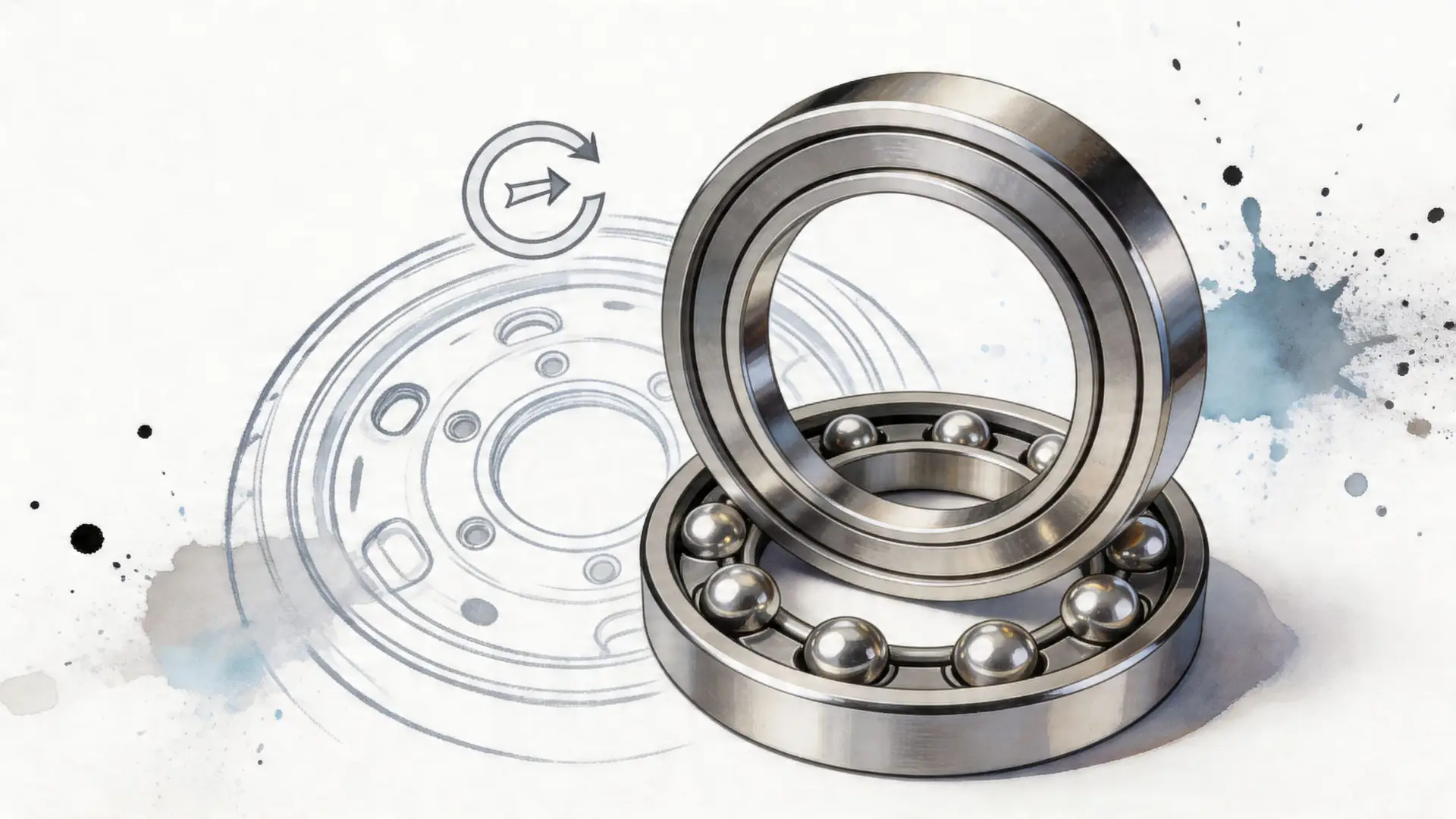
A wheel bearing is the part that lets the wheel spin while still holding the weight of the vehicle. It sits inside the hub area and carries load every second the car is moving, whether you are cruising down NE 28th Street, turning into a parking lot, or hitting broken pavement around Haltom City.
That sounds simple, but the job is demanding. The bearing has to keep the wheel rotating with very little friction while also holding the wheel steady under cornering, braking, and bumps. If it cannot do both, the wheel end starts losing precision.
Why this small part matters so much
Inside a modern bearing assembly are hardened rolling elements, grease, and seals. The grease reduces friction. The seals keep out water, grit, and road contamination. On North Texas roads, that matters. Potholes, standing water, road debris, and heat all put extra stress on sealed hub assemblies.
A healthy bearing works a lot like a well-greased roller. It turns freely under load without wobble or drag. Once contamination gets past the seal or the internal surfaces start wearing, the movement is no longer smooth. Friction rises, heat builds, and the bearing starts to wear faster.
The bearing also affects more than wheel rotation. On many vehicles, the hub area works closely with the ABS and traction control system. If the bearing develops play, sensor readings can become less consistent and the vehicle may not feel as planted as it should.
If you want a model-specific symptom guide after understanding the basic function, this breakdown of bad rear wheel bearing symptoms helps connect the part’s job to the signs drivers notice on the road.
What actually goes wrong
In the shop, I usually see wheel bearings fail from wear, impact, or contamination. A hard curb hit can shorten bearing life. So can water intrusion, poor installation, or years of load cycles.
The failure usually starts inside the bearing surfaces. They become rough instead of smooth. That roughness creates noise first, then heat, then looseness. Once that clearance opens up, the wheel can stop tracking as accurately as it should.
That is the concern. A bad wheel bearing is not just a noisy part. It is a load-bearing part that directly affects stability, braking feel, and how safely the wheel stays supported.
Recognizing the Warning Signs of a Bad Wheel Bearing
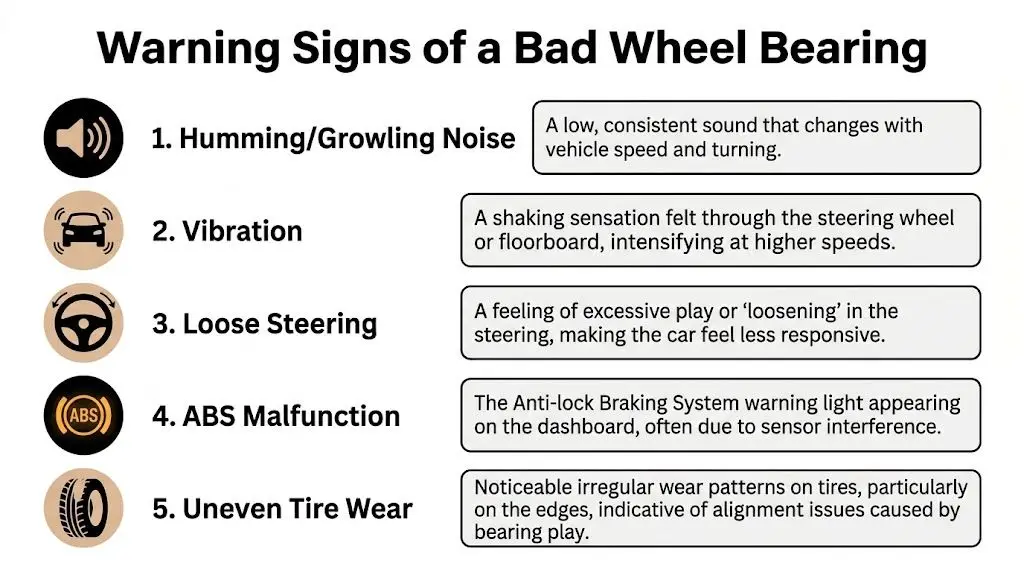
Most drivers don’t catch a wheel bearing at the earliest stage because the first symptom sounds harmless. The most common warning is a humming or grinding noise, and it’s the primary indicator in over 70% of cases according to this wheel bearing symptom video breakdown. That sound often starts subtle and gets louder with speed.
The early signs drivers tend to dismiss
Early bearing symptoms are easy to write off as tire noise or road texture. Pay attention if you notice:
- A steady hum that rises with speed. This is the classic early symptom.
- A growling sound in turns. The noise may change when the vehicle’s weight shifts from side to side.
- A rough sound that stays with the wheel speed. If the engine revs change but the sound doesn’t, look toward the wheel end.
If you want a more detailed local symptom checklist, this guide to bad rear wheel bearing symptoms can help you compare what you’re hearing and feeling.
Signs the problem is moving past the early stage
Once the bearing wears further, the symptoms stop being subtle. You may notice:
- Vibration through the steering wheel or floor
- Loose or vague steering feel
- Uneven tire wear
- ABS warning light
- A wobble or clunk from one wheel area
The ABS light surprises a lot of drivers. On many vehicles, the wheel speed sensor reads movement at the hub. If the bearing develops play, that sensor may get inconsistent data and trigger a warning.
When a wheel bearing starts affecting steering feel or stability, you’re past the stage of “watch it and see.”
A simple driveway check
You can’t fully diagnose a bearing by ear alone, but you can notice patterns:
- Drive at neighborhood speed and listen with the radio off.
- Note whether the sound changes with speed.
- Pay attention in gentle turns. A bearing often gets louder when load shifts.
- Look at the tire for irregular wear at the edges.
- Don’t crawl under the vehicle or keep testing it repeatedly if it already feels unstable.
A real diagnosis still requires proper inspection. Noise can overlap with tire cupping, brake issues, or other front-end problems. But if the sound pattern matches a failing bearing, don’t keep gambling on it.
The Dangers of Driving on a Failing Wheel Bearing
A bad wheel bearing starts as noise. It ends as a control problem.

The first damage is usually indirect. Extra friction can make the vehicle roll less efficiently. The wheel may stop tracking straight. The tire can wear in a pattern that no alignment will fix until the bearing issue is corrected. Drivers sometimes chase the wrong repair because the tire or steering symptom gets their attention first.
The hidden braking risk
One of the biggest dangers isn’t obvious from the driver’s seat. A bad bearing can interfere with wheel speed sensor readings and affect modern safety systems. According to Maxi Auto Repair’s discussion of bad wheel bearing risk, a failing wheel bearing can create erratic sensor data and reduce braking effectiveness by up to 20-30%, while also disabling ABS and traction control on some vehicles.
That matters a lot on wet Texas roads. If you need to stop hard and the ABS isn’t seeing clean wheel-speed data, the vehicle may not respond the way you expect.
The failure chain gets expensive fast
A worn bearing doesn’t stay isolated for long. Once it loosens up, it can start damaging nearby components. The hub can take a beating. Brakes can suffer. Tire wear gets worse. In more advanced cases, axle or suspension parts can end up part of the repair conversation too.
In legal and insurance cases, that kind of breakdown often ties back to inadequate maintenance and delayed response to known warning signs. That’s not a legal conclusion for every vehicle problem, but it does show how seriously ignored wheel-end issues are treated after a crash or road incident.
A bearing failure is one of those problems that gives warning, then suddenly stops being predictable.
Here’s a short visual that shows why wheel-end failures should be taken seriously:
Worst-case outcomes
The severe risks are the ones drivers remember after the fact:
- Wheel lock-up if the bearing seizes
- Extreme heat at the wheel end
- Loss of stable steering
- Wheel detachment in a severe failure
You don’t get a reliable countdown to that point. Some bearings make noise for a while. Others get much worse on one trip. That’s why the safe answer stays conservative even when the vehicle still moves under its own power.
How Far Can You Really Drive and What to Do Immediately
This is the question every worried driver asks, and it deserves a straight answer.
Some drivers have reported getting 100-500 miles out of an early-stage noisy bearing before symptoms got worse, based on real-world forum experiences collected in this Bimmerforums discussion on driving with a bad wheel bearing. That is not a safety standard. It is proof that bearing failure timing is unpredictable.
If all you have is a faint noise and you’re a short city drive from help, the risk is lower than if the vehicle is already vibrating or wobbling. Lower risk does not mean safe.
A practical Haltom City risk framework
Use the symptoms, not wishful thinking, to decide what to do next.
| Symptom Stage | Audible/Visible Signs | Recommended Action in Haltom City |
|---|---|---|
| Early concern | Faint hum or light growl that changes with speed, no vibration, no warning lights noticed | Drive only if absolutely necessary, keep it to a very short city route, avoid highways, and head straight to a shop |
| Elevated risk | Noise is clearly louder, changes in turns, slight steering change, tire wear visible | Don't run errands. Go directly for inspection or arrange a tow |
| High risk | Grinding, vibration, wobble, loose steering feel, ABS warning, pulling | Stop driving and tow it |
| Critical | Heat smell, severe clunking, obvious instability | Do not move the vehicle under its own power |
What to do right now
If you suspect a bad bearing and must move the vehicle before it's inspected:
- Slow down immediately. Keep speeds low and stay off the highway.
- Turn the radio off. Listen for changes in the sound.
- Choose the shortest route possible. No extra stops.
- Avoid hard cornering and sudden braking.
- If the symptom changes from noise to vibration or wobble, stop.
A good general habit is to use a structured vehicle check any time a new mechanical symptom shows up. This guide on how to diagnose vehicle problems is useful for sorting normal noise from a true safety issue.
"If it's only noise, drivers talk themselves into one more trip. The problem is that bearings don't announce the exact trip when they become dangerous."
The safest answer is still simple. If you're asking how far you can go, you're already close to the point where the vehicle needs to be inspected, not tested.
Towing vs Limping to the Shop in Haltom City
This decision usually comes down to distance, symptom severity, and road type.
If the vehicle only has a faint bearing noise and you're a few city miles away on surface streets, some drivers choose to limp it in. If the vehicle has grinding, wobble, steering looseness, or warning lights tied to wheel speed issues, towing is the better call.
When limping it might be the lesser risk
A short, low-speed city drive may be a calculated choice if all of these are true:
- The noise is mild and not paired with vibration
- You're close by and can avoid highway traffic
- The vehicle still tracks normally
- You're going directly to a repair facility
When towing is the right answer
Tow it if any of these show up:
- Grinding instead of humming
- Steering play or pulling
- Shaking through the wheel or floor
- An ABS warning with other wheel-end symptoms
- A longer route that includes freeway speeds
If you're not sure whether your policy or roadside plan helps with recovery, it's smart to review your towing options before you're stranded on the side of the road.
The cheap choice isn't always the low-cost choice. A short tow bill can be easier to absorb than turning a bearing job into a much larger suspension, hub, axle, or brake repair.
What to Expect for a Wheel Bearing Repair
A wheel bearing repair is usually straightforward if the problem is caught before it starts damaging the hub, brakes, axle, or tire. In the shop, the first job is confirming the bearing is the source of the noise. Tire roar, cupped tread, and some brake issues can sound similar on rough North Texas roads.
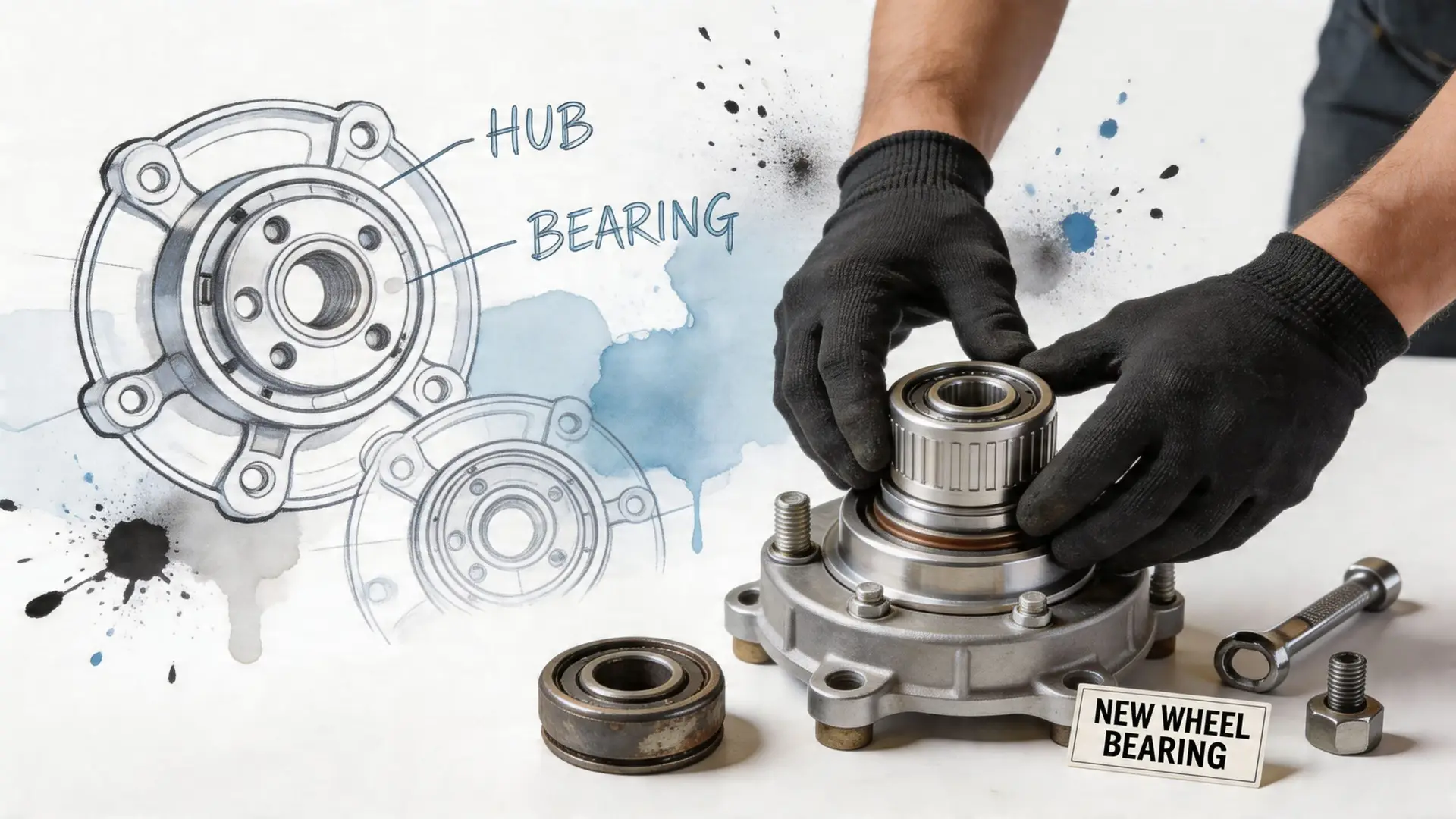
On many newer vehicles, the repair means replacing the entire hub assembly because the bearing comes built into that unit. On other vehicles, the bearing is pressed out of the knuckle or hub and a new one is pressed in. The second type usually takes more labor and the right equipment. Pressing a bearing in crooked or tightening axle hardware incorrectly can ruin a new part fast.
A proper inspection is methodical. The technician road-tests the vehicle, listens for load changes in turns, checks for wheel play on the lift, and inspects the surrounding brake and suspension parts for heat, looseness, or metal dust. In my experience, that step matters as much as the part itself. Good diagnosis prevents paying for a bearing when the actual problem is a tire, CV axle, or brake issue.
The repair process usually looks like this:
- Remove the wheel, brake caliper, and rotor
- Access the hub or pressed-in bearing
- Replace the failed bearing or hub assembly
- Torque all fasteners to spec
- Recheck wheel speed sensor operation if equipped
- Road-test the vehicle to confirm the noise is gone
If you want a better feel for how a local shop handles inspections and mechanical repairs, this guide to auto repair services in Haltom City gives useful context.
Cost depends on the vehicle, the design of the bearing, and how long the problem has been ignored. A simple bolt-on hub assembly is often faster than a press-in bearing. Rust can slow the job down too, especially on older vehicles. If the bad bearing has already affected the wheel hub, ABS sensor, axle, brake rotor, or tire, the bill goes up because the repair is no longer limited to one part.
Parts quality matters here.
Cheap bearings can be noisy out of the box or fail early, and that means paying labor twice. The better repair uses a quality bearing or hub, correct torque procedures, and a final road test. Texas heat, patched pavement, and potholes around Haltom City already put enough stress on wheel-end parts. Installing bargain components usually is not the place to save money.
What helps is simple. Accurate diagnosis, quality parts, clean mounting surfaces, and torqueing everything to specification. What causes trouble is guessing, replacing unrelated parts first, or trying to stretch a failing bearing for a few more weeks. Early repair keeps this job predictable. Late repair turns it into a wheel-end overhaul.
Your Next Step for a Safe Ride in Haltom City
You hear a steady hum on Denton Highway, then the steering starts to feel a little loose when you change lanes. That is the point to stop guessing. A failing wheel bearing can turn from noise to a control problem faster than many drivers expect, especially on rough pavement and patched roads around Haltom City.
The next step is simple. Have the vehicle inspected before you decide to drive it any farther.
A good inspection answers the question that matters most. Is this car safe to move under its own power, or does it need a tow? A technician should road-test it if conditions allow, check for wheel play on a lift, inspect the hub and brake area, and look for related damage that can raise the repair cost if the problem has gone too far. That gives you a real risk assessment, not a guess based on noise alone.
For drivers in Haltom City, Keller, Watauga, and North Richland Hills, local conditions matter. Heat, potholes, concrete expansion joints, and worn surface streets put extra stress on wheel-end parts. A bearing that seems manageable on a short neighborhood drive can get much louder and less stable at highway speed.
Choose a shop that will explain the trade-offs clearly. If the bearing is only starting to fail, you may be dealing with a straightforward repair. If it has already damaged the hub, sensor, brakes, or tire, the job gets bigger and the safety risk goes up with it.
If your car has started humming, growling, vibrating, or feeling loose at the wheel, have it inspected by Express Lube and Car Care, conveniently located at 6211 Denton Hwy in Haltom City. Their certified technicians serve drivers across Haltom City, Keller, Watauga, and North Richland Hills with transparent recommendations, quality repairs, and the kind of fast, reliable service that helps you get back on the road safely.