
You're driving down Denton Highway, easing up to a light, and the car starts talking back. Maybe it's a low groan. Maybe it's a rhythmic thump. Maybe the brake pedal feels like it's tapping your foot in little pulses. Most drivers around Haltom City call that the warped rotor sound.
That name is common, but it also sends a lot of people in the wrong direction.
If you're hearing a strange brake noise, your first thought is usually simple. “Are my brakes safe?” That's the right question. The good news is that this problem is often more understandable, and sometimes more fixable, than it first sounds. The tricky part is figuring out whether you're dealing with rotor surface variation, worn pads, brake hardware, or another issue that only shows up when you slow down.
A lot of brake noises sound similar from the driver's seat. A squeal can mean one thing. A grind can mean something very different. A thump with pedal pulsation points in another direction. If you've already been searching for answers, a guide to why brakes squeak can help separate everyday brake sounds from the one people often label as rotor warp.
Hearing a Strange Noise When You Brake
One of the most common local stories goes like this. A driver heads through Haltom City traffic, everything feels normal at cruising speed, then the noise starts only when the brake pedal goes down. At first it's faint. A day later it's easier to notice. Then the steering wheel gives a little shake, and now it's hard to ignore.
That's where people get uneasy, and for good reason. Brake noises don't feel like a “wait and see” kind of problem.
The warped rotor sound usually isn't a constant noise. It tends to show up in a pattern. You press the brake pedal and hear or feel something rhythmic. It may sound like a repeating thump, hum, chatter, or groan that matches wheel rotation. Drivers often describe it as if something is slightly out of round, like a shopping cart wheel with one bad spot that keeps coming back around.
Brakes usually tell you when the problem is happening. If the noise appears only during braking, that timing matters as much as the sound itself.
The confusing part is that “warped rotor” became the catch-all phrase for almost any brake pulsation. It stuck because it's easy to say and easy to picture. Many drivers imagine the rotor disc bending from heat like a vinyl record left in the sun.
That mental picture isn't usually what's going on.
The Myth of the Warped Rotor
The phrase warped rotor sounds logical. Rotors get hot. Metal changes with heat. The pedal pulses. Case closed, right?
Not usually.
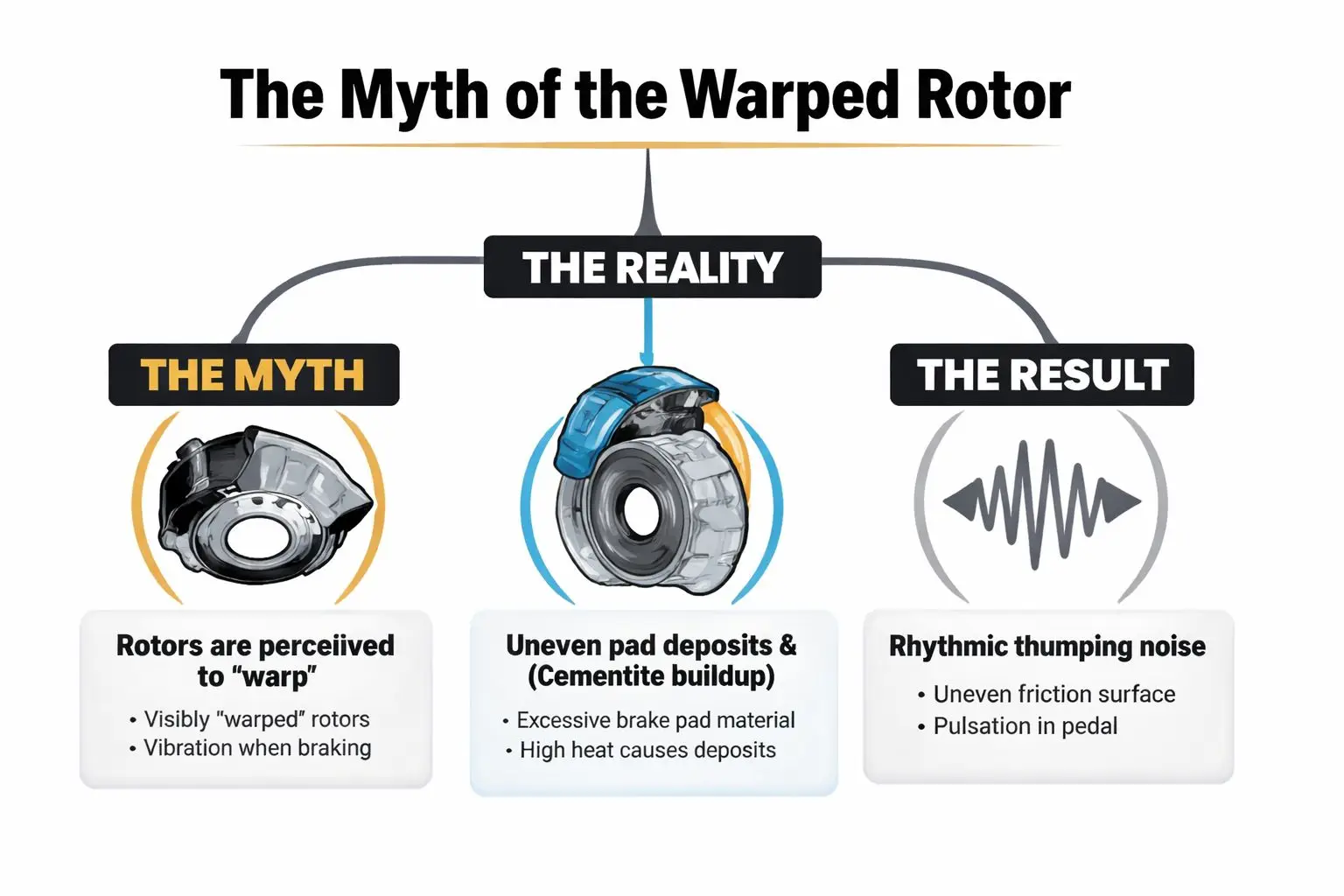
Engineering analysis points to a different explanation. True thermal warping is exceptionally rare, and over 90% of reported “warped rotor” cases are thickness variation caused by uneven brake pad material transfer, with trouble showing up when runout exceeds 0.004 inches (0.1 mm), the maximum industry tolerance noted in this source on brake vibration and thickness variation.
What's really happening on the rotor surface
Think of the rotor like a dinner plate spinning between the brake pads. If the plate stayed perfectly even all the way around, the pads would press smoothly every time you stopped.
Now imagine tiny high spots and low spots forming on that surface.
Those spots often come from uneven friction material transfer. Brake pad material doesn't always lay down evenly across the rotor face. Under heat, certain areas pick up more deposit than others. When that rotor spins, the pad grabs a little harder on one section, a little lighter on the next, then harder again. That repeating change creates the pulse you feel and the sound you hear.
A better analogy is a wobbly record, except the problem isn't always a bent disc. Sometimes it's the surface itself being uneven, so the stylus keeps riding over bumps. Your brake pads are doing the same thing.
Why drivers still call it warping
The old term stuck because the symptom feels dramatic. The brake pedal pulses. The steering wheel can shake. The noise comes in a repeating rhythm. From the driver's seat, “warped” feels like the obvious answer.
But from a mechanic's standpoint, the key term is Disc Thickness Variation, often shortened to DTV. That means the rotor isn't the same effective thickness at every point around its braking surface. Even a small change can create a noticeable vibration when the pads clamp down.
This is why good diagnosis matters more than guessing. If someone replaces parts based only on the word “warp,” they can miss the underlying cause. Surface deposits, improper bedding, uneven lug torque, pad issues, or related hardware can all contribute to the same complaint.
Practical rule: Don't focus on the label. Focus on the pattern. Rhythmic noise plus pedal pulsation during braking usually points a technician toward rotor surface variation, not a dramatic bent disc.
Why heat still matters
Heat is still part of the story. It just doesn't automatically mean the rotor bent.
When brakes get hot, pad material changes behavior. After a hard stop, if the vehicle sits with the pads clamped against the rotor, that contact can leave a more concentrated imprint in one area. Over time, those deposits build unevenly. That's how a driver ends up with the classic warped rotor sound even though the rotor itself may not be physically warped in the way people imagine.
That difference matters because the repair decision changes. Some rotors can be resurfaced. Some need replacement. Some need pad service and a proper re-bedding process. The sound is real. The common explanation often isn't.
Squeal vs Grind vs Thump Distinguishing Brake Noises
Brake sounds are easy to mix up because they all happen near the wheels, they all involve metal and friction, and they all get your attention fast. But your ears can still tell you a lot.
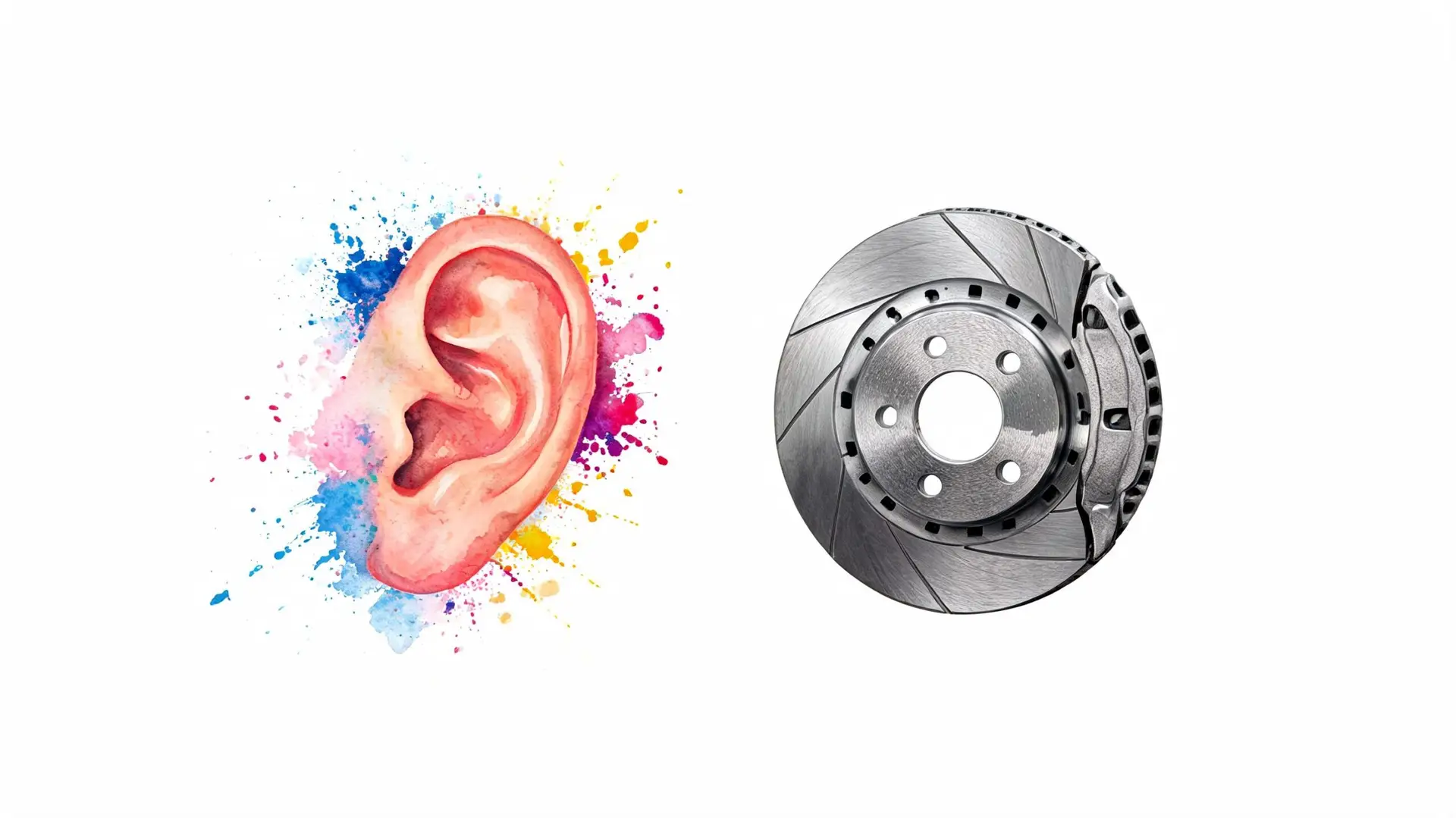
A useful way to think about it is this. Squeal is sharp. Grind is harsh. Thump is rhythmic.
A quick listener's guide
| Sound | What it tends to feel like | Common clue |
|---|---|---|
| High-pitched squeal | Usually more heard than felt | Often points toward glazed pads or pad wear indicators |
| Metallic grinding | Rough, harsh, ugly sound | Often suggests worn pads making metal-to-metal contact |
| Rhythmic thump or groan | Heard and felt in a repeating pattern | Often fits DTV-related brake pulsation |
| Clunking | More like a knock than a friction sound | Can suggest loose components or hardware |
One helpful distinction comes from this analysis of how brake noises differ. It notes that warped rotor complaints are often described as groaning, thumping, rhythmic squealing, or chattering, while glazed pads lean toward a high-pitched squeal, worn pads toward metallic grinding, and loose components toward clunking. It also notes that a pulsating thump felt and heard in the pedal or steering often signals DTV greater than 0.001 inches.
Timing matters as much as tone
Ask yourself a few plain-language questions.
- Only when braking: If the noise shows up when your foot goes on the pedal and fades when you release it, the brake system moves higher on the suspect list.
- Still there off-brake: If the hum or growl keeps going even when you're not braking, a wheel bearing or tire issue may deserve a closer look.
- Pulsation included: If you can feel the beat of the sound through the pedal or wheel, that points more toward rotor surface variation than a simple squeak.
If you want a broader comparison of sounds from around the whole vehicle, this guide to common car noises and what they mean helps separate brake-related symptoms from suspension, tire, and bearing noise.
A brake squeal can be annoying. A brake grind is more urgent. A brake thump with pulsation is its own category, and it deserves a measured inspection instead of a guess.
Simple Diagnostic Checks Before You Call a Pro
Before you pick up the phone, you can gather useful clues without taking anything apart. You're not trying to diagnose the whole brake system in your driveway. You're trying to notice patterns that help a technician narrow things down faster.
One fact that helps frame this. Brake pedal pulsation and the related warped rotor sound affect 25 to 30% of vehicles over 50,000 miles, and 60% of front-brake cases transmit symptoms into the steering wheel due to spindle coupling, according to this report on brake pulsation and steering vibration.
What to notice during a short drive
Use a calm, low-speed drive in a safe area. Keep it simple.
Feel the pedal
Does the brake pedal push back in a repeating pulse, or is it smooth? A repeating pulse tells the technician the issue may be tied to rotor surface variation instead of a random squeak.
Watch the steering wheel
If the steering wheel shivers when braking, especially from moderate speed, that often gives an important clue about the front brake area.
Listen for rhythm
A steady squeal is different from a beat-like thump. Count the pattern in your head if you can. If it repeats as the car slows, that's useful information.
What to check when the car is parked
You don't need tools for a basic visual check.
- Rotor face: Look through the wheel if you can. Heavy scoring, dark patches, or obvious uneven surface marks are worth mentioning.
- Wheel area: If one wheel looks dustier than the others or has a burnt smell after driving, tell the shop. That can matter.
- Noise conditions: Write down whether the sound happens cold, hot, first stop of the day, downhill, or after a long drive.
A visual guide to how to inspect brake rotors can help you know what surface marks are worth noting before an inspection.
What not to do
Don't try panic-stop testing on public roads. Don't spray chemicals on brake parts hoping the noise disappears. Don't assume a recent brake job rules out rotor issues either. New pads on an uneven rotor can still produce the same complaint.
The best pre-visit diagnosis isn't a repair. It's a clear description: what you hear, what you feel, when it happens, and whether the steering wheel joins in.
Resurfacing vs Replacing Rotors Whats Best for Your Car
Once the noise is confirmed as a rotor-surface problem, the next question is practical. Can the rotor be machined smooth, or is it time for replacement?
There isn't one answer that fits every vehicle. The right choice depends on rotor condition, remaining thickness, heat checking, scoring, and whether the variation comes from surface deposits or deeper damage.
When resurfacing makes sense
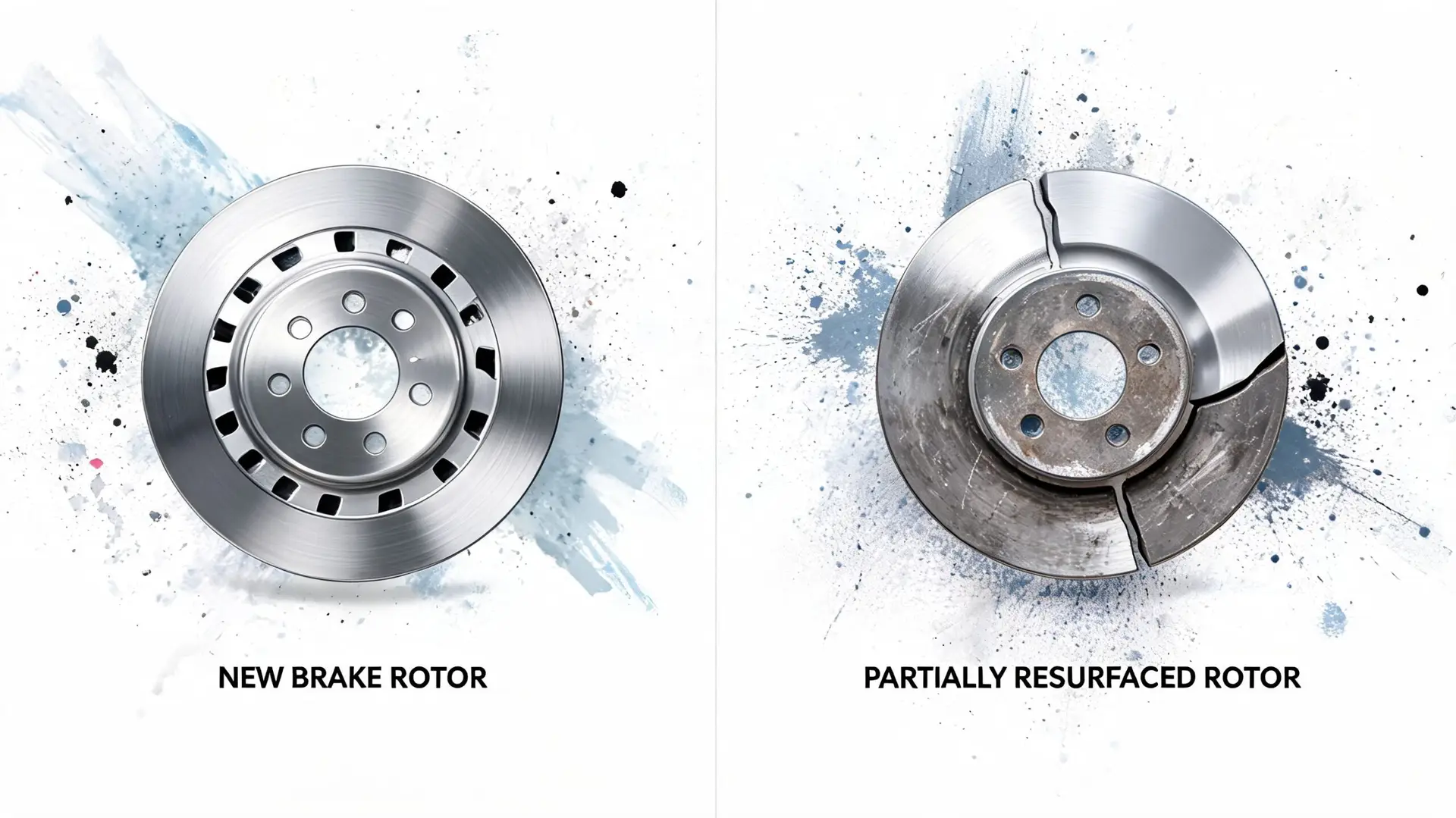
Resurfacing means machining the rotor face so both sides are smooth and even again. It's a bit like shaving a rough tabletop until it sits flat. If the rotor still has enough material left after machining, resurfacing can restore a smooth braking surface.
That logic is familiar in other repair trades too. The same way homeowners might choose to renew your old hardwood floors instead of replacing every board, a technician may save a usable rotor by cleaning up the working surface rather than throwing it away.
Resurfacing tends to make sense when:
- Thickness remains within spec: The rotor can be machined and still stay safely above the minimum marked by the manufacturer.
- Surface issue is moderate: Light scoring or deposit-related variation may be corrected without replacing the part.
- No major structural damage shows up: Deep cracks, severe heat damage, or extreme wear change the conversation.
When replacement is the better call
Sometimes machining doesn't leave enough safe material. Sometimes the rotor has been cut before. Sometimes the surface damage is severe enough that replacement is the smarter and safer move.
Replacement usually makes more sense when the rotor is too thin, badly scored, heat-damaged, or built in a way that doesn't leave much room for machining. A technician also has to think beyond “Can this be cut?” to “Will this rotor still perform well after that cut?”
Why measurement decides the answer
The important part isn't the opinion. It's the measurement.
According to this explanation of DTV diagnosis and repair options, the sound people attribute to warped rotors is primarily caused by Disc Thickness Variation, and technicians can diagnose it by using micrometers to measure rotor thickness variation and by visually checking for scoring patterns that help distinguish genuine rotor damage from material deposits.
That's why a careful brake inspection uses actual tools. A micrometer tells the truth. A visual check helps confirm whether the rotor surface has buildup, scoring, or damage that resurfacing won't solve. Brake jobs go wrong when people skip this step and jump straight to “replace everything” or “just slap pads on it.”
Shop-floor reality: A rotor doesn't get repaired because it “looks kind of okay.” It gets repaired or replaced because measurements say it can, or can't, safely go back into service.
Understanding Costs and Safety Risks
Most drivers ask two questions right away. What's this going to cost, and can I keep driving it for a while?
The honest answer is that the cost depends on what the inspection finds. If the issue is mostly surface-related and the rotor is still serviceable, the repair path is different than if the rotor is too thin or badly damaged. Pad condition also matters. So does whether one axle or both is affected.
Because repair pricing changes by vehicle, parts design, and condition, the smart move is to treat diagnosis as the first money-saving step. The wrong guess can lead to replacing parts that didn't need replacement, or keeping parts that should've been retired.
Why the safety side matters
Brake pulsation isn't just a comfort issue. It can change how consistently the pads contact the rotor during a stop. That matters most when you need smooth, predictable braking.
The source material on this topic also mentions smartphone tools that may help people record and analyze brake sounds. A future-facing industry note on brake sound analysis apps says that post-2025 apps such as BrakeScan AI and VibraCheck use phone microphones and accelerometers to analyze braking audio and vibration, but it also says they are not a replacement for certified technicians. That same note frames hot Texas conditions as part of the problem, mentioning situations where rotors can reach 600°F in summer driving conditions.
A sensible way to think about urgency
Use this rule of thumb:
- Mild noise, no pedal change: Schedule an inspection soon.
- Noise plus pulsation: Move it up on your list.
- Grinding, strong vibration, or obvious braking change: Treat it as urgent.
If the vehicle takes more concentration to stop smoothly, that's not a symptom to normalize. Brake issues tend to get more expensive when they're ignored, and they can become harder to diagnose cleanly once other parts start wearing unevenly in response.
You don't need to panic. You do need to pay attention.
Your Next Steps for Safe Braking in Haltom City
If you remember one thing, make it this. The warped rotor sound usually isn't proof that a brake rotor bent like a potato chip. More often, it points to surface variation or uneven pad transfer that needs proper measurement and a real diagnosis.
That's why guessing rarely helps. A squeal, a grind, and a rhythmic thump may all come from the brake area, but they don't mean the same thing. The sound, the pedal feel, the steering wheel behavior, and the rotor measurements all have to line up before anyone can recommend resurfacing, replacement, or another fix.
A good next step is simple:
- Write down when the noise happens
- Note whether the brake pedal pulses
- Pay attention to steering wheel vibration
- Schedule a brake inspection before the symptom gets worse
After the repair, prevention matters too. Follow proper bedding procedures when new pads and rotors are installed. Try not to hold the brake pedal firmly after a hard stop if the brakes are very hot. If wheels have been removed recently, make sure lug torque was handled correctly by the shop. Small details can affect how evenly the rotor and pad surfaces work together.
If you want to know what a professional visit typically covers, this overview of what brake service includes is a helpful place to start.
Haltom City drivers, along with neighbors in Keller, Watauga, and North Richland Hills, don't need to become brake engineers. You just need to catch the symptom early, describe it clearly, and have it checked by people who measure before they recommend.
If your car is making a warped rotor sound, the team at Express Lube and Car Care can help you get a clear answer. Their certified technicians serve Haltom City drivers with brake inspections, straightforward recommendations, and the kind of local service that helps you feel confident every time you hit the pedal.