
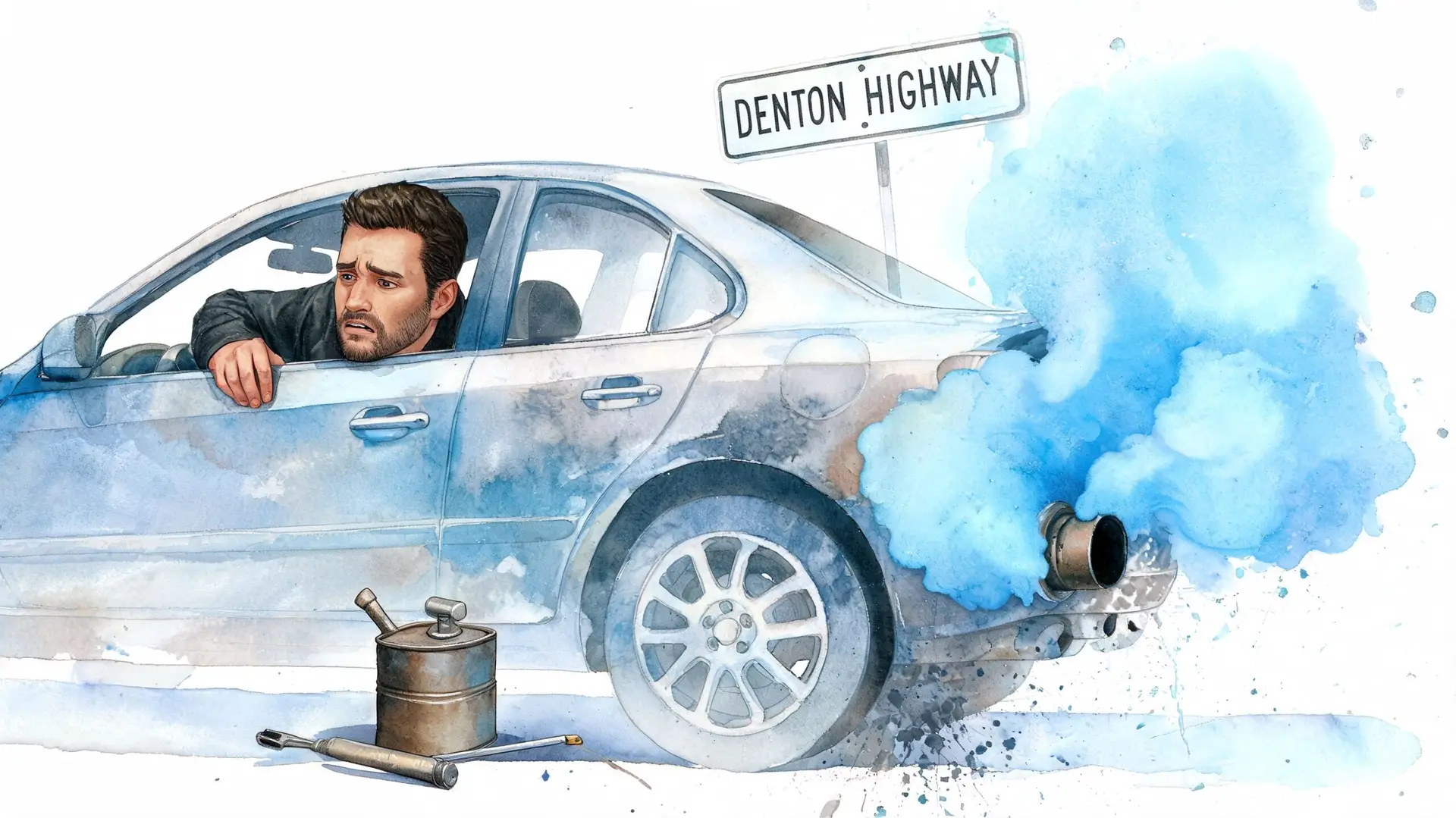
You’re driving down Denton Highway, maybe heading home through Haltom City after work, and you catch something in the mirror. A faint blue puff when you pull away from a light. Or maybe there’s no smoke at all, but your dipstick keeps reading low even though you don’t see oil spots where you park.
That gets people’s attention fast, and it should. When oil disappears, it’s going somewhere. Sometimes it’s leaking outside the engine. Sometimes the engine is burning it inside the cylinders. Those are two different problems, and they need different fixes.
A lot of local drivers ask the same question in almost the same words: what causes a car to burn oil, and how serious is it? The short answer is that oil usually gets past a seal, a guide, or a ventilation system that’s no longer controlling pressure the way it should. The better answer takes a little more unpacking, because not every oil-burning complaint means the engine is on its last leg.
Is Your Car Sending Smoke Signals on Denton Highway
One common scenario goes like this. A driver from North Richland Hills notices a little smoke on startup but the car still runs fine. Another driver in Watauga doesn’t see smoke at all, but adds oil between services and assumes that’s just what older cars do. Then a week later, the oil light flickers and now it feels urgent.
That’s why this topic matters. Oil burning is one of those problems that can stay quiet for a while. The vehicle may start, idle, and drive normally right up until the oil level gets low enough to affect lubrication.
What the smoke usually means
Blue or blue-gray exhaust is the classic clue. It means engine oil is getting into the combustion chamber and burning with the air-fuel mixture. That can happen from the bottom of the engine, the top of the engine, or through the crankcase ventilation system.
You may also notice:
- More frequent top-offs between oil changes
- A burning oil smell after driving
- Rougher performance if oil starts fouling spark plugs
- Low oil level without obvious drips under the vehicle
Most people don’t need a lecture when this happens. They need a calm answer to one question: is this a watch-it issue, or a fix-it-now issue?
In Haltom City, where plenty of people rely on one daily driver for work, school, and errands, that distinction matters. If the car is using oil slowly and predictably, you monitor it. If it’s using oil quickly, smoking hard, or running poorly, you stop guessing and diagnose it.
Normal Oil Use vs A Real Problem
A low dipstick does not automatically mean the engine is worn out. Some oil use is part of normal operation, especially on higher-mileage vehicles and certain newer engine designs that were built with fuel economy in mind.
Engine oil is a working fluid. It handles lubrication, heat, and contamination inside a hot, high-stress environment. Over time, a small amount can get past normal clearances and get used without pointing to a major failure.
Why modern engines confuse people
A lot of drivers expect a newer vehicle to go from oil change to oil change without dropping at all. That expectation is where the confusion starts. In the shop, I still see late-model engines that use oil more than owners expect, not because the owner did anything wrong, but because some engines were designed with tighter efficiency targets and less margin for oil control.
That trade-off matters. Better fuel economy can come with lower-tension rings, different PCV strategies, and engine designs that are less forgiving if maintenance slips or driving conditions are hard on the oil.
What’s normal and what deserves attention
The better way to judge oil use is by trend.
If a vehicle uses a small, steady amount between services, runs clean, and has no smoke, no drivability complaints, and no warning lights, that usually falls into the monitor-it category. If the level starts dropping faster than it used to, the pattern has changed, and that deserves a closer look even if the car still seems to drive fine.
Here is the line I use with Haltom City drivers:
- Likely normal if oil use is light, consistent, and the engine runs the same as always
- Needs inspection soon if top-offs are becoming more frequent or the rate of use has changed
- A real problem if oil loss is quick, blue smoke shows up, performance drops, or the engine starts fouling plugs or triggering warning lights
One more point that trips people up. Dark oil is not the same thing as burned oil. If that question is part of what you are sorting out, this guide on what causes engine oil to turn black explains the difference.
The line most drivers should use
Judge the car by repeatable conditions, not one reading on a busy morning. Check the level the same way each time, on level ground, after the engine has sat long enough for the oil to drain back. Then watch the pattern over a few weeks.
A vehicle that has always needed a little oil may still have plenty of life left. A vehicle that suddenly starts using oil is sending a different message, and that is when diagnosis matters. Before assuming the engine is burning everything it loses, rule out external loss too. Some vehicles leave almost no visible spots but still seep enough oil to matter, and resources like Top Level Cars oil leak fixes show how leak symptoms can overlap with oil-burning complaints.
That distinction saves people money. It keeps you from treating normal consumption like a catastrophe, and it keeps you from ignoring a real problem until the repair bill gets much bigger.
The Top Three Causes of Excessive Oil Burning
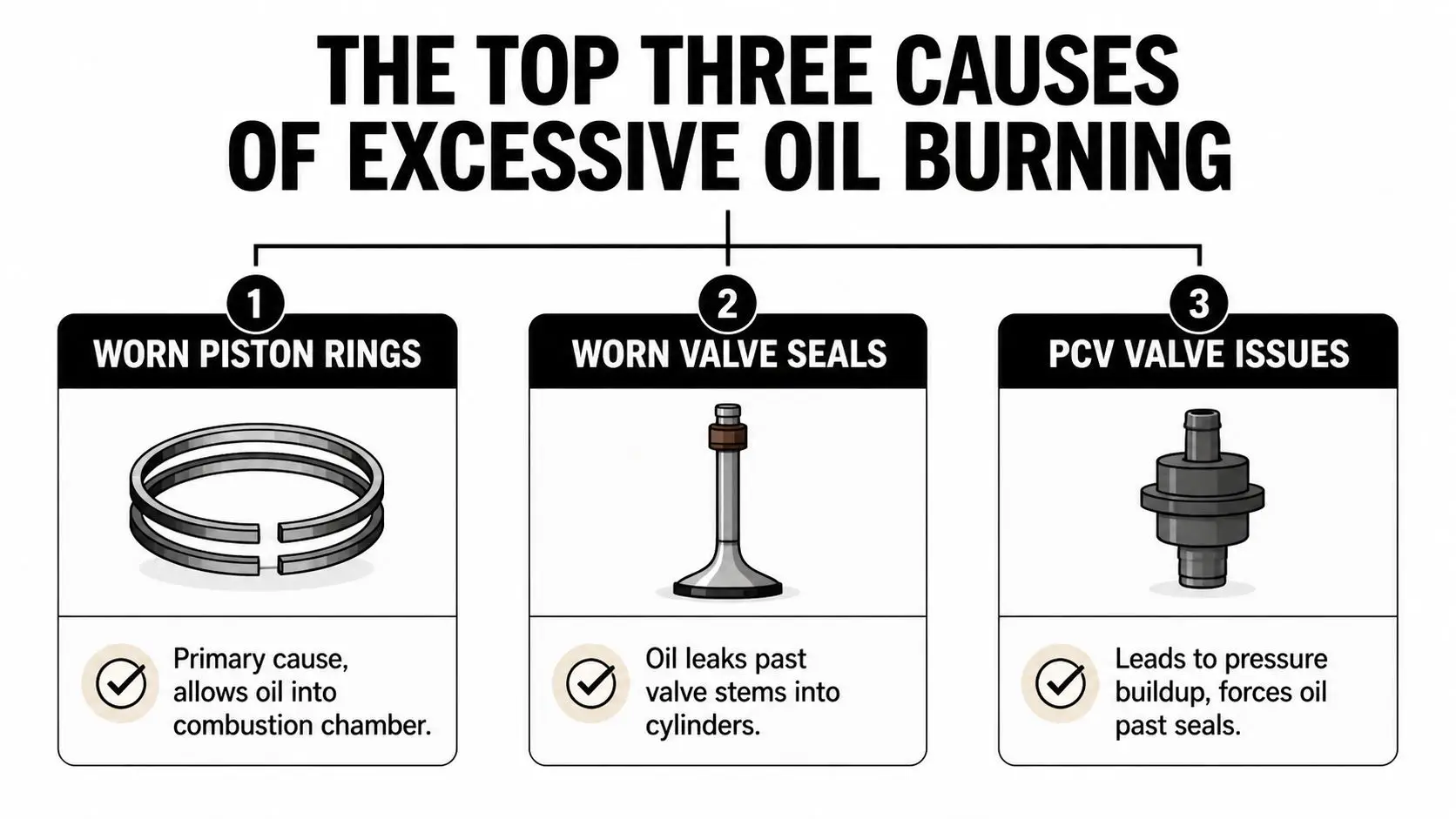
Once a vehicle starts using oil fast enough that you are adding between services, the cause is usually one of three places inside the engine system. In our bays, the repeat offenders are worn piston rings, worn valve seals, and PCV system problems. The job is figuring out which one fits the pattern, because the repair path and cost can be very different.
Worn piston rings
Piston rings seal combustion pressure and control the thin film of oil on the cylinder wall. When the rings wear, oil gets pulled into the combustion chamber and burns along with the air fuel mixture. Power often drops at the same time, because the engine is losing some of the pressure it needs to make efficient combustion.
Tires Plus on why cars burn oil notes that worn piston rings and cylinder walls are a common mechanical cause of excessive oil consumption. In plain terms, this is the hard one. Ring wear usually points to internal engine wear, not a simple bolt-on fix.
Common clues include:
- Blue smoke during acceleration
- Oil use that keeps increasing
- Noticeably weaker performance
- Low compression or blow-by symptoms
Piston rings work like the pressure seal for each cylinder. When that seal weakens, oil slips past where it should not.
Worn valve seals
Valve seals meter oil at the top of the engine, around the valve stems. When they get brittle or worn, oil leaks down into the combustion chamber from above. The symptom pattern is usually different from ring wear, and that distinction helps.
A puff of blue smoke on startup after the car sits overnight is a classic clue. Smoke after idling at a light and then pulling away is another. In the shop, I treat that timing as useful evidence, because it points toward oil draining past the seals while the engine is sitting or idling instead of being forced past the rings under load.
Valve seal problems can stay livable for a while. They still create carbon buildup, raise oil consumption, and can foul spark plugs if ignored.
PCV system problems
The Positive Crankcase Ventilation system manages crankcase pressure and routes vapors back into the intake. When that system sticks, clogs, or pulls too much vacuum, the engine can start consuming oil even though the internal hard parts are not completely worn out.
This cause gets missed all the time because the symptoms can overlap with larger engine problems. A faulty PCV valve or blocked hose can push oil past seals, pull oil vapor into the intake, or make a small wear issue act much worse than it really is. That is why a good technician checks the simple pressure-control pieces before recommending major engine work. If you want a broader look at how shops sort out overlapping symptoms, our guide to diagnosing vehicle problems before parts get thrown at them lays out the process.
Quick Guide to Oil Burning Causes
| Cause | Common Symptoms | Repair Complexity |
|---|---|---|
| Worn piston rings | Blue smoke under acceleration, oil loss, reduced performance | High |
| Worn valve seals | Puff of smoke on startup or after idling, gradual oil use | Moderate to high |
| PCV valve issues | Oil consumption without obvious leaks, pressure-related symptoms | Low to moderate |
If you are still sorting out whether the oil is being burned or leaking externally, this overview of Top Level Cars oil leak fixes is a useful companion read because leaks and burning often get mixed up.
Simple Diagnostic Checks You Can Do at Home
You pull into the driveway after a week of commuting through Haltom City, check the dipstick, and the oil is down again. That does not automatically mean the engine is worn out. It means you need better clues before anybody starts selling you parts.
Start with a pattern, not a guess
Check the oil on level ground with the engine off after it has sat long enough for the oil to drain back into the pan. Record the level and the mileage. Then recheck it after a few days of normal driving.
A note on your phone works fine.
What matters is the pattern. A car that drops a little oil over a long interval is different from one that loses it quickly between fill-ups. That distinction helps separate normal consumption from a problem worth chasing.
Watch the exhaust at the right moments
Smoke timing tells you more than smoke color alone. Ask someone to stand behind the car, or prop your phone up safely and record a cold start.
Look for these moments:
- Smoke right at startup often points to oil getting into the cylinders while the engine sits.
- Smoke during acceleration can point toward oil getting past worn parts when cylinder pressure rises.
- Smoke after idling at a light, then pulling away often suggests oil is slipping in from the top end.
- No obvious smoke with steady oil loss still matters. Some engines burn oil lightly enough that you will smell it or see the level drop before you ever catch a blue cloud.
Rule out an external leak
I see this mistake all the time. Drivers assume the engine is burning oil, but the oil is leaking onto the outside of the engine and cooking off on a hot surface.
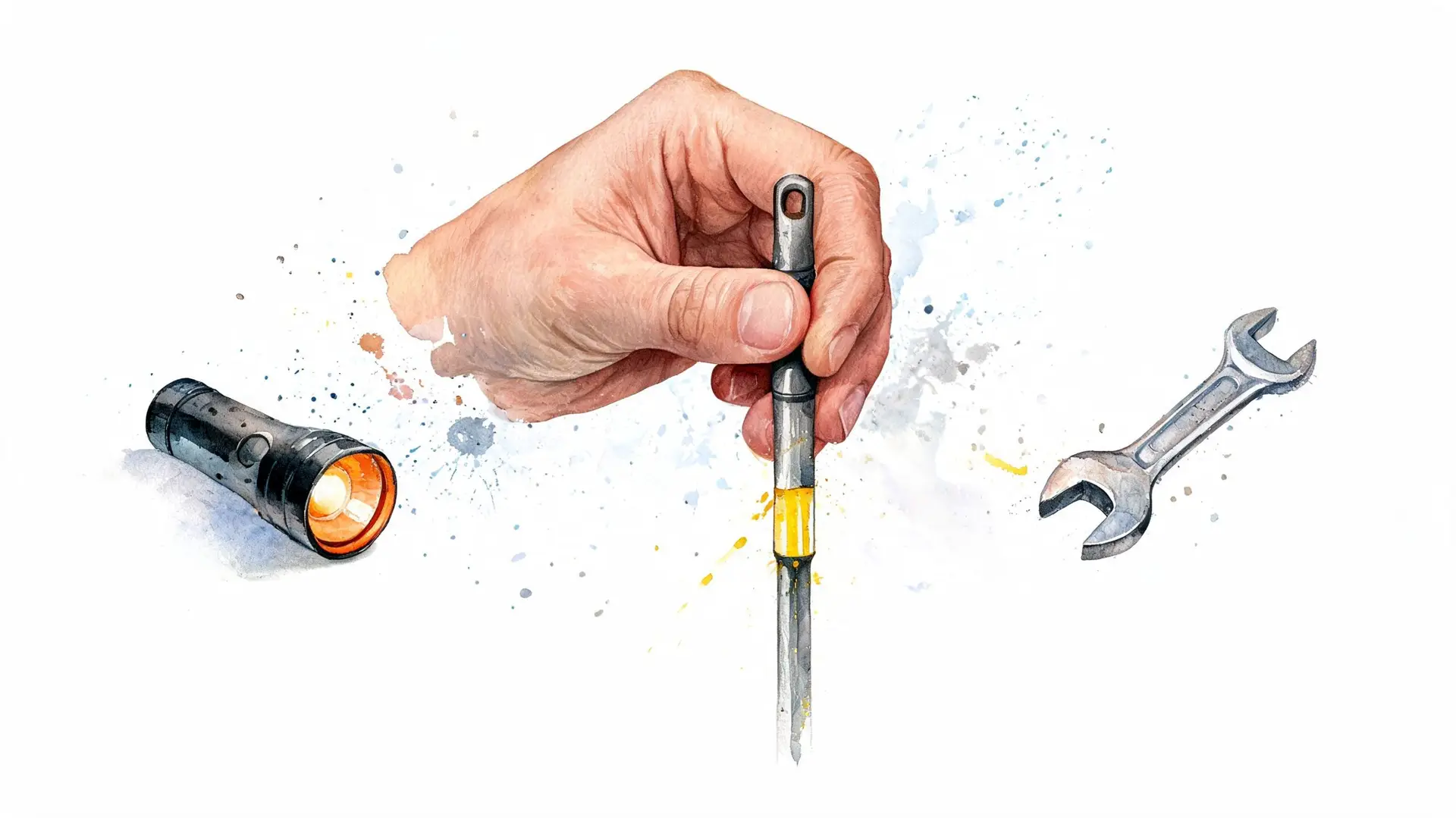
Use a flashlight and inspect the valve cover area, around the oil filter, the drain plug, the oil pan rail, and the lower front and rear of the engine. Fresh wet oil tells a different story than old dark grime. If you smell burnt oil after a drive, check for oil landing on the exhaust manifold or other hot parts.
If you want a simple process for sorting symptoms before you book an appointment, our guide on how to diagnose vehicle problems before replacing parts lays it out clearly.
Do a basic PCV and intake check
You do not need shop equipment to spot obvious trouble. If the PCV valve and hoses are easy to access, inspect them for cracks, collapsed lines, heavy sludge, or loose connections. Pull the oil fill cap and look for thick deposits that suggest poor maintenance or moisture buildup.
If you can reach the intake tube, look for oily residue that seems excessive. A light film is common on many engines. Pools of oil or heavy wet buildup deserve attention.
Home checks have limits. You can spot clues in the driveway, but you cannot measure crankcase pressure, verify ring sealing, or confirm valve seal leakage without proper testing. That is where a shop saves time and money by narrowing the problem instead of guessing.
A quick visual walkthrough can help you understand what technicians are checking:
What to bring to a technician
Good notes cut diagnostic time.
Bring these with you:
- Mileage and oil level notes from each check
- When the smoke happens, such as cold start, idle, or acceleration
- Photos or video if the symptom comes and goes
- Recent oil change history, including oil weight and filter used
Clear observations help a technician separate a minor service issue from internal engine wear much faster.
Repair Options and Cost Estimates in Haltom City
Once the cause is narrowed down, the main question is whether the repair fits the vehicle.
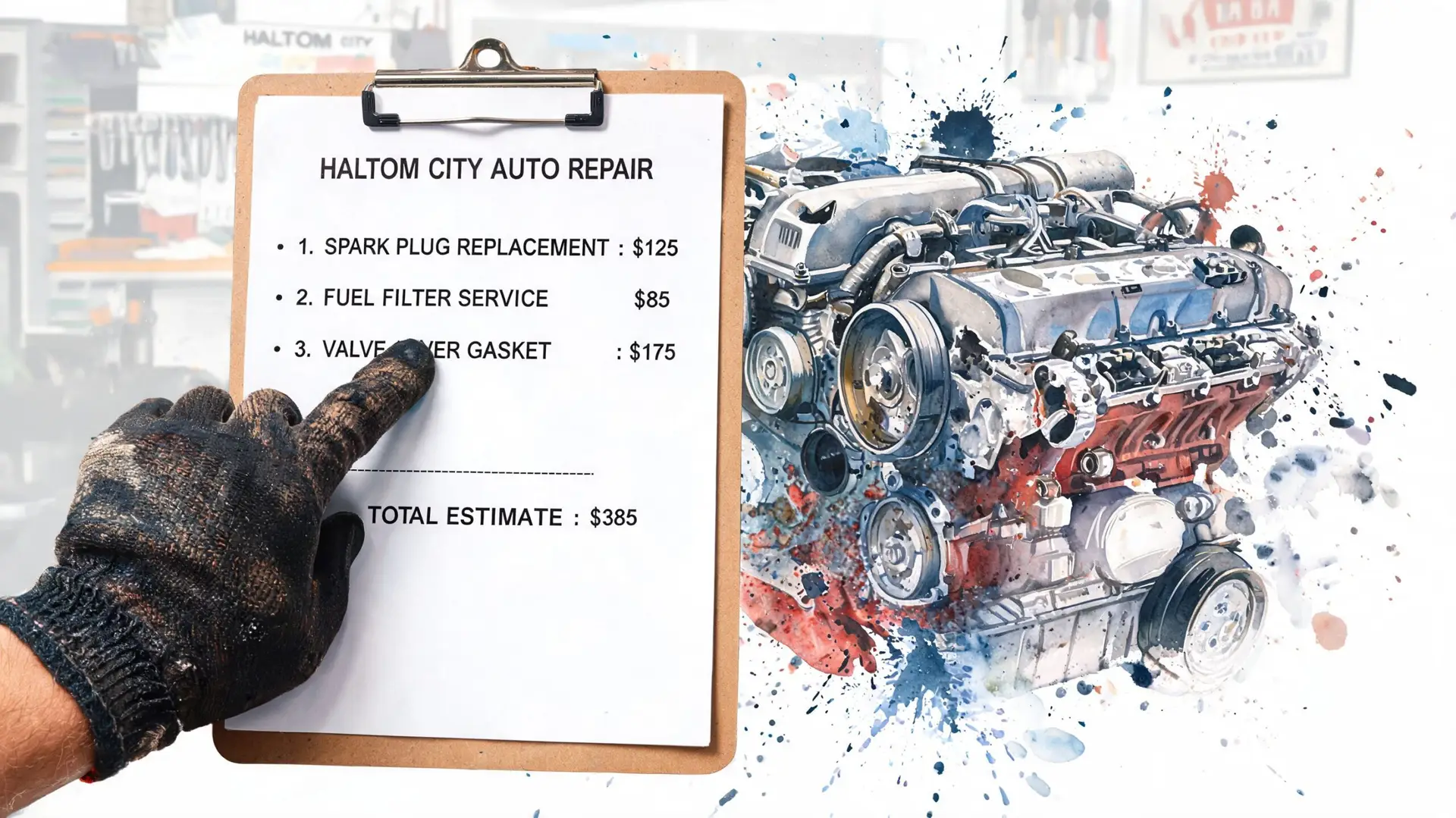
In the shop, I look at three things before I talk numbers with an owner. How fast the engine is using oil. Whether the fix is external, upper-engine, or internal. How much useful life the car still has. A well-kept truck with a strong transmission deserves a different recommendation than a high-mileage commuter with several other problems stacked on top of each other.
The lower-cost repair path
The first money-saving move is confirming the problem before authorizing parts. A restricted PCV system, stuck valve, worn hose, or intake issue can mimic bigger engine trouble and costs far less to address than internal engine work. That is why we start with diagnosis, not guesses.
If the problem stays in that lower tier, the bill is usually manageable. PCV-related repairs, hose replacement, and basic intake cleanup are often the least expensive path. They also carry the least risk, because you are correcting a known fault instead of trying to mask oil use with a temporary workaround.
Mid-level repairs and major repairs
Valve stem seal work sits in the middle. On some engines, access is reasonable. On others, labor is the whole story. The part itself is not usually what hurts. Getting to it does.
Ring wear, cylinder wear, or broader internal damage is the expensive conversation. At that point, the choice usually comes down to repair, replace the engine, or manage the oil use for a limited time while planning the next step. I do not recommend that last option unless the consumption rate is known, the owner is checking the level often, and the vehicle’s remaining value does not justify major engine work.
Here is the practical breakdown most owners in Haltom City end up weighing:
- Minor service repair: PCV valve, hoses, clamps, and related inspection
- Moderate repair: valve seals or upper-engine labor where the engine is otherwise healthy
- Major repair: piston rings, internal engine work, or engine replacement
What about using thicker oil
Drivers ask about this all the time, especially on older cars.
A viscosity change can sometimes slow oil consumption in a worn engine, but it is not a cure. It can also create new problems if the oil no longer matches what the engine was designed to use. Cold-start lubrication, variable valve timing performance, and overall oil flow can all suffer if someone starts experimenting without a plan.
That is why the oil choice should follow the diagnosis. If the engine has a minor wear issue and the manufacturer allows an alternative grade, there may be room for a short-term adjustment. If the engine has ring wear or heavy valve seal leakage, thicker oil usually buys time, not a real fix. If you want a broader look at local repair pricing before making that call, this guide on how much engine repair costs in Haltom City helps put the bigger numbers in context.
The local decision most owners face
Around Haltom City, Keller, Watauga, and North Richland Hills, the best repair is not always the most complete repair. It is the repair that matches the car, the budget, and how long the owner plans to keep it.
A newer vehicle with steady oil loss usually deserves proper testing and a real fix. An older vehicle with moderate consumption, no drivability issues, and limited resale value may be better served by careful monitoring and scheduled top-offs while you budget for a replacement. The wrong move is spending money out of order. Confirm the cause first, then decide whether the car is worth the repair.
How to Prevent Oil Burning and Extend Engine Life
A lot of oil-burning problems start with a simple pattern. The level drops a little between services. The car still runs fine. Nobody checks it until the engine is two quarts low and the wear has already picked up.
Prevention is mostly about catching that pattern early and staying ahead of it. In the shop, I see the same preventable issues over and over. Missed oil changes, a stuck PCV valve, the wrong oil grade, or an owner assuming the warning light will give enough notice. It usually does not.
Build a habit around oil checks
The dipstick gives you more useful information than the oil light ever will. The light usually comes on after the engine is already low enough to be at risk.
Start with a baseline. Check the oil on level ground, with the engine off long enough for the oil to drain back, and do it at the same point every few weeks or every 1,000 miles. If the level keeps dropping between checks, write down the mileage and how much oil it needed. That record matters. It tells you whether the engine has a stable consumption pattern or whether the problem is getting worse.
Pay attention to the conditions too. A puff of smoke on startup points you in a different direction than oil loss during highway driving.
Use the right oil and stay on schedule
Oil choice matters, but it needs to match the engine, the mileage, and the condition of the vehicle. Texas heat puts extra stress on oil, especially in stop-and-go driving around Haltom City, North Richland Hills, and Fort Worth. If the engine already has some wear, stretched service intervals leave less room for error.
Use the grade the manufacturer calls for unless there is a clear reason to change it. If you are sorting out options for an older engine, this guide on the best oil for high-mileage cars can help you choose without guessing.
A quality filter matters too. Cheap filters can bypass early or fail to hold contaminants well, which adds wear over time.
Small maintenance items make a big difference
Some causes of oil burning are easier to prevent than to repair.
- Replace the PCV valve when needed because excess crankcase pressure can push oil where it does not belong
- Fix small leaks early so you can tell the difference between oil loss from leaking and oil loss from burning
- Watch for coolant or fuel contamination because contaminated oil breaks down faster
- Keep the engine full because running low speeds up wear on rings, cylinder walls, and valve train parts
Additives rarely solve the root problem. Regular checks, correct oil, and timely service do.
If your vehicle is smoking, using oil between services, or you want a straight answer before the problem gets expensive, schedule a visit with Express Lube and Car Care. Our team in Haltom City can inspect the vehicle, figure out whether you are dealing with a leak, a ventilation issue, or internal engine wear, and help you decide on the smartest next step.