
A soft or spongy brake pedal usually points to air in the hydraulic lines, a fluid leak, contaminated fluid, or a failing master cylinder, and none of these are safe to ignore. If your pedal sinks close to the floor or braking feels weak, do not drive the vehicle; arrange a tow or call roadside assistance instead. We recommend having a trusted shop inspect the system before you get back behind the wheel.
TL;DR:
- A soft brake pedal most often results from air in the hydraulic system, fluid leaks, contamination, or a failing master cylinder, all of which require prompt professional inspection.
- Do not drive the vehicle if the pedal sinks close to the floor or braking feels weak; instead, call roadside assistance and have it towed for safety.
- Basic checks like inspecting fluid color, looking for leaks, and noting recent brake work can help technicians diagnose the problem faster.
- A professional brake inspection thoroughly evaluates hydraulic, mechanical, and electronic components, including pedal feel, fluid condition, and warning lamps.
- Repair actions typically involve bleeding the system, replacing fluid, or fixing leaks, with costs varying depending on the specific cause identified.
Table of Contents
- 1. Common causes of a soft or spongy brake pedal
- 2. What to do right away if your brake pedal feels soft
- 3. Simple checks you can safely do before your appointment
- 4. What a professional brake inspection covers
- 5. Likely repair outcomes based on the root cause
- 6. Why certified inspection matters for brake problems
- Our take on soft brake pedal troubleshooting
- Schedule a brake inspection with us
- FAQ
- Sources
1. Common causes of a soft or spongy brake pedal
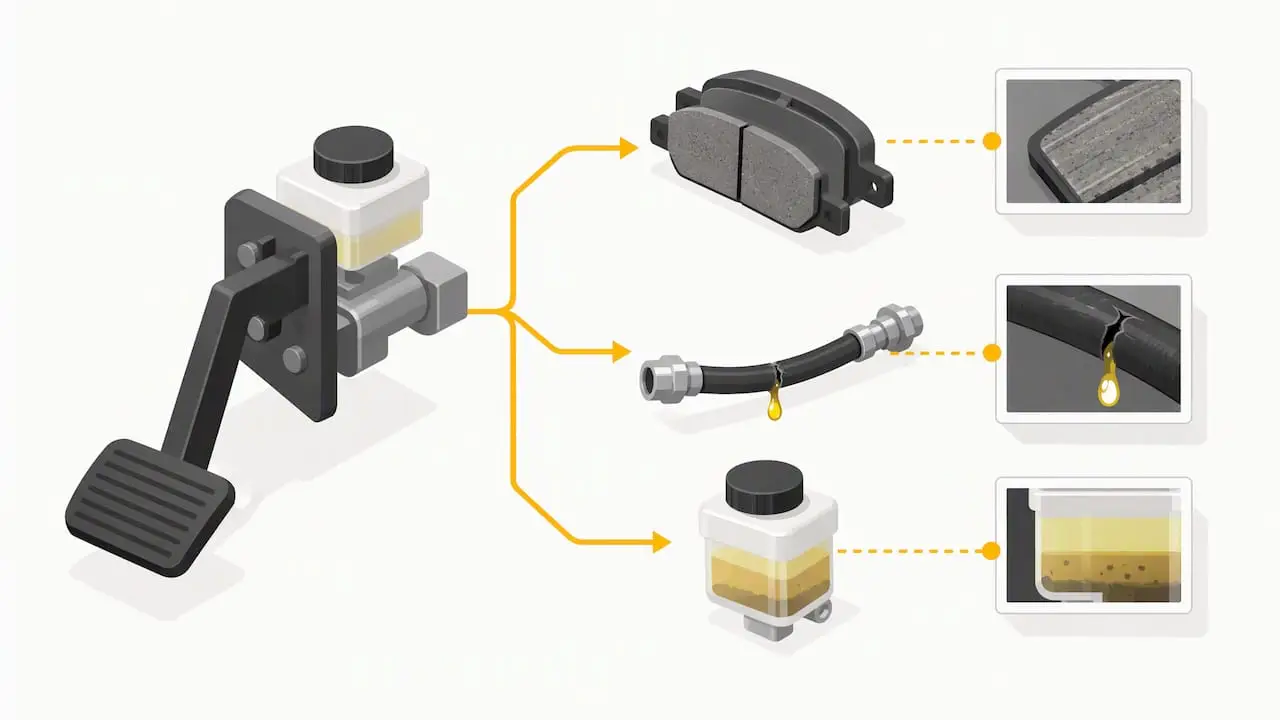
A soft pedal happens when something interrupts the hydraulic pressure that normally travels from your foot to the brake calipers or wheel cylinders. A few causes show up far more often than others.
- Air in the hydraulic system: if the softness started right after brake work, trapped air is a frequent culprit, and pumping the pedal a few times may firm it up temporarily until it’s bled.
- Brake fluid leak or low fluid: a dropping reservoir level, a dashboard brake warning light, or a visible puddle under a wheel all point here.
- Contaminated or moisture-affected fluid: fluid that looks dark or gritty absorbs moisture over time, lowering its boiling point and causing the pedal to fade or feel soft during hard or repeated braking, according to Wagner’s technical guidance.
- Master cylinder internal leak: if you hold steady pressure on the pedal and feel it slowly sink toward the floor, the master cylinder is a likely source.
- Brake booster or vacuum faults: these tend to produce a hard, stiff pedal rather than a soft one, which is a useful distinction to mention to your technician.
- Damaged hoses, calipers, or wheel cylinders: wet or oily residue near a wheel, or braking that pulls to one side, can mean a leak at that corner.
- Worn pads, shoes, or rotor issues: excess pedal travel paired with vibration or pulsation often traces back to worn friction material or a warped rotor.
- ABS or electronic influences: a faulty ABS module can alter pedal feedback even when the hydraulic system itself is sound.
Technical resources on brake fluid leaks note that air, leaks, contamination, and failing components are the most common, actionable sources of this complaint, which is why a methodical inspection beats guessing at parts.
2. What to do right away if your brake pedal feels soft
Your first priority is keeping yourself and everyone on the road safe, not diagnosing the exact cause yourself.
- If the pedal sinks close to the floor or stopping power feels weak, stop driving and arrange a tow.
- Call roadside assistance rather than attempting to limp the vehicle to a shop; AAA guidance treats this level of pedal travel as a genuine safety warning, not a minor annoyance.
- If you must move the vehicle a short distance at low speed to reach safety, avoid relying on repeated pumping as a fix. It can mask a developing problem rather than solve it.
- With the engine off, press the pedal several times to deplete vacuum reserve, then hold pressure and start the engine. If the pedal drops slightly and feels easier to press, note that for your technician; it’s a useful clue about the power-assist system.
Skip any DIY brake work if you see fluid pooling near a wheel, notice fluid on your hands or the ground, or feel a total loss of braking. Those situations call for a tow, not a wrench.
Pro Tip: Write down exactly when the softness started, whether it followed recent brake work, and any pedal behavior you noticed. That timeline often shortens diagnostic time.
3. Simple checks you can safely do before your appointment
A few low-risk observations at home can help a technician narrow things down faster once you arrive.
- Check the brake fluid reservoir: fluid should look clear to light amber; dark, cloudy, or gritty fluid suggests contamination.
- Look under the car and around each wheel well for wet spots, drips, or an oily sheen, which can indicate a leak at a hose, caliper, or wheel cylinder.
- With the engine off and parked safely, press and hold the pedal to see whether it slowly sinks, then try the engine-start vacuum check described above.
- Note whether the brake warning lamp or ABS lamp is lit, and whether the vehicle pulls to one side when you brake gently in a safe, empty area.
- Write down any recent brake service, such as a pad replacement or hose work, since timing often points directly to the cause.
Bring these notes to your appointment. Our brake problem symptoms guide walks through related warning signs if you want more context before you go.
4. What a professional brake inspection covers
A thorough inspection looks at the whole system rather than replacing the first part that looks suspicious. Technicians typically start with the pedal itself and the dashboard, then move to the fluid and hydraulic components.
- Pedal feel and travel, along with brake and ABS warning lamps.
- Reservoir fluid level and condition, checked for contamination or moisture.
- Visible hoses, lines, and master cylinder behavior under sustained pressure.
- Pads or shoes, calipers or wheel cylinders, and rotor or drum condition, including runout.
- An ABS and electronic scan to rule out a module issue affecting pedal feedback.
Federal vehicle-in-use inspection standards describe pedal-reserve and pedal-travel limits that technicians use to evaluate brake system integrity, including force and travel checks that give a consistent benchmark for what counts as a passing pedal. At our shop, findings from this process are documented through a digital vehicle inspection with photos, so you can see exactly what we found before any repair begins.
5. Likely repair outcomes based on the root cause
Once the cause is identified, the fix is usually straightforward, and the right repair restores a firm, predictable pedal rather than a temporary improvement.
- Bleeding the system or exchanging fluid clears trapped air or contaminated fluid and restores consistent pressure.
- Replacing master cylinder seals, or the cylinder itself, stops the slow pedal sink that shows up under steady pressure.
- Repairing or replacing a damaged hose, line, or caliper addresses leaks and the uneven braking that often comes with them.
- Servicing worn pads, shoes, or rotors reduces excess pedal travel and resolves vibration during braking.
- Repairing the booster or vacuum assist restores proper power assist when the pedal feels unusually hard rather than soft.
- An ABS scan and module diagnosis catches electronic faults that change pedal feedback even when the hydraulics check out fine.
6. Why certified inspection matters for brake problems
A soft pedal can come from several different systems, and separating them correctly takes more than a guess. We support a methodical approach to that diagnosis rather than a rushed one. Every inspection we perform includes digital photos of what we find, so you can see the worn pad, the leaking hose, or the fluid condition for yourself. Because we offer convenient service, you don’t have to wait days just to find out whether your brakes are safe to drive on.
Our take on soft brake pedal troubleshooting
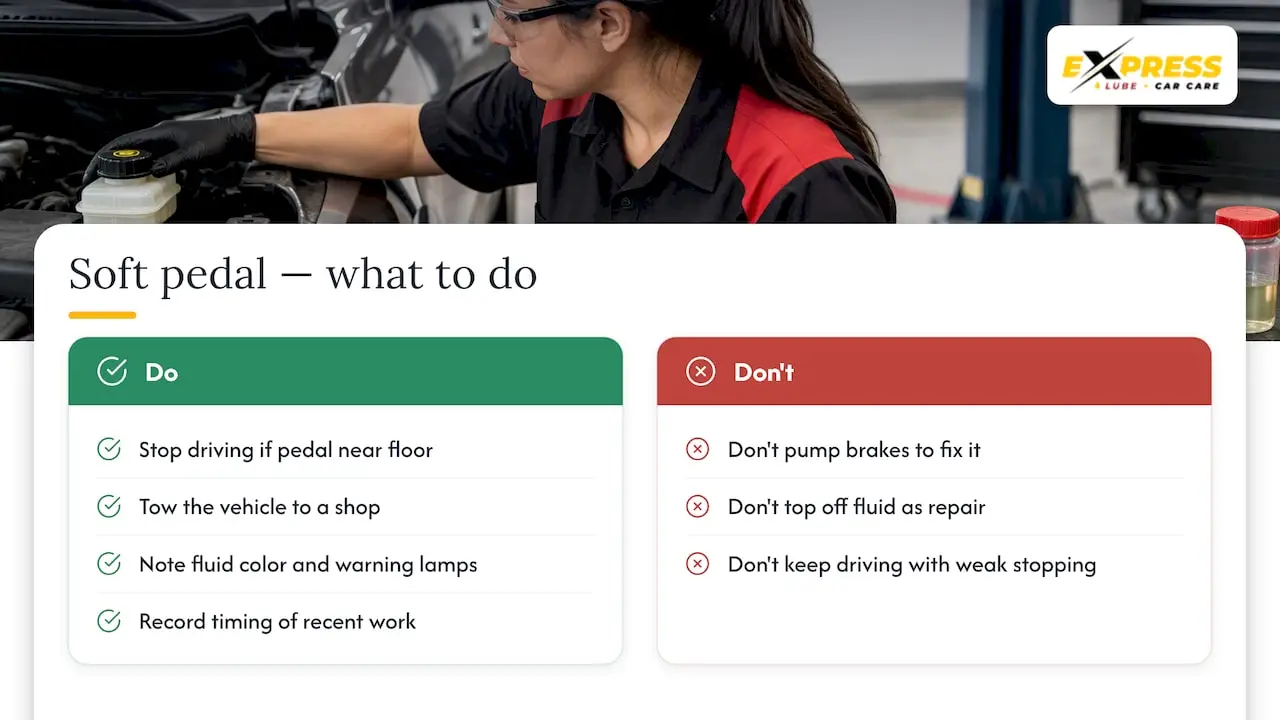
Most advice about a soft pedal focuses on what might be wrong rather than what to do first, and that order matters. The single most useful thing a driver can do is recognize the safety threshold: pedal near the floor, weak stopping power, stop driving. Everything else, the fluid color, the warning lamps, the timing of recent work, is supporting evidence you gather for a technician, not a DIY repair project.
We think the conventional troubleshooting guides lean too hard on pumping the brakes or topping off fluid as a fix. Those actions sometimes mask a leak or a failing master cylinder long enough to create a dangerous surprise later. The better habit is treating any unexplained change in pedal feel as information to report accurately, not a problem to patch yourself. A technician who gets a clear timeline and a few honest observations from you will almost always diagnose the system faster than one starting from scratch.
— Express Lube & Car Care
Schedule a brake inspection with us
A soft pedal is one of those problems that’s cheaper and safer to catch early, and we make that easy with convenient, no-appointment, same-day inspections. When you come in, tell us when the softness started, whether you’ve had recent brake work done, and what you noticed from the fluid and pedal checks above; that information helps us zero in on the cause quickly.
Our brake repair and pad replacement page covers the services we offer for exactly this kind of complaint, and our fluid exchange services page explains what a bleed or fluid flush involves if contamination turns out to be the cause. Every inspection includes a digital report with photos to show what we found before any work begins. Visit our services page to book an inspection, or stop by without an appointment and we’ll take a look the same day.
FAQ
How do you fix a soft brake pedal?
The fix depends on the cause: bleeding the system clears trapped air, fluid exchange removes contamination, and a leaking hose, caliper, or master cylinder needs repair or replacement. A professional inspection identifies which of these applies before any repair starts.
What does it mean if the brake pedal is soft?
A soft pedal usually means something is interrupting the hydraulic pressure between your foot and the brakes, most often air, a leak, contaminated fluid, or a failing master cylinder. It’s a signal to get the brake system checked, not something to work around.
Is it safe to drive with a soft brake pedal?
If the pedal sinks close to the floor or braking feels weak, AAA guidance treats that as a real safety warning, and driving isn’t recommended. Arrange a tow or roadside assistance and have the brakes inspected before getting back on the road.
How much does it cost to fix a soft brake pedal?
The cost depends entirely on the cause, since a fluid bleed, a hose repair, and a master cylinder replacement are very different jobs. We can give you an accurate estimate once a brake repair inspection identifies what’s actually wrong.
Sources
- Five ways to know you may need brake repair (AAA)
- Common causes of brake fluid leaks and diagnoses (Advics Aftermarket)
- PART 570—Vehicle in use inspection standards (govinfo / CFR)