
A pad-only brake job typically runs $100 to $350 per axle, while adding new rotors pushes that range to $250 to $500 per axle. The gap between those two numbers comes down to one question your shop should answer clearly: are your rotors being replaced, resurfaced, or left alone? Always ask for a line-item quote before you approve the work.
TL;DR:
- Expect brake pad replacement costs to range from $100 to $350 per axle, depending on whether rotors are being replaced or resurfaced.
- Costs increase significantly when rotors are included, with jobs often ranging from $250 to $500 per axle, especially for SUVs, trucks, and luxury vehicles.
- Parts costs vary by material, with ceramic pads being more expensive but quieter, while semi-metallic and organic options offer different trade-offs in noise and wear.
- Replacing rotors is advisable if they are deeply grooved or below minimum thickness, as resurfacing can shorten their lifespan and lead to future replacements.
- A detailed, line-by-line written estimate including hardware, fluid service, and rotor condition helps prevent hidden costs and guides accurate comparisons.
Table of Contents
- Typical Brake Pad Replacement Cost Ranges
- What Drives Brake Job Costs: Parts, Labor, and Diagnostics
- Ceramic, Semi-Metallic, or Organic: How Pad Material Affects Price
- When Rotors or Calipers Push Your Total Higher
- DIY Brake Pads vs a Professional Brake Job
- How to Read and Compare Brake Repair Estimates
- Simple Steps to Extend Pad Life and Avoid Bigger Repairs
- How We Approach Brake Estimates at Express Lube & Car Care
- Ready to Get a Clear Brake Estimate?
- FAQ
- Sources
Typical Brake Pad Replacement Cost Ranges
Where you land in the brake pad replacement cost range depends almost entirely on whether your rotors need attention too. For pads alone, expect to pay $100 to $350 per axle, with many jobs landing closer to the $150 average that Kelley Blue Book reports. Replace both front and rear axles and you’re often looking at a combined total toward the higher end of that spread.
Once rotors enter the picture, costs climb. Consumer Reports notes that pads and rotors are frequently replaced together, and a pads-plus-rotors job commonly costs $250 to $500 per axle. Here’s roughly how that breaks down by vehicle type:
- Compact or economy cars: Often fall near the lower end of both ranges, thanks to lighter rotors and widely available parts.
- Midsize sedans: Typically sit in the middle of the pad-only and pads-plus-rotors ranges.
- SUVs and trucks: Larger brake components and heavier curb weight tend to push costs toward the upper end.
- Performance or luxury vehicles: Can exceed these ranges due to specialized pad compounds and larger, more expensive rotors.
These are starting points for a conversation with your technician, not a quote you should expect to match exactly.
What Drives Brake Job Costs: Parts, Labor, and Diagnostics
Every brake estimate breaks into three buckets, and understanding each one helps you see where your money goes.
- Parts: Pads, rotors, and hardware kits (the small clips, shims, and springs that keep everything seated correctly) each show up as separate line items on a proper estimate.
- Labor: Most brake jobs run a set number of labor hours per axle, and hourly shop rates vary by region, which is one reason the same repair can cost more in one city than another.
- Diagnostics: A visual inspection or a full diagnostic check can reveal wear beyond the pads, and those findings often reshape the final number.
That last point matters most. A technician who opens up your wheel and finds scored rotors or a sticking caliper isn’t padding your bill. They’re telling you what your brakes actually need, and a trustworthy shop will walk you through those findings before touching anything further.
Ceramic, Semi-Metallic, or Organic: How Pad Material Affects Price
Not all brake pads are built the same way, and the material you choose affects both your upfront cost and your long-term driving experience.
Ceramic pads tend to cost more than semi-metallic or organic options, but they run quieter and produce less brake dust, a trade-off many drivers find worthwhile according to Consumer Reports. Semi-metallic pads handle heat well and often cost less than ceramics, though they can be noisier. Organic pads are typically the most affordable but wear faster under heavy use.
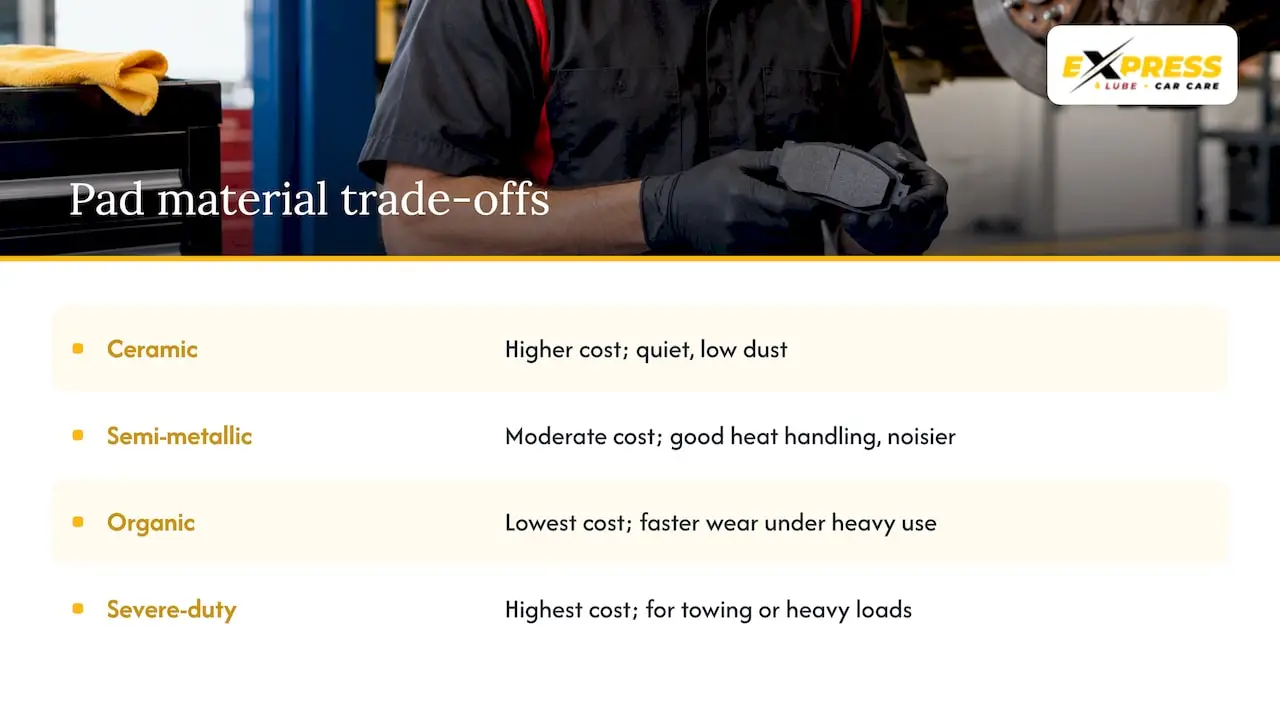
Severe-duty pads sit at the top of the price range and make sense if you tow frequently, drive steep grades, or carry heavy loads on a regular basis. For everyday commuting, a standard certified pad usually covers your needs without the premium price.
When Rotors or Calipers Push Your Total Higher
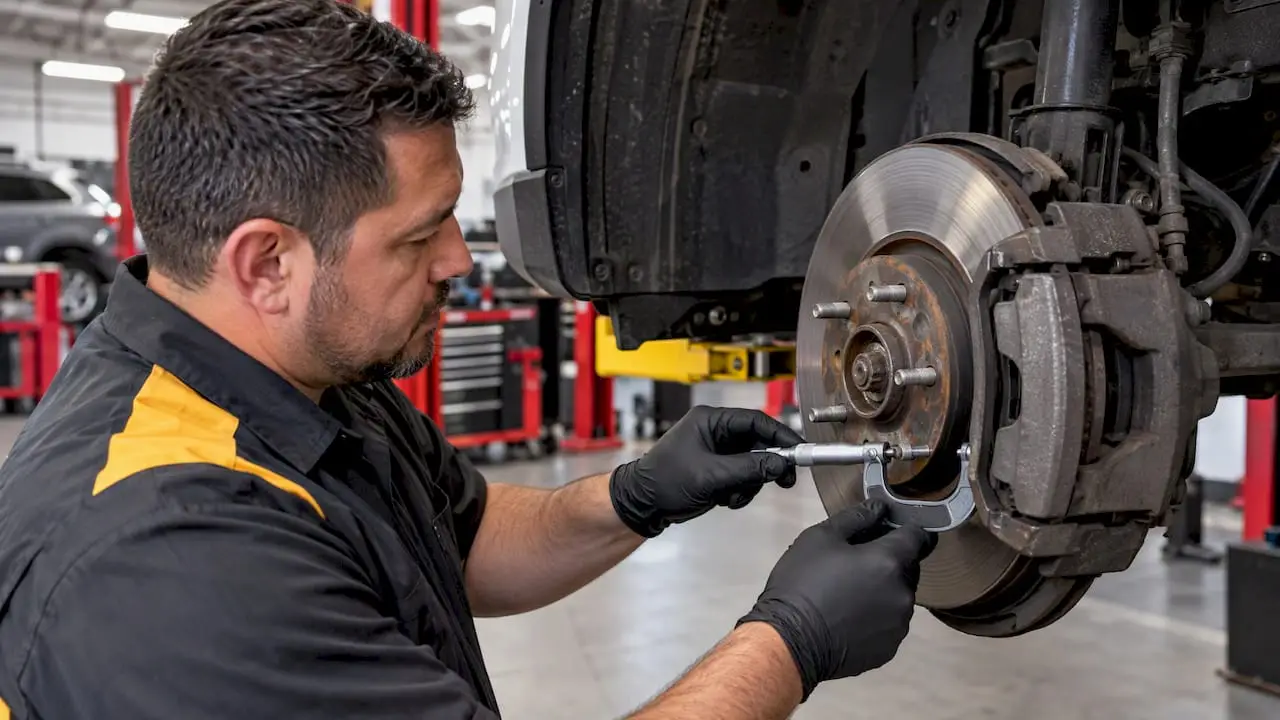
Pads rarely fail alone. If your rotors have deep grooves, uneven wear, or have thinned below the minimum spec stamped on them, resurfacing them might seem like the economical choice, but machining removes material and can shorten their remaining life. In many cases, straight replacement ends up being the better long-term value, even though it costs more upfront.
Calipers are the other common cost add. A caliper that’s sticking or leaking brake fluid needs to be rebuilt or replaced before new pads can do their job properly, and skipping that step leads to uneven pad wear almost immediately. Your technician may also recommend a brake fluid flush during this visit, since contaminated fluid affects pedal feel and can trigger ABS-related warning lights.
DIY Brake Pads vs a Professional Brake Job
Swapping brake pads yourself can save on labor costs, but it comes with real trade-offs worth weighing carefully. A shop typically completes a pad replacement in well under an hour per axle, and that labor charge covers more than just time.
Doing it yourself requires a torque wrench, a C-clamp or caliper tool, jack stands rated for your vehicle’s weight, and a clear understanding of your specific brake hardware. Missing a shim, under-torquing a caliper bolt, or skipping a bleed when needed can all compromise stopping power in ways you might not notice until it’s too late. DIY work can also void coverage on parts if they aren’t installed to specification, so weigh the savings against the risk before deciding.
How to Read and Compare Brake Repair Estimates
A brake estimate is only useful if you can compare it against another one, and that requires asking for specifics rather than accepting a single bottom-line number.
- Request pad details: Ask for the pad material and, if possible, the part number, so you know exactly what you’re paying for.
- Check rotor status: Confirm whether rotors are being replaced or resurfaced, and ask for the measured thickness.
- Review labor hours: A written estimate should show labor hours separately from parts cost.
- Confirm hardware and fluid: Hardware kits and any fluid service should appear as their own line items.
- Ask about warranty: Clarify what’s covered and for how long before you approve the work.
AAA and Consumer Reports both recommend this line-item approach specifically because a vague “brake pad replacement” quote can hide rotor condition or skip hardware entirely. Our guide on verifying auto repair estimates walks through additional questions worth asking at the counter.
Pro Tip: Ask your shop to photograph your rotor thickness measurement before and after the job, so you have a clear record of what was actually done.
Simple Steps to Extend Pad Life and Avoid Bigger Repairs
A little attention between visits keeps small issues from becoming expensive ones.
- Inspect at every oil change: Consumer Reports recommends checking pad thickness at each oil change or tire rotation, since pads typically last 25,000 to 50,000 miles depending on driving habits.
- Avoid riding the brakes: Coasting instead of lightly braking on long downhill stretches reduces heat buildup and wear.
- Keep fluid fresh: A brake fluid service at the recommended interval protects the entire system, including calipers and ABS components.
- Choose rotor machining wisely: If your rotors are well above minimum thickness and only lightly scored, resurfacing can be a reasonable value. Once they’re close to spec, replacement is usually the smarter long-term choice.
Catching a worn pad early, before it scores the rotor, is often the difference between a modest pad-only bill and a full pads-and-rotors job.
How We Approach Brake Estimates at Express Lube & Car Care
We build every brake estimate the way this article recommends you evaluate one: line by line. Our technicians back the diagnosis, and our digital vehicle inspection includes photos of your actual rotor and pad condition, not just a verbal description. You’ll see what we see before you approve any work, and we welcome questions about pad material, rotor status, or labor hours on your written quote.
— Express Lube & Car Care
Ready to Get a Clear Brake Estimate?
Worn pads and warning lights don’t wait for a convenient time, and we built our brake service around that reality. We offer no-appointment-required visits with same-day service in most cases, so you can get a straight answer about your brakes without rearranging your whole day.
Here’s what makes a visit with us worth your time:
- Transparent, line-item pricing on every brake estimate, with no vague bottom-line numbers.
- Technicians who walk you through exactly what your pads and rotors need.
- Digital inspection photos showing your actual brake condition before any work begins.
- Service coupons available for your next visit.
Visit our brake repair and pad replacement page to see what’s included, grab the $20 off brakes coupon, or head straight to our appointment page to get your brakes checked this week.
FAQ
How much does it cost to replace all 4 brake pads?
Replacing pads on all four wheels typically means paying the per-axle rate twice, so expect a combined total that reflects two front and rear pad jobs at $100 to $350 per axle each. Your actual total depends on pad material and whether either axle also needs rotor work.
Is it cheaper to replace brake pads yourself?
DIY pad replacement can lower your labor cost, but it requires the right tools, correct torque specs, and careful attention to hardware like clips and shims. Mistakes during a DIY job can affect braking performance or void parts coverage, so weigh the savings against the risk before skipping a professional inspection.
Can you drive with bad brake pads?
Driving on worn brake pads is a safety risk, since thin pads reduce stopping power and can lead to metal-on-metal contact that damages your rotors. If you notice squealing, grinding, or a soft pedal, treat it as a reason to get your brakes inspected promptly rather than waiting.
Should I replace all four brake pads at once?
Not necessarily. Front and rear pads usually wear at different rates, so replacement typically happens by axle based on actual measured thickness rather than as a routine four-wheel job. Your technician’s inspection findings should guide which axle needs attention now.
What’s included in a typical brake pad replacement price?
A complete estimate should show pad material and cost, labor hours, any hardware kit needed, and whether rotors are included. Ask for this breakdown so you can compare quotes on the same terms.
Sources
- How Much Does It Cost To Replace Brake Pads? | AAA Automotive
- Your car maintenance checklist | Consumer Reports
- Brake Repair Prices & Cost Estimates | KBB
- How Much Does It Cost To Replace Brakes? | AutoZone