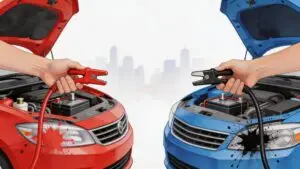

You turn the key, the dash lights up, and instead of the engine firing, you get that miserable click, or a fast series of clicks, and your whole morning goes sideways. That happens all over Haltom City, Watauga, and North Richland Hills, especially when a car has been sitting, the weather swings hard, or the battery was already weak before the latest hot spell.
The short answer is yes, you can charge a car battery. In many cases, that's the right move. But the battery has to be checked first, the charger has to match the battery, and the connection process has to be done carefully so you don't create sparks, damage electronics, or waste time charging a battery that's already done.
A lot of drivers assume a dead battery always means replacement. That's not true. Some batteries only need the right charge cycle. Others are being drained by something in the vehicle. And some are too far gone to trust, even if they take a charge for a little while.
That Dreaded Click Your Guide to a Dead Battery
A dead battery usually announces itself at the worst time. You're headed to work on Denton Highway, trying to get the kids loaded up for school, or leaving a grocery run in Watauga. You turn the key and hear click-click-click. No crank. No start. Just frustration.
That sound doesn't always mean the battery is ruined. It often means the battery doesn't have enough usable power to spin the starter. In plenty of cases, charging it can get you back on the road. The key is figuring out whether the battery is only discharged or whether there's a bigger issue behind it.
If the clicking is new and you want a broader overview of what can cause it, this ultimate troubleshooting guide for a car that won't start with a clicking noise gives a helpful high-level breakdown. For drivers who need to jump the vehicle before they can even think about charging it, this guide on how to attach jumper cables safely is a useful companion.
Practical rule: A battery that went dead once after sitting may be recoverable. A battery that keeps going dead is telling you something.
Around North Texas, heat is rough on batteries. It speeds up internal wear, dries things out, and turns a marginal battery into a no-start battery faster than expected. That's why charging isn't just about getting power back in. It's about deciding whether the battery is still worth saving.
How to Assess Your Battery's Condition First
A charger should be the second step, not the first. Spend two minutes checking the battery before you plug anything in, because a battery that is cracked, swollen, or badly corroded can waste your time or create a safety problem.

Start with a visual check
Texas heat is hard on battery cases. By the time a battery fails in August around Haltom City, I often find the warning signs were already there under the hood.
Check these items before testing or charging:
- Swollen battery case: Heat can warp the case and point to internal damage.
- Cracks, wet spots, or leakage: Do not charge a leaking battery. Replace it.
- Corroded terminals: White, green, or bluish buildup can block current and create a false "dead battery" diagnosis.
- Strong sulfur smell: That rotten egg odor can mean the battery is venting gas or failing internally.
Corrosion matters more than many drivers realize. A battery can still have usable voltage and fail to deliver enough current through dirty connections. If you want to stop that problem before it starts, this guide on battery terminal corrosion prevention lays out the basics.
Check resting voltage with a multimeter
A simple digital multimeter gives you a better answer than guesswork. With the engine off, set the meter to DC volts, place the red probe on the positive terminal and the black probe on the negative terminal, then read the number.
Use this as a practical guide:
| Battery reading | What it usually means |
|---|---|
| 12.6V to 12.8V | Fully charged or close to it |
| Around 12.2V | Partially discharged |
| Below 12.0V | Discharged enough to need attention |
Numbers alone do not tell the whole story. In North Texas, I see batteries show low voltage after a hot day, then refuse to recover because the heat has already shortened their life. If the case looks good and the voltage is only low, charging is reasonable. If the battery is swollen, leaking, or smells wrong, skip the charger and replace it.
One more practical point. Some smart chargers will not start charging a battery that is severely discharged because they do not detect enough base voltage. That is common with batteries that have sat too long in the heat. In the shop, that usually means the battery needs further testing, not blind charging attempts.
Rule out a drain before blaming the battery
A weak battery is not always the root problem. Sometimes the battery is being drained while the car sits.
Consumer Reports notes that certain vehicles can stay awake if the key fob is left too close, such as in a garage or on a hook near the car. That can contribute to battery drain over time, especially on vehicles with proximity systems. Their article on key fobs and car battery drain is a good example of how that issue happens.
I have seen this around Haltom City with cars parked in attached garages during summer. The owner charges the battery, the car starts, then the same problem comes back a few days later. The battery was not the whole story.
If your household has both gas vehicles and an EV, it also helps to keep charging equipment and parking setup organized so cables, keys, and parking habits do not create extra electrical headaches. Homeowners comparing setups sometimes start with guides like how to install an EV charger at home, then realize the same planning mindset helps with everyday vehicle reliability too.
Choosing the Right Car Battery Charging Method
Not every battery problem needs the same tool. The right choice depends on how dead the battery is, how quickly you need the car, and what type of battery you're working with.
What works best for each situation
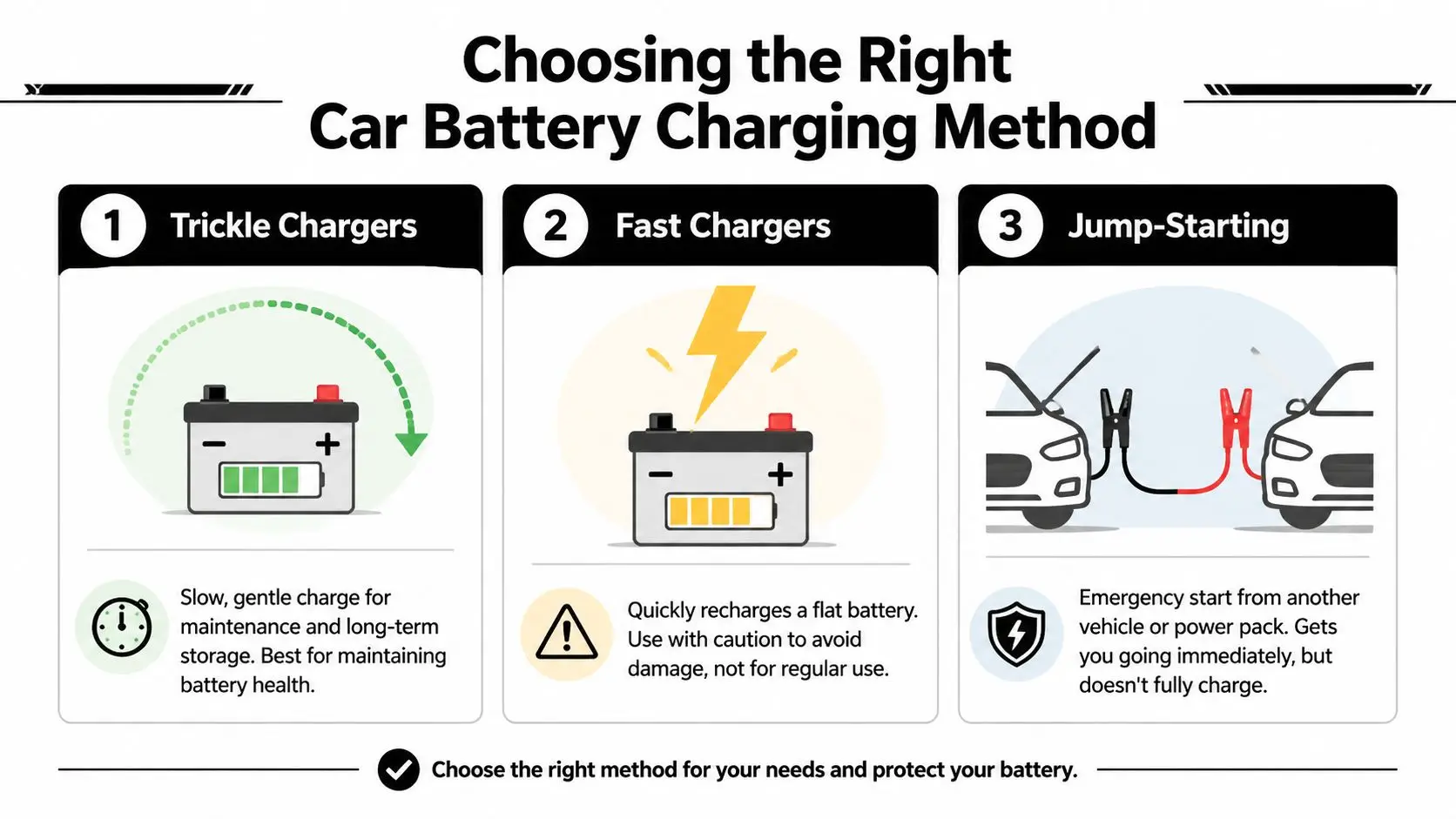
For most drivers, there are three real-world options: a slow maintenance charge, a faster charger, or an emergency jump-start.
Trickle charging is the gentle option. It's useful when the battery is weak but not in a rush situation, or when a vehicle sits for stretches. This is the method I trust most for preserving battery health when time isn't the problem.
Fast charging gets power back in more quickly, but it's less forgiving. It can be useful when you need the vehicle sooner, but it isn't the method to use casually on a regular basis.
Jump-starting is not the same as charging. It gives the car enough power to start. That's all. If the battery is severely discharged, a jump may get the engine running, but it doesn't mean the battery is healthy or restored.
Charging Method Comparison
| Method | Best For | Typical Time | Key Benefit |
|---|---|---|---|
| Trickle charger | Maintenance, stored vehicles, gentle recovery | Slower | Easier on battery health |
| Fast charger | Quicker recovery when you need the car soon | Faster | Gets usable charge into the battery sooner |
| Jump-starting | Emergency no-start situations | Immediate start attempt | Gets the engine running without waiting for a full charge |
Why smart chargers are worth it
A modern smart charger is the safest all-around choice for most home users. It automatically adjusts how it charges instead of pushing the same output the entire time.
That's important because applying the 80/20 rule by charging to 80% and not letting a battery dip below 20% can extend its life by 2-3 times. For traditional 12V lead-acid batteries, avoiding overcharging is critical, as it is a cause in 40% of premature failures. Smart chargers prevent this, based on the data summarized in this 80/20 smart charging reference.
That doesn't mean every car battery should be babied forever. It means daily habits matter. Repeatedly draining a battery hard, then hammering it with rough charging, shortens its useful life.
A charger that manages the battery automatically is usually a better bet than a cheap constant-output unit, especially on newer vehicles with AGM batteries.
If you drive an EV or you're adding charging equipment at home for another vehicle in the household, this guide on how to install an EV charger at home is a useful separate read. That's a different system than charging a 12V starting battery, but homeowners often look at both issues around the same time.
The trade-offs that matter
- Slow charging is kinder: It takes patience, but it's easier on the battery.
- Fast charging saves time: It can be practical, but it needs more care.
- A jump is only a bridge: If the battery won't recover afterward, you haven't solved the underlying issue.
One local option is Express Lube & Car Care, which offers battery testing and charging-system checks for drivers who want the battery and vehicle electrical system looked at together before buying parts or chargers.
The Safe Process for Charging a Car Battery
A lot of battery damage happens during charging, not just before it. Around Haltom City, I see that after a hard Texas summer more than people expect. Heat weakens batteries, and a battery that already has one foot out the door can get worse fast if it's charged with the wrong settings or connected carelessly.
Safety comes first
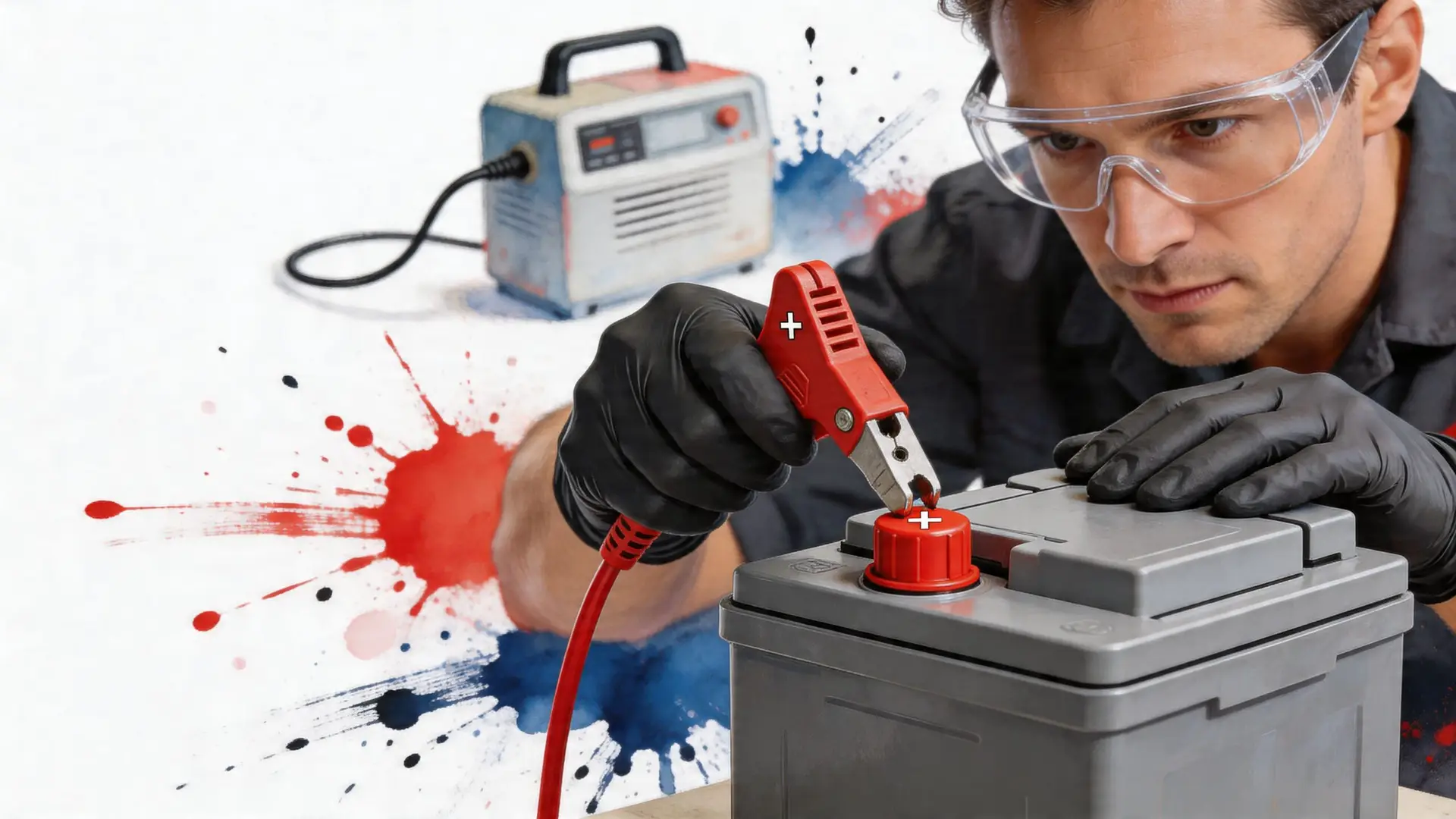
Start in a well-ventilated spot. Wear safety glasses and gloves. Keep flames, cigarettes, and anything that can spark away from the battery.
Turn the vehicle off. Put it in park. Make sure the charger is unplugged before the clamps touch anything.
Do not charge a battery with a cracked case, leaking fluid, heavy swelling, or melted terminals. Replace it instead.
How to connect the charger
Use the charger's instructions for battery type and mode. The connection order stays simple.
- Find the terminals. Positive has a plus sign. Negative has a minus sign.
- Attach the red clamp first. Connect it to the positive battery terminal.
- Attach the black clamp second. Connect it to a clean metal ground point on the chassis or engine if your charger allows that. If the charger instructions call for the negative terminal, follow the manual.
- Select the correct setting. Match the charger to the battery type, such as standard flooded lead-acid or AGM.
- Plug in the charger and begin charging.
That order helps reduce the chance of a spark near the battery, where charging gases can collect.
Connect positive first. Use a solid ground point for the negative lead if your charger instructions allow it. Keep sparks away from the battery.
What the charger is doing in the background
A smart charger usually works in stages. First it delivers a stronger charge to recover most of the battery. Then it tapers down as the battery fills up. Finally, some chargers switch to a maintenance mode that holds the battery at a safe level without cooking it.
That matters in North Texas. Batteries that have been baked by heat often accept a charge unevenly, so a charger that slows itself down near the top of the cycle is much safer than an old constant-output unit.
| Stage | What happens | Why it matters |
|---|---|---|
| Bulk | Charger puts most of the energy back in | Brings a low battery up quickly |
| Absorption | Voltage stays controlled while current drops | Helps finish the charge without overheating |
| Float | Charger maintains the battery at a safe level | Useful if the vehicle sits for a while |
For drivers who want to see the process visually, this short walkthrough helps:
What to watch while charging
Check on the battery once in a while. Do not just hook it up in the garage and ignore it all weekend unless the charger is specifically designed for long-term maintenance.
Watch for these problems:
- Too much heat: A battery that gets hot to the touch should be disconnected and inspected.
- Error lights or fault codes: Smart chargers will often stop if they sense reverse polarity, a bad connection, or an internal battery problem.
- Wrong battery mode: AGM batteries need the proper setting. Using the wrong mode can lead to weak charging or overcharging.
- Poor ventilation: Charging can release gas, especially on older batteries.
- No recovery after charging: If the battery charges up but the car still struggles to start, the problem may be in the vehicle's charging system. A quick check of the signs of a bad alternator and charging system problem can help you sort that out.
One practical note from the shop. If a battery gets hot early in the charge cycle, smells strongly of sulfur, or the charger keeps throwing a fault, stop there. That battery may be too far gone to recover safely.
How to disconnect safely
When the charger shows a full charge, turn the charger off and unplug it first. Then remove the clamps in reverse order.
- Remove the black clamp.
- Remove the red clamp.
- Secure the cables.
- Let the battery sit for a short time if you want a cleaner resting-voltage reading.
If the engine cranks strong afterward, the charge likely did its job. If it starts today and acts dead again tomorrow, the battery may be worn out, or the car may not be recharging it while you drive.
Troubleshooting Common Car Battery Charging Issues
Some batteries charge easily. Others fight you every step of the way. That's usually where people start asking, "Can you charge a car battery if the charger won't even recognize it?"
When the charger won't start
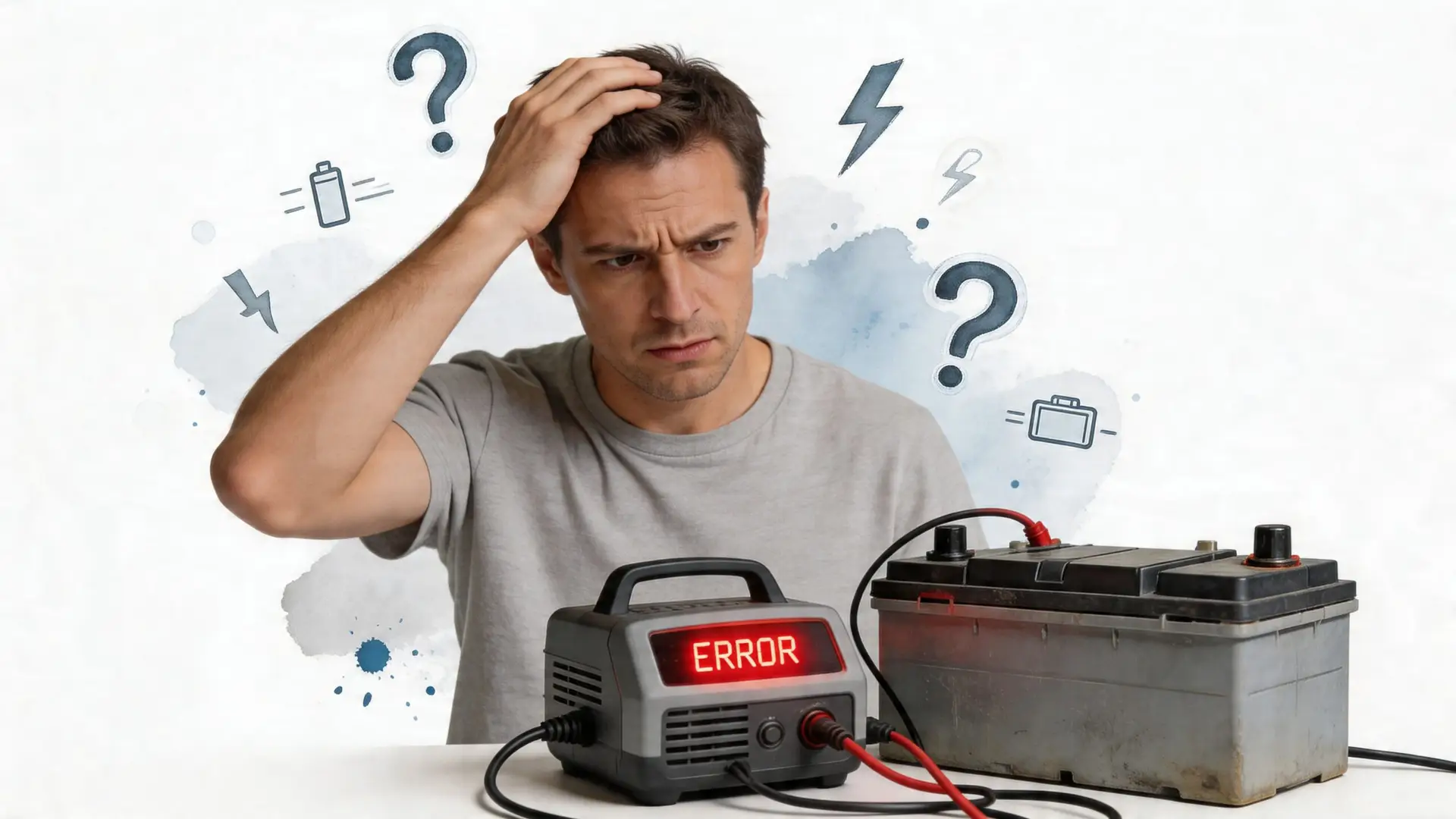
A common frustration is that smart chargers often refuse to charge a completely dead battery below 3-4V. Data suggests 30-40% of these dead battery replacements are unnecessary. A mechanic's hack of briefly jump-starting the battery can provide enough initial voltage for the smart charger to engage, potentially saving the battery and avoiding a $100-$200 replacement cost, as described in AAA's article on how to charge a dead battery yourself.
That problem shows up a lot with modern chargers because they're designed to protect themselves and the vehicle. If they sense almost no voltage, they assume the battery is faulty or connected wrong.
The practical workaround is simple: get a little voltage into the dead battery first, then try the charger again. That can be done with a brief jump-start procedure. It isn't magic. It just gives the charger enough signal to wake up and begin its normal cycle.
If the battery is physically sound and the charger says "error" immediately, the battery may be too far down for the charger to recognize, not necessarily beyond saving.
When the battery charges but won't hold it
If the battery reaches charge and then goes flat again, look at the bigger picture.
- The alternator may not be doing its job: If the battery drains while driving, charging alone won't solve it. A quick check of how to know if an alternator is bad can help you sort that out.
- The battery may be sulfated: Some chargers have a recondition or desulfation mode, but results vary.
- A parasitic drain may still be present: The battery can test fine and still keep going dead if something stays on after shutdown.
- The battery may be worn out: A battery can accept surface charge but still fail under real load.
What usually doesn't work
Drivers lose time by trying the same failed approach over and over.
Common misses include:
- Using a basic charger on the wrong setting: Especially on AGM batteries.
- Assuming a jump-start fixed the battery: It only got the engine going.
- Ignoring heat damage: In North Texas, internal battery wear often shows up after the car sits.
- Skipping a load or charging-system test: Voltage alone doesn't tell the full story.
If you charge the battery properly and it's still unreliable, trust that pattern. A battery that strands you once can do it again at the next gas station or in the office parking lot.
When to Visit Express Lube & Car Care in Haltom City
Some battery issues are fine for driveway troubleshooting. Others need shop equipment and a faster answer.
If the battery case is swollen, cracked, leaking, or giving off a strong sulfur smell, don't keep charging it. Replace it. If the car starts after charging but struggles again soon after, the battery may be weak internally or the charging system may have another fault.
Texas weather makes this more important, not less. Heat ages batteries faster, and a battery that feels "mostly okay" can fail the next time the vehicle sits through a temperature swing. That's especially true for commuters, families with multiple short trips, and fleet vehicles that need to be ready every day.
Professional testing is also the smarter move when the problem could involve more than the battery. If you're dealing with repeated dead-battery issues, dim lights, warning lights, or inconsistent starts, an auto electrical repair inspection is a better next step than guessing.
A shop can check battery condition, charging output, cable condition, and whether the vehicle is losing power while parked. That saves a lot of wasted money on parts that weren't the problem.
If you're in Haltom City, Keller, Watauga, or North Richland Hills and you're tired of wondering whether your battery needs a charge or a replacement, get it tested before it leaves you stranded again.
If your car is clicking, slow to crank, or keeps killing batteries after sitting, Express Lube and Car Care can help you sort out whether it needs a proper charge, a battery replacement, or a full charging-system check so you can get back on the road with confidence.