

You notice it the second you turn the key. The fan comes on, but the air isn’t helping. In a Haltom City summer, that means a miserable drive down Denton Highway. On a cold North Texas morning, it means numb hands, foggy glass, and a cabin that never gets comfortable.
When car heater and ac not working shows up at the same time, most drivers assume the worst. Sometimes it is a bigger repair. But a lot of the time, the right answer comes from slowing down and checking the system in order instead of guessing and replacing parts.
A vehicle’s climate control system is a mix of airflow parts, electrical controls, engine-cooling parts, and on the A/C side, refrigerant and compressor operation. If one of those basics is missing, the vents may blow weak, warm, cold, or nothing at all. The trick is figuring out whether you have an airflow problem, a heat problem, a cooling problem, or a control problem.
Why Your Car’s Heater and AC Failed at the Same Time
In North Texas, this problem gets your attention fast. If both systems quit, you’re not dealing with bad luck on two separate parts. You’re usually dealing with one shared failure point.
A foundational reason both car heaters and car A/C systems fail is that they depend on the same engine-cooling and HVAC infrastructure, so a single fault can affect both comfort systems. Technicians often diagnose heater complaints and A/C complaints together because airflow, heat transfer, and coolant or refrigerant delivery all have to work properly for either system to work right, as noted in this heater system overview.
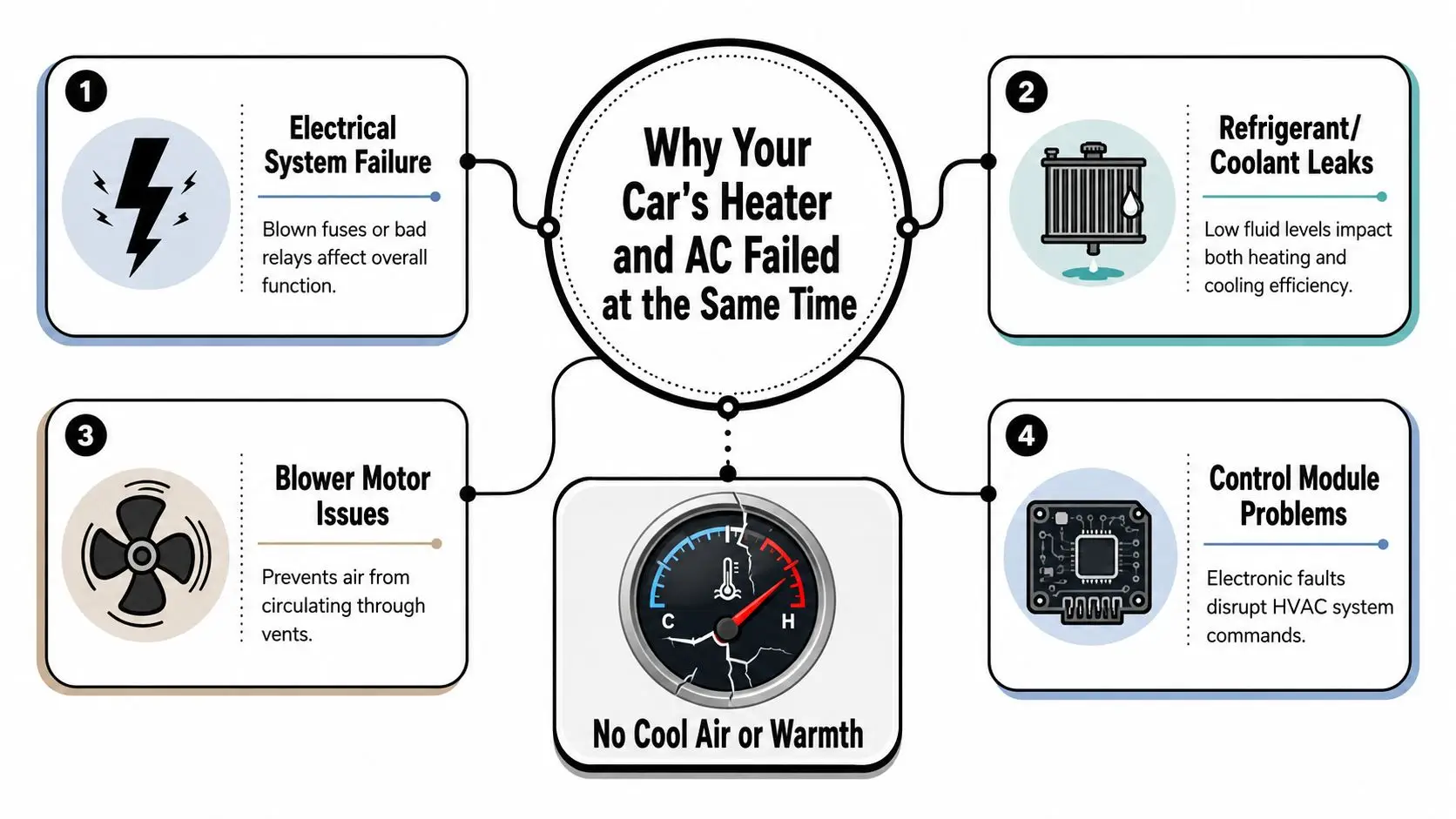
The shared parts that cause double failure
The heater and A/C use some of the same support pieces:
- Blower motor and fan speed control. If the blower won’t move air, neither hot nor cold air reaches the cabin.
- Fuse and relay circuits. One blown fuse or failed relay can shut down controls, fan operation, or compressor command.
- HVAC doors and actuators. If a blend door sticks, the system may send the wrong temperature through the vents.
- Control head or module inputs. The panel may look normal while the system ignores commands.
That overlap is why people often chase the wrong problem. They add refrigerant when the blower isn’t moving enough air. They replace a heater part when the issue is a fuse or actuator.
Practical rule: If both heat and A/C feel wrong, start with shared systems first. Airflow, electrical power, and control signals come before part swapping.
Why guessing usually costs more
The hardest part for DIY drivers is separating symptoms. “No cold air” can really mean no airflow. “No heat” can really mean the engine never gets warm enough. “It worked yesterday” can point to an electrical or control issue.
If you like understanding how thermostat-based control problems show up in larger mobile HVAC systems too, this guide on RV thermostat not working diagnosis is a useful comparison. The hardware is different, but the logic is similar. Bad inputs and control faults can make a working system act broken.
For a broader look at how these parts work together in passenger vehicles, our own breakdown of the automotive HVAC system helps connect the dots before you start checking parts.
Easy First Checks for Any Driver
Before you book a repair, do the simple checks. These are the things I want people to rule out first because they don’t require specialty tools and they often expose the problem quickly.

Start with what you can hear and feel
Sit in the car and run the system through a few settings.
Check these in order:
- Turn the fan from low to high. Listen for a clear change in blower speed.
- Switch between vent, floor, and defrost. Notice whether airflow location changes.
- Move the temperature from full cold to full hot. See whether the air changes at all.
- Try recirculate on and off. Some systems respond noticeably when the door moves.
Those quick tests tell you a lot. If the fan is silent on every speed, think electrical supply, fuse, relay, blower motor, or control issue. If the fan is loud but the vents barely move air, think blockage or an airflow-side problem.
Weak airflow can feel like a heating or cooling failure even when the core or refrigerant side is working. A clogged cabin filter, failing blower resistor, or stuck blend door can mimic bigger cooling-system or refrigerant issues, as discussed in this airflow-focused troubleshooting video.
Check the cabin air filter and intake area
A neglected cabin air filter can choke the whole system. On many vehicles, it’s behind the glove box or under a trim panel. If it’s packed with dust and debris, airflow drops hard and the system feels dead even when the heater core or A/C circuit is still working.
Also look at the exterior air intake near the base of the windshield. Leaves and debris can restrict incoming air, especially after storms or long parking periods.
A simple driveway checklist:
- Look for packed debris around the cowl area near the windshield.
- Inspect the filter media for dirt, leaves, or moisture damage.
- Notice any musty smell when the fan comes on. That often goes with airflow restriction or moisture buildup.
- Re-test the fan after replacement so you can compare airflow before and after.
Check HVAC fuses before blaming major parts
Every owner’s manual has a fuse diagram. Use it. Many vehicles have one fuse box under the dash and another under the hood. Look for labels tied to HVAC, blower, A/C, heater, climate control, or compressor.
Pull the suspect fuse and inspect the metal strip inside. If the strip is broken or burned, replace it with the same type and rating only. If the replacement blows again, stop there. That usually means the circuit has a deeper fault.
If your vehicle has intermittent electrical issues beyond climate control, our guide to auto electrical repair can help you understand when a simple fuse check turns into wiring diagnosis.
A good visual walk-through helps here:
If the fan makes noise but airflow is weak, don’t jump straight to coolant or refrigerant. Air has to move before temperature matters.
What you can safely conclude at this stage
If the blower doesn’t run, focus on power and fan control.
If airflow is weak, focus on filter, intake blockage, blower strength, and door operation.
If airflow is strong but temperature is wrong, move on to the heater-specific or A/C-specific checks below.
Checking for Heater-Specific Problems
If the A/C side still seems capable of cooling but your heater blows cold, start with the engine-cooling side. Cabin heat isn’t created by magic. It comes from hot engine coolant moving through the heater core.
For heater diagnosis, the highest-yield first step is checking coolant level. Low coolant is a common cause of weak or no heat, and a clogged heater core often shows up as weak heat, cold air from the vents, or a sweet coolant odor in the cabin, according to this heater diagnosis guide.
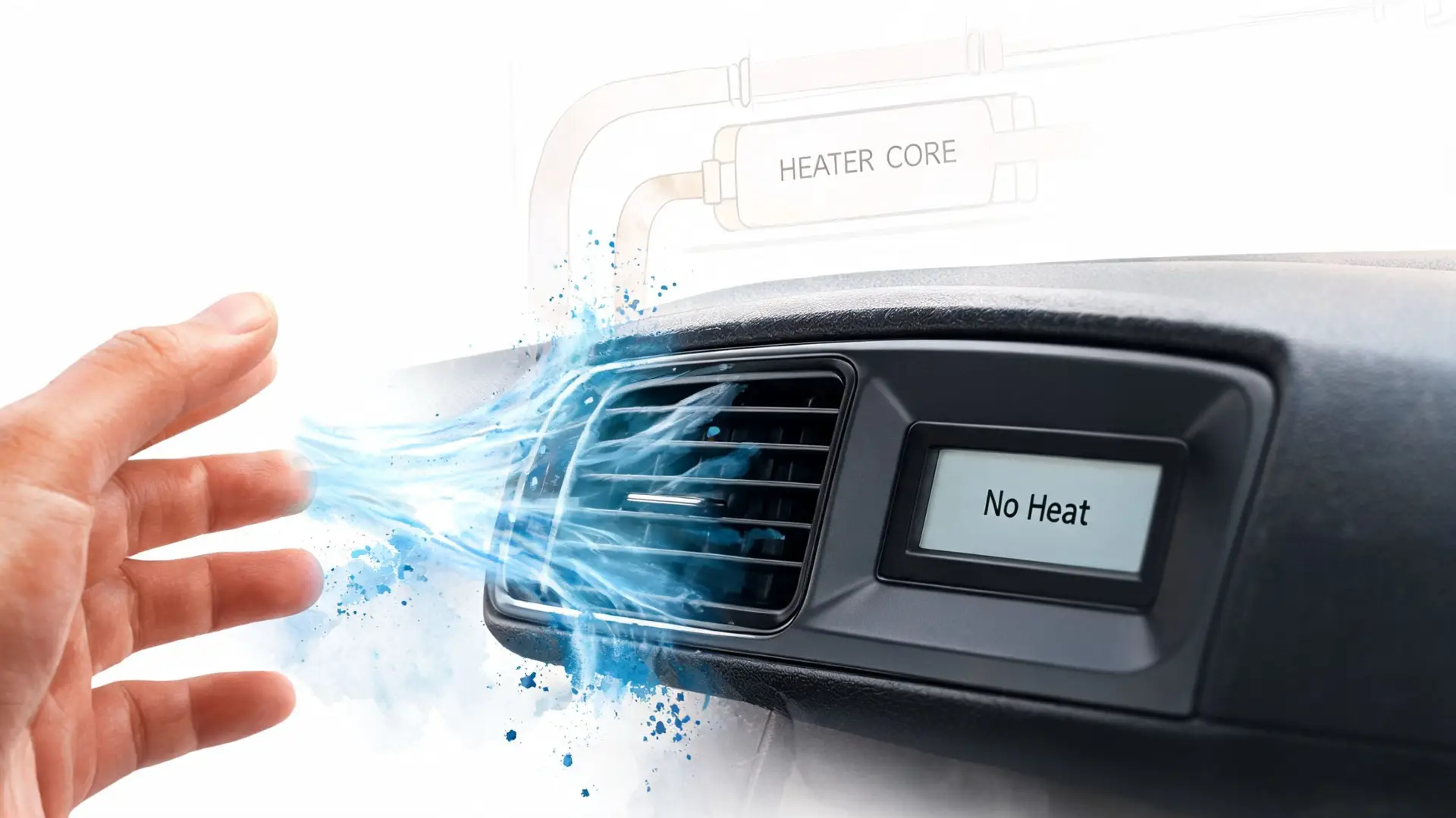
Check coolant only when the engine is cool
Never open a hot cooling system. Let the engine cool fully, then inspect the coolant reservoir. If your vehicle design allows a radiator check, only do it when the system is cold.
What to watch for:
- Low level in the overflow bottle can point to a leak or poor maintenance.
- Dirty or rusty-looking coolant can suggest internal contamination or poor circulation.
- A sweet smell in the cabin often points toward heater core leakage.
- Wet carpet under the dash is another heater core warning sign.
If coolant is low, that matters beyond cabin comfort. You’re looking at a cooling-system problem that can affect engine operation too. If you suspect a leak, this page on car coolant leak symptoms and repair is a good next step.
Watch the engine temperature behavior
A heater needs the engine to reach normal operating temperature. If the temperature gauge stays unusually low while driving, the thermostat may be stuck open. When that happens, coolant may keep circulating too soon, and the engine never gets hot enough to produce solid cabin heat.
That symptom usually looks like this:
| Symptom | What it often points to |
|---|---|
| Engine takes a long time to warm up | Thermostat staying open |
| Heat improves only after long driving | Marginal coolant temp or circulation issue |
| Heat fades at idle | Low coolant, air pocket, or weak circulation |
| Sweet odor inside cabin | Heater core concern |
A heater core should transfer heat. If there’s no hot coolant reaching it, replacing the blower or controls won’t fix the problem.
Know when the heater core is the real issue
A restricted heater core usually doesn’t fail like a light bulb. It tends to lose effectiveness. You may get lukewarm air, heat only on one side, or heat that drops off when the engine idles.
Bring it in if you notice:
- Fogging on the inside of the windshield that doesn’t clear normally
- Persistent coolant smell inside the cabin
- Damp passenger-side floor area
- Cold air even when the engine is fully warm
Heater core work can get labor-heavy fast because access often requires dash disassembly. That’s not the first repair to guess at.
Diagnosing Common Air Conditioning Failures
When the heater works but the A/C blows warm in Haltom City traffic, the most common path is to check airflow first, then refrigerant charge and compressor operation. That’s the order that saves time.
A step-by-step A/C workflow starts with the cabin air filter, then system pressure checks, then compressor clutch engagement. One major pitfall is assuming the compressor is bad when the actual cause is a blown fuse, weak electrical feed, or low refrigerant pressure preventing clutch engagement, as outlined in this A/C diagnostic workflow.
What you can check without gauges
You don’t need manifold gauges to make a few useful observations.
With the engine running and A/C set to max cool:
- Listen for the compressor clutch to click
- Watch whether the clutch engages and spins
- Notice whether engine idle changes slightly when A/C is commanded on
- Compare vent temperature at idle and while driving
If the clutch never engages, that doesn’t automatically mean the compressor failed. It can also mean the system pressure is too low, a fuse or relay issue is blocking it, or a control-side fault is keeping it off.
Warm air isn’t always a refrigerant-only problem
Drivers hear “needs a recharge” all the time. Sometimes that’s true. But a recharge without finding the leak is a temporary move at best.
Problems that can look similar from the driver’s seat include:
- Low refrigerant from a leak
- Dirty or clogged condenser
- Compressor not compressing
- Electrical feed issue to the clutch
- Pressure switch or related control fault
That overlap is why visual checks matter. If airflow is strong but never gets cold, and the compressor doesn’t engage, you’re past the easy driveway stage.
What works and what doesn’t
What works:
- Confirming the fan moves strong air
- Watching compressor behavior
- Looking for obvious condenser blockage at the front of the vehicle
- Noting whether cooling changes at idle versus road speed
What doesn’t:
- Replacing random A/C parts because the air feels warm
- Assuming all warm-air complaints are low refrigerant
- Treating sealers and shortcut products as a proper repair path
If you want a clearer picture of A/C-specific symptoms before scheduling service, our car AC troubleshooting guide breaks down the common patterns in plain language.
Warm air with strong airflow is a different problem than weak airflow with mild cooling. Diagnose those as two separate symptoms.
When to See a Professional in Haltom City
A broken heater or A/C gets expensive fastest when the diagnosis is wrong.
In North Texas, that matters. A weak A/C in a Haltom City summer can make a daily commute miserable, and a heater that only works part of the time on a cold morning usually points to more than a simple switch or fuse.
Some problems stop being practical for driveway troubleshooting because the next step requires tools, access, or training that most drivers do not have. Late-model vehicles often use actuators, sensors, pressure inputs, and control modules to decide whether the system will heat, cool, change outlets, or run the compressor at all. As explained in this HVAC control-system article, a control fault can shut the system down even when the major parts are still usable.

Jobs that usually need shop equipment
These repairs are where DIY guesses usually cost more than they save:
- A/C evacuation and recharge. The system has to be recovered and measured correctly. If refrigerant is low, the leak still has to be found.
- Electrical testing at the compressor, pressure switches, or control head. Warm air can come from a bad compressor, but it can also come from a command problem.
- Blend door actuator diagnosis and replacement. The failed actuator may be buried in the dash, and similar symptoms can come from a door issue, a control issue, or a calibration problem.
- Heater core diagnosis. A restriction, internal leak, circulation problem, or trapped air can all feel similar from the driver’s seat.
- Module, sensor, and network faults. Many newer systems need scan data to confirm what the HVAC system is being asked to do.
What you can do yourself, and where to stop
It makes sense to handle the simple checks yourself. Look at coolant level when the engine is cold. Check the cabin air filter if your vehicle has one. Confirm the blower works on every speed. Try all temperature and mode settings and pay attention to what changes.
Stop once the next step involves refrigerant equipment, live electrical testing, scan-tool data, or taking apart the dash.
That is the true trade-off:
| You handle it yourself | You bring it to a shop |
|---|---|
| Lower cost on basic checks | Faster diagnosis on electrical, control, and sealed-system faults |
| Good for filters, fuses, visible problems, and symptom notes | Better for pressure testing, scan data, and hidden failures |
| Higher chance of replacing a good part by mistake | Better chance of fixing the root cause the first time |
A good rule is simple. If the blower works but the temperature never responds correctly, if one side is hot and the other is cold, if the system works only sometimes, or if you already replaced an obvious part and nothing changed, it is time for professional diagnosis.
Drivers around Haltom City, Watauga, Keller, and North Richland Hills deal with both extremes, brutal heat and the occasional hard cold snap, so HVAC problems show up fast and become hard to ignore. Express Lube and Car Care at 6211 Denton Hwy handles maintenance and repair work that goes beyond a basic visual check, including cooling-system and HVAC-related diagnosis.
Your Climate Control Questions Answered
Some climate-control complaints don't fit neatly into one part failure. These are the questions that come up most often when symptoms are inconsistent or just plain confusing.
Common Climate Control Questions
| Question | Likely Cause & Explanation |
|---|---|
| Why does my A/C work while driving but not at idle? | That often points to a cooling-efficiency issue, airflow problem at the condenser, or weak system performance that shows up more at a stop than at road speed. |
| Why does my heater only get warm when I’m accelerating? | That can happen when coolant level is low or circulation is inconsistent. The system may move enough hot coolant at higher engine speed but not enough at idle. |
| Why is one side hot and the other side cold? | Dual-zone systems and blend-door problems commonly cause this. The temperature request may be reaching one side but not the other. |
| Why did the climate control act strange after a battery issue? | Modern HVAC systems can depend on modules, stored positions, and electrical inputs. A voltage or control fault can interrupt normal operation even when the mechanical parts are still usable. |
A quick rule for strange symptoms
If the issue is intermittent, think electrical, control, fuse, module, or actuator before you assume a major mechanical failure.
If the issue is consistent, pay close attention to which part is missing: airflow, heat, cooling, or response to controls.
That distinction saves a lot of wasted time.
If your car heater and ac not working problem has gone past the easy checks, schedule an inspection with Express Lube and Car Care. Drivers around Haltom City deal with enough weather extremes already. A proper diagnosis can tell you whether you’re looking at a simple airflow fix, a cooling-system issue, or a deeper electrical or A/C repair before more parts get replaced.