
A car mechanic, formally called an automotive service technician, is a trained professional who diagnoses, maintains, and repairs cars and light trucks using computerized tools, hands-on skill, and documented service procedures. The Bureau of Labor Statistics reports that a large number of people work in this occupation, and the National Institute for Automotive Service Excellence (ASE) certifies technicians as a direct consumer protection measure.
Before you read further, here are three things to do right now:
- Verify that any shop you consider employs ASE-certified technicians.
- Ask whether the shop provides a photo-backed Digital Vehicle Inspection and a written warranty.
- Test a new shop with a low-cost service, like an oil change, before authorizing major repairs.
Express Lube & Car Care in Haltom City, TX, is one local example of a shop that checks all three boxes: ASE-certified techs, Digital Vehicle Inspection, and written warranties on every job.
Table of Contents
- What does a car mechanic actually do every day?
- What is the work environment like for mechanics?
- How do you become a car mechanic?
- What do car mechanics earn, and is the job growing?
- What services do mechanics provide, and what drives the cost?
- How do you find a reliable mechanic near you?
- Key Takeaways
- The trust signals that actually protect you
- Same-day auto repair services in Haltom City, TX
- Useful sources
- FAQ
What does a car mechanic actually do every day?
The job title covers far more than oil changes. According to the O*NET occupation profile for automotive service technicians, common job titles include automotive technician, service technician, and lube technician, each representing a different specialization within the same trade.
Core daily duties include:
- Computerized diagnostics: Connecting scan tools to the vehicle’s OBD-II port to read fault codes, then interpreting those codes alongside live sensor data to pinpoint the actual problem, not just the symptom, as explained in detail in the AdBlue system fault guide.
A check engine light is a good illustration of how these tasks connect. The technician runs a diagnostic scan, identifies the fault code, cross-references it with live data, confirms the needed repair, writes a clear estimate, and only then begins work. Skipping any step in that sequence is where misdiagnoses happen.
Pro Tip: When a shop explains a repair, ask them to show you the scan data or the worn part. A confident technician will welcome the question. One who deflects it is a yellow flag.
What is the work environment like for mechanics?
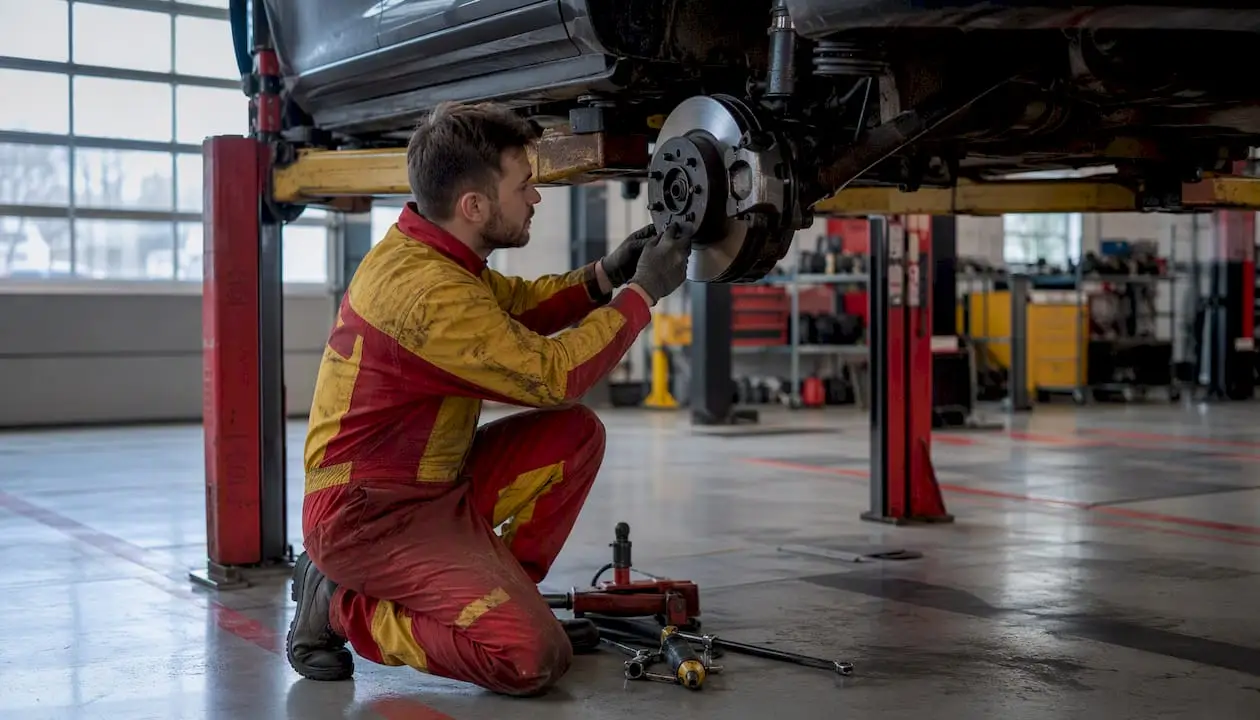
Auto repair shops are loud, physically demanding, and require sustained attention to safety. Technicians spend most of their day on their feet, often working in awkward positions under vehicles on lifts or crouched in tight engine bays. Lifting heavy components, like rotors, batteries, and exhaust sections, is routine.
Most full-time mechanics work a standard 40-hour week, though evening and Saturday hours are common at shops that serve commuters. Mobile mechanics and dealership service departments sometimes operate on extended schedules to match customer demand.
Safety practices matter in ways that directly affect you as a customer. Shops that follow proper lift safety, use eye protection, and maintain clean workspaces are also more likely to handle your vehicle carefully. One specific credential to confirm for A/C work: EPA Section 609 certification, which is required by federal law for any technician who purchases or handles refrigerants. A shop performing A/C service without certified technicians is operating outside EPA requirements.
Safety note: Always ask whether the technician performing your A/C service holds EPA Section 609 certification. It is a legal requirement, not an optional credential.
How do you become a car mechanic?
There is no single path, which is actually good news for people entering the trade. The BLS identifies three common entry routes:
- Employer apprenticeships: — Some dealerships and independent shops hire entry-level technicians and provide structured on-the-job training, sometimes paired with manufacturer-specific courses.
Most technicians combine formal training with years of hands-on experience before they feel fully competent across all vehicle systems. Specializing in hybrid and EV systems, diesel engines, or transmissions typically requires additional manufacturer training on top of a base credential.
Certifications that actually matter
ASE credentials are the industry standard. The National Institute for Automotive Service Excellence offers certifications across eight automotive areas (engine repair, brakes, electrical, HVAC, and more), plus a Master Technician designation. According to research on ASE certification’s return on investment, certified technicians rely on data-driven diagnostics rather than the “parts cannon” approach, which reduces unnecessary replacements and saves customers money. That makes ASE certification both a professional credential and a consumer protection signal.
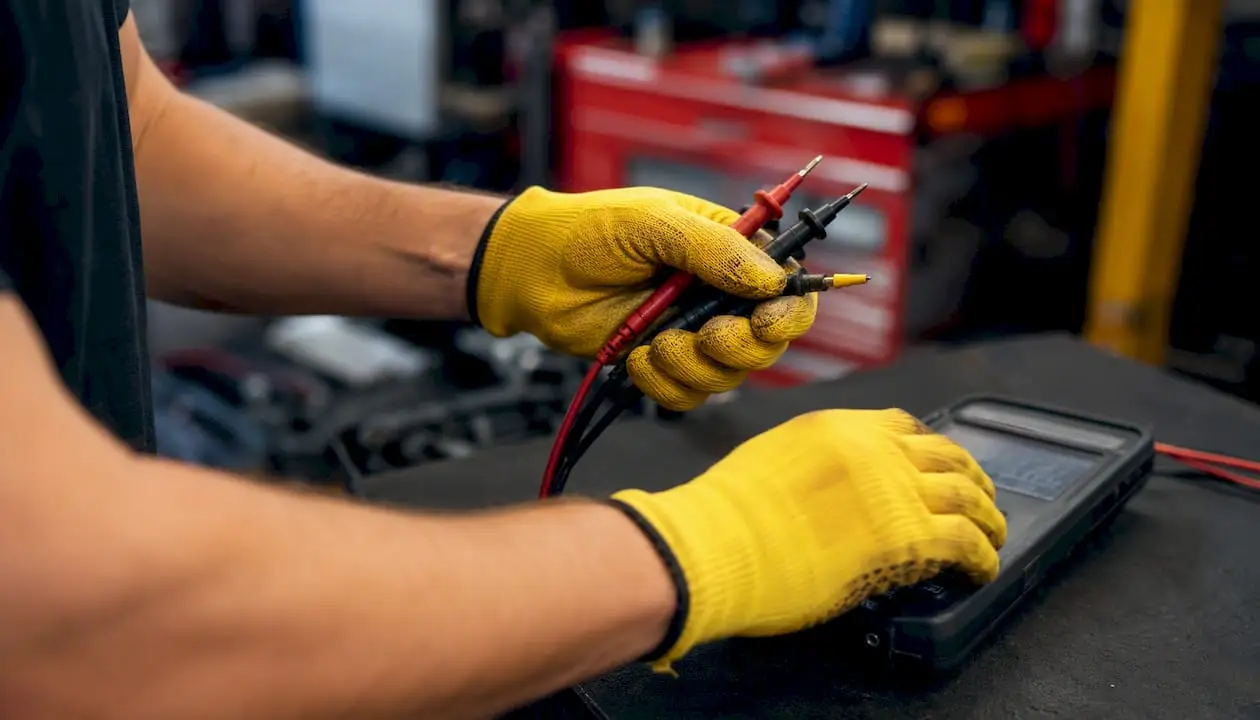
EPA Section 609 certification is mandatory for technicians who work with vehicle refrigerants. The EPA’s Section 609 program sets the training and testing standards for this credential.
Manufacturer training from brands like Ford, GM, Toyota, and Honda adds vehicle-specific knowledge that general ASE credentials do not cover. Technicians who hold both ASE and manufacturer certifications tend to command higher pay and handle a wider range of repairs confidently.
Pro Tip: Ask any shop whether they offer employer-paid training for their technicians. Shops that invest in ongoing education tend to stay current with EV systems, updated scan tools, and evolving manufacturer specs.
What do car mechanics earn, and is the job growing?
The BLS reported a median annual wage for automotive service technicians as of May 2024, with a projected job growth rate from 2024 to 2034 similar to the average for all occupations. The BLS reported a median annual wage for automotive service technicians as of May 2024, with a projected job growth rate from 2024 to 2034 similar to the average for all occupations. The primary reference point for median pay is the BLS figure of $49,670 as of May 2024.
| Metric | Figure | Source |
|---|---|---|
| Median annual pay | $49,670 (May 2024) | BLS |
| 10th percentile | — | BLS |
| 90th percentile | Above $79,000 | BLS |
| Total employment | — | BLS |
| Projected growth (2024–2034) | ~4% | BLS |
| Total employment | — | BLS |
| Projected growth (2024–2034) | ~4% | BLS |
Median pay: $49,670 per year as of May 2024, according to BLS data, with the top 10% of technicians earning above $79,000 annually.
Several factors push earnings toward the higher end of that range:
- Holding multiple ASE certifications, especially the Master Technician designation.
- Completing hybrid and EV-specific training, which is increasingly in demand.
- Developing strong diagnostic skills that reduce repair time and increase shop throughput.
- Earning a state vehicle inspection license, which adds a revenue-generating service.
- Specializing in diesel, transmissions, or high-performance vehicles where fewer technicians compete.
Reaching six-figure income is possible in specialized roles, particularly for technicians who combine master-level ASE credentials with EV training and work in high-cost-of-living markets, though it represents the upper tier rather than a typical outcome.
What services do mechanics provide, and what drives the cost?
Most auto repair shops offer a core set of services that cover the majority of what your vehicle needs over its lifetime. Common services include:
- Oil and filter changes
- Brake pad and rotor replacement
- Battery and alternator testing and replacement
- Engine diagnostics (check engine light, misfires, performance issues)
- A/C service and refrigerant recharge
- Timing belt replacement
- Transmission service and fluid exchange
- Suspension and steering repairs
Pricing varies more than most drivers expect, and AAA’s state-by-state labor rate data makes clear that labor rate is the single biggest driver of cost differences across regions. A shop in a high-cost metro area may charge $180 per hour in labor; a shop in a smaller market might charge $95. The same repair can look very different on paper depending on where you live.
Other cost factors include:
- Parts quality: OEM (original equipment manufacturer) parts cost more than aftermarket alternatives but often carry longer warranties.
- Vehicle make and model: European luxury vehicles and newer EVs typically require more expensive parts and specialized tools.
- Diagnostic time: Complex electrical faults or intermittent problems take longer to trace, and that time appears on your estimate as diagnostic labor.
- Warranty coverage: Shops offering longer parts-and-labor warranties often build that cost into their pricing, but the protection is worth it.
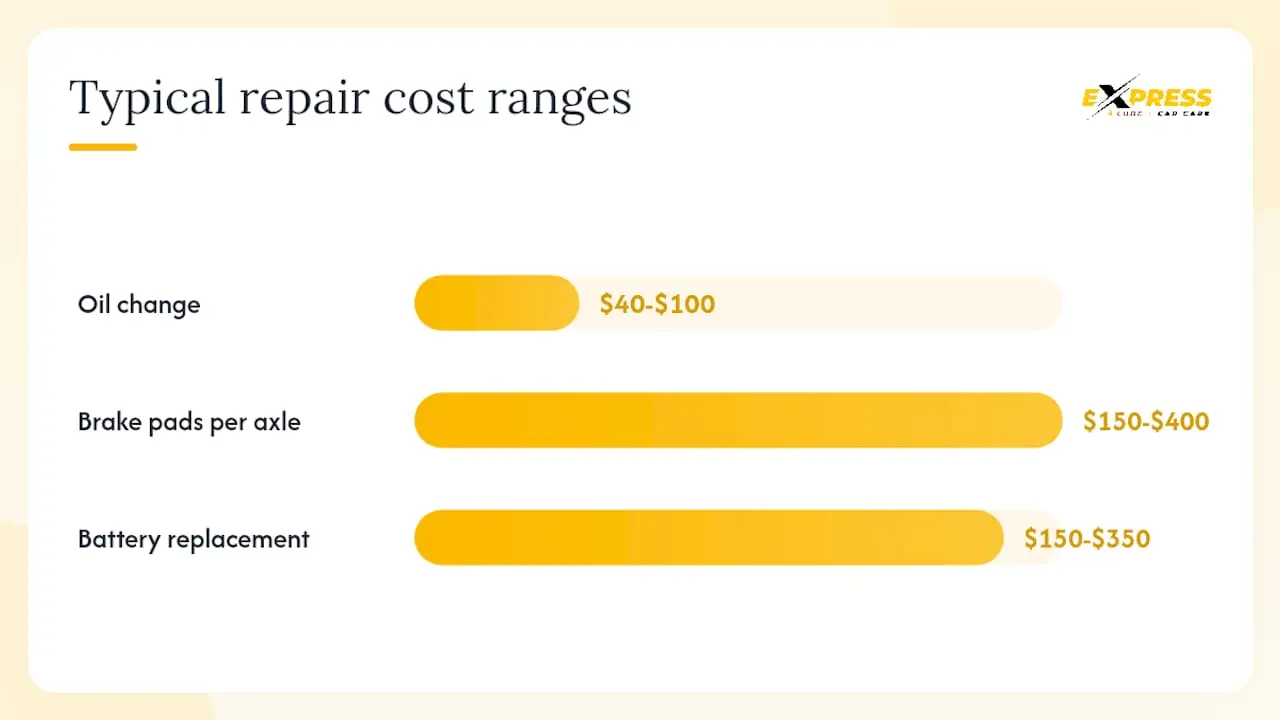
As rough estimates (regional and vehicle variation applies): an oil change typically runs $40–$100, brake pad replacement $150–$400 per axle, and a battery replacement $150–$350 including installation. Always treat these as starting points, not guarantees.
Pro Tip: Before authorizing any repair over $300, ask the shop to separate the labor and parts costs on the written estimate. That breakdown tells you immediately whether the pricing is reasonable and gives you something concrete to compare if you get a second opinion.
How do you find a reliable mechanic near you?
Finding a trustworthy shop takes about 20 minutes of research and one low-stakes visit. Here is a practical sequence:
- Verify certifications — Check whether the shop displays ASE certification and whether individual technicians are certified. Ask specifically about EPA Section 609 for any A/C work.
- Look for Digital Vehicle Inspection — A shop that sends photo-backed inspection reports gives you documented evidence of your vehicle’s condition, which protects both parties.
- Read reviews for patterns, not just star ratings. According to review evaluation guidance, consistent themes across multiple reviews, such as repeated mentions of surprise charges or missed diagnoses, are far more informative than a single one-star complaint.
- Test the shop with a low-cost service. Consumer Reports recommends starting with a routine service like an oil change to evaluate communication, transparency, and turnaround before trusting the shop with a major repair.
Questions to ask before you commit
- “What does your warranty cover, and for how long?”
- “Will you send me a Digital Vehicle Inspection report with photos?”
- “How do you handle it if the repair takes longer or costs more than the estimate?”
- “Do you keep service records I can access later?”
- “Are your technicians ASE-certified?”
Red flags to watch for
- Verbal estimates only, with no written documentation.
- Pressure to approve additional repairs before the original job is finished.
- Reluctance to show you the worn part or the scan data.
- No clear answer on warranty coverage.
- Reviews that repeatedly mention the same problem, especially billing surprises.
Pro Tip: Keep every written estimate, invoice, and inspection report in a folder, physical or digital. That paper trail is your protection if a warranty dispute arises later, and it helps the next technician understand your vehicle’s history.
For a deeper local checklist, the choosing a local mechanic guide from Express Lube & Car Care walks through each step with DFW-specific context.
Key Takeaways
A reliable car mechanic combines ASE certification, transparent diagnostics, and written documentation — those three signals separate trustworthy shops from risky ones.
| Point | Details |
|---|---|
| Core duties | Mechanics diagnose, maintain, and repair vehicles using scan tools, hands-on skill, and documented service records. |
| Certifications to verify | Confirm ASE certification for general work and EPA Section 609 for any A/C service before authorizing repairs. |
| Median pay | BLS reports the median annual wage as $49,670 as of May 2024 with higher earners making significantly more. |
| How to vet a shop | Test with a low-cost service first, request a written estimate, and ask for a photo-backed Digital Vehicle Inspection report. |
| Express Lube & Car Care | Offers ASE-certified technicians, Digital Vehicle Inspection, written warranties, and same-day service in Haltom City, TX. |
The trust signals that actually protect you
Most drivers focus on price when choosing a shop, and that instinct is understandable. But price is the last thing to evaluate, not the first. A low quote from an uncertified technician who skips the written estimate can cost you far more than a fair quote from a certified shop that documents everything.
The shops that consistently deliver good outcomes share a short list of habits: they write everything down, they show you the evidence, and they stand behind their work with a warranty that covers both parts and labor. Those habits are not expensive to maintain. They are simply what a professional operation looks like.
What concerns us at Express Lube & Car Care is the number of drivers who arrive after a bad experience elsewhere, having approved repairs based on a verbal estimate or a vague description of “what was wrong.” The fix is simple: insist on documentation before you hand over your keys. A shop that resists that request is telling you something important.
We built our process around Digital Vehicle Inspection, written estimates, and ASE-certified technicians because those tools protect you, and because they hold us accountable too. That accountability is not a marketing claim. It is how we operate every day.
Same-day auto repair services in Haltom City, TX
No-appointment oil changes and same-day diagnostics are the fastest way to test a new shop without committing to a major repair. At Express Lube & Car Care, you get ASE-certified technicians, a photo-backed Digital Vehicle Inspection on every visit, and a written warranty before any work begins. That combination gives you the documentation and the accountability that this guide recommends looking for.
If a larger repair comes up and cost is a concern, flexible financing options through Snap Finance are available so you can address the problem now rather than drive on a safety issue while you wait. Start with an oil change or a diagnostic scan, see how the team communicates, and decide from there. You can book your visit online or simply pull in during business hours.
Useful sources
- Automotive Service Technicians and Mechanics
- 49-3023.00 – Automotive Service Technicians and Mechanics
- ROI on ASE certification — Jennifer Holland
- Section 609 technician training and certification programs
- How to find a high-quality car repair shop
- Average Mechanic Labor Rate: Repair Costs in Your State 2026 – AAA
- How to find a good mechanic
- BLS Automotive Service Technicians Salary – $50,627 Median May 2025 | CompSignal
FAQ
What is a car mechanic called professionally?
The formal occupational title is automotive service technician, used by the Bureau of Labor Statistics and O*NET. “Car mechanic” is the common everyday term for the same role.
What do car mechanics do on a typical day?
They diagnose vehicle problems using scan tools, perform routine maintenance like oil changes and tire rotations, replace worn parts such as brakes and batteries, and document every service performed.
How much does a car mechanic charge for repairs?
Labor rates vary significantly by region, according to AAA’s state-by-state data. As rough estimates, an oil change runs $40–$100, brake pad replacement $150–$400 per axle, and a battery replacement $150–$350, before regional and vehicle-specific variation.
How can a mechanic earn $100,000 or more per year?
Reaching that level typically requires a combination of Master ASE certification, hybrid or EV specialization, strong diagnostic skills, and working in a high-demand market. The BLS reports the 90th percentile of technician earnings exceeds $79,000, with specialized roles pushing higher.
How do I know if a mechanic shop is trustworthy?
Verify ASE certification, ask for a photo-backed Digital Vehicle Inspection, and request a written estimate before approving any work. Consumer Reports recommends testing a new shop with a low-cost service first to evaluate communication and transparency before committing to major repairs. Express Lube & Car Care provides all three trust signals on every visit.