
An engine misfire usually shows up as a rough idle, a shudder or stutter when you accelerate, and a Check Engine light. Cars.com describes the same pattern: a rough idle or stutter you can both hear and feel. If the light is flashing, slow down and get the car looked at right away. If it is steady, plan a diagnosis soon. At Express Lube & Car Care, 6211 Denton Hwy in Haltom City, we diagnose the cause before recommending any repair, because a misfire is a symptom with several possible sources.
TL;DR
- A misfire means one or more cylinders are not completing normal combustion, so that cylinder adds no power on that cycle.
- Common signs: rough idle, shaking, hesitation under acceleration, weaker power, worse fuel economy and a Check Engine light.
- A flashing Check Engine light signals a severe misfire. Reduce speed and have the car inspected as soon as possible to protect the catalytic converter.
- Causes fall into three groups: lost spark, a bad air/fuel mixture, or lost compression. A scan and testing find which one.
- Call (817) 281-3300 or request an appointment for a diagnosis.
Table of Contents
- What is an engine misfire?
- How do you know if your engine is misfiring?
- What do the misfire codes mean?
- What causes an engine misfire?
- Why does a misfire show up under load or at highway speed?
- Can you drive with an engine misfire?
- How is a misfire diagnosed?
- What does a misfire repair usually involve?
- Real-world examples
- Does a misfire affect an emissions test?
- Our perspective
- Get a misfire diagnosed in Haltom City
- FAQ
- Sources
What is an engine misfire?
Your engine burns a mix of air and fuel in each cylinder, and each burn pushes a piston down. A misfire happens when a cylinder fails to complete that burn. As one industry source explains, the affected cylinder produces no power during that cycle. The other cylinders keep working, which is why the engine feels uneven instead of simply dying.
The car’s computer watches for this. According to Underhood Service, the powertrain computer detects misfires from changes in crankshaft speed, read through the crankshaft position sensor, and compares the power loss cylinder by cylinder. That is how the Check Engine light and a stored code come about.
How do you know if your engine is misfiring?
Symptoms range from barely noticeable to obvious. Here is what to watch for.
Rough idle and shaking
At a red light on Denton Highway, the steering wheel and seat may buzz, and the tachometer may bounce instead of holding steady. A healthy engine idles at a steady speed. If the RPM needle dips and surges, one cylinder may be dropping out.
Hesitation, stuttering or jerking when you accelerate
Pulling away from a light or merging onto Loop 820 or I-35W, you may feel a stumble or a jerk before the engine catches up. The Cars.com article above lists a stutter on acceleration as a classic cylinder misfire sign.
Loss of power
With one cylinder not contributing, the car feels weak. You notice it most going uphill, towing, or getting up to highway speed. A weak-feeling truck that used to pull easily is a common example.
Check Engine light, steady or flashing
A steady light means the computer has logged a problem. A flashing light is more serious. More on that below.
Worse fuel economy and an odd exhaust smell
Unburned fuel is wasted fuel. Cars.com notes that a misfire can lower fuel economy, increase emissions and limit acceleration. You may also notice a raw fuel smell from the tailpipe.
Stalling or rough starts
In some cases the engine dies at a stop or shakes hard on a cold start. Any stall in traffic is worth treating as a safety issue, not just an annoyance.
What do the misfire codes mean?
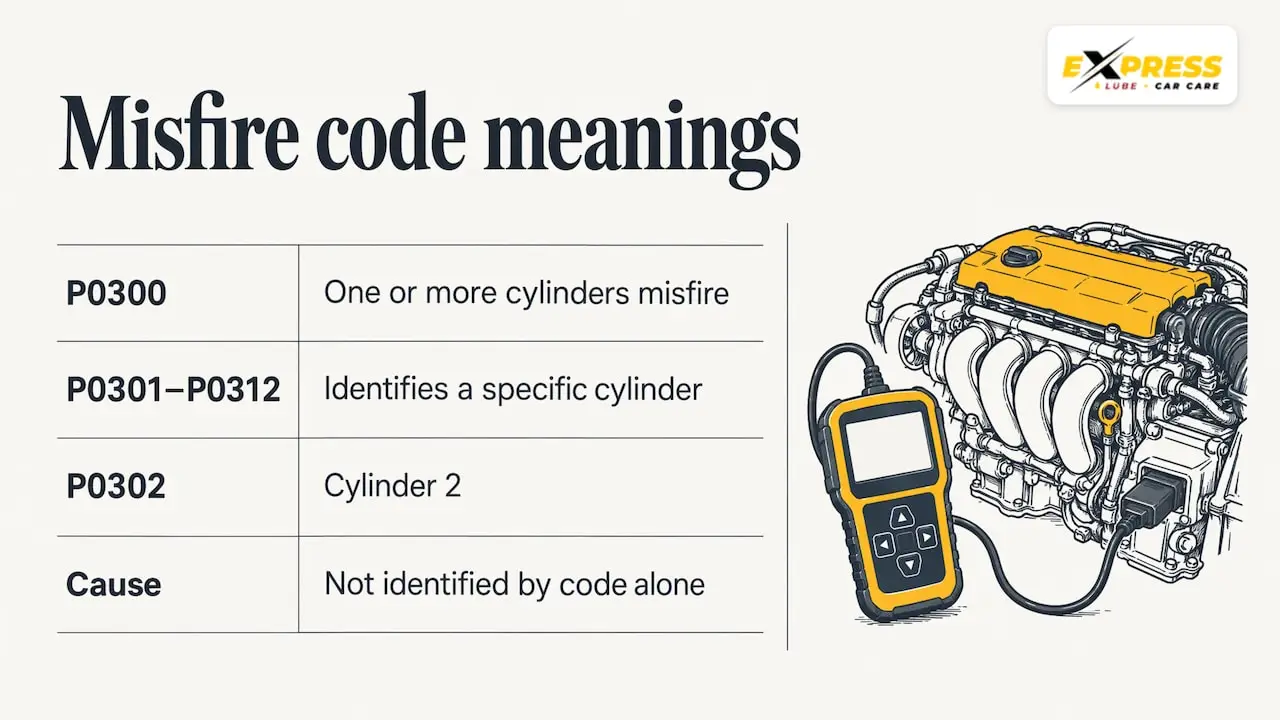
When the computer sets a misfire code, the number tells you where to look. Edmunds explains that P0300 means the engine control unit detected that one or more cylinders are not firing properly, without naming a single cylinder. Codes in the P0301 to P0312 range point to a specific cylinder, with the last digits matching the cylinder number: P0302 is cylinder 2, for example.
A code names the cylinder, not the part. A P0302 could come from a coil, a spark plug, an injector or a compression problem in that cylinder. That is why a code alone is not a repair order. Our check engine light diagnostics start with the code and then test to find the real cause.
What causes an engine misfire?
AA1Car, a professional diagnostic reference, boils the causes down to three basics: loss of spark, an air/fuel mixture too far out of balance to ignite, or loss of compression.
| Cause group | Typical culprits | What you may notice |
|---|---|---|
| Loss of spark | Worn spark plugs, failing ignition coils, damaged plug wires | Stumble under acceleration, rough idle |
| Fuel/air imbalance | Clogged or inoperative injector, air leak, low fuel pressure | Hesitation, lean running, poor economy |
| Loss of compression | Worn rings, leaking valves, head gasket problems | Persistent misfire in one cylinder that tune-up parts do not cure |
A U.S. consumer guide from Capital One adds that misfires are not limited to spark parts: fuel metering, unmetered air, engine-control electronics and mechanical sealing can all disrupt combustion.
For AA1Car, a fuel-side misfire can come from a clogged injector, an air leak, or low fuel pressure from a weak pump, restricted filter or leaking regulator. If the plug and wire are fine and the cylinder is still weak, compression or leak-down testing shows whether the engine itself is the problem.
Why does a misfire show up under load or at highway speed?
Some misfires only appear when the engine is working hard: climbing a grade, towing, or accelerating onto the highway. AA1Car says a misfire that only shows under load can come from a plug or wire that shorts under demand, a bad coil or coil connection, or an erratic crankshaft position sensor signal. It also notes that intermittent misfires, which occur only when cold, only under load, or unpredictably, are harder to diagnose.
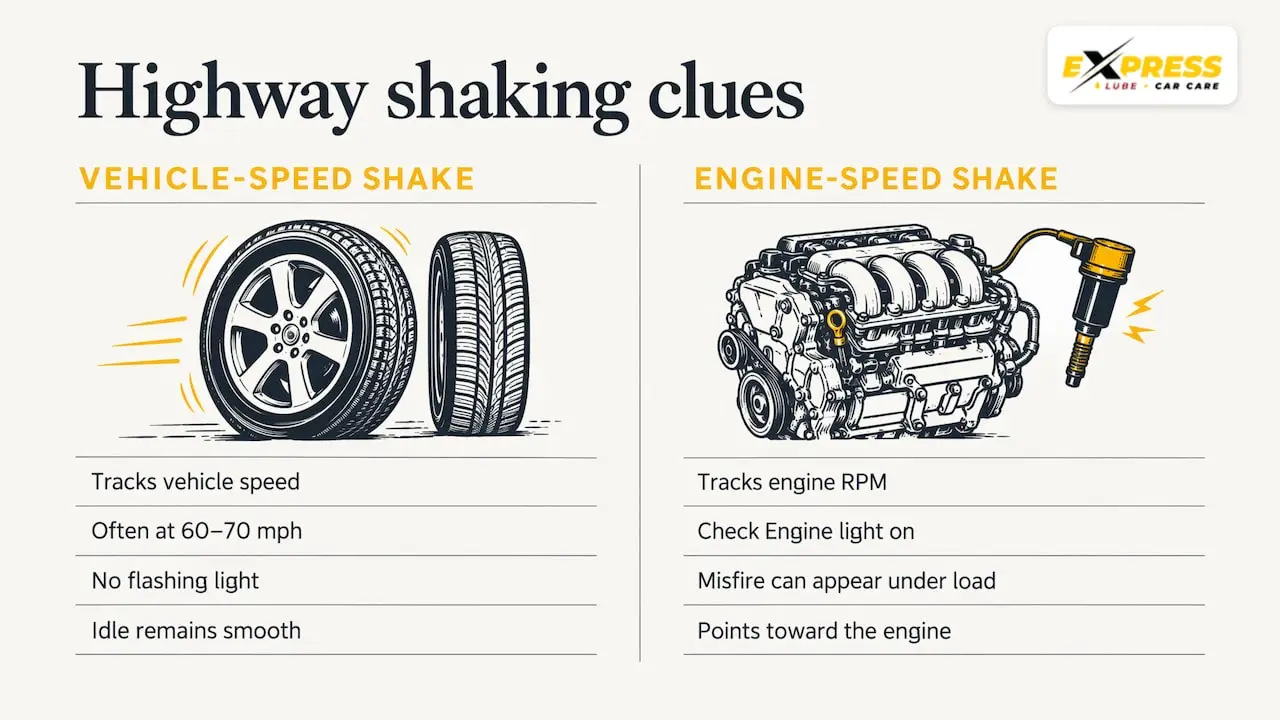
That matters for a vibration you feel at highway speed. A misfire can cause it, but so can other issues. Shaking that tracks vehicle speed and shows up at 60 to 70 mph, with no flashing light and a smooth idle, often points toward tires, wheels or suspension. Shaking that tracks engine RPM and comes with a Check Engine light points toward the engine. Our guide on why a car shakes when you accelerate walks through the difference. A technician can separate the two quickly during a road test and inspection.
North Texas summers add to the load. Long stretches of stop-and-go traffic on Denton Highway or I-820, followed by a high-speed run on the highway with the A/C on, put heat and demand on ignition parts and the cooling system. If a weak coil or worn plug is borderline, that combination is when it often shows itself.
Can you drive with an engine misfire?
It depends on the light.
- Flashing Check Engine light: This indicates a severe misfire. Consumer Reports, citing an ASE expert, says a blinking light in late-model vehicles usually means a misfire severe enough to send unburned fuel into the exhaust and rapidly damage the catalytic converter. The advice is to reduce power and have the vehicle inspected as soon as possible. The EPA gives the same guidance: reduce speed and seek service promptly, because even a short severe misfire can seriously damage emissions components.
- Steady Check Engine light with mild symptoms: Consumer Reports’ expert says a steady light generally calls for prompt service. Keep trips short, avoid hard acceleration and towing, and schedule a diagnosis.
Unburned fuel in a hot exhaust is also a reason to treat a flashing light seriously beyond repair cost. These car fire prevention tips cover other warning signs worth acting on.
The EPA also notes that onboard monitoring can catch a misfire a driver might not notice, and that timely repair can keep a relatively inexpensive spark plug problem from becoming catalytic converter damage. If the light is flashing and the car is shaking hard, pull over safely and call for a tow. Our flashing check engine light guide explains the tow-or-drive decision in more detail.
How is a misfire diagnosed?
Good diagnosis moves from the broad to the specific, and it avoids replacing parts on a guess.
- Read the codes and freeze-frame data. This shows which cylinder or cylinders are involved and under what conditions the misfire was logged.
- Compare misfire counts. Underhood Service recommends comparing scan-tool misfire counts between cylinders, then focusing tests on the cylinder with the highest count. Power-balance or cylinder-deactivation tests can help isolate the fault.
- Test the ignition side. The spark plug maker NGK suggests checking whether disconnecting each coil changes how the engine runs, and swapping a suspect coil with a known-good one. If the misfire follows the coil, the coil is the problem. If it stays on the same cylinder, the spark plug may be at fault.
- Check fuel and air. Injector operation, fuel pressure and vacuum leaks come next if ignition tests are clean.
- Test compression when needed. If the cylinder is still weak with good plug and ignition parts, compression or leak-down testing shows whether the engine has a mechanical problem.
The order matters. A $0 test can save you from buying coils for a cylinder whose real problem is an injector. Our shop does this kind of diagnosis through engine diagnostics and repair, and our digital vehicle inspections come with photos and technician recommendations, so you can see what we see.
What does a misfire repair usually involve?
The fix follows the cause:
- Spark plugs and ignition: replacing worn plugs, a failed coil or damaged wiring. This is typically handled as part of tune-up, spark plug and ignition repair. If a single coil has failed, our article on ignition coil replacement costs explains what shapes the bill.
- Fuel system: cleaning or replacing an injector, or addressing a fuel pressure problem.
- Air leaks and sensors: repairing leaking intake components or faulty sensors that throw off the mixture.
- Mechanical repair: if compression is low, the repair moves into engine repair and replacement.
We do not quote a repair until we know the cause, and we never guess at a price before testing.
Real-world examples
The commuter’s stumble. A driver heading home on Denton Highway feels the car hesitate every time it pulls away from a light, and the light comes on steady. Codes show P0304. Testing finds a worn plug and a weak coil on cylinder 4. Fixing both ends the stumble. Waiting weeks would have risked a flashing light.
The truck that will not pull. A pickup feels fine around town but loses power climbing an overpass with a trailer. The misfire only appears under load, which points to an ignition component that breaks down under demand, as AA1Car describes. A road test with the scan tool running catches it.
The flashing light on the highway. A sedan starts shaking and the light flashes. The right move is to ease off, exit, and get service. Driving the rest of the way across Fort Worth at full speed is the situation that damages a catalytic converter. Our catalytic converter replacement guide shows what that damage can lead to.
Does a misfire affect an emissions test?
It can. A misfire raises exhaust emissions, and an active Check Engine light is a problem for an emissions inspection. Since January 1, 2025, Texas no longer requires safety inspections for most non-commercial vehicles, under House Bill 3297. The same TxDMV notice says emissions inspections are still required in certain counties, including Tarrant County, before registration. Qualifying commercial vehicles remain subject to the applicable safety inspection rules. Check the Texas emissions and commercial inspections page for what applies to your vehicle.
Our perspective
A misfire is the engine telling you something specific, and the job is to listen before spending money. We have seen how easily a rough idle gets blamed on the first part that comes to mind. Our approach is diagnosis first: read the codes, test the cylinder, and then explain what we found.
Our digital vehicle inspections include photos and technician recommendations, so you see the same evidence we do. Our technicians are ASE-certified, and the shop is RepairPal certified. We work on multiple makes, from daily commuters to trucks, SUVs and European vehicles, and we handle routine maintenance as well as complex mechanical problems.
Our approach to quoting is clear, upfront pricing and honest recommendations. If you are in a hurry, we offer no-appointment, same-day service.
Express Lube & Car Care
Get a misfire diagnosed in Haltom City
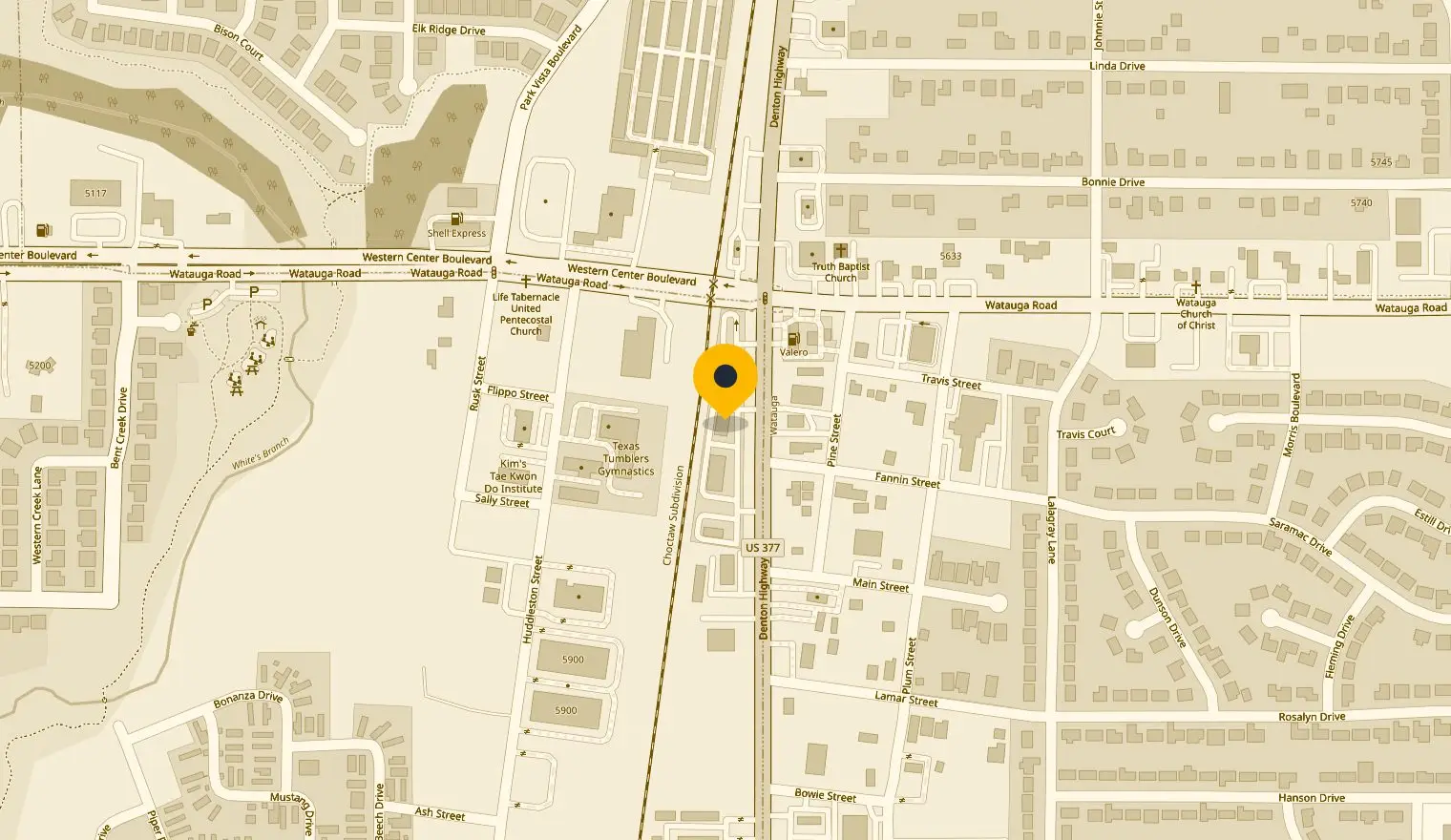
If your car is shaking, hesitating or has a Check Engine light, our services page lists everything we handle, from ignition and fuel system work to engine repair. We are at 6211 Denton Hwy, Haltom City, TX 76148, and drivers come to us from Watauga, North Richland Hills, Keller and Fort Worth.
Eligible repairs may qualify for third-party financing through Snap Finance, subject to provider approval and applicable terms. You can read about financing your auto repairs. Qualifying repairs may also be covered by our 24-month/24,000-mile warranty, so ask which terms apply to your repair.
FAQ
What are cylinder misfire symptoms?
The usual signs are a rough idle, shaking, hesitation or stuttering when you accelerate, reduced power, poorer fuel economy and a Check Engine light. A scan tool may show a code like P0301 through P0312, where the last digits identify the cylinder.
Can you drive with a misfire?
If the Check Engine light is flashing, reduce speed and have the vehicle inspected as soon as possible, because unburned fuel can damage the catalytic converter. With a steady light and mild symptoms, keep trips short and schedule a diagnosis promptly.
What causes an engine misfire?
There are three basic causes: loss of spark, an air/fuel mixture that is too far off to ignite, or loss of compression. In practice that means worn plugs, failing coils, injector or fuel pressure problems, air leaks, or internal engine wear.
Why does my engine misfire only under load?
A plug, wire or coil can work fine at idle and break down when the engine demands more. A failing crankshaft position sensor signal can also cause it. Because these faults come and go, they take careful testing to find.
Can a misfire cause vibration at highway speed?
Yes, it can, but tires, wheels and suspension are common causes too. If the shaking follows engine RPM and comes with a Check Engine light, suspect a misfire. If it follows road speed, a technician will check the wheels and suspension first.
If your car is misfiring, call (817) 281-3300 or schedule a misfire diagnosis at our Haltom City shop, and we will find the cause before recommending a repair. You can also visit our website.
Sources
- What Is an Engine Misfire and What Causes It? (Cars.com)
- Engine Misfire Symptoms: How to Diagnose the Cause
- Diagnosing Misfires (Underhood Service)
- P0300: Random/Multiple Cylinder Misfire Detected (Edmunds)
- How To Diagnose & Repair Engine Misfires (AA1Car)
- What Causes an Engine to Misfire? (Capital One)
- What Does the Check Engine Light Look Like, and Really Mean? (Consumer Reports)
- EPA Environmental Fact Sheet on OBD
- Texas vehicle inspection changes (TxDMV)
- Tips for Preventing Car Fires