

Most oil leak repairs typically cost several hundred dollars, with diagnosis fees often running a moderate amount separately. High-labor jobs like a rear main seal or timing cover repair can make the total cost significantly higher.
TL;DR:
- Most oil leak repairs range from a few hundred dollars for simple gasket replacements to over $1,000 for labor-intensive jobs like rear main seal or timing cover fixes.
- Costs vary significantly depending on the leak source, vehicle type, and whether engine disassembly is required, with luxury models often costing more due to parts and labor.
- Accurate diagnosis involves visual inspection, targeted cleaning, dye testing, and pressure checks, typically costing $80 to $150 and taking up to 90 minutes.
- Minor leaks from loose drain plugs or oil filler caps can cost as little as $5, while major leaks needing deep disassembly demand comprehensive estimates and warranty considerations.
- Drive only short distances with slow leaks and check oil levels regularly, stopping immediately if smoke, burning smell, or rapid oil loss occurs.
Table of Contents
- Oil Leak Repair Cost by Source: What Drives the Bill
- What Causes Oil Leaks, and How to Spot the Source
- Why Oil Leak Repair Prices Swing So Widely
- How Shops Diagnose an Oil Leak (and Why Diagnosis Costs Money)
- When It’s Safe to Drive and When to Stop
- What to Ask Before You Approve an Oil Leak Repair
- The Express Lube & Car Care Take on Oil Leak Diagnosis
- Get Your Oil Leak Diagnosed the Right Way
- Sources
- FAQ
Oil Leak Repair Cost by Source: What Drives the Bill
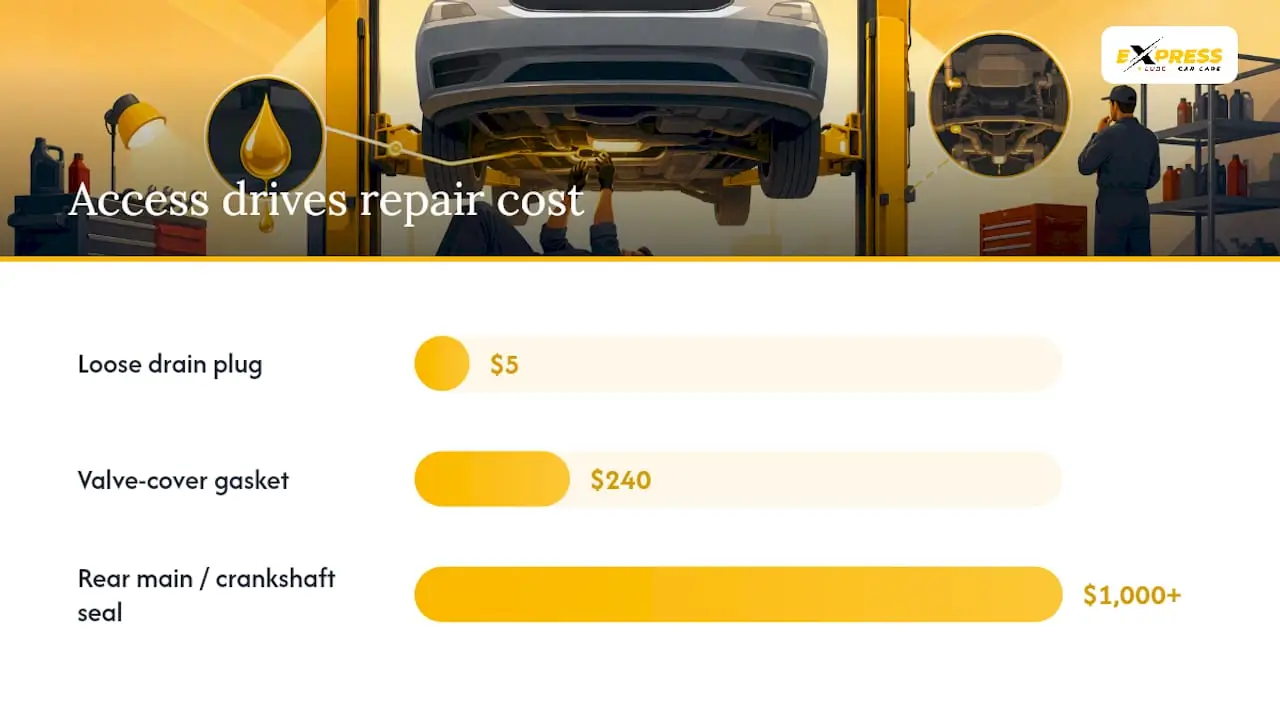
The part leaking matters, but how much of the engine has to come apart to reach it matters more. A valve cover sits right on top of the engine, easy to access, so replacing that gasket is usually a quick job. A rear main seal hides between the engine and transmission, and reaching it can mean pulling the transmission or even the engine itself. That difference in access is why two leaks that sound similar on paper can cost wildly different amounts to fix.
Synchrony’s breakdown of oil leak repair costs puts simple valve-cover-gasket jobs around $240 total, while labor-intensive seal replacements can top $1,000. Here’s how costs generally vary by source without specific figures:
| Leak Source | General Cost Range |
|---|---|
| Valve cover gasket | Typically lower cost due to easy access |
| Oil filter housing or cap | Usually inexpensive, with less labor needed |
| Oil pan gasket | Moderate cost reflecting parts and labor |
| Timing cover gasket | Labor-intensive with higher total cost |
| Rear main / crankshaft seal | Among the costliest due to difficult access |
Small leaks are sometimes cheaper still. A loose drain plug or a worn crush washer might only need a $5 part and 15 minutes of labor. On the other end, oil pan gasket work climbs fast on vehicles where the pan sits behind subframes or exhaust components.
Vehicle type shifts these numbers too. A compact sedan with a transversely mounted engine often has better access than a truck with a longitudinal engine and four-wheel-drive components in the way. Luxury and European models tend to run higher across the board, both because parts cost more and because labor guides allot more hours for the same job.
What Causes Oil Leaks, and How to Spot the Source
Most leaks trace back to one of five culprits, and each one tends to show up in a slightly different way:
- Valve cover gasket: A slow seep along the top edge of the engine, often visible as light staining down the side of the block.
- Oil pan gasket: Drips or a puddle directly under the engine, usually near the front or middle depending on the pan’s shape.
- Rear main or crankshaft seal: Oil pooling near the back of the engine, sometimes mistaken for a transmission leak since it sits close to the bell housing.
- Oil filter or filler cap: A leak near the front or side of the engine, frequently caused by a filter that wasn’t tightened correctly during the last oil change.
- Overfill: Oil pushed out through the dipstick tube or a gasket seal after too much was added, sometimes producing smoke off the exhaust manifold.
Oil doesn’t always drip straight down from where it started. Airflow and engine vibration can carry it several inches or more before it drops, which is why a puddle’s location is a clue, not a confirmed answer. A burning smell usually means oil has landed on the exhaust, and that’s worth treating as more urgent than a spot on your driveway. Leaks also tend to look worse cold, when oil has had time to pool, and less visible once the engine’s warm and thinner oil has burned off the excess.
Why Oil Leak Repair Prices Swing So Widely
Ask three shops for a quote on the same leak and you can get three different numbers, and it’s rarely because someone’s overcharging. Labor is usually the biggest line item on the invoice, and the hours required depend entirely on what has to be removed to reach the failed part.
- Rear main seals and timing covers often require pulling the transmission, exhaust components, or front engine covers, adding hours beyond the part swap itself.
- OEM gaskets and seals typically cost more upfront but come with tighter tolerances and manufacturer warranties, while aftermarket parts save money with more variability in fit and longevity.
- Engine layout changes labor time directly. A pan that drops with four bolts is a different job than one buried behind a subframe.
- Diagnostic time, your shop’s hourly labor rate, and any warranty coverage on prior repairs all shift the final number up or down.
Pro Tip: If a leak is coming from a component that was recently replaced, check whether it’s still under warranty before paying full price again.
Synchrony’s cost analysis notes that two vehicles with the exact same leaking part can carry very different bills once one requires deep disassembly and the other doesn’t. That’s the single biggest reason a rear main seal quote from one shop might be double another’s, even on the same make and model.
How Shops Diagnose an Oil Leak (and Why Diagnosis Costs Money)
Finding the source correctly matters more than most people assume, because a misdiagnosed leak means paying for a repair that doesn’t fix anything. A proper diagnostic process usually follows a few steps:
- Visual inspection of the engine bay, looking for wet trails, staining, and the general area oil has collected.
- Targeted cleaning of the suspected area, done carefully to avoid spraying water into electrical connectors or sensors, following safe steps from clean engine bay: safe steps and ceramic protection.
- UV dye or Spotcheck developer testing, where a fluorescent dye or developer spray is used to reveal exactly where fresh oil is emerging under a black light or visual check, per OEM diagnostic procedures.
- Pressure testing, when applicable, to confirm whether a seal is failing under normal operating conditions rather than just seeping residual oil.
This process typically takes 30 to 90 minutes and costs $80 to $150, which lines up with the ASE-aligned diagnostic checklist standard that most certified shops follow. Older engines with years of accumulated grime, or vehicles with more than one leak at once, can push that time toward the higher end. Ask your shop for photos or a digital inspection report as proof of what they found. It’s a small ask that protects you from paying for guesswork.
When It’s Safe to Drive and When to Stop
Topping off oil between fill-ups is a reasonable short-term move if the leak is slow and you’re checking levels regularly, ideally with a dipstick check every few days until you get to a shop. Stop-leak additives and high-mileage oils can help here too. They work by swelling aged rubber seals, which can slow a minor drip, but they won’t repair a torn gasket or a seal that’s failed structurally, according to AutoZone’s guidance on DIY oil leak fixes.
Some signs mean you should stop driving and call for a tow instead of continuing on:
- Oil loss that’s rapid enough to drop the level noticeably within a day.
- Visible smoke coming from the engine bay, which usually means oil has reached a hot exhaust component.
- A strong burning smell inside the cabin, not just outside the car.
Letting a leak go unaddressed for months doesn’t just risk running the engine low on oil, which is asking it to work without the lubrication it depends on. It can also lead to clutch contamination on manual transmissions, accelerated wear on internal components, and in worst cases, a fire risk if oil keeps reaching hot exhaust surfaces.
What to Ask Before You Approve an Oil Leak Repair
A good estimate should answer these questions before you sign off on any work:
- What diagnostic steps were used to confirm the leak source, and how many labor hours does the repair estimate include?
- What parts are being used, OEM or aftermarket, and what warranty comes with each?
- Can you provide photos or a digital inspection report, and is further disassembly likely once the job starts?
- How does this estimate compare to a second opinion, and are there vague line items like “miscellaneous parts” that need clarifying?
Two written estimates side by side will tell you more than any single number can. If one shop’s quote is dramatically lower and doesn’t mention diagnostic steps or parts warranties, that’s usually a sign corners are being cut somewhere.
The Express Lube & Car Care Take on Oil Leak Diagnosis
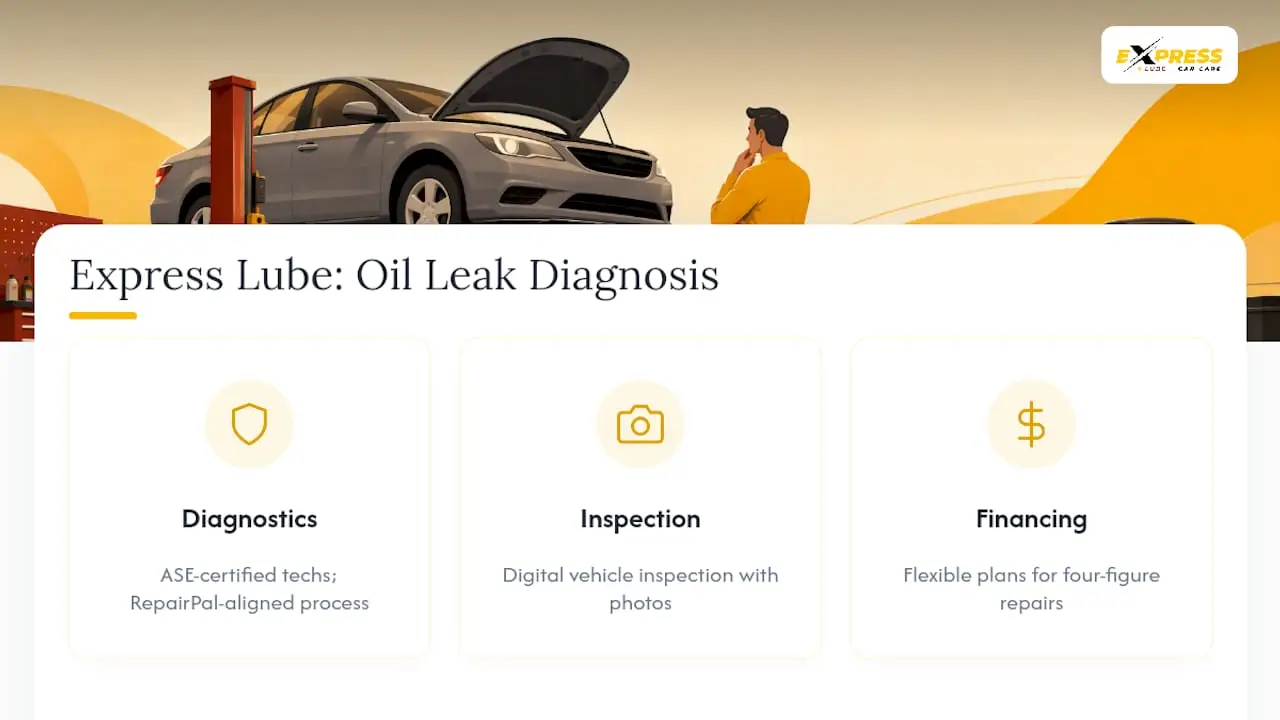
Guesswork is the expensive part of oil leak repair, not the gasket. Our ASE-certified technicians follow the same diagnostic discipline that RepairPal-aligned shops use, which means fewer repeat visits and estimates that actually hold up once the work starts.
We back every diagnosis with a digital vehicle inspection, complete with photos and specific recommendations, so you’re not taking our word for it on faith. Bigger jobs like a rear main seal don’t have to blow up your week or your budget either, since flexible financing keeps a four-figure repair from becoming a reason to keep driving on a bad seal.
— Express Lube & Car Care
Get Your Oil Leak Diagnosed the Right Way
A guessing game costs more than an accurate diagnosis ever will, and that’s exactly why Express Lube & Car Care starts every leak visit with a clear inspection instead of a quick guess. No appointment is required, turnaround is fast, and every finding comes documented through our digital vehicle inspection process, so you see the actual photos before approving any work.
If you’re due for maintenance while you’re at it, our $25 off oil changes coupon covers that visit too. And if the diagnosis turns up a bigger repair like a rear main seal or timing cover job, flexible financing through Snap Finance can spread that cost out instead of forcing an all-at-once decision. Bring your vehicle in with whatever you’ve noticed, a puddle color, a smell, a spot on the driveway, and schedule your visit online or call ahead to get started.
Sources
- How Much Does It Cost to Repair Car Oil Leaks?
- Engine oil leak diagnostic and Spotcheck developer procedure (OEM/NHTSA excerpt)
FAQ
Is It Worth Fixing an Oil Leak?
Yes, in almost every case. A leak that seems minor now tends to get worse and more expensive, while running low on oil risks far costlier engine damage than the original repair would have cost.
Can I Still Drive With an Oil Leak?
A slow, minor leak is usually safe to drive short distances if you’re checking and topping off oil regularly, but stop immediately if you see smoke, smell burning oil, or notice the level dropping fast.
What Are Common Causes of Oil Leaks?
The most frequent causes are a worn valve cover gasket, a failing oil pan gasket, and a deteriorated rear main or crankshaft seal, though a loose oil filter or overfilled crankcase can also cause leaks.
Is There a Cheap Way to Fix an Oil Leak?
Stop-leak additives and high-mileage oils can slow small drips by swelling old seals, but they’re a short-term measure, not a permanent repair for a torn gasket or failed seal.
How Much Does Diagnosing an Oil Leak Cost?
Professional leak diagnosis typically costs $80 to $150 and takes 30 to 90 minutes, covering visual inspection, cleaning, and dye or pressure testing to confirm the exact source before repair.