

Most radiator replacement jobs land between $400 and $1,541 total, with the RepairPal estimator averaging $1,361 to $1,541 for parts and labor combined. Where you fall in that range depends on part grade (aftermarket versus OEM), your vehicle’s labor difficulty, and whether related repairs like hoses or a thermostat get added to the ticket. DIY can cut labor costs significantly, but only if you have the time and tools to do it right.
TL;DR:
- Larger vehicles like trucks and SUVs tend to have higher replacement costs, often reaching between $600 and $1,200 due to bigger radiators and added components.
- DIY radiator replacements can cut costs to under $400 but carry risks of improper bleeding or incorrect installation that can lead to engine overheating.
- Accurate estimates require knowing your vehicle’s make, model, and specific symptoms, as shop quotes vary based on part grade and labor complexity.
- Choosing ASE-certified or RepairPal-approved shops helps ensure proper installation, transparent pricing, and post-service pressure and temperature checks.
Table of Contents
- What Does Radiator Replacement Cost Cover?
- How Does Vehicle Type Change the Price?
- What Add-On Repairs Commonly Raise the Bill?
- Is DIY Radiator Replacement Worth the Savings?
- How Do You Get an Accurate Local Estimate?
- Why Does Shop Selection Matter for This Repair?
- What the Cost Data Actually Tells You
- Get a Transparent Radiator Quote in Haltom City
- Sources
- FAQ
What Does Radiator Replacement Cost Cover?
A radiator replacement bill has two parts: the radiator itself and the labor to swap it. Understanding how those two numbers add up helps you spot a fair quote from an inflated one.
Parts costs break into three rough tiers:
- Budget aftermarket radiators: often under $100 to around $200, according to AutoZone’s cost breakdown
- Quality aftermarket radiators: typically $200 to $500, depending on your vehicle’s cooling capacity and construction
- OEM radiators: usually $400 to $900 or more, since you’re paying for exact factory fitment and often better long-term durability
Labor runs on shop time, not guesswork. Most radiator jobs take 1.5 to 4 hours depending on how accessible the radiator is and whether other components (fan shroud, AC condenser) have to come out first. At typical shop rates, that translates into roughly $150 to $500 in labor alone.
Add those together and you get a believable range: a straightforward economy car with a budget radiator might total $400 to $600, while a job needing an OEM part and more labor time can push past $900.
Statistic Callout: RepairPal’s estimator puts the average full-system radiator replacement between $1,361 and $1,541, with labor alone estimated at $366 to $538 and parts around $995 to $1,004. That figure reflects a complete, shop-quality job with proper coolant service, not a bare-minimum swap.
How Does Vehicle Type Change the Price?
Not every radiator job is created equal, and the vehicle sitting in your driveway matters as much as the part itself. Labor difficulty and integrated components drive most of the variation.
- Economy cars: Simpler engine bays and easier radiator access usually keep totals on the lower end, often $400 to $700.
- SUVs and trucks: Larger radiators, more coolant capacity, and sometimes an integrated transmission cooler add both parts cost and labor time, pushing totals toward $600 to $1,200.
- Luxury and performance vehicles: Tighter engine bays, specialized OEM parts, and sometimes dual cooling circuits can send totals well above $1,000, occasionally past $1,500.
Before you commit to a number, check make and model specific fitment. Some vehicles route transmission or power steering coolant lines through the radiator, and a shop needs to account for that when quoting labor. Skipping that check is how estimates go sideways.
What Add-On Repairs Commonly Raise the Bill?
A radiator rarely fails alone, and shops that do this work correctly usually recommend addressing the parts around it at the same time. Here’s what tends to get added, and why:
- Coolant flush: $80 to $150, and worth doing anyway since manufacturers generally recommend replacing coolant roughly every 30,000 miles to prevent internal corrosion.
- Radiator hoses: $50 to $200 depending on how many need replacing, especially if they’re already brittle or cracked.
- Thermostat: $75 to $200, a common companion repair since a failing thermostat can mimic radiator symptoms.
- Clamps: Usually under $50, but they’re cheap insurance against a fresh leak two weeks after the repair.
- Fan shroud: Cost varies by vehicle, but often gets replaced if it’s cracked from age or heat exposure.
- Water pump: One of the pricier add-ons, since it usually requires similar teardown labor as the radiator itself.
A realistic combined scenario: radiator plus hoses plus a coolant flush can bring a $500 radiator job to $650 or more. Shops group these repairs because the labor to access the radiator often exposes the same hoses and clamps anyway. Doing it once avoids paying for that access twice.
Is DIY Radiator Replacement Worth the Savings?
If you’re comfortable under the hood, DIY can cut your total to parts cost alone, sometimes $100 to $400 depending on part grade. But the labor you’re saving is real work: most DIYers spend 2 to 6 hours on the job, and that estimate assumes nothing goes wrong.
- Tools and materials needed: a torque wrench, coolant funnel, drain pan, new coolant, and often a service manual for your specific engine.
- Common pitfalls: improper bleeding of air pockets, incorrect hose clamp torque, and mixing coolant types that shouldn’t be combined.
- The real risk: get any of that wrong and you’re looking at overheating, which can warp cylinder heads or blow a gasket, turning a radiator job into an engine repair.
Pro Tip: If you don’t own a torque wrench or you’re unsure how to properly bleed your specific cooling system, that’s the moment to stop and call a shop. A radiator that’s improperly bled will overheat within days, and the fix costs far more than the labor you were trying to save.
How Do You Get an Accurate Local Estimate?
Online estimators give you a starting range, not a quote. To get something you can actually budget around, come prepared:
- Have your year, make, model, and engine code ready before you call
- Describe your symptoms clearly (temperature gauge behavior, leak location, coolant color)
- Mention any recent coolant service or cooling system work
When you talk to a shop, ask directly: what part grade are they quoting, does the estimate include a coolant flush, what’s the labor time, and is there a warranty on parts and labor. Online ranges are useful for a sanity check, but a proper quote requires an in-person look, especially since pressure testing and visual diagnostics are how shops confirm the radiator, not something else, is actually the problem.
Why Does Shop Selection Matter for This Repair?
Radiator work touches your engine’s cooling system directly, which means a rushed or incorrect installation carries real risk; following safe steps like those in a clean engine bay guide can prevent damage. ASE-certified technicians have demonstrated competency through standardized testing, and a RepairPal-certified shop has met a separate bar for transparent pricing and customer service.
A quality shop should provide:
- A written estimate before work begins, broken down by parts and labor
- Photo documentation of the failed part and surrounding components
- Parts receipts showing what grade of radiator was installed
- A post-service check confirming the system holds pressure and runs at normal temperature
Express Lube & Car Care performs digital vehicle inspections with photos and uses ASE-certified technicians, which gives drivers a documented record instead of a verbal explanation.
What the Cost Data Actually Tells You
The widest gap in radiator pricing isn’t between shops. It’s between a vague online range and a quote built from your actual vehicle. RepairPal’s estimator and AutoZone’s cost guides both give honest numbers, but they’re built on averages across thousands of vehicles, not your specific engine bay, your specific hose routing, or the corrosion sitting in your coolant right now.
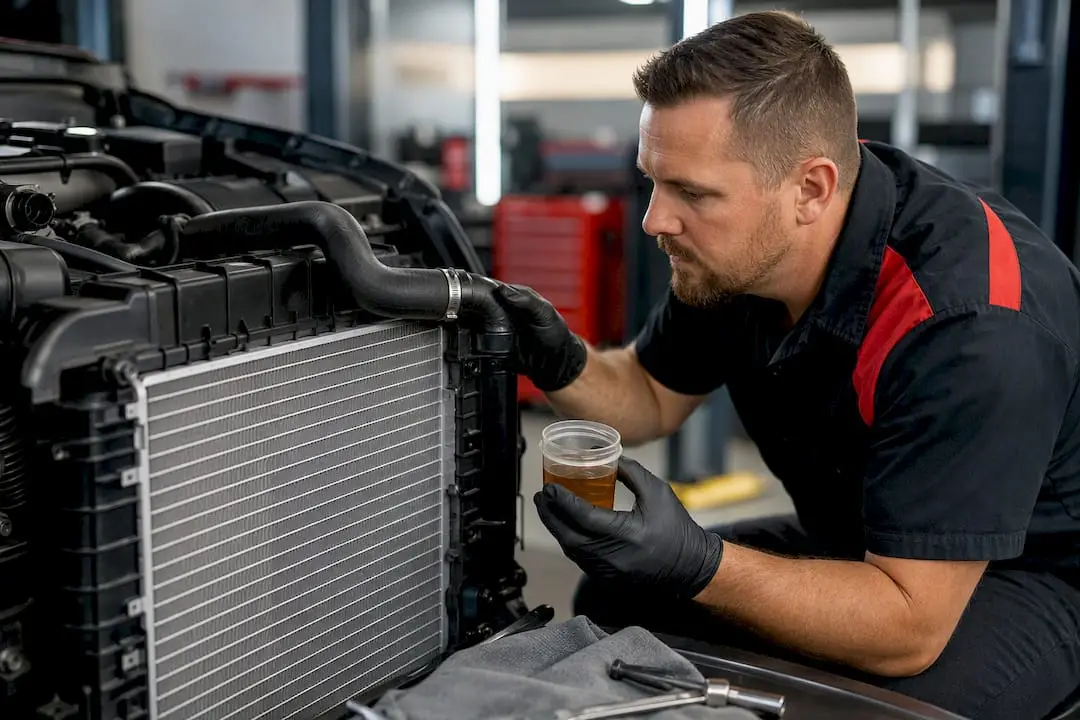
Here’s what conventional advice tends to underweight: a “cheap” radiator repair that ignores a failing hose or an overdue coolant flush isn’t actually cheap. It’s a second labor bill waiting to happen, since the same access work has to be redone. That’s why grouping related repairs, even when it raises the upfront number, usually saves money over the life of the vehicle.
If you take one thing from any cost estimate, take this: use it to know what questions to ask, not as a final number. A shop that walks you through your specific quote, part grade, and labor time before you agree to anything is doing the job right.
Get a Transparent Radiator Quote in Haltom City
A vague online estimate can’t tell you what your specific vehicle needs, but a real inspection can. Express Lube & Car Care gives Haltom City drivers a documented, photo-backed digital vehicle inspection before any repair work starts, so you know exactly what part grade and labor time you’re paying for instead of guessing between online ranges.
If your radiator estimate came in higher than expected, or the job has grown to include hoses, a thermostat, or related cooling system repair, flexible financing through Snap Finance can help spread out the cost. Technicians handle the diagnosis and the repair, with no appointment required for most visits. Schedule your inspection today and get a written, itemized quote before any work begins.
Sources
- Radiator Replacement Cost Estimate
- What does it cost to replace a radiator?
- How to change a car radiator (DIY guide)
FAQ
Is It Worth Fixing a Car Radiator?
Yes, in most cases. A radiator repair or replacement is almost always cheaper than the engine damage that can result from continued overheating, including warped heads or a blown gasket.
Is Replacing a Radiator a Big Job?
It’s a moderate job, not a major one. Most professional replacements take 1.5 to 4 hours of labor, while DIYers typically need 2 to 6 hours including cooldown and bleeding time.
Can I Drive a Car With a Bad Radiator?
Driving with a failing radiator is risky and not recommended. Watch for high temperature gauge readings, coolant leaks, or steam, and get the vehicle inspected before continuing to drive it.
How Much Should It Cost to Change a Radiator?
Total radiator replacement cost typically runs $400 to $1,541, depending on part grade and labor. RepairPal’s estimator averages $1,361 to $1,541 for a complete job, while simpler economy vehicles with aftermarket parts often land closer to $400 to $700.