

Steering wheel vibration usually points to a tire, wheel, brake, or suspension problem, and the fix depends on when you feel it. If the shaking is severe or sudden, pull over and avoid hard braking until the vehicle is checked. For milder, persistent vibration, we recommend a professional inspection soon so a small issue, like an unbalanced tire or a warped rotor, doesn’t turn into a bigger repair.
TL;DR:
- Vibration at highway speeds usually indicates an unbalanced tire or wheel, which typically costs around $27 to $34 per tire for balancing services.
- Braking-related steering shake often points to warped rotors or sticking calipers, which require resurfacing or replacing rotors, frequently along with brake pad checks.
- Symptoms like evident tire damage, bulges, or sidewall deformities generally necessitate tire replacements rather than repairs, especially if damage affects safety.
- Sudden or severe vibration during driving, especially with pulling or steering trouble, calls for immediate stopping and inspection to prevent further damage or accidents.
- A precise diagnosis relies on a road test, hoist inspection, and documentation of findings, with costs varying for suspension or steering repairs based on parts needed.
Table of Contents
- Common Causes of Steering Wheel Vibration and How They Feel
- A Safe Checklist Before Your Shop Visit
- When to Stop Driving and How to Handle It Safely
- What Repairs Typically Cost and What to Expect
- How We Diagnose Steering Wheel Vibration
- When to Watch It and When to Act
- Get Your Steering Vibration Diagnosed Today
- FAQ
- Sources
Common Causes of Steering Wheel Vibration and How They Feel
Pinpointing the cause starts with noticing exactly when the shaking happens. Each common culprit has its own pattern, and recognizing it can save you time and guesswork at the shop.
Warped brake rotors cause vibration mainly when you brake. You’ll feel a pulsing in both the brake pedal and the steering wheel, especially from higher speeds. According to AAA, this kind of braking vibration commonly points to warped rotors or sticking calipers, and a shop will typically resurface or replace the rotors and inspect the pads while they’re at it.
Wheel or tire imbalance shows up differently: vibration that builds as you approach highway speeds and eases off when you slow down. This is one of the most common causes of steering wheel shaking at 60 to 70 mph, and the fix is a wheel balancing service, along with a check for missing balance weights.
Tire damage, including flat spots or sidewall bulges, can cause vibration at low or inconsistent speeds, often paired with visible wear or deformity you can spot during a walk-around. Damaged tires typically need replacement rather than repair.
Wheel alignment problems tend to show up alongside pulling to one side and uneven tread wear. While alignment alone rarely causes pure vibration, it’s often addressed at the same time as tire work since the two are closely related.
Worn suspension or steering components, like tie rods, ball joints, bushings, or shocks, usually bring on vibration that worsens gradually and comes with other handling changes, such as looseness in the wheel or a bouncy ride. These parts generally need replacement once worn, and Consumer Reports notes that progressive vibration paired with handling trouble often traces back to these components.
Wheel bearings and CV joints usually produce a humming or rumbling sound that grows louder with speed, sometimes changing when you turn. These are driveline parts, not braking parts, and they typically need replacement once worn. Our guide on wheel bearing failure signs breaks down what to listen and feel for.
A few quick clues to narrow things down:
- Vibration only when braking: look at rotors and brake components first.
- Vibration that appears or worsens at highway speed: suspect tire balance or a driveline issue.
- Vibration present at all speeds, including idle or low speed: consider tire damage or a bent wheel.
A Safe Checklist Before Your Shop Visit
A little observation before you book an appointment helps a technician diagnose the problem faster and often on the first visit.
- Note when the vibration happens: at certain speeds, during braking, while accelerating, or when turning, and whether it’s constant or comes and goes.
- Walk around the vehicle and look for visible tire issues such as bulges, cuts, missing balance weights, or dents in the wheel rim.
- Photograph anything unusual you find on the tires or wheels.
- Check tire pressure on all four tires and note any that seem low or uneven compared to the others.
- Skip unsafe DIY checks, like crawling under the car on the roadside; save hands-on inspection for a lift at the shop.
- Record a short video of the vibration, if it’s safe to do so as a passenger, since the exact feel and timing helps a technician replicate the problem.
Pro Tip: Bring your notes, photos, and video straight to the service writer when you check in, it turns a vague complaint into a specific lead for the technician.
When to Stop Driving and How to Handle It Safely
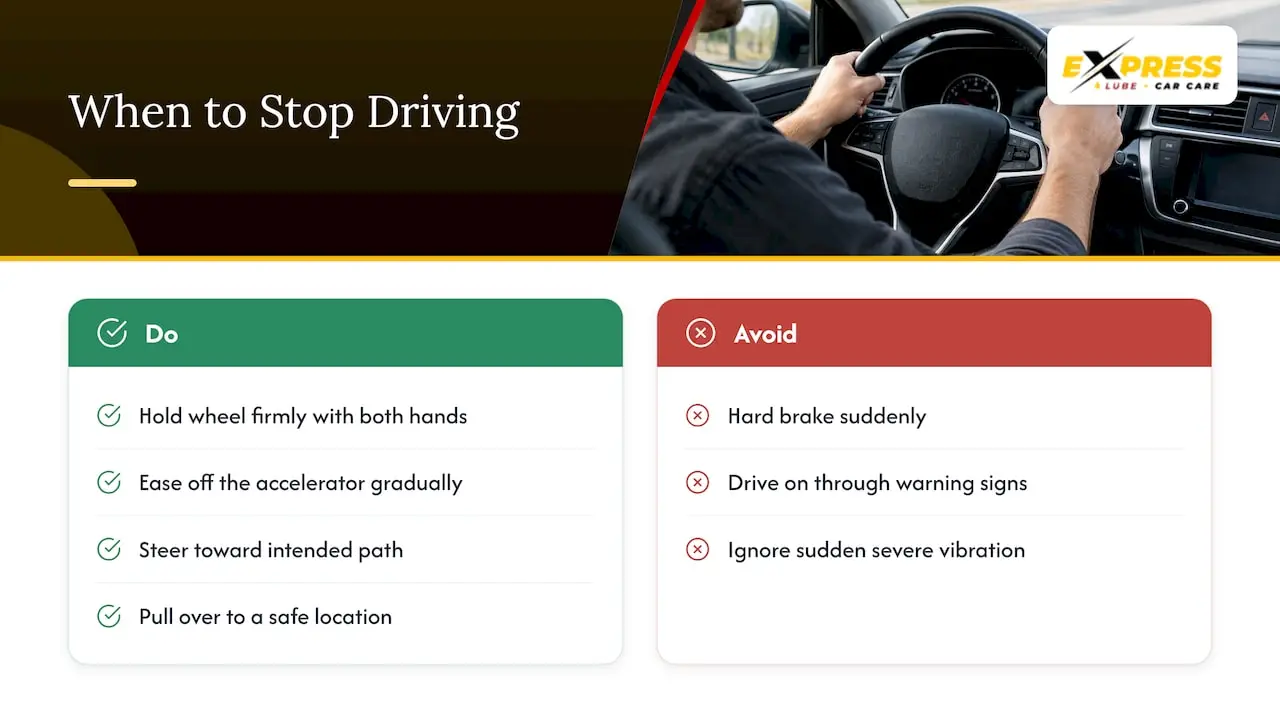
Some vibration is a maintenance issue you can schedule around. Other times, it’s an emergency. If you suspect a tire is failing, or the vibration is sudden and severe, NHTSA advises holding the steering wheel firmly with both hands, easing off the accelerator gradually, avoiding hard braking, steering in the direction you want to go, and then pulling over to a safe location.
Treat these as immediate stop signals: rapid loss of tire pressure, a strong pull to one side or trouble steering straight, or brake pulsation combined with steering shake. Driving on through these signs risks further damage to brakes and suspension, and raises your crash risk.
Roughly 1 in 11 fatal crashes involves a tire-related failure, which is part of why NHTSA urges drivers to treat tire and steering warning signs seriously rather than waiting them out.
What Repairs Typically Cost and What to Expect
Once a cause is identified, the repair path is usually straightforward. Here’s what shops generally do for each scenario:
- Wheel balancing: a routine service that typically runs about $27 to $34 per tire, according to Consumer Reports, and is distinct from alignment, which corrects wheel geometry rather than rotating mass.
- Brake rotor service: rotors can sometimes be resurfaced, but many shops replace them outright, especially when pads are worn too, since replacing both together keeps braking performance even.
- Tire replacement: required for sidewall bulges or flat spots; alignment is often bundled in in cases involving a pothole, since the same impact can throw off both.
- Suspension and steering repairs: cost varies by vehicle and which parts are involved, since tie rods, ball joints, and struts differ widely in price and labor time.
A pothole strike can quietly knock off balance weights, bend a rim, or jar suspension components loose, which is why Consumer Reports recommends an inspection after a hard impact even if nothing looks damaged. We recommend asking for a digital vehicle inspection with photos so you can see exactly what’s found before authorizing any work.
How We Diagnose Steering Wheel Vibration
Our team includes trained technicians, and we maintain high standards of service quality on every diagnostic job.
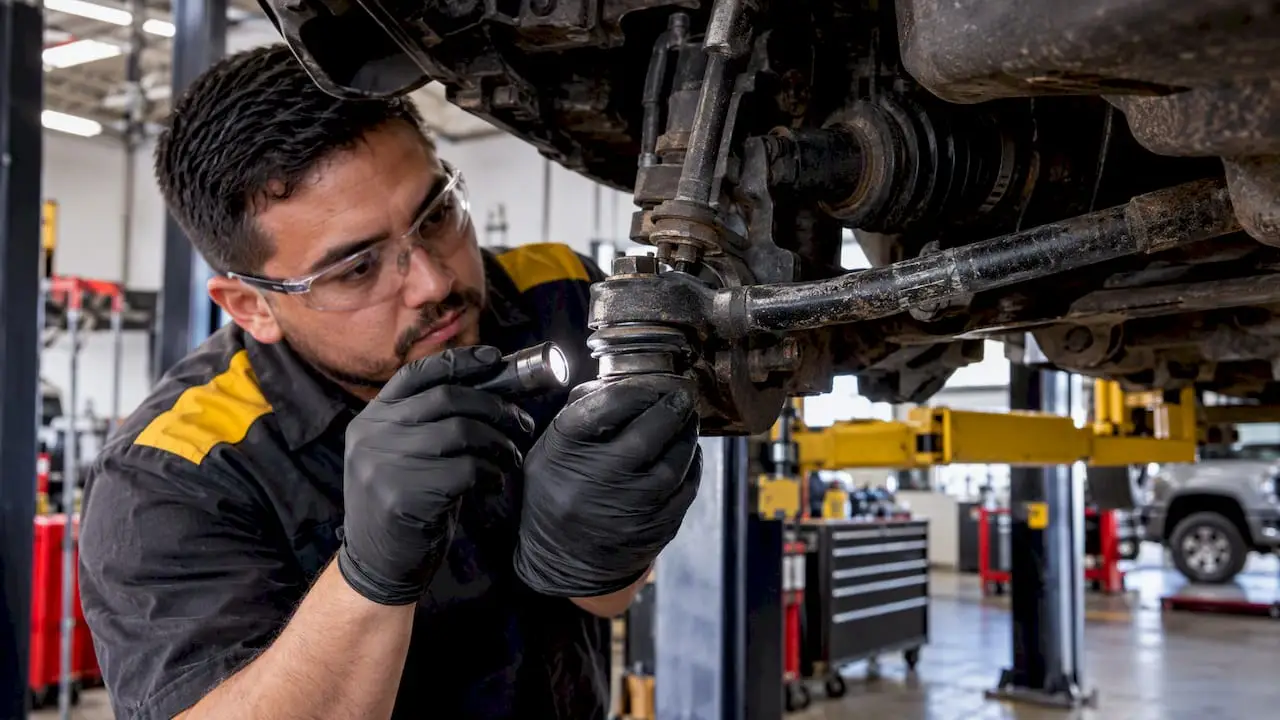
When a vehicle comes in for steering vibration, we start with a road test to confirm when and how the shaking occurs, then move to a hoist inspection covering the wheels, tires, and brake components. From there, we check for bearing play, suspension wear, and anything a pothole or curb strike might have disturbed. Every finding gets documented in a digital vehicle inspection with photos, so you can see the actual condition of your parts rather than taking our word for it. We operate to serve customers promptly, often seeing cars the same day the shaking starts.
When to Watch It and When to Act
A faint, intermittent vibration at low speed with nothing else wrong is reasonable to monitor for a short while. But vibration during braking, anything sudden, visible tire or rim damage, or handling that keeps getting worse all call for prompt service. Bringing documented symptoms, a video, and notes on timing, speeds things up and helps avoid repeat visits.
— Express Lube & Car Care
Get Your Steering Vibration Diagnosed Today
A shaking steering wheel is easier to deal with when you know what’s behind it, and we make that part simple. Our services cover everything from brake repair to a full digital vehicle inspection with photos, so you see exactly what our technicians find before any work begins.

| What you get | Why it matters |
|---|---|
| Same-day, no-appointment visits | Get checked the day the vibration starts |
| Digital inspection with photos | See the actual issue before approving repairs |
| ASE-certified technicians | Trained diagnosis for tire, brake, and suspension causes |
Book a visit through our appointment page and let us pinpoint the cause before it turns into a bigger repair.
FAQ
What would cause a steering wheel to vibrate?
Steering wheel vibration is most often caused by an unbalanced or damaged tire, a warped brake rotor, a bent wheel, or worn suspension and steering parts. The timing of the vibration, whether it happens at speed, during braking, or all the time, usually points to which system is involved.
Why does my steering wheel vibrate at 70 mph?
Vibration that only shows up at highway speed is commonly caused by an out-of-balance wheel or tire, which becomes more noticeable as rotation speed increases. A humming or rumbling vibration at speed can also point to a worn wheel bearing or driveline component.
Is it okay to drive if my steering wheel is shaking?
Light, occasional vibration at low speed may be safe to monitor briefly, but NHTSA treats sudden or severe shaking, especially with pulling or trouble steering, as a sign to pull over safely rather than keep driving. Persistent vibration of any kind should be inspected soon, since it can signal tire, brake, or suspension damage that worsens over time.
How can I fix a vibrating steering wheel?
The fix depends on the cause: wheel balancing for highway-speed vibration, rotor resurfacing or replacement for braking vibration, or tire or suspension component replacement for damage or wear. A professional road test and hoist inspection is the most reliable way to confirm which repair applies to your vehicle.