

You usually do not need an appointment for a routine oil change, since many quick-lube shops and independent garages accept walk-ins. Express Lube & Car Care is one example of a shop built around no-appointment, same-day service. Exceptions do exist, though: vehicles needing specialty synthetic oil, uncommon filters, or extra repair work often move faster with a quick call ahead, especially during busy weekend hours.
TL;DR:
- Most quick-lube shops and independent garages accept walk-ins for routine oil changes, but calling ahead is advisable for vehicles needing specialty oils or filters.
- Shops often require appointments during peak times or for complex services, especially if specific parts need to be ordered or if the work involves more than a basic oil change.
- Keeping detailed records of all maintenance, including receipts and photos, is essential for warranty protection and resolving potential disputes.
- Express Lube & Car Care offers no-appointment, same-day service, with digital inspections and clear estimates to streamline the process.
Table of Contents
- When you can walk in and when you should book an appointment
- Why shops sometimes require appointments
- How to check a shop’s policy and what to ask when calling or booking online
- Typical oil change turnaround times and cost expectations
- Keeping service records for warranty protection
- Cancellation and rescheduling policies
- What to do if you arrive without an appointment and they are full
- Dealership versus independent shop appointment requirements
- How Express Lube & Car Care handles appointments and walk-ins
- Ready for an oil change? Here is how to get started
- Sources
- FAQ
When you can walk in and when you should book an appointment
Most quick-lube shops and many independent garages are set up for walk-in traffic. They run multiple service bays specifically so drivers can pull in, get an oil change, and leave without planning ahead. Dealerships and specialty-service shops tend to work differently. They often schedule appointments in blocks because their technicians handle a wider range of repair work, not just oil changes.
A few situations make calling ahead the smarter move, even at a walk-in-friendly shop:
- Your vehicle requires a specialty synthetic oil or an uncommon filter that the shop may need to order.
- You have received a manufacturer service advisory that calls for a specific procedure.
- You manage a fleet vehicle and need to coordinate service around a work schedule.
- Your car needs more than an oil change, such as a diagnostic check or brake inspection.
Here is a simple rule to work from: if your car takes a standard oil type and you are not showing up during a weekend rush, walking in usually works fine. If your vehicle has special requirements or you are on a tight schedule, a quick phone call saves you a wasted trip.
Why shops sometimes require appointments
Appointment policies usually come down to logistics rather than preference. When a shop hits peak demand, its service bays fill up fast, and reserving appointment slots is how it keeps wait times manageable for everyone.
Inventory plays a role too. If your vehicle needs a specific oil grade or filter that is not a common stock item, the shop may ask you to schedule so they can have the part ready when you arrive. This is common with newer vehicles or those requiring extended-life synthetic oil.
Service complexity matters as well. A basic oil and filter swap takes one set of hands and a short window. A multi-point inspection or added repair work takes longer and often needs a technician who is not already mid-task on another vehicle.
Pro Tip: If you are unsure whether your car needs a special oil grade, check your owner’s manual or have your VIN ready when you call, since it lets the shop confirm stock before you drive over.
How to check a shop’s policy and what to ask when calling or booking online
Start with the shop’s website service page or online booking tool, since most list walk-in availability directly. A quick look at the shop’s Google Business profile can also show current hours and any posted wait-time updates. When in doubt, a two-minute phone call clears up everything.
Ask these questions when you call:
- Do you accept walk-ins for oil changes, or is an appointment required?
- Do you have my oil grade and filter in stock for my vehicle?
- How long will a standard oil change take right now?
- Do you need my VIN or my vehicle’s model and year to confirm parts?
Once you arrive, ask for a written estimate or repair order before work begins, and request a next-service reminder sticker when you leave. The FTC recommends that every repair order list the work performed, parts used, and labor charges, which protects you if a question comes up later. According to AAA, scheduling ahead still helps you avoid long waits during weekends and holidays, particularly if your car needs specialty oil or an uncommon filter.
Typical oil change turnaround times and cost expectations
A standard quick-lube oil change typically takes about twenty to forty-five minutes, according to AAA, though the time can stretch if the shop is busy or you add extra services like a filter replacement or fluid top-off.
Cost varies based on a few factors:
- Whether you choose conventional or synthetic oil, with synthetic typically costing more.
- How many quarts your engine holds, since larger engines need more oil.
- Whether your filter is a standard or specialty type.
- Whether you add inspections or minor repairs to the visit.
Consumer Reports notes that typical oil change prices range roughly from $35 to $150, depending on oil type and vehicle needs, and that common oil change intervals fall between 5,000 and 10,000 miles depending on your vehicle and oil type. Knowing your engine’s oil capacity ahead of time, which you can find in your owner’s manual, helps you get a more accurate quote when you call.
Keeping service records for warranty protection
Every oil change receipt you save is proof that you kept your side of the maintenance bargain. That matters more than most drivers realize. The FTC warns that neglecting routine maintenance, including oil changes, can affect your warranty or service-contract coverage, so keeping records and receipts is worth the small effort.
A simple system works best. Keep a folder, physical or digital, with every repair order and receipt organized by date. Include the mileage at each service, the oil type used, and any parts replaced. If your vehicle ever needs a warranty claim, this record shows you followed the manufacturer’s recommended schedule instead of skipping intervals.
Digital vehicle inspections with photo documentation add another layer of proof, since a photo of a worn belt or a low fluid level timestamps the condition of your car at that visit. If a dispute ever comes up over what was found or recommended, having that documentation on hand settles the question quickly.
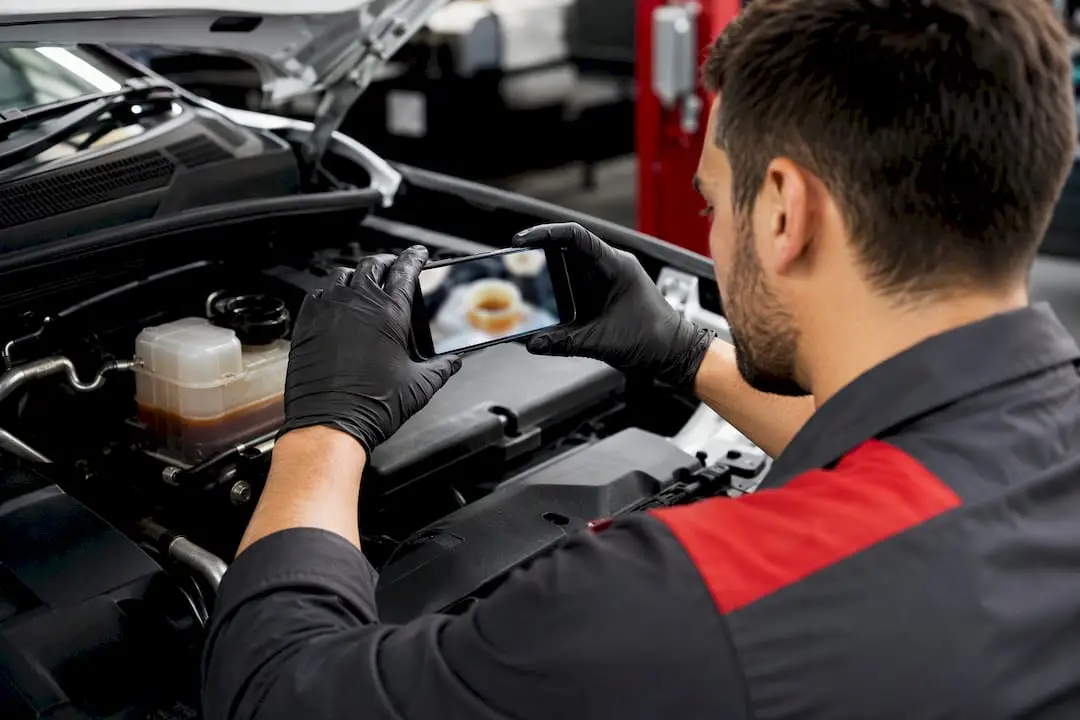
Treat your oil change receipts the same way you would treat any other financial record tied to your vehicle. They cost nothing to keep and can save you real money if a warranty question ever comes up.
Cancellation and rescheduling policies
Plans change, and most shops that take appointments understand that. If you booked online or by phone and need to cancel, a quick call as early as possible gives the shop time to fill that slot with another driver. Many booking tools let you cancel or reschedule directly, so check your confirmation email or text for a link before you call.
Rescheduling is usually painless for a routine oil change since there is no specialty part tied to a fixed delivery window in most cases. If your vehicle needed an ordered part, though, canceling last minute could mean the shop has to hold that item until your next visit, so a heads-up call is worth the courtesy.
If you are running late rather than canceling outright, call ahead and let the shop know. Many can shift you to the next available bay without losing your spot entirely, especially if you are only a few minutes behind. Waiting until you simply do not show up leaves the shop guessing and wastes a slot another driver could have used.
What to do if you arrive without an appointment and they are full
Showing up without calling first and finding every bay full is not a dead end. Most walk-in shops keep a rough queue, so ask the service advisor for an estimated wait time before you decide to leave. Sometimes a 20-minute wait is all that stands between you and a finished oil change.
If the wait is longer than you can manage, ask whether you can leave your car and pick it up later in the day. Many shops offer this option, especially if you are dropping off before work or during a lunch break. It is also worth asking if a specific time later that day tends to be less busy, since shops often see predictable lulls between rush periods.
If none of those options work, ask if you can book a same-day or next-day slot before you leave. This puts you ahead of other walk-ins and guarantees your car gets seen without another wasted trip.
Dealership versus independent shop appointment requirements
Dealership service departments generally lean more heavily on scheduled appointments than independent shops or quick-lube chains. This comes down to how dealerships operate: their technicians often split time between routine maintenance, warranty repairs, and recall work, so appointments help them plan technician time across a wider range of jobs.
Independent shops and quick-lube locations, by contrast, are frequently built around speed and walk-in convenience for routine services like oil changes. Their staffing and bay setup are designed for a steady flow of drivers who did not call ahead. That does not mean independents never need appointments. Ones offering broader repair services, like transmission or engine work, often reserve appointment slots for those larger jobs while still keeping bays open for walk-in oil changes.
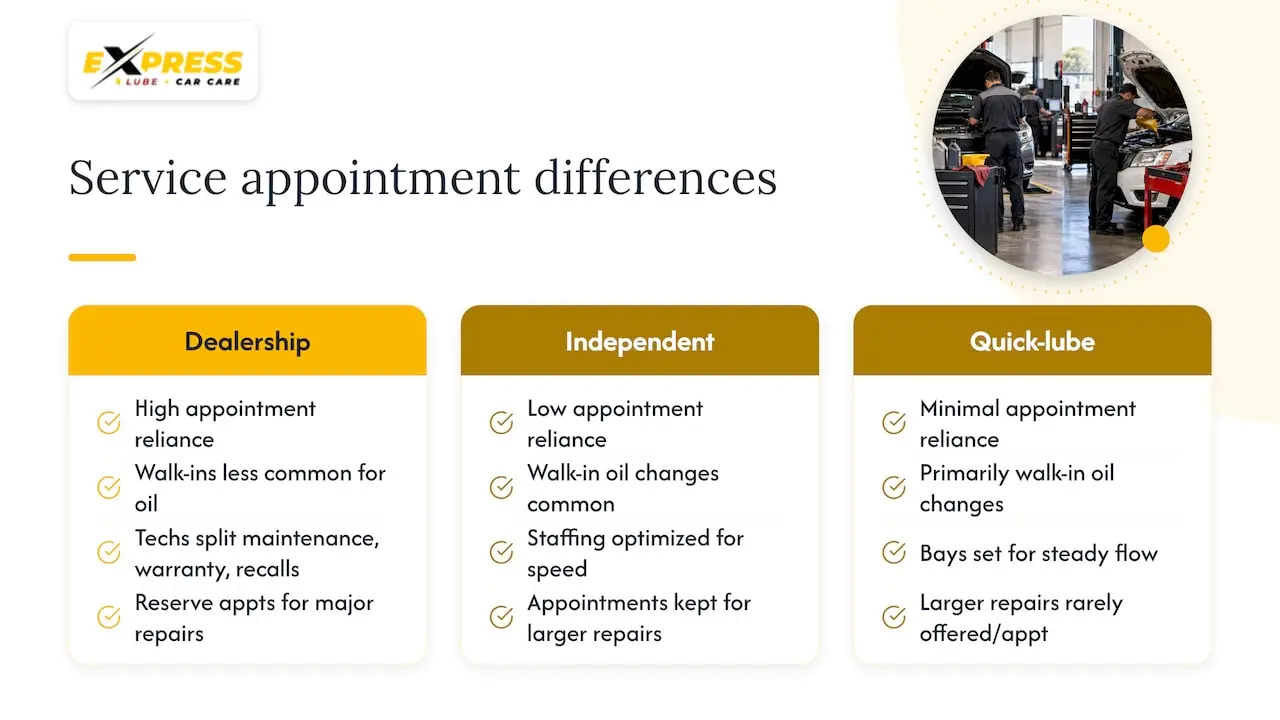
If you are choosing between the two for a routine oil change, a quick-lube or independent shop with posted walk-in hours will usually get you in and out faster. Save the dealership appointment for warranty-specific work or recalls tied to your vehicle identification number.
How Express Lube & Car Care handles appointments and walk-ins
This shop built its oil change service around no-appointment, same-day visits, so you can pull in without planning ahead. Technicians are ASE-certified, and the shop carries RepairPal certification, both signals of a consistent standard behind the work performed on vehicles.
The walk-in process is straightforward: you check in, get an estimated wait time, and your vehicle goes through a digital inspection with photos so you can see exactly what the technician found, following safe steps and ceramic protection for engine-bay care. Before any work begins beyond the oil change, you receive an itemized repair order.
A written repair order is not paperwork for its own sake. It is the record that protects you if a warranty question ever comes up.
Ask for that repair order every time, and hold onto it alongside your next-service reminder.
— Express Lube & Car Care
Ready for an oil change? Here is how to get started
Whether you want to walk in today or lock in a time that works for your schedule, Express Lube & Car Care makes both easy. Same-day service means you are not stuck waiting days for a routine oil change, and if you would rather plan ahead, booking takes just a few minutes.
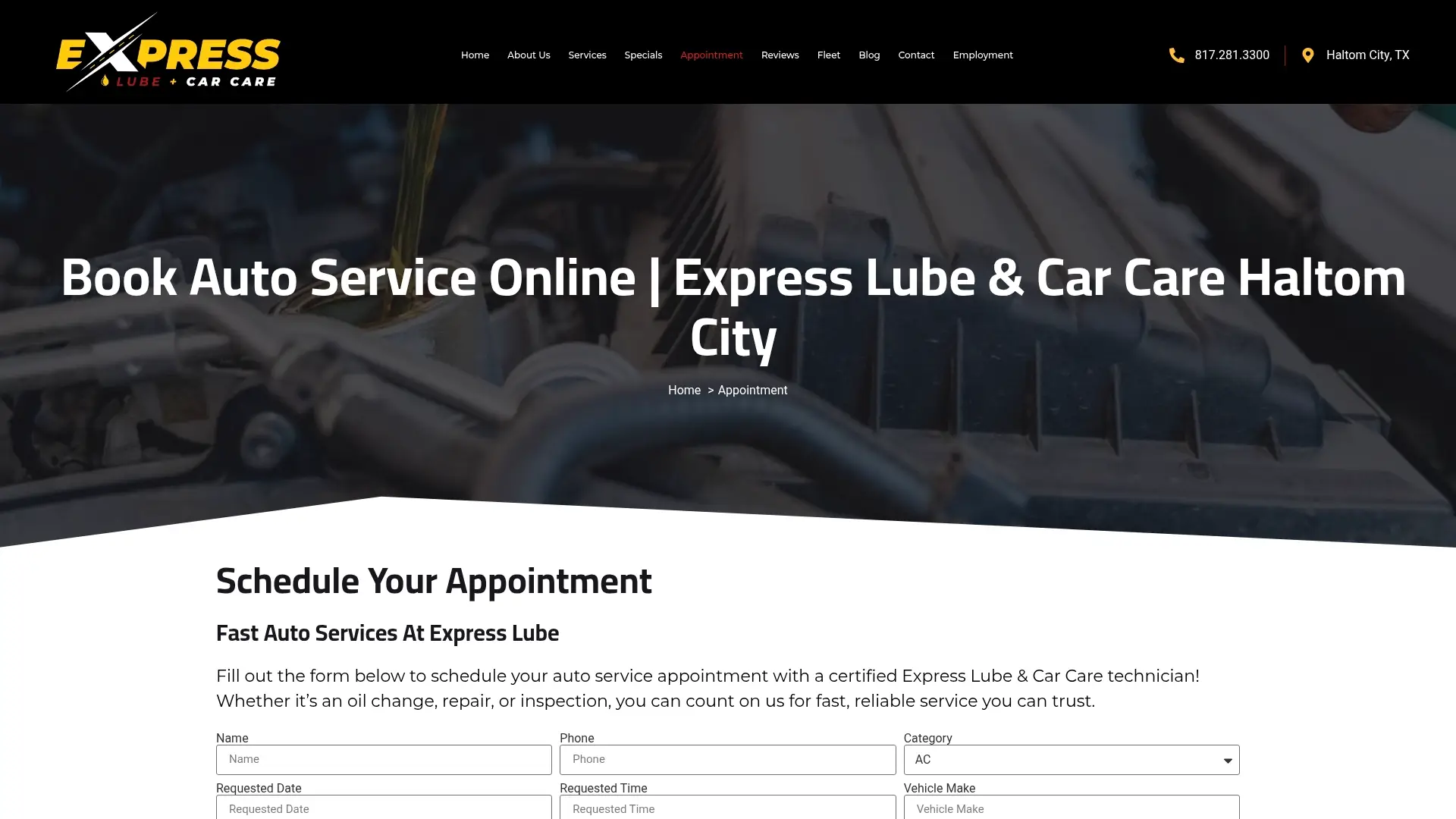
Before you head over, here is what to have ready:
- Your vehicle’s make, model, and year, or your VIN if you have it handy.
- Your preferred oil type, conventional or synthetic, if you know it.
- A phone number in case the shop needs to reach you about additional recommendations.
Check the current $25 off oil change coupon before your visit, and reach out by phone or through the appointment page to lock in a time or confirm current walk-in wait estimates.
Sources
The guidance in this article draws on a handful of consumer-focused sources worth bookmarking if you want to dig deeper:
- How often should you change your oil? | AAA Automotive
For more on how oil-change intervals vary by vehicle, see our guide on multi-vehicle oil change intervals.
FAQ
Do you need an appointment to change your oil?
Most quick-lube shops and many independent garages accept walk-ins for a routine oil change, so an appointment usually is not required. Calling ahead still helps if your vehicle needs specialty oil, an uncommon filter, or you are visiting during a weekend rush.
Is an oil change usually $100?
Oil change prices typically range from about $35 to $150 depending on whether you choose conventional or synthetic oil and how many quarts your engine holds.
Can I just show up without calling ahead?
Yes, at most quick-lube and independent shops you can arrive without calling first, since these businesses are typically set up for walk-in service. If the shop is at capacity, ask for an estimated wait time or whether you can drop off your car and pick it up later.
Are oil changes worth the cost?
Routine oil changes protect your engine and help preserve your manufacturer warranty, since the FTC notes that skipping routine maintenance can affect warranty coverage. Keeping your service records and receipts is the simplest way to show you stayed on schedule if a warranty question ever comes up.
How do I find a reliable oil change shop?
Look for shops with certified technicians, transparent written estimates, and clear walk-in or appointment policies listed on their website or Google Business profile. Asking for a repair order at every visit and comparing that against your owner’s manual schedule helps you judge whether a shop’s recommendations line up with your vehicle’s actual needs.