

Expect a typical tie rod replacement to run roughly $150 to $450 per side for parts and labor, depending on whether it’s an inner or outer tie rod and what vehicle you drive. Most shops will also recommend a wheel alignment afterward, which adds to the total. Because a failing tie rod affects your ability to steer safely, we’d encourage you to treat this repair as time-sensitive rather than something to put off.
TL;DR:
- Invoices should list parts, labor, and alignment separately; outer rods cost $30 to $150, inner rods $80 to $300, and alignment $75 to $150.
- RepairPal estimates a Toyota Corolla at $243 to $283, a Ford Explorer at $212 to $252, and a Volkswagen GTI at $352 to $392.
- Clunking combined with steering looseness can signal dangerous joint wear; limit driving to short, low speed trips and arrange an inspection the same day.
- A full alignment is standard after replacement; vehicles with systems that assist drivers may also need steering angle or camera calibration, adding time and cost.
- Outer replacements usually take 0.5 to 1.5 hours per side, while inner rod work, rusted hardware, or steering rack damage can extend labor.
Table of Contents
- 1. What a fair tie rod replacement quote includes
- 2. How inner and outer tie rods differ in cost
- 3. What makes a tie rod quote higher or lower
- 4. Symptoms that mean your tie rods need attention
- 5. What happens at the shop and how long the repair takes
- 6. Why an alignment matters after tie rod replacement
- Our perspective on choosing a shop for tie rod work
- Get a steering inspection and a clear quote
- FAQ
- Sources
1. What a fair tie rod replacement quote includes
A trustworthy invoice breaks the job into three clear pieces: parts, labor, and alignment. Knowing the typical range for each helps you spot a quote that’s padded or one that’s missing something important.
- Outer tie rod end: typically $30 to $150 for the part alone, with inner tie rods running $80 to $300 depending on the vehicle.
- Labor: usually 0.5 to 2.0 hours per side, with RepairPal’s estimator showing labor commonly landing in the $85 to $125 range for the job.
- Alignment: generally $75 to $150 once the new tie rod is installed.
These ranges shift with the vehicle. RepairPal’s make and model estimators show how much variation is normal: a Volkswagen GTI often lands between $352 and $392, a Ford Explorer between $212 and $252, and a Toyota Corolla between $243 and $283.
| Vehicle type | Typical total (parts, labor, alignment) |
|---|---|
| Economy sedan (example: Toyota Corolla) | $243 to $283 |
| Full-size truck or SUV (example: Ford Explorer/F-150) | $212 to $392 |
| European import (example: Volkswagen GTI) | $352 to $392 |
If a quote falls well outside these ranges, ask the shop to walk you through which line item is driving the difference.
2. How inner and outer tie rods differ in cost
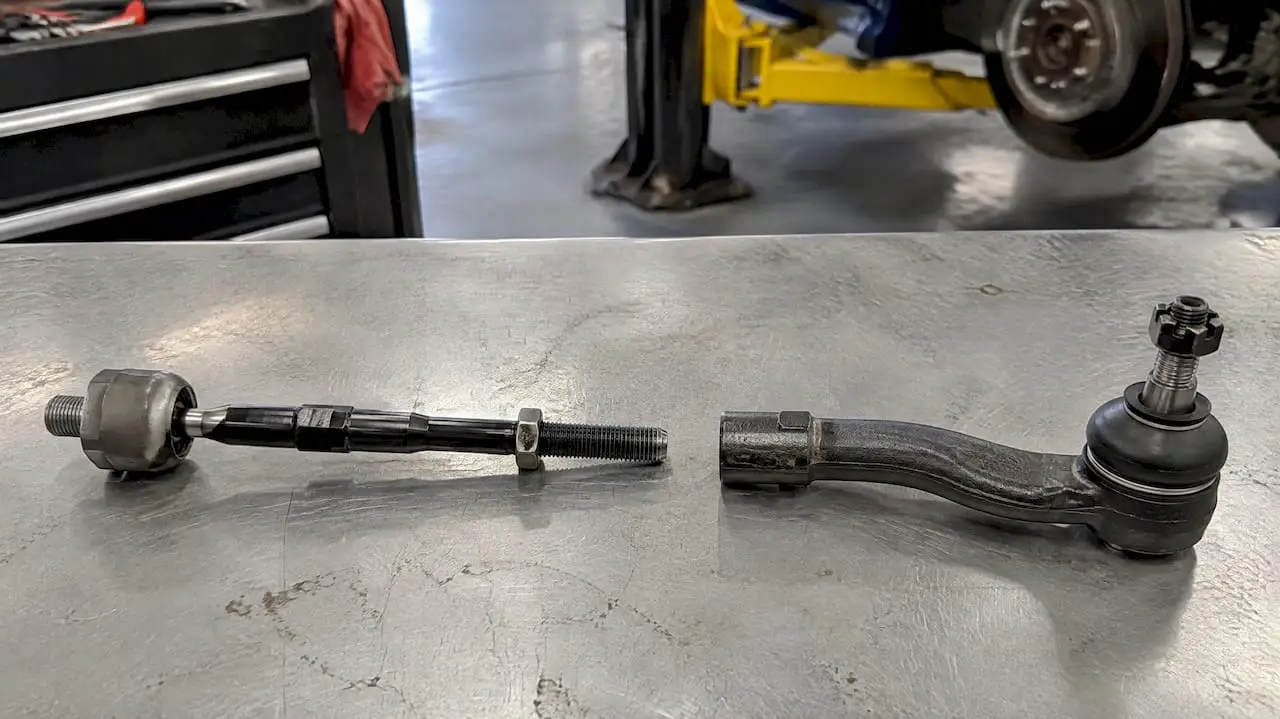
Your steering linkage includes an outer tie rod end, which connects to the steering knuckle near the wheel, and an inner tie rod, which connects closer to the steering rack. Both allow the wheels to pivot when you turn, but they wear differently.
Outer tie rods take the brunt of road shock and are the part replaced most often. Inner tie rods generally last longer and are replaced less frequently, usually only when damage or long-term neglect of the outer tie rod has affected them.
- Outer tie rod replacement: the more common, lower-cost repair.
- Inner tie rod replacement: less frequent, but pricier due to added labor and part cost.
- Full rack replacement: sometimes necessary if a technician finds power steering fluid near the inner tie rod boot, which points to a leaking rack seal rather than a simple tie rod issue.
3. What makes a tie rod quote higher or lower
A few variables explain most of the spread between a $150 repair and a $450 one. Walking through them helps you judge whether a higher estimate is justified.
- Vehicle complexity: European imports and trucks with tighter engine bay access often carry higher labor and part costs than mainstream domestic sedans.
- OEM versus aftermarket parts: OEM tie rods typically cost more upfront but may carry a longer expected service life and manufacturer-backed warranty.
- Extent of damage: seized or rusted hardware, a damaged steering rack, or worn suspension components nearby can add hours to the job.
- Shop type and labor rate: dealership labor rates tend to run higher than independent shops, which affects your total even when parts cost the same.
- Replacing both sides: if one tie rod shows significant wear, a technician may recommend replacing both to avoid uneven handling and premature wear on the other side.
Pro Tip: Ask any shop to itemize parts, labor hours, and alignment separately before you approve the work. A quote that lumps everything into one number is harder to compare.
4. Symptoms that mean your tie rods need attention
Catching the warning signs early can mean the difference between a straightforward tie rod swap and a more involved repair. MOOG’s technical guidance outlines the most common signs drivers notice.
- A clunking or knocking noise when turning at low speeds, often in parking lots or driveways.
- Vibration or looseness felt through the steering wheel, especially at highway speeds.
- Uneven wear across the front tires, which points to a steering geometry problem.
- A wandering sensation where the car doesn’t track straight without constant correction.
Tie rod failure is safety-critical. The ball-in-socket joints inside a worn tie rod can grind down and eventually separate, which can cause a sudden and complete loss of steering control. If you notice clunking combined with looseness in the wheel, limit driving to short, low-speed trips and get the vehicle inspected the same day.
5. What happens at the shop and how long the repair takes
A technician typically lifts the vehicle, checks for play in the steering linkage by hand, and inspects the boots and joints for looseness or leaking grease. This diagnostic step usually takes less than 30 minutes.
- Outer tie rod replacement: typically 0.5 to 1.5 hours per side under normal conditions.
- Inner tie rod or rack-related work: longer, often requiring additional disassembly.
- Rusted or seized hardware: can add significant time, since frozen nuts and bolts sometimes need penetrating oil or careful cutting rather than a quick swap.
Knowing these timeframes helps you judge whether a quoted labor charge is reasonable for the work involved.
6. Why an alignment matters after tie rod replacement
Replacing a tie rod changes the toe angle of your front wheels, which is why a wheel alignment is considered standard practice afterward rather than an optional upsell. Skipping it can lead to uneven tire wear and a steering wheel that isn’t centered.
- A standard alignment typically costs $75 to $150, with MOOG noting that precision alignments can run higher.
- The old shortcut of counting thread turns during reinstallation no longer substitutes for a full alignment, especially on vehicles with driver-assist systems that depend on accurate steering-angle data.
- On vehicles equipped with ADAS, a steering-angle sensor calibration or camera calibration may be needed after the alignment, which can add both time and cost to the final bill.
Our perspective on choosing a shop for tie rod work
Parts quality matters less than most drivers assume. What actually prevents premature failure is installation technique: a properly centered stud and correct torque on the mounting nut, paired with a real post-repair alignment rather than a guess. MOOG’s own installation guidance points to this directly, noting that an improperly torqued nut or mis-centered stud can cause vibration and early failure regardless of the part brand installed.
That’s a big part of why shop selection matters as much as part selection. We have qualified technicians and strive for fair pricing and quality repairs. When you’re comparing quotes elsewhere, ask what warranty backs the parts and labor, whether you’ll receive inspection photos documenting the actual damage, which parts brand is being installed, and how the labor estimate was calculated.
— Express Lube & Car Care
Get a steering inspection and a clear quote
If you’ve noticed clunking, vibration, or uneven tire wear, we can inspect your steering and suspension system and give you a straightforward, itemized quote before any work begins. Our technicians handle everything from a single outer tie rod swap to more involved steering and suspension repairs, with no appointment required.

- Request a digital vehicle inspection with photos so you can see exactly what needs attention.
- Review our full steering and suspension services before you commit to a repair.
- Ask about flexible financing options if the repair is more involved than expected.
Ready to get started? Book your appointment and we’ll take it from there.
FAQ
Can I drive my car with a bad tie rod?
Driving on a failing tie rod is risky because the joint can separate without warning, leading to a sudden loss of steering control. If you notice clunking or looseness in the wheel, limit driving to short, low-speed trips and get it inspected promptly.
What are the symptoms of bad tie rods?
Common signs include clunking or knocking noises when turning, vibration or looseness felt through the steering wheel, and uneven front tire wear. A vehicle that wanders or doesn’t track straight is another common warning sign.
How urgent is tie rod replacement?
Tie rod repair should be treated as urgent because the component is safety-critical to steering control. If you’re hearing clunking combined with steering looseness, same-day inspection is the safer choice rather than waiting.
How long does it take a mechanic to change a tie rod?
An outer tie rod swap typically takes 0.5 to 1.5 hours per side under normal conditions, while inner tie rod or rack-related work takes longer. Rusted or seized hardware can extend the repair time beyond these typical ranges.