
You're probably here because the ABS light came on, the brakes feel a little different, or you're trying to decide if this is something that can wait until tomorrow. That's a fair question. Most drivers in Haltom City don't think about the anti-lock braking system until the dashboard forces the issue.
The good news is that an ABS problem doesn't always mean your whole braking system has failed. The bad news is that guessing gets expensive fast. In the shop, the difference between a simple sensor issue and a control module problem is the difference between a basic fix and a repair bill that climbs into four figures. The safest move is to know what you can check at home, what warning signs mean stop driving, and what a proper abs car repair process should look like before you approve any work.
What Is an Anti-Lock Braking System
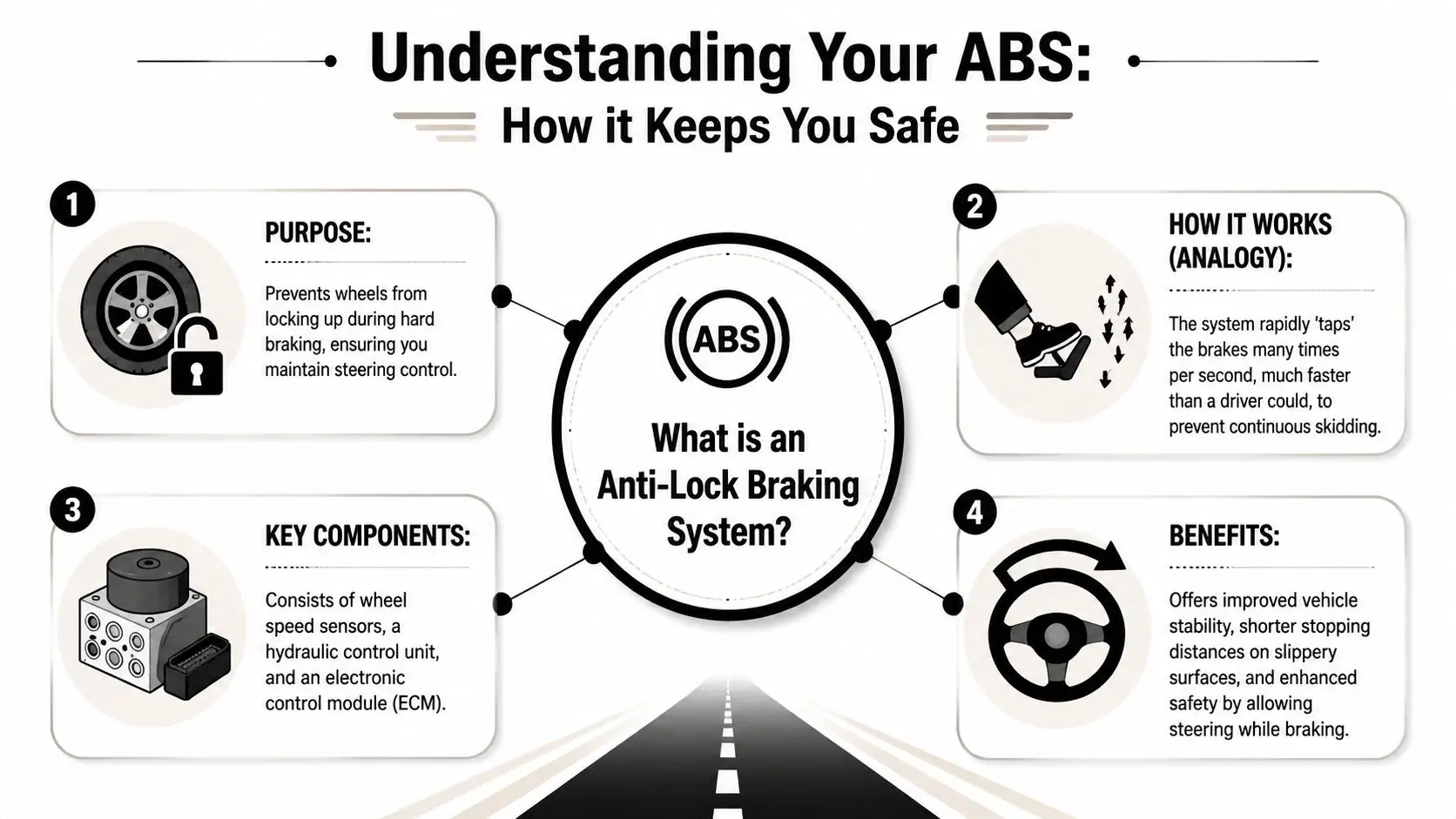
ABS, or anti-lock braking system, is the part of your brake system that helps keep the wheels from locking during a hard stop. If the wheels lock, the car can slide straight ahead even when you're trying to steer around something. ABS helps prevent that.
A simple way to think about it is this. Your regular brakes provide the stopping force. ABS acts like a very fast helper that releases and reapplies brake pressure in tiny bursts when a wheel is about to stop rotating. That pulsing happens far faster than a driver could pump the brake pedal manually.
The main parts that make ABS work
ABS sounds complicated, but the basic pieces are straightforward:
- Wheel speed sensors watch how fast each wheel is turning.
- The hydraulic unit adjusts brake pressure when a wheel is about to lock.
- The pump and valves help cycle that pressure quickly.
- The control module reads the sensor data and tells the system what to do.
If one part gives bad information, the whole system can turn the warning light on. That's why abs car repair often involves electrical diagnosis, not just replacing brake pads or rotors.
ABS gives you a better chance to steer while braking hard. It doesn't replace safe following distance or good tires.
Why it matters on real roads
In everyday driving around Haltom City, Keller, Watauga, and North Richland Hills, ABS matters most when the road is wet, dirty, uneven, or when traffic stops suddenly. A U.S. National Highway Traffic Safety Administration study found ABS reduced total crash involvements by 6% in passenger cars and 8% in light trucks, with similar reductions in nonfatal-injury crashes, according to the NHTSA study on ABS crash effects.
That doesn't mean ABS makes a vehicle invincible. It means the system provides a measurable safety benefit when it's working properly. If you want a broader look at how your braking system works as a whole, this guide on types of car brakes is a useful place to start.
Common ABS Warning Signs and Causes
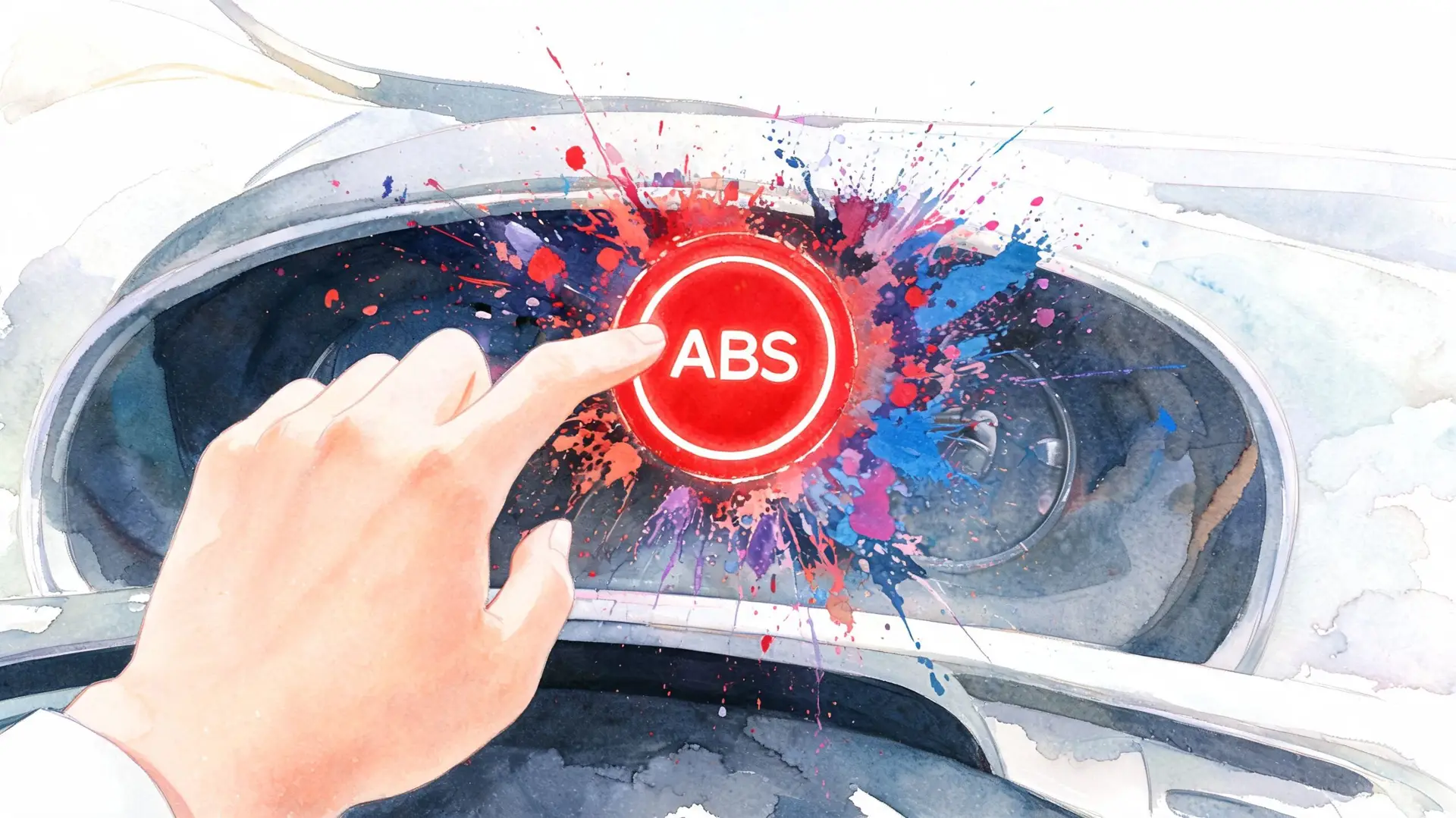
The most obvious sign is the ABS warning light on the dash. But that's not the only clue. Some drivers notice an odd pedal feel, strange noises, or the vehicle acting differently during braking before they ever schedule service.
What drivers usually notice first
A few symptoms should get your attention quickly:
- ABS light only. The regular hydraulic brakes usually still work, but anti-lock protection may not.
- ABS light plus red brake warning light. This is more serious and may point to a hydraulic brake problem.
- Pedal feel changes. A soft pedal, hard pedal, or unexpected pulsing needs attention.
- Grinding, clicking, or odd activation. Sometimes the system reacts when it shouldn't.
- Wheel lockup under hard braking. That can mean the ABS isn't intervening the way it should.
The practical safety point is clear in Meineke's guidance on ABS warning light risk and brake warning combinations. Regular hydraulic brakes usually still work with an ABS light on, but braking distance and steering control can be worse in an emergency. An ABS light by itself is less urgent than an ABS light with a red brake light.
What usually causes those symptoms
Most ABS faults come from a short list of causes:
- Wheel speed sensor problems from damage, contamination, or corrosion
- Wiring or connector issues near the wheel area
- Low brake fluid or poor fluid condition
- Blown fuse or relay faults
- ABS control module failure
- Tone ring damage that causes bad sensor readings
That mix is why guessing usually wastes money. The symptom may feel dramatic, but the cause could still be something basic.
If you want a quick visual explanation of warning signs, this short video is helpful before you decide your next step.
A simple drive or tow decision guide
Use this as a practical rule:
Practical rule: If the ABS light is on by itself and the brake pedal feels normal, many drivers can carefully drive to a shop. If the red brake warning light is also on, the pedal drops, fluid is leaking, or the vehicle feels unsafe, don't chance it. Arrange a tow.
Drivers who are also noticing squealing, grinding, vibration, or pedal changes should review these brake problem symptoms before deciding whether the issue is isolated to ABS or part of a broader brake system problem.
Safe At-Home Checks Before You Call a Mechanic
You can do a few useful checks in your driveway without taking anything apart. These checks won't replace a professional diagnosis, but they can help you spot an obvious issue and explain the symptoms more clearly when you call.
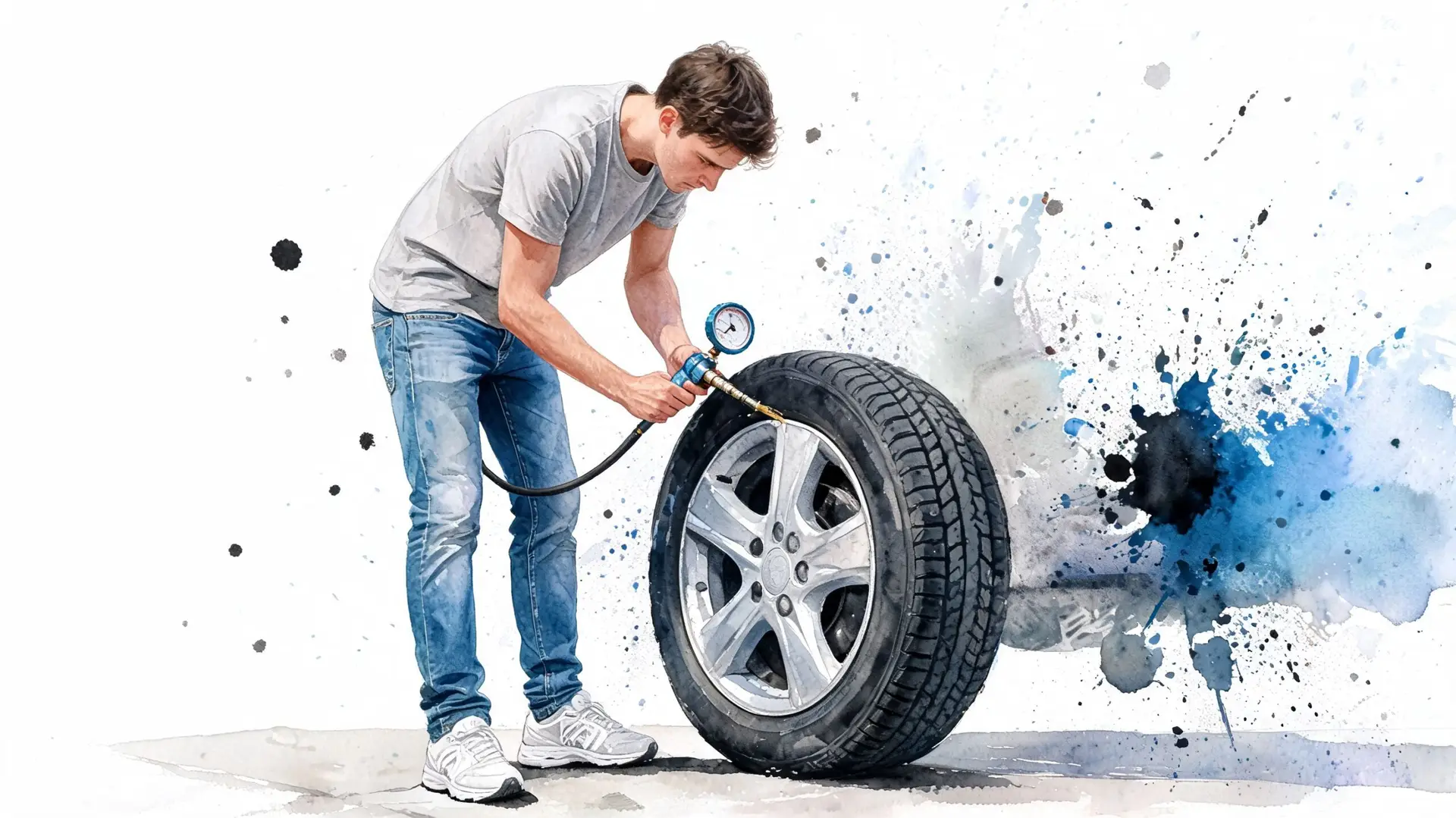
Three checks that are safe for most drivers
Start simple and stay visual.
Check the brake fluid reservoir
Look at the fluid level and the condition of the fluid if the reservoir is transparent. If the level is low, don't assume it's only an ABS issue. Low fluid can point to brake wear or a leak, and a leak changes the safety decision immediately.Look around the wheels for obvious wiring damage
Without crawling under an unsupported vehicle, look through the wheel area for loose, cut, or hanging wires near the hub. ABS sensor wiring often lives in a harsh environment with heat, road debris, and water.Check the fuse box for an ABS fuse issue
Your owner's manual usually identifies fuse locations. A blown fuse doesn't tell you why it failed, but it does tell you the problem may be electrical and not purely mechanical.
What to notice during a short stationary check
Sit in the car and pay attention to a few basics before moving it:
- Dashboard behavior. Does the ABS light stay on after startup?
- Brake pedal feel. Does it feel normal, soft, unusually hard, or sink?
- Warning light combinations. Is it only ABS, or is the red brake warning light on too?
If pedal feel is changing, don't focus on the warning light alone. The way the pedal behaves tells you a lot about whether the issue is merely electronic or potentially hydraulic.
For drivers who like to learn the basics before coming in, this article on how to troubleshoot an anti-lock braking system gives useful background on fault tracing and warning behavior.
What not to do at home
Skip these:
- Don't unplug sensors at random and hope the light clears.
- Don't open brake lines or loosen hydraulic parts.
- Don't condemn the module just because the ABS light is on.
- Don't drive-test a brake problem aggressively to “see if ABS kicks in.”
If you're already checking wear items around the wheel area, this guide on how to inspect brake rotors can help you separate visible brake wear from an electronic ABS fault.
Understanding Professional ABS Repair and Costs
You can do the sensible checks at home, see the ABS light still on, and still have no clear answer. That is usually the point where professional testing saves time and keeps you from paying for the wrong part.
A proper ABS diagnosis follows an order. A technician checks for stored ABS codes, verifies power and ground, looks at live wheel speed data, inspects the wiring and connectors tied to the fault, and tests the hydraulic unit or module only if the earlier steps point there. That matters because a bad sensor signal, damaged wire, or poor connection can trigger the same warning light that many drivers assume means “module.”
The first cost most drivers ask about is diagnostic time. Diagnostics alone average about $116 to $170, while ABS control module replacement averages about $1,186 to $1,276, based on Kelley Blue Book cost guidance that references RepairPal estimates. The gap between those numbers is why diagnosis is money well spent.
Repair versus replacement
Module replacement is sometimes the right call, but it is not the only path. Some ABS modules can be removed, bench-tested, and repaired by a specialty rebuilder if the failure is inside the electronics and the rest of the system checks out. Shops also have to weigh downtime, parts availability, programming requirements, and whether a rebuild is dependable for that specific vehicle.
Industry repair guidance from Module Experts' ABS control module repair overview notes that rebuild services are available for many units, though the exact repair method and turnaround depend on the module design and fault. In practical terms, that means one vehicle may be a good rebuild candidate while another needs replacement and programming to restore proper operation.
Don't approve a module because it is the scariest item on the estimate. Approve it because the testing proved it failed.
Typical ABS repair cost ranges
The table below keeps the hard numbers limited to sourced figures. For other ABS repairs, the final cost depends on what testing finds and how difficult the fault is to access and repair.
| Repair Type | Average Parts Cost | Average Labor Cost | Total Estimated Cost |
|---|---|---|---|
| ABS diagnosis | Included in diagnostic service | Included in diagnostic service | $116 to $170 |
| ABS control module replacement | $1,033 to $1,052 | $152 to $223 | $1,186 to $1,276 |
| ABS control module rebuild or repair | Varies by rebuilder and module | Varies by rebuilder and vehicle needs | Varies by diagnosis |
| Wheel speed sensor repair | Varies by vehicle | Varies by vehicle | Varies by diagnosis |
| Wiring or connector repair | Varies by fault location | Varies by testing time | Varies by diagnosis |
If an estimate includes circuit testing, communication faults, or intermittent signal tracing, that falls under the same kind of auto electrical repair diagnostics many modern vehicles need. Around Haltom City, the fairest ABS repair process is simple: confirm the cause first, explain whether repair or replacement makes more sense, and show you why before any major parts get approved.
Preventative Maintenance for a Healthy ABS
A lot of ABS problems are preventable. They usually build slowly through dirty brake fluid, neglected brake work, damaged wheel-area wiring, or a warning light that gets ignored until the problem spreads into a more expensive repair.
Brake fluid is one of the big ones. It absorbs moisture over time, and that moisture can corrode internal brake and ABS components. The U.S. Department of Transportation explains brake fluid care and contamination concerns in its brake fluid safety guidance. On vehicles with age and miles on them, clean fluid matters because the ABS hydraulic unit has tight internal passages and valves that do not handle contamination well.
If your vehicle has traction control or stability control, those systems often rely on the same wheel-speed information and brake control inputs as ABS. One warning light can point to a problem that affects more than one safety system, which is why it makes sense to deal with it early instead of waiting for a second symptom.
What good prevention looks like
The best habit is simple. Have the brake system inspected during routine service, and ask specifically about fluid condition, pad wear, sensor wiring near the wheels, and any stored brake or ABS faults if a light has been intermittent.
A few practical steps help a lot:
- Replace brake fluid when service history is unknown or the fluid tests bad. Clean fluid protects the hydraulic side of the system.
- Repair brake problems early. Worn pads, fluid leaks, and metal-to-metal brake noise put the whole system under extra strain.
- Check the wheel areas after suspension, axle, or bearing work. ABS sensor wires and connectors can get pulled, bent, or left loose.
- Take intermittent warning lights seriously. A light that comes and goes is still a fault.
- Choose a shop that explains what it found in plain language. Good local service and trust matter for repair shops just like they do in other businesses that study how to convert reviews into customers.
What owners should avoid
Code clearing is not maintenance. It only turns the light off until the fault returns.
Guessing at parts is expensive too. A wheel sensor, hub bearing, wiring issue, and module fault can trigger similar warnings, so prevention still comes back to inspections, clean fluid, and fixing small brake issues before they turn into electrical or hydraulic ones.
On older vehicles, that trade-off matters even more. Spending a little on routine brake service is usually easier than dealing with a large ABS repair after corrosion or contamination has been sitting in the system for years.
ABS Repair in Haltom City with Express Lube & Car Care
Local drivers usually want the same three things when an ABS light comes on. They want to know if the vehicle is safe to drive, what the problem is, and whether the estimate is for a real fix or a guess.
That's where process matters. A high-quality ABS repair starts with a structured workflow that includes visual inspection, code scanning, sensor signal testing, continuity checks, voltage-drop testing, and component actuation checks when needed, following the kind of diagnostic sequence shown in this expert ABS diagnostic walkthrough. That method helps separate a basic wheel sensor or wiring problem from a true module or hydraulic fault.
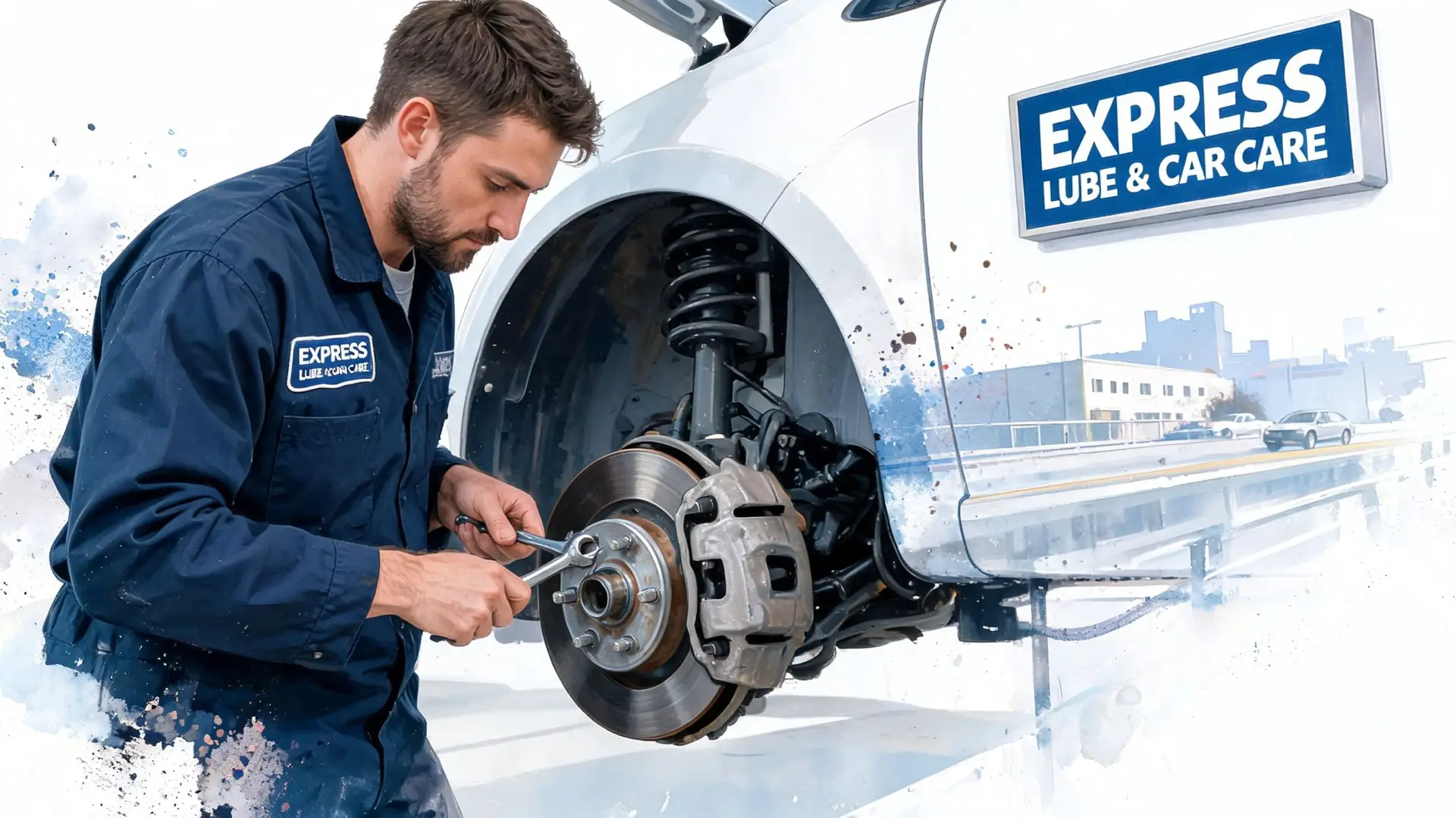
What a local driver should expect
A proper visit for abs car repair in Haltom City should feel straightforward:
- First, verify the complaint. Is the light constant, intermittent, or tied to speed and braking?
- Then inspect the basics. Fluid condition, fuses, wiring, connectors, and wheel area components need a real look.
- After that, scan the ABS system directly. Generic code readers often miss useful ABS data.
- Then test before replacing. Sensor signal issues, power supply faults, and module communication problems need confirmation.
That approach is especially important for families and fleet vehicles in this area. Older daily drivers may have corrosion, wiring wear, or prior repair history that changes the diagnosis. Work trucks and high-mileage vehicles can develop recurring wheel-end and electrical issues that look bigger than they are.
Why transparency matters on ABS work
ABS estimates can confuse people because several parts can trigger the same warning light. A trustworthy shop should explain whether the problem appears to be a sensor input fault, a wiring problem, a hydraulic control issue, or a module fault, and what testing supports that conclusion.
Express Lube & Car Care in Haltom City is one local option for that kind of brake and diagnostic work. The shop's service model centers on certified technicians, advanced diagnostic equipment, and clear estimates, which fits the kind of step-by-step ABS workflow drivers need when they're trying to avoid unnecessary parts replacement.
Good ABS service is less about swapping parts quickly and more about proving the fault before the repair begins.
If you're the type who checks reviews before booking, this guide on how to convert reviews into customers offers a useful reminder of what to look for in local business feedback. For auto repair, the best reviews usually mention communication, accurate diagnosis, and whether the final repair matched the original problem.
If your ABS light is on, your brake pedal feels off, or you want a local shop to check the system before a small problem turns into a major one, schedule a visit with Express Lube and Car Care. Drivers in Haltom City and nearby communities can get a clear diagnosis, a straightforward explanation of what failed, and practical guidance on whether the fix is minor, module-related, or part of a broader brake repair.