

Regular oil changes are the single most effective maintenance task for protecting your engine from premature wear, sludge buildup, and costly failure. Motor oil is not a simple lubricant. It is a precisely engineered fluid that performs multiple simultaneous functions, and when it degrades, every one of those functions fails at once. Understanding why regular oil changes matter gives you the practical knowledge to protect your vehicle, avoid unnecessary repair bills, and keep your engine running at its best for years to come.
Why regular oil changes matter for engine health
Motor oil does far more than reduce friction between moving metal parts. It cools engine components that the radiator and coolant system cannot reach directly, carries combustion byproducts away from cylinder walls, and neutralizes the acids that form naturally during the combustion process. According to Consumer Reports, regular oil changes keep your engine clean and boost its performance by removing the dirt and particles that accumulate during normal operation.
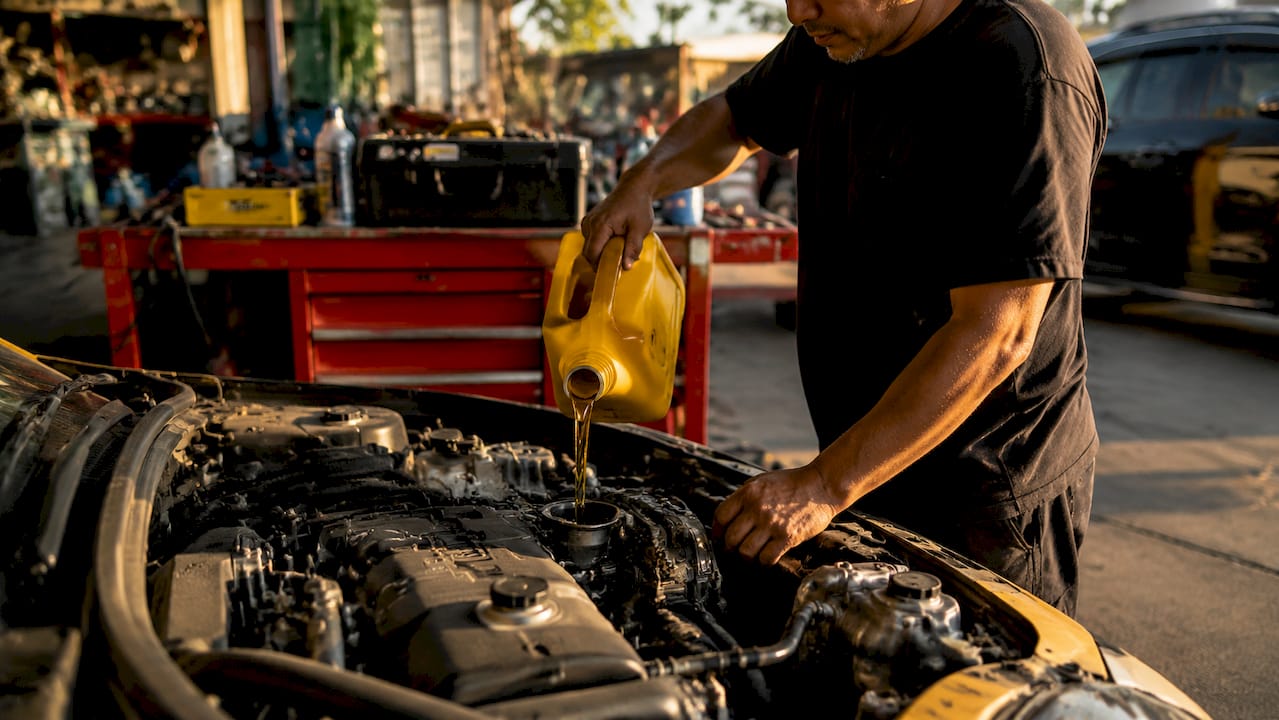
Motor oil achieves all of this through a chemical additive package blended into the base oil. These additives include detergents that suspend contaminants, antioxidants that slow chemical breakdown, and acid neutralizers that protect metal surfaces. The problem is that these additives deplete with use. Once they are gone, the oil can no longer do its job, no matter how much of it remains in the crankcase.
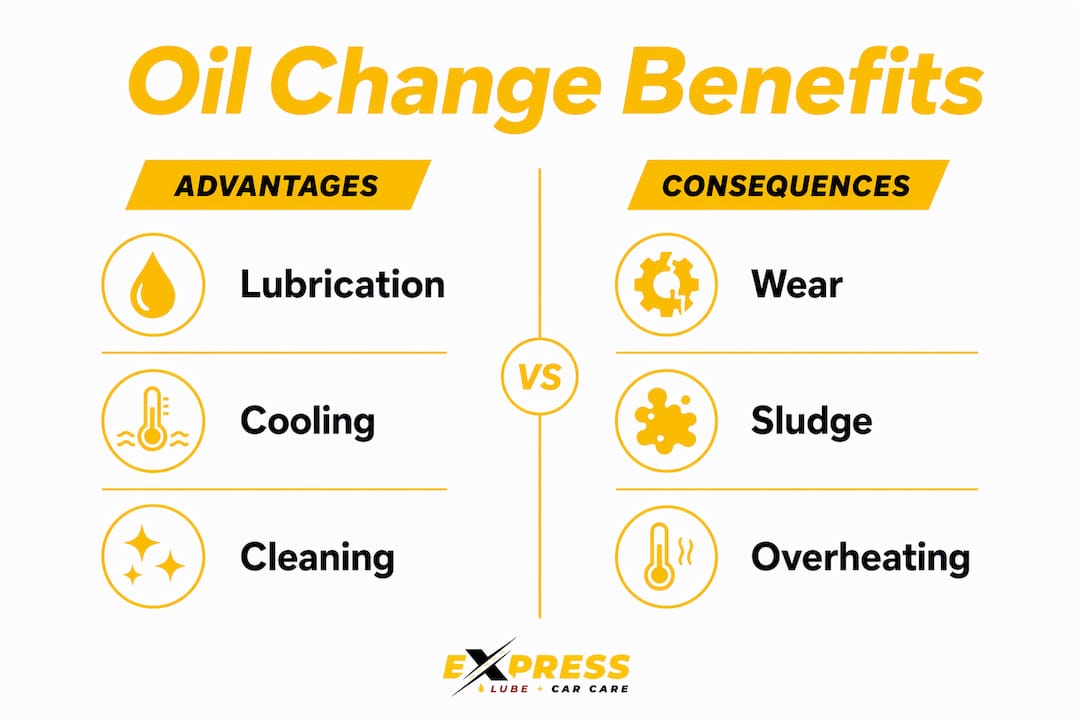
Here is what fresh, high-quality motor oil does for your engine every time you drive:
- Lubricates metal surfaces to reduce friction and prevent wear on pistons, camshafts, and bearings
- Cools engine components by absorbing and transferring heat away from areas the cooling system cannot reach
- Cleans by suspending carbon deposits, metal particles, and combustion byproducts so the filter can trap them
- Neutralizes acids formed during combustion before they can corrode engine metal
- Protects seals by keeping gaskets and O-rings pliable and preventing leaks
Pro Tip: Synthetic oil, such as Mobil 1 or Pennzoil Platinum, maintains its viscosity and additive performance significantly longer than conventional oil under the same driving conditions. If your vehicle allows it, switching to full synthetic is one of the most cost-effective ways to extend engine life.
What happens when you skip an oil change
Neglecting oil changes does not produce immediate, dramatic symptoms. That is exactly what makes it dangerous. The damage accumulates quietly over thousands of miles while your engine continues to run, masking the deterioration happening inside.
When chemical additives are depleted, oil turns into acidic sludge that actively damages the engine it was designed to protect. This sludge blocks oil passages, starves bearings of lubrication, and coats internal surfaces with a layer of carbon and oxidized oil that no amount of fresh oil can fully dissolve. The consequences build on each other:
- Increased friction and heat as degraded oil loses its ability to separate metal surfaces
- Sludge formation that clogs oil passages and reduces flow to critical engine components
- Acid corrosion on cylinder walls, bearings, and camshaft lobes
- Reduced fuel economy as the engine works harder against increased internal resistance
- Accelerated wear on pistons, rings, and valve train components
Skipping oil changes significantly shortens engine life and may result in very expensive repairs or complete engine breakdown. A single neglected interval rarely causes immediate failure, but the cumulative effect of repeated delays is predictable and severe.
One detail many drivers miss: oil degrades chemically even when the car sits in the driveway. Moisture, oxidation, and acid buildup occur in stationary vehicles. A car driven only 2,000 miles over 14 months still needs fresh oil. Time matters just as much as mileage. For a deeper look at what skipping an oil change actually does to your engine, the breakdown is more detailed than most drivers expect when they read about the risks.
How driving conditions affect oil change frequency
The old “every 3,000 miles” rule is not just outdated. It was never a universal truth. Oil change frequency depends on how you actually drive, not just how far you drive. Two vehicles with identical mileage can have dramatically different oil conditions based on driving habits and environment.
Short-trip city driving is classified as a severe condition because the engine never fully reaches operating temperature. When oil stays cool, moisture and unburned fuel accumulate in the crankcase instead of evaporating off. This accelerates degradation faster than highway miles at sustained speed. Other severe conditions include towing, frequent stop-and-go traffic, extreme heat or cold, and driving on dusty roads.
| Driving condition | Effect on oil | Recommended approach |
|---|---|---|
| Short city trips under 5 miles | Moisture and fuel contaminate oil faster | Shorten interval, consider synthetic |
| Highway driving at steady speed | Oil degrades more slowly | Follow manufacturer’s standard interval |
| Towing or hauling heavy loads | High engine load depletes additives faster | Use heavy-duty oil, shorten interval |
| Extreme heat (Texas summers) | Accelerates oxidation and viscosity breakdown | Check oil level monthly, use high-temp synthetic |
| Low mileage, long time periods | Chemical degradation still occurs | Change at least once per year regardless of miles |
Modern vehicles from Toyota, Ford, GM, and Honda now include oil life monitoring systems that calculate remaining oil life based on engine load, temperature cycles, and driving patterns. These systems are far more accurate than a fixed mileage number. Oil life monitors reflect your actual driving habits and engine load to recommend the optimal change interval for your specific situation.
Pro Tip: Do not wait for the oil life monitor to hit zero before scheduling a change. Plan your appointment when it reaches 15 to 20 percent remaining. This gives you a comfortable window without cutting it close, especially if your schedule is unpredictable.
The choice between synthetic and conventional oil also directly affects how often you need to change it. Many automakers now set oil change intervals at 7,500 or even 10,000 miles for vehicles using full synthetic oil. Conventional oil typically requires changes closer to every 5,000 miles under normal conditions. Understanding the difference before your next service visit helps you make a smarter decision. A detailed comparison of synthetic vs. conventional oil breaks down which option fits your vehicle and budget.
How to determine the right oil change schedule for your vehicle
Setting the right oil change schedule is not complicated, but it does require you to look at a few specific sources rather than guessing. Here is a practical sequence for getting it right:
- Check your owner’s manual first. The manufacturer specifies the correct oil type, viscosity grade, and recommended interval for your exact engine. This is the most reliable starting point and overrides any generic advice.
- Use your oil life monitor as a real-time guide. If your vehicle has one, treat it as your primary indicator between manual-specified intervals. It accounts for how you actually drive, not how an average driver might.
- Factor in time, not just miles. Even if you drive very little, oil degrades over time due to moisture and oxidation. Change your oil at least once every 12 months regardless of mileage.
- Assess your driving conditions honestly. If you regularly make short trips, tow a trailer, or drive in extreme heat, treat your conditions as severe and shorten your interval accordingly.
- Check the oil physically between changes. Pull the dipstick every month or every other fill-up. Fresh oil is amber and slightly transparent. Dark brown or black oil with a gritty texture means the additives are depleted and a change is overdue.
- Choose the right oil for your habits. Full synthetic oil from brands like Valvoline, Castrol, or Mobil 1 offers longer protection and better performance under severe conditions. Conventional oil works for older vehicles with low-stress driving patterns.
Following a car maintenance schedule by mileage alongside your oil change routine gives you a complete picture of your vehicle’s service needs, not just one piece of it.
Key takeaways
Regular oil changes protect your engine by maintaining lubrication, preventing sludge, and preserving fuel economy, with the correct interval determined by your oil type, driving conditions, and manufacturer guidance.
| Point | Details |
|---|---|
| Oil does more than lubricate | Motor oil cools, cleans, and neutralizes acids in addition to reducing friction. |
| Degraded oil causes real damage | Depleted additives turn oil into acidic sludge that corrodes engine components over time. |
| Driving conditions set the interval | Short trips, towing, and extreme heat degrade oil faster than steady highway driving. |
| Time matters as much as mileage | Oil degrades chemically even in parked vehicles, so change it at least once per year. |
| Synthetic oil extends protection | Full synthetic oils allow longer intervals and perform better under severe driving conditions. |
What we see every day at Express Lube & Car Care
The 3,000-mile rule is one of the most persistent myths in automotive maintenance, and it costs drivers money. We see customers come in who have changed their oil every 3,000 miles for years on a vehicle that the manufacturer specifies for 7,500 miles with synthetic oil. They are spending twice as much as they need to. On the other side, we see drivers who have stretched a conventional oil change to 8,000 miles because they heard “modern oil lasts longer.” Both approaches miss the point.
The right interval is specific to your vehicle, your oil type, and how you actually drive. What we have learned from working with DFW drivers is that most people underestimate how much their daily commute affects oil degradation. Short trips in stop-and-go traffic around Haltom City are genuinely harder on oil than a long highway drive to Dallas. The oil life monitor in your vehicle knows this. We encourage every driver to trust it over any fixed number they read on a sticker.
Oil changes are also an opportunity that most drivers do not fully use. A full vehicle health check during an oil change appointment catches worn belts, low fluids, and battery issues before they strand you. That is the real value of consistent, professional service.
— Express Lube & Car Care
Keep your engine protected with Express Lube & Car Care
Express Lube & Car Care in Haltom City makes it easy to stay on schedule without rearranging your day. No appointment is needed, and ASE-certified technicians handle your oil change quickly while performing a multi-point inspection that checks fluid levels, belts, filters, and more.
If your oil life monitor is dropping or you cannot remember your last change, now is the right time to act. Visit Express Lube & Car Care for fast, transparent service you can trust. If your engine has been running on degraded oil for longer than you realize, our team also provides engine diagnostics and repair to catch any developing issues before they become major failures. Stop in today and leave with confidence.
FAQ
Why do regular oil changes matter so much?
Regular oil changes remove degraded oil that has lost its ability to lubricate, cool, and clean your engine. Without fresh oil, metal components wear faster, sludge builds up, and engine damage accumulates silently over time.
How often should you change your oil in 2026?
Most modern vehicles using full synthetic oil require changes every 7,500 to 10,000 miles, while conventional oil typically needs replacement closer to every 5,000 miles. Always follow your owner’s manual and oil life monitor for the most accurate guidance.
Does oil go bad even if you don’t drive much?
Yes. Oil degrades chemically through moisture and oxidation even in a parked vehicle. Drivers with low annual mileage should still change their oil at least once every 12 months.
Is the 3,000-mile oil change rule still valid?
No. The 3,000-mile rule is outdated for most modern vehicles. Many manufacturers now recommend intervals of 7,500 to 10,000 miles with synthetic oil, making the old rule an unnecessary expense for most drivers.
What are the warning signs that your oil needs changing?
Dark, gritty oil on the dipstick, a low oil life reading on your dashboard monitor, increased engine noise, or a burning smell from the engine bay all indicate that an oil change is overdue. Catching these signs early prevents more serious engine damage.