
How certified repair shops strengthen fleet reliability
Certified repair shops are the single most reliable lever fleet managers have for cutting vehicle downtime and repair costs. Shops staffed with ASE-certified technicians deliver significantly better shop productivity and substantially fewer comebacks, meaning vehicles get fixed right the first time and return to service faster. RepairPal certification adds another layer of accountability, signaling that a shop meets verified standards for pricing transparency, quality, and customer satisfaction.
Here is what certified shops consistently deliver for fleets:
- Fewer repeat repairs: Technicians who have passed rigorous ASE testing fix problems correctly the first time, resulting in 60% fewer costly return visits.
- Greater vehicle uptime: Accurate diagnostics and thorough inspections keep vehicles on the road longer between service events.
- Workforce stability: Certified technicians show 30% lower turnover than non-certified peers, so your shop relationship stays consistent.
- Legal protection: ASE certification is a legally defensible third-party credential that protects fleets in liability situations involving vehicle crashes or maintenance disputes.
- Compliance confidence: Certified shops follow documented procedures that support regulatory and safety requirements across your fleet.
- Cost control: Higher first-time fix rates reduce parts waste, labor hours, and emergency roadside costs.
The role of certified shops in fleet reliability goes well beyond basic repairs, embodying key best practices for car maintenance that optimize fleet uptime and cost efficiency. They function as operational partners, and choosing them deliberately is one of the most practical fleet management best practices you can apply in 2026.
Why regular maintenance by certified shops keeps your fleet running
Skipping or delaying scheduled maintenance is one of the fastest ways to turn a manageable repair into a full vehicle replacement. Certified shops catch developing problems during routine inspections before they become breakdowns, and that early intervention is where the real cost savings happen.
Certified repair shops provide technician expertise, better diagnostics, and preventive maintenance that reduce breakdowns and extend vehicle lifespan. For a fleet, that translates directly into fewer emergency service calls, lower parts costs, and vehicles that stay in service longer before needing major work. A single unplanned breakdown can cost far more than several scheduled service visits combined, once you factor in towing, rental vehicles, and lost productivity.

Regular maintenance through a certified shop also supports scheduled servicing that keeps your fleet compliant with safety regulations and manufacturer warranty requirements. Fuel efficiency improves too, since properly maintained engines, tires, and fluid systems run cleaner and consume less fuel per mile.
Key maintenance benefits certified shops deliver for fleets:
- Accurate inspections: Certified technicians follow documented procedures, so nothing gets missed during a routine visit.
- Preventive parts replacement: Worn components get identified and replaced before they cause a failure on the road.
- Fluid and filter management: Proper intervals for oil, coolant, transmission fluid, and filters protect drivetrain components.
- Tire and brake monitoring: Regular checks prevent the two most common causes of fleet roadside incidents.
- Compliance documentation: Certified shops provide records that satisfy DOT and insurance requirements.
Pro Tip: Build a maintenance calendar tied to mileage and time intervals, then schedule all fleet vehicles through a single certified shop that knows your fleet’s history. Consistency in who services your vehicles reduces diagnostic time and catches recurring issues faster.
What you gain by choosing certified and experienced repair shops
The gap between a certified shop and a non-certified one shows up most clearly in diagnostic accuracy. Certified technicians have passed standardized tests covering every major vehicle system, and they bring that structured knowledge to every repair order. A technician who guesses at a fault code costs you more in parts and labor than one who diagnoses it correctly the first time.
Technician career paths built around certification create pride and commitment that directly benefit repair quality and shop trust. Certified technicians also command higher earnings than non-certified peers, which means shops that invest in certification attract and keep better talent. That stability matters for fleets because a shop with consistent staff knows your vehicles, your usage patterns, and your maintenance history.
Modern fleets increasingly include vehicles with advanced driver assistance systems (ADAS) and, in some cases, electric powertrains. Only about 44% of repair shops are currently fully equipped to handle ADAS repairs and calibration. Choosing a certified shop that has invested in the right training and equipment for these technologies protects you from a growing bottleneck.
Benefits of certified and experienced shops at a glance:
- Higher first-time fix rates: Structured diagnostic skills reduce parts waste and rework.
- Faster throughput: Experienced technicians work more efficiently, shortening your vehicles’ time out of service.
- Lower long-term labor costs: Fewer repeat repairs mean fewer billable hours for the same problem.
- ADAS and EV capability: Shops with OEM-level training handle modern vehicle technology that non-certified shops often cannot.
- Workforce consistency: Lower technician turnover means the same skilled hands work on your fleet over time.
Workshops committed to continuous technician training and certification consistently outperform others in efficiency and customer satisfaction.
How to identify and choose a trusted certified repair shop
Start with credentials. Any shop you consider for fleet work should display current ASE certification and, ideally, RepairPal certification. ASE certification requires technicians to pass rigorous written tests and document at least two years of verifiable shop experience, so the credential reflects both knowledge and real-world competence. RepairPal certification adds independent verification of fair pricing and quality standards.
Beyond credentials, look at how the shop handles transparency. Digital vehicle inspections, transparent pricing, and reliable warranty coverage are key factors when selecting a trusted certified repair shop. A shop that sends you a photo-documented inspection report before starting work gives you the information you need to approve repairs quickly, which shortens the overall repair cycle.

Repair delays often come from process gaps rather than technician skill. Approvals, communication gaps, and handoffs between vendors can easily add days to a repair cycle, so a shop that communicates proactively and uses clear approval workflows is worth prioritizing. Ask prospective shops how they handle repair authorization, how they track parts availability, and how they notify you when a vehicle is ready.
Criteria to evaluate when selecting a certified shop for fleet work:
- ASE and RepairPal certifications: Confirm current credentials, not just a logo on the wall.
- Fleet volume capacity: The shop should handle your vehicle count without creating scheduling bottlenecks.
- Comeback rate: Ask directly how often vehicles return for the same repair. Low comeback rates signal quality work.
- Digital inspection tools: Photo and video documentation supports faster approvals and clearer records.
- Warranty policy: A shop confident in its work backs repairs with a written warranty.
- Communication workflow: Clear points of contact and proactive status updates reduce delays on your end.
- Modern vehicle capability: Confirm the shop has training and equipment for ADAS, hybrid, or EV vehicles in your fleet.
Pro Tip: Ask for references from other fleet accounts before committing. A shop that already services commercial fleets understands the urgency of uptime in a way that consumer-focused shops often do not.
What industry research says about certified technicians and fleet performance
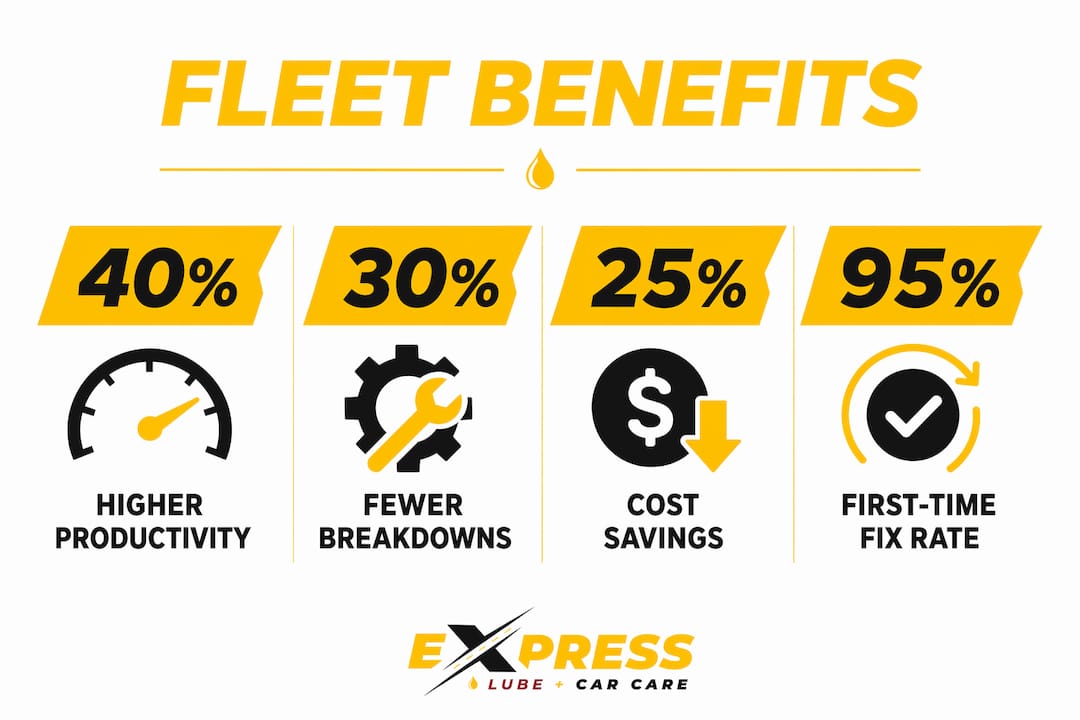
The data on certified technicians is consistent and clear. ASE-certified technicians deliver 40% better shop productivity and 60% fewer comebacks, according to Jennifer Holland, assistant vice president of marketing for the National Institute for Automotive Service Excellence (ASE). Those numbers translate directly into reduced downtime and lower total maintenance costs for any fleet.
Key finding: Fleets employing ASE-certified technicians see 40% higher shop productivity and 60% fewer repeat repairs, while also benefiting from lower technician turnover compared to non-certified shops.
Joe Young, Fleet Maintenance Operations Manager for Publix Supermarkets, described the real-world impact directly: “What I have seen and been able to report is that we’ve had cost reductions in labor, parts, and roadside breakdowns.” Publix operates a large fleet of over-the-road trucks and trailers, and Young attributed the company’s ability to extend asset life to a combination of ASE certifications, OEM-level credentials, and internal training programs.
The best-performing fleets combine ASE and OEM certifications to cover both general repair needs and brand-specific issues, including software updates and ADAS calibrations. For mixed fleets with multiple makes and models, that combination reduces the number of shops you need and keeps repair quality consistent across your entire operation.
Certification also functions as a business safeguard by providing a legally defensible third-party credential that protects fleets from inconsistent repair quality and builds customer trust. Young noted this directly: when his technicians’ certifications were reviewed during a legal deposition following a vehicle crash, the documentation “took the wind out of the sails of that particular legal situation.”
Additional research-backed insights for fleet managers:
- Integrate certifications with KPIs: Track breakdown rates, asset downtime, and comeback rates alongside technician certification levels to see the direct connection.
- Combine ASE and OEM credentials: Mixed fleets benefit most when technicians hold both, covering general mechanics and brand-specific diagnostics.
- Address process fragmentation: Certification alone does not resolve delays caused by disconnected approval systems. Pair certified shops with centralized communication workflows for best results.
- Invest in ongoing training: Shops that stop training fall behind as vehicle technology advances. Continuous certification renewal keeps technicians current with ADAS, EVs, and evolving diagnostics.
Express Lube & Car Care: certified service for DFW fleets
Fleet managers in the DFW area have a practical option close by. Express Lube & Car Care in Haltom City operates with ASE-certified technicians and holds RepairPal certification, giving your fleet the verified quality standards and transparent pricing that reduce guesswork and delays. No appointment is needed, turnaround times are fast, and the shop’s digital vehicle inspection process gives you documented records for every service visit.
Whether you need routine oil changes, engine diagnostics, or a full maintenance program for your fleet, Express Lube & Car Care handles it with the kind of consistency that keeps vehicles on the road. Financing options are also available through Snap Finance for fleets managing repair costs across multiple vehicles.
Key Takeaways
Certified repair shops deliver measurable improvements in fleet reliability through higher first-time fix rates, lower technician turnover, and documented compliance standards that protect your operation legally and financially.
| Point | Details |
|---|---|
| ASE certification drives productivity | ASE-certified technicians deliver 40% better shop productivity and 60% fewer repeat repairs. |
| Lower turnover stabilizes service | Certified technicians show 30% lower turnover, keeping consistent, knowledgeable staff on your fleet. |
| Legal and compliance protection | ASE certification is a legally defensible credential that supports fleets in liability and regulatory situations. |
| Combine ASE and OEM credentials | Mixed fleets benefit most from technicians holding both ASE and OEM certifications for full repair coverage. |
| Process gaps cause delays too | Certification works best when paired with centralized approval workflows to eliminate communication-driven repair delays. |
FAQ
What certifications should a repair shop have to service a fleet?
Look for current ASE certification across the vehicle systems your fleet uses, plus RepairPal certification for verified pricing and quality standards. For mixed fleets with modern vehicles, OEM-level credentials for ADAS and brand-specific diagnostics are also worth confirming.
What are the 5 pillars of fleet management?
Fleet management typically covers vehicle acquisition, maintenance and repair, fuel management, compliance and safety, and disposal or replacement. Maintenance is the pillar most directly affected by whether you use certified or non-certified repair shops.
What is the 30-60-90 rule for car maintenance?
Certified shops follow manufacturer-specified service intervals and document each visit, inspecting or replacing key components like air filters, spark plugs, coolant, and transmission fluid. This thorough documentation supports fleet compliance records.
What are the 3 C’s of auto repair?
The principle of documenting vehicle condition, identifying the root cause, and recording the correction performed is consistently applied by certified technicians, improving diagnostic accuracy and creating clear records for fleet managers.
How do certified shops reduce fleet operating costs?
Higher first-time fix rates mean fewer repeat labor charges, and preventive maintenance catches failures before they become expensive roadside breakdowns. Publix’s fleet maintenance team reported direct cost reductions in labor, parts, and roadside incidents after integrating ASE and OEM certifications into their maintenance program.