

Most drivers can handle engine air filter replacement themselves, and it usually takes 5 to 15 minutes with a $10 to $30 part. You’ll need a screwdriver at most, since the airbox on most vehicles sits right under the hood with clip-on or screw-down access. Call a professional instead if you’re dealing with a check engine light, a mass airflow (MAF) sensor code, or an air box buried behind other components.
- DIY time: 5 to 15 minutes for most vehicles
- Part cost: $10 to $30 for a standard paper filter
- Skip the DIY route if: you see a diagnostic trouble code, the housing is hard to reach, or the filter is soaked in oil from an old MAF issue
Quick fact: How-to resources confirm that most vehicles allow a filter swap in under 10 minutes, with parts commonly running $10 to $40.
Key Takeaways
Engine air filter replacement is a fast, low-cost job most drivers can do themselves in 5 to 15 minutes, but dusty driving conditions and uncertain diagnostics call for a professional inspection instead.
| Point | Details |
|---|---|
| DIY is usually straightforward | Most vehicles take 5 to 15 minutes and cost $10 to $30 in parts for a full swap. |
| Check the interval, not just the calendar | Replace every 12,000 to 15,000 miles normally, but halve that in dusty or heavy-idle conditions. |
| Use the light test | Hold the filter up to bright light; if you can’t see through the pleats, replace it. |
| Watch for acceleration loss, not MPG drops | A clogged filter usually hurts acceleration before it affects fuel economy on fuel-injected engines. |
| Book a pro for uncertain cases | Express Lube & Car Care’s ASE-certified techs pair filter replacement with a photo-based digital vehicle inspection. |
Table of Contents
- What You Need Before You Start an Engine Air Filter Replacement
- Where Is the Engine Air Filter and How Do You Check It?
- How to Replace an Engine Air Filter Step by Step
- How Often Should You Replace Your Engine Air Filter?
- Is It Cheaper to Replace the Air Filter Yourself?
- Common Mistakes to Avoid When Changing an Engine Air Filter
- When a Shop Visit Makes More Sense Than a Driveway Fix
- Sources
- FAQ
What You Need Before You Start an Engine Air Filter Replacement
You don’t need a mechanic’s toolbox for this job. Most cars need nothing more than your hands, though a flathead screwdriver, an 8mm socket, and a rag for wiping down the housing cover all the bases. A few vehicles use Torx screws on the airbox lid, so check before you start rather than mid-job.
Confirm the correct filter using your VIN at a parts retailer like AutoZone or looking it up on RockAuto, since airbox shapes vary even across trim levels of the same model. OEM filters match factory fit exactly; aftermarket filters (Fram, K&N, Bosch) often cost less and some claim better airflow, though the DOE study on air filter effects found clean filtration matters more than brand for real-world performance.
- Flathead screwdriver
- 8mm socket or nut driver (some vehicles)
- Clean rag
- Gloves (optional, keeps hands clean)
- Torx bit (only if your airbox uses it)
Pro Tip: Always let the engine cool for at least 15 minutes before you start. A hot intake pipe near the airbox can burn your hand, and you don’t need that kind of surprise on a quick job.
Where Is the Engine Air Filter and How Do You Check It?
Look for a black plastic box roughly the size of a shoebox, connected to a wide accordion-style intake hose. On most sedans and trucks, it sits toward the driver’s side or passenger side near the firewall, just behind the headlight area. It’s one of the easiest components to spot once you know what you’re looking for.
- Locate the airbox and trace the intake hose back to it.
- Unclip the metal or plastic latches, or remove the retaining screws, without forcing anything.
- Lift the lid straight up, keeping the hose attached if possible.
- Pull the filter out and hold it up to a bright light.
- Check the pleats for color, debris, and tears.
A clean filter looks white or off-white and lets light pass through the pleats easily. Champion Auto Parts notes that a filter blocking most of that light, caked in dirt, or showing oil contamination needs replacing now, not next oil change. If you spot a reusable filter that looks over-oiled, don’t try to clean it yourself. That’s a job for someone who knows the right re-oiling ratio.
How to Replace an Engine Air Filter Step by Step
Once you’ve confirmed the filter needs replacing, the actual swap is the fastest part of the whole job. Before you touch anything, note which way the airflow arrow on the old filter points, or snap a quick photo on your phone. Some filters are shaped to fit only one way, but plenty of others will slide in backward if you’re not paying attention, and a backward filter restricts airflow more than the dirty one you just pulled out.
Here’s the full sequence:
- Confirm the engine is off and cool. Never work near a running engine.
- Unclip or unscrew the airbox lid and set it aside carefully.
- Lift the old filter straight up and out. Don’t twist or tear it.
- Wipe down the inside of the airbox with a dry cloth to clear loose dust and leaves.
- Check the intake area near the MAF sensor (if visible) but don’t touch the sensor element itself, even with a dry rag.
- Set the new filter in with the airflow arrow matching the old orientation. It should sit flush without pressing or forcing.
- Re-secure the lid, making sure every clip clicks back into place.
- Start the engine and confirm no warning lights appear.
“Each 1 kPa increase in air-filter pressure drop corresponds to roughly a 1 to 1.5% power loss in spark-ignition engines,” according to an MDPI experimental study, which recommends service around a 1.0 to 2.5 kPa pressure rise for passenger cars.
That’s the technical reason a clogged filter feels sluggish before it ever throws a warning light. Most vehicles take 5 to 15 minutes start to finish, and the biggest time sink is usually figuring out which clip releases the lid on your specific model; you can find compatible replacement filters like the Medify Air MA-CAR Replacement Filter in Dubai for convenient DIY swaps.
Two things to never do:
- Never blow compressed air through the pleats of a paper filter. It damages the media instead of cleaning it.
- Never force a filter that doesn’t sit flush. If it’s binding, you likely have the wrong part number.
Pro Tip: Keep a spare filter in your trunk if you drive a lot of gravel roads or job sites. Swapping a dusty filter for a clean spare takes less time than digging through a glovebox for a rag.
How Often Should You Replace Your Engine Air Filter?
Most owner’s manuals call for engine air filter replacement every 12,000 to 15,000 miles under normal driving conditions, according to maintenance guidance from Vehisales. Some premium synthetic-media filters are rated closer to 30,000 miles, but that number assumes clean, paved-road driving, not the conditions most trucks and daily commuters actually face.
Driving conditions change that math fast. Cut the interval in half if you regularly drive on dirt roads, live somewhere dusty, or spend a lot of time idling in traffic or at job sites. Inspecting every oil change costs you two minutes and tells you exactly where you stand.
- Normal driving: inspect at every oil change, replace around 12,000 to 15,000 miles
- Dusty, gravel, or off-road driving: inspect monthly, consider replacing every 6,000 to 7,500 miles
- Heavy idling (delivery routes, stop-and-go traffic): treat like severe conditions, inspect often
A DOE-funded Oak Ridge National Laboratory study found that modern fuel-injected engines showed no significant fuel economy change from a clogged filter, since the engine computer adjusts fuel delivery automatically. What did change was acceleration, which got noticeably better once the researchers swapped in a clean filter. That’s the real-world tell: your MPG probably won’t move, but your car will feel gutless before the dashboard ever complains.
Is It Cheaper to Replace the Air Filter Yourself?
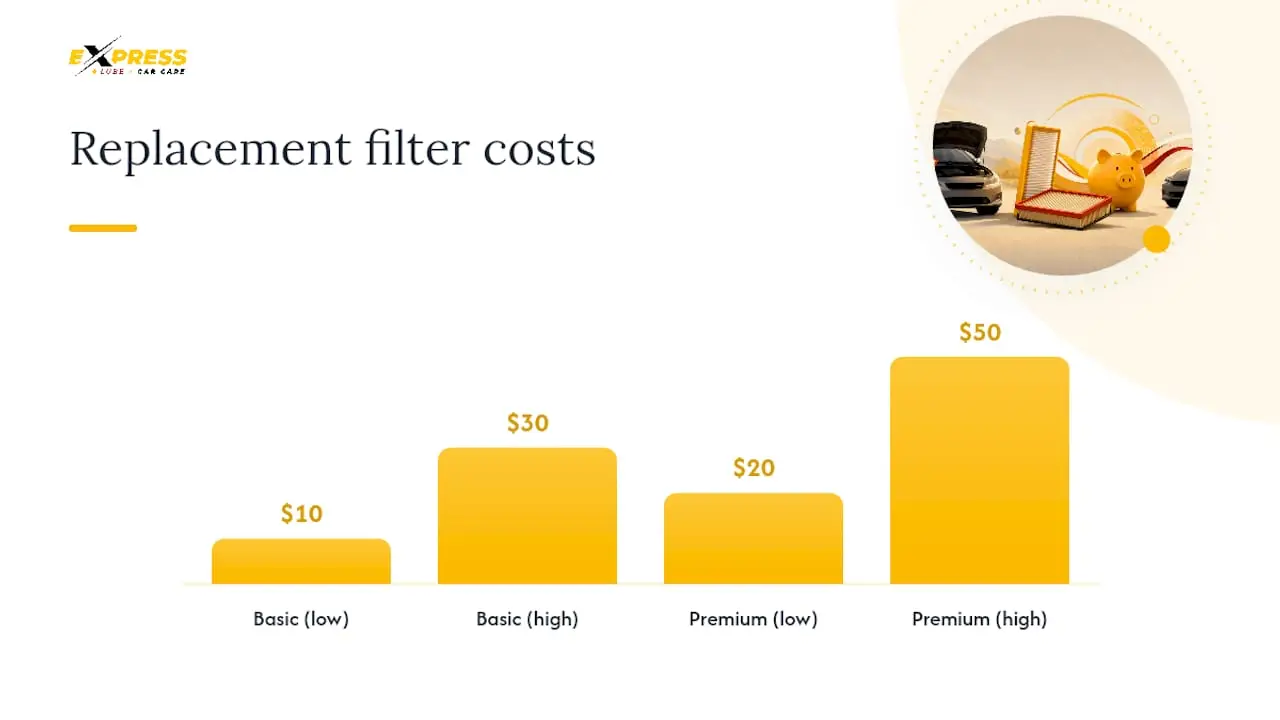
A basic paper filter runs $10 to $30 at most parts stores, while premium options with activated-carbon layers land closer to $20 to $50. Buying the part yourself and doing the swap in your driveway is the cheapest route by a wide margin, especially if you already own basic hand tools.
Quick-lube shops and dealerships typically charge more for the same filter once labor and inspection get added in, and that price covers more than just parts. You’re also paying for a technician’s eyes on your intake, MAF sensor, and hoses; a health check DIY skips entirely unless you know exactly what to look for.
| Option | Time | Typical Cost |
|---|---|---|
| DIY filter swap | 5–15 minutes | $10–$30 (basic) / $20–$50 (premium) |
| Shop or quick-lube service | 10–30 minutes | Parts plus labor, inspection included |
- DIY saves money on labor but skips the professional inspection
- Shop service costs more upfront but often flags related issues (torn intake boot, failing MAF) before they become bigger repairs
- Either route beats ignoring a dirty filter, since the part itself is inexpensive compared to the parts it protects
Common Mistakes to Avoid When Changing an Engine Air Filter
A few small errors turn a 10-minute job into a bigger problem. Skip these, and you’ll be fine.
- Forcing a misfitting filter into place instead of double-checking the part number
- Over-tightening clips, which cracks the plastic housing over time
- Touching or wiping the MAF sensor element directly, even with a soft cloth
- Washing or blowing air through a paper filter, which manufacturer guidance warns damages the filtering media
- Skipping the airbox seal check, which lets unfiltered air bypass the filter entirely
Pro Tip: Photograph the old filter’s orientation before you remove it. If you get interrupted mid-job, that photo saves you from guessing later.
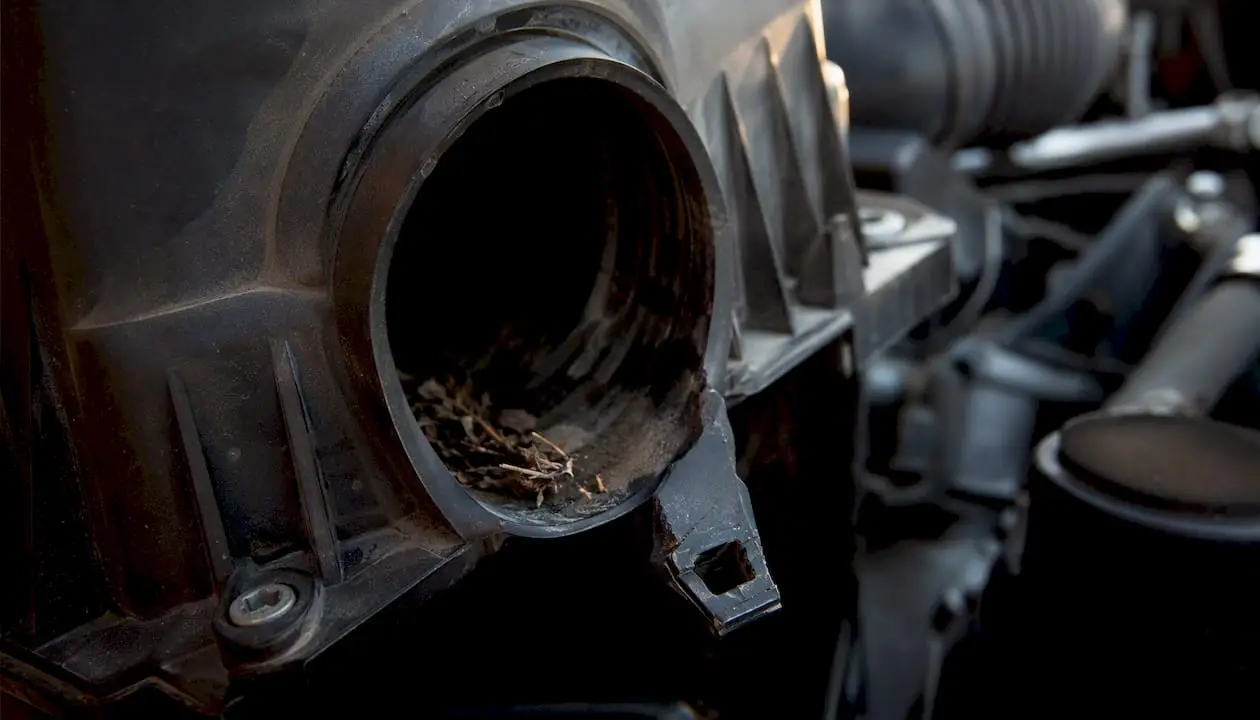
If you notice a cracked housing tab, debris trapped deep in the intake tube, or a check engine light that won’t clear after replacement, stop and get it looked at by a professional.
What Do You Do With the Old Filter?
Most paper filters go in general household waste unless your local recycling program accepts mixed-material automotive parts. If your old filter is soaked in engine oil from a re-oiled reusable type, treat it as automotive hazardous waste and follow your city’s disposal guidance. Most repair shops, including Express Lube & Car Care, will dispose of your old filter for you at no extra charge when you’re already a customer.
A Technician’s View on DIY Versus Professional Service
A shop earns its cost when something’s not obvious: a cracked intake boot, a MAF code that won’t clear, or an airbox buried behind a battery tray. Express Lube & Car Care’s ASE-certified technicians pair every inspection with photo documentation, so you see exactly what they found instead of taking their word for it. If your situation feels uncertain, that visibility is worth the visit.
When a Shop Visit Makes More Sense Than a Driveway Fix
DIY works great when the airbox is easy to reach and the part is obvious. It gets less appealing when your intake system is tucked behind other components, your check engine light won’t clear, or you’re just not sure what you’re looking at once the lid comes off.
A quick-lube visit for filter replacement in Haltom City gets you more than a fresh part. Express Lube & Car Care’s technicians inspect the MAF sensor and intake seal, replace the filter with the correct part for your exact vehicle, and document everything with photos through a digital vehicle inspection, so you know precisely what was checked and why. That kind of visibility catches small problems, like a cracked intake boot, before they turn into bigger repair bills.
Professional installation also comes with proper disposal of your old filter and a second set of trained eyes on anything unusual under the hood. If you’d rather skip the driveway entirely, book an oil change and filter check and let a certified tech handle it while you wait.
Sources
- Fueleconomy
- Experimental Study of the Effect of Air Filter Pressure Drop on Internal Combustion Engine Performance
- What Are the Signs of a Dirty Engine Air Filter? | Champion Auto Parts
- Engine and Cabin Air Filters: When to Replace Each and What Waiting Costs | Vehisales Blog
- How to Check & Replace Engine Air Filters: Step-by- …
Always check your owner’s manual first. Manufacturer intervals vary, and yours is the most accurate source for your specific vehicle.
FAQ
How Often Should You Replace Your Engine Air Filter?
Most manufacturers recommend every 12,000 to 15,000 miles under normal driving, cut in half for dusty or heavy-idle conditions.
How Much Does It Cost to Replace an Engine Air Filter?
Parts alone run $10 to $30 for a basic filter and $20 to $50 for premium options; shop service adds labor and inspection on top of that.
Can You Replace Your Own Engine Air Filter?
Yes, most vehicles allow a filter swap in 5 to 15 minutes with basic tools, though hard-to-reach airboxes or diagnostic codes are better left to a shop.
Do You Actually Need to Replace a Dirty Engine Air Filter?
Yes. A clogged filter reduces acceleration and can let fine particles reach the intake, even though it rarely changes fuel economy on modern fuel-injected engines.
What Are the Signs of a Dirty Engine Air Filter?
Reduced acceleration, a filter that looks dark or caked with debris, and occasionally a check engine light are the clearest warning signs.