

A professional cabin air filter replacement typically runs $60 to $130 at a repair shop, with parts alone costing $15 to $50 if you tackle it yourself. If your filter sits behind an easy glove-box panel and you’re comfortable popping off a few clips, DIY is a smart move. If access is buried under the dash or you’re not sure what you’re looking at, a shop visit is worth the extra cost.
TL;DR:
- Professional cabin air filter replacement typically costs between $86 and $114, with labor accounting for roughly half the total bill.
- Accessibility of the filter varies widely across vehicle models, with some accessible behind the glove box and others requiring extensive dash or trim removal.
- A shop’s service should include inspecting the housing, checking airflow, and providing documentation like photos of the old filter to ensure transparency.
- DIY replacement is quick and simple if the filter is behind the glove box, often taking less than 15 minutes and costing only $15 to $50 in parts.
- Always verify the parts, labor time, and any extra fees beforehand, and avoid shops that refuse to show you the old filter or provide clear cost breakdowns.
Table of Contents
- Cabin Air Filter Replacement Cost Breakdown: Parts vs. Labor
- Does Your Vehicle Make This Job Easy or Hard?
- What a Professional Replacement Actually Includes
- DIY Cabin Air Filter Replacement: Step-by-Step
- How to Pick a Shop and Get a Fair Cabin Filter Replacement Cost
- Why Express Lube & Car Care Handles This Job Right
- Our Take on DIY vs. Professional Replacement
- Book Your Cabin Air Filter Service Today
- Sources
- FAQ
Cabin Air Filter Replacement Cost Breakdown: Parts vs. Labor
The gap between DIY and shop pricing comes down almost entirely to labor. RepairPal puts the average professional replacement at $86 to $114, with labor and parts listed as separate line items so you can see exactly where your money goes.
By the numbers: Shop labor often makes up roughly half the total bill, according to Filterbuy’s cost analysis, meaning a $100 job might break down to $40 to $50 for a mid-grade filter and the rest for the technician’s time.
A few factors push that number up or down:
- Filter grade: A standard particulate filter costs less than an activated-carbon or HEPA-style filter, which adds odor and allergen filtering at a higher price point.
- Accessibility: Filters tucked behind the glove box are quick work; ones hidden under the cowl or dash take longer and cost more in labor.
- Local labor rates: Shop rates vary by region, and that difference shows up directly in your final invoice.
- Taxes and shop fees: Sales tax and small shop supply fees can add a few dollars on top of the quoted parts-and-labor price.
None of these factors should make a routine filter swap feel like a mystery bill. A shop quoting well above $130 for a straightforward glove-box filter is worth a second question before you say yes.
Does Your Vehicle Make This Job Easy or Hard?
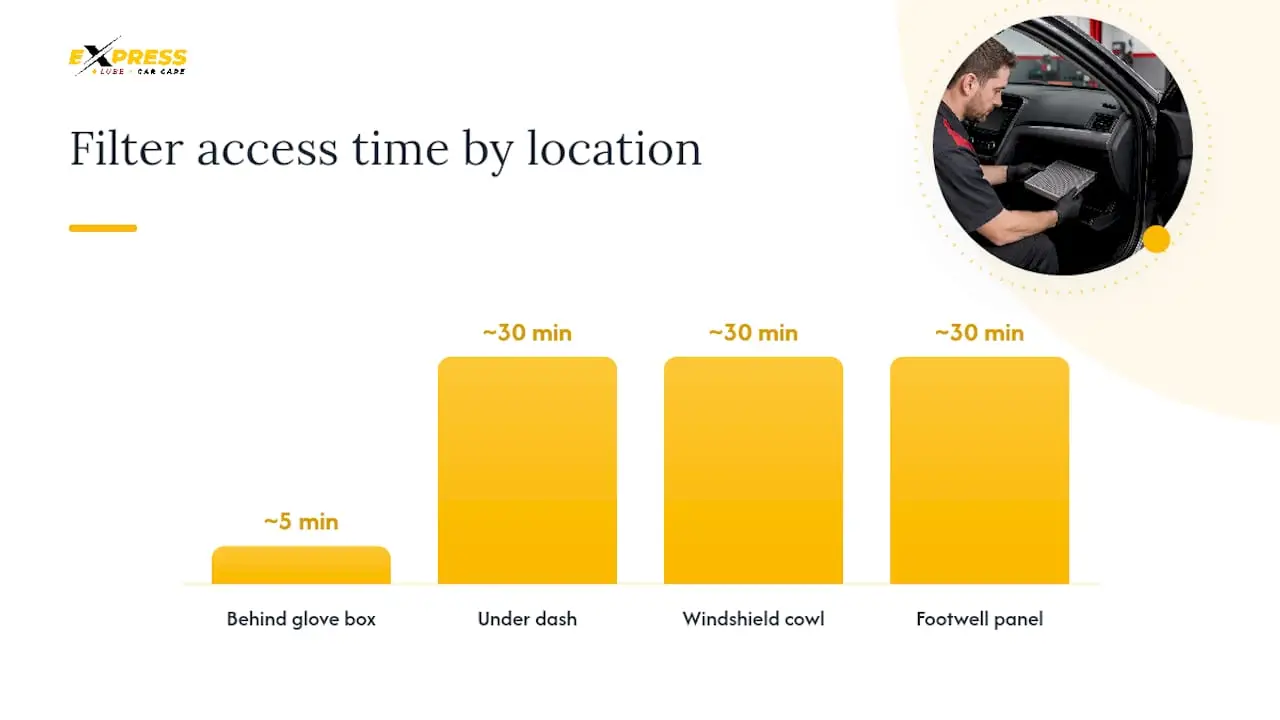
Filter location is the single biggest variable in how long this job takes, and it depends entirely on your make and model. Many sedans and trucks put the cabin filter right behind the glove box, where you can reach it in minutes without tools.
Other vehicles hide it in less convenient spots:
- Under the dashboard, requiring you to work on your back with limited visibility
- Beneath the windshield cowl, sometimes requiring wiper removal
- Behind a footwall panel that needs a trim clip tool to release without cracking plastic
European and luxury models, along with several SUVs, are more likely to fall into the harder category. A job that takes five minutes on one car can take thirty on another, and that time difference is exactly why shop quotes vary so much between vehicles.
Before you commit to DIY, check your owner’s manual or do a quick model-specific search. Five minutes of research can save you a cracked clip or a scratched dashboard panel later.
What a Professional Replacement Actually Includes
A cabin air filter swap at a shop usually takes 10 to 20 minutes of hands-on labor, but you’re paying for more than just the physical swap. The value shows up in what happens around it.
A solid shop visit should include:
- A quick check of HVAC airflow and fan function while the housing is open
- An inspection of the filter housing itself for cracks, debris, or moisture
- The technician showing you the old filter before it goes in the trash
- Photos or a digital inspection report documenting the condition of the old part
Car and Driver notes that professional shops add diagnostic checks and confirm correct installation, which matters more than it sounds. A filter seated wrong can let unfiltered air bypass it entirely.
Occasionally a technician opens the housing and finds something bigger, like early signs of blower motor strain or evidence of moisture intrusion. When that happens, expect the shop to explain the added cost before doing any extra work.
Pro Tip: Ask upfront whether the shop’s price includes showing you the old filter. A shop that documents the swap with photos, rather than just handing you an invoice, is being transparent about what you paid for.
DIY Cabin Air Filter Replacement: Step-by-Step
If your vehicle has glove-box access, this is one of the easier maintenance jobs you can do yourself. Start by confirming the correct part number for your make, model, and year, either through the filter box lookup tool or your owner’s manual. Standard filters run $15 to $25, while carbon or HEPA-style filters usually land closer to $30 to $50.
Once you have the right filter in hand, the swap itself is quick:
- Open the glove box and remove any contents.
- Locate the release tabs or stops that let the glove box drop or swing free.
- Find the filter housing cover and release its clips or latch.
- Slide out the old filter, noting the airflow direction arrow printed on its frame.
- Insert the new filter with the arrow facing the same direction.
- Close the housing, snap the glove box back into place, and test the fan on high.
For a straightforward glove-box job, expect this to take 5 to 15 minutes start to finish.
Stop and call a shop if you find a housing you can’t locate without removing trim panels, clips that feel brittle or already cracked, standing water, or visible mold. Forcing a stuck panel is how a $20 filter turns into a $200 dashboard repair.
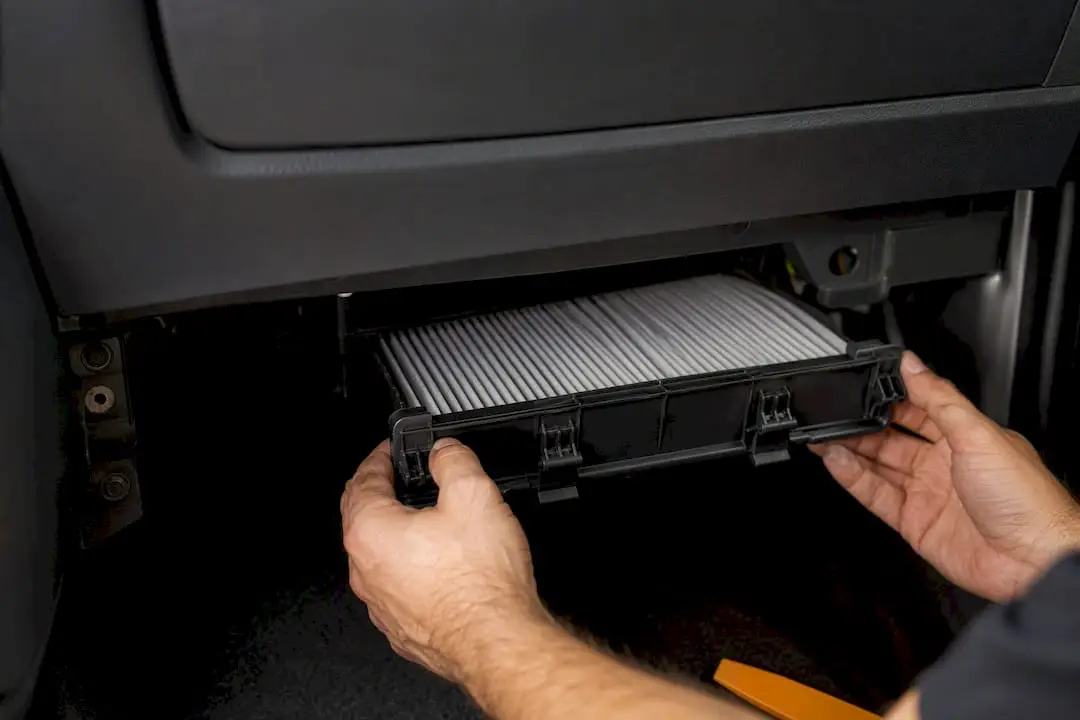
Pro Tip: Snap a photo of the old filter’s orientation before removing it. It’s the fastest way to make sure the new one goes in facing the right direction.
How to Pick a Shop and Get a Fair Cabin Filter Replacement Cost
If you decide a shop is the smarter route, a few questions upfront will tell you whether the quote is fair. Ask for parts cost and labor cost as separate numbers, not a single bundled figure. Ask how many minutes the job is estimated to take, and whether tax or shop fees apply on top of the quote.
Also ask to see the old filter once it’s removed, or request photos as part of a digital inspection. The FTC’s guidance on auto repair recommends getting a written, itemized estimate before any work begins, and that habit applies just as well to a small job like this as it does to a major repair.
Watch for these red flags:
- A shop that refuses to show you the old filter or explain what it found
- A vague, bundled price with no parts-versus-labor breakdown
- A quoted time well beyond 20 minutes for a filter you know sits behind the glove box
A shop confident in its pricing has no reason to hide any of this.
Why Express Lube & Car Care Handles This Job Right
Express Lube & Car Care staffs ASE-certified technicians and holds RepairPal certification, two signals that point to consistent, trustworthy service rather than guesswork. Every visit includes a digital vehicle inspection with photos, so you see the condition of your old filter and understand exactly what you’re paying for.
No appointment is required, and most filter jobs have a quick turnaround. If you want to understand how filter changes fit into your broader maintenance routine, our guide on how often to change your car’s air filter and our automotive HVAC system guide both walk through the details.
Our Take on DIY vs. Professional Replacement
If you’re a commuter with easy glove-box access, DIY makes sense. Allergy sufferers and owners of older cars with unknown filter history benefit more from a professional check, since a technician can catch housing or blower issues you’d miss. Always check your owner’s manual and watch for symptoms first.
Book Your Cabin Air Filter Service Today
Express Lube & Car Care gives you a faster path to clean cabin air than hunting down a part number and hoping your glove box clips cooperate. Our ASE-certified technicians handle the swap quickly, no appointment needed, and every visit includes a digital vehicle inspection with photos so you actually see the old filter before it’s replaced.
If a technician spots something bigger during the inspection, like a strained blower motor, Snap Finance options can help you handle it without delay. Right now you can also save with our $25 off oil changes coupon, a good pairing if your filter swap lines up with a scheduled oil change. Check out our digital vehicle inspection service page for details, then stop by or book your visit whenever it fits your schedule.
Sources
- Cabin Air Filter Replacement Cost – How Much Does It Cost? | Filterbuy
- RepairPal: Cabin air filter replacement cost estimator
- How to Tell if Your Cabin Air Filter is Dirty | FRAM
- Cabin air filter explained | Car and Driver
- Engine and cabin air filters: the $30 DIY fix that extends your car’s life | HowToGeek
FAQ
Will AutoZone Change My Cabin Air Filter?
Some auto parts stores will install an easy, glove-box-access cabin filter for free or a small tip, according to Car and Driver, though policies vary by location and vehicle.
What Are the Symptoms of a Dirty Cabin Filter?
Watch for reduced airflow from the vents, a musty or moldy odor, louder fan noise, frequent windshield fogging, and visible dust blowing out when the HVAC runs, per FRAM’s guidance.
Can I Replace My Cabin Air Filter Myself?
Yes, if your filter has glove-box access, DIY replacement usually takes 5 to 15 minutes and costs $15 to $50 in parts. If the housing is hidden under the dash or cowl, a professional shop is the safer choice.
Is a Cabin Air Filter Worth Changing?
Yes. A clogged filter forces your HVAC blower motor to work harder, which can contribute to premature blower failure, making regular replacement one of the lowest-cost ways to protect your vehicle’s HVAC system.
How Often Should I Replace My Cabin Air Filter?
Most manufacturers recommend replacement in a range roughly corresponding to mid-teens of thousands of miles or about yearly, though dusty or high-pollution driving conditions may call for more frequent changes.